More like Construction Shack
anchored on:science fiction
but
- Mars (Kim Stanley Robinson)
series36 books1982
similar byterraformingscience fiction+1 more
The Mars trilogy is a series of science fiction novels by Kim Stanley Robinson that chronicles the settlement and terraforming of the planet Mars through the personal and detailed viewpoints of a wide variety of characters spanning 187 years, from 2026 to 2212. Ultimately more utopian than dystopian, the story focuses on egalitarian, sociological, and scientific advances made on Mars, while Earth suffers from overpopulation and ecological disaster.
- Forge of God
series2 books1987
completed
similar byscience fiction+2 more
The Forge of God (1987) is Greg Bear's science fiction novel about Earth's discovery that it is the target of an incomprehensible, overwhelming alien attack, following scientists and ordinary people as they try to understand what is destroying the planet. Its 1992 sequel, Anvil of Stars, follows a group of young survivors sent on a mission of interstellar retaliation, continuing directly from the first book's ending.
- Man Plus
series2 books1976
similar byscience fictionnear future+1 more
Frederik Pohl's Man Plus follows Roger Torraway, who is surgically and cybernetically rebuilt into a post-human organism able to survive unprotected on the Martian surface, as part of a crash program to colonize Mars ahead of a predicted global crisis. The 1976 novel, which won the Nebula Award, is a clinical, unsentimental look at what such a transformation costs a person's sense of self. Thomas T. Thomas wrote the sequel Mars Plus, continuing the story of the Martian colony years later.
- Termination Shock
Neal Stephensonstandalone novel2021
similar byterraformingscience fictionnear future
Termination Shock is a science fiction novel by American writer Neal Stephenson, published in 2021. The book is set in a near-future when climate change has significantly altered human society and follows the attempts of a solar geoengineering scheme. The novel focuses on the geopolitical and social consequences of the rogue fix for climate change, themes common in the growing climate fiction genre.
- The Hammer of God
Arthur C. Clarkestandalone novel1993
similar byscience fictionnear future+1 more
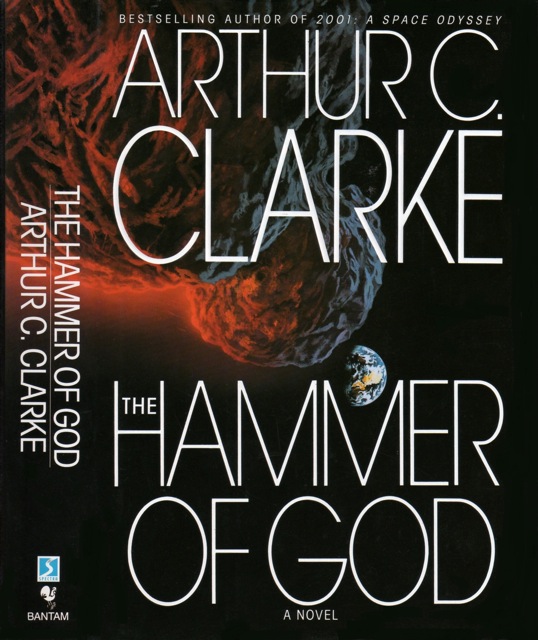
The Hammer of God is a science fiction novel by Arthur C. Clarke originally published in 1993. Set in the year 2109, it deals with the discovery of an asteroid to be on course to collide with Earth and depicts the mission for deflecting the asteroid by using fusion thermal rockets.
- Mother of Storms
John Barnesstandalone novel1994
similar byscience fictionnear future+1 more
From the flaps of the Tor first edition: "It is 2028. A strike to destroy an illegal Arctic weapons cache has a catastrophic side effect. Massive amounts of energy are liberated from the polar ice, suddenly warming the Earth's climate. In the middle of the Pacific, a gigantic hurricane thousands of miles across is forming, larger than any in human history. A storm with winds of supersonic speed. A storm that changes direction at whim. A storm that refuses to die. A storm so vast it spawns dozens more in its wake... Blinded by intrigue, expedience, and greed, the world's politicians and power brokers have ignored the killer storms threat until it is too late. Already the death toll is in the tens of millions, as it savages the Pacific coast, while its devil's brood of smaller storms are wreaking havoc across the face of the planet. While the survivors scramble for advantage, a handful of courageous men and women undertake a daring, desperate plan to save humanity from total destruction - a plan so visionary it may alter forever the future of the human race."
- The Crack in Space
Philip K. Dickstandalone novel1966
similar byscience fictionnear future+1 more
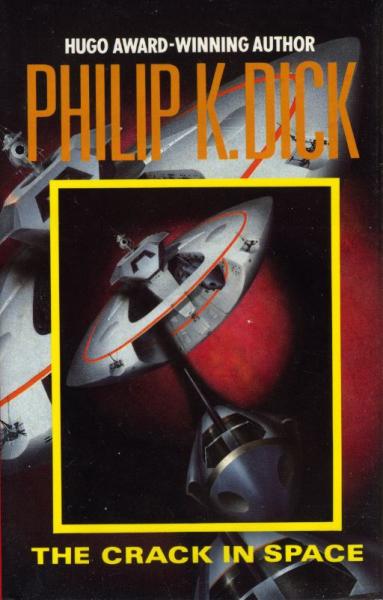
The Crack in Space is a 1966 science fiction novel by American writer Philip K. Dick. In the United Kingdom, it has been published under the title of the original novella, Cantata 140, published in the July 1964 issue of The Magazine of Fantasy & Science Fiction. This original title refers to the short title in English, Sleepers Awake, of J.S. Bach's Cantata BWV 140 and the novel's 'bibs', the millions sleeping in suspended animation. Both are based on the short story Prominent Author. The common elements are the Jiffi-scuttler transport device, the company, Terran Development, that manufactures it, and a summary of Prominent Author as an event of the past in chapter 2. The "crack in space" is a defect in Jiffi-scuttler operation that allows access to the Earth and to parallel Earths at various times and locations, beyond its intended use of providing near-instant transport between specific locations on the Earth in the present.
- Birth of Fire
Jerry Pournellestandalone novel1976
similar byterraformingscience fictionnear future
Birth of Fire is a science fiction novel by American writer Jerry Pournelle. It was first published by Laser Books in 1976, and later reprinted by Baen Books. It is related to the books Exiles to Glory and High Justice, and with those two, form a starting point for the CoDominium series.
- Farmer in the Sky
Robert A. Heinleinstandalone novel1950
similar byscience fiction+1 more
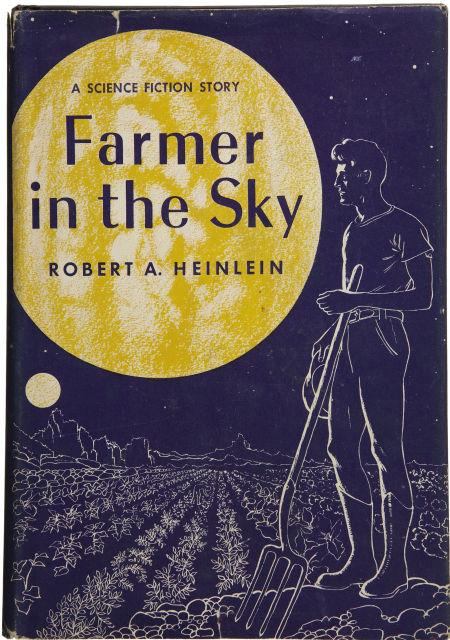
A family emigrates to the new colony on Ganymede, but the existing colonists do not have the resources to support a flood of immigrants. The teenage son, a boy scout, works to invigorate their barren holding without any technological support. Things come to a head when disaster strikes.
- Space Merchants
series2 books1953
completed
similar byscience fictionnear future
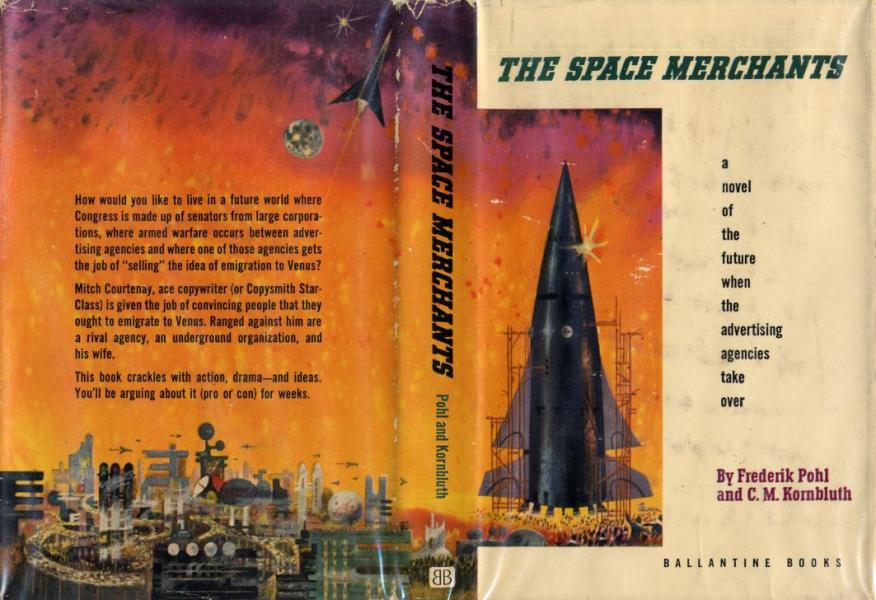
The Space Merchants (1953) is a satirical science fiction novel by Frederik Pohl and C. M. Kornbluth that follows an advertising executive navigating a future where aggressive consumer capitalism has swallowed politics and daily life. The authors reunited three decades later for a direct sequel, The Merchants' War (1984), returning to the same satirical world. Together the two books form a compact bookend pair rather than an ongoing series.
- The Fountains of Paradise
Arthur C. Clarkestandalone novel1979
similar byscience fiction+1 more
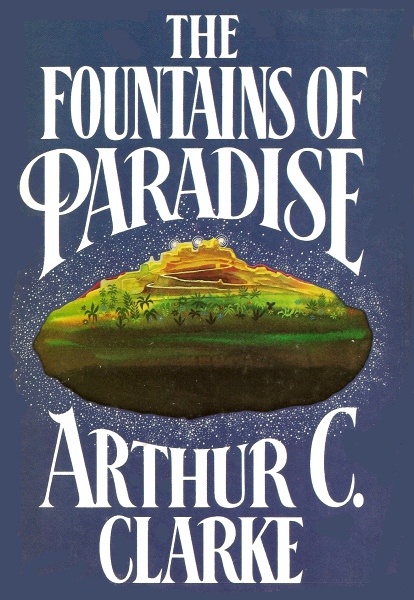
The Fountains of Paradise is a 1979 science fiction novel by British writer Arthur C. Clarke. Set in the 22nd century, it describes the construction of a space elevator. This "orbital tower" is a giant structure rising from the ground and linking with a satellite in geostationary orbit at the height of approximately 36,000 kilometres. Such a structure would be used to raise payloads to orbit without the expense of using rockets. The novel won both the Hugo and Nebula Awards for Best Novel.
- Arctic Rising
Tobias S. Buckellstandalone novel2012
similar byterraformingscience fictionnear future
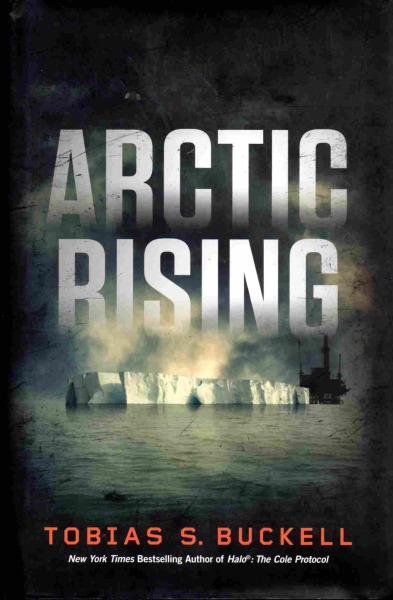
"The Arctic Ice Cap has all but melted, and the international community is racing to claim the massive amounts of oil beneath the newly accessible ocean. Enter the Gaia Corporation. Its two founders plan to terraform Earth to save it from itself--but in doing so, they may have created a superweapon the likes of which the world has never seen. Anika Duncan, a pilot for the United Nations Polar Guard, finds herself caught up in a plot by military agencies and corporations who want the Gaia Corporation stopped. But when Gaia loses control of its superweapon, it will be Anika who has to decide the future of the world."--Publisher's description.
- Nova
Samuel R. Delanystandalone novel1968
similar byscience fiction+1 more
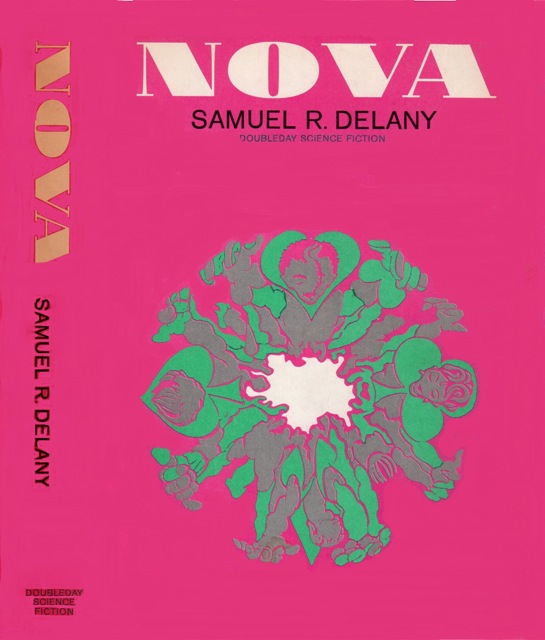
Nоva is a science fiction novel by American writer Samuel R. Delany published in 1968. The plot concerns the spaceship captain Lorq Von Ray's search for a nova, which will produce the essential power source Illyrion, and his vendetta with the Red family, who seek to kill him. Nominally space opera, it explores the politics and culture of a future where cyborg technology is universal, yet making major decisions can involve using tarot cards. It has strong mythological overtones, relating to both the Grail Quest and Jason's quest for the Golden Fleece.
- The Sands of Mars
Arthur C. Clarkestandalone novel1951
similar byterraformingscience fiction
From the back cover of the Pocket Books first paperback printing: "The Sands of Mars is ... the story of Martin Gibson, writer of interplanetary novels, a guy who knows all the answers to space flight... at least in theory. Then Gibson actually travels on the maiden voyage of the new passenger spaceship to Mars. What he finds there... love, danger, adventure... comes with as much shock to him as it will to you and to every reader who wonders at the startling mysteries of the universe!"
- 2312
Kim Stanley Robinsonstandalone novel2012
similar byterraformingscience fiction
In the eponymous year, when Earth's ecology is degraded and humanity has settled throughout the solar system by terraforming and genetic engineering, mysterious disasters strike some human communities and an assortment of human types from throughout the system seek to find and eliminate the cause.
- The Golden Aquarians
Monica Hughesstandalone novel1994
similar byscience fictionnear future+1 more
Walt Elliot goes with the father he hasn't seen for years to the planet Aqua, where he discovers that his father's project threatens the existence of a highly intelligent native species.
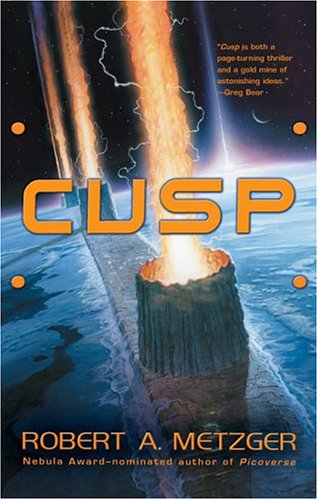
- CUSP
Robert A. Metzgerstandalone novel2005
similar byscience fictionnear future+1 more
Cusp is a 2005 hard science fiction novel by American writer Robert A. Metzger. It deals with two perpendicular rings running along the Earth's surface that act as cosmic jets using ionized hydrogen.
- Death Tolls
John E. Stithstandalone novel1987
similar byterraformingscience fictionnear future
Man on terraformed Mars tries to find out if brother's death was murder.
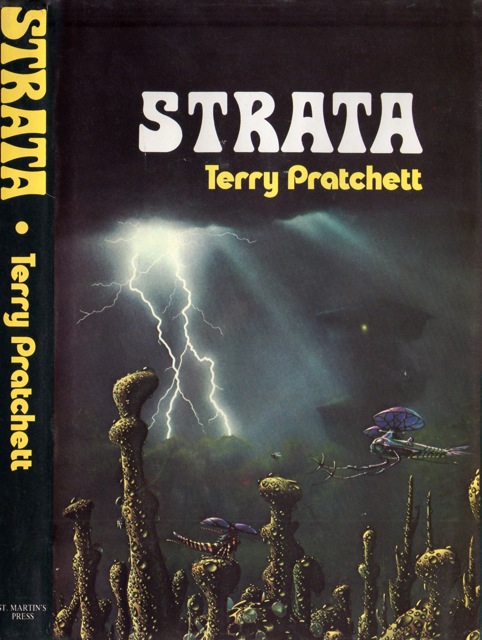
- Strata
Terry Pratchettstandalone novel1981
similar byscience fiction+1 more
Strata is a 1981 science fiction comedy novel by English writer Terry Pratchett. It is one of Pratchett's first novels and among the few science fiction novels he wrote, along with The Dark Side of the Sun, Only You Can Save Mankind, The Nome Trilogy and the co-authored The Long Earth.
- Trouble on Project Ceres
Ted Whitestandalone novel1971
similar byterraformingscience fictionnear future
Someone is trying to sabotage the project Larry's father is working on--one which would turn millions of desert acres into fertile fields for food.
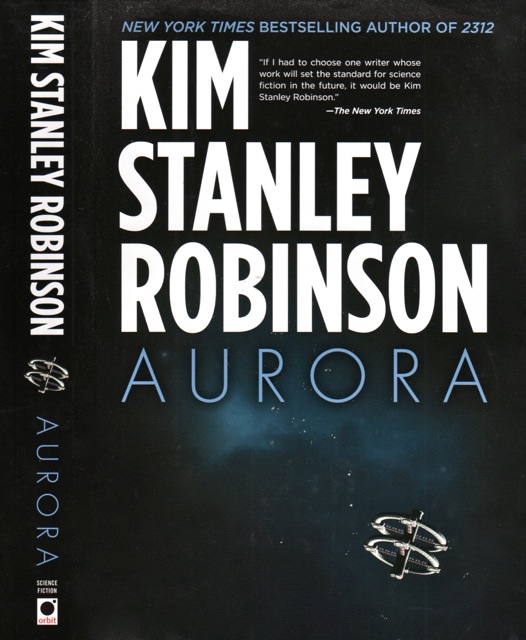
- Aurora
Kim Stanley Robinsonstandalone novel2015
similar byscience fiction+1 more
Aurora is a 2015 novel by American science fiction author Kim Stanley Robinson. The novel concerns a generation ship built in the style of a Stanford torus, traveling to Tau Ceti to start a human colony. The novel's primary narrative voice is that of the starship's artificial intelligence. Aurora was well received by critics.