More like Contrast
anchored on:science fictionsurvivalother star systemsfar futurespace colonizationtense
but
- Tunnel in the Sky
Robert A. Heinleinstandalone novel1955
similar byscience fictionsurvivaltenseother star systemsfar future
As the final test of a survivalist/explorer class, teenagers are dumped on an alien planet to use their skills while awaiting pickup. But something has gone wrong, and they find they are on their own.
- The Outposter
Gordon R. Dicksonstandalone novel1972
similar byscience fictiontenseother star systemsfar futurespace colonizationsurvival
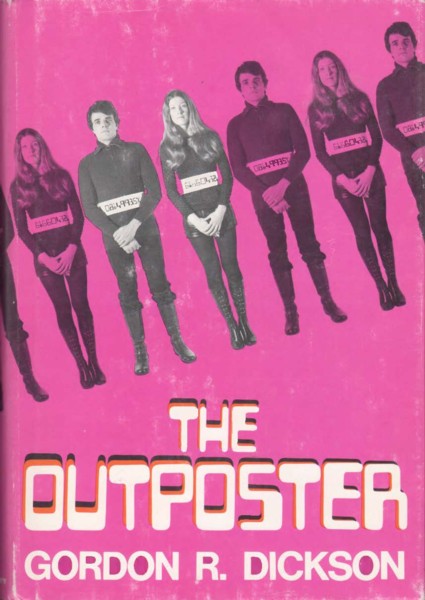
From the flap of the Lippincott first edition: "Rich man, poor man, beggarman, thief - the lottery played no favorites. If your number came up, you joined the rest of the losers marked for exile from overcrowded Earth. Shipped to a raw new outpost in space, you were officially called a colonist. But your whispered name was "garbage," your destination was oblivion, and you had few illusions about your chances of survival. The Outposters - a token band of specially trained personnel - were given the impossible task of guiding and protecting these outcasts in their harsh new environment. Will indifferent support from Earth, supply lines ran thin and raids by hostile aliens were increasing unchecked. Only one young Outposter, Mark Ten Roos, dared to challenge the system and change the odds. To help him, Mark hand-picked a strange assortment of allies from the new shipment of colonists: a brash opportunist, every instinct honed for personal survival; a midget woman with a professorship in philosophy; a widowed mathematician, expert in position astrophysics; an ex-marine with a dishonorable discharge. And help came to Mark from a source he had not expected - the daughter of the Outer Navy's ranking officer. When Mark Ten Roo put his plan into action, he knew he was also putting his life on the line."
- Deathworld
series4 books1960
completed
similar byscience fictionsurvivalfar futureother star systemsspace colonization+1 more
Deathworld is the name of a series of science fiction novels by American writer Harry Harrison, including the books Deathworld, Deathworld 2 and Deathworld 3, plus the short story "The Mothballed Spaceship". The central hero is a gambler who becomes involved with colonists of an extremely hostile planet.
- West of the Sun
Edgar Pangbornstandalone novel1953
similar byscience fictionsurvivalother star systemsfar futurespace colonization+1 more
From the back cover of the Dell first paperback printing: "After eleven years in space the Argo landed... West of the Sun ... on the dangerous planet Lucifer. The crew faced and untamed world of huge carnivorous birds with wolverine heads and flashing black teeth; furred, ten-foot tall men; red-skinned man-eating pygmies. They fought for mere survival but - their duty was to colonize and populate the planet - four men and only two women."
- The Dosadi Experiment
Frank Herbertstandalone novel1977
similar byscience fictiontenseother star systemsfar futuresurvival
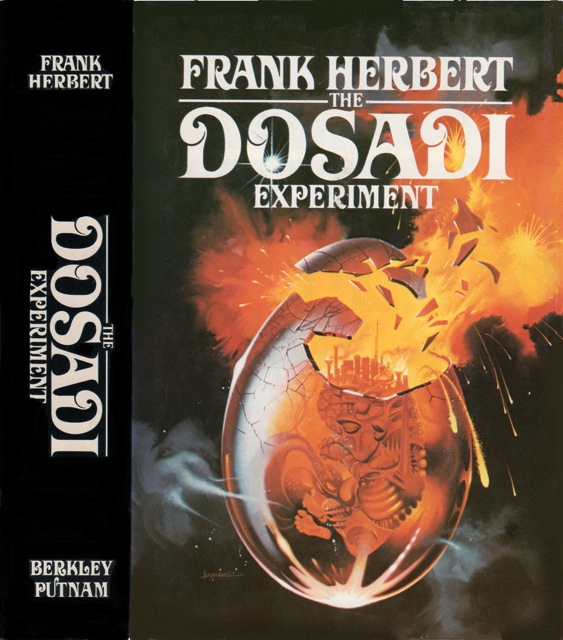
From the flaps of the Berkley Putnam first edition: "In his first new work of science fiction since the best-selling Children of Dune, Frank Herbert returns to his world of Whipping Star, and involves Jorj X. McKie, Saboteur Extraordinary, in a new intrigue. In Whipping Star, McKie discovered that some of the stars in the universe are actually intelligent, super-powerful beings, and was able to befriend one of them, the star Alcyone - affectionately known as Fannie Mae. As The Dosadi Experiment opens, McKie is assigned to investigate the planet Dosadi, which is isolated from the rest of the galaxy by a "god-wall," a barrier set up by one of the intelligent stars. Dosadi is rumored to be an experimental planet, and the experimenters are the froglike Gowachin, whose culture is founded upon a strange legal system in which McKie is the only human ever trained. He learns that humans and Gowachin have been placed on Dosadi, without their consent, for an experiment that could last centuries: an experiment in extreme overcrowding. But this monstrous plot is apparently out of control, and it seems the Gowachin may be prepared to destroy Dosadi rather than expose its secret, thus breaking the peace among the races, and starting the first interstellar war. But this is just the beginning. When McKie finally reaches Dosadi he discovers that the Dosadis have taken control of their own evolution and produced a competitive, highly evolved elite, of both humans and Gowachin, who have been able to extrapolate the existence of a universe beyond the god-wall and hate whoever has imprisoned them like this. They plan to break out and avenge themselves on the galaxy."
- Heorot
series4 books1987
similar byscience fictionother star systemsfar futurespace colonization+2 more
Larry Niven, Jerry Pournelle and Steven Barnes's The Legacy of Heorot strands human colonists on an idyllic-seeming alien world where they discover apex predators -- grendels -- hidden beneath the surface, forcing them to fight for survival. Beowulf's Children continues the colony a generation later as the children born on the planet clash with their parents over how to live alongside the grendels, and a fourth book, Starborn and Godsons, returns to the settlement decades further on. It's hard-SF creature-horror crossed with generational colony drama.
- Dune
series20 books1963
part of Dune Universe
similar byscience fictionfar futureother star systems+1 more
Frank Herbert's Dune Chronicles opens with 1965's Dune, set on the desert planet Arrakis where House Atreides takes control of the only source of the vital spice melange and young Paul Atreides is pulled into a struggle over its politics and religion. Herbert carried the story forward across five further novels — Dune Messiah, Children of Dune, God Emperor of Dune, Heretics of Dune, and Chapterhouse: Dune — following Paul's line over the following millennia, before Brian Herbert and Kevin J. Anderson later extended the saga. Many other editions of these six novels are omnibus and box-set repackagings rather than separate stories.
- The Seed of Earth
Robert Silverbergstandalone novel1962
similar byscience fictionsurvivaltenseother star systemsfar futurespace colonization
Back of book: The leaders of Earth intend to spread Mankind throughout the universe, until every habitable planet boasts a human civilization. 60 colony ships leave Earth every day on a one-way trip to the stars. Each ship carries 100 draftees. 6000 a day. 48,000 a week. Two and one half million every year. If your number comes up, one of them is YOU. The Draftees for the planet Osiris are a typical colony group: fifty men and fifty women with little in common, except their courage and determination to make the best of a situation they cannot change. But sacrifice and brave resolve are not enough to save them in their struggle to survive on a hostile new planet. The tiny band of colonists is torn apart by violence, and threatened by an alien menace. They face disaster, unless someone can discover the secret of survival on a world so different from the one they left behind.
- Cycle of Fire
Hal Clementstandalone novel1957
similar byscience fictionsurvivaltenseother star systemsfar future
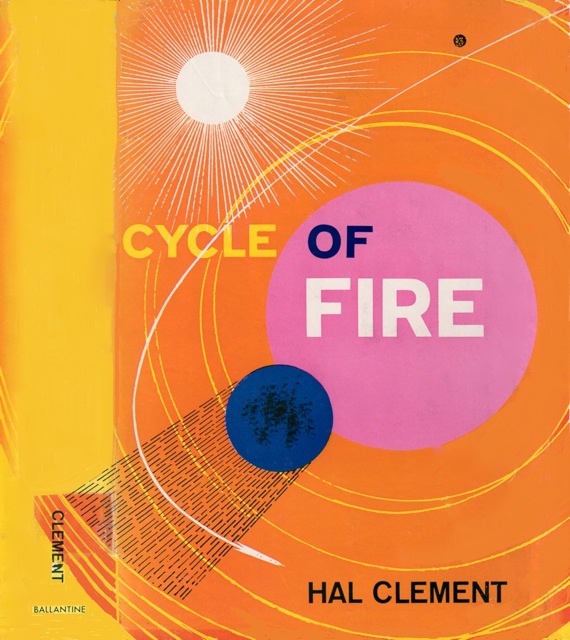
After his ship crashed on the inhospitable planet Abyorman, Nils Kruger had spent weeks wandering across the face of the planet.suffering from blistering heat, the searing cold of an alien climate. Now he had found a fellow wanderer, Dar, an alien castaway. They may both die. The human opts to do something about it. Dar, who knows the time of his death in advance, opts to do nothing. Which of them is right? Perhaps both
- Dune Universe
universe78 books1963
Start hereDune · Start here
similar byscience fictionfar futureother star systems+1 more
Arrakis. Dune. The desert planet, where empire runs on a single substance: the spice melange, which folds space, prolongs life, and unlocks prescience, and which exists nowhere else in the known universe. Frank Herbert's saga is a meditation dressed as an adventure — feudal houses and a secret sisterhood, engineered messiahs and the patient ecology of a world without water, all turning on the terrible gravity of who commands the spice. It reads like scripture and schemes like a war room, ten thousand years hence, among people who have outlawed the thinking machine and made instruments of themselves instead. At its heart stand Herbert's original six — Dune, Dune Messiah, Children of Dune, God Emperor of Dune, Heretics of Dune, Chapterhouse: Dune — a single deepening arc across millennia, arguing the whole way between prophecy and free will. Around that spine his son Brian Herbert and Kevin J. Anderson have raised a vast prequel architecture: Prelude to Dune, tracing the great houses a generation before Paul; Legends of Dune, reaching back to the crusade that broke the machines; the Schools of Dune cycle on the founding of Bene Gesserit, Mentat, and Navigator; the Caladan Trilogy and Heroes of Dune filling years the originals left in shadow. Many hands, dozens of volumes, one desert. What sets Dune apart is its refusal of the simple: religion is manufactured, heroes are hazards, and the sand itself — worm, water, ecology — acts as a political power. Begin where the universe did, with Frank Herbert's Dune (1965), and read the original six in order; you need nothing else to feel the full weight. The prequels are a country to explore afterward, taken by era. Beginnings are delicate times.
- Pandora
series4 books1966
similar byscience fictionfar futureother star systemssurvival+2 more
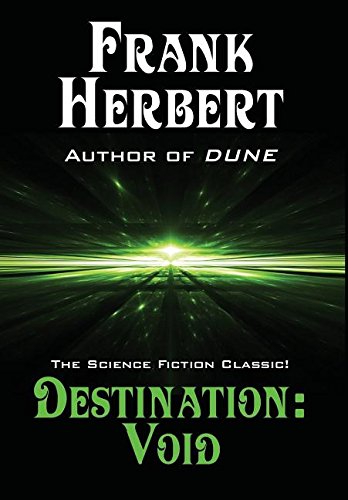
The Pandora Sequence opens with Frank Herbert's solo novel Destination: Void, in which a starship crew must jury-rig a working artificial consciousness after their vessel's control systems fail. Bill Ransom co-writes the three novels that follow, carrying the survivors to the world Pandora, where they must contend with both a manipulative machine intelligence and the planet's own hostile ecology. Across its four books the series moves from a claustrophobic ship-bound crisis to a generations-long struggle over faith, control, and survival on a dangerous new world.
- Rider at the Gate
C. J. Cherryhstandalone novel1995
similar byscience fictiontenseother star systemsfar futurespace colonizationsurvival
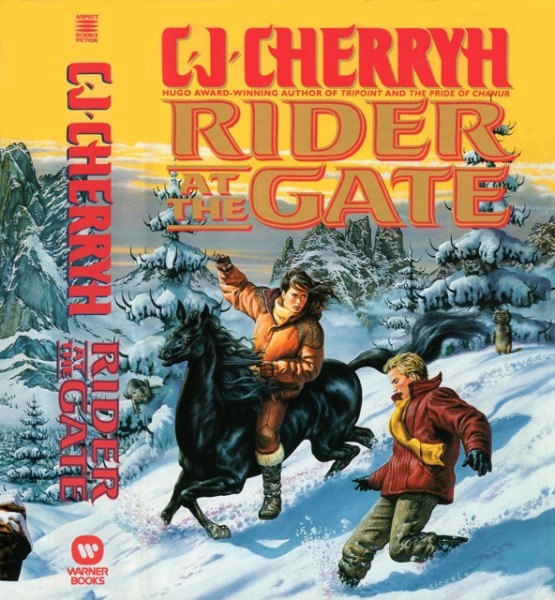
Rider at the Gate is a science fiction novel by American writer C. J. Cherryh, first published by Warner Books in August 1995. It is the first of a series of two novels written by Cherryh and is set in the author's Finisterre universe. The second book in the series, Cloud's Rider, was published in September 1996. The series is about the descendants of lost colonists stranded many generations ago on the hostile planet of Finisterre.
- The Status Civilization
Robert Sheckleystandalone novel1960
similar byscience fictiontenseother star systemsfar futuresurvival
"Will Barrent had no memory of his crime ... but he found himself shipped across space to a brutal prison-planet. On Omega, his only chance to advance himself -- and stay alive -- is to commit an endless series of violent crimes. The average inmate's life expectancy from time of arrival is three years. Can Barrett survive, escape, and return to Earth to clear his name?" - From the cover of the 2007 Wildside paperback edition.
- Cloud's Rider
C. J. Cherryhstandalone novel1996
similar byscience fictiontenseother star systemsfar futurespace colonizationsurvival
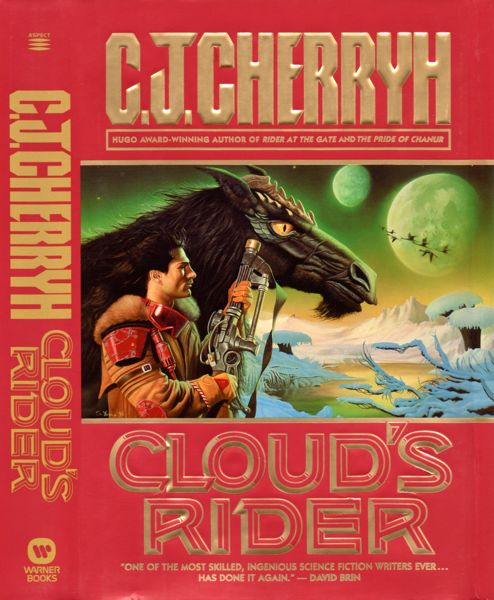
Cloud's Rider is a science fiction novel written by American writer C. J. Cherryh, first published by Warner Books in September 1996. It is the second of a series of two novels written by Cherryh and is set in the author's Finisterre universe. The first book in the series, Rider at the Gate was published in August 1995. The series is about the descendants of lost colonists stranded many generations ago on the hostile planet of Finisterre.
- Catteni Sequence
series5 books1970
completed
similar byscience fictionother star systemsfar future+3 more
The Catteni series is a tetralogy of science fiction novels by American writer Anne McCaffrey. In this universe, humans are slaves of aliens, the humanoid Catteni. Woven through all four of the books are details of the relationship between Kristin Bjornsen, a former slave, and Zainal, a renegade Catteni.
- In the Company of Others
Julie E. Czernedastandalone novel2001
similar byscience fictiontensefar futurespace colonizationsurvivalother star systems
When humans set out to explore the universe, they found a number of planets suitable for colonizing. The one thing they didn't find was intelligent life. And so the terraforming of worlds began, with eager immigrant families temporarily housed in space stations till their new home planets were ready. But the technicians made one all important mistake by introducing the alien Quill to worlds where they did not belong. The Quill were supposed to be destroyed when the crews finished their work, but some survived, multiplied, and mutated till they were no longer harmless. They were deadly. Suddenly mankind was in retreat, leaving colonists stranded in space. In the ensuing chaos many stations failed. For the survivors, the only hope lay in finding a way to wipe out the Quill. Earth scientist, Dr. Gail Smith, thought one special human, Aaron Pardell, might hold the answer. Found as a baby and raised by a stationer in the "Outsider" settlement that clung to Thromberg Station, Aaron may have survived Quill contact. Still, finding Aaron and winning his help might be the least of Dr. Smith"s problems.... (from the back cover of the DAW Books first edition)
- The Songs of Distant Earth
Arthur C. Clarkestandalone novel1986
similar byscience fictionother star systemsfar futurespace colonizationsurvival
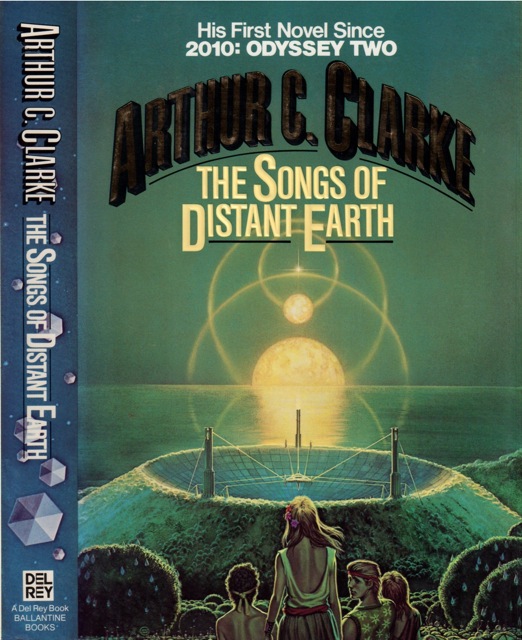
The Songs of Distant Earth is a 1986 science fiction novel by British writer Arthur C. Clarke, based upon his 1958 short story of the same title. Of all of his novels, Clarke stated that this was his favourite. Prior to the publishing of the novel, Clarke also wrote a short step outline with the same title, published in Omni magazine and anthologised in The Sentinel in 1983.
- Pushing Ice
Alastair Reynoldsstandalone novel2005
similar byscience fictiontensefar futuresurvivalother star systems
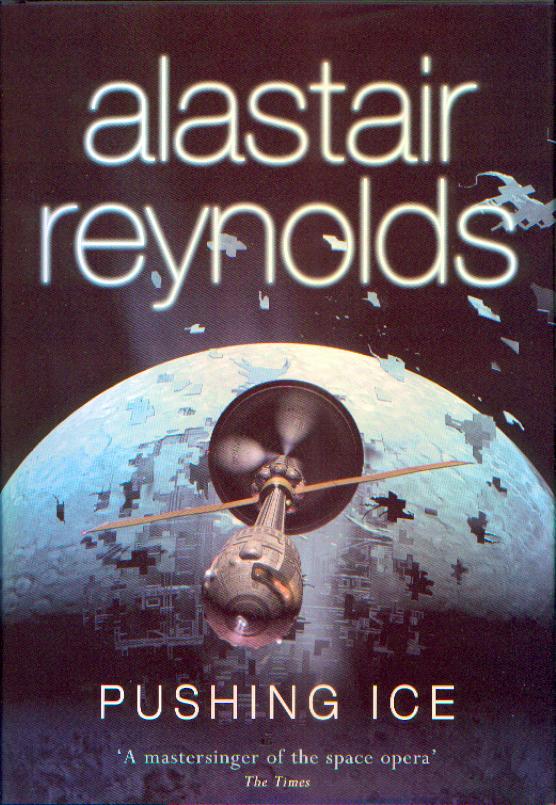
When Saturn's moon Janus suddenly takes off into interstellar space, an ice mining spaceship sent to investigate finds itself swept along into distant space until it ends up trapped in a gigantic alien structure, wherein the crew must prepare to reside for the foreseeable future.
- Search the Sky
C. M. Kornbluth & Frederik Pohlstandalone novel1954
similar byscience fictionother star systemsfar futurespace colonizationfunny
Search the Sky is a satirical science fiction novel by American writers Frederik Pohl and Cyril M. Kornbluth, first published in 1954 by Ballantine Books.
- Freehold
William C. Dietzstandalone novel1987
similar byscience fictiontenseother star systemsfar futurespace colonizationsurvival
Colonel Stell and his band of mercenaries yearn for a place to call home. To them Freehold is like a bright diamond in the vast universe. But its desert conditions, economic instability, social disarray, and political turmoil render the planet perfect for takeover. Willing to fight anything that stands in their way, Colonel Stell and his small crew contend with all who seek to dominate their planet, even vast interstellar empires. Their success will not be determined by their size but by their resolution to create creating a home for themselves.
- Operation Bounce House
Matt Dinnimanstandalone novel2026
similar byscience fictiontenseother star systemsfar futurespace colonizationsurvival
Operation Bounce House is a 2026 science-fiction novel by American author Matt Dinniman. A standalone novel, the book was published through Ace Books and centers upon a group of colonists who must defend their home against a plot to eradicate them from the planet.
- The Founder Effect
series36 books2020
similar byscience fictiontenseother star systemsfar futurespace colonizationsurvival
- Pax / Astra
series2 books1954
completed
similar byscience fictionfar futuretensesurvival+2 more
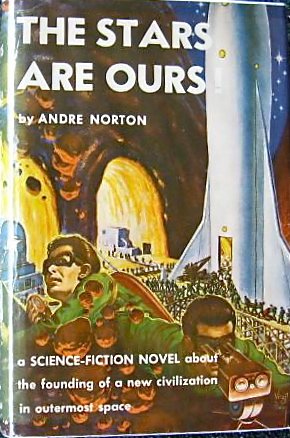
Andre Norton's The Stars Are Ours! (1954) and its sequel Star Born (1957) follow a group of scientists and their families who flee a repressive future Earth to colonize a distant world they name Astra, and then the next generation, who must contend with that world's original inhabitants. Star Flight appears to be a later omnibus or reissue rather than a third original novel.