Loreful
HomeDiscover
Search series, authors…⌘K
Loreful

Reading orders for SF/F series and shared universes — with your place kept in every one.

Explore

UniversesSeriesWorksAuthorsAtlas

Help

FAQAboutSite map

Account & legal

Sign inCreate accountPrivacyTerms

Data

Built on ISFDB, Wikipedia, Wikidata and Open Library. Curated reading orders carry their reasoning on the page; the rest follow publication order. Data sources & licenses

© Loreful · data: ISFDB · CC BY

More like Convolute

anchored on:science fictionotherworld

but

Mood

The mood the book leaves you in.

  • The reading experience is propelled by journeys, exploration, and physical risk; excitement and forward momentum dominate over dread or introspection.
  • Joy and loss are deliberately mixed; the resolution grants characters something real while taking something else away, leaving warmth and sorrow together.
  • The book demands work from the reader — dense prose, difficult structure, unfamiliar ideas, or morally uncomfortable material — as part of its intended effect.
  • Grim events, cruelty, or despair dominate the atmosphere, and the book does not soften them with comfort or comic relief.
  • The atmosphere is quietly unsettling — wrongness, unease, and the uncanny pervade the book without necessarily escalating into overt horror.
  • The book is built to move the reader; character feeling is foregrounded and major scenes aim at a strong emotional response.
  • Humor is a primary aim and the prose plays for laughs — comic situations, wit, or dialogue produce sustained comedy, not occasional levity.
  • The book insists that things can improve; effort and decency are shown to matter, and the arc bends toward better outcomes even through hardship.
  • The book teaches as it goes — real facts, history, science, or craft are conveyed in enough depth that learning is part of the reading experience.
  • The book is designed to uplift and motivate, presenting perseverance or achievement in a way that invites the reader to aspire or act.
  • The overall register is cheerful and easygoing; stakes are kept gentle and the book avoids dwelling on pain or dread.
  • Withheld information drives the experience; the book sustains enigmas and secrets the reader wants resolved, whatever its genre.
  • The book is contemplative and inward-looking, giving more weight to thought, memory, and meaning than to external events.
  • The book works as comfort reading — low tension, a soothing pace, and an atmosphere the reader can unwind in.
  • Grief, loss, or melancholy set the dominant register, and the book lets sorrow stand rather than resolving it into comfort.
  • Sustained suspense is the point; the book keeps the reader braced for what happens next through danger, pressure, or impending revelation.
  • Playful invention and charm define the register — fanciful conceits, light absurdity, and a narration that delights in its own oddity.

About

What the story runs on.

  • Stories in which extraterrestrial beings are central — as characters, cultures, or the object of the plot.
  • Stories driven by deliberate modification of genomes — designer organisms, engineered humans, and the consequences of remaking life.
  • Stories about venturing into space to explore — survey missions, astronauts, and the frontier of the unknown beyond Earth.
  • Stories structured as a quest — a journey undertaken to find, deliver, or destroy something of great import.
  • Stories in which staying alive against nature, catastrophe, or scarcity is the central problem.
  • Stories of lovers kept apart by law, family, faith, or station, where the obstacle to love is the plot.
  • Stories in which a friendship — its making, testing, or loss — is the emotional center.
  • Stories of growing up — a young protagonist crossing from childhood into adult knowledge and responsibility.
  • Stories about who a character truly is — self-discovery, doubled lives, and the search for a self.
  • Stories driven by maneuvering for power — factions, conspiracies, and statecraft conducted in shadow.
  • Stories about rising against rulers — uprisings, resistance movements, and revolutions and their aftermaths.
  • Stories in which war itself is the subject — combat, occupation, and what warfare does to soldiers and civilians.

Shelf

Where it sits in the library.

    • Fiction built on magic or other supernatural elements that have no scientific explanation.
    • Secondary-world fantasy at large scale, where the fate of nations or the world turns on the protagonists' struggle.
    • Fantasy set in a recognizably modern city or contemporary world where the supernatural intrudes on everyday life.
    • Fantasy that blends in horror's atmosphere and imagery, keeping a fantastical frame around grim or frightening material.
    • Action-driven fantasy following warriors or rogues with personal stakes against sorcerous threats, rather than world-spanning conflicts.
    • Fantasy set in a real historical period or a close analogue of one, with magic woven into the era.
    • Fantasy in which protagonists cross from the ordinary world into another world through a portal or similar passage.
    • Fiction that retells or reworks a traditional fairy tale in a new form or setting.
    • Fantasy drawing directly on myths, legends, and folklore, retelling them or building on their figures and logic.
    • Fantasy of ghosts, vampires, shapeshifters, psychics, and similar phenomena, usually set in an otherwise ordinary world.
    • Fiction mixing science-fictional trappings with overtly magical or impossible elements in one setting.
    • Low-stakes fantasy emphasizing comfort, community, and everyday pleasures over conflict and peril.
    • Speculative fiction of pervasive moral ambiguity, violence, and cynicism that rejects heroic conventions — fantasy and SF alike.
      • Fiction that extrapolates from science and technology — future societies, space travel, or speculative inventions — within at least nominally natural laws.
      • Science fiction of interstellar scope — starships, galactic polities, and adventure across star systems.
      • Science fiction committed to scientific rigor, where technical plausibility constrains the story.
      • Science fiction centered on armed forces and warfare, told largely from a military point of view.
      • Science fiction of networked, corporate-dominated near futures, pairing high technology with social decay.
      • Science fiction styled on nineteenth-century steam-powered technology, often in a Victorian or pseudo-Victorian setting.
      • Fiction depicting an oppressive or catastrophic society, presented as a warning.
      • Fiction set after civilization's collapse, following survivors in the ruins of the old world.
      • Fiction in which characters move between past and future, and the mechanics or consequences of that travel drive the plot.
      • Fiction exploring a world where a historical event went differently and history diverged from ours.
      • Science fiction about humanity's first encounter and communication with an alien intelligence.
      • Science fiction in which extraterrestrial forces attack or occupy Earth and humanity resists.
      • Fiction whose primary aim is to frighten or unsettle the reader through dread, menace, or the monstrous.
      • Horror of vast, indifferent, incomprehensible entities before which humanity is insignificant, in the Lovecraft tradition.
      • Horror of decaying houses, buried family secrets, and oppressive atmosphere in the Gothic literary tradition.
      • Horror centered on hauntings and the returning dead.
      • Horror located in the mind — paranoia, obsession, and unreliable perception rather than external monsters.
      • Horror built around the reanimated dead and survival amid their outbreaks.
      • Horror defined by explicit, transgressive gore that refuses to cut away from violence.
      • Speculative fiction of the strange and uncanny that resists both natural explanation and standard genre categories.
      • Fiction organized around solving a crime or puzzle, typically following an investigator toward the identification of a culprit.
      • A puzzle-first mystery that lays out clues so the culprit's identity can be deduced before the reveal.
      • Crime fiction of moral ambiguity, fatalism, and hard-edged style, set among the corrupt and the doomed.
      • A mystery following the realistic routines of police work — forensics, interviews, and case-building.
      • A gentle mystery with an amateur sleuth, a small community, and violence kept off the page.
      • A mystery set in a past era, where the investigation works within that period's methods and society.
      • Fast-paced fiction driven by imminent danger, pursuit, or high-stakes conspiracy, built to sustain tension.
      • A thriller of espionage — agents, tradecraft, and intelligence services in conflict.
      • A thriller centered on lawyers and the courtroom, where litigation carries the suspense.
      • A thriller driven by detailed contemporary or near-future technology, often military or scientific.
      • A thriller whose tension comes from mental states and manipulation between characters rather than external action.
      • Fiction whose central plot is a romantic relationship and its development toward an emotionally satisfying resolution.
      • Romance in which one or both partners are supernatural beings, blending fantasy elements into the love story.
      • A fantasy-romance hybrid in which the romantic arc and the fantasy plot carry equal weight.
      • Romance set in a past era, with courtship shaped by the period's society and manners.
      • Romance set in the present day, without supernatural or historical elements.
      • Fiction set in a real past period, where the historical setting materially shapes characters and events.
        • General and literary fiction emphasizing prose style, character interiority, or formal ambition over genre plot conventions.
        • Fiction in a realistic world where magical events occur and are treated as ordinary, in the tradition of Latin American literature.
        • Fiction that ridicules people, institutions, or society in order to criticize them.
        • Fiction of dreamlike, irrational imagery and logic that breaks from realistic representation.
        • Fiction that plays with narrative convention through metafiction, fragmentation, and self-reference.
        • Fiction propelled by journeys, exploration, and physical peril, where action and survival carry the plot.
        • Adventure fiction of ships and seafaring — naval engagements, voyages, and life at sea.
        • Fiction of the American frontier West — gunmen, ranchers, and lawmen, typically in the late nineteenth century.
        • Fiction centered on soldiers, campaigns, and the experience of warfare, historical or imagined.
          • Fiction written primarily to amuse, using comedic situations, wit, or parody as its organizing principle.
            • Multi-generational fiction following a family or dynasty across decades, with inheritance and kinship as the through-line.
              • Fiction whose world runs on explicit game mechanics — levels, stats, and skills that characters can see and exploit.
                • Fiction about costumed or superpowered heroes and their conflicts with comparable villains.

                Practical

                How long a commitment, whether it stands alone, and whether it has finished.

                Tap a chip to ask for it · tap again to rule it out · once more to clear. Numbers show what would be left.

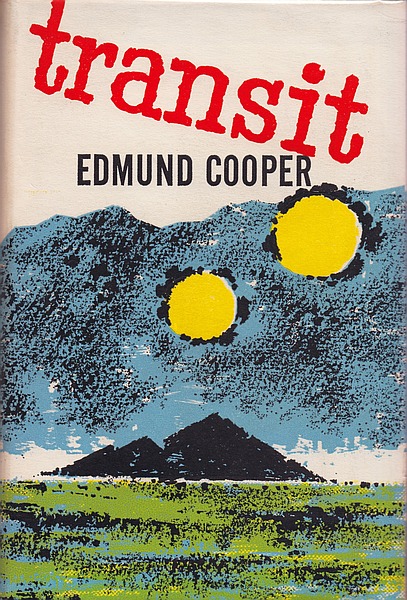
                • Cover of Transit
                  Transit

                  Edmund Cooper · standalone novel · 1964

                  similar byscience fictionotherworld

                  Transit... to another world. As a human being - an Earthman - Richard Avery was not particularly successful. He was mediocre as a teacher, and a failure as an artist. The rewards of Earth had passed him by. Still... Earth was home. It was where he belonged, where he could at least go his way unnoticed. Until that afternoon in Kensington Gardens, and that gleaming, hypnotic crystal that transported him - instantaneously - to a new and alien world. He was not alone, at least. There were three other Earth people marooned with him, all without a hint of the location or reason. And four more oddly assorted individuals would have been hard to imagine... Together, they faced sudden, savage onslaughts from an unknown foe. Together, they faced a fantastic implacable environment. And alone, they faced themselves - for to win, or even to survive, they had to re-discover what it meant to be human... (from the back cover of the Lancer first American edition)

                • Cover of Flatland
                  Flatland

                  series · 2 books · 1884

                  similar byscience fictionotherworld

                  Edwin A. Abbott's 1884 novella Flatland: A Romance of Many Dimensions imagines a two-dimensional world of geometric beings, using its narrator's brush with higher dimensions as both a mathematical thought experiment and a satire of Victorian social rank. Ian Stewart's 2001 Flatterland follows a descendant of that narrator on a tour of stranger geometries, from curved and multidimensional space to relativity, as a knowing homage to Abbott's original. Together they pair a Victorian mathematical classic with its modern sequel.

                • Cover of Six Gates from Limbo
                  Six Gates from Limbo

                  J. T. McIntosh · standalone novel · 1968

                  similar byscience fictionotherworld

                  Awakening in a grassy clearing, a man with no tools or weapons, no name, no memory, begins to explore his world. He finds this no-place is furnished with six gateways. What lies beyond cannot be seen. And then he finds his name - Rex - and a companion - Regina - and Limbo begins to seem like Eden. But it is a paradise with its own destruction built in. (adapted from the back cover of the Avon edition)

                • Cover of Inside Outside
                  Inside Outside

                  Philip José Farmer · standalone novel · 1964

                  similar byscience fictionotherworld

                  Inside / Outside is a science fiction novel by American writer Philip José Farmer. Originally released in 1964, the novel explores the question of what happens before souls inhabit human bodies, and how they are created.

                • Cover of Scale
                  Scale

                  Greg Egan · standalone novel · 2023

                  similar byscience fictionotherworld

                  Scale is a science-fiction novel by Australian author Greg Egan, published in 2023. The novel describes a world, in which matter is composed differently and causes humans to have several different sizes, as well as the frictions between them.

                • Cover of Restoree
                  Restoree

                  Anne McCaffrey · standalone novel · 1967

                  similar byscience fiction

                  Torn from Earth by a bizarre and nameless black force, Sara has no idea where she is or why she inhabits a beautiful new body. Controlled by brutal guards and tamed by terror, she can not comprehend her role as a nurse for a man who appears to be an idiot. She discovers that the planet she had been brought to was Lothar and that the man she was caring for was its Regent, Sara knows the restorees had to escape. When they do, they become fugitives on a world of multiple evils. (adapted from the back cover of the Baen edition)

                • Cover of Grimus
                  Grimus

                  Salman Rushdie · standalone novel · 1975

                  similar byotherworld+1 more

                  After drinking a mysterious fluid that grants him immortality, the young Axona man Flapping Eagle sets out on a centuries-long search for his vanished sister, drifting through identities and eras as the decades pass without aging him. The trail eventually leads him to a hidden dimension reachable through the Mediterranean, and to Calf Island, a refuge for immortals who have grown weary of endless life but cannot bring themselves to give it up, ruled by a strange and rigid order all its own. Salman Rushdie's first novel, an early, genre-inflected departure from the realism of his later, more famous work.

                • Cover of Brave New World
                  Brave New World

                  series · 8 books · 1932

                  similar byscience fictionotherworld

                  Aldous Huxley's 1932 novel imagines a future World State where reproduction, social caste, and desire are all engineered before birth, and the population is kept content through conditioning, sleep-hypnosis, and a mood-altering drug called soma. The story follows the disruption this seemingly stable order suffers when an outsider raised beyond its reach is brought into it, exposing what the society traded away for comfort and order. Some editions pair the novel with Huxley's own 1958 nonfiction essay collection, Brave New World Revisited, which reassesses the book's ideas rather than continuing its story.

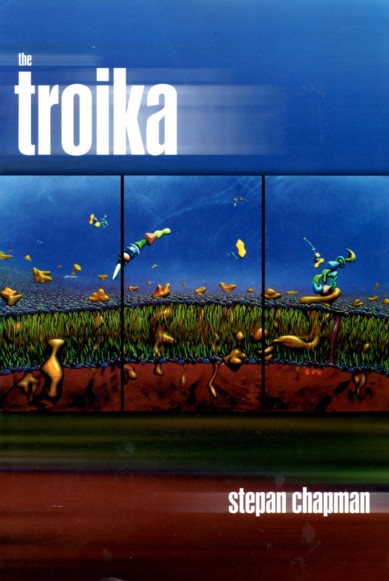
                • Cover of The Troika
                  The Troika

                  Stepan Chapman · standalone novel · 1997

                  similar byscience fictionotherworld

                  The Troika is a 1997 science fiction novel by American writer Stepan Chapman. Written in surrealist style, the novel features a highly complex plot mixing fantasy and science fiction. It received the Philip K. Dick Award for 1997.

                • Cover of Atta
                  Atta

                  Francis Rufus Bellamy · standalone novel · 1953

                  similar byscience fictionotherworld

                  Atta: A Novel of a Most Extraordinary Adventure is a science fiction novel by Francis Rufus Bellamy published in 1953. In 1954 the novel was published back-to-back with Murray Leinster's The Brain Stealers as Ace Double D-079.

                • Cover of Land Beyond the Map
                  Land Beyond the Map

                  Kenneth Bulmer · standalone novel · 1965

                  similar byscience fictionotherworld

                  Land Beyond the Map is a short science fiction novel written by Kenneth Bulmer. It originally appeared in the magazine Science Fantasy in 1961 under the title "The Map Country". It was subsequently enlarged and published by Ace Books in 1965. It was published in an Ace Double, which also contained another short novel, Fugitive of the Stars by Edmond Hamilton, on the opposite side.

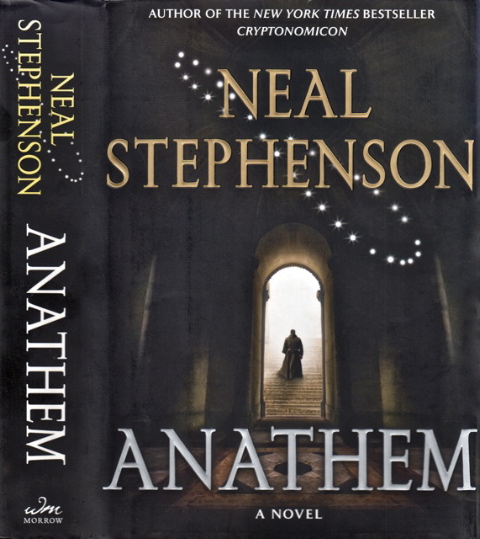
                • Cover of Anathem
                  Anathem

                  Neal Stephenson · standalone novel · 2008

                  similar byscience fiction

                  On a planet where quasi-monastic academic institutions have existed alongside the secular world for thousands of years, a young scholar from one such institution becomes part of a planetwide effort to muster an appropriate reaction to a shocking discovery.

                • Cover of A Red Sun Also Rises
                  A Red Sun Also Rises

                  Mark Hodder · standalone novel · 2012

                  similar byscience fictionotherworld

                  "Reclusive Anglican priest Aiden Fleisher and brilliant hunchback Clarissa Stark travel as missionaries to the distant South Pacific island of Koluwai, where they encounter hostile natives--and a gateway to another world lit by two suns. Fleisher and Stark meet the native Yatsill, consummate mimics who construct an elaborate society based on Victorian London, using details mined from the thoughts of their new visitors. As Aiden and Clarissa strive to make sense of this strange new world, they become aware of an approaching menace: the arrival of a third sun that will bring the Blood Gods to ravage the world."--Library Journal.

                • Cover of Masters of the Maze
                  Masters of the Maze

                  Avram Davidson · standalone novel · 1965

                  similar byscience fiction+1 more

                  Masters of the Maze is a science fiction novel by American writer Avram Davidson, originally published in 1965 by Pyramid Books with a cover by John Schoenherr. The first UK edition, the only hardcover to date, was issued by White Lion in 1974. An American paperback reprint followed from Manor Books in 1976. Ebook editions appeared in 2012, from both Prologue Books and SF Gateway.

                • Cover of The Blue World
                  The Blue World

                  Jack Vance · standalone novel · 1966

                  similar byscience fiction

                  The Blue World is a science fiction adventure novel by American writer Jack Vance. The novel is based on Vance's earlier novella The Kragen, which appeared in the July 1964 edition of Fantastic.

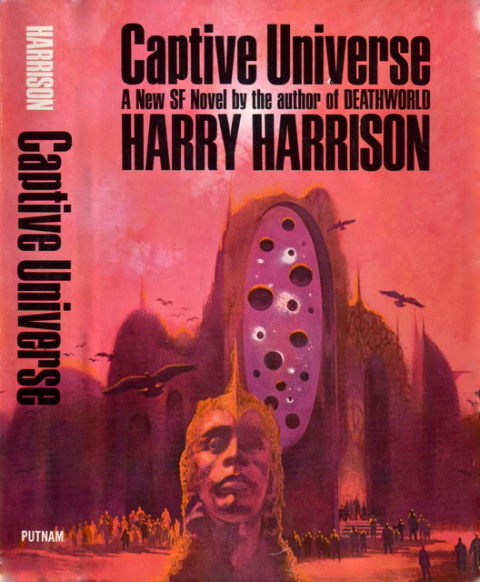
                • Cover of Captive Universe
                  Captive Universe

                  Harry Harrison · standalone novel · 1969

                  similar byscience fictionotherworld

                  Chimal is an Aztec farmer's son in an isolated valley cut off from the world by a landslide generations back, split between two villages that live under strict, ancient law enforced by priests. Unlike everyone around him, he keeps asking questions no one will answer about what lies beyond the valley's walls, curiosity that costs him an arranged marriage and, after a priest's death is laid at his door, very nearly his life. His escape, through tunnels no one admits exist, is only the beginning of what he finds out about his world. A standalone novel from Harry Harrison.

                • Cover of Inverted World
                  Inverted World

                  Christopher Priest · standalone novel · 1974

                  similar byscience fiction

                  A city travels slowly along tracks laid by the residents ahead of the city and pulled up from behind the city, through territory where other people live.

                • Cover of The Rauder Brothers & The Lizardmen's Pit
                  The Rauder Brothers & The Lizardmen's Pit

                  Steve Heuzinkveld · standalone novel · 2021

                  similar byscience fictionotherworld

                  When somebody goes missing, nobody suspects the Lizardmen. For thousands of years, the Kirzakai have avoided all human contact. Until now. While their estranged father investigates a reported Lizardman sighting, Raymond and Benjamin Rauder are kidnapped and forced to work in a harsh prison on the other side of the world. Having lost his memories during the abduction, Ray only knows one thing for certain: he doesn't belong there. Knowing even less about their father, Ben slowly unravels the mysteries surrounding the prison and the forgotten reptilian race. Plagued with internal strife, the Kirzakai fight against a shadow organisation, The Faction, who are intent on eliminating their species once and for all. Embroiled in the beginnings of an all-out war, The Rauder Brothers struggle to escape The Lizardmen's Pit, but with each attempt, they are pulled further in.

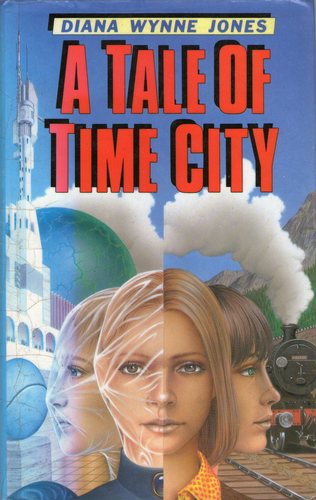
                • Cover of A Tale of Time City
                  A Tale of Time City

                  Diana Wynne Jones · standalone novel · 1987

                  similar byscience fictionotherworld

                  In 1939 an eleven-year-old London girl is kidnapped to Time City, a place existing outside the stream of time and manipulating the history of humanity, where she finds the inhabitants facing their worst hour of crisis.

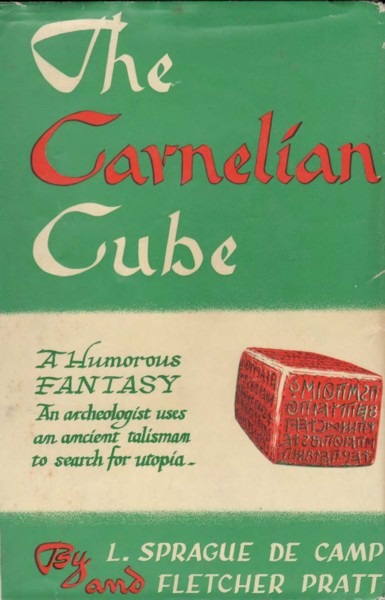
                • Cover of The Carnelian Cube
                  The Carnelian Cube

                  L. Sprague de Camp & Fletcher Pratt · standalone novel · 1948

                  similar byscience fictionotherworld

                  The Carnelian Cube is a science-fantasy novel by American writers L. Sprague de Camp and Fletcher Pratt. It was first published in hardcover by Gnome Press in 1948, and in paperback by Lancer Books in 1967. An E-book edition was published by Gollancz's SF Gateway imprint on September 29, 2011 as part of a general release of de Camp's works in electronic form. It has also been translated into Italian and German.

                • Cover of Venus Plus X
                  Venus Plus X

                  Theodore Sturgeon · standalone novel · 1960

                  similar byscience fictionotherworld

                  Charlie Johns wakes in a featureless silver room with no memory of how he got there and a watch that's inexplicably running backward. He's been brought, how and by whom is never explained to him, to Ledom, an isolated, technologically advanced society whose members are all both male and female and have done away with fixed sex roles entirely. Guides walk him through Ledom's customs and machinery while making clear he's there to judge them before he can go home. Interwoven with Charlie's tour are chapters following an ordinary mid-century American family, setting the utopia against the world it's implicitly critiquing. Theodore Sturgeon's provocative novel about gender and social design.

                • Cover of The Courier's Daughter Trilogy
                  The Courier's Daughter Trilogy

                  series · 3 books · 2012

                  similar byscience fiction+1 more

                  The Courier's Daughter Trilogy is C. J. Redwine's YA fantasy series: Defiance (2012), Deception and Deliverance. Set in a walled, post-collapse city ruled by rigid survival laws, it follows a young woman searching for her missing father against the city's authorities and the monstrous forces beyond its walls. The trilogy follows one continuous search and its fallout across all three books.

                • Cover of The Lost Regiment
                  The Lost Regiment

                  series · 9 books · 1990

                  similar byscience fiction

                  William R. Forstchen's Lost Regiment series begins with Rally Cry, in which a Civil War Union regiment is swept onto a distant world where humans transplanted from many eras and cultures are farmed as food by an alien race. Arriving with nineteenth-century gunpowder weapons and organized tactics, the regiment's survivors fight to build a defensible nation and turn the war back on their captors, a conflict that escalates across nine novels of technology, politics, and generations.

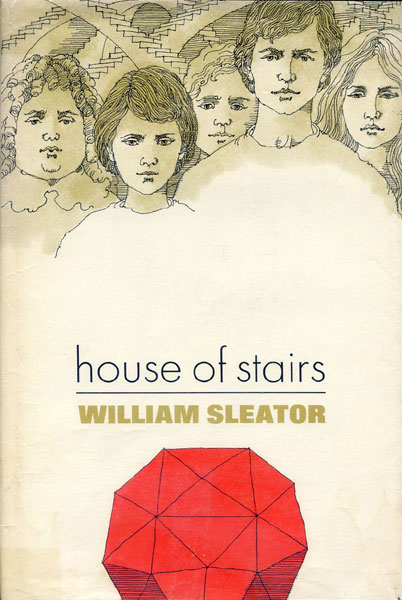
                • Cover of House of Stairs
                  House of Stairs

                  William Sleator · standalone novel · 1974

                  similar byscience fictionotherworld

                  Publisher's description: "Five fifteen-year-old orphans of widely varying personality characteristics are involuntarily placed in a house of endless stairs as subjects for a psychological experiment on conditioned human response."