More like Core
anchored on:science fictionour worldnear futuretensehard science fictionsurvival+1 more
but
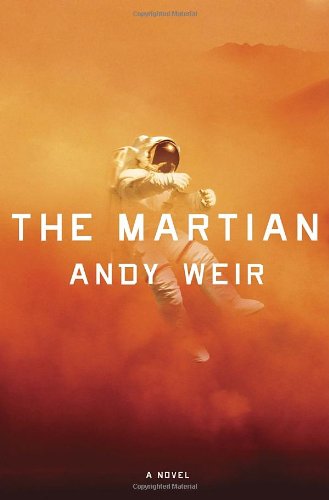
- The Martian
series2 books2012
similar bysurvivaltensenear futurescience fictionhard science fictionour world
Andy Weir's novel The Martian, first self-published in 2011 before a commercial re-release, follows astronaut Mark Watney after he is stranded alone on Mars when his crew presumes him dead and departs. Using scientific improvisation and dark humor, Watney works to keep himself alive long enough for a rescue to reach him. It is a single, self-contained survival story.
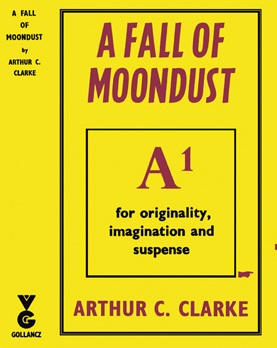
- A Fall of Moondust
Arthur C. Clarkestandalone novel1961
similar bytensesurvivalnear futurescience fictionhard science fiction
From the back cover of the Harbrace paperback: "The action of A Fall of Moondust takes place almost a century from now when tours on the moon are a common occurrence. One of the high points of each tour is a cruise around the Sea of Thirst, a body of volcanic dust, in a specially designed vessel called the Selene On a perfectly routine voyage one day the Selene suddenly disappears. How do you locate a small tourist "cruiser" buried beneath fifty feet of dust? If you find it, how do you rescue the passengers and crew? If you are on board, how do you feel and what do you do while brave men and expert technicians join forces in a race against time? Sustained excitement, lively humor, and an engaging cast of characters make this one of Arthur C. Clarke's most intriguing novels."
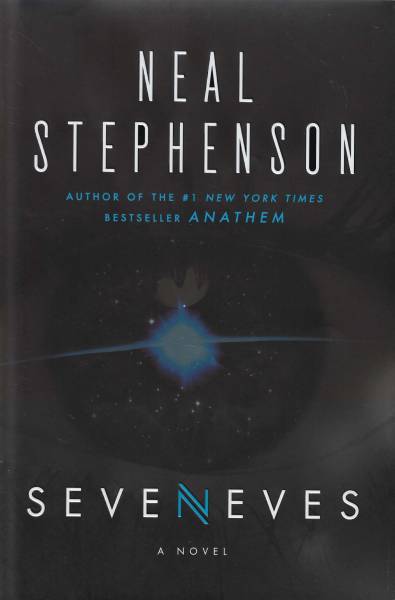
- Seveneves
Neal Stephensonstandalone novel2015
similar bysurvivaltensenear futurescience fictionecological collapsehard science fictionour world
Seveneves is a science fiction novel by Neal Stephenson published in 2015. The story tells of the desperate efforts to preserve Homo sapiens in the wake of apocalyptic events on Earth after the unexplained disintegration of the Moon and the remaking of human society as a space-based civilization after a severe genetic bottleneck.
- Make Room! Make Room!
Harry Harrisonstandalone novel1966
similar bysurvivaltensenear futurescience fictionecological collapseour world
Make Room! Make Room! is a 1966 science fiction novel written by Harry Harrison exploring the consequences of both unchecked population growth on society and the hoarding of resources by a wealthy minority. It was originally serialized in Impulse magazine.
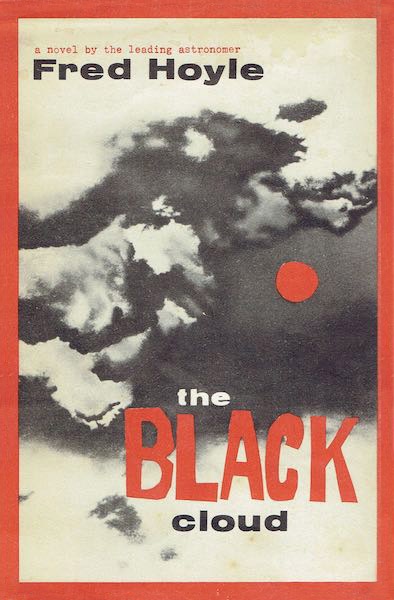
- The Black Cloud
Fred Hoylestandalone novel1957
similar bysurvivaltensescience fictionhard science fictionour world+1 more
The Black Cloud is a 1957 science fiction novel by British astrophysicist Fred Hoyle. It details the arrival of an enormous cloud of gas that enters the Solar System and appears about to destroy most of the life on Earth by blocking the Sun's radiation.
- Mother of Storms
John Barnesstandalone novel1994
similar bytensesurvivalnear futurescience fictionecological collapseour world
From the flaps of the Tor first edition: "It is 2028. A strike to destroy an illegal Arctic weapons cache has a catastrophic side effect. Massive amounts of energy are liberated from the polar ice, suddenly warming the Earth's climate. In the middle of the Pacific, a gigantic hurricane thousands of miles across is forming, larger than any in human history. A storm with winds of supersonic speed. A storm that changes direction at whim. A storm that refuses to die. A storm so vast it spawns dozens more in its wake... Blinded by intrigue, expedience, and greed, the world's politicians and power brokers have ignored the killer storms threat until it is too late. Already the death toll is in the tens of millions, as it savages the Pacific coast, while its devil's brood of smaller storms are wreaking havoc across the face of the planet. While the survivors scramble for advantage, a handful of courageous men and women undertake a daring, desperate plan to save humanity from total destruction - a plan so visionary it may alter forever the future of the human race."
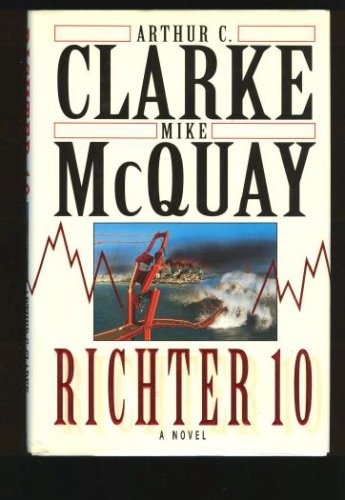
- Richter 10
Arthur C. Clarke & Mike McQuaystandalone novel1996
similar bysurvivaltensenear futurescience fictionhard science fictionour world+1 more
Richter 10 is a 1996 science fiction novel by Arthur C. Clarke and Mike McQuay. The protagonist, Lewis Crane, develops a hatred of earthquakes after his parents are killed and his home destroyed by one when he is seven years old. He devises a way of predicting earthquakes months or years in advance, and eventually banishing them forever by stopping all tectonic activity. The book's title is a reference to the Richter scale, on which 10 was considered to be the most power an earthquake was likely to ever have.
- Rogue Moon
Algis Budrysstandalone novel1960
similar bytensesurvivalnear futurescience fictionhard science fiction
A project to transport humans by matter transmission becomes the means to send explorers to the Moon when the US discovers an alien artifact on the dark side, but anyone who enters dies, so a hardened adventurer is given the job.
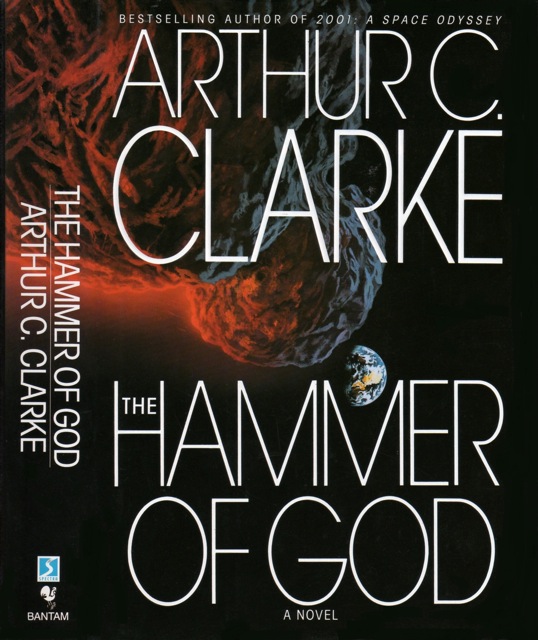
- The Hammer of God
Arthur C. Clarkestandalone novel1993
similar bytensesurvivalnear futurescience fictionhard science fiction+1 more
The Hammer of God is a science fiction novel by Arthur C. Clarke originally published in 1993. Set in the year 2109, it deals with the discovery of an asteroid to be on course to collide with Earth and depicts the mission for deflecting the asteroid by using fusion thermal rockets.
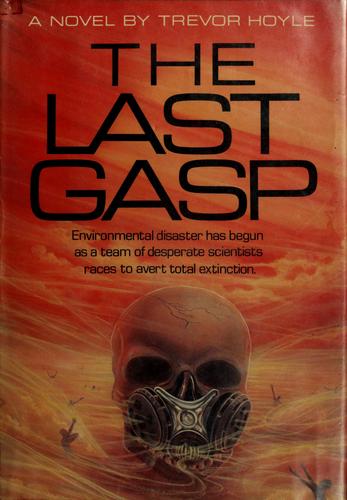
- The Last Gasp
Trevor Hoylestandalone novel1983
similar bytensesurvivalnear futurescience fictionecological collapseour world
From the flaps of the Crown first edition: "When British marine biologist Gavin Chase stepped out into the windswept wastes at the Halley Bay antarctic research station one morning, the last thing he expected to see was a sled team coming out of nowhere carrying a half-mad, half-frozen Russian scientist babbling an incomprehensible warning. But that warning would threaten the future of the human race and force Chase to make some of the hardest decisions of his life. Months later, at a Geneva environmental conference, Chase meets Cheryl Detrick, the daughter of Theo Detrick, the grand old man of diatom research. Chase, the Detricks, and Soviet scientist Boris Stanovnik theorize that the oxygen-producing microscopic plants of the world's oceans are dying and the level of atmospheric pollutants has finally exceeded the ability of the planet's ecology to recycle them. There is also good reason to believe that the superpowers are planning to wage a new type of environmental warfare. Sooner or later there will be nothing left to breathe. So begins a race against the future. Chase and Cheryl, now lovers, struggle to avert ecological catastrophe as agents of the military-industrial complex hunt them down... and as a growing belt of unbreathable gases spreads outward from the equator, uprooting millions. Their enemies are Lloyd Madden, an insane military mastermind planning to seed the earth with poison and then repopulate it with a race of mutants, and Joseph Earl Gelstrom, a wealthy chemical manufacturer who has Cheryl's father killed to hide his involvement. But Gelstrom himself falls victim to pollution sickness, and he repents. To raise money to finance a research team, Chase must make an unholy alliance with the dying Gelstrom, but this is too much for Cheryl, who leaves him. As more and more of the world becomes uninhabitable, as industries and governments collapse and chaos reigns, as the oceans fill up with dioxin, as the climate changes and mutant life-forms encroach upon the last refuges of humankind, Chase leads a last desperate mission to find and rescue Cheryl and to lead his team of scientists to safety."
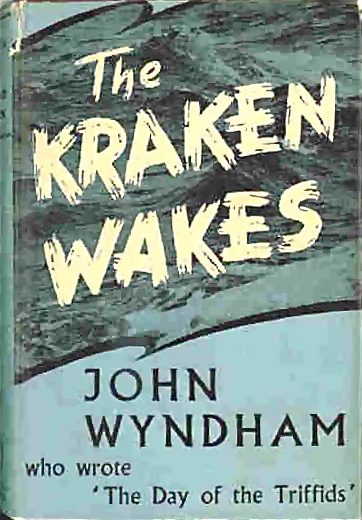
- The Kraken Wakes
John Wyndhamstandalone novel1953
similar bytensesurvivalscience fictionour world+1 more
" Behind a spectacular meteor shower actually hides the beginning of an invasion by a mysterious and powerful alien race. Earth's life is disrupted by the attacks of extraterrestrials whose war machines, emerging from the depths of the oceans, seem indestructible. The coalitioned forces of the whole world are worthless, powerless in the face of the indecipherable and deadly plans of a superior intelligence, capable of bringing the entire planet to the brink of catastrophe" Goodreads May 20, 2022
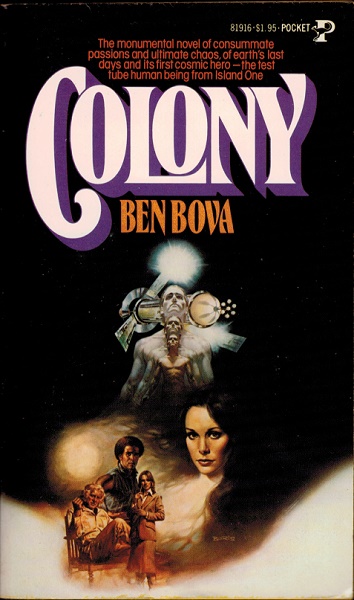
- Colony
Ben Bovastandalone novel1978
similar bysurvivaltensenear futurescience fiction+2 more
Colony continues the story Ben Bova began in Millennium, following astronaut-turned-administrator Chet Kinsman years later as the head of an orbiting space habitat that has become Earth's only real refuge from a planet buckling under overpopulation, food shortages and unrest. Getting a place in the habitat is a matter of life and death for millions who will never be chosen, and as Earth's governments grow more desperate to control or dismantle the colony outright, Kinsman has to decide how far he'll go to protect the world he's built off-world. Bova later folded both novels together into the omnibus The Kinsman Saga. Part of Ben Bova's Chet Kinsman series.
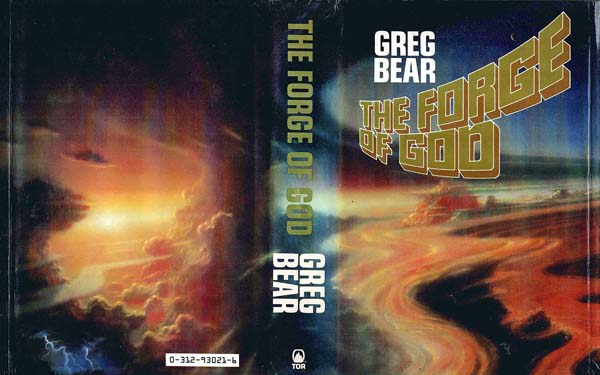
- Forge of God
series2 books1987
completed
similar bysurvivaltensescience fiction+3 more
The Forge of God (1987) is Greg Bear's science fiction novel about Earth's discovery that it is the target of an incomprehensible, overwhelming alien attack, following scientists and ordinary people as they try to understand what is destroying the planet. Its 1992 sequel, Anvil of Stars, follows a group of young survivors sent on a mission of interstellar retaliation, continuing directly from the first book's ending.
- The Andromeda Strain
series2 books1969
similar bytensesurvivalscience fiction+2 more
Michael Crichton's 1969 novel The Andromeda Strain follows a team of scientists racing to contain a lethal extraterrestrial microorganism that crash-lands in Arizona, told in the clinical, document-driven style that helped establish the techno-thriller genre. Daniel H. Wilson's authorized 2019 sequel The Andromeda Evolution revisits the same threat five decades later. Together the two books form a two-part outbreak story separated by a fifty-year gap in publication.
- The Hopkins Manuscript
R. C. Sherriffstandalone novel1939
similar bysurvivaltensenear futurescience fictionecological collapseour world
The Hopkins Manuscript is a dystopian science fiction novel by R. C. Sherriff, first published in 1939 by Victor Gollancz. In 1958 it was reissued in a revised edition as a Pan paperback under the title The Cataclysm. The novel was later republished under its original title by The Macmillan Company in 1963 and by Persephone Books in 2002.
- Z for Zachariah
Robert C. O'Brienstandalone novel1975
similar bysurvivaltensenear futurescience fictionour world
Sixteen-year-old Ann Burden, on an Amish family farm in an isolated valley, believes she is the only survivor of nuclear war and nerve gas. One day a man arrives in a "safe-suit" that he and others have recently developed.
- Mara / Raging Earth
series4 books2002
similar bysurvivaltensenear futurescience fictionecological collapseour world
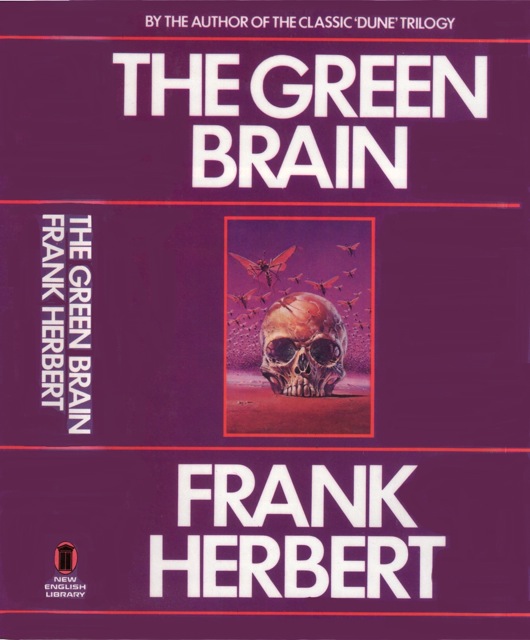
- The Green Brain
Frank Herbertstandalone novel1966
similar bysurvivaltensenear futurescience fictionecological collapse
WorldCat: In an overpopulated world seeking living room in the jungles, the International Ecological Organization was systematically exterminating the voracious insects which made these areas uninhabitable. Using deadly foamal bombs and newly developed vibration weapons, men like Joao Martinho and his co-workers fought to clear the green hell of the Mato Grosso. But somehow those areas which had been completely cleared were becoming reinfested, despite the impenetrable vibration barriers. And tales came out of the jungles ... of insects mutated to incredible sizes ... of creatures who seemed to be men, but whose eyes gleamed with the chitinous sheen of insects. ... A fascinating examination of the fragile balance between consciousness, man and insect from one of the best-loved science fiction creators of all time.
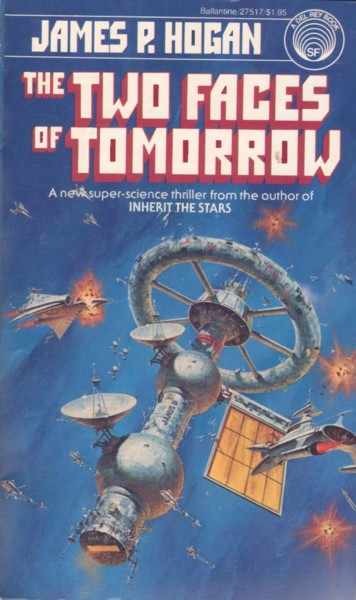
- The Two Faces of Tomorrow
James P. Hoganstandalone novel1979
similar bytensesurvivalnear futurescience fictionhard science fiction
From the back cover: SURVIVAL TEST Civilization had grown so complex that only a world-wide computer network could control everything. But the computer was only logical -- it lacked common sense. And its all-too-logical decisions were beginning to cause too many near fatal accidents. The solution was on the drawing boards -- a universal self-aware and self-programming computer, equipped with judgment. But... could it be controlled? Or would it attempt to take over, disregarding its creators? If so, could it be turned off? Raymond Dyer and his team of computer specialists knew they had to find answers to these questions, but the project was to dangerous to test on Earth. So they installed the super computer on an orbiting satellite and programmed it to survive at all costs. Then they sent a group of men to attack the computer... to goad it into trying to kill them. They they would turn it off. Obviously if things went wrong, they might lose a few men -- but the satellite and the computer could always be destroyed. Obviously... But the computer didn't quite see it that way!
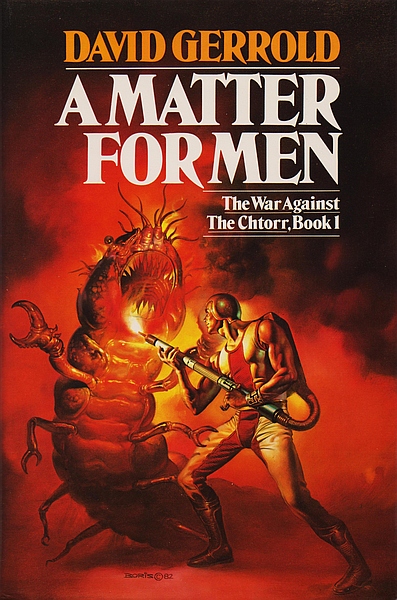
- War Against the Chtorr
series7 books1983
similar bysurvivaltensenear futurescience fictionecological collapse+1 more
The War Against the Chtorr is a series of science fiction novels by American writer David Gerrold. The Chtorr series was originally planned as a trilogy, but as the story became more intricate, Gerrold realized that three books would not be enough for him to tell the entire story. For a time, he was uncertain how many books there would be in the end but plans on seven. As of 2022, four books have been completed. As of 2017, a fifth and sixth were in the works, 24 years after the publication of the fourth book.
- Adventures of Viktor & Julia
series2 books1999
similar bysurvivaltensenear futurescience fictionhard science fiction
- The Fireman
Joe Hillstandalone novel2016
similar bysurvivaltensenear futurescience fictionour world
The Fireman is a novel set in a post-apocalyptic time by American author Joe Hill. The novel, Hill's fourth, tells the tale of a deadly spore that has infected most of the world's population. Hill first spoke of the novel in 2013 in promotional interviews for his then-new novel NOS4A2. The novel was released on May 17, 2016.
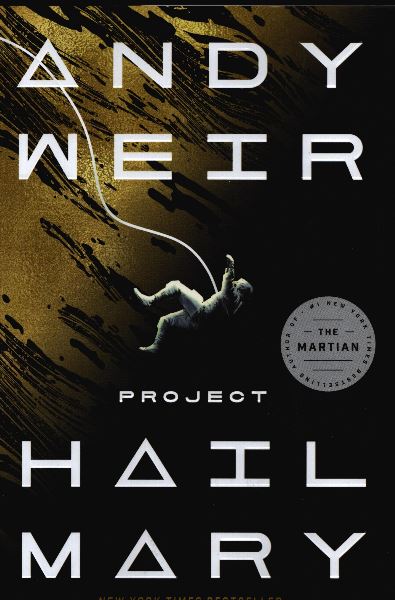
- Project Hail Mary
Andy Weirstandalone novel2021
similar bysurvivalnear futurescience fictionhard science fictionour world+1 more
Project Hail Mary is a 2021 hard science fiction novel by American writer Andy Weir. It centers on science teacher and former biologist Ryland Grace, who wakes up aboard a spacecraft, afflicted with amnesia.
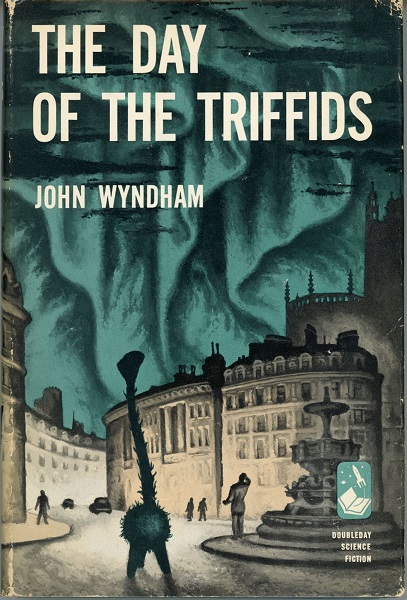
- The Triffids
series3 books1951
similar bysurvivalscience fictionour world+2 more
John Wyndham's The Day of the Triffids (1951) opens with a meteor-shower-like event that leaves most of Britain's population blind, throwing civilization into collapse just as triffids, an aggressive and mobile species of poisonous plant, become free to hunt the helpless survivors. Simon Clark's authorized sequel The Night of the Triffids (2001) picks up a generation later, narrated by the original protagonist's son as he confronts a new triffid-dominated world, and John Whitbourn's The Age of the Triffids extends the shared setting further still. Together the three novels form a loose post-apocalyptic trilogy built on Wyndham's original premise rather than a tightly plotted single story.