More like Cosmicomics
anchored on:science fictionspacewhimsicalshort story cycleliterary & generalspace exploration+3 more
but
- Qfwfq
series2 books1965
completed
similar byscience fictionspacewhimsicalidentityliterary & generalshort story cycle+3 more
- The Ghosts of Heaven
Marcus Sedgwickstandalone novel2014
similar byidentityspacescience fictionliterary & generalreflectiveshort story cycle+1 more
Four linked stories of discovery and survival begin with a Paleolithic-era girl who makes the first written signs, continue with Anna, who people call a witch, then a mad twentieth-century poet who watches the ocean knowing the horrors it hides, and concluding with an astronaut on the first spaceship from Earth sent to colonize another world.
- Imperial Earth
Arthur C. Clarkestandalone novel1975
similar byspace explorationscience fictionspacereflective
Imperial Earth is a science fiction novel by British writer Sir Arthur C. Clarke, published in 1975 by Gollancz Books. The plot follows the protagonist, Duncan Makenzie, on a trip to Earth from his home on Titan, in large part as a diplomatic visit to the U.S. for its quincentennial in 2276, but also to have a clone of himself produced. The book was published in time for the U.S. bicentennial in 1976.
- Grimus
Salman Rushdiestandalone novel1975
similar byidentityliterary & generalreflective+1 more
After drinking a mysterious fluid that grants him immortality, the young Axona man Flapping Eagle sets out on a centuries-long search for his vanished sister, drifting through identities and eras as the decades pass without aging him. The trail eventually leads him to a hidden dimension reachable through the Mediterranean, and to Calf Island, a refuge for immortals who have grown weary of endless life but cannot bring themselves to give it up, ruled by a strange and rigid order all its own. Salman Rushdie's first novel, an early, genre-inflected departure from the realism of his later, more famous work.
- Childhood's End
Arthur C. Clarkestandalone novel1953
similar byidentityscience fictionreflective+1 more
Childhood's End is a 1953 science fiction novel by the British author Arthur C. Clarke. The story follows a peaceful alien invasion of Earth by mysterious Overlords, whose arrival begins decades of apparent utopia under indirect alien rule, at the cost of human identity and culture.
- The Stars My Destination
Alfred Besterstandalone novel1956
similar byidentityspacescience fiction+1 more
When a passing spaceship refuses to rescue the lone survivor from the drifting wreck of another ship, he dedicates his life to discovering who made that decision and exacting his revenge, in the process altering human history and his own character.
- Piranesi
Susanna Clarkestandalone novel2020
similar byidentityliterary & generalreflectivefirst person
A man lives in a huge isolated labyrinthine building partially submerged in an ocean, together with another man and 13 skeletons, which is the only world he recalls.
- Strata
Terry Pratchettstandalone novel1981
similar byspace explorationspacescience fiction+1 more
Strata is a 1981 science fiction comedy novel by English writer Terry Pratchett. It is one of Pratchett's first novels and among the few science fiction novels he wrote, along with The Dark Side of the Sun, Only You Can Save Mankind, The Nome Trilogy and the co-authored The Long Earth.
- Memoirs of a Spacewoman
Naomi Mitchisonstandalone novel1962
similar byspace explorationspacescience fictionreflectivefirst person
Memoirs of a Spacewoman is a science fiction novel by Scottish novelist and poet Naomi Mitchison published in 1962 by Victor Gollancz Ltd.
- Star Smashers of the Galaxy Rangers
Harry Harrisonstandalone novel1973
similar byspace explorationspacescience fictionwhimsical
Star Smashers of the Galaxy Rangers is a 1973 comic science fiction novel by American writer Harry Harrison. It is a parody of the space opera genre and in particular, the Lensman and Skylark series of E. E. "Doc" Smith. The main characters are homages to Tom Swift Jr. and his buddy, Bud Barclay. It also includes a homage to Larry Niven's Ringworld (1970).
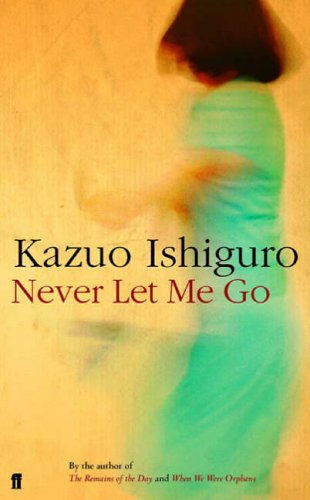
- Never Let Me Go
Kazuo Ishigurostandalone novel2005
similar byidentityscience fictionliterary & generalreflectivefirst person
Never Let Me Go is a 2005 science fiction novel by the British author Kazuo Ishiguro. It was shortlisted for the 2005 Man Booker Prize, for the 2006 Arthur C. Clarke Award and the 2005 National Book Critics Circle Award. Time magazine named it the best novel of 2005. It included the novel in its '100 Best English-language novels published since 1923—the beginning of TIME'. It also received an ALA Alex Award in 2006. A film adaptation directed by Mark Romanek was released in 2010.
- Harm's Way
Colin Greenlandstandalone novel1993
similar byspace explorationidentityspacescience fiction
Sophie Farthing, an orphan who grew up on a space station, emerges from her repressed upbringing to embark on a perilous journey from Earth to the Moon and across Mars searching for the origin of her birth.
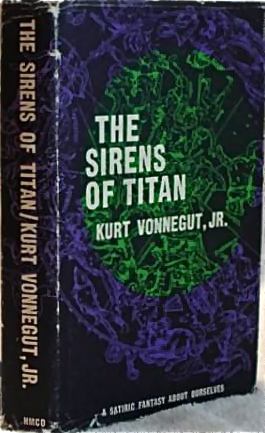
- The Sirens of Titan
Kurt Vonnegut & Jr.standalone novel1959
similar byspacescience fiction+2 more
The Sirens of Titan is a comic science fiction novel by Kurt Vonnegut Jr., first published in 1959. His second novel, it involves issues of free will, omniscience, and the overall purpose of human history, with much of the story revolving around a Martian invasion of Earth.
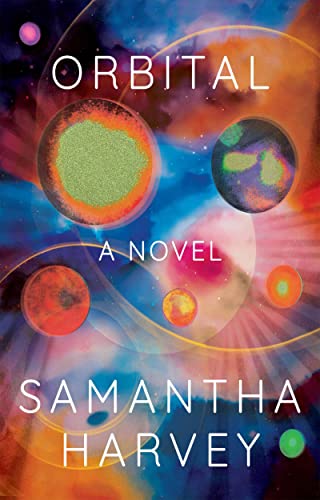
- Orbital
Samantha Harveystandalone novel2023
similar byspace explorationspacescience fictionliterary & generalreflective
Orbital is a 2023 novel by English novelist Samantha Harvey that incorporates elements of science fiction, literary fiction, and philosophical fiction, published by Jonathan Cape in the UK and by Grove Atlantic in the US. It follows six fictional astronauts over 24 hours on an orbiting space station.
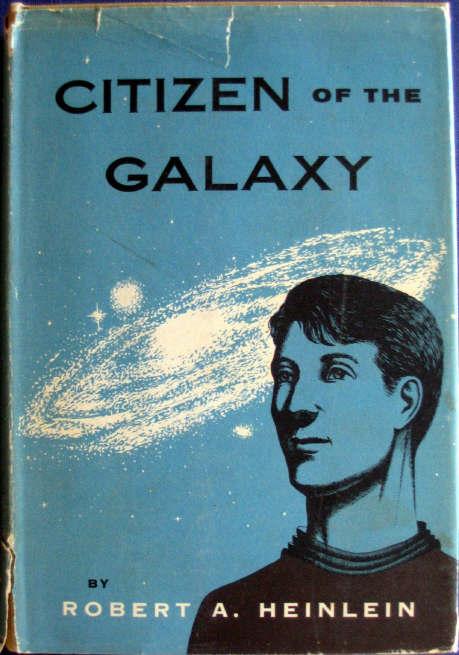
- Citizen of the Galaxy
Robert A. Heinleinstandalone novel1957
similar byidentityscience fictionspace+1 more
On a planet far distant from Earth, a lame beggar buys a young boy slave who has forgotten his origins. The beggar is more than he seems, and gives the boy an extensive education while employing him as an observer of activity in their city. Years later, the beggar is captured by the government, and the youth must escape the planet.
- A Different Light
Elizabeth A. Lynnstandalone novel1978
similar byspace explorationspacescience fictionreflective
Jimson had twenty years to live. Or one. Twenty if he stayed in space-normal, where his disease could be treated. One year if he followed the Starcaptain into the Hype - the "not-space" that trip was the only way to the stars, where jeweled voyagers sailed the light-centuries in color-shifting ships; humankind's outriders, star-burned lovers to a Universe heavy with stars... This is the story of that year. (from the back cover of the first edition)
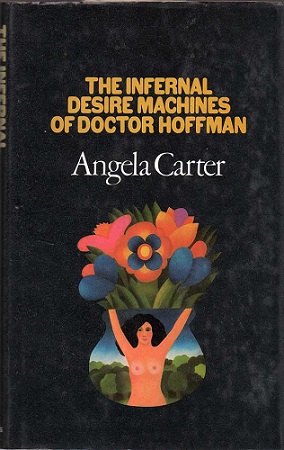
- The Infernal Desire Machines of Doctor Hoffman
Angela Carterstandalone novel1972
similar byidentityliterary & general+2 more
The Infernal Desire Machines of Doctor Hoffman, published in the United States as The War of Dreams, is a 1972 novel by Angela Carter. This picaresque novel is heavily influenced by surrealism, Romanticism, critical theory, and other branches of Continental philosophy. Its style is an amalgam of magical realism and postmodern pastiche. The novel has been called a theoretical fiction, as it clearly engages in some of the theoretical issues of its time, notably feminism, mass media and the counterculture.
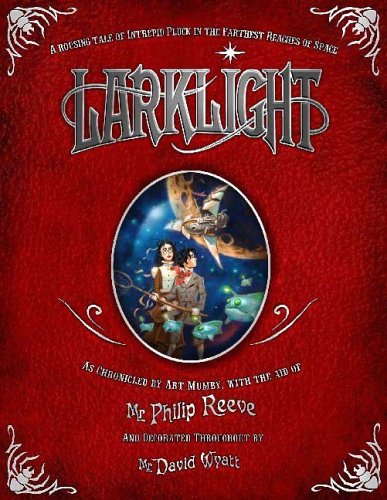
- Larklight Trilogy
series3 books2006
similar byspace explorationspacescience fictionwhimsical
The Larklight trilogy is a trilogy of middle grade novels by Philip Reeve, entitled Larklight, Starcross, and Mothstorm. These books are all illustrated by David Wyatt.
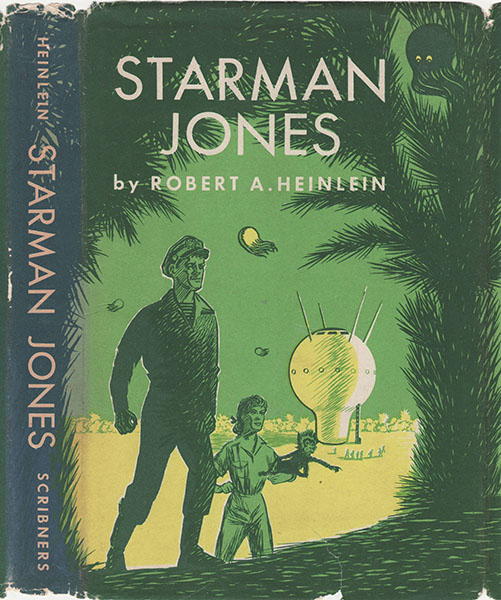
- Starman Jones
Robert A. Heinleinstandalone novel1953
similar byspace explorationspacescience fiction
Starman Jones, a 1953 science fiction novel by Robert A. Heinlein, features a farm boy who wants to go to the stars. Charles Scribner's Sons published the book as part of the Heinlein juveniles series.
- Stranger in a Strange Land
Robert A. Heinleinstandalone novel1961
similar byidentityscience fictionreflective
Stranger in a Strange Land is a 1961 science fiction novel by the American author Robert A. Heinlein. It tells the story of Valentine Michael Smith, a human who comes to Earth in early adulthood after being born on the planet Mars and raised by Martians, and explores his interaction with and eventual transformation of Terran culture.
- Astonishing the Gods
Ben Okristandalone novel1995
similar byidentityliterary & generalreflective+1 more
Astonishing the Gods is a novel by Nigerian writer Ben Okri.
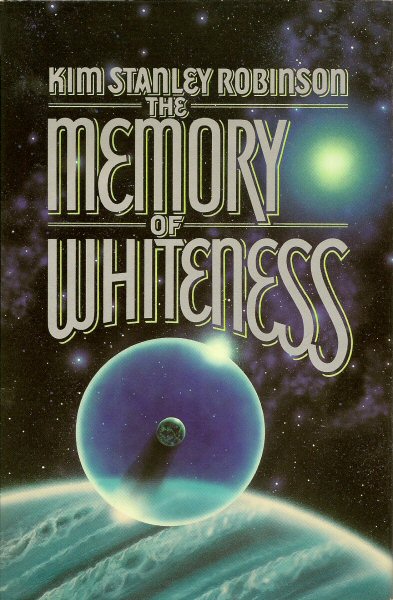
- The Memory of Whiteness
Kim Stanley Robinsonstandalone novel1985
similar byspace explorationspacescience fictionreflective
The Memory of Whiteness is a science fiction novel by Kim Stanley Robinson, published in September 1985.
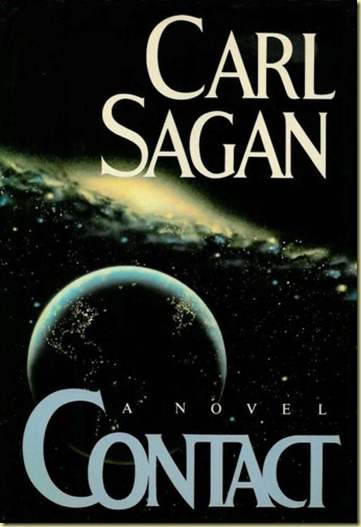
- Contact
Carl Saganstandalone novel1985
similar byspace explorationscience fictionreflective+1 more
From the front flap of the Simon and Schuster first edition: For centuries humanity has dreamed of life and intelligence beyond the Earth; for decades scientists have searched for it in every corner of the sky; for years Project Argus, a vast, sophisticated complex of radio telescopes, has listened for a signal indicating the existence, somewhere in the universe, of extraterrestrial intelligence. Then, one afternoon, the course of human history is changed, abruptly and forever. The Message, awaited for so long, its very possibility doubted by so many, arrives. Contact has been made. Life, intelligence, someone, something beyond Earth, 26 light-years away, in the vicinity of the star Vega, is calling, beaming across space a wholly unexpected message to say that we are not - have never been - alone. In Contact, Carl Sagan, whose Cosmos enthralled millions of readers and television viewers, has brilliantly employed the freedom of fiction to imagine the greatest adventure of all - humanity's first encounter with other intelligent beings. But the novel is not only about contact between humans and extraterrestrials; it is also about contact, down here on Earth, with each other and ourselves. At its center is a brilliant scientist, Eleanor Arroway, director of Project Argos, who is the first to realize that chapter one of human history is over. It is she who is instrumental in decoding the Message - and in persuading world leaders not to treat it as a threat - she who finds her own life changed by the immense challenge of responding to the Message; she who finally journeys out to experience, in circumstances at once profoundly religious and scientific, the most fateful encounter in human history.
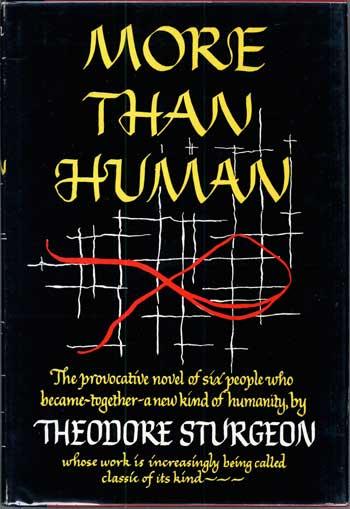
- More Than Human
Theodore Sturgeonstandalone novel1953
similar byidentityscience fictionreflectiveshort story cycle
More Than Human is a 1953 science fiction fix-up novel by American writer Theodore Sturgeon. It is a revision and expansion of his 1952 novella Baby Is Three, which is bracketed by two additional parts written for the novel, "The Fabulous Idiot" and "Morality". It won the 1954 International Fantasy Award, which was also given to works in science fiction. It was additionally nominated in 2004 for a "Retro Hugo" award for the year 1954. Science fiction critic and editor David Pringle included it in his book Science Fiction: The 100 Best Novels.