Loreful
HomeDiscover
Search series, authors…⌘K
Loreful

Reading orders for SF/F series and shared universes — with your place kept in every one.

Explore

UniversesSeriesWorksAuthorsAtlas

Help

FAQAboutSite map

Account & legal

Sign inCreate accountPrivacyTerms

Data

Built on ISFDB, Wikipedia, Wikidata and Open Library. Curated reading orders carry their reasoning on the page; the rest follow publication order. Data sources & licenses

© Loreful · data: ISFDB · CC BY

More like Crashing

but

Mood

The mood the book leaves you in.

  • The reading experience is propelled by journeys, exploration, and physical risk; excitement and forward momentum dominate over dread or introspection.
  • Joy and loss are deliberately mixed; the resolution grants characters something real while taking something else away, leaving warmth and sorrow together.
  • The book demands work from the reader — dense prose, difficult structure, unfamiliar ideas, or morally uncomfortable material — as part of its intended effect.
  • Grim events, cruelty, or despair dominate the atmosphere, and the book does not soften them with comfort or comic relief.
  • The atmosphere is quietly unsettling — wrongness, unease, and the uncanny pervade the book without necessarily escalating into overt horror.
  • The book is built to move the reader; character feeling is foregrounded and major scenes aim at a strong emotional response.
  • Humor is a primary aim and the prose plays for laughs — comic situations, wit, or dialogue produce sustained comedy, not occasional levity.
  • The book insists that things can improve; effort and decency are shown to matter, and the arc bends toward better outcomes even through hardship.
  • The book teaches as it goes — real facts, history, science, or craft are conveyed in enough depth that learning is part of the reading experience.
  • The book is designed to uplift and motivate, presenting perseverance or achievement in a way that invites the reader to aspire or act.
  • The overall register is cheerful and easygoing; stakes are kept gentle and the book avoids dwelling on pain or dread.
  • Withheld information drives the experience; the book sustains enigmas and secrets the reader wants resolved, whatever its genre.
  • The book is contemplative and inward-looking, giving more weight to thought, memory, and meaning than to external events.
  • The book works as comfort reading — low tension, a soothing pace, and an atmosphere the reader can unwind in.
  • Grief, loss, or melancholy set the dominant register, and the book lets sorrow stand rather than resolving it into comfort.
  • Sustained suspense is the point; the book keeps the reader braced for what happens next through danger, pressure, or impending revelation.
  • Playful invention and charm define the register — fanciful conceits, light absurdity, and a narration that delights in its own oddity.

About

What the story runs on.

  • Stories in which extraterrestrial beings are central — as characters, cultures, or the object of the plot.
  • Stories structured as a quest — a journey undertaken to find, deliver, or destroy something of great import.
  • Stories in which staying alive against nature, catastrophe, or scarcity is the central problem.
  • Stories of lovers kept apart by law, family, faith, or station, where the obstacle to love is the plot.
  • Stories in which a friendship — its making, testing, or loss — is the emotional center.
  • Stories of growing up — a young protagonist crossing from childhood into adult knowledge and responsibility.
  • Stories about who a character truly is — self-discovery, doubled lives, and the search for a self.
  • Stories about mourning — living through the death of a loved one and what loss does to the survivors.
  • Stories in which a buried family truth — hidden parentage, crimes, or shames — surfaces and reorders the present.
  • Stories driven by maneuvering for power — factions, conspiracies, and statecraft conducted in shadow.
  • Stories in which war itself is the subject — combat, occupation, and what warfare does to soldiers and civilians.
  • Stories organized around investigating a killing — the case, the clues, and the pursuit of the killer, in any genre's clothing.

Shelf

Where it sits in the library.

    • Fiction built on magic or other supernatural elements that have no scientific explanation.
    • Secondary-world fantasy at large scale, where the fate of nations or the world turns on the protagonists' struggle.
    • Fantasy set in a recognizably modern city or contemporary world where the supernatural intrudes on everyday life.
    • Fantasy that blends in horror's atmosphere and imagery, keeping a fantastical frame around grim or frightening material.
    • Action-driven fantasy following warriors or rogues with personal stakes against sorcerous threats, rather than world-spanning conflicts.
    • Fantasy set in a real historical period or a close analogue of one, with magic woven into the era.
    • Fantasy in which protagonists cross from the ordinary world into another world through a portal or similar passage.
    • Fiction that retells or reworks a traditional fairy tale in a new form or setting.
    • Fantasy drawing directly on myths, legends, and folklore, retelling them or building on their figures and logic.
    • Fantasy of ghosts, vampires, shapeshifters, psychics, and similar phenomena, usually set in an otherwise ordinary world.
    • Fiction mixing science-fictional trappings with overtly magical or impossible elements in one setting.
    • Low-stakes fantasy emphasizing comfort, community, and everyday pleasures over conflict and peril.
    • Speculative fiction of pervasive moral ambiguity, violence, and cynicism that rejects heroic conventions — fantasy and SF alike.
      • Fiction that extrapolates from science and technology — future societies, space travel, or speculative inventions — within at least nominally natural laws.
      • Science fiction of interstellar scope — starships, galactic polities, and adventure across star systems.
      • Science fiction committed to scientific rigor, where technical plausibility constrains the story.
      • Science fiction centered on armed forces and warfare, told largely from a military point of view.
      • Science fiction of networked, corporate-dominated near futures, pairing high technology with social decay.
      • Science fiction styled on nineteenth-century steam-powered technology, often in a Victorian or pseudo-Victorian setting.
      • Fiction depicting an oppressive or catastrophic society, presented as a warning.
      • Fiction set after civilization's collapse, following survivors in the ruins of the old world.
      • Fiction in which characters move between past and future, and the mechanics or consequences of that travel drive the plot.
      • Fiction exploring a world where a historical event went differently and history diverged from ours.
      • Science fiction about humanity's first encounter and communication with an alien intelligence.
      • Science fiction in which extraterrestrial forces attack or occupy Earth and humanity resists.
      • Fiction whose primary aim is to frighten or unsettle the reader through dread, menace, or the monstrous.
      • Horror of vast, indifferent, incomprehensible entities before which humanity is insignificant, in the Lovecraft tradition.
      • Horror of decaying houses, buried family secrets, and oppressive atmosphere in the Gothic literary tradition.
      • Horror centered on hauntings and the returning dead.
      • Horror located in the mind — paranoia, obsession, and unreliable perception rather than external monsters.
      • Horror built around the reanimated dead and survival amid their outbreaks.
      • Horror defined by explicit, transgressive gore that refuses to cut away from violence.
      • Speculative fiction of the strange and uncanny that resists both natural explanation and standard genre categories.
      • Fiction organized around solving a crime or puzzle, typically following an investigator toward the identification of a culprit.
      • A puzzle-first mystery that lays out clues so the culprit's identity can be deduced before the reveal.
      • Crime fiction of moral ambiguity, fatalism, and hard-edged style, set among the corrupt and the doomed.
      • A mystery following the realistic routines of police work — forensics, interviews, and case-building.
      • A gentle mystery with an amateur sleuth, a small community, and violence kept off the page.
      • A mystery set in a past era, where the investigation works within that period's methods and society.
      • Fast-paced fiction driven by imminent danger, pursuit, or high-stakes conspiracy, built to sustain tension.
      • A thriller of espionage — agents, tradecraft, and intelligence services in conflict.
      • A thriller centered on lawyers and the courtroom, where litigation carries the suspense.
      • A thriller driven by detailed contemporary or near-future technology, often military or scientific.
      • A thriller whose tension comes from mental states and manipulation between characters rather than external action.
      • Fiction whose central plot is a romantic relationship and its development toward an emotionally satisfying resolution.
      • Romance in which one or both partners are supernatural beings, blending fantasy elements into the love story.
      • A fantasy-romance hybrid in which the romantic arc and the fantasy plot carry equal weight.
      • Romance set in a past era, with courtship shaped by the period's society and manners.
      • Romance set in the present day, without supernatural or historical elements.
      • Fiction set in a real past period, where the historical setting materially shapes characters and events.
        • General and literary fiction emphasizing prose style, character interiority, or formal ambition over genre plot conventions.
        • Fiction in a realistic world where magical events occur and are treated as ordinary, in the tradition of Latin American literature.
        • Fiction that ridicules people, institutions, or society in order to criticize them.
        • Fiction of dreamlike, irrational imagery and logic that breaks from realistic representation.
        • Fiction that plays with narrative convention through metafiction, fragmentation, and self-reference.
        • Fiction propelled by journeys, exploration, and physical peril, where action and survival carry the plot.
        • Adventure fiction of ships and seafaring — naval engagements, voyages, and life at sea.
        • Fiction of the American frontier West — gunmen, ranchers, and lawmen, typically in the late nineteenth century.
        • Fiction centered on soldiers, campaigns, and the experience of warfare, historical or imagined.
          • Fiction written primarily to amuse, using comedic situations, wit, or parody as its organizing principle.
            • Multi-generational fiction following a family or dynasty across decades, with inheritance and kinship as the through-line.
              • Fiction whose world runs on explicit game mechanics — levels, stats, and skills that characters can see and exploit.
                • Fiction about costumed or superpowered heroes and their conflicts with comparable villains.

                Practical

                How long a commitment, whether it stands alone, and whether it has finished.

                Tap a chip to ask for it · tap again to rule it out · once more to clear. Numbers show what would be left.

                • K
                  Kairos

                  series · 11 books · 1962

                  completed

                  similar by+3 more

                  The Time Quintet is a science fantasy series of five young adult novels written by American author Madeleine L'Engle and made up of A Wrinkle in Time (1962), A Wind in the Door (1973), A Swiftly Tilting Planet (1978), Many Waters (1986), and An Acceptable Time (1989).

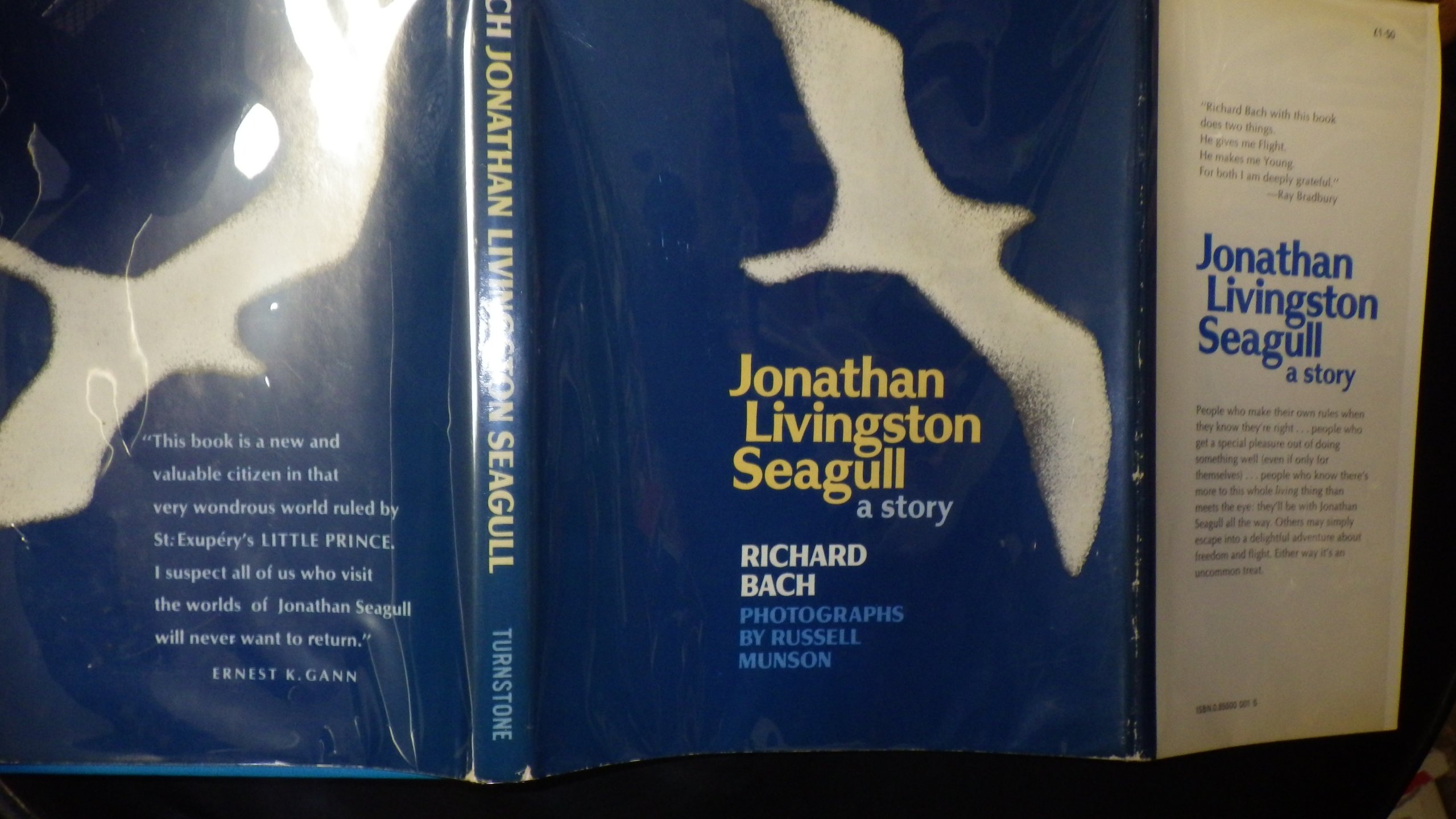
                • Cover of Jonathan Livingston Seagull
                  Jonathan Livingston Seagull

                  Richard Bach · standalone novel · 1970

                  similar bycoming of agereflectiveliterary & generalour worldcontemporary

                  Jonathan Livingston Seagull is an allegorical fable in novella form written by American author Richard Bach and illustrated with black-and-white photographs shot by Russell Munson. It is about a seagull who is trying to learn about flying, personal reflection, freedom, and self-realization. It was first published in book form in 1970 with little advertising or expectations; by the end of 1972, over a million copies were in print, the book having reached the number-one spot on bestseller lists mostly through word of mouth recommendations.

                • Cover of Holes
                  Holes

                  Louis Sachar · standalone novel · 1998

                  similar bycoming of agereflectiveliterary & generalour worldcontemporary

                  Holes is a 1998 middle grade novel written by Louis Sachar and first published by Farrar, Straus and Giroux. The book centers on Stanley Yelnats IV, a young boy who is sent to Camp Green Lake, a correctional boot camp in a desert in Texas, after being wrongfully convicted of theft. The plot explores the history of the area and how the actions of several characters in the past have affected Stanley's life in the present. These interconnecting stories touch on themes such as labor, boyhood and masculinity, friendship, meaning of names, illiteracy, elements of fairy tales, and racism.

                • Cover of Empire of the Sun
                  Empire of the Sun

                  series · 2 books · 1984

                  completed

                  similar bycoming of agereflective+2 more

                  J. G. Ballard's Empire of the Sun draws on his own childhood to follow Jim, a British boy separated from his parents in Japanese-occupied Shanghai during World War II and interned in a civilian camp for the rest of the war. Ballard revisited the same period and a version of the same character years later in The Kindness of Women, a more explicitly fictionalized continuation into Jim's adult life. Empire of the Sun is the more directly autobiographical and better-known of the two.

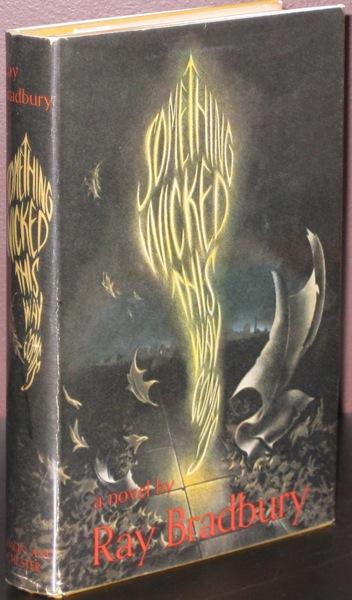
                • Cover of Green Town
                  Green Town

                  series · 31 books · 1946

                  completed

                  similar bycoming of agereflectiveliterary & general

                  Green Town gathers two of Ray Bradbury's loosely linked novels set in his fictionalized version of his childhood home of Waukegan, Illinois: the dark fantasy Something Wicked This Way Comes (1962), in which a sinister traveling carnival led by the mysterious Mr. Dark descends on a small town and preys on its residents' desires, and the later Farewell Summer (2006), which follows Douglas Spaulding through an autumn stand-off between the town's boys and its elders. Written more than four decades apart, the two novels share Bradbury's recurring setting and nostalgic, myth-making tone rather than a single continuous plot.

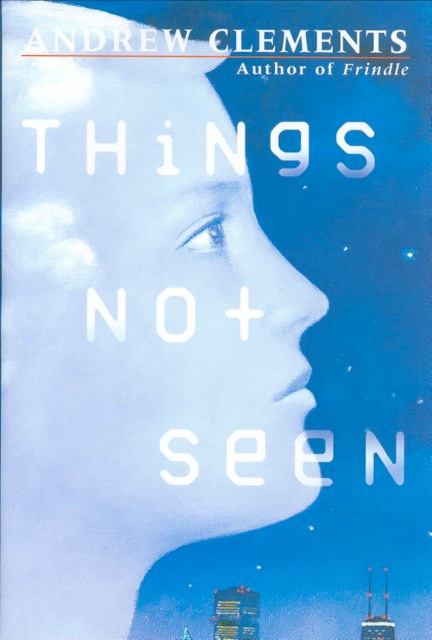
                • Cover of Things
                  Things

                  series · 3 books · 2002

                  completed

                  similar bycoming of ageliterary & generalcontemporary+2 more

                • Cover of Never Let Me Go
                  Never Let Me Go

                  Kazuo Ishiguro · standalone novel · 2005

                  similar bycoming of agereflectiveliterary & generalour world

                  Never Let Me Go is a 2005 science fiction novel by the British author Kazuo Ishiguro. It was shortlisted for the 2005 Man Booker Prize, for the 2006 Arthur C. Clarke Award and the 2005 National Book Critics Circle Award. Time magazine named it the best novel of 2005. It included the novel in its '100 Best English-language novels published since 1923—the beginning of TIME'. It also received an ALA Alex Award in 2006. A film adaptation directed by Mark Romanek was released in 2010.

                • Cover of Ishmael
                  Ishmael

                  series · 2 books · 1992

                  completed

                  similar byreflectiveliterary & generalour worldcontemporary+1 more

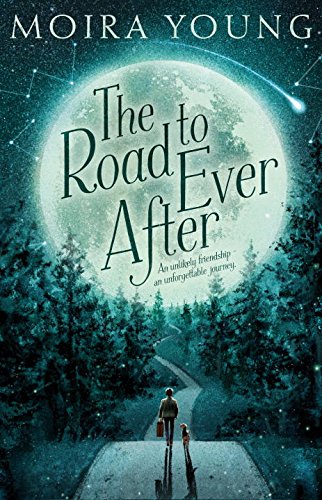
                • Cover of The Road to Ever After
                  The Road to Ever After

                  Moira Young · standalone novel · 2016

                  similar bycoming of agereflectiveliterary & generalour worldcontemporary

                  Ordered to leave his hometown, young Davy, an orphaned artist, escorts elderly Miss Flint to her childhood home, where she plans to die.

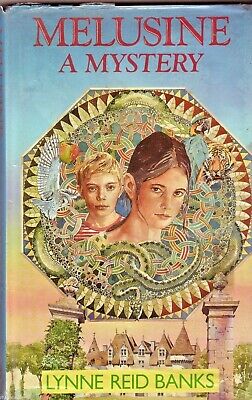
                • Cover of Melusine
                  Melusine

                  Lynne Reid Banks · standalone novel · 1988

                  similar bycoming of agereflectiveliterary & generalour worldcontemporary

                  A teenaged boy becomes embroiled in the mysterious life of a farm girl while on vacation in the south of France.

                • Cover of Chocky
                  Chocky

                  series · 2 books · 1968

                  similar bycontemporary+3 more

                  Chocky (1968) is John Wyndham's science fiction novel about an eleven-year-old boy, Matthew, whose parents grow alarmed by his conversations with an unseen presence that feeds him unsettling insights into mathematics and human progress, building toward the reveal of what, or who, Chocky really is. Mark Daniel's Chocky's Challenge (1986), published after Wyndham's death, is an authorized continuation that carries the story forward.

                • Cover of Up from Jericho Tel
                  Up from Jericho Tel

                  E. L. Konigsburg · standalone novel · 1986

                  similar bycoming of ageliterary & generalour worldcontemporary+1 more

                  Up from Jericho Tel is a children's novel written and illustrated by E. L. Konigsburg, published by Atheneum Books in 1986.

                • Cover of The Snake-Stone
                  The Snake-Stone

                  Berlie Doherty · standalone novel · 1995

                  similar bycoming of ageliterary & generalour worldcontemporary+1 more

                  "James is a championship diver, with a shot for the Olympics. But when he thinks about his birth mother, something in him sinks like a stone. His adoptive parents love him, and his father is a terrific diving coach--yet even they cannot tell him who he really is. So James breaks training and runs off to the farmland of his birth, with nothing but a mysterious stone shaped like a snake. Can he use it to unlock his past?"

                • Cover of The White Darkness
                  The White Darkness

                  Geraldine McCaughrean · standalone novel · 2005

                  similar byreflectiveliterary & generalour worldcontemporary+1 more

                  The White Darkness is a novel by Geraldine McCaughrean, published in 2005 by Oxford University Press. It won the 2008 Michael L. Printz Award from the American Library Association.

                • Cover of The Dreaming Jewels
                  The Dreaming Jewels

                  Theodore Sturgeon · standalone novel · 1950

                  similar byour worldcontemporary+2 more

                  The Dreaming Jewels (1950), also known as The Synthetic Man, is a science fiction novel by American writer Theodore Sturgeon. It was his first published novel.

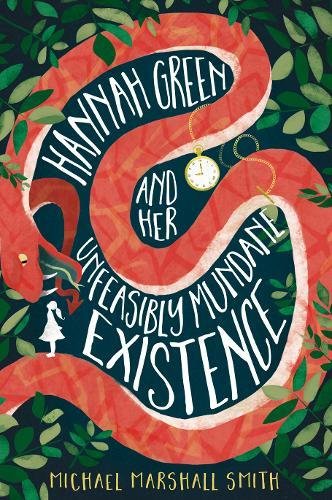
                • Cover of Hannah Green and Her Unfeasibly Mundane Existence
                  Hannah Green and Her Unfeasibly Mundane Existence

                  Michael Marshall Smith · standalone novel · 2017

                  similar byour worldcontemporary+2 more

                • Cover of The Retake
                  The Retake

                  Jen Calonita · standalone novel · 2021

                  similar byour worldcontemporary+1 more

                • Cover of Stranger in a Strange Land
                  Stranger in a Strange Land

                  Robert A. Heinlein · standalone novel · 1961

                  similar bycoming of agereflectiveour world

                  Stranger in a Strange Land is a 1961 science fiction novel by the American author Robert A. Heinlein. It tells the story of Valentine Michael Smith, a human who comes to Earth in early adulthood after being born on the planet Mars and raised by Martians, and explores his interaction with and eventual transformation of Terran culture.

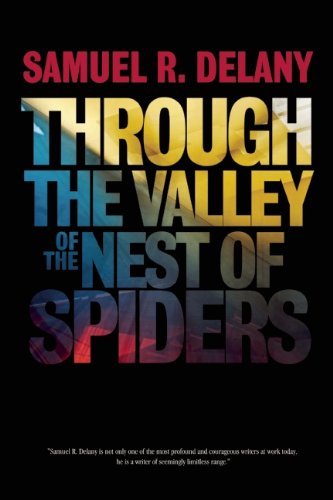
                • Cover of Through the Valley of the Nest of Spiders
                  Through the Valley of the Nest of Spiders

                  series · 1 book · 2012

                  similar bycoming of agereflectiveliterary & generalour worldcontemporary

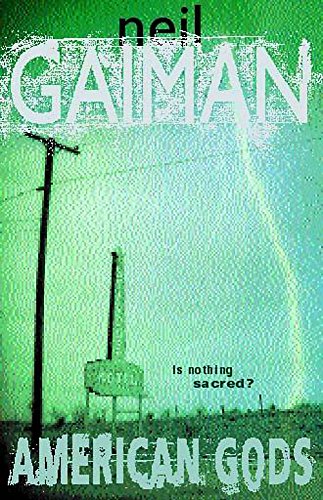
                • Cover of American Gods
                  American Gods

                  series · 10 books · 1999

                  similar byour worldcontemporary+1 more

                  Neil Gaiman's American Gods (2001) follows Shadow Moon, an ex-convict who takes a job as bodyguard to a mysterious drifter who is secretly the Norse god Odin, and is drawn into a brewing conflict between the old immigrant gods of myth and the new gods of media, technology, and modern American life. Gaiman's 2005 novel Anansi Boys is set in the same mythological world and shares the trickster god Mr. Nancy, but follows a different protagonist and story, making it a loose companion rather than a direct sequel.

                • Cover of The Elliott Family
                  The Elliott Family

                  series · 8 books · 1946

                  completed

                  similar byour world+1 more

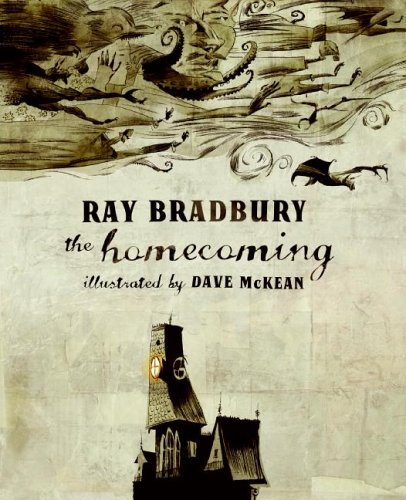
                  Ray Bradbury's From the Dust Returned gathers and expands short stories he wrote across five decades about the Elliotts, a large, ancient family of vampires, ghosts, and other gentle monsters gathered in a rambling Illinois house. Framed by new connecting chapters, it follows the family's mortal foundling, Timothy, as the household prepares for a once-a-century homecoming.

                • Cover of The Particular Sadness of Lemon Cake
                  The Particular Sadness of Lemon Cake

                  Aimee Bender · standalone novel · 2010

                  similar bycoming of agereflectiveliterary & generalcontemporary

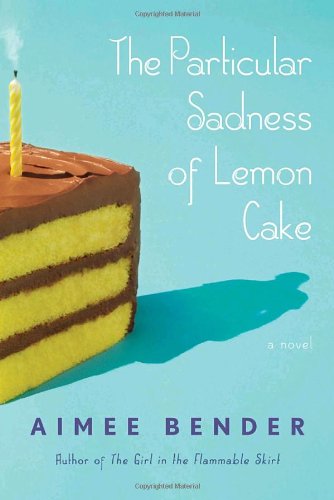
                  The story follows a girl with a talent, from childhood to young adulthood. Rose has the ability to taste emotions in the food she eats, which she discovers on her ninth birthday, tasting in her birthday cake the emotions of her mother who baked it.

                • Cover of Flip
                  Flip

                  David Lubar · standalone novel · 2003

                  similar bycoming of agereflectiveliterary & generalour worldcontemporary

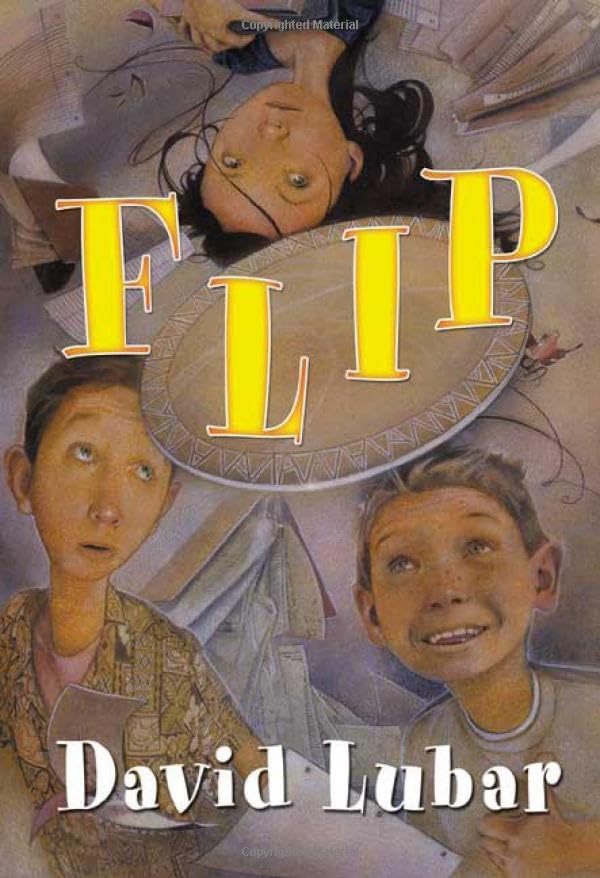
                  Eighth-graders Ryan and Taylor are twins, and that's where the similarities end, but they share at least one thing in common: nothing is turning out as they planned.

                • Cover of The Absolutely Perfect Horse
                  The Absolutely Perfect Horse

                  Ardath Mayhar & Marylois Dunn · standalone novel · 1983

                  similar byliterary & generalour worldcontemporary+2 more

                  The formerly noble, now downtrodden horse known as Dogmeat helps Annie and her family reassess their values.