More like Created
but
- Library of America P. K. Dick Collection
series9 books1962
completed
similar bynear futurescience fiction+5 more
- Blade Runner Universe
series6 books1968
similar bydarknear futurescience fictionidentity+2 more
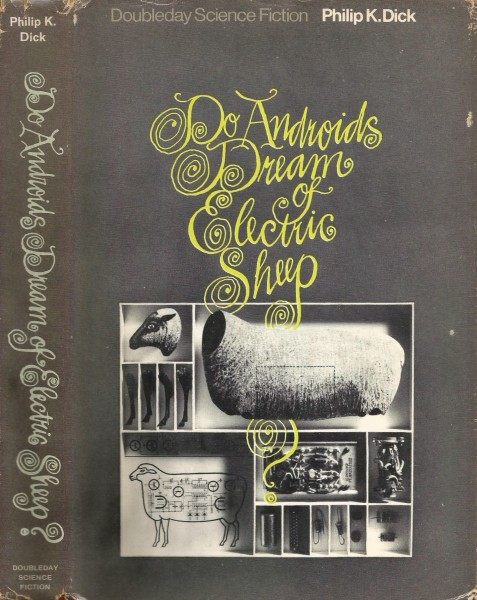
Philip K. Dick's 1968 novel Do Androids Dream of Electric Sheep? follows bounty hunter Rick Deckard as he tracks escaped androids through an irradiated, near-abandoned San Francisco, using the hunt to probe questions of empathy and what separates human from machine. The novel became the basis for Ridley Scott's 1982 film Blade Runner, and Marvel Comics later published an illustrated adaptation of that film. Together the two trace the story's path from prose original to screen and comic-page adaptation.
- Patternist
series6 books1976
completed
similar bydarkscience fictiongenetic engineering+4 more
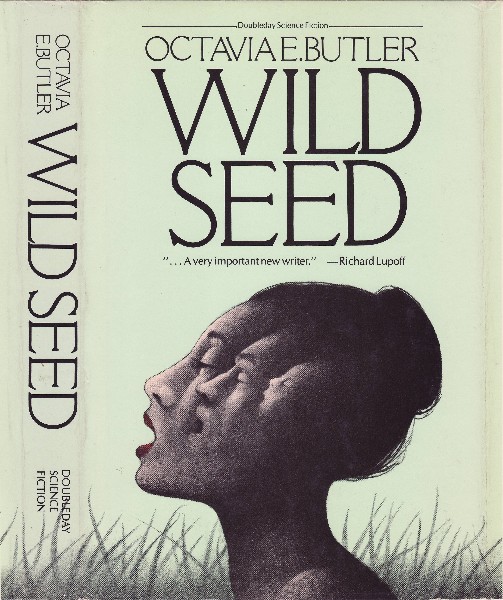
The Patternist series is a group of science fiction novels by Octavia E. Butler that detail a secret history continuing from the Ancient Egyptian period to the far future that involves telepathic mind control and an extraterrestrial plague. A profile of Butler in Black Women in America notes that the themes of the series include "racial and gender-based animosity, the ethical implications of biological engineering, the question of what it means to be human, ethical and unethical uses of power, and how the assumption of power changes people."
- Ship Breaker
series3 books2010
similar bydarknear futurescience fictionyoung adulttense+4 more
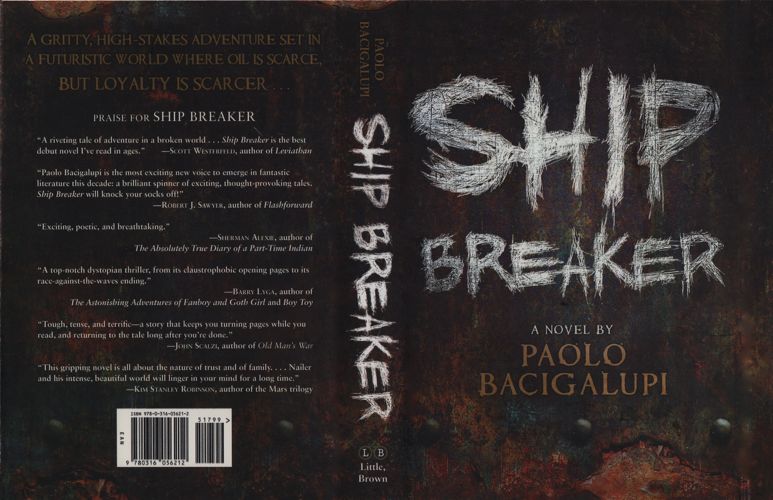
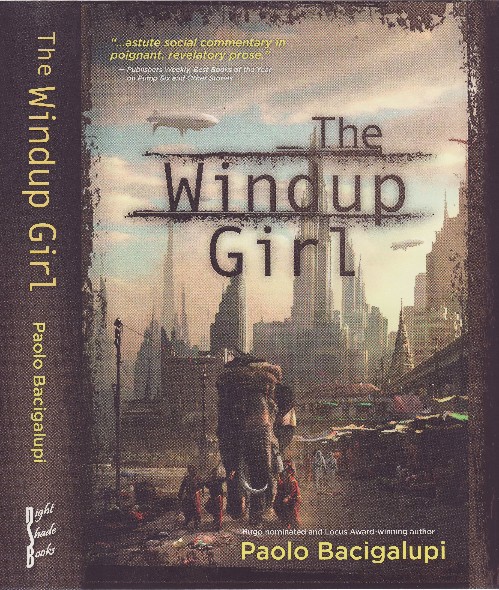
Nailer works a light-crew scavenging copper wire and scrap from beached oil tankers on a Gulf Coast reshaped by rising seas and vanished order, until a wrecked clipper ship washes ashore carrying a half-drowned girl from the wealthy world he'll never belong to. Paolo Bacigalupi's Ship Breaker follows Nailer as helping her pulls him out of his abusive father's orbit and into a much larger, more dangerous game involving her family's fortune. The sequels The Drowned Cities and Tool of War widen the same flooded, resource-scavenging future to new characters and coastlines.
- A Clockwork Orange
series4 books1962
completed
similar bydarkour worldnear futurescience fictiondystopia+1 more
Anthony Burgess's 1962 novel is narrated by Alex, a teenage gang leader in a near-future Britain gripped by a youth subculture of extreme violence, recounting his crimes in Nadsat, an invented slang blending English with Russian-derived words. After his crimes catch up with him, Alex is made the subject of a controversial state program meant to forcibly reform his behavior, and the novel uses his ordeal to question whether imposed goodness is worth the loss of free will. It is a standalone novel.
- Unwind Dystology
series5 books2007
similar bydarknear futurescience fictiondystopiagenetic engineeringyoung adulttense+2 more
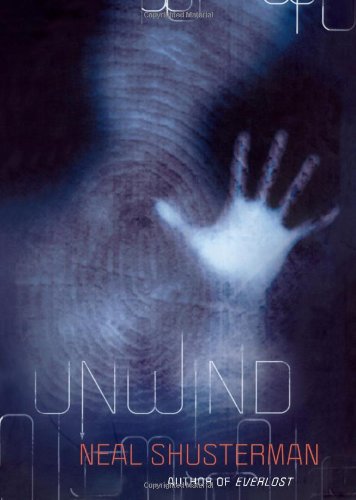
Neal Shusterman's Unwind Dystology opens in a United States reshaped by the resolution to a war over reproductive rights: parents can retroactively have a teenager "unwound," their body disassembled for transplant on the premise that nothing technically dies since every part lives on in someone else. The first novel follows three teens fleeing that fate, and the sequels widen the same dystopia's cast and consequences across a four-book arc plus companion material. It is grim speculative fiction built to ask hard bioethical questions rather than offer comfort.
- Dogs of War (Adrian Tchaikovsky)
series3 books2017
similar byour worldnear futurescience fiction+5 more
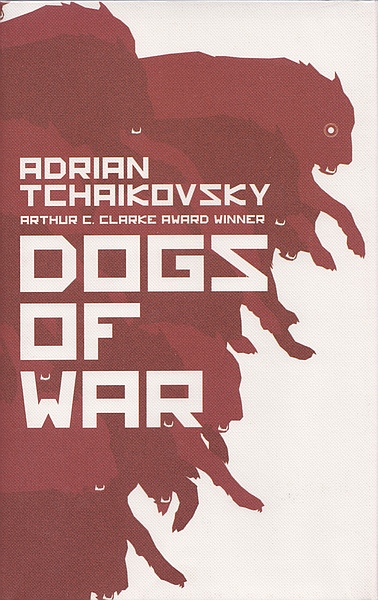
Adrian Tchaikovsky's Dogs of War follows Rex, a genetically engineered "Good Boy" - a hulking bioform supersoldier built for a private military contractor - as he begins to question the nature of his own obedience and personhood after his handler disappears. Dogs of War, Bear Head, and Bee Speaker widen from that first book's battlefield into questions of AI rights, corporate power, and non-human consciousness across a near-future Earth. The trilogy uses its engineered-animal soldiers to interrogate free will and loyalty rather than play them as straightforward action heroes.
- The World Jones Made
Philip K. Dickstandalone novel1956
similar bydarknear futurescience fictiondystopiapsychic powerstense+2 more
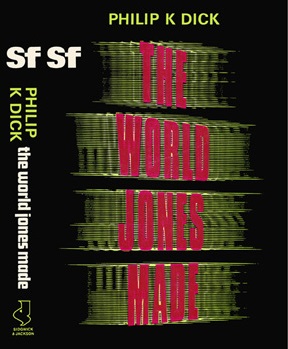
The World Jones Made is a 1956 science fiction novel by American writer Philip K. Dick, examining notions of precognition, humanity, and politics. It was first published by Ace Books as one half of Ace Double D-150, bound dos-à-dos with Agent of the Unknown by Margaret St. Clair.The story takes place after a nuclear war in which society is dominated by relativism, which rejects absolute truths and preaches tolerance as the highest principle. The mutant Floyd Jones, who can see into the future, plans to overthrow the system and colonise space. The story ends with the defeat of Jones, whose plans fail despite his ability to see the future due to the immutability of fate.
- Clone
Richard Cowperstandalone novel1972
similar byour worldnear futurescience fictiondystopiapsychic powersidentitytense+1 more
History's first clones: Alvin, Bruce, Colin, and Desmond - Spawned in a dangerous 21st century experiment, there were brought into a world where educated apes did manual labor and the government encouraged suicide as a method of population control. Their existence as clones was unknown to anyone - even to each other - known only to their creator. But then came the strange, haunting visions, the peculiar psychic sensations that drew them closer and closer together - revealing one and for all the mysterious secret they shared that would change the world! (from the back cover of the Pocket Books edition)
- Stand on Zanzibar
John Brunnerstandalone novel1968
similar bydarkour worldnear futurescience fictiondystopiagenetic engineering
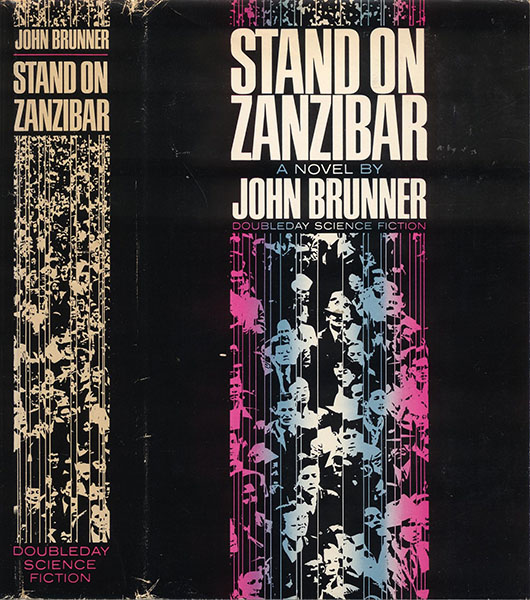
Stand on Zanzibar is a dystopian New Wave science fiction novel written by John Brunner and first in part published in New Worlds magazine in 1967 and in book form in 1968. The book won a Hugo Award for Best Novel at the 27th World Science Fiction Convention in 1969, as well as the 1969 BSFA Award and the 1973 Prix Tour-Apollo Award.
- Brave New World
series8 books1932
similar byscience fictiondystopia+4 more
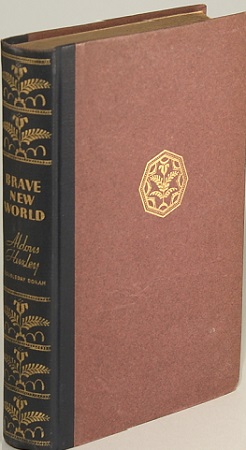
Aldous Huxley's 1932 novel imagines a future World State where reproduction, social caste, and desire are all engineered before birth, and the population is kept content through conditioning, sleep-hypnosis, and a mood-altering drug called soma. The story follows the disruption this seemingly stable order suffers when an outsider raised beyond its reach is brought into it, exposing what the society traded away for comfort and order. Some editions pair the novel with Huxley's own 1958 nonfiction essay collection, Brave New World Revisited, which reassesses the book's ideas rather than continuing its story.
- The Windup Universe
series3 books2005
similar bydarkour worldnear futurescience fictiondystopiagenetic engineering+1 more
- Partials Sequence
series4 books2012
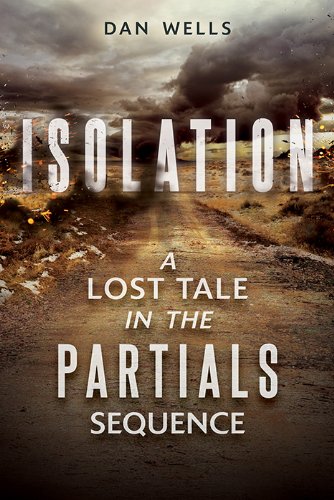
similar bynear futurescience fictiongenetic engineeringyoung adulttense+4 more
- Mortal Coil
series3 books2017
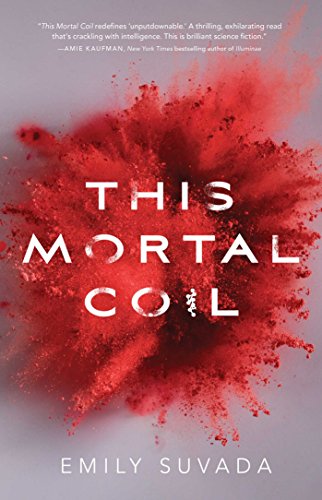
similar bynear futurescience fictiondystopiagenetic engineeringyoung adulttense+2 more
- Sprawl Trilogy
series10 books1981
similar bydarknear futurescience fictiontense
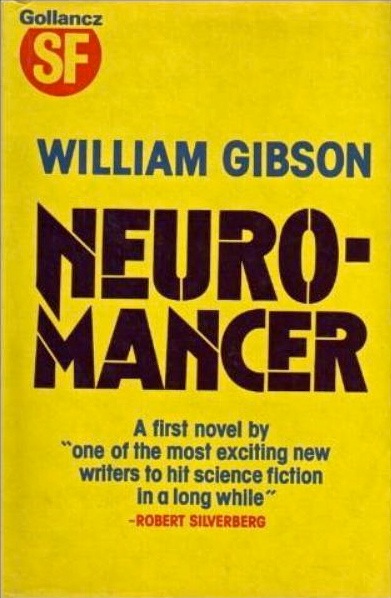
The Sprawl Trilogy is William Gibson's foundational cyberpunk sequence: Neuromancer (1984), in which hacker Case is drawn into a high-stakes heist alongside an artificial intelligence and a damaged ex-soldier, followed by Count Zero (1986) and Mona Lisa Overdrive (1988), which widen the same near-future world of corporate power and networked cyberspace to new characters. Johnny Mnemonic, an early short story set in the same fictional milieu, predates the novels and introduces the courier Molly Millions before her role in the trilogy. Together these works established much of cyberpunk's visual and thematic vocabulary.
- Shadrach in the Furnace
Robert Silverbergstandalone novel1976
similar bydarkour worldnear futurescience fictiondystopiaidentity+1 more
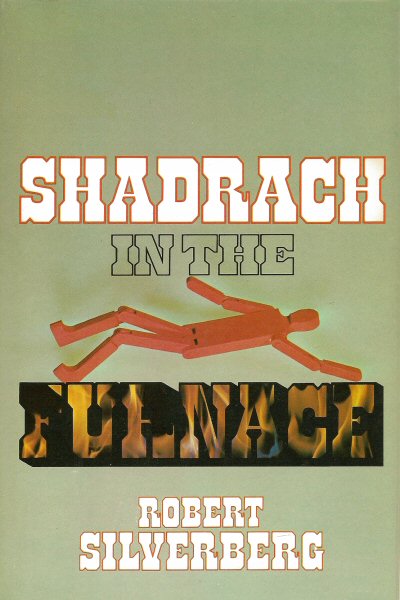
Shadrach in the Furnace is a science fiction novel by American writer Robert Silverberg, first published as a serial in Analog Science Fiction and Fact magazine in the August, September, and October 1976 issues. It was subsequently published by Bobbs Merrill in 1976. The novel was nominated in 1976 for the Nebula Award, and in 1977 for the Hugo Award.
- The Idlewild Trilogy
series3 books2003
similar bydarkour worldnear futurescience fictiongenetic engineeringidentity+1 more
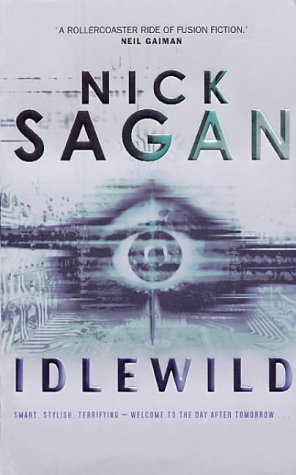
Nick Sagan's Idlewild trilogy opens with Idlewild (2003), a science-fiction novel that alternates between mid-21st-century interludes and events a generation later, following humanity's ten last survivors, cast in a modern mythological framework as god-like figures. It continues across Edenborn and Everfree.
- Fahrenheit 451
series2 books1951
completed
similar bynear futurescience fictiondystopia+2 more
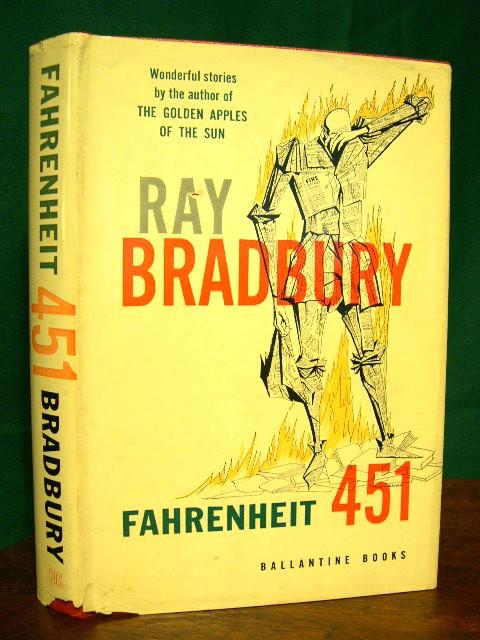
Fahrenheit 451 began life as "The Fireman," a novella Ray Bradbury published in 1951, which he then expanded into the full novel released in 1953 under its now-famous title. Set in a future where books are outlawed and firemen exist to burn them, it follows fireman Guy Montag as doubts about his job push him toward the very literature he's supposed to destroy. The novella and novel are one story's evolution rather than two separate books.
- Juliette / Shatter Me
series16 books2011
similar bynear futurescience fictiondystopiayoung adult+4 more
Tahereh Mafi's Shatter Me series follows Juliette, a teenager whose touch is lethally dangerous, in a dystopian future. The debut novel, Shatter Me (2011), is written in a fragmented, diary-like style with crossed-out lines reflecting its narrator's state of mind; the series has since grown to seven novels plus five companion novellas.
- Arc of a Scythe
series17 books2016
similar byour worldscience fictiondystopiayoung adult+3 more
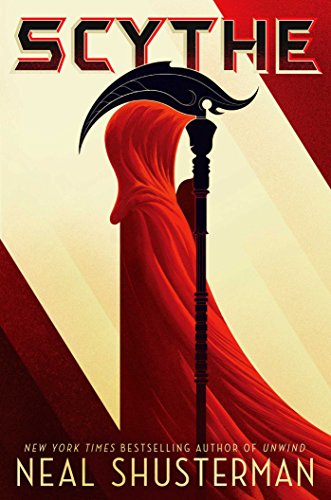
Neal Shusterman's Arc of a Scythe opens with Scythe (2016), set in a future where the AI Thunderhead has ended death and disease — except for a designated order of Scythes tasked with killing to control population. Thunderhead and The Toll continue the trilogy, joined by companion material collected as Gleanings.
- Colony
Ben Bovastandalone novel1978
similar bynear futurescience fictiondystopiatense+3 more
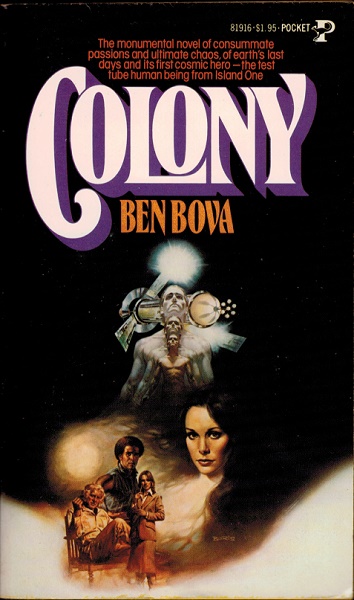
Colony continues the story Ben Bova began in Millennium, following astronaut-turned-administrator Chet Kinsman years later as the head of an orbiting space habitat that has become Earth's only real refuge from a planet buckling under overpopulation, food shortages and unrest. Getting a place in the habitat is a matter of life and death for millions who will never be chosen, and as Earth's governments grow more desperate to control or dismantle the colony outright, Kinsman has to decide how far he'll go to protect the world he's built off-world. Bova later folded both novels together into the omnibus The Kinsman Saga. Part of Ben Bova's Chet Kinsman series.
- The Zap Gun
Philip K. Dickstandalone novel1967
similar bydarkour worldnear futurescience fiction+3 more
The Zap Gun is a 1967 science fiction novel by American writer Philip K. Dick. It was first published as the two-part serial Project Plowshare in Worlds of Tomorrow in 1965 and 1966, before Pyramid Books issued it in paperback under its present title. The novel originated in a title-first commission devised by Pyramid editor Don Bensen and was written in 1964 during a period of rapid production in Dick's career.
- Poster Girl
Veronica Rothstandalone novel2022
similar byour worldnear futurescience fictiondystopia+1 more
- Uglies Universe
series9 books2005
similar bynear futurescience fictiondystopiayoung adult+4 more
Scott Westerfeld's Uglies series is set roughly three centuries in the future, after industrial collapse, in a society that classifies everyone by mandatory cosmetic-surgery life stages - Uglies, Pretties, Middle Pretties, and Crumblies - policed by the surveillance division Special Circumstances. Tally Youngblood, the original tetralogy's protagonist, initially awaits her own operation before learning it also surgically dulls independent thought, driving her toward the hidden resistance community called the Smoke. Beyond the four core novels (Uglies, Pretties, Specials, Extras), the franchise extends into other formats, including the manga-influenced graphic novel Shay's Story, co-written with Devin Grayson, and a later Impostors spin-off series.