Loreful
HomeDiscover
Search series, authors…⌘K
Loreful

Reading orders for SF/F series and shared universes — with your place kept in every one.

Explore

UniversesSeriesWorksAuthorsAtlas

Help

FAQAboutSite map

Account & legal

Sign inCreate accountPrivacyTerms

Data

Built on ISFDB, Wikipedia, Wikidata and Open Library. Curated reading orders carry their reasoning on the page; the rest follow publication order. Data sources & licenses

© Loreful · data: ISFDB · CC BY

More like Cry Vampire!

anchored on:contemporary

but

Mood

The mood the book leaves you in.

  • The reading experience is propelled by journeys, exploration, and physical risk; excitement and forward momentum dominate over dread or introspection.
  • Joy and loss are deliberately mixed; the resolution grants characters something real while taking something else away, leaving warmth and sorrow together.
  • The book demands work from the reader — dense prose, difficult structure, unfamiliar ideas, or morally uncomfortable material — as part of its intended effect.
  • Grim events, cruelty, or despair dominate the atmosphere, and the book does not soften them with comfort or comic relief.
  • The atmosphere is quietly unsettling — wrongness, unease, and the uncanny pervade the book without necessarily escalating into overt horror.
  • The book is built to move the reader; character feeling is foregrounded and major scenes aim at a strong emotional response.
  • Humor is a primary aim and the prose plays for laughs — comic situations, wit, or dialogue produce sustained comedy, not occasional levity.
  • The book insists that things can improve; effort and decency are shown to matter, and the arc bends toward better outcomes even through hardship.
  • The book teaches as it goes — real facts, history, science, or craft are conveyed in enough depth that learning is part of the reading experience.
  • The book is designed to uplift and motivate, presenting perseverance or achievement in a way that invites the reader to aspire or act.
  • The overall register is cheerful and easygoing; stakes are kept gentle and the book avoids dwelling on pain or dread.
  • Withheld information drives the experience; the book sustains enigmas and secrets the reader wants resolved, whatever its genre.
  • The book is contemplative and inward-looking, giving more weight to thought, memory, and meaning than to external events.
  • The book works as comfort reading — low tension, a soothing pace, and an atmosphere the reader can unwind in.
  • Grief, loss, or melancholy set the dominant register, and the book lets sorrow stand rather than resolving it into comfort.
  • Sustained suspense is the point; the book keeps the reader braced for what happens next through danger, pressure, or impending revelation.
  • Playful invention and charm define the register — fanciful conceits, light absurdity, and a narration that delights in its own oddity.

About

What the story runs on.

  • Stories in which extraterrestrial beings are central — as characters, cultures, or the object of the plot.
  • Stories structured as a quest — a journey undertaken to find, deliver, or destroy something of great import.
  • Stories in which staying alive against nature, catastrophe, or scarcity is the central problem.
  • Stories of lovers kept apart by law, family, faith, or station, where the obstacle to love is the plot.
  • Stories in which a friendship — its making, testing, or loss — is the emotional center.
  • Stories of growing up — a young protagonist crossing from childhood into adult knowledge and responsibility.
  • Stories about who a character truly is — self-discovery, doubled lives, and the search for a self.
  • Stories about mourning — living through the death of a loved one and what loss does to the survivors.
  • Stories in which a buried family truth — hidden parentage, crimes, or shames — surfaces and reorders the present.
  • Stories driven by maneuvering for power — factions, conspiracies, and statecraft conducted in shadow.
  • Stories in which war itself is the subject — combat, occupation, and what warfare does to soldiers and civilians.
  • Stories organized around investigating a killing — the case, the clues, and the pursuit of the killer, in any genre's clothing.

Shelf

Where it sits in the library.

    • Fiction built on magic or other supernatural elements that have no scientific explanation.
    • Secondary-world fantasy at large scale, where the fate of nations or the world turns on the protagonists' struggle.
    • Fantasy set in a recognizably modern city or contemporary world where the supernatural intrudes on everyday life.
    • Fantasy that blends in horror's atmosphere and imagery, keeping a fantastical frame around grim or frightening material.
    • Action-driven fantasy following warriors or rogues with personal stakes against sorcerous threats, rather than world-spanning conflicts.
    • Fantasy set in a real historical period or a close analogue of one, with magic woven into the era.
    • Fantasy in which protagonists cross from the ordinary world into another world through a portal or similar passage.
    • Fiction that retells or reworks a traditional fairy tale in a new form or setting.
    • Fantasy drawing directly on myths, legends, and folklore, retelling them or building on their figures and logic.
    • Fantasy of ghosts, vampires, shapeshifters, psychics, and similar phenomena, usually set in an otherwise ordinary world.
    • Fiction mixing science-fictional trappings with overtly magical or impossible elements in one setting.
    • Low-stakes fantasy emphasizing comfort, community, and everyday pleasures over conflict and peril.
    • Speculative fiction of pervasive moral ambiguity, violence, and cynicism that rejects heroic conventions — fantasy and SF alike.
      • Fiction that extrapolates from science and technology — future societies, space travel, or speculative inventions — within at least nominally natural laws.
      • Science fiction of interstellar scope — starships, galactic polities, and adventure across star systems.
      • Science fiction committed to scientific rigor, where technical plausibility constrains the story.
      • Science fiction centered on armed forces and warfare, told largely from a military point of view.
      • Science fiction of networked, corporate-dominated near futures, pairing high technology with social decay.
      • Science fiction styled on nineteenth-century steam-powered technology, often in a Victorian or pseudo-Victorian setting.
      • Fiction depicting an oppressive or catastrophic society, presented as a warning.
      • Fiction set after civilization's collapse, following survivors in the ruins of the old world.
      • Fiction in which characters move between past and future, and the mechanics or consequences of that travel drive the plot.
      • Fiction exploring a world where a historical event went differently and history diverged from ours.
      • Science fiction about humanity's first encounter and communication with an alien intelligence.
      • Science fiction in which extraterrestrial forces attack or occupy Earth and humanity resists.
      • Fiction whose primary aim is to frighten or unsettle the reader through dread, menace, or the monstrous.
      • Horror of vast, indifferent, incomprehensible entities before which humanity is insignificant, in the Lovecraft tradition.
      • Horror of decaying houses, buried family secrets, and oppressive atmosphere in the Gothic literary tradition.
      • Horror centered on hauntings and the returning dead.
      • Horror located in the mind — paranoia, obsession, and unreliable perception rather than external monsters.
      • Horror built around the reanimated dead and survival amid their outbreaks.
      • Horror defined by explicit, transgressive gore that refuses to cut away from violence.
      • Speculative fiction of the strange and uncanny that resists both natural explanation and standard genre categories.
      • Fiction organized around solving a crime or puzzle, typically following an investigator toward the identification of a culprit.
      • A puzzle-first mystery that lays out clues so the culprit's identity can be deduced before the reveal.
      • Crime fiction of moral ambiguity, fatalism, and hard-edged style, set among the corrupt and the doomed.
      • A mystery following the realistic routines of police work — forensics, interviews, and case-building.
      • A gentle mystery with an amateur sleuth, a small community, and violence kept off the page.
      • A mystery set in a past era, where the investigation works within that period's methods and society.
      • Fast-paced fiction driven by imminent danger, pursuit, or high-stakes conspiracy, built to sustain tension.
      • A thriller of espionage — agents, tradecraft, and intelligence services in conflict.
      • A thriller centered on lawyers and the courtroom, where litigation carries the suspense.
      • A thriller driven by detailed contemporary or near-future technology, often military or scientific.
      • A thriller whose tension comes from mental states and manipulation between characters rather than external action.
      • Fiction whose central plot is a romantic relationship and its development toward an emotionally satisfying resolution.
      • Romance in which one or both partners are supernatural beings, blending fantasy elements into the love story.
      • A fantasy-romance hybrid in which the romantic arc and the fantasy plot carry equal weight.
      • Romance set in a past era, with courtship shaped by the period's society and manners.
      • Romance set in the present day, without supernatural or historical elements.
      • Fiction set in a real past period, where the historical setting materially shapes characters and events.
        • General and literary fiction emphasizing prose style, character interiority, or formal ambition over genre plot conventions.
        • Fiction in a realistic world where magical events occur and are treated as ordinary, in the tradition of Latin American literature.
        • Fiction that ridicules people, institutions, or society in order to criticize them.
        • Fiction of dreamlike, irrational imagery and logic that breaks from realistic representation.
        • Fiction that plays with narrative convention through metafiction, fragmentation, and self-reference.
        • Fiction propelled by journeys, exploration, and physical peril, where action and survival carry the plot.
        • Adventure fiction of ships and seafaring — naval engagements, voyages, and life at sea.
        • Fiction of the American frontier West — gunmen, ranchers, and lawmen, typically in the late nineteenth century.
        • Fiction centered on soldiers, campaigns, and the experience of warfare, historical or imagined.
          • Fiction written primarily to amuse, using comedic situations, wit, or parody as its organizing principle.
            • Multi-generational fiction following a family or dynasty across decades, with inheritance and kinship as the through-line.
              • Fiction whose world runs on explicit game mechanics — levels, stats, and skills that characters can see and exploit.
                • Fiction about costumed or superpowered heroes and their conflicts with comparable villains.

                Practical

                How long a commitment, whether it stands alone, and whether it has finished.

                Tap a chip to ask for it · tap again to rule it out · once more to clear. Numbers show what would be left.

                • Cover of Lockwood & Co.
                  Lockwood & Co.

                  series · 6 books · 2013

                  similar byfriendshipbritish islescontemporaryeerie+2 more

                  Lockwood & Co. is a young adult supernatural thriller series by Jonathan Stroud. It follows three young operatives of a psychic detection agency as they fight ghosts in London, England.

                • Cover of Bod Owens
                  Bod Owens

                  series · 3 books · 2007

                  similar bybritish islescontemporaryeeriemiddle grade+2 more

                  The Graveyard Book follows Nobody "Bod" Owens, a toddler who escapes the murder of his family and is raised among the ghosts of an old English graveyard, absorbing their otherworldly customs while a threat from his past waits beyond the gates. Neil Gaiman's 2008 novel won both the Newbery and Carnegie Medals, and illustrator P. Craig Russell later adapted it into a two-volume graphic novel. Bod's story spans the original novel and that graphic-novel retelling rather than continuing in a prose sequel.

                • Cover of The Ocean at the End of the Lane
                  The Ocean at the End of the Lane

                  Neil Gaiman · standalone novel · 2013

                  similar byfriendshipbritish islescontemporaryeerie+1 more

                  A seven year old farm boy becomes friends with an eleven year old neighbor girl, who he discovers is ancient and powerful and intervenes when a nonhuman entity attempts to make a home in earthly reality.

                • Cover of The Darkdeep
                  The Darkdeep

                  series · 3 books · 2018

                  similar byfriendshipcontemporarymiddle grade+3 more

                • Cover of Small Spaces
                  Small Spaces

                  series · 4 books · 2018

                  similar byhorrorcontemporaryeerietensemiddle grade+1 more

                • Cover of Dracula
                  Dracula

                  universe · 144 books · 1897

                  Start hereDracula · Start here

                  similar byhorror+1 more

                  "Come freely. Go safely. And leave something of the happiness you bring" — so the Count greets his guest at the threshold of the Carpathians, and the great door shuts behind. Bram Stoker's Dracula (1897) is the wellspring of the modern vampire: the account of a centuries-old Transylvanian nobleman who quits his crumbling castle for the crowded lodging-houses of London, and the handful of ordinary people — a young solicitor, a doctor of the mad, a professor of stranger learning — who must piece together what he is before he makes the whole city his fold. It is told wholly in fragments: journal entries, letters, telegrams, ships' logs, phonograph cylinders, each hand recording only its own sliver of the dark. Around that single novel a whole crypt of continuations has grown, raised by many writers across a century. Fred Saberhagen's Dracula Sequence hands the Count the microphone, retelling the old events from his own wry, aggrieved lips and following him into later intrigues. Robert Lory's brisk 1970s Dracula Horror Series revives him as a reluctant weapon turned against fouler things; Peter Tremayne's trilogy reaches back along his bloodline; and further sequels, a Quincey Morris spin-off, and Dracula's Children carry the shadow onward. This is a loose shared world built upon a public-domain figure, not one governed continuity — each author remakes him as villain, antihero, or sympathetic narrator. Begin, always, with Stoker's original; the letters and the mounting dread stand entirely on their own. From there follow whichever door tempts you — Saberhagen's The Dracula Tape for the monster's own confession, Lory or Tremayne for tales that never glance back at the Borgo Pass again.

                • Cover of Fliss
                  Fliss

                  series · 2 books · 1989

                  similar byhorror+5 more

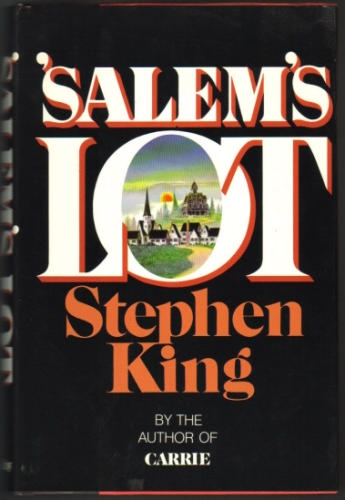
                • Cover of Jerusalem's Lot
                  Jerusalem's Lot

                  series · 3 books · 1975

                  similar byhorrorcontemporaryeerietensevampires

                  Stephen King's 1975 novel 'Salem's Lot follows writer Ben Mears as he returns to his childhood town of Jerusalem's Lot, Maine, only to discover that its residents are being turned into vampires by a newly arrived stranger. It transplants Gothic vampire horror into a small New England community, tracking that community's collapse under a supernatural siege. It is a single, self-contained novel.

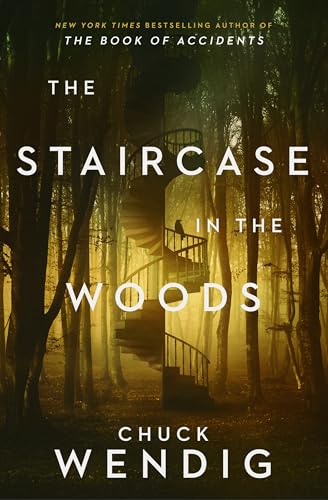
                • Cover of The Staircase in the Woods
                  The Staircase in the Woods

                  Chuck Wendig · standalone novel · 2025

                  similar byhorrorfriendshipcontemporaryeerietense

                  While on a camping trip, five high-schoolers bound by an oath to always protect one another discover something in the middle of the forest: a mysterious staircase to nowhere. One friend climbs up but does not come back down. Then the staircase disappears. Twenty years later it reappears, and the friends return to find the lost boy—and what lies beyond the staircase.

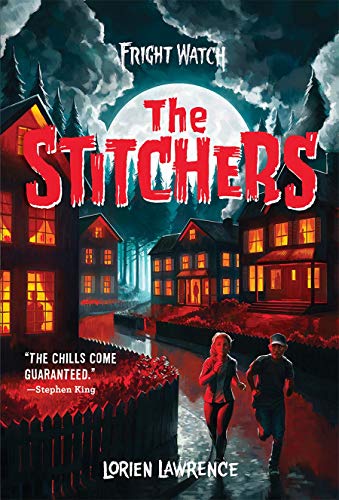
                • Cover of Fright Watch
                  Fright Watch

                  series · 3 books · 2020

                  similar byhorrorcontemporaryeerie+4 more

                • Cover of Lewis Barnavelt
                  Lewis Barnavelt

                  series · 12 books · 1973

                  similar byeeriecontemporarymiddle grade+2 more

                  Lewis Barnavelt is a lonely orphan who moves in with his uncle Jonathan, an amateur wizard, in a rambling old house that turns out to hide a doomsday clock built into its walls by a previous, malevolent owner. John Bellairs introduced the character in The House with a Clock in Its Walls (1973), illustrated by Edward Gorey, and after Bellairs's death Brad Strickland continued the series from his notes and outlines for most of its later volumes. It blends gothic horror atmosphere with a gentler, more whimsical strain of children's fantasy.

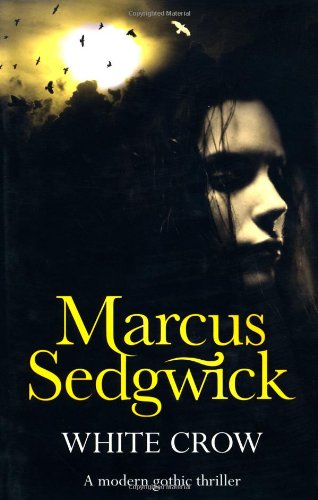
                • Cover of White Crow
                  White Crow

                  Marcus Sedgwick · standalone novel · 2010

                  similar byhorrorbritish islescontemporaryeerie+1 more

                  Sixteen-year-old Rebecca moves with her father from London to a small, seaside village, where she befriends another motherless girl and they spend the summer together exploring the village's sinister history.

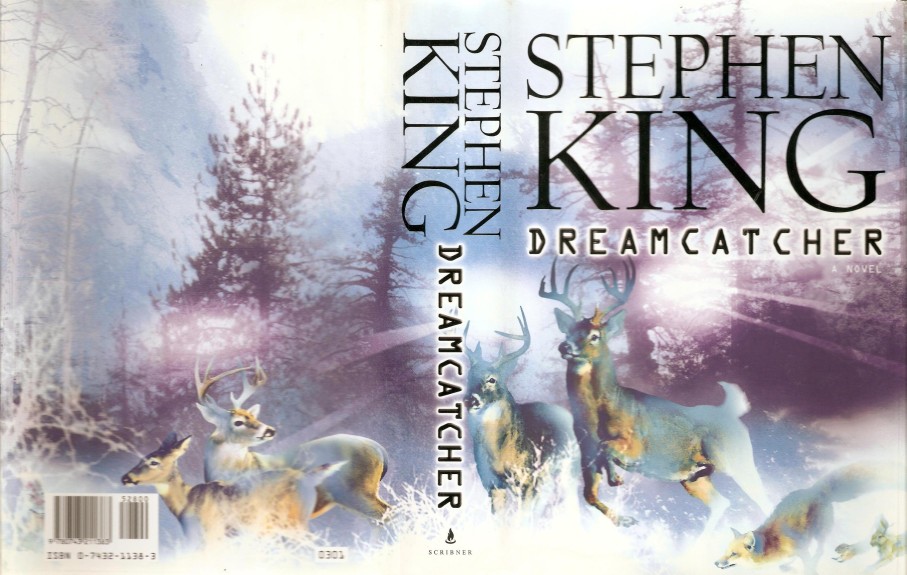
                • Cover of Dreamcatcher
                  Dreamcatcher

                  Stephen King · standalone novel · 2001

                  similar byhorrorfriendshipcontemporarytense

                  Dreamcatcher is a 2001 science fiction horror novel by American writer Stephen King, featuring elements of body horror, suspense and alien invasion. The book, written in longhand, helped the author recuperate from a 1999 car crash, and was completed in half a year. According to the author in his afterword, the working title was Cancer. His wife, Tabitha King, persuaded him to change the title. A film adaptation was released in 2003.

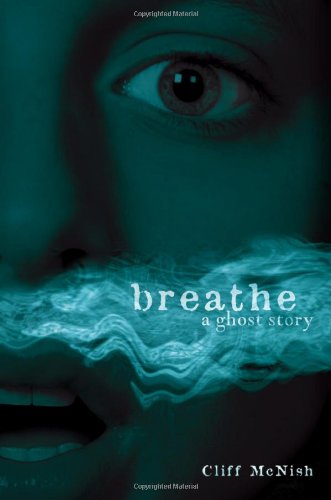
                • Cover of Breathe
                  Breathe

                  Cliff McNish · standalone novel · 2006

                  similar byhorrorbritish islescontemporaryeerietense

                  Breathe: A Ghost Story is a novel by English author Cliff McNish published in 2006 as McNish's first stand-alone novel. It is about a group of ghost children trapped inside an old farmhouse by a malignant spirit known as the Ghost Mother. Twelve-year-old Jack, suffering from chronic asthma, has just moved into the old house with his widowed mother, and discovers that the Ghost Mother wants him to herself.

                • Cover of The Course of the Heart
                  The Course of the Heart

                  M. John Harrison · standalone novel · 1992

                  similar bybritish islescontemporaryeerie+2 more

                  On a hot May night, three Cambridge students carry out a ritualistic act that changes their lives. Years later, none of the participants can remember what exactly transpired, but their clouded memories can't rid them of an overwhelming sense of dread.

                • Cover of Skellig
                  Skellig

                  David Almond · standalone novel · 1998

                  similar byfriendshipbritish islescontemporaryeeriemiddle grade

                  Skellig is a children's novel by the British author David Almond, published by Hodder in 1998. It was the Whitbread Children's Book of the Year and it won the Carnegie Medal from the Library Association, recognising the year's outstanding children's book by a British author. In 2007, it placed third in the "Carnegie of Carnegies", after Northern Lights and Tom's Midnight Garden. In the U.S., it was a runner up for the Michael L. Printz Award, which recognises one work of young adult fiction annually. Since publication, it has also been adapted into a play, an opera, and a film. In December of 2011, a prequel, My Name is Mina was published. William Blake's poems feature in the book, the play and the film.

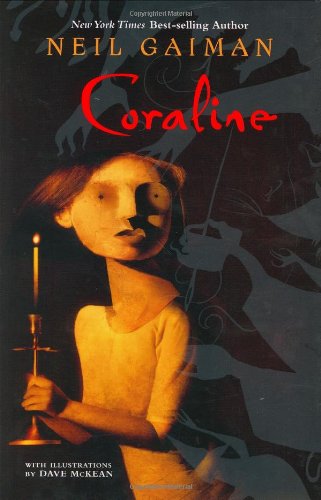
                • Cover of Coraline
                  Coraline

                  series · 2 books · 2002

                  similar byhorrorcontemporaryeerietensemiddle grade

                • Cover of Allie's Ghost Hunters
                  Allie's Ghost Hunters

                  series · 4 books · 2002

                  similar bycontemporarymiddle grade+3 more

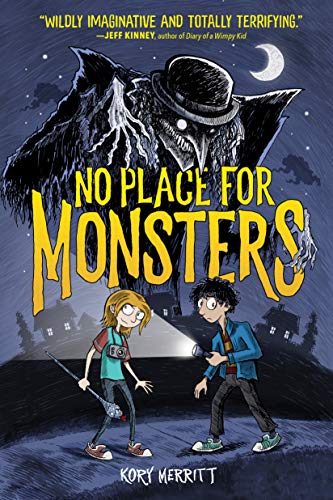
                • Cover of No Place for Monsters
                  No Place for Monsters

                  series · 3 books · 2020

                  similar bycontemporarymiddle grade+3 more

                • Cover of Johnny Dixon and the Professor
                  Johnny Dixon and the Professor

                  series · 13 books · 1983

                  similar byhorroreeriecontemporarymiddle grade+1 more

                  Johnny Dixon is a fictional American boy featured in a series of twelve children's gothic horror novels, 1983 to 1999, written by John Bellairs or his successor Brad Strickland. In each book, 12-year-old Johnny and his group of friends face and overcome evil forces usually bent on ending the world. Alternatively, Johnny Dixon is the book series.

                • Cover of The Stonewalkers
                  The Stonewalkers

                  Vivien Alcock · standalone novel · 1981

                  similar bycontemporaryeerietensemiddle grade+2 more

                  "A garden statue of Belladonna, brought to life by a flash of lightning, gathers a stone army from gardens and churches as twelve-year old Poppy and her friend Emma watch, fascinated and terrified." --summary, WorldCat library record of the 1st ed., {{OCLC|8782733}} 12-year-old, friendless Poppy Brown, "talking to a statue in the square", inadvertently releases Belladonna, who will "loose other carelessly destructive statues, ready to 'please or kill with equal unconcern'." --KirkusReviews.com, positive review of the 1st US ed. (contemporary, posted with ISBN for 2009 audiobook?)

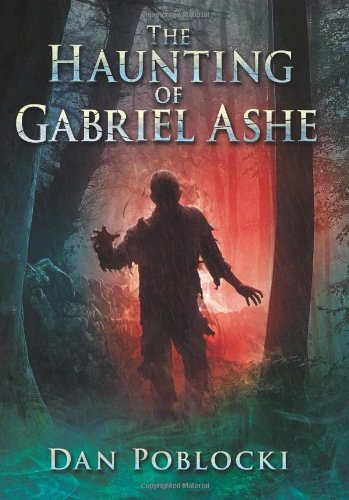
                • Cover of The Haunting of Gabriel Ashe
                  The Haunting of Gabriel Ashe

                  Dan Poblocki · standalone novel · 2013

                  similar byhorrorfriendshipcontemporaryeerietensemiddle grade

                  Since eighth-grader Gabriel Ashe moved into his grandmother's house he has been spending a lot of time playing in the woods with his new friend Seth, but the games Seth invents involve a child-eating monster called the Hunter, and Gabriel is not sure how much is imagination and how much real.

                • Cover of Seasons of Horror
                  Seasons of Horror

                  series · 7 books · 1990

                  completed

                  similar byhorroreerie+2 more

                • Cover of The Secret of Crickley Hall
                  The Secret of Crickley Hall

                  James Herbert · standalone novel · 2006

                  similar byhorrorbritish islescontemporaryeerietense

                  The Secret of Crickley Hall is a 2006 supernatural thriller novel by the British writer James Herbert.