More like Cuckoo's Egg
anchored on:science fictionaliensother star systemsfar futurecoming of ageidentity
but
- Ender Wiggin
series14 books1977
part of Ender's Game Universe
similar byscience fictionfar futureother star systemsaliens+3 more
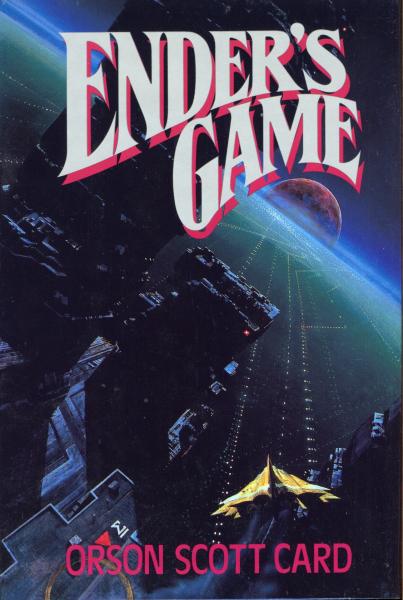
Orson Scott Card's Ender's Game (1985, expanded from his 1977 novella) follows child prodigy Andrew "Ender" Wiggin as he is recruited into a military training program built to prepare Earth's defenses for an anticipated third war against an insectoid alien species known as the Formics. The saga continues years later through Speaker for the Dead and Xenocide, following an older Ender as he confronts the moral weight of his role in that earlier conflict, and concludes the core arc in Children of the Mind, with Ender in Exile filling in the years between the first two books. Set within the wider Ender's Game universe, the series shifts from military coming-of-age story to slower, more philosophical science fiction as it progresses.
- Hainish
series33 books1964
completed
similar byscience fictionfar futureother star systemsreflective+1 more
The Hainish Cycle consists of a number of science fiction novels and stories by Ursula K. Le Guin. The cycle is set in a future history that features civilizations of human beings on planets orbiting a number of nearby stars, including Terra ("Earth"); these humans are contacting each other for the first time and establishing diplomatic relations, as well as setting up a confederacy under the guidance of the oldest of the human worlds, the peaceful planet Hain. In this history, human beings did not evolve on Earth, but they were instead the result of interstellar colonies planted by Hain in the distant past, after which interstellar travel ceased for an extended period. Some of the human races have new genetic traits, a result of ancient Hainish experiments in genetic engineering; this includes people who can dream while awake, and a world of hermaphroditic people who only enter active sexuality once per month, not knowing which sex will manifest in them. In keeping with Le Guin's narrative approach, she uses varied social and environmental settings to explore the anthropological and sociological outcomes of human evolution in those environments. The author often discounted the characterization of a so-called "Hainish Cycle".
- Downward to the Earth
Robert Silverbergstandalone novel1969
similar byscience fictionother star systemsfar futurealiensreflective
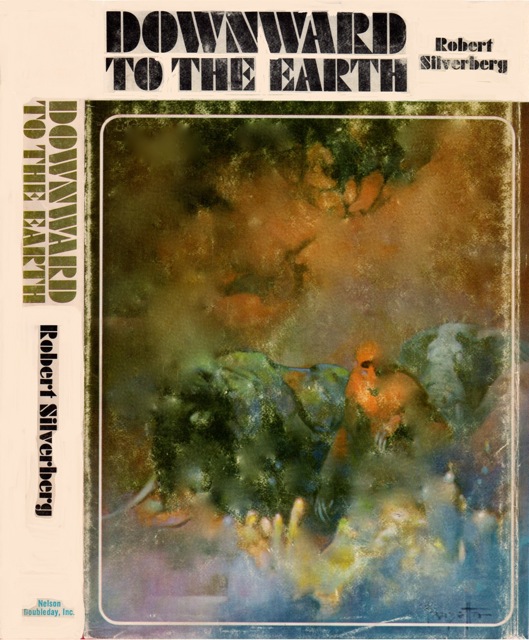
Edmund Gunderson was the Terran administrator of the colony world of Belzagor, and he returns to it after it has gained independence, feeling a sense of guilt for the way he has treated its dominant species, the elephant-like nildoror, whose animalistic appearance had kept Gunderson from taking them seriously as sentient beings. On his return, he feels a new sense of kinship with the natives, perhaps more than for the Terran tourists. The nildoror undergo a process of rebirth, and Gunderson's greatest guilt comes from having denied rebirth to seven nildoror to make them help him repair flood damage.(From Wikipedia)
- Stranger in a Strange Land
Robert A. Heinleinstandalone novel1961
similar byscience fictionaliensreflectiveidentitycoming of age
Stranger in a Strange Land is a 1961 science fiction novel by the American author Robert A. Heinlein. It tells the story of Valentine Michael Smith, a human who comes to Earth in early adulthood after being born on the planet Mars and raised by Martians, and explores his interaction with and eventual transformation of Terran culture.
- A Time of Changes
Robert Silverbergstandalone novel1971
similar byscience fictionother star systemsfar futurereflectiveidentity+1 more
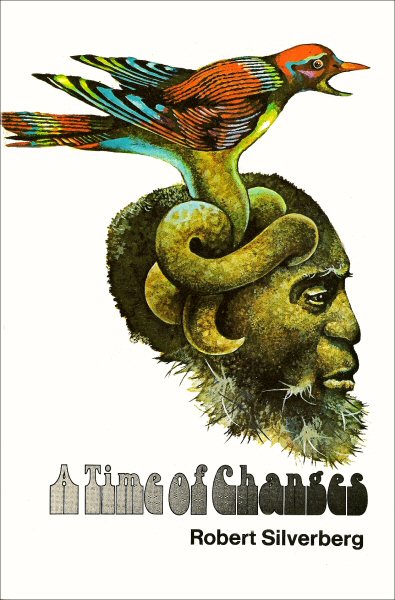
A Time of Changes is a 1971 science fiction novel by American writer Robert Silverberg. It won the Nebula Award for that year, and was also nominated for the 1972 Hugo and Locus Awards.
- The City and the Stars
Arthur C. Clarkestandalone novel1956
similar byscience fictionother star systemsfar futurereflective+1 more
The City and the Stars is a science fiction novel by British writer Arthur C. Clarke, published in 1956. This novel is a complete rewrite of Clarke's earlier Against the Fall of Night, his first novel, which had been published in Startling Stories magazine in 1948 after being rejected by the editor of Astounding Science-Fiction, according to the author.
- The Man in the Maze
Robert Silverbergstandalone novel1969
similar byscience fictionother star systemsfar futurereflectiveidentity+1 more
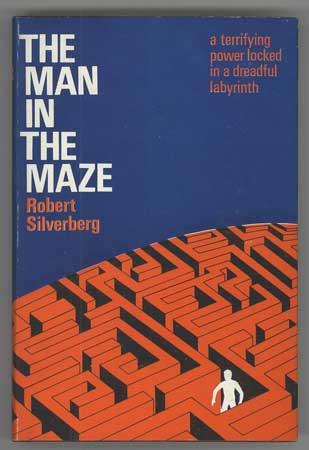
The Man in the Maze is a science fiction novel by American writer Robert Silverberg, originally serialized in the magazine Worlds of If in April and May 1968, and published in bookstores the following year. It tells the tale of a man rendered incapable of interacting normally with other human beings by his uncontrollable psychic abilities. The novel is inspired by Sophocles' play Philoctetes, with the roles of Odysseus, Neoptolemus and Philoctetes played by Boardman, Rawlins, and Muller, respectively.
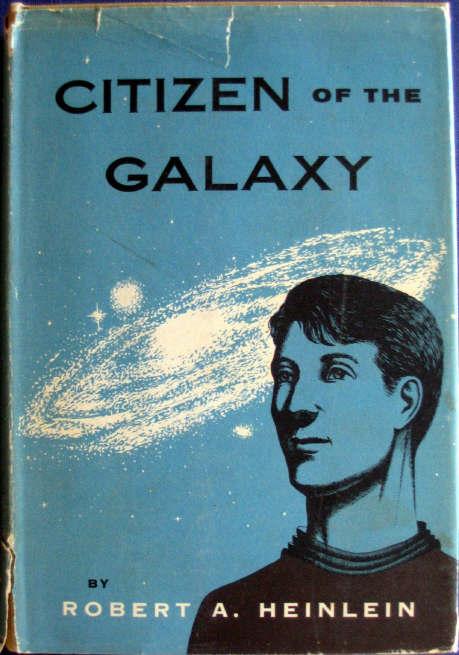
- Citizen of the Galaxy
Robert A. Heinleinstandalone novel1957
similar byscience fictionother star systemsfar futurecoming of ageidentity
On a planet far distant from Earth, a lame beggar buys a young boy slave who has forgotten his origins. The beggar is more than he seems, and gives the boy an extensive education while employing him as an observer of activity in their city. Years later, the beggar is captured by the government, and the youth must escape the planet.
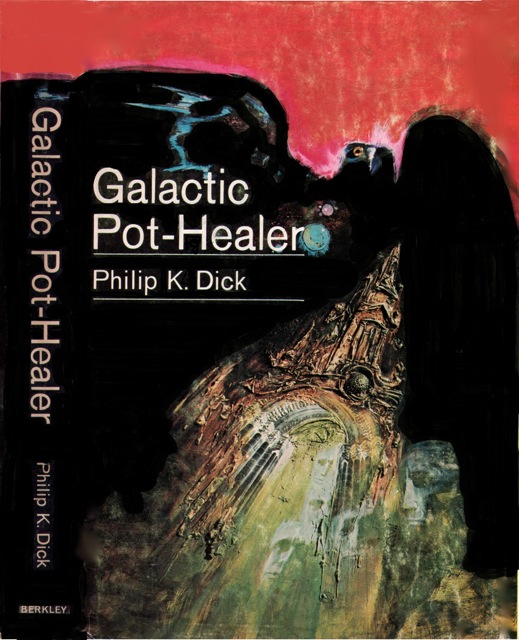
- Sirius Five
series2 books1969
completed
similar byscience fictionother star systemsfar futurealiens+2 more
Philip K. Dick's Galactic Pot-Healer (1969) follows Joe Fernwright, an unemployed pot-mender on a future Earth, recruited by the alien Glimmung to help raise a sunken cathedral on the planet Sirius 5, mixing surreal comic adventure with questions about fate and the value of effort when success is never guaranteed. Dick's earlier young-adult manuscript Nick and the Glimmung, unpublished until 1988, shares the Glimmung character and other elements with it, suggesting he reworked the same creature across two very different books.
- Dune
series20 books1963
part of Dune Universe
similar byscience fictionfar futureother star systems+1 more
Frank Herbert's Dune Chronicles opens with 1965's Dune, set on the desert planet Arrakis where House Atreides takes control of the only source of the vital spice melange and young Paul Atreides is pulled into a struggle over its politics and religion. Herbert carried the story forward across five further novels — Dune Messiah, Children of Dune, God Emperor of Dune, Heretics of Dune, and Chapterhouse: Dune — following Paul's line over the following millennia, before Brian Herbert and Kevin J. Anderson later extended the saga. Many other editions of these six novels are omnibus and box-set repackagings rather than separate stories.
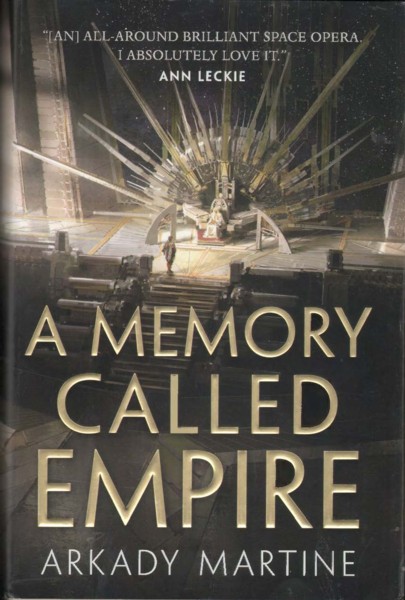
- Teixcalaan
series2 books2019
similar byscience fictionother star systemsfar futurereflectiveidentity+1 more
Arkady Martine's space opera duology follows Mahit Dzmare, ambassador from the small, independent Lsel Station, as she arrives in the vast Teixcalaanli Empire to investigate her predecessor's death and finds herself caught up in the empire's own succession crisis. A Memory Called Empire and A Desolation Called Peace pair court intrigue with Mahit's conflicted, outsider fascination with an empire she can't help admiring.
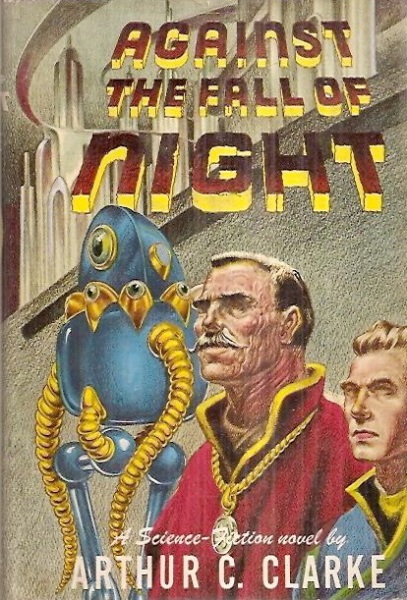
- Against the Fall of Night
series2 books1953
similar byscience fictionother star systemsfar futurereflective
Against the Fall of Night is Arthur C. Clarke's 1953 novel of a stagnant, climate-controlled city called Diaspar a billion years in Earth's future, where a young man named Alvin becomes the first in living memory to want to leave it. Clarke later rewrote the book more expansively as The City and the Stars, and in 1990 Gregory Benford wrote Beyond the Fall of Night, an authorized sequel continuing on from this original, shorter version's ending.
- Isis
series3 books1980
completed
similar byscience fictionother star systemsfar futurecoming of age+2 more
The Keeper of the Isis Light, by Monica Hughes, opens a science-fiction trilogy for young readers set on the distant colony world of Isis, orbiting the star Ra, as new settlers from Earth arrive to find the planet already has a solitary young guardian who isn't glad to see them. The trilogy continues through The Guardian of Isis and The Isis Pedlar, later collected together as The Isis Trilogy.
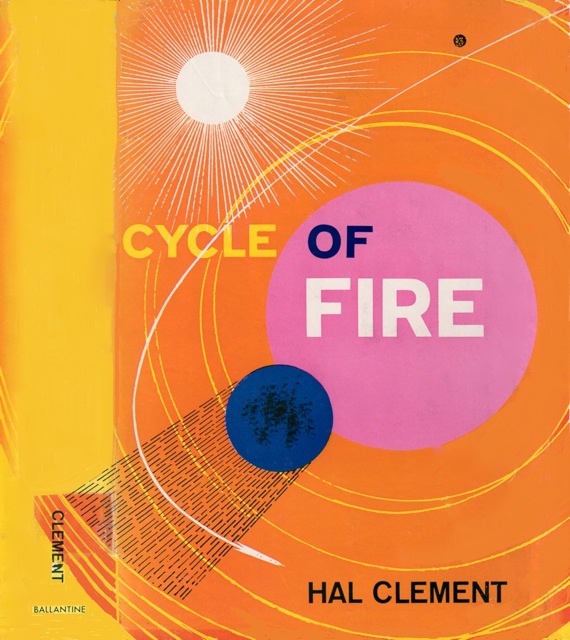
- Cycle of Fire
Hal Clementstandalone novel1957
similar byscience fictionother star systemsfar futurealiensreflective
After his ship crashed on the inhospitable planet Abyorman, Nils Kruger had spent weeks wandering across the face of the planet.suffering from blistering heat, the searing cold of an alien climate. Now he had found a fellow wanderer, Dar, an alien castaway. They may both die. The human opts to do something about it. Dar, who knows the time of his death in advance, opts to do nothing. Which of them is right? Perhaps both
- Glaktik Komm
series4 books1975
completed
similar byscience fictionother star systemsfar futurealiensidentity+1 more
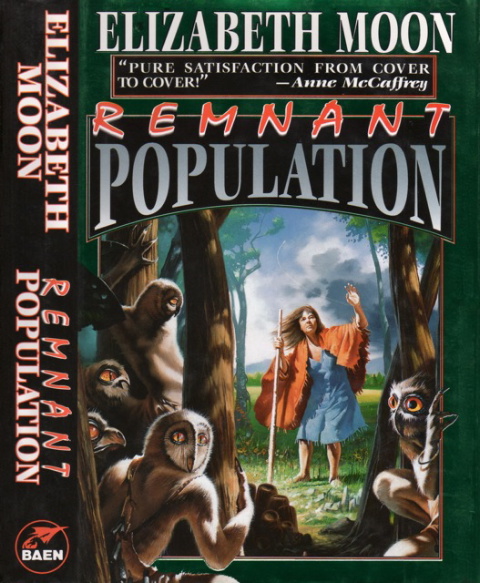
- Remnant Population
Elizabeth Moonstandalone novel1996
similar byscience fictionother star systemsfar futurealiensreflective
From the dust jacket front flap of the Baen first edition: Alone at last... People had always told Ofelia what to do; for once she was going to do what she wanted. She refused to get on the cryo ships, refused to leave the only world she could call home. And when they finally came for her, she hid, not that the authorities looked all that hard for one crazy old woman. Now Ofelia is alone, content to live with no more demands on her self or her time, the only remaining settler on an abandoned planet. The new settlers arrive. At first she fears that they have come to reoccupy the settlement she has come to think of as hers - but they land far away. And as Ofelia secretly listens, they are slaughtered to the last child by stone-age aliens no one knew were there. Now it will be up to Ofelia to save the aliens from Earth's wrath...
- Triton
Samuel R. Delanystandalone novel1976
similar byscience fictionother star systemsfar futurereflectiveidentity
Trouble on Triton: An Ambiguous Heterotopia (1976) is a science fiction novel by American writer Samuel R. Delany. It was nominated for the 1976 Nebula Award for Best Novel, and was shortlisted for a retrospective James Tiptree, Jr. Award in 1995. It was originally published under the shorter title Triton.
- Kingdoms of the Wall
Robert Silverbergstandalone novel1992
similar byscience fictionother star systemsfar futurealiensreflective
Kingdoms of the Wall is a 1992 science fiction novel by American writer Robert Silverberg. It is set on a faraway planet inhabited by an alien race and in an undefined future. Its subject is the perpetual communal quest for knowledge in the face of hardship and wonders, which through the revelation of an unexpected and devastating truth results in the deconstruction and slaying of gods.
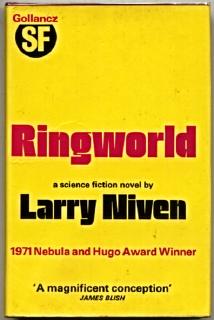
- Ringworld
series5 books1970
part of Known Space
similar byscience fictionother star systemsfar futurealiens
The Ringworld series is a series of science fiction novels written by American author Larry Niven. It is part of his Known Space series of stories. Its backdrop is the Ringworld, a giant artifact 3 million times the surface area of Earth circling a star. The series is composed of four standalone science fiction novels, the original award-winning book and its three sequels:1970: Ringworld 1979: The Ringworld Engineers 1996: The Ringworld Throne 2004: Ringworld's Children
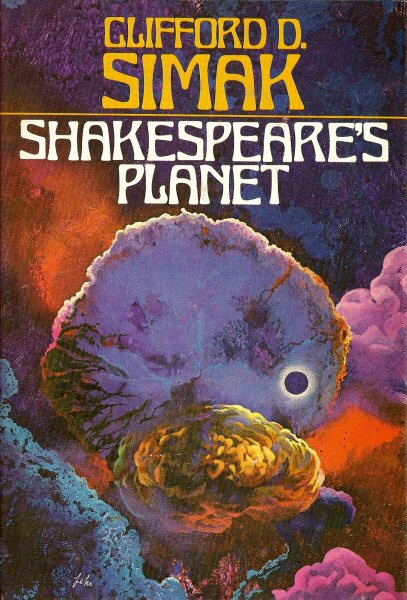
- Shakespeare's Planet
Clifford D. Simakstandalone novel1976
similar byscience fictionother star systemsfar futurereflectivealiens
Woken after a thousand-year voyage meant to find humanity a new home, Carter Horton finds his ship stranded for good, tended by the disembodied minds of three volunteers who gave up their bodies to fly it. Outside waits a world already crowded with strangers: a robot named Nicodemus, and an alien called the Carnivore who claims to have known a human, once, called Shakespeare, and to have arrived here through a tunnel across time. As more travelers arrive through that same tunnel, Horton has to work out what kind of planet he has actually landed on. A standalone novel from Clifford D. Simak.
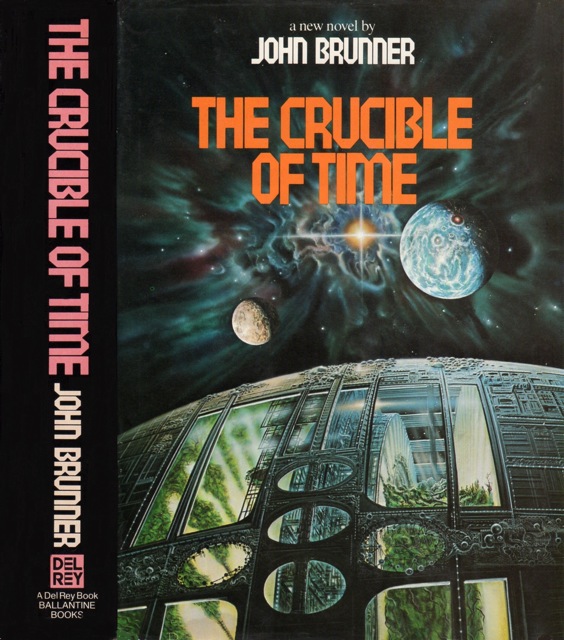
- The Crucible of Time
John Brunnerstandalone novel1983
similar byscience fictionother star systemsfar futurealiens+1 more
The Crucible of Time is a fix-up science fiction novel by John Brunner. It was first published in 1983.
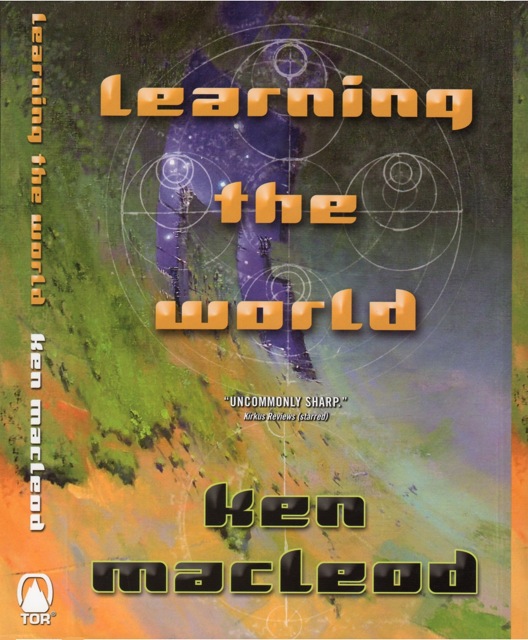
- Learning the World
Ken MacLeodstandalone novel2005
similar byscience fictionother star systemsfar futurereflectivealiens+1 more
From the front flap of the Tor first printing: "Humanity has spread to every star within 500 light-years of its half-forgotten origin, coloring the sky with a haze of habitats. Societies rise and fall. Incautious experiments burn fast and fade. On the fringes, less modified humans get on with the job of settling a universe that has, so far, been empty of intelligent life. The ancient starship But the Sky, My Lady! The Sky! is entering orbit around a promising new system after a four hundred year journey. For its long-lived inhabitants, the centuries have been busy. Now a younger generation is eager to settle the system. The ship is a seed-pod ready to burst. Then they detect curious electromagnetic emissions from the system's Earth-like world. As the nature of the signals becomes clear, the choices facing the humans become stark. On Ground, second world from the sun, a young astronomer searches for his system's outermost planet. A moving point of light thrills, then disappoints him. It's only a comet. His physicist colleague Orro takes time off from trying to invent a flying-machine to calculate the comet's trajectory. Something is very odd about that comet's path. They are not the only ones for whom the world has changed. "We are not living in the universe we thought we lived in yesterday. We have to start learning the world all over again.""
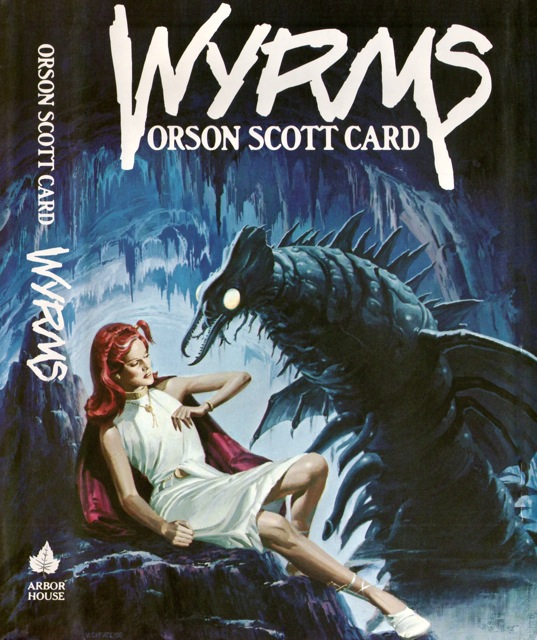
- Wyrms
Orson Scott Cardstandalone novel1987
similar byscience fictionother star systemsfar futurereflectiveidentity
Wyrms (1987) is a science fiction novel by American writer Orson Scott Card. The story examines desire, wisdom, and human will. Card describes a version of the tri-partite soul, similar to that articulated by Plato in the Republic.
- Starship Troopers
Robert A. Heinleinstandalone novel1959
similar byscience fictionfar futureother star systemscoming of agealiens
Starship Troopers is a military science fiction novel by American writer Robert A. Heinlein. Written in a few weeks in reaction to the US suspending nuclear tests, the story was first published as a two-part serial in The Magazine of Fantasy & Science Fiction as Starship Soldier, and published as a book by G. P. Putnam's Sons on November 5, 1959.