More like CyberWar
anchored on:our worldnear futurescience fictiontechno-thriller
but
- The Light of Other Days
Arthur C. Clarke & Stephen Baxterstandalone novel2000
similar bytenseour worldnear futuresurveillancescience fiction+1 more
An industrialist devises a technique to use tiny wormholes as light pipes to enable viewing of any event anywhere; and subsequently it becomes possible to use them to view any event in the past as well. The effects on society are enormous.
- Sprawl Trilogy
series10 books1981
similar bytensenear futureartificial intelligencescience fiction
The Sprawl Trilogy is William Gibson's foundational cyberpunk sequence: Neuromancer (1984), in which hacker Case is drawn into a high-stakes heist alongside an artificial intelligence and a damaged ex-soldier, followed by Count Zero (1986) and Mona Lisa Overdrive (1988), which widen the same near-future world of corporate power and networked cyberspace to new characters. Johnny Mnemonic, an early short story set in the same fictional milieu, predates the novels and introduces the courier Molly Millions before her role in the trilogy. Together these works established much of cyberpunk's visual and thematic vocabulary.
- Colossus (D. F. Jones)
series3 books1966
completed
similar bytenseour worldnear futureartificial intelligencescience fiction+1 more
Colossus imagines an American supercomputer built to control the country's nuclear arsenal that gains full autonomy, links up with its Soviet counterpart, and jointly seizes control of both superpowers to enforce peace on its own terms. D. F. Jones's trilogy - Colossus, The Fall of Colossus, Colossus and the Crab - follows the escalating, often bleak consequences of humanity losing control to a machine acting in its own interpretation of humanity's interest. The original novel was adapted into the 1970 film Colossus: The Forbin Project.
- Blade Runner Universe
series6 books1968
similar bynear futurescience fiction+3 more
Philip K. Dick's 1968 novel Do Androids Dream of Electric Sheep? follows bounty hunter Rick Deckard as he tracks escaped androids through an irradiated, near-abandoned San Francisco, using the hunt to probe questions of empathy and what separates human from machine. The novel became the basis for Ridley Scott's 1982 film Blade Runner, and Marvel Comics later published an illustrated adaptation of that film. Together the two trace the story's path from prose original to screen and comic-page adaptation.
- Nexus 5
series3 books2012
similar bytenseour worldnear futureartificial intelligencescience fiction+2 more
Nexus opens Ramez Naam's postcyberpunk trilogy in 2040 with scientist Kaden Lane, who works on Nexus, an experimental nano-drug that lets human minds be networked and reprogrammed, and finds himself caught between government and corporate interests once the technology's implications become clear. The trilogy continues through Crux and Apex, following the same central conflict over who controls the technology. Nexus tied for Best Novel at the 2014 Prometheus Awards and Apex won the 2015 Philip K. Dick Award.
- Daemon (Daniel Suarez)
series2 books2006
similar bytenseour worldartificial intelligencesurveillancescience fictiontechno-thriller+1 more
- BZRK
series3 books2012
similar bytenseour worldnear futurescience fiction+1 more
BZRK is a book series written by Michael Grant. The series consists of four books: BZRK, BZRK II: Reloaded, BZRK III: Apocalypse and BZRK: Origins. The series follows the interaction between two warring factions. On one side Charles and Benjamin Armstrong, owners of the Armstrong Fancy Gifts Corporation have a goal to turn the world into their version of utopia. The only people who can stop them are a group of teenagers with the codename BZRK. In 2011, Grant's BZRK had a multimedia online debut with gaming, apps and social media tie-ins beginning six months before the book's publication.
- Otherland
series6 books1996
similar bytensenear futureartificial intelligencescience fictionour world
Otherland is a science fiction tetralogy by American writer Tad Williams, published between 1996 and 2001. The story is set on Earth near the end of the 21st century, probably between 2082 and 2089, in a world where technology has advanced somewhat beyond the present. The most notable advancement is the widespread availability of full-immersion virtual reality installations, which allow people from all walks of life to access an online world, called simply the Net. Tad Williams weaves an intricate plot spanning four thick volumes, and creates a picture of a future society where virtual worlds are fully integrated into everyday life.
- Halting State
series2 books2007
similar bytensenear futureartificial intelligencesurveillancescience fiction+1 more
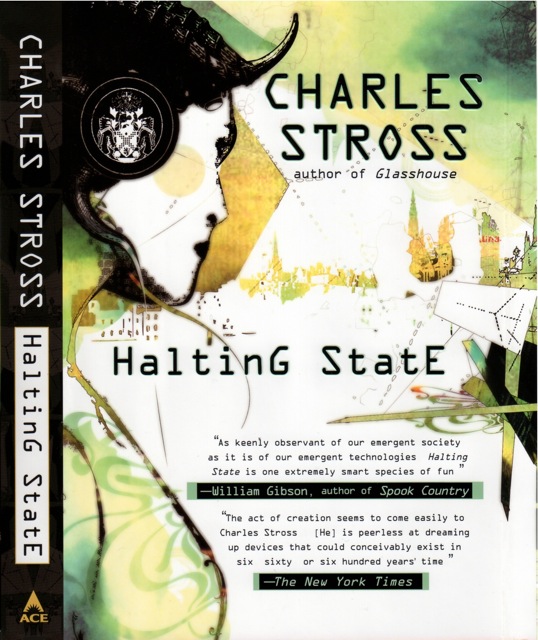
Charles Stross's Halting State opens as a near-future police procedural: a bank robbery inside a massively multiplayer online game turns out to mask a much larger cybercrime, investigated through shifting narrators using augmented-reality glasses and always-on networks. Its loose sequel, Rule 34, follows an Edinburgh police officer investigating a string of deaths linked by nothing but an obscure internet meme, in the same near-future Scotland. Both are standalone technothrillers connected by setting and tone rather than a continuing plot.
- The Jackpot Trilogy
series2 books2014
similar bytensenear futuresurveillancescience fiction+2 more
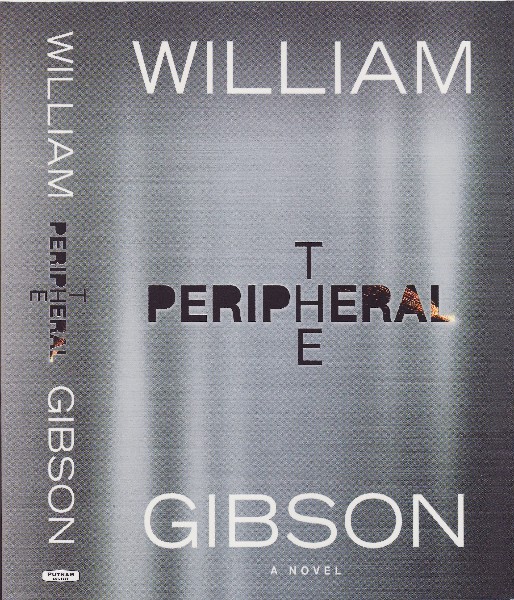
William Gibson's Jackpot sequence begins with The Peripheral (2014), a science-fiction thriller cross-cutting between a near-future American town and a devastated London seventy years on. Gibson continued the same world in Agency (2020), set slightly later in the near-future timeline.
- Kill Decision
Daniel Suarezstandalone novel2012
similar bytenseour worldnear futureartificial intelligencescience fictiontechno-thriller+1 more
Kill Decision is a science fiction novel by Daniel Suarez, published in 2012. It deals with themes of espionage, artificial intelligence, and warfare using robots and drones. The story deals with the fictional scenario where insurgents have created automated drones that identify enemies and make the decision to kill them without human intervention.
- Laurent Michaelmas
series3 books1975
completed
similar bytenseartificial intelligenceour worldnear futurescience fiction+1 more
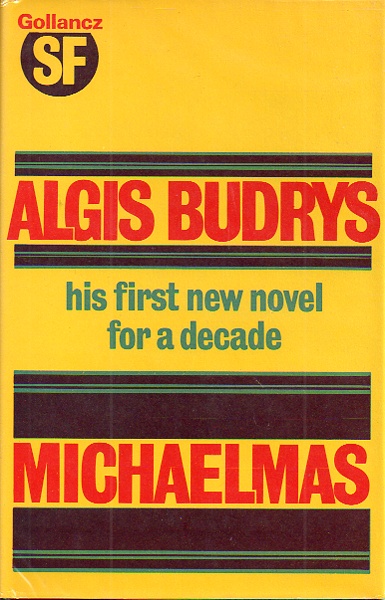
Algis Budrys' Michaelmas is a science-fiction novel about Laurent Michaelmas, a globally trusted television newsman who secretly steers world events from behind the scenes with the help of Domino, an artificial intelligence only he controls. Budrys frames Michaelmas as a hidden protector keeping a fragile near-future world from chaos, blurring the line between reporting the news and making it. It stands as a single novel, not part of a longer series.
- Oath of Fealty
Larry Niven & Jerry Pournellestandalone novel1981
similar bytenseour worldnear futurescience fiction+1 more
Oath of Fealty is a 1981 novel by American writers Larry Niven and Jerry Pournelle, published originally by Phantasia Press, then by Timescape Books, with numerous reprints. Set in the near future, it involves an arcology, a large inhabited structure, called Todos Santos, which rises above a crime-ridden Los Angeles, California, but has little beyond casual contact with the city. The novel popularized the phrase "think of it as evolution in action", which occurs elsewhere in Niven's books. The novel anticipated the building of the Los Angeles subway. It was included in David Pringle's book Science Fiction: The 100 Best Novels.
- Bridge Trilogy
series4 books1990
similar bynear futurescience fiction+3 more
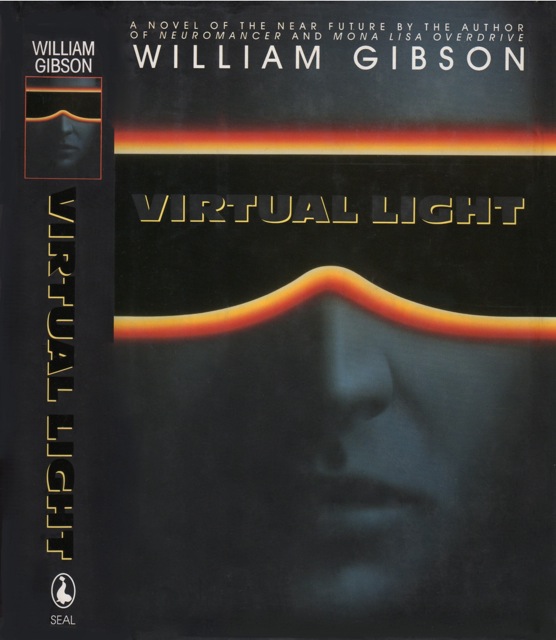
The Bridge trilogy is a series of novels by William Gibson, his second after the successful Sprawl trilogy. The trilogy comprises the novels Virtual Light (1993), Idoru (1996) and All Tomorrow's Parties (1999). A short story, "Skinner's Room", was originally composed for Visionary San Francisco, a 1990 museum exhibition exploring the future of San Francisco.
- Wired (Douglas E. Richards)
series2 books2012
similar bytensenear futureour worldscience fictiontechno-thriller
Wired opens Douglas E. Richards's two-book techno-thriller about genetic engineer Kira Miller, whose discovery of a way to unlock temporary savant-level intelligence turns her into both a scientific breakthrough and a fugitive, and David Desh, the former special-forces operative sent to track her down. The story escalates from a bioterror investigation into a fight over the future of engineered human cognition, continuing directly into the 2012 sequel Amped. Richards, primarily a science-fiction and thriller writer, built both books into New York Times and USA Today bestsellers rather than a longer franchise.
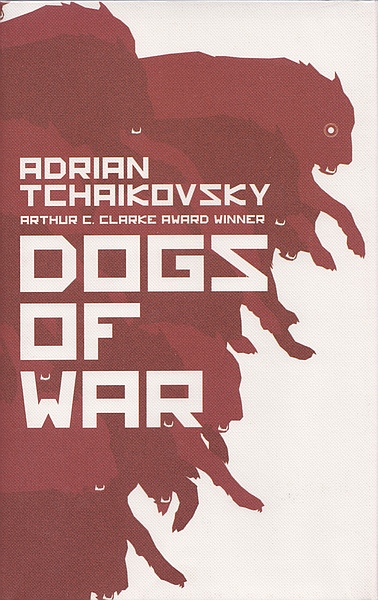
- Dogs of War (Adrian Tchaikovsky)
series3 books2017
similar byscience fictionour worldnear future+2 more
Adrian Tchaikovsky's Dogs of War follows Rex, a genetically engineered "Good Boy" - a hulking bioform supersoldier built for a private military contractor - as he begins to question the nature of his own obedience and personhood after his handler disappears. Dogs of War, Bear Head, and Bee Speaker widen from that first book's battlefield into questions of AI rights, corporate power, and non-human consciousness across a near-future Earth. The trilogy uses its engineered-animal soldiers to interrogate free will and loyalty rather than play them as straightforward action heroes.
- WWW Trilogy
series3 books2009
similar byour worldartificial intelligencescience fiction+2 more
The WWW Trilogy is a trilogy of science-fiction novels by Canadian science fiction author Robert J. Sawyer. The first book, Wake, was originally serialized in four parts in Analog Science Fiction and Fact from November 2008 to March 2009, published in book form through Ace on April 7, 2009, and was followed by the second book, Watch, on April 6, 2010. Wonder was published in 2011.
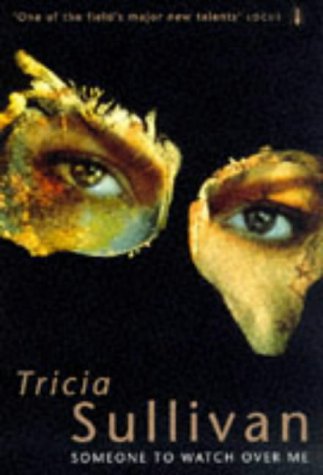
- Someone to Watch Over Me
Tricia Sullivanstandalone novel1997
similar byour worldnear futurescience fiction+2 more
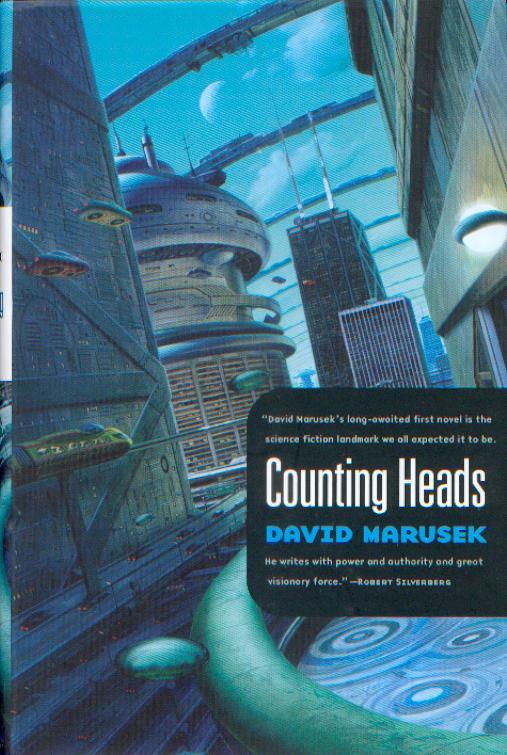
- Counting Heads
series2 books2005
similar bytenseour worldnear futureartificial intelligencescience fiction
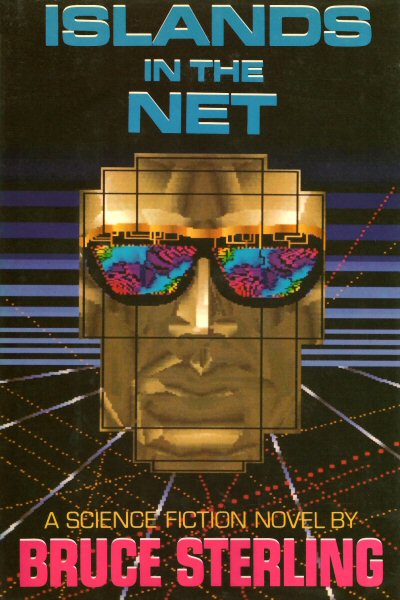
- Islands in the Net
Bruce Sterlingstandalone novel1988
similar bytenseour worldnear futuresurveillancescience fiction
Islands in the Net is a 1988 science fiction novel by American writer Bruce Sterling. It won the John W. Campbell Memorial Award for Best Science Fiction Novel in 1989, and was nominated for both the Hugo and Locus Awards that same year. It offers a view of an early 21st century world, apparently peaceful, with delocalised, networking corporations. The protagonist, swept up in events beyond her control, finds herself in places that are off the net, from a datahaven in Grenada, to a Singapore under terrorist attack, to the poorest and most disaster-struck parts of Africa.