More like Dagger
anchored on:fantasysecondary worldsword and sorcerybig city
but
- A Song of Ice and Fire
series14 books1996
part of World of Ice and Fire
similar bypolitical intriguefantasysecondary worlddark+1 more
A Song of Ice and Fire is a series of high fantasy novels by the American author George R. R. Martin. Martin began writing the first volume, A Game of Thrones, in 1991, and published it in 1996. Martin, who originally envisioned the series as a trilogy, has released five out of seven planned volumes. The most recent entry in the series, A Dance with Dragons, was published in 2011. Since then, Martin has been working on the sixth novel, titled The Winds of Winter. A seventh novel, A Dream of Spring, is planned to follow.
- Malazan Book of the Fallen
series20 books1999
part of Malazan
similar bysecondary worldfantasydark+2 more
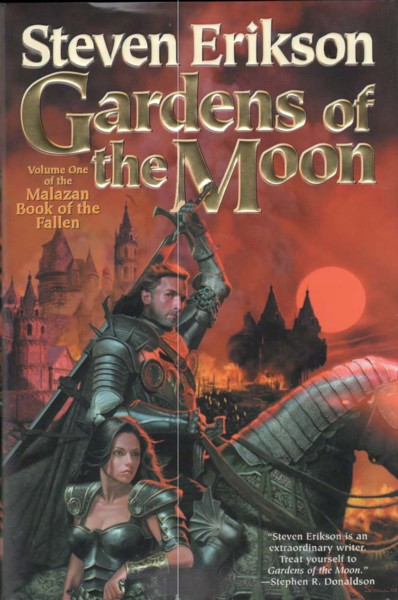
The Malazan Book of the Fallen is a series of epic fantasy novels written by the Canadian author Steven Erikson. The series, published by Bantam Books in the U.K. and Tor Books in the U.S., consists of ten volumes, beginning with Gardens of the Moon (1999) and concluding with The Crippled God (2011). Erikson's series presents the narratives of a large cast of characters spanning thousands of years across multiple continents.
- Malazan
universe36 books1999
Start hereMalazan Book of the Fallen · Start here
similar bysecondary worlddark+3 more
Pity the historian who tries to map this world; pity more the god who thinks he rules it. The Malazan Empire marches across continents on the boots of its common soldiers, and above them move Ascendants — mortals grown into something like gods, and gods worn thin as old coin. Magic is drawn from Warrens, roads of power threaded through reality; the dead keep their grudges; and every empire, however vast, is a wager against time. This is epic fantasy told from the mud, where a sapper cracking a joke weighs as much as an immortal settling a feud older than the human race. The world began as a tabletop campaign two friends built in the 1980s, and it still moves by two hands. Steven Erikson's ten-volume Malazan Book of the Fallen is the spine — Gardens of the Moon, Deadhouse Gates, Memories of Ice, on through The Crippled God — each book a near-standalone campaign that only later reveals how it locks together. Ian C. Esslemont walks the same years from a different vantage in his Novels of the Malazan Empire (Night of Knives, Return of the Crimson Guard onward). Around them stand the prequels: Erikson's Kharkanas Trilogy, archaic and elegiac, chronicling a doomed elder people, and Esslemont's brisker Path to Ascendancy, following two adventurers before they became legends. Erikson's Witness sequence carries the tale forward, and novellas of the genial necromancers Bauchelain and Korbal Broach supply the gallows comedy. Nothing is explained to you; comprehension is earned, and that is the pleasure. The themes run deep — compassion set against cruelty, the toll empires charge, civilizations that fall and are mourned. Begin where the saga does, with Erikson's Gardens of the Moon, and read the ten in publication order; the prequels are for the already-initiated. Trust that confusion is the price of entry.
- Throne of Glass
series15 books2012
similar bysecondary world+5 more
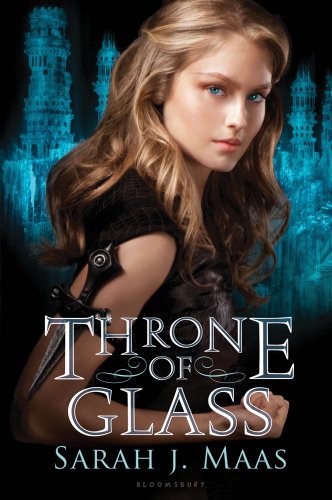
Throne of Glass is a epic fantasy novel series by American author Sarah J. Maas, beginning with the entry of the same name, released on August 2, 2012. The story follows the journey of Celaena Sardothien, a teenage assassin in a corrupt kingdom with a tyrannical ruler, the King of Adarlan. As the story progresses, Celaena forms unexpected bonds and uncovers a conspiracy amidst her adventures. The series concluded with the eighth book in October 2018.
- The Riftwar Universe
universe44 books1982
Start hereRiftwar Saga · Start here
similar byfantasysecondary world+2 more
On the world of Midkemia a tear opens in the air itself, a rift hung between stars, and through it march the armies of an empire from another world entirely. So begins the chronicle Raymond E. Feist has kept for three decades: the tale of Pug, a castle kitchen boy apprenticed to a magician on the very day the invasion lands, and of Tomas, his friend, who inherits the armor and the ancient fury of a dead dragon-lord. Around these two the Riftwar Cycle turns, widening book by book from one besieged frontier keep into the whole history of a world of kingdoms, guilds, thieves' dens and mage-towers. The cycle runs to roughly thirty novels, gathered into arcs a newcomer can enter and finish on their own. The founding Riftwar Saga (Magician, Silverthorn, A Darkness at Sethanon) sets the board; the Serpentwar Saga, Krondor's Sons and the Conclave of Shadows carry the story down the generations; the Darkwar, Demonwar and Chaoswar sagas bring it toward its close. Crossing the rift to the rival world of Kelewan, Feist and Janny Wurts wrote the Empire trilogy, opening with Daughter of the Empire, a court intrigue told wholly from the invaders' side and for many the finest thing here. Shorter Legends of the Riftwar and the game-born Riftwar Legacy fill the corners; later still, Feist opens an altogether new world in the Firemane books. Feist writes fantasy in its most companionable key: apprentices who grow into archmages, tavern boys who become spies and dukes, a world you return to the way you return to an old inn. The mood is adventure before dread, friendship and rank and hard-won craft, wars that cost something, all of it rendered plainly and at a gallop. Begin where it began, with Magician, then follow the arcs in the order they were written, and the rift will carry you the rest of the way.
- The Acacia Trilogy
series3 books2007
similar bypolitical intriguefantasysecondary worlddark+1 more
Acacia: The War with the Mein begins with an empire's ruling Akaran children fleeing after assassins from an exiled people kill their father, scattering the heirs into a wider world whose comfortable myths — and the drug trade and slavery underwriting the empire's peace — turn out to be far uglier than they were raised to believe. David Anthony Durham's trilogy, continuing through The Other Lands and The Sacred Band, follows the siblings as each confronts a different piece of the empire's hidden machinery.
- The Green Bone Saga
series5 books2017
similar bypolitical intriguetensefantasysecondary worldbig city+1 more
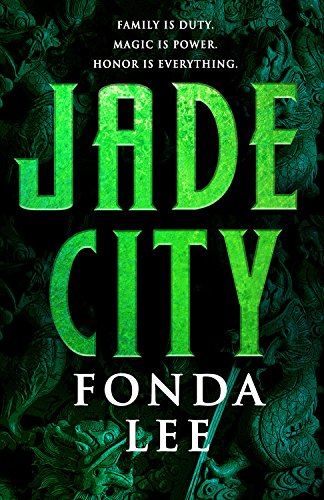
Jade City opens Fonda Lee's Green Bone Saga, following the Kaul family, leaders of one of two rival jade-dealing crime clans on the island nation of Kekon, where magic jade grants enhanced abilities to trained warriors and its trade underpins the whole social order. The series follows the Kaul siblings across decades as their clan's power is challenged from within and without, blending gangster-family drama with epic fantasy. It runs across three novels plus shorter companion works.
- Dragon Trilogies
series6 books1988
similar bypolitical intriguetensefantasysecondary world
The Dragon Prince and Dragon Star trilogies comprise six connected fantasy novels written by Melanie Rawn. The Dragon Prince trilogy focuses on Prince Rohan of the Desert and his Sunrunner wife, Sioned, while the Dragon Star trilogy focuses on their son, Pol. The Dragon Prince trilogy consists of novels Dragon Prince, The Star Scroll, and Sunrunner's Fire. The books in the Dragon Star trilogy are Stronghold, The Dragon Token, and Skybowl.
- Divine Cities
series3 books2014
similar bypolitical intriguefantasysecondary worldbig city+2 more
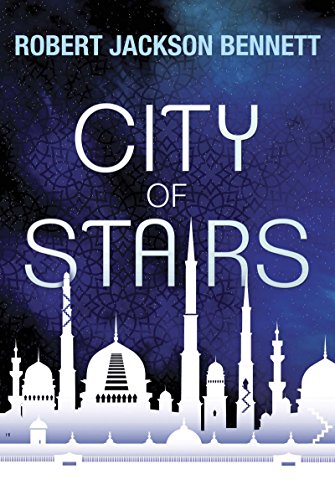
The Divine Cities is a trilogy of fantasy novels by the American writer Robert Jackson Bennett. It consists of the novels City of Stairs, City of Blades (2016) and City of Miracles (2017).
- Six of Crows
series3 books2015
part of Grishaverse
similar bytensefantasysecondary worldbig citydark
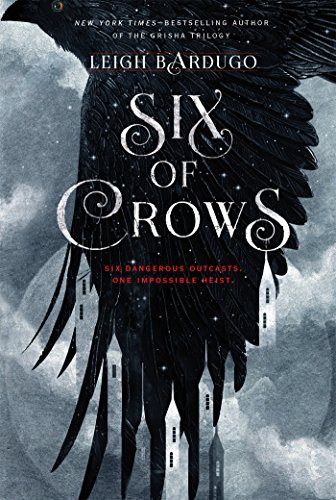
Leigh Bardugo's Six of Crows duology (2015-2016) follows a crew of six criminal teenagers in Ketterdam, a city modeled on the Dutch Republic, as they pull off a near-impossible heist and then deal with its fallout. Told from multiple points of view, the books lean on the found-family bond between the crew members as much as the caper plotting, and sit within Bardugo's wider Grishaverse alongside her Shadow and Bone books.
- The Lotus War
series4 books2012
similar byfantasysecondary worlddark+2 more
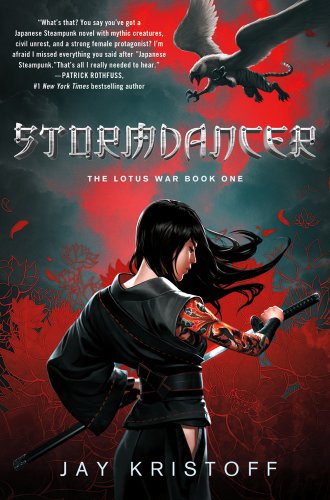
The Lotus War is Jay Kristoff's steampunk fantasy trilogy set in a pollution-choked, Japanese-inspired empire: Stormdancer (2012), Kinslayer and Endsinger, with the novella The Last Stormdancer as a coda. It follows a young woman who tames a griffin-like beast thought extinct, drawing her into a rebellion against the empire's oppressive Shogunate. It is a complete trilogy plus novella.
- The Nikolai Duology
series2 books2019
part of Grishaverse
similar bypolitical intriguetensefantasysecondary worlddark
Leigh Bardugo's Nikolai Duology picks up Nikolai Lantsov and Zoya Nazyalensky from her earlier Grishaverse trilogy set in Ravka, now dealing with the kingdom's fallout as king and general, and adds Nina Zenik from the Six of Crows spin-off working a mission out of Ketterdam. King of Scars and its sequel Rule of Wolves tie together threads from across the wider Grishaverse rather than starting fresh, raising the stakes to a hidden threat inside Nikolai himself. It functions as the convergence point for Bardugo's separate Grishaverse story lines.
- Chronicle of the Unhewn Throne Universe
series6 books2014
similar bytensesecondary worldfantasydark+2 more
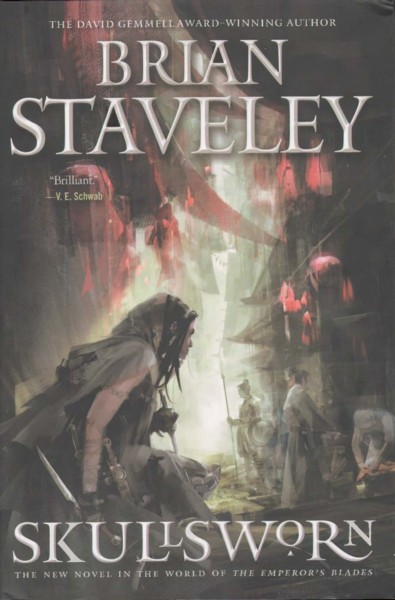
Skullsworn is Brian Staveley's standalone prequel novel, set in the same world as his epic fantasy trilogy The Chronicle of the Unhewn Throne. It was written to work as an entry point on its own rather than requiring the trilogy first. Staveley later expanded the same setting further with a full sequel series, Ashes of the Unhewn Throne.
- Nazhuret of Sordaling / Lens of the World
series3 books1990
similar byfantasysecondary world+4 more
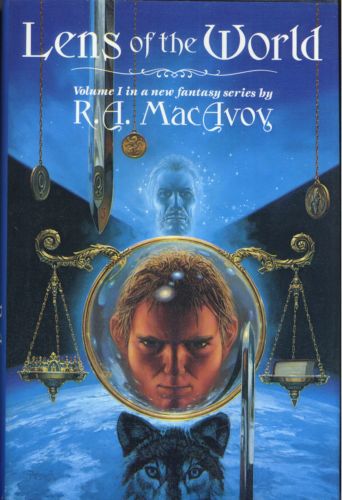
Lens of the World is narrated by Nazhuret, an orphan and outcast who rises from the bottom of the Sordaling military school to become a formidable warrior, philosopher, and eventually confidant to the king of Bestinglon, telling his own unlikely rise in his own words. R. A. MacAvoy's trilogy continues through King of the Dead and Winter of the Wolf, following Nazhuret further into the politics of a court he was never meant to be part of.
- The Traitor Spy Trilogy
series3 books2010
part of Kyralia series
similar bypolitical intriguefantasysecondary world+1 more
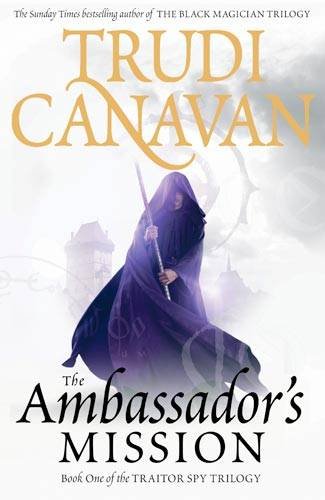
Trudi Canavan is an Australian writer of fantasy novels, best known for her best-selling fantasy trilogies The Black Magician and Age of the Five. While establishing her writing career she worked as a graphic designer. She completed her third trilogy, The Traitor Spy trilogy, in August 2012 with The Traitor Queen. Subsequently, Canavan has written a series called Millennium's Rule, with a completely new setting consisting of multiple worlds which characters can cross between. Though originally planned as a trilogy, a fourth and final book in the Millennium's Rule series was published.
- Shadow
Dave Duncanstandalone novel1987
similar bypolitical intriguefantasysword and sorcerysecondary world+1 more
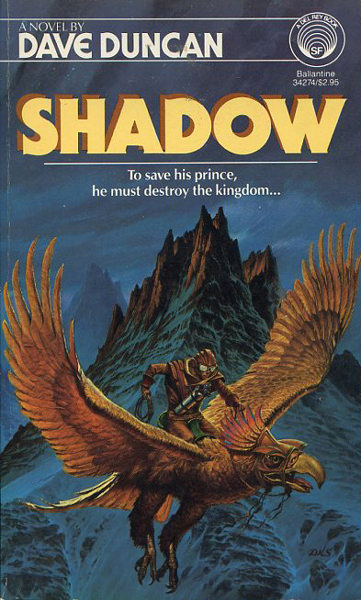
Sald Harl would like nothing more than to soar on the wings of his noble eagle, but his youthful rides in the sky are cut short by an appointment to guard the prince. Sald watches his dreams of flight fade with his name and independence as he takes over his bodyguard duties. During a perilous journey to the edges of the kingdom a dark secret comes to life. Now the great Prince Shadow is accused of treason and Sald must orchestrate a desperate plan of escape or he will lose the one thing he has been ordered to defend. The only option of freedom in sight is a dangerous flight that no one has ever survived. Once again Sald may feel the freedom of souring though the air unchained from the shackles of servitude.
- Blood Over Bright Haven
M. L. Wangstandalone novel2023
similar bytensefantasysecondary worldbig citydark+1 more
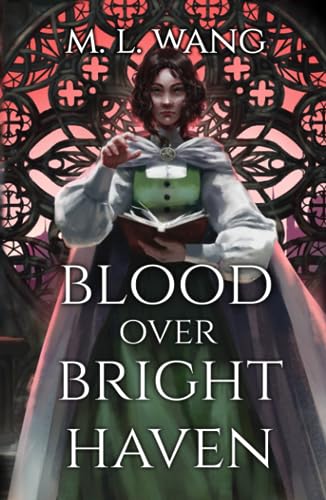
Magic has made the city of Tiran an industrial utopia, but magic has a cost—and the collectors have come calling. An orphan since the age of four, Sciona has always had more to prove than her fellow students. For twenty years, she has devoted every waking moment to the study of magic, fueled by a mad desire to achieve the impossible: to be the first woman ever admitted to the High Magistry. When she finally claws her way up the ranks to become a highmage, however, she finds that her challenges have just begun. Her new colleagues will stop at nothing to let her know she is unwelcome, beginning with giving her a janitor instead of a qualified lab assistant. What neither Sciona nor her peers realize is that her taciturn assistant was once more than a janitor; before he mopped floors for the mages, Thomil was a nomadic hunter from beyond Tiran’s magical barrier. Ten years have passed since he survived the perilous crossing that killed his family. But working for a highmage, he sees the opportunity to finally understand the forces that decimated his tribe, drove him from his homeland, and keep the Tiranish in power. Through their fractious relationship, mage and outsider uncover an ancient secret that could change the course of magic forever—if it doesn’t get them killed first. Sciona has defined her life by the pursuit of truth, but how much is one truth worth with the fate of civilization in the balance? A standalone dark academia brimming with mystery, tragedy, and the damning echoes of the past. For fans of Leigh Bardugo, V. E. Schwab, and Fullmetal Alchemist.
- Lightbringer
series5 books2010
similar bysecondary world+3 more
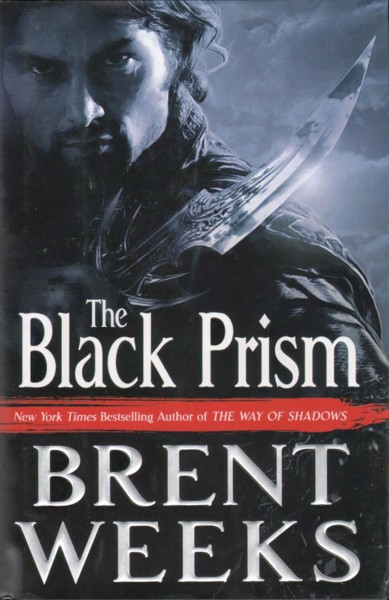
The Black Prism introduces Gavin Guile, the Prism — supreme religious and political authority over the Seven Satrapies, and the only person able to draft every color of magical light into solid, structural "luxin" — as an uprising and a hidden family secret both threaten to unravel the fragile peace he's built. Brent Weeks's five-book Lightbringer series pushes its chromaturgy magic system toward its physical and moral limits: drafters who overuse their color eventually "break the halo" and turn into monsters called wights.
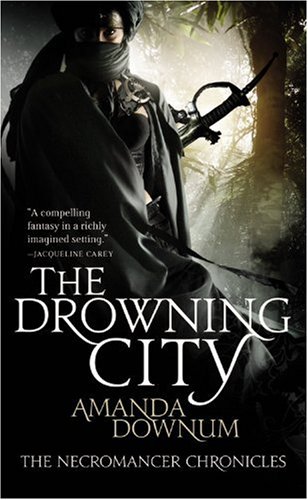
- The Necromancer Chronicles
series4 books2009
similar bypolitical intriguefantasysecondary worlddark+2 more
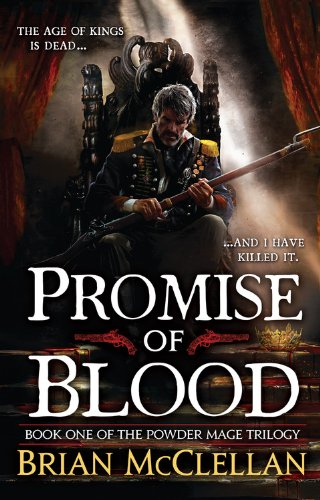
- The Powder Mage
universe19 books2013
Start hereThe Powder Mage Trilogy · Start here
similar bypolitical intriguetensesecondary worldfantasy
Load your powder, and pray your sorcery outruns their cannon. Here the age of kings is ending at musket-point: a world where black powder is not merely fired but eaten, and the men and women called powder mages snort a pinch of it to burn a trance across the battlefield — igniting an enemy's cartridges from a mile off, bending a bullet mid-flight, reading a room by the taste of the air. Against them stand the Privileged, glove-fingered sorcerers of the old order who summon fire and frost, and above both, gods who have not finished walking the earth. Brian McClellan builds this flintlock world across two linked trilogies. The Powder Mage Trilogy — Promise of Blood, The Crimson Campaign, The Autumn Republic — opens with a field marshal's coup against a rotten monarchy and the invasion, revolution, and divine reckoning that follow. Gods of Blood and Powder — Sins of Empire, Wrath of Empire, Blood of Empire — crosses the ocean a decade on to the colonial frontier of Fatrasta, where old soldiers, spies, and a heretic goddess collide. A run of novellas and short stories fills the corners between. Expect grapeshot and gunsmoke, siege lines and back-alley intrigue, generals and con men given equal weight. Begin at Promise of Blood and read in publication order — the trilogies run in sequence, and the short work is seasoning, not prerequisite.