More like Dangerous Notes
anchored on:europe
but
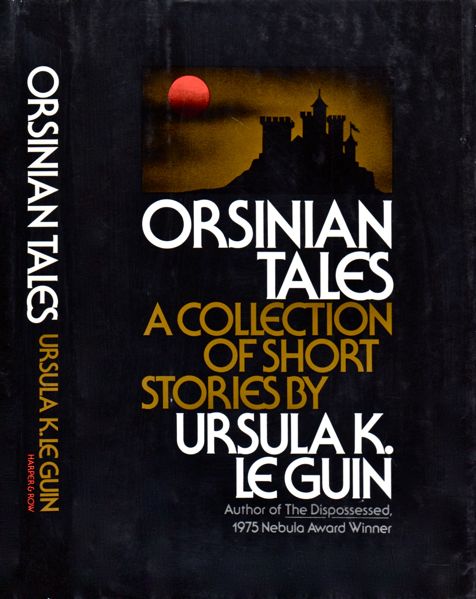
- Orsinia
series16 books1961
completed
similar byreflectivehistorical fiction+2 more
Orsinia is Ursula K. Le Guin's invented Central European country, used as the setting for character-driven historical fiction rather than her more famous science fiction and fantasy: the linked short stories of Orsinian Tales and the novel Malafrena, set among failed 1820s revolutionaries. There's no ongoing plot connecting the pieces; Orsinia functions more as a shared place and history than a series with continuing characters.
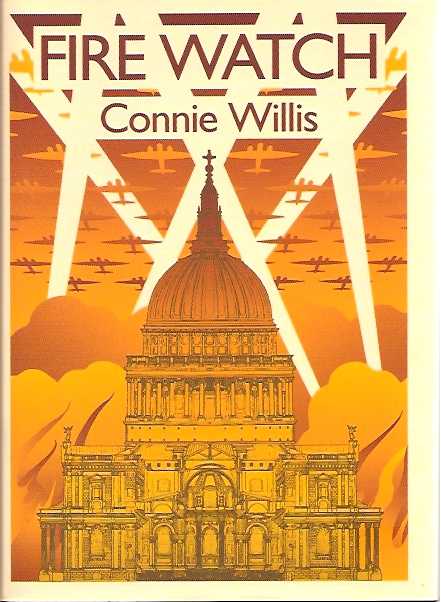
- Oxford Time Travel
series6 books1982
similar byscience fictioneurope+2 more
Connie Willis's Oxford Time Travel novels are set at a near-future Oxford University where historians travel into the past as observers, constrained by a version of history that resists any change large enough to alter real events. Doomsday Book sends a medieval historian to what should be 1320 but turns out to be the Black Death year of 1348, intercut with a present-day epidemic at Oxford; To Say Nothing of the Dog returns to the same time-travel program for a lighter, Victorian-set story with different characters. The two novels share their setting and rules rather than a directly continuing plot.
- Kesh / Always Coming Home
series10 books1984
similar byreflectivescience fiction+2 more
Ursula K. Le Guin's Always Coming Home imagines the Kesh, a society living in California's Napa Valley long after an unspecified societal collapse, presented not as a conventional novel but as a found archive of Kesh stories, poems, glossaries and 'anthropological' material assembled by a fictional visiting scholar-narrator. The book was originally released with a companion cassette, Music and Poetry of the Kesh, featuring original compositions by Todd Barton for instruments and songs described in the text. It's one of Le Guin's most formally experimental works, closer to an invented ethnography than a traditional science-fiction narrative.
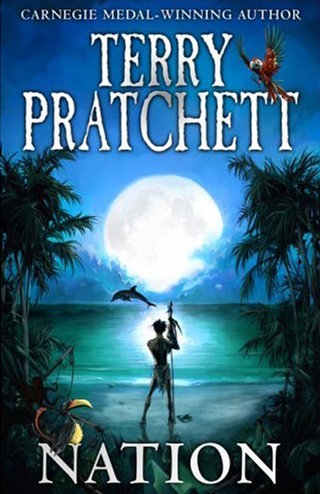
- Nation
Terry Pratchettstandalone novel2008
similar byreflectivecoming of age19th centuryemotional+1 more
From copyright page: "After a devastating tsunami destroys all that they have ever known, Mau, an island boy, and Daphne, an aristocratic English girl, together with a small band of refugees, set about rebuilding their community and all the things that are important in their lives."
- The Island of Dr. Moreau
series12 books1896
similar byscience fiction19th century
H. G. Wells's 1896 novel The Island of Doctor Moreau follows a shipwrecked man stranded on a remote island where a reclusive scientist creates human-animal hybrids through vivisection, using the scenario to probe questions of cruelty, control, and what separates humanity from the beasts it experiments on. The premise has drawn later reimaginings gathered alongside it here, including Brian Aldiss's Moreau's Other Island and Silvia Moreno-Garcia's The Daughter of Doctor Moreau, each transplanting Wells's central idea into a new setting and voice. Taken together, the group traces one unsettling premise across more than a century of speculative fiction rather than forming a single ongoing story.
- Earth's Children
series6 books1980
similar bycoming of ageeuropehistorical fiction+2 more
Earth's Children is a series of epic historical fiction novels written by Jean M. Auel set circa 30,000 years before the present day. There are six novels in the series. Although Auel had previously mentioned in interviews that there would be a seventh novel, publicity announcements for the sixth confirmed that it would be the final book in the sequence.
- Stranger in a Strange Land
Robert A. Heinleinstandalone novel1961
similar byreflectivescience fictioncoming of age
Stranger in a Strange Land is a 1961 science fiction novel by the American author Robert A. Heinlein. It tells the story of Valentine Michael Smith, a human who comes to Earth in early adulthood after being born on the planet Mars and raised by Martians, and explores his interaction with and eventual transformation of Terran culture.
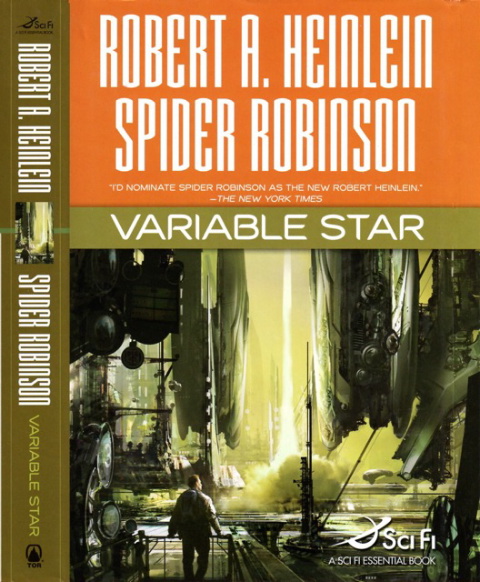
- Variable Star
Robert A. Heinlein & Spider Robinsonstandalone novel2006
similar byscience fictioncoming of agemusic+1 more
Variable Star is a 2006 science fiction novel by American author Spider Robinson, based on the surviving seven pages of an eight-page 1955 novel outline by Robert A. Heinlein, who died in 1988. The book is set in a divergent offshoot of Heinlein's Future History and contains many references to works by Heinlein and other authors. It describes the coming of age of a young musician who signs on to the crew of a starship as a way of escaping from a failed romance. Robinson posted a note on his website in 2009 noting that his agent had sold a trilogy of sequels based on the novel and its characters.
- Childhood's End
Arthur C. Clarkestandalone novel1953
similar byreflectivescience fiction+1 more
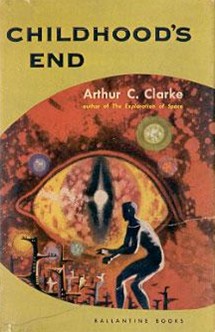
Childhood's End is a 1953 science fiction novel by the British author Arthur C. Clarke. The story follows a peaceful alien invasion of Earth by mysterious Overlords, whose arrival begins decades of apparent utopia under indirect alien rule, at the cost of human identity and culture.
- Time and Again
series2 books1970
completed
similar byscience fiction+3 more
Time and Again (1970) follows Si Morley, a commercial artist recruited into a secret government project that sends him back to Manhattan in 1882, where he falls for a woman named Julia while weighing whether he can, or should, alter the past; Jack Finney illustrates the story with period photographs and engravings. The sequel, From Time to Time (1995), continues Si's story with a further trip into the past.
- The Giver
series5 books1993
similar byscience fiction+2 more
The Giver Quartet is a series of four books about a dystopian world by American author Lois Lowry, which consists of The Giver (1993), Gathering Blue (2000), Messenger (2004), and Son (2012). The first book won the 1994 Newbery Medal and has sold more than 50 million copies. The story takes place at an unknown point of time within the future. Each book has a different protagonist but is set in the same futuristic era.
- Tales of a Darkening World
series17 books1954
completed
similar byscience fiction+2 more
Edgar Pangborn's loose post-apocalyptic sequence is set generations after an unspecified war has reduced North America to small, pseudo-medieval communities ruled by a Church that actively suppresses old technology and persecutes mutants. Davy, the best-known entry, follows its roguish narrator from indentured servitude to a fragile reformist community rebuilt on an island; The Judgment of Eve and the story collection Still I Persist in Wondering return to the same world and some of its people. It's gentler and more concerned with human folly than most post-apocalyptic fiction of its era.
- The Moon and the Sun
Vonda N. McIntyrestandalone novel1997
similar byscience fictioneuropehistorical fictionemotional+1 more
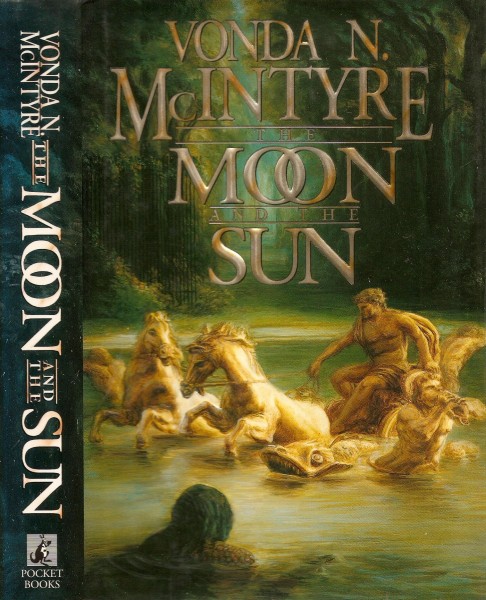
The Moon and the Sun is a novel by American writer Vonda N. McIntyre, published in 1997. The book combines two major genres: science fiction and historical romance. It won the Nebula Award for Best Novel in 1997, beating out A Game of Thrones by George R. R. Martin. The novel was inspired by the short story "The Natural History and Extinction of the People of the Sea", also by McIntyre, which was illustrated by fellow author Ursula K. Le Guin.
- The City and the Stars
Arthur C. Clarkestandalone novel1956
similar byreflectivescience fiction+1 more
The City and the Stars is a science fiction novel by British writer Arthur C. Clarke, published in 1956. This novel is a complete rewrite of Clarke's earlier Against the Fall of Night, his first novel, which had been published in Startling Stories magazine in 1948 after being rejected by the editor of Astounding Science-Fiction, according to the author.
- The Dreaming Jewels
Theodore Sturgeonstandalone novel1950
similar byscience fictionemotional+2 more
The Dreaming Jewels (1950), also known as The Synthetic Man, is a science fiction novel by American writer Theodore Sturgeon. It was his first published novel.
- The Chrysalids
John Wyndhamstandalone novel1955
similar byreflectivescience fictioncoming of age
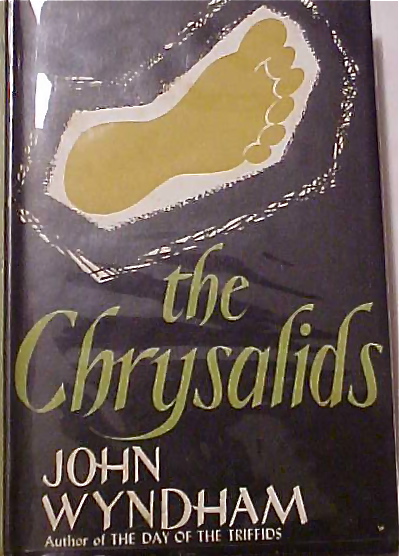
The Chrysalids is a science fiction novel by British writer John Wyndham, first published in 1955 by Michael Joseph. It is the least typical of Wyndham's major novels, but regarded by some as his best. An early manuscript version was entitled Time for a Change.
- Hiddensee
Gregory Maguirestandalone novel2017
similar byreflectiveeurope19th century+1 more
Presents an imaginative tale rooted in early nineteenth-century German Romanticism that explores parallels between the origin legend of the famous Nutcracker with the life of Drosselmeier, the toymaker who carves him.
- Ender Wiggin
series14 books1977
part of Ender's Game Universe
similar byscience fiction+3 more
Orson Scott Card's Ender's Game (1985, expanded from his 1977 novella) follows child prodigy Andrew "Ender" Wiggin as he is recruited into a military training program built to prepare Earth's defenses for an anticipated third war against an insectoid alien species known as the Formics. The saga continues years later through Speaker for the Dead and Xenocide, following an older Ender as he confronts the moral weight of his role in that earlier conflict, and concludes the core arc in Children of the Mind, with Ender in Exile filling in the years between the first two books. Set within the wider Ender's Game universe, the series shifts from military coming-of-age story to slower, more philosophical science fiction as it progresses.
- Earth Abides
George R. Stewartstandalone novel1949
similar byreflectivescience fiction+1 more
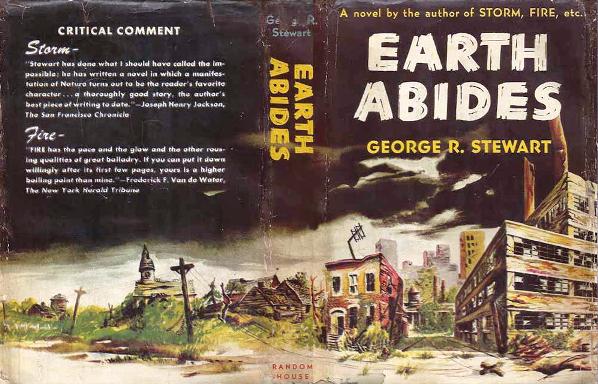
The novel tells the story of the fall of civilization from deadly disease and the emergence of a new culture with simpler tools. Set in the 1940s in Berkeley, California, the story is told by Isherwood Williams, who emerges from isolation in the mountains to find almost everyone dead. en.wikipedia.org
- Villette
Charlotte Brontëstandalone novel1853
similar byreflectivecoming of ageeurope19th centuryemotional
Villette is an 1853 novel written by English author Charlotte Brontë. After an unspecified family disaster, the protagonist Lucy Snowe travels from her native England to the fictional Continental city of Villette to teach at a girls' school, where she is drawn into adventure and romance.
- Galileo's Dream
Kim Stanley Robinsonstandalone novel2009
similar byreflectivescience fictioneuropehistorical fiction
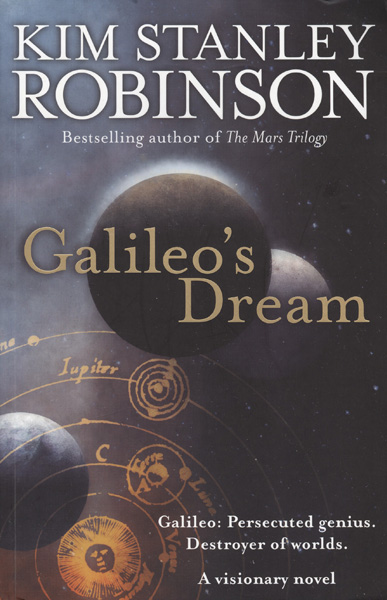
Galileo's Dream (2009) is a science fiction novel with elements of historical fiction, written by Kim Stanley Robinson. In the book, 17th-century scientist Galileo Galilei is visited by far-future time travelers living on the Galilean moons of Jupiter. Italicized portions of text within the novel are "mostly from Galileo's writing or that of his contemporaries."
- A Clockwork Orange
series4 books1962
completed
similar byscience fiction+2 more
Anthony Burgess's 1962 novel is narrated by Alex, a teenage gang leader in a near-future Britain gripped by a youth subculture of extreme violence, recounting his crimes in Nadsat, an invented slang blending English with Russian-derived words. After his crimes catch up with him, Alex is made the subject of a controversial state program meant to forcibly reform his behavior, and the novel uses his ordeal to question whether imposed goodness is worth the loss of free will. It is a standalone novel.
- Gravity's Rainbow
Thomas Pynchonstandalone novel1973
similar byeurope+3 more
Gravity's Rainbow is a 1973 postmodern novel by Thomas Pynchon. The narrative is set primarily in Europe at the end of World War II and centers on the design, production and dispatch of V-2 rockets by the German military. In particular, it features the quest undertaken by several characters to uncover the secret of a mysterious device, the Schwarzgerät, which is slated to be installed in a rocket with the serial number "00000".