Loreful
HomeDiscover
Search series, authors…⌘K
Loreful

Reading orders for SF/F series and shared universes — with your place kept in every one.

Explore

UniversesSeriesWorksAuthorsAtlas

Help

FAQAboutSite map

Account & legal

Sign inCreate accountPrivacyTerms

Data

Built on ISFDB, Wikipedia, Wikidata and Open Library. Curated reading orders carry their reasoning on the page; the rest follow publication order. Data sources & licenses

© Loreful · data: ISFDB · CC BY

More like Danse Macabre

anchored on:weird fiction

but

Mood

The mood the book leaves you in.

  • The reading experience is propelled by journeys, exploration, and physical risk; excitement and forward momentum dominate over dread or introspection.
  • Joy and loss are deliberately mixed; the resolution grants characters something real while taking something else away, leaving warmth and sorrow together.
  • The book demands work from the reader — dense prose, difficult structure, unfamiliar ideas, or morally uncomfortable material — as part of its intended effect.
  • Grim events, cruelty, or despair dominate the atmosphere, and the book does not soften them with comfort or comic relief.
  • The atmosphere is quietly unsettling — wrongness, unease, and the uncanny pervade the book without necessarily escalating into overt horror.
  • The book is built to move the reader; character feeling is foregrounded and major scenes aim at a strong emotional response.
  • Humor is a primary aim and the prose plays for laughs — comic situations, wit, or dialogue produce sustained comedy, not occasional levity.
  • The overall register is cheerful and easygoing; stakes are kept gentle and the book avoids dwelling on pain or dread.
  • Withheld information drives the experience; the book sustains enigmas and secrets the reader wants resolved, whatever its genre.
  • The book is contemplative and inward-looking, giving more weight to thought, memory, and meaning than to external events.
  • Grief, loss, or melancholy set the dominant register, and the book lets sorrow stand rather than resolving it into comfort.
  • Sustained suspense is the point; the book keeps the reader braced for what happens next through danger, pressure, or impending revelation.
  • Playful invention and charm define the register — fanciful conceits, light absurdity, and a narration that delights in its own oddity.

About

What the story runs on.

  • Stories in which extraterrestrial beings are central — as characters, cultures, or the object of the plot.
  • Stories in which demons or devils — infernal beings, their bargains, possessions, and hierarchies — drive the plot.
  • Stories about the raised or restless dead — necromancers and their arts, liches, skeletons, and revenants.
  • Stories in which gods and deities act as characters — walking the world, meddling in mortal lives, or dying.
  • Stories driven by a curse laid on a person, family, or place, and the struggle to live under it or break it.
  • Stories in which staying alive against nature, catastrophe, or scarcity is the central problem.
  • Stories about who a character truly is — self-discovery, doubled lives, and the search for a self.
  • Stories about mental unraveling — descent into madness, delusion, and minds at war with themselves.
  • Stories about mourning — living through the death of a loved one and what loss does to the survivors.
  • Stories about isolation and estrangement — characters cut off from connection, by circumstance or by nature.
  • Stories in which a buried family truth — hidden parentage, crimes, or shames — surfaces and reorders the present.
  • Stories organized around investigating a killing — the case, the clues, and the pursuit of the killer, in any genre's clothing.

Shelf

Where it sits in the library.

    • Fiction built on magic or other supernatural elements that have no scientific explanation.
    • Secondary-world fantasy at large scale, where the fate of nations or the world turns on the protagonists' struggle.
    • Fantasy set in a recognizably modern city or contemporary world where the supernatural intrudes on everyday life.
    • Fantasy that blends in horror's atmosphere and imagery, keeping a fantastical frame around grim or frightening material.
    • Action-driven fantasy following warriors or rogues with personal stakes against sorcerous threats, rather than world-spanning conflicts.
    • Fantasy set in a real historical period or a close analogue of one, with magic woven into the era.
    • Fantasy drawing directly on myths, legends, and folklore, retelling them or building on their figures and logic.
    • Fantasy of ghosts, vampires, shapeshifters, psychics, and similar phenomena, usually set in an otherwise ordinary world.
    • Fiction mixing science-fictional trappings with overtly magical or impossible elements in one setting.
    • Fiction that extrapolates from science and technology — future societies, space travel, or speculative inventions — within at least nominally natural laws.
    • Science fiction of interstellar scope — starships, galactic polities, and adventure across star systems.
    • Science fiction centered on armed forces and warfare, told largely from a military point of view.
    • Science fiction of networked, corporate-dominated near futures, pairing high technology with social decay.
    • Science fiction styled on nineteenth-century steam-powered technology, often in a Victorian or pseudo-Victorian setting.
    • Fiction depicting an oppressive or catastrophic society, presented as a warning.
    • Fiction set after civilization's collapse, following survivors in the ruins of the old world.
    • Fiction in which characters move between past and future, and the mechanics or consequences of that travel drive the plot.
    • Fiction exploring a world where a historical event went differently and history diverged from ours.
    • Science fiction about humanity's first encounter and communication with an alien intelligence.
    • Science fiction in which extraterrestrial forces attack or occupy Earth and humanity resists.
    • Fiction whose primary aim is to frighten or unsettle the reader through dread, menace, or the monstrous.
    • Horror of vast, indifferent, incomprehensible entities before which humanity is insignificant, in the Lovecraft tradition.
    • Horror of decaying houses, buried family secrets, and oppressive atmosphere in the Gothic literary tradition.
    • Horror centered on hauntings and the returning dead.
    • Horror located in the mind — paranoia, obsession, and unreliable perception rather than external monsters.
    • Horror built around the reanimated dead and survival amid their outbreaks.
    • Horror defined by explicit, transgressive gore that refuses to cut away from violence.
    • Speculative fiction of the strange and uncanny that resists both natural explanation and standard genre categories.
    • Fiction organized around solving a crime or puzzle, typically following an investigator toward the identification of a culprit.
    • A puzzle-first mystery that lays out clues so the culprit's identity can be deduced before the reveal.
    • Crime fiction of moral ambiguity, fatalism, and hard-edged style, set among the corrupt and the doomed.
    • A mystery set in a past era, where the investigation works within that period's methods and society.
    • Fast-paced fiction driven by imminent danger, pursuit, or high-stakes conspiracy, built to sustain tension.
      • Fiction whose central plot is a romantic relationship and its development toward an emotionally satisfying resolution.
        • Fiction set in a real past period, where the historical setting materially shapes characters and events.
          • General and literary fiction emphasizing prose style, character interiority, or formal ambition over genre plot conventions.
          • Fiction in a realistic world where magical events occur and are treated as ordinary, in the tradition of Latin American literature.
          • Fiction that ridicules people, institutions, or society in order to criticize them.
          • Fiction that plays with narrative convention through metafiction, fragmentation, and self-reference.
          • Fiction propelled by journeys, exploration, and physical peril, where action and survival carry the plot.
          • Adventure fiction of ships and seafaring — naval engagements, voyages, and life at sea.
          • Fiction of the American frontier West — gunmen, ranchers, and lawmen, typically in the late nineteenth century.
          • Fiction centered on soldiers, campaigns, and the experience of warfare, historical or imagined.
            • Fiction written primarily to amuse, using comedic situations, wit, or parody as its organizing principle.

            Practical

            How long a commitment, whether it stands alone, and whether it has finished.

            Tap a chip to ask for it · tap again to rule it out · once more to clear. Numbers show what would be left.

            • Cover of The House on the Borderland
              The House on the Borderland

              William Hope Hodgson · standalone novel · 1908

              similar byweird fiction

              The House on the Borderland (1908) is a supernatural horror novel by British fantasist William Hope Hodgson. The novel is a hallucinatory account of a recluse's stay at a remote house, and his experiences of supernatural creatures and otherworldly dimensions.

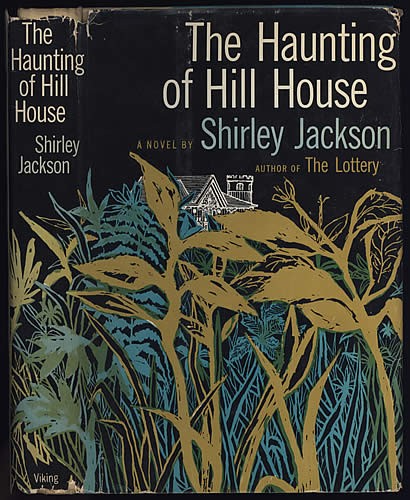
            • Cover of The Haunting of Hill House
              The Haunting of Hill House

              Shirley Jackson · standalone novel · 1959

              similar byweird fiction

              The Haunting of Hill House is a 1959 gothic horror novel by American author Shirley Jackson. It was a finalist for the National Book Award and has been made into two feature films, a play, and is the basis of a Netflix series.

            • Cover of New Crobuzon
              New Crobuzon

              series · 4 books · 2000

              similar byweird fiction

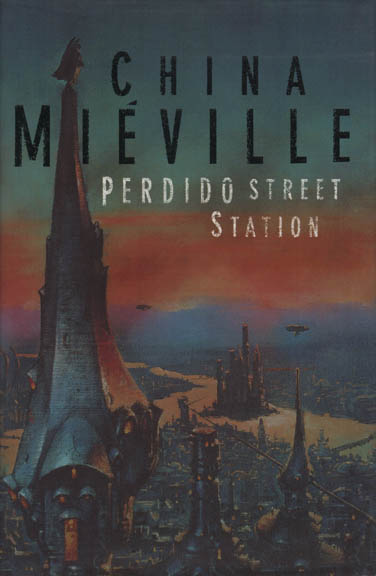
              The New Crobuzon books are three standalone novels by China Miéville set in and around New Crobuzon, a vast, corrupt industrial city in his invented world of Bas-Lag where magic, biopunk technology, and several sentient species coexist. Perdido Street Station follows a renegade scientist and his lover after an experiment unleashes something monstrous on the city, while The Scar and Iron Council return to the same setting with different casts and only loose continuity between books.

            • Cover of The Purple Cloud
              The Purple Cloud

              M. P. Shiel · standalone novel · 1901

              similar byweird fiction

              Around 1900, the author receives a packet of writings of a psychic, who recounts her vision of the multi-decade diary of an arctic explorer of the future, the first to reach the north pole; but during his multiyear trek, an unknown eruption temporarily poisons the atmosphere with cyanide, killing all human and animal life, sparing only the arctic latitudes and leaving him the last man on earth.

            • Cover of From a Buick 8
              From a Buick 8

              Stephen King · standalone novel · 2002

              similar byweird fiction

              From a Buick 8 is a horror novel by American writer Stephen King. Published on September 24, 2002, this is the second novel by King to be centred around a car. The title comes from Bob Dylan's song "From a Buick 6".

            • Cover of Southern Reach Trilogy
              Southern Reach Trilogy

              series · 4 books · 2014

              similar byweird fiction

              The Southern Reach Series is a series of novels by the American author Jeff VanderMeer first published in 2014—Annihilation, Authority, Acceptance, and Absolution. The series takes its name from the secret agency that is central to the plot. In 2013, Paramount Pictures bought the movie rights for the series, and a film adaptation of Annihilation was made with Alex Garland as writer-director. The film was released in 2018. The most recent book in the series, Absolution, was released on 22 October 2024.

            • Cover of Our Lady of Darkness
              Our Lady of Darkness

              Fritz Leiber · standalone novel · 1977

              similar byweird fiction

              Our Lady of Darkness (1977) is an urban fantasy novel by American author Fritz Leiber. The novel is distinguished for three elements: the heavily autobiographical elements in the story, the use of Jungian psychology that informs the narrative, and its detailed description of "megapolisomancy", a fictional occult science. It was originally published in shorter form as The Pale Brown Thing.

            • Cover of Railsea
              Railsea

              China Miéville · standalone novel · 2012

              similar byweird fiction

              Railsea is a young adult novel written and illustrated by English writer China Miéville, and published in May 2012. Miéville described the novel as "weird fiction", io9 labelled its mix of fantasy and steampunk elements as "salvagepunk" and the story has been seen as an "affectionate parody" of Herman Melville's classic 1851 novel Moby-Dick, also drawing on Robert Louis Stevenson's adventure novels Treasure Island and Kidnapped.

            • Cover of The Cosmic Puppets
              The Cosmic Puppets

              Philip K. Dick · standalone novel · 1957

              similar byweird fiction

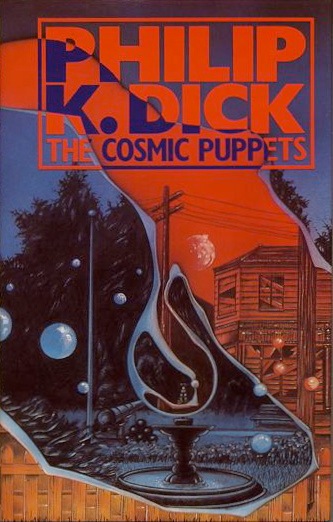
              The Cosmic Puppets is a science fiction novel by American author Philip K. Dick, published in 1957. It is a novelization of a short story initially published in the December 1956 issue of Satellite Science Fiction. The Cosmic Puppets was first published as a novel by Ace Books as one half of Ace Double D-249, bound dos-à-dos with Sargasso of Space by Andrew North .The story follows Ted Barton, a man who returns to his childhood hometown of Millgate, Virginia, only to discover that it has been erased from all official records and is now a surreal place where the laws of reality are distorted. Barton learns that the town is a battleground in a cosmic struggle between two ancient beings, a conflict that has twisted the fabric of his home and the memories of its inhabitants.

            • Cover of The Collected Fiction of William Hope Hodgson
              The Collected Fiction of William Hope Hodgson

              series · 6 books · 1907

              completed

              similar byweird fiction

            • Cover of The Staircase in the Woods
              The Staircase in the Woods

              Chuck Wendig · standalone novel · 2025

              similar byweird fiction

              While on a camping trip, five high-schoolers bound by an oath to always protect one another discover something in the middle of the forest: a mysterious staircase to nowhere. One friend climbs up but does not come back down. Then the staircase disappears. Twenty years later it reappears, and the friends return to find the lost boy—and what lies beyond the staircase.

            • Cover of Borne
              Borne

              series · 3 books · 2017

              similar byweird fiction

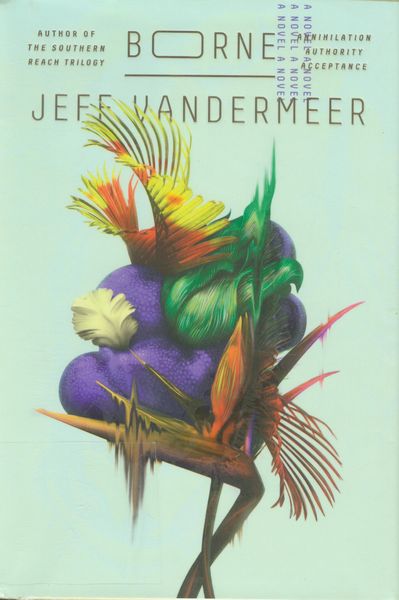
              Borne is set in a ruined, biotech-poisoned city dominated by a giant flying bear named Mord, where a scavenger finds a strange organism she names Borne and raises it, only to discover it may be more dangerous - and more alive - than she expected. Jeff VanderMeer's series continues with the related novels The Strange Bird and Dead Astronauts, set in the same devastated world.

            • Cover of The Golden Age of Weird Fiction Megapack
              The Golden Age of Weird Fiction Megapack

              series · 13 books · 1931

              completed

              similar byweird fiction

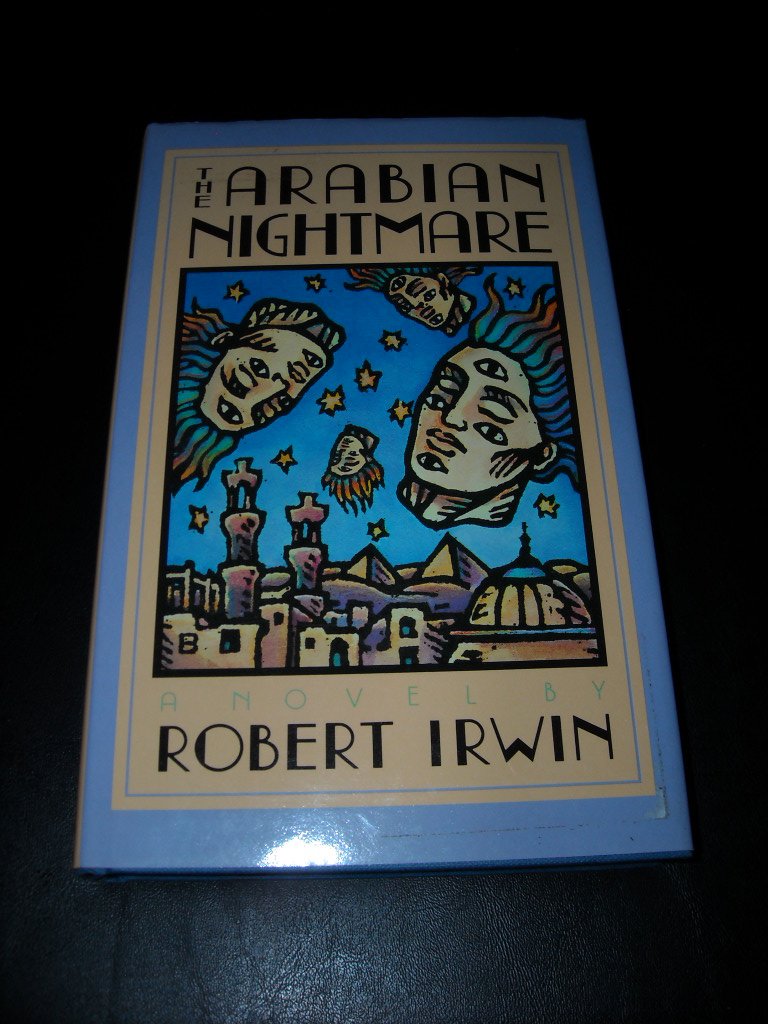
            • Cover of The Arabian Nightmare
              The Arabian Nightmare

              Robert Irwin · standalone novel · 1983

              similar byweird fiction

              The Arabian Nightmare is a novel by Robert Irwin published in 1983. The Arabian Nightmare was inspired by The Arabian Nights, as well as the novel The Manuscript Found in Saragossa by Jan Potocki.

            • Cover of Collected Fiction (Arthur Machen)
              Collected Fiction (Arthur Machen)

              series · 5 books · 1907

              completed

              similar byweird fiction

            • Cover of The Course of the Heart
              The Course of the Heart

              M. John Harrison · standalone novel · 1992

              similar byweird fiction

              On a hot May night, three Cambridge students carry out a ritualistic act that changes their lives. Years later, none of the participants can remember what exactly transpired, but their clouded memories can't rid them of an overwhelming sense of dread.

            • Cover of The Citadel of Fear
              The Citadel of Fear

              Francis Stevens · standalone novel · 1970

              similar byweird fiction

            • Cover of Ambergris
              Ambergris

              series · 20 books · 1996

              similar byweird fiction

              Ambergris is the fictional, fungus-ridden city Jeff VanderMeer uses as the throughline for a loosely connected cycle of increasingly strange fiction, beginning with the linked stories of City of Saints and Madmen. Shriek: An Afterword recasts the city's history through a historian's biography of her artist brother's disappearance into its underground; Finch turns to a hardboiled detective investigating a murder after the city's balance of power has shifted. Each book changes form and narrator, using the setting itself as the connective tissue rather than a continuing plot.

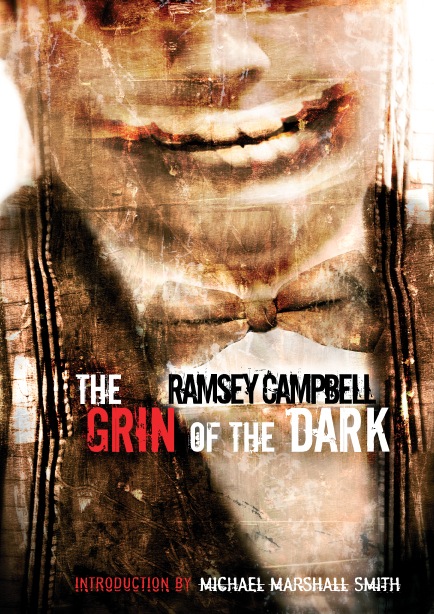
            • Cover of The Grin of the Dark
              The Grin of the Dark

              series · 2 books · 2007

              similar byweird fiction

            • Cover of Penguin Classics Lovecraft
              Penguin Classics Lovecraft

              series · 3 books · 1999

              completed

              similar byweird fiction

            • Cover of Brood of the Witch-Queen
              Brood of the Witch-Queen

              Sax Rohmer · standalone novel · 1918

              similar byweird fiction

              Brood of the Witch Queen is a 1918 supernatural horror novel by Arthur Henry Sarsfield Ward, known better under his pseudonym, Sax Rohmer.

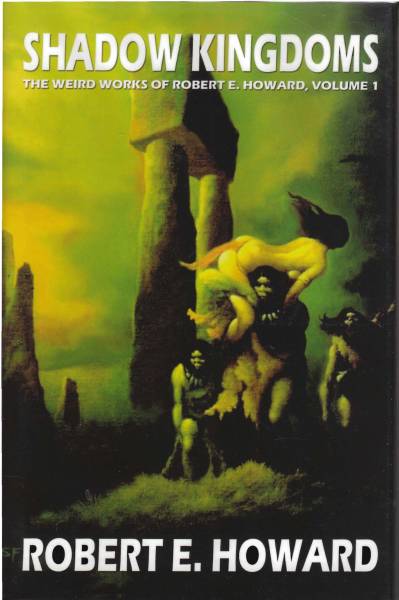
            • Cover of The Weird Works of Robert E. Howard
              The Weird Works of Robert E. Howard

              series · 10 books · 2004

              completed

              similar byweird fiction

            • Cover of Alice Isn't Dead
              Alice Isn't Dead

              Joseph Fink · standalone novel · 2018

              similar byweird fiction

              Spotting her late wife in news-report backgrounds, truck driver Keisha Taylor stumbles into an otherworldly conflict on the nation's highway systems.

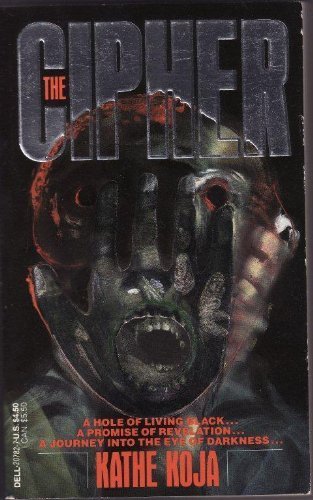
            • Cover of The Cipher
              The Cipher

              Kathe Koja · standalone novel · 1991

              similar byweird fiction