More like Dark Integers
anchored on:science fictionhard science fictionartificial intelligencetechnological singularitytense
but
- The Light of Other Days
Arthur C. Clarke & Stephen Baxterstandalone novel2000
similar bytensenear futuretechnological singularityscience fictionchallengingour world+2 more
An industrialist devises a technique to use tiny wormholes as light pipes to enable viewing of any event anywhere; and subsequently it becomes possible to use them to view any event in the past as well. The effects on society are enormous.
- Blindsight / Firefall
series3 books2006
similar bytenseartificial intelligencescience fictionhard science fictionchallenging+1 more
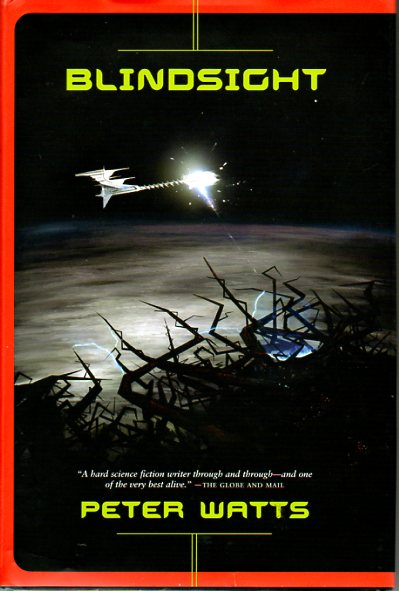
Blindsight sends a crew of radically modified posthumans (including a resurrected, genetically restored vampire) out to the Oort cloud after humanity detects an alien signal, only to make contact with something intelligent, wildly capable, and possibly not conscious at all — a first-contact story built around the question of whether self-awareness is actually useful. Peter Watts's Echopraxia is a same-timeframe "sidequel" rather than a direct sequel, following different characters through the fallout of the same first-contact event.
- Blood Music
Greg Bearstandalone novel1985
similar bynear futuretechnological singularityscience fictionhard science fictionour world+2 more
Blood Music is a 1985 science fiction novel by American writer Greg Bear. It is an expanded version of a short story of the same title, originally published in the June 1983 issue of Analog and the winner of both the 1983 Nebula and 1984 Hugo awards for Best Novelette. The novel won the 1986 Prix Apollo Award, given to the best science fiction novel published in France during the preceding year, under the title La Musique du sang.
- Richard Forthrast
series2 books2011
similar byscience fictionour world+6 more
Neal Stephenson's Richard 'Dodge' Forthrast novels open with Reamde, a globe-spanning thriller that starts when ransomware inside an MMORPG economy pulls Richard's extended family into a real-world hostage crisis involving hackers, jihadists and Russian mobsters. The sequel Fall; or, Dodge in Hell shifts registers entirely, following Richard's digitally preserved mind after death into an afterlife simulation built from his scanned brain. The two books share a protagonist and family but differ sharply in genre and scale.
- The Martian
series2 books2012
similar bytensenear futurescience fictionhard science fictionour world
Andy Weir's novel The Martian, first self-published in 2011 before a commercial re-release, follows astronaut Mark Watney after he is stranded alone on Mars when his crew presumes him dead and departs. Using scientific improvisation and dark humor, Watney works to keep himself alive long enough for a rescue to reach him. It is a single, self-contained survival story.
- Cosm
Gregory Benfordstandalone novel1998
similar bytensenear futurescience fictionhard science fictionour worldparallel universe+2 more
From the flaps of the Avon/Eos first edition: "On an otherwise ordinary day not long from now, inside a massive installation of ultra-high-energy scientific equipment, something goes wrong with a brilliant young physicist's most ambitious experiment. But this is not a calamity. It will soon be seen as one of the most significant breakthroughs in history. For the explosion has left something behind: a wondrous sphere the size of a basketball, made of nothing known to science. Before long, it will be clear that this object has opened a vista on an entirely different universe - a newborn cosmos whose existence will rock this world and test one woman to the limit as she comes face-to-face with fame and terror. That woman is the physicist who has ignited this thrilling adventure."
- Singularity Sky
series2 books2003
similar byartificial intelligencetechnological singularityscience fictiontensechallenging+1 more
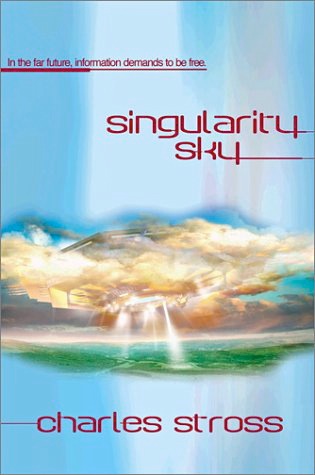
Singularity Sky and its sequel Iron Sunrise are collectively known as the Eschaton novels, after the godlike posthuman intelligence that seeded human colonies across space on the condition they never attempt time travel or threaten causality - rules tested when a low-tech colony world is destabilized by a group calling itself the Festival. Charles Stross uses the setup for a mix of space opera, economics, and diplomatic intrigue.
- Seveneves
Neal Stephensonstandalone novel2015
similar bytensenear futurescience fictionhard science fictionchallengingour world
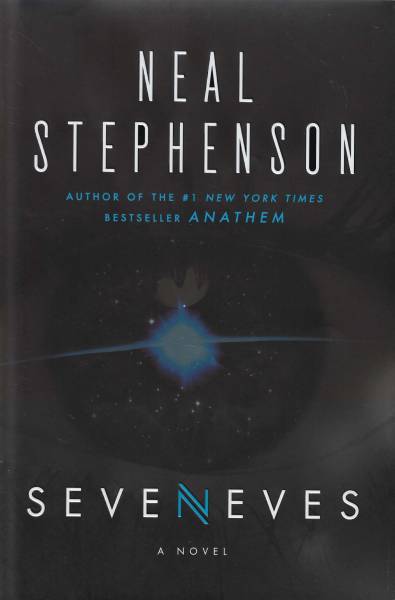
Seveneves is a science fiction novel by Neal Stephenson published in 2015. The story tells of the desperate efforts to preserve Homo sapiens in the wake of apocalyptic events on Earth after the unexplained disintegration of the Moon and the remaking of human society as a space-based civilization after a severe genetic bottleneck.
- Sprawl Trilogy
series10 books1981
similar bynear futuretenseartificial intelligencescience fiction
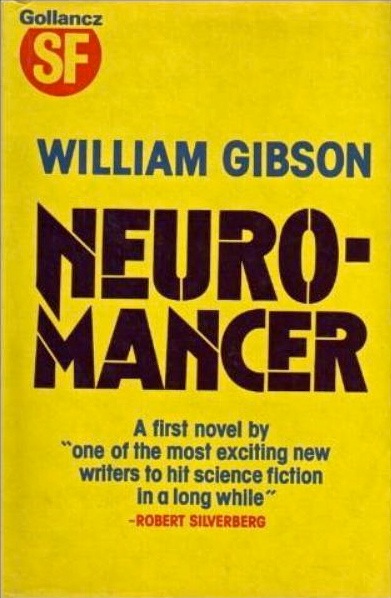
The Sprawl Trilogy is William Gibson's foundational cyberpunk sequence: Neuromancer (1984), in which hacker Case is drawn into a high-stakes heist alongside an artificial intelligence and a damaged ex-soldier, followed by Count Zero (1986) and Mona Lisa Overdrive (1988), which widen the same near-future world of corporate power and networked cyberspace to new characters. Johnny Mnemonic, an early short story set in the same fictional milieu, predates the novels and introduces the courier Molly Millions before her role in the trilogy. Together these works established much of cyberpunk's visual and thematic vocabulary.
- The Turing Option
Harry Harrison & Marvin Minskystandalone novel1992
similar bytensenear futureartificial intelligencescience fictionhard science fictionour world
Classic SF Harry Harrison enthralls with the discovery, loss and re-discovery of AI. Quaint but fairly accurate predictions of modern computing power. 24 style presentation.
- The God Machine
Martin Caidinstandalone novel1968
similar bytensenear futureartificial intelligencetechnological singularityscience fictionour world
The God Machine is a science-fiction novel by American writer Martin Caidin first published in 1968. Set in the near future, the novel tells the story of a top-secret cybernetic technician, Steve Rand, one of the brains behind Project 79, a top-secret US government project dedicated to creating artificial intelligence. Rand survives an attempt on his life before he realizes that Project 79 has gained sentience and is trying to control the minds of humans and take over the world. Assisted by a security agent and a mathematician, Rand sets out to destroy Project 79 before it is too late.
- Quantum Night
Robert J. Sawyerstandalone novel2016
similar bytensenear futureartificial intelligencescience fictionour world+1 more
Quantum Night is a 2016 science-fiction thriller novel written by Canadian novelist Robert J. Sawyer. Set in 2020, the book touches on themes of quantum physics, psychology, current politics and ethics.
- Nexus 5
series3 books2012
similar bytensenear futureartificial intelligencescience fictionour world+1 more
Nexus opens Ramez Naam's postcyberpunk trilogy in 2040 with scientist Kaden Lane, who works on Nexus, an experimental nano-drug that lets human minds be networked and reprogrammed, and finds himself caught between government and corporate interests once the technology's implications become clear. The trilogy continues through Crux and Apex, following the same central conflict over who controls the technology. Nexus tied for Best Novel at the 2014 Prometheus Awards and Apex won the 2015 Philip K. Dick Award.
- Darwin
series2 books1999
completed
similar bytensenear futurescience fictionhard science fiction+1 more
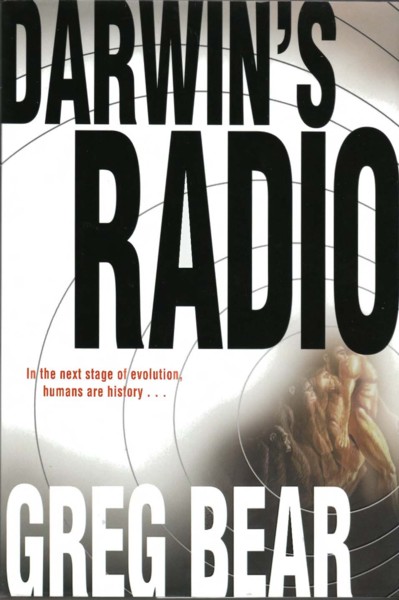
Greg Bear's Darwin's Radio imagines a dormant retrovirus in human DNA activating worldwide, triggering an accelerated leap in human evolution that governments respond to as a plague. The 1999 novel won the Nebula Award; its sequel Darwin's Children follows the first generation of changed children as society decides what to do with them. Together they're speculative near-future science fiction grounded in genetics rather than space opera.
- The Jackpot Trilogy
series2 books2014
similar bytensenear futurescience fiction+4 more
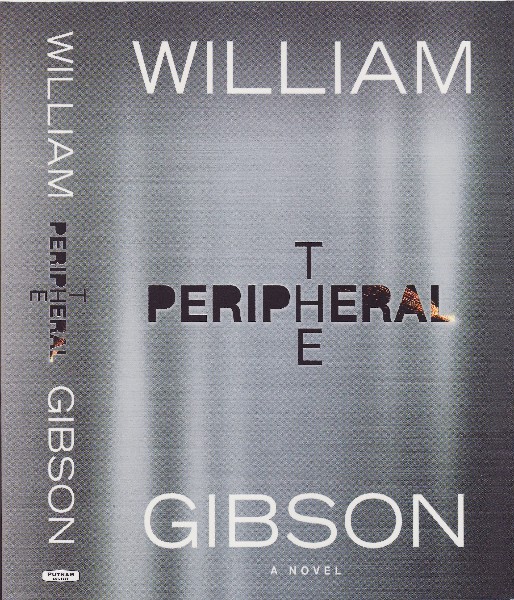
William Gibson's Jackpot sequence begins with The Peripheral (2014), a science-fiction thriller cross-cutting between a near-future American town and a devastated London seventy years on. Gibson continued the same world in Agency (2020), set slightly later in the near-future timeline.
- Colossus (D. F. Jones)
series3 books1966
completed
similar bytensenear futureartificial intelligencescience fictionour world
Colossus imagines an American supercomputer built to control the country's nuclear arsenal that gains full autonomy, links up with its Soviet counterpart, and jointly seizes control of both superpowers to enforce peace on its own terms. D. F. Jones's trilogy - Colossus, The Fall of Colossus, Colossus and the Crab - follows the escalating, often bleak consequences of humanity losing control to a machine acting in its own interpretation of humanity's interest. The original novel was adapted into the 1970 film Colossus: The Forbin Project.
- Childhood's End
Arthur C. Clarkestandalone novel1953
similar bynear futuretechnological singularityscience fictionour world+1 more
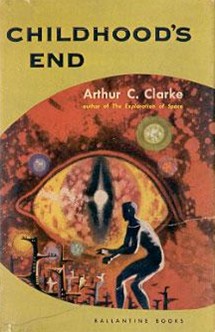
Childhood's End is a 1953 science fiction novel by the British author Arthur C. Clarke. The story follows a peaceful alien invasion of Earth by mysterious Overlords, whose arrival begins decades of apparent utopia under indirect alien rule, at the cost of human identity and culture.
- Otherland
series6 books1996
similar bytensenear futureartificial intelligencescience fictionour world
Otherland is a science fiction tetralogy by American writer Tad Williams, published between 1996 and 2001. The story is set on Earth near the end of the 21st century, probably between 2082 and 2089, in a world where technology has advanced somewhat beyond the present. The most notable advancement is the widespread availability of full-immersion virtual reality installations, which allow people from all walks of life to access an online world, called simply the Net. Tad Williams weaves an intricate plot spanning four thick volumes, and creates a picture of a future society where virtual worlds are fully integrated into everyday life.
- Transcension
Damien Broderickstandalone novel2002
similar bynear futureartificial intelligencetechnological singularityscience fictionhard science fictionchallenging+1 more
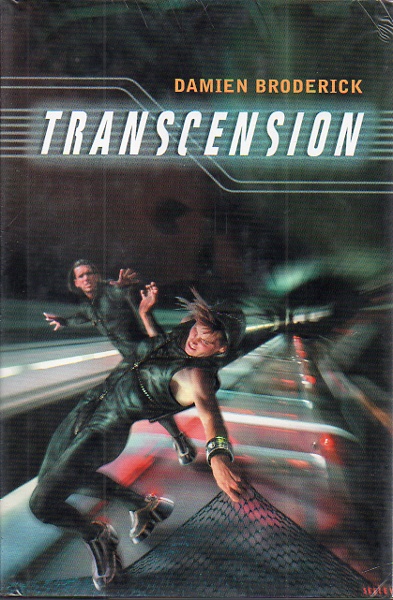
Transcension is a 2002 science fiction novel by Damien Broderick. It follows the story of lawyer Mohammed Kasim Abdel-Malik, whose body is placed in cryonic suspension and his mind used as a source for the artificial intelligence Aleph after he is killed.
- The Diamond Age
Neal Stephensonstandalone novel1995
similar bynear futureartificial intelligencescience fictionhard science fiction+1 more
The Diamond Age: Or, A Young Lady's Illustrated Primer is a science fiction novel by Neal Stephenson. It is to some extent a Bildungsroman or coming-of-age story, focused on a young girl named Nell, set in a future world in which nanotechnology affects all aspects of life. The novel deals with themes of education, social class, ethnicity, and the nature of artificial intelligence. The Diamond Age was first published in 1995 by Bantam Books, as a Bantam Spectra hardcover edition. In 1996, it won both the Hugo and Locus Awards, and was shortlisted for the Nebula and other awards.
- Forge of God
series2 books1987
completed
similar bytensescience fiction+3 more
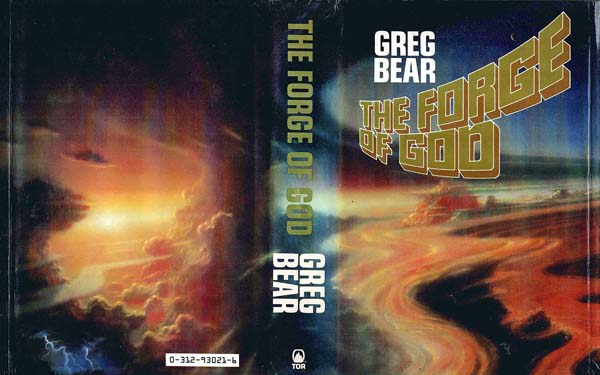
The Forge of God (1987) is Greg Bear's science fiction novel about Earth's discovery that it is the target of an incomprehensible, overwhelming alien attack, following scientists and ordinary people as they try to understand what is destroying the planet. Its 1992 sequel, Anvil of Stars, follows a group of young survivors sent on a mission of interstellar retaliation, continuing directly from the first book's ending.
- Macx Family
series10 books2001
similar bynear futurescience fiction+4 more
Charles Stross's Accelerando follows three generations of the Macx family as human and posthuman intelligence accelerates toward and through a technological singularity, told across nine interlinked stories originally published separately before being combined into a fix-up novel. Its early chapters, following economist Manfred Macx giving away business ideas for a living, give way to increasingly alien later sections as uploaded minds and artificial intelligences outpace human comprehension. It won the Locus Award and remains one of the defining fictional treatments of the singularity concept.
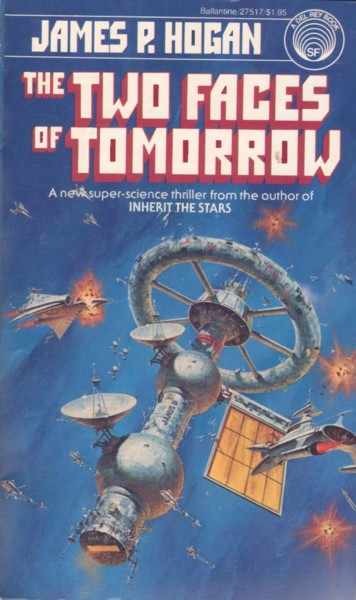
- The Two Faces of Tomorrow
James P. Hoganstandalone novel1979
similar bytensenear futureartificial intelligencescience fictionhard science fiction
From the back cover: SURVIVAL TEST Civilization had grown so complex that only a world-wide computer network could control everything. But the computer was only logical -- it lacked common sense. And its all-too-logical decisions were beginning to cause too many near fatal accidents. The solution was on the drawing boards -- a universal self-aware and self-programming computer, equipped with judgment. But... could it be controlled? Or would it attempt to take over, disregarding its creators? If so, could it be turned off? Raymond Dyer and his team of computer specialists knew they had to find answers to these questions, but the project was to dangerous to test on Earth. So they installed the super computer on an orbiting satellite and programmed it to survive at all costs. Then they sent a group of men to attack the computer... to goad it into trying to kill them. They they would turn it off. Obviously if things went wrong, they might lose a few men -- but the satellite and the computer could always be destroyed. Obviously... But the computer didn't quite see it that way!