More like Darkness Visible
anchored on:literary & generalbritish isleslate 20th centuryidentitymadnessfaith and religion+2 more
but
- The Private Memoirs and Confessions of a Justified Sinner
James Hoggstandalone novel1824
similar byliterary & generalbritish isleschallengingdarkidentitymadnessfaith and religion
The Private Memoirs and Confessions of a Justified Sinner: Written by Himself: With a detail of curious traditionary facts and other evidence by the editor is a novel by the Scottish author James Hogg, published anonymously in 1824.
- Crash
J. G. Ballardstandalone novel1973
similar byliterary & generalchallengingdarkmadnessbritish isles+1 more
Crash is a novel by J. G. Ballard, first published in 1973 with a cover designed by Bill Botten. It follows a group of car-crash fetishists who, inspired by the famous crashes of celebrities, become sexually aroused by staging and participating in car accidents.
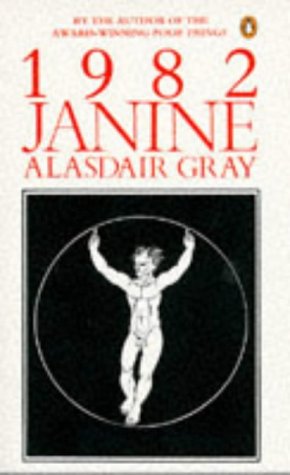
- 1982 Janine
Alasdair Graystandalone novel1984
similar byliterary & generalbritish isleslate 20th centurydarkidentitymadness
1982, Janine is a novel by the Scottish author Alasdair Gray. His second, it was published in 1984, and remains his most controversial work. Its use of pornography as a narrative device attracted much criticism, although others, including Gray himself, consider it his best work.
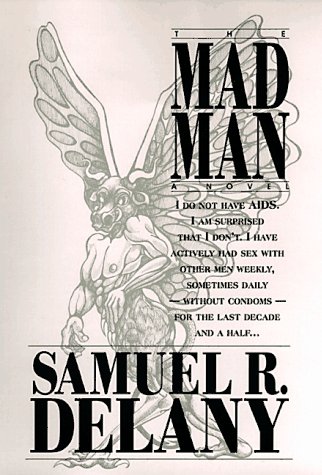
- The Mad Man
Samuel R. Delanystandalone novel1994
similar byliterary & generallate 20th centurychallengingdarkidentitymadness
The Mad Man is a literary novel by Samuel R. Delany, first published in 1994 by Richard Kasak. In a disclaimer that appears at the beginning of the book, Delany describes it as a "pornotopic fantasy". It was originally published in 1994, republished and slightly revised in 1996, and republished again with significant changes in 2002 and again in an e-book version with further corrections in 2015. Delany considers the 2015 version the definitive edition.
- American Psycho
Bret Easton Ellisstandalone novel1991
similar byliterary & generallate 20th centurychallengingdarkmadness+1 more
American Psycho is a horror novel by American writer Bret Easton Ellis, published in 1991. The story is told in the first-person by Patrick Bateman, a wealthy, narcissistic, and vain Manhattan investment banker who lives a double life as a serial killer. Alison Kelly of The Observer notes that while "Some countries [deem it] so potentially controversial that it only to be sold as shrink-wrapped", "critics rave about it" and "academics revel in its transgressive and postmodern qualities".
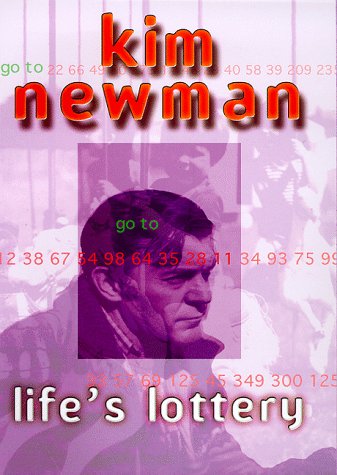
- Life's Lottery
Kim Newmanstandalone novel1999
similar byliterary & generalbritish isleslate 20th centurychallengingidentity+1 more
Life's Lottery is a speculative fiction novel by Kim Newman, published in 1999. Loosely connected to Newman's The Quorum, Life's Lottery is written in second-person and invites the reader to assume the role of the protagonist, an Englishman named Keith Marion, and make decisions that determine the character's life and death. Because Life's Lottery can be read not only as a standard novel but also in a traditional gamebook format, it is often classified as a "Choose Your Own Adventure book for adults".
- The Brief Wondrous Life of Oscar Wao
Junot Díazstandalone novel2007
similar byliterary & generallate 20th centurychallengingdarkidentity
Dark fantasy novel. A young man who dreams of being “the Dominican J.R.R. Tolkien” is doomed by a family curse, traced across generations.
- The True Tale of the Monster Billy Dean
David Almondstandalone novel2011
similar byliterary & generaldarkbritish islesidentitymadnessfaith and religion
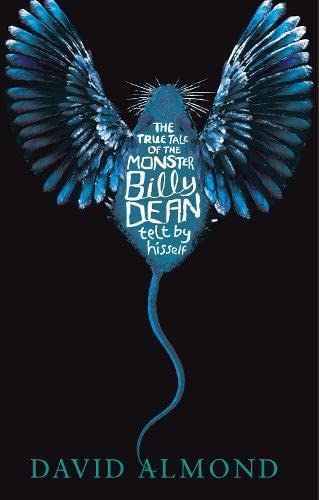
The True Tale of the Monster Billy Dean telt by hisself is a 2011 story by David Almond. It was released simultaneously in young adult (Puffin) and adult editions (Penguin), and was Almond's first adult novel. It is about a boy, Paul, who is imprisoned by his parents until the age of thirteen and on his freedom is treated as a messiah.
- Great Apes
Will Selfstandalone novel1997
similar byliterary & generalchallengingdarkbritish islesidentity+1 more
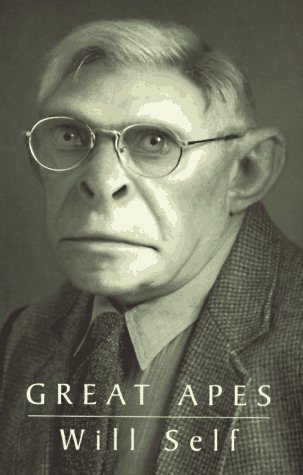
Great Apes is a 1997 novel by Will Self.
- Every Day Is Mother's Day
Hilary Mantelstandalone novel1985
similar byliterary & generalbritish isleslate 20th centurydarkmadness
Every Day is Mother's Day is the first novel by British author Hilary Mantel, published in 1985 by Chatto and Windus. It was inspired in part by Hilary Mantel's own experiences as a social work assistant at a geriatric hospital which involved visits to patients in the community and access to case notes, the loss of which play an important part in the novel.
- Climbers
M. John Harrisonstandalone novel1989
similar byliterary & generalbritish isleslate 20th centurychallengingidentity
Climbers is a literary novel by the British author M. John Harrison. First published in 1989 and apparently set several years earlier, the book had been out of print for several years but was reissued in paperback by Phoenix in 2004. It has attracted considerable critical acclaim and won the Boardman Tasker Prize for Mountain Literature in 1989. It was not, however, universally popular with the British climbing public, and received at least one negative review in the popular magazine Climber.
- The Satanic Verses
Salman Rushdiestandalone novel1988
similar byliterary & generalchallengingbritish islesidentityfaith and religion
The Satanic Verses is the fourth novel by British–Indian writer Salman Rushdie. First published in September 1988, the book was inspired by the life of the Islamic prophet Muhammad. As with his previous books, Rushdie used magical realism and relied on contemporary events and people to create his characters. The title refers to the Satanic Verses, a group of Quranic verses about three pagan Meccan goddesses: Allāt, Al-Uzza, and Manāt. The part of the story that deals with the satanic verses was based on accounts from the historians al-Waqidi and al-Tabari.
- Pincher Martin
William Goldingstandalone novel1956
similar byliterary & generalchallengingdarkidentitymadness
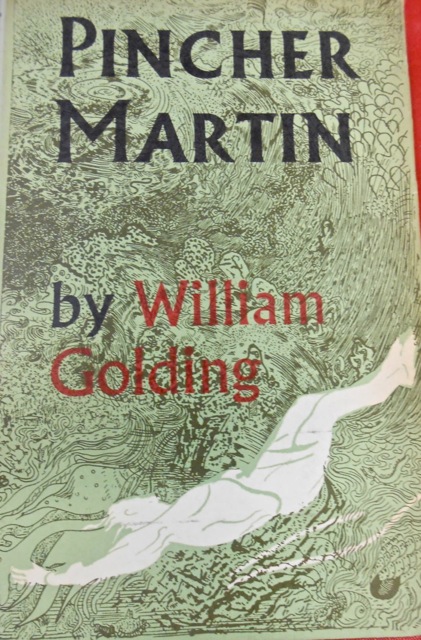
Pincher Martin is a novel by British writer William Golding, first published in 1956. It is Golding's third novel, following The Inheritors and his debut Lord of the Flies. It is one of Golding's best-known novels, noted for being existential and minimalistic in setting.
- The Day of Creation
J. G. Ballardstandalone novel1987
similar byliterary & generallate 20th centurychallengingmadness
Dr. John Mallory has spent six purposeless months running a WHO clinic in a corner of Central Africa gutted by guerrilla war, with almost no patients to treat, when he throws himself into a project: bringing water to the parched land, with dreams of blooming the Sahara. When his drilling improbably succeeds and unleashes a river, Mallory's fixation curdles into obsession -- he begins to identify with the river as an extension of himself, and assembles an expedition, including a girl he takes for a water spirit and a half-blind documentary filmmaker, to follow it upstream toward its source. A visionary novel by J. G. Ballard.
- The Third Policeman
Flann O'Brienstandalone novel1967
similar byliterary & generalbritish isleschallengingmadness+1 more
The Third Policeman is a novel by Irish writer Brian O'Nolan, writing under the pseudonym Flann O'Brien. It was written in 1939 and 1940, but after it initially failed to find a publisher, the author withdrew the manuscript from circulation and claimed he had lost it. The book remained unpublished at the time of his death in 1966. It was published by MacGibbon & Kee in 1967.
- Gravity's Rainbow
Thomas Pynchonstandalone novel1973
similar byliterary & generalchallengingdarkbritish isles
Gravity's Rainbow is a 1973 postmodern novel by Thomas Pynchon. The narrative is set primarily in Europe at the end of World War II and centers on the design, production and dispatch of V-2 rockets by the German military. In particular, it features the quest undertaken by several characters to uncover the secret of a mysterious device, the Schwarzgerät, which is slated to be installed in a rocket with the serial number "00000".
- Hogg
Samuel R. Delanystandalone novel1995
similar byliterary & generallate 20th centurychallengingdarkmadness
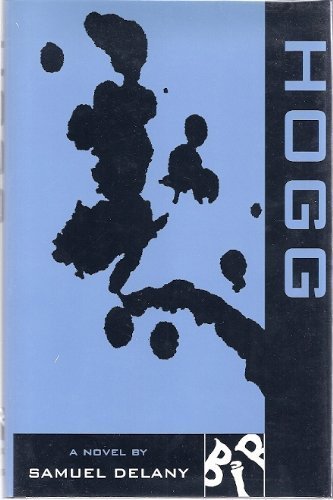
Hogg is a novel by American author Samuel R. Delany, written in 1969 and completed in 1995. The novel deals graphically with themes of murder, child molestation, incest, coprophilia, coprophagia, urolagnia, anal-oral contact, necrophilia and rape. It was conceptualized and written in 1969, with a further draft completed in 1973, and it was finally published with some further, though relatively minor, rewrites in 1995 by Black Ice Books. Two later editions have featured some corrections, the last of which, published by Fiction Collective Two in 2004, carries a note from Delany stating that it is definitive.
- Red Shift
Alan Garnerstandalone novel1973
similar byliterary & generalbritish isleschallengingidentity
Quoting that 1978 review article by Brian Lee: Red Shift [after The Owl Service] was again about the relationship between two adolescents, but interwoven in their love story were two other strands: one about a group of Roman legionaires 'going tribal' among warring factions of the British (the parallel and the brutal language are obviously those of the Americans among the Viet Cong and the Viet Minh); the other strand is about the massacre of a village on the Welsh border during the Civil War.{{BREAK}} Undoubtedly, Red Shift is a brilliantly written and gripping book. The difficulty about it is that Garner makes no concessions to his readers (and on the book jacket he makes it clear that it is for children). It is told almost entirely in cryptic conversation with minimal clues to the identity of the speakers. He switches from strand to strand of the story without warning. The book cannot be understood and appreciated at one hasty reading. It is worth serious study, but will children persevere? In her introduction to the 1973 edition of Children's Books of the Year, critic and reviewer Elaine Moss says: Spurred on by the publication of Alan Garner's literary crossword puzzle Red Shift ... many of us asked ourselves where children's publishing should end and adult begin? For Children's Books of the Year I have drawn the line below Red Shift and excluded it ... Alan Garner, in deliberately choosing an avant-garde form, is also choosing an advanced, sophisticated audience for his book. Alan Garner himself seems to have come around to this view. This year a television adaptation of Red Shift was screened at peak viewing time with no mention of the fact that it was originally published as a children's novel. [end quotation from the review article; ellipses by Lee]
- Lanark: A Life in Four Books
Alasdair Graystandalone novel1981
similar byliterary & generalchallengingdarkbritish islesidentity
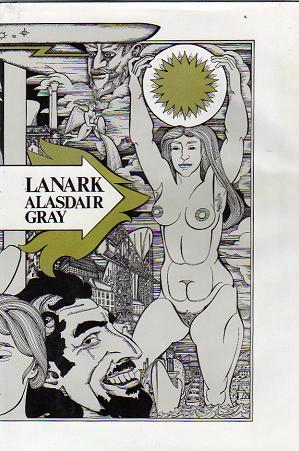
Lanark, subtitled A Life in Four Books, is the first novel of Scottish writer Alasdair Gray. Written over a period of almost thirty years, it combines realist and dystopian surrealist depictions of his home city of Glasgow.
- Voice of the Fire
Alan Moorestandalone novel1996
similar byliterary & generalbritish isleschallengingidentityfaith and religion
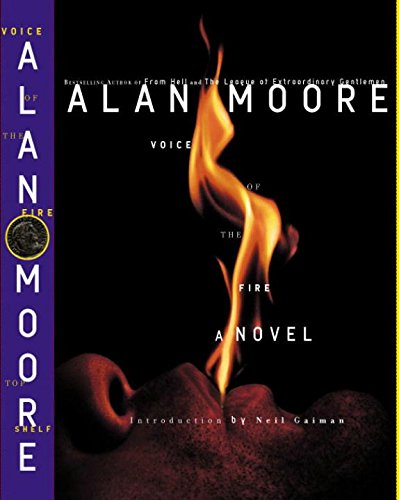
Voice of the Fire is the first novel from Alan Moore, comic book writer. The twelve-chapter book was initially published in the United Kingdom in 1996. The narratives take place around Moore’s hometown of Northampton, England, during the month of November, and span several millennia – from 4000 B.C. to the present day. The 2004 edition from Top Shelf Productions features an introduction from Neil Gaiman and colour plates by artist José Villarrubia. A new paperback edition, retaining all of these features, was published by Top Shelf in July 2009.
- Shrine
James Herbertstandalone novel1983
similar bybritish isleslate 20th centurydarkmadnessfaith and religion
Shrine is a 1983 horror novel by English writer James Herbert, exploring themes of religious ecstasy, mass hysteria, demonic possession, faith healing and Catholicism.
- Time's Arrow
Martin Amisstandalone novel1991
similar byliterary & generalchallengingdarkidentity+1 more
From Amazon description: In this icy, knife's-edge story of a life that progresses backward through time, unfolding into one of the darkest episodes of the 20th century, Amis ("at his intriguing, heedful, and powerful best" —Time Out), finds a chillingly original approach to the Holocaust in fiction • From the acclaimed author of Zone of Interest "The narrative moves with irresistible momentum.... [Amis is] a daring, exacting writer willing to defy the odds in pursuit of his art." —Newsday Tod. T. Friendly is living his life in reverse. Doctor Friendly has just died, but he moves "out of blackest sleep" to find himself surrounded by doctors and on the deathbed of a man in whose body he is imprisoned. After weeks of improving in the hospital, he is sent home to his affable, melting-pot, primary-colors existence in suburban America. As Friendly breaks up with his lovers in a prelude to seducing them and mangles his patients before he sends them home, his life races backward toward the one appalling moment in modern history when such reversals make sense. From the fresh-cut lawns of his retirement to the hustle of New York, and then back to the boat which reverses his course to the war-torn Europe Friendly came from, Amis brings the steeliest nerve to the job of realizing the novel's inevitable logic. Trapped in his body from grave to cradle, Friendly's consciousness can only watch as he struggles to make sense of the good doctor's most ambitious project yet—the final solution.
- Marabou Stork Nightmares
Irvine Welshstandalone novel1995
similar byliterary & generalbritish isleslate 20th centurychallengingdarkmadness
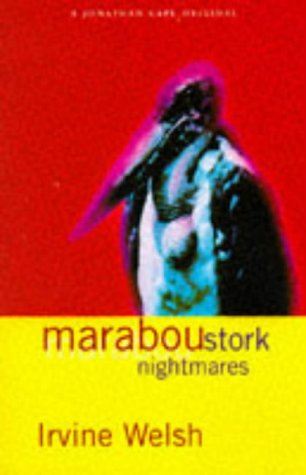
Marabou Stork Nightmares is an experimental novel by Irvine Welsh, and his second novel, published in the UK in 1995.
- VALIS
series4 books1981
completed
similar bychallengingfaith and religionidentity+3 more
The VALIS trilogy is a set of science fiction/philosophical novels by author Philip K. Dick which include VALIS (1981), The Divine Invasion (1981), and The Transmigration of Timothy Archer (1982). Dick's first novel about the VALIS concept originally titled "VALISystem A", was published as Radio Free Albemuth after Dick's death in 1985.