More like Daylight
but
- The Vampire Chronicles
series15 books1976
completed
similar byvampirescontemporary+3 more
The Vampire Chronicles is a series of Gothic vampire novels and a media franchise, created by American author Anne Rice, that revolves around the fictional character Lestat de Lioncourt, a French nobleman turned into a vampire in the 18th century.
- Piranesi
Susanna Clarkestandalone novel2020
similar byreflectivefantasyliterary & generalidentity+1 more
A man lives in a huge isolated labyrinthine building partially submerged in an ocean, together with another man and 13 skeletons, which is the only world he recalls.
- Life of Pi
Yann Martelstandalone novel2001
similar byreflectivecontemporaryliterary & generalidentity+1 more
Life of Pi is a Canadian philosophical novel by Yann Martel published in 2001. The protagonist is Piscine Molitor "Pi" Patel, an Indian boy from Pondicherry, who explores issues of spirituality and metaphysics from an early age. After a shipwreck, he survives 227 days while stranded on a lifeboat in the Pacific Ocean with a Bengal tiger named Richard Parker, raising questions about the nature of reality and how it is perceived and told.
- Lost
Gregory Maguirestandalone novel2001
similar byreflectivecontemporaryliterary & generalidentity+1 more
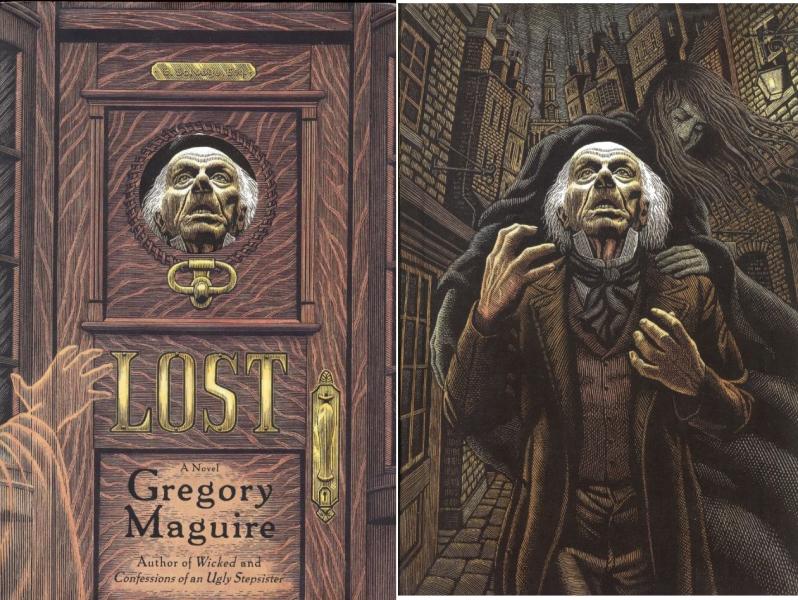
Lost is a 2001 novel by American author Gregory Maguire. Unlike many of Maguire's other adult novels, Lost is set in the real world. The novel's concept is that the protagonist is a distant relative of the man who inspired Charles Dickens' character of Ebenezer Scrooge.
- The Lion of Boaz-Jachin and Jachin-Boaz
Russell Hobanstandalone novel1973
similar byreflectivecontemporaryfantasyliterary & generalidentity
The Lion of Boaz-Jachin and Jachin-Boaz is a novel by American writer Russell Hoban published in 1973, and was his first book for adult readers. The novel is set in an unspecified location in the Middle East, and was written when Hoban lived in London, and was initially published by British publisher Jonathan Cape. Initially appearing to be written as a kind of fable, Boaz-Jachin and Jachin-Boaz are a father and son, both map-makers; the narrative then places both father and son in contemporary London.
- The Falling Woman
Pat Murphystandalone novel1986
similar byreflectivecontemporaryfantasyliterary & generalidentity
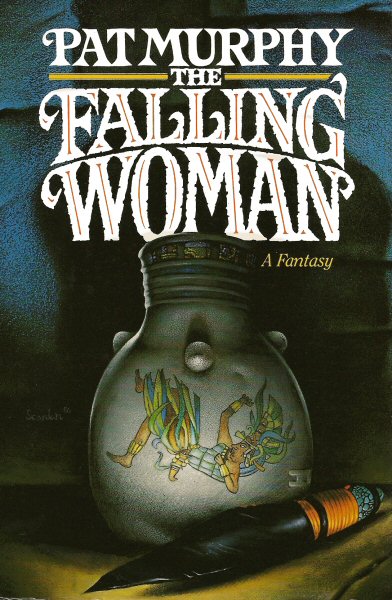
The Falling Woman is a 1986 contemporary psychological fantasy novel by Pat Murphy. The book won the Nebula Award for Best Novel in 1987.
- Sacrament
Clive Barkerstandalone novel1995
similar byreflectivecontemporaryliterary & generalidentity+1 more
Sacrament is a 1996 novel by British author Clive Barker. It follows a wildlife photographer who is obsessed with documenting species of animals that are faced with extinction. It is set in Yorkshire, England, San Francisco and Hudson Bay, Canada and explores how his obsession is connected to his upbringing in Yorkshire. The Author described it as "a story about how we become who we are and how we must deal with what we are by facing up to including the things that happened to us in childhood, good and bad. It's also about what's happening to our planet."
- After Such Knowledge
series7 books1953
completed
similar by+3 more
After Such Knowledge is James Blish's loosely linked trilogy on the costs of forbidden or dangerous knowledge. It opens with A Case of Conscience, in which a Jesuit scientist studying a seemingly sinless alien race is forced to weigh what he finds against his own faith, continues with the historical novel Doctor Mirabilis about the medieval friar and scientist Roger Bacon, and closes with the two-part Black Easter, in which a magician is hired to loose Hell's demons upon the world for a single day. The three books share a theme rather than a continuous plot or cast.
- Heaven Eyes
David Almondstandalone novel2000
similar byreflectivecontemporaryliterary & generalidentity+1 more
Heaven Eyes is a young adult novel by author David Almond. It was published in Great Britain by Hodder Children's Books in 2000 and by Delacorte Press in the United States in 2001. A paperback version was released in 2002 by Dell Laurel Leaf.
- Ægypt
series5 books1987
completed
similar byreflectivecontemporaryfantasyliterary & generalidentity
Ægypt is a fantasy tetralogy written by American author John Crowley. The series describes the life and work of Pierce Moffett, a history professor who prepares a manuscript for publication even as it prepares him for some as-yet unknown destiny, all set amidst strange and subtle Hermetic manipulations among the Faraway Hills at the border of New York, New Jersey and Pennsylvania.
- VALIS
series4 books1981
completed
similar byreflectiveidentity+2 more
The VALIS trilogy is a set of science fiction/philosophical novels by author Philip K. Dick which include VALIS (1981), The Divine Invasion (1981), and The Transmigration of Timothy Archer (1982). Dick's first novel about the VALIS concept originally titled "VALISystem A", was published as Radio Free Albemuth after Dick's death in 1985.
- Or What You Will
Jo Waltonstandalone novel2020
similar byreflectivecontemporaryfantasyliterary & generalidentity
Or What You Will is a 2020 metafictional fantasy novel by Jo Walton, about immortality and creativity. It was first published by Tor Books.
- Earthsea Cycle
series18 books1964
completed
part of Earthsea
similar byreflectivefantasy+1 more
The Earthsea Cycle, also known as Earthsea, is a series of high fantasy books written by American author Ursula K. Le Guin. Beginning with A Wizard of Earthsea (1968), The Tombs of Atuan (1970), and The Farthest Shore (1972), the series was continued in Tehanu (1990), and Tales from Earthsea and The Other Wind. In 2018, all the novels and short stories were published in a single volume, The Books of Earthsea: The Complete Illustrated Edition, with artwork by Charles Vess.
- Dream Archipelago
series16 books1976
completed
similar byliterary & generalidentity+2 more
Christopher Priest's Dream Archipelago stories return again and again to a vast chain of islands stretched across a world locked in permanent, distant war between two continental powers, without ever quite settling whether the archipelago is a real place or something closer to collective dream or fiction within the fiction. Novels like The Affirmation and The Islanders, along with numerous short stories, revisit the setting from different, often contradictory angles rather than building one continuous narrative. The ambiguity between what's real and what's invented is treated as the point, not a gap to be resolved.
- Kairos
series11 books1962
completed
similar by+2 more
The Time Quintet is a science fantasy series of five young adult novels written by American author Madeleine L'Engle and made up of A Wrinkle in Time (1962), A Wind in the Door (1973), A Swiftly Tilting Planet (1978), Many Waters (1986), and An Acceptable Time (1989).
- The Magicians
J. B. Priestleystandalone novel1954
similar byreflectivecontemporaryfantasyliterary & generalidentity
The Magicians is a short novel by J. B. Priestley, first published in 1954. An example of Priestley's perennial concern with the true nature of time, the story uses fantasy elements to discuss the midlife crisis of a successful industrialist, briefly touching on social problems and mass psychology.
- Little, Big
John Crowleystandalone novel1981
similar byreflectivecontemporaryfantasy+1 more
Little, Big: or, The Fairies' Parliament is a contemporary fantasy novel by John Crowley, published in 1981. It won the World Fantasy Award in 1982.
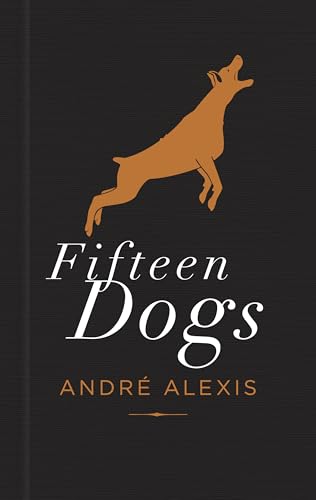
- Fifteen Dogs
André Alexisstandalone novel2015
similar byreflectivecontemporaryfantasyliterary & generalidentity
Fifteen Dogs: An Apologue is a novel by Canadian writer André Alexis. Published by Coach House Books in 2015, the novel was the winner of the 2015 Scotiabank Giller Prize and the 2015 Rogers Writers' Trust Fiction Prize, as well as the 2017 edition of Canada Reads.
- Fillory
series7 books2009
similar bycontemporaryfantasy+2 more
Lev Grossman's Magicians trilogy (The Magicians, The Magician King, The Magician's Land, 2009-2014) follows Quentin Coldwater from a secretive college of magic in upstate New York into Fillory, a fantasy world he grew up reading about in a series of children's books that turns out to be real. As Quentin, his classmates, and his old friend Julia become entangled in ruling and defending Fillory, the trilogy pushes past the wish-fulfillment of a classic portal fantasy to ask what happens once getting everything you wanted stops being enough.
- Dracula
universe144 books1897
Start hereDracula · Start here
similar by+1 more
"Come freely. Go safely. And leave something of the happiness you bring" — so the Count greets his guest at the threshold of the Carpathians, and the great door shuts behind. Bram Stoker's Dracula (1897) is the wellspring of the modern vampire: the account of a centuries-old Transylvanian nobleman who quits his crumbling castle for the crowded lodging-houses of London, and the handful of ordinary people — a young solicitor, a doctor of the mad, a professor of stranger learning — who must piece together what he is before he makes the whole city his fold. It is told wholly in fragments: journal entries, letters, telegrams, ships' logs, phonograph cylinders, each hand recording only its own sliver of the dark. Around that single novel a whole crypt of continuations has grown, raised by many writers across a century. Fred Saberhagen's Dracula Sequence hands the Count the microphone, retelling the old events from his own wry, aggrieved lips and following him into later intrigues. Robert Lory's brisk 1970s Dracula Horror Series revives him as a reluctant weapon turned against fouler things; Peter Tremayne's trilogy reaches back along his bloodline; and further sequels, a Quincey Morris spin-off, and Dracula's Children carry the shadow onward. This is a loose shared world built upon a public-domain figure, not one governed continuity — each author remakes him as villain, antihero, or sympathetic narrator. Begin, always, with Stoker's original; the letters and the mounting dread stand entirely on their own. From there follow whichever door tempts you — Saberhagen's The Dracula Tape for the monster's own confession, Lory or Tremayne for tales that never glance back at the Borgo Pass again.