Loreful
HomeDiscover
Search series, authors…⌘K
Loreful

Reading orders for SF/F series and shared universes — with your place kept in every one.

Explore

UniversesSeriesWorksAuthorsAtlas

Help

FAQAboutSite map

Account & legal

Sign inCreate accountPrivacyTerms

Data

Built on ISFDB, Wikipedia, Wikidata and Open Library. Curated reading orders carry their reasoning on the page; the rest follow publication order. Data sources & licenses

© Loreful · data: ISFDB · CC BY

More like Dead Flip

anchored on:late 20th centuryyoung adultnorth america

but

Mood

The mood the book leaves you in.

  • The reading experience is propelled by journeys, exploration, and physical risk; excitement and forward momentum dominate over dread or introspection.
  • Joy and loss are deliberately mixed; the resolution grants characters something real while taking something else away, leaving warmth and sorrow together.
  • The book demands work from the reader — dense prose, difficult structure, unfamiliar ideas, or morally uncomfortable material — as part of its intended effect.
  • Grim events, cruelty, or despair dominate the atmosphere, and the book does not soften them with comfort or comic relief.
  • The atmosphere is quietly unsettling — wrongness, unease, and the uncanny pervade the book without necessarily escalating into overt horror.
  • The book is built to move the reader; character feeling is foregrounded and major scenes aim at a strong emotional response.
  • Humor is a primary aim and the prose plays for laughs — comic situations, wit, or dialogue produce sustained comedy, not occasional levity.
  • The book insists that things can improve; effort and decency are shown to matter, and the arc bends toward better outcomes even through hardship.
  • The book teaches as it goes — real facts, history, science, or craft are conveyed in enough depth that learning is part of the reading experience.
  • The book is designed to uplift and motivate, presenting perseverance or achievement in a way that invites the reader to aspire or act.
  • The overall register is cheerful and easygoing; stakes are kept gentle and the book avoids dwelling on pain or dread.
  • Withheld information drives the experience; the book sustains enigmas and secrets the reader wants resolved, whatever its genre.
  • The book is contemplative and inward-looking, giving more weight to thought, memory, and meaning than to external events.
  • The book works as comfort reading — low tension, a soothing pace, and an atmosphere the reader can unwind in.
  • Grief, loss, or melancholy set the dominant register, and the book lets sorrow stand rather than resolving it into comfort.
  • Sustained suspense is the point; the book keeps the reader braced for what happens next through danger, pressure, or impending revelation.
  • Playful invention and charm define the register — fanciful conceits, light absurdity, and a narration that delights in its own oddity.

About

What the story runs on.

  • Stories in which extraterrestrial beings are central — as characters, cultures, or the object of the plot.
  • Stories structured as a quest — a journey undertaken to find, deliver, or destroy something of great import.
  • Stories in which staying alive against nature, catastrophe, or scarcity is the central problem.
  • Stories of lovers kept apart by law, family, faith, or station, where the obstacle to love is the plot.
  • Stories in which a friendship — its making, testing, or loss — is the emotional center.
  • Stories of growing up — a young protagonist crossing from childhood into adult knowledge and responsibility.
  • Stories about who a character truly is — self-discovery, doubled lives, and the search for a self.
  • Stories about mourning — living through the death of a loved one and what loss does to the survivors.
  • Stories in which a buried family truth — hidden parentage, crimes, or shames — surfaces and reorders the present.
  • Stories driven by maneuvering for power — factions, conspiracies, and statecraft conducted in shadow.
  • Stories in which war itself is the subject — combat, occupation, and what warfare does to soldiers and civilians.
  • Stories organized around investigating a killing — the case, the clues, and the pursuit of the killer, in any genre's clothing.

Shelf

Where it sits in the library.

    • Fiction built on magic or other supernatural elements that have no scientific explanation.
    • Secondary-world fantasy at large scale, where the fate of nations or the world turns on the protagonists' struggle.
    • Fantasy set in a recognizably modern city or contemporary world where the supernatural intrudes on everyday life.
    • Fantasy that blends in horror's atmosphere and imagery, keeping a fantastical frame around grim or frightening material.
    • Action-driven fantasy following warriors or rogues with personal stakes against sorcerous threats, rather than world-spanning conflicts.
    • Fantasy set in a real historical period or a close analogue of one, with magic woven into the era.
    • Fantasy in which protagonists cross from the ordinary world into another world through a portal or similar passage.
    • Fiction that retells or reworks a traditional fairy tale in a new form or setting.
    • Fantasy drawing directly on myths, legends, and folklore, retelling them or building on their figures and logic.
    • Fantasy of ghosts, vampires, shapeshifters, psychics, and similar phenomena, usually set in an otherwise ordinary world.
    • Fiction mixing science-fictional trappings with overtly magical or impossible elements in one setting.
    • Low-stakes fantasy emphasizing comfort, community, and everyday pleasures over conflict and peril.
    • Speculative fiction of pervasive moral ambiguity, violence, and cynicism that rejects heroic conventions — fantasy and SF alike.
      • Fiction that extrapolates from science and technology — future societies, space travel, or speculative inventions — within at least nominally natural laws.
      • Science fiction of interstellar scope — starships, galactic polities, and adventure across star systems.
      • Science fiction committed to scientific rigor, where technical plausibility constrains the story.
      • Science fiction centered on armed forces and warfare, told largely from a military point of view.
      • Science fiction of networked, corporate-dominated near futures, pairing high technology with social decay.
      • Science fiction styled on nineteenth-century steam-powered technology, often in a Victorian or pseudo-Victorian setting.
      • Fiction depicting an oppressive or catastrophic society, presented as a warning.
      • Fiction set after civilization's collapse, following survivors in the ruins of the old world.
      • Fiction in which characters move between past and future, and the mechanics or consequences of that travel drive the plot.
      • Fiction exploring a world where a historical event went differently and history diverged from ours.
      • Science fiction about humanity's first encounter and communication with an alien intelligence.
      • Science fiction in which extraterrestrial forces attack or occupy Earth and humanity resists.
      • Fiction whose primary aim is to frighten or unsettle the reader through dread, menace, or the monstrous.
      • Horror of vast, indifferent, incomprehensible entities before which humanity is insignificant, in the Lovecraft tradition.
      • Horror of decaying houses, buried family secrets, and oppressive atmosphere in the Gothic literary tradition.
      • Horror centered on hauntings and the returning dead.
      • Horror located in the mind — paranoia, obsession, and unreliable perception rather than external monsters.
      • Horror built around the reanimated dead and survival amid their outbreaks.
      • Horror defined by explicit, transgressive gore that refuses to cut away from violence.
      • Speculative fiction of the strange and uncanny that resists both natural explanation and standard genre categories.
      • Fiction organized around solving a crime or puzzle, typically following an investigator toward the identification of a culprit.
      • A puzzle-first mystery that lays out clues so the culprit's identity can be deduced before the reveal.
      • Crime fiction of moral ambiguity, fatalism, and hard-edged style, set among the corrupt and the doomed.
      • A mystery following the realistic routines of police work — forensics, interviews, and case-building.
      • A gentle mystery with an amateur sleuth, a small community, and violence kept off the page.
      • A mystery set in a past era, where the investigation works within that period's methods and society.
      • Fast-paced fiction driven by imminent danger, pursuit, or high-stakes conspiracy, built to sustain tension.
      • A thriller of espionage — agents, tradecraft, and intelligence services in conflict.
      • A thriller centered on lawyers and the courtroom, where litigation carries the suspense.
      • A thriller driven by detailed contemporary or near-future technology, often military or scientific.
      • A thriller whose tension comes from mental states and manipulation between characters rather than external action.
      • Fiction whose central plot is a romantic relationship and its development toward an emotionally satisfying resolution.
      • Romance in which one or both partners are supernatural beings, blending fantasy elements into the love story.
      • A fantasy-romance hybrid in which the romantic arc and the fantasy plot carry equal weight.
      • Romance set in a past era, with courtship shaped by the period's society and manners.
      • Romance set in the present day, without supernatural or historical elements.
      • Fiction set in a real past period, where the historical setting materially shapes characters and events.
        • General and literary fiction emphasizing prose style, character interiority, or formal ambition over genre plot conventions.
        • Fiction in a realistic world where magical events occur and are treated as ordinary, in the tradition of Latin American literature.
        • Fiction that ridicules people, institutions, or society in order to criticize them.
        • Fiction of dreamlike, irrational imagery and logic that breaks from realistic representation.
        • Fiction that plays with narrative convention through metafiction, fragmentation, and self-reference.
        • Fiction propelled by journeys, exploration, and physical peril, where action and survival carry the plot.
        • Adventure fiction of ships and seafaring — naval engagements, voyages, and life at sea.
        • Fiction of the American frontier West — gunmen, ranchers, and lawmen, typically in the late nineteenth century.
        • Fiction centered on soldiers, campaigns, and the experience of warfare, historical or imagined.
          • Fiction written primarily to amuse, using comedic situations, wit, or parody as its organizing principle.
            • Multi-generational fiction following a family or dynasty across decades, with inheritance and kinship as the through-line.
              • Fiction whose world runs on explicit game mechanics — levels, stats, and skills that characters can see and exploit.
                • Fiction about costumed or superpowered heroes and their conflicts with comparable villains.

                Practical

                How long a commitment, whether it stands alone, and whether it has finished.

                Tap a chip to ask for it · tap again to rule it out · once more to clear. Numbers show what would be left.

                • Cover of Seasons of Horror
                  Seasons of Horror

                  series · 7 books · 1990

                  completed

                  similar byeerienorth america+3 more

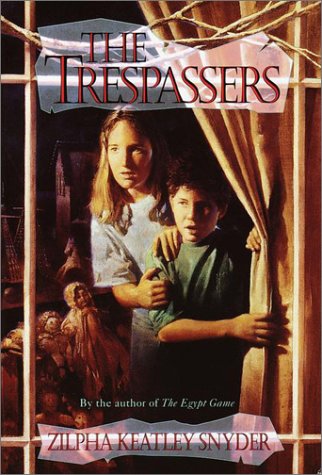
                • Cover of The Trespassers
                  The Trespassers

                  Zilpha Keatley Snyder · standalone novel · 1995

                  similar byghost storieseeriefriendshipcoming of agelate 20th centurynorth americasmall town

                  Having trespassed and explored the empty Hutchinson mansion, which seems haunted by the presence of a long-dead young girl, sixth grader Neely and her little brother become regular visitors when emotionally disturbed Curtis Hutchinson moves in.

                • Cover of Green Town
                  Green Town

                  series · 31 books · 1946

                  completed

                  similar bycoming of agenorth americasmall town+1 more

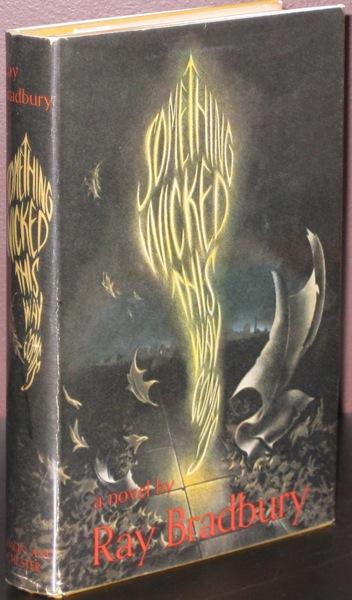
                  Green Town gathers two of Ray Bradbury's loosely linked novels set in his fictionalized version of his childhood home of Waukegan, Illinois: the dark fantasy Something Wicked This Way Comes (1962), in which a sinister traveling carnival led by the mysterious Mr. Dark descends on a small town and preys on its residents' desires, and the later Farewell Summer (2006), which follows Douglas Spaulding through an autumn stand-off between the town's boys and its elders. Written more than four decades apart, the two novels share Bradbury's recurring setting and nostalgic, myth-making tone rather than a single continuous plot.

                • Cover of Ghost Story
                  Ghost Story

                  Peter Straub · standalone novel · 1979

                  similar byghost storieseerielate 20th centurynorth americasmall town

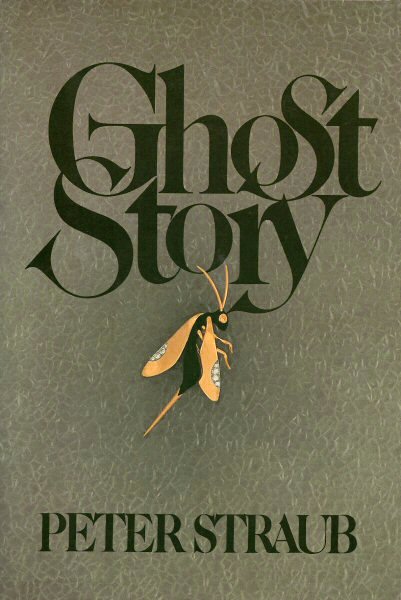
                  Four prominent citizens of a small town in upstate New York who share guilt over something that happened in their youth are revisited late in life by a destructive evil force which uses their guilt as an opportunity to destroy them as well as the entire town.

                • Cover of Lockwood & Co.
                  Lockwood & Co.

                  series · 6 books · 2013

                  similar byghost storieseeriefriendshipyoung adult+1 more

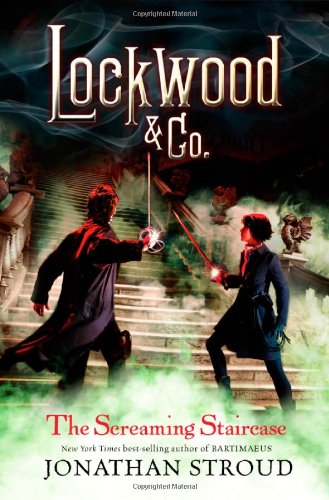
                  Lockwood & Co. is a young adult supernatural thriller series by Jonathan Stroud. It follows three young operatives of a psychic detection agency as they fight ghosts in London, England.

                • Cover of Shadowed Summer
                  Shadowed Summer

                  Saundra Mitchell · standalone novel · 2009

                  similar byghost storieseeriefriendshipcoming of agenorth americayoung adultour worldsmall town

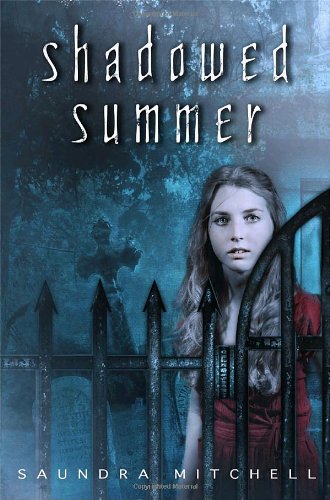
                  Iris is ready for another hot, routine summer in her small Louisiana town, hanging around the Red Stripe grocery with her best friend, Collette, and traipsing through the cemetery telling each other spooky stories and pretending to cast spells. Except this summer, Iris doesn't have to make up a story. This summer, one falls right in her lap.Years ago, before Iris was born, a local boy named Elijah Landry disappeared. All that remained of him were whispers and hushed gossip in the church pews. Until this summer. A ghost begins to haunt Iris, and she's certain it's the ghost of Elijah. What really happened to him? And why, of all people, has he chosen Iris to come back to?From the Hardcover edition.

                • Cover of Johnny Dixon and the Professor
                  Johnny Dixon and the Professor

                  series · 13 books · 1983

                  similar byeerienorth america+3 more

                  Johnny Dixon is a fictional American boy featured in a series of twelve children's gothic horror novels, 1983 to 1999, written by John Bellairs or his successor Brad Strickland. In each book, 12-year-old Johnny and his group of friends face and overcome evil forces usually bent on ending the world. Alternatively, Johnny Dixon is the book series.

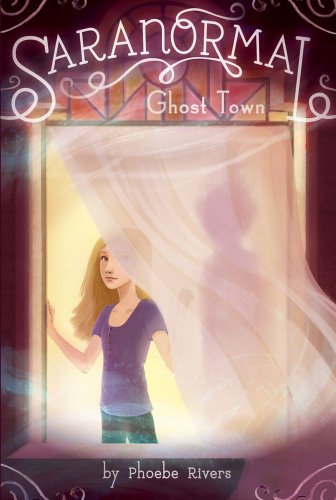
                • Cover of Saranormal
                  Saranormal

                  series · 11 books · 2012

                  similar byghost stories+6 more

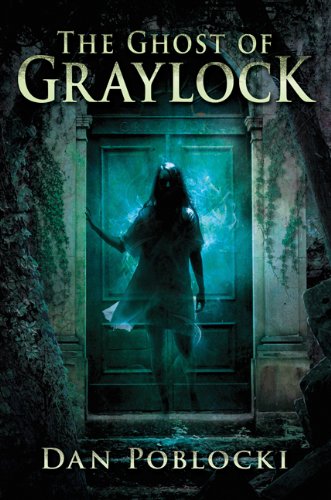
                • Cover of The Ghost of Graylock
                  The Ghost of Graylock

                  Dan Poblocki · standalone novel · 2012

                  similar byghost storieseeriefriendshipnorth americaour worldsmall town+2 more

                  Staying with their aunts over the summer, Neil Cady, his sister Bree, and their new friends Wesley and Eric, set out to explore Greylock Hall, an abandoned psychiatric hospital which is supposed to be haunted by the ghost of Nurse Janet. Staying with their aunts over the summer, Neil Cady, his sister, Bree, and their new friends Wesley and Eric set out to explore Graylock Hall, an abandoned psychiatric hospital which is rumored to be haunted by the ghost of Nurse Janet.

                • Cover of Shades of London
                  Shades of London

                  series · 4 books · 2011

                  similar byghost storiesyoung adult+4 more

                • Cover of Allie Nichols
                  Allie Nichols

                  series · 4 books · 1998

                  completed

                  similar byghost storieseerienorth america+4 more

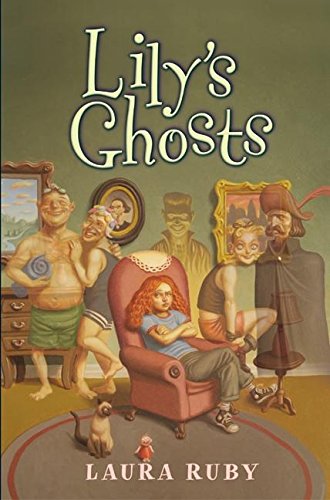
                • Cover of Lily's Ghosts
                  Lily's Ghosts

                  Laura Ruby · standalone novel · 2003

                  similar byghost storieseeriefriendshipnorth americasmall town+1 more

                  Strange goings-on at her great-uncle's summer home in Cape May, New Jersey, draw Lily and a new friend into a mystery involving lost treasure, a fake medium, and ghosts of all sizes, shapes, and dispositions.

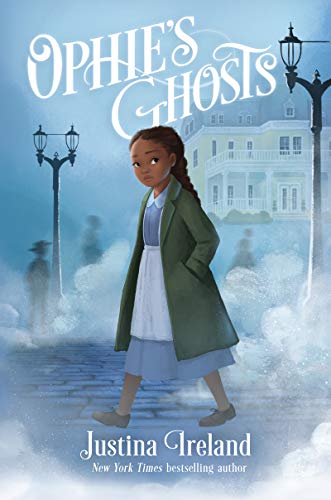
                • Cover of Ophie's Ghosts
                  Ophie's Ghosts

                  Justina Ireland · standalone novel · 2021

                  similar byghost storiesnorth americaour world+2 more

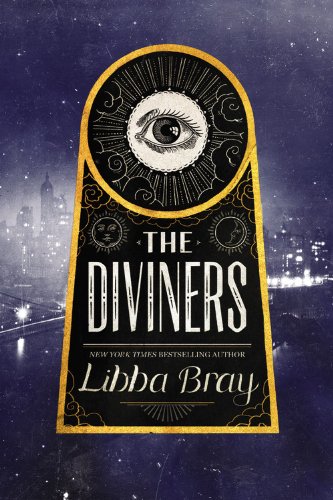
                • Cover of The Diviners
                  The Diviners

                  series · 4 books · 2012

                  similar byeerienorth americayoung adult+1 more

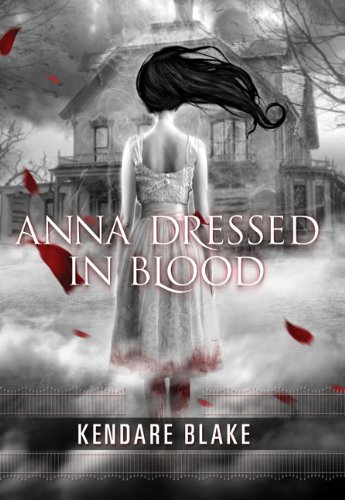
                • Cover of Anna Korlov
                  Anna Korlov

                  series · 2 books · 2011

                  similar byghost storiesyoung adult+4 more

                  Kendare Blake's YA horror duology follows Cas Lowood, who has spent three years continuing his late father's work of hunting and dispatching violent ghosts, until he meets Anna, a ghost far more dangerous, and more sympathetic, than any he's faced. Anna Dressed in Blood and its sequel Girl of Nightmares follow Cas as his professional detachment gives way to a bond that complicates everything he thought he knew about his calling.

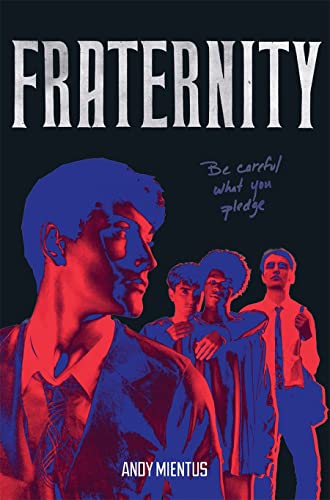
                • Cover of Fraternity
                  Fraternity

                  Andy Mientus · standalone novel · 2022

                  similar byeeriefriendshipcoming of agelate 20th centurynorth americayoung adult+1 more

                  In the fall of 1991, Zooey Orson transfers to the Blackfriars School for Boys hoping for a fresh start following a scandal at his last school. However, he quickly learns that he isn’t the only student keeping a secret. Before he knows it, he’s fallen in with a group of boys who all share the same secret, one which they can only express openly within the safety of the clandestine gatherings of the Vicious Circle––the covert club for gay students going back decades. But when the boys unwittingly happen upon the headmaster’s copy of an arcane occult text, they unleash an eldritch secret so terrible, it threatens to consume them all.

                • Cover of Castle Rock
                  Castle Rock

                  series · 16 books · 1978

                  similar bynorth americasmall town+1 more

                  Castle Rock is the fictional Maine town that links a cluster of otherwise separate Stephen King novels and novellas, including The Dead Zone, Cujo, The Dark Half, Needful Things, and Elevation. Rather than telling one continuous story, the books share a setting and occasional recurring figures, such as Sheriff Alan Pangborn, while each follows its own self-contained plot and cast. Any title can be read on its own without needing the others.

                • Cover of White Smoke
                  White Smoke

                  Tiffany D. Jackson · standalone novel · 2021

                  similar byghost storieseerienorth americayoung adultsmall town+1 more

                  Marigold is running from ghosts. The phantoms of her old life keep haunting her, but a move with her newly blended family from their small California beach town to the embattled Midwestern city of Cedarville might be the fresh start she needs. Her mom has accepted a new job with the Sterling Foundation that comes with a free house, one that Mari now has to share with her bratty ten-year-old stepsister, Piper. The renovated picture-perfect home on Maple Street, sitting between dilapidated houses, surrounded by wary neighbors has its... secrets. That’s only half the problem: household items vanish, doors open on their own, lights turn off, shadows walk past rooms, voices can be heard in the walls, and there’s a foul smell seeping through the vents only Mari seems to notice. Worse: Piper keeps talking about a friend who wants Mari gone. But "running from ghosts" is just a metaphor, right? As the house closes in, Mari learns that the danger isn’t limited to Maple Street. Cedarville has its secrets, too. And secrets always find their way through the cracks.

                • Cover of Green Knowe
                  Green Knowe

                  series · 8 books · 1954

                  completed

                  similar by+5 more

                  Green Knowe is a series of six children's novels written by Lucy M. Boston, illustrated by her son Peter Boston, and published from 1954 to 1976. It features a very old house, Green Knowe, based on Boston's home at the time, The Manor in Hemingford Grey, Huntingdonshire, England. In the novels she brings to life the people she imagines might have lived there.

                • Cover of Lewis Barnavelt
                  Lewis Barnavelt

                  series · 12 books · 1973

                  similar byeerienorth america+3 more

                  Lewis Barnavelt is a lonely orphan who moves in with his uncle Jonathan, an amateur wizard, in a rambling old house that turns out to hide a doomsday clock built into its walls by a previous, malevolent owner. John Bellairs introduced the character in The House with a Clock in Its Walls (1973), illustrated by Edward Gorey, and after Bellairs's death Brad Strickland continued the series from his notes and outlines for most of its later volumes. It blends gothic horror atmosphere with a gentler, more whimsical strain of children's fantasy.

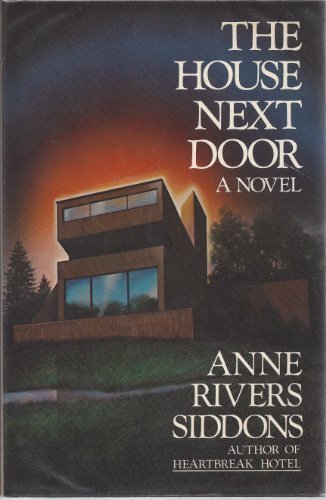
                • Cover of The House Next Door
                  The House Next Door

                  Anne Rivers Siddons · standalone novel · 1978

                  similar byghost storieseerielate 20th centurynorth americasmall town

                  Thirtysomething Colquitt and Walter Kennedy live in a charming, peaceful suburb of newly bustling Atlanta, Georgia. Life is made up of enjoyable work, long, lazy weekends, and the company of good neighbors. Then, to their shock, construction starts on the vacant lot next door, a wooded hillside they'd believed would always remain undeveloped. Disappointed by their diminished privacy, Colquitt and Walter soon realize something more is wrong with the house next door. Surely the house can't be "haunted," yet it seems to destroy the goodness of every person who comes to live in it, until the entire heart of this friendly neighborhood threatens to be torn apart.
                • Cover of New York Circulating Material Repository
                  New York Circulating Material Repository

                  series · 3 books · 2010

                  similar bynorth america+4 more

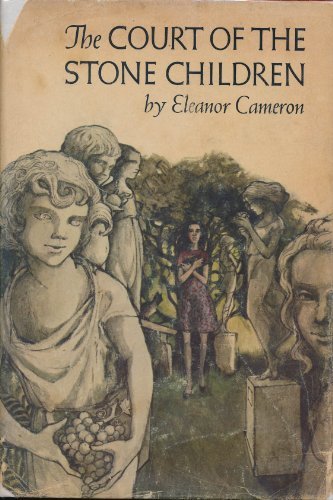
                • Cover of Stone Children
                  Stone Children

                  series · 2 books · 1973

                  completed

                  similar bynorth america+4 more

                • Cover of Blossom Culp
                  Blossom Culp

                  series · 4 books · 1975

                  completed

                  similar bynorth america+2 more