More like Dead Girls
anchored on:science fictionour worldnear futurecyberpunkidentitydark
but
- Blade Runner Universe
series6 books1968
similar bydarknear futureidentityscience fictioncyberpunk+1 more
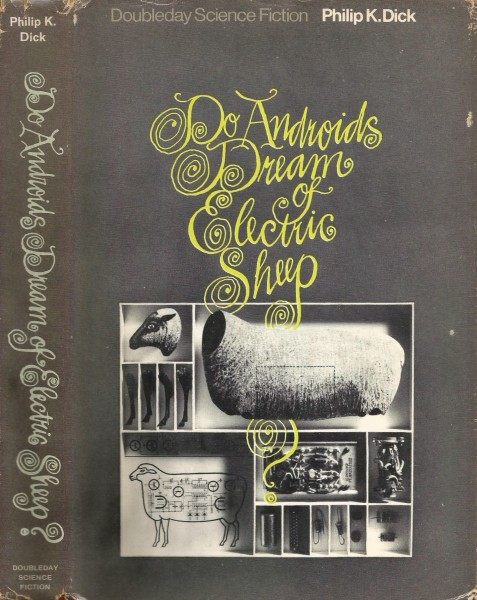
Philip K. Dick's 1968 novel Do Androids Dream of Electric Sheep? follows bounty hunter Rick Deckard as he tracks escaped androids through an irradiated, near-abandoned San Francisco, using the hunt to probe questions of empathy and what separates human from machine. The novel became the basis for Ridley Scott's 1982 film Blade Runner, and Marvel Comics later published an illustrated adaptation of that film. Together the two trace the story's path from prose original to screen and comic-page adaptation.
- Sprawl Trilogy
series10 books1981
similar bydarknear futurescience fictioncyberpunkvirtual reality
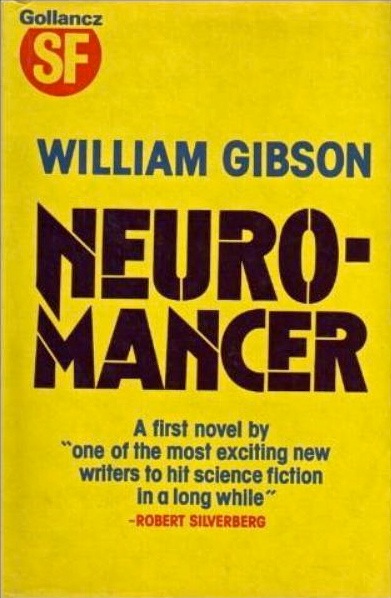
The Sprawl Trilogy is William Gibson's foundational cyberpunk sequence: Neuromancer (1984), in which hacker Case is drawn into a high-stakes heist alongside an artificial intelligence and a damaged ex-soldier, followed by Count Zero (1986) and Mona Lisa Overdrive (1988), which widen the same near-future world of corporate power and networked cyberspace to new characters. Johnny Mnemonic, an early short story set in the same fictional milieu, predates the novels and introduces the courier Molly Millions before her role in the trilogy. Together these works established much of cyberpunk's visual and thematic vocabulary.
- Blood Music
Greg Bearstandalone novel1985
similar bydarknear futurescience fictionour worldcyberpunknanotechnology
Blood Music is a 1985 science fiction novel by American writer Greg Bear. It is an expanded version of a short story of the same title, originally published in the June 1983 issue of Analog and the winner of both the 1983 Nebula and 1984 Hugo awards for Best Novelette. The novel won the 1986 Prix Apollo Award, given to the best science fiction novel published in France during the preceding year, under the title La Musique du sang.
- Only Forward
Michael Marshall Smithstandalone novel1994
similar bydarkidentitynear futurescience fictioncyberpunkvirtual reality
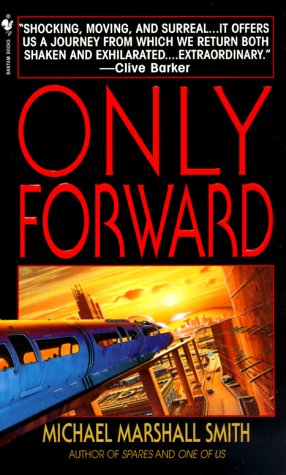
Only Forward is a science fiction novel by English writer Michael Marshall Smith; his debut novel, it was first published in 1994 by HarperCollins. It was the winner of the August Derleth Award (1995) and Philip K. Dick Award (2000).
- Against Gravity
Gary Gibsonstandalone novel2005
similar bydarkidentitynear futurescience fictionour worldcyberpunknanotechnology
From the back cover of the Tor 2013 TPB: "If you lived long enough this could be your future - Little is as it used to be, and many are not who they seem. In the late twenty-first century, it's a very different world. Meet Kendrick Gallmon, survivor of the Maze. In this covert research facility, political prisoners become unwilling participants in an experiment to turn them into perfect soldiers. Now Kendrick is trying to pick up the pieces of his life. But he knows his nervous system, now riddled with unstable nanotech augmentations, is slowly killing him. Then one day his heart stops beating, forever, and a ghost urges him to return to the source of all his nightmares. A long-abandoned military complex, filled with entirely new voices of the dead..."
- A Clockwork Orange
series4 books1962
completed
similar bydarkscience fictionnear futureour world+1 more
Anthony Burgess's 1962 novel is narrated by Alex, a teenage gang leader in a near-future Britain gripped by a youth subculture of extreme violence, recounting his crimes in Nadsat, an invented slang blending English with Russian-derived words. After his crimes catch up with him, Alex is made the subject of a controversial state program meant to forcibly reform his behavior, and the novel uses his ordeal to question whether imposed goodness is worth the loss of free will. It is a standalone novel.
- Shadrach in the Furnace
Robert Silverbergstandalone novel1976
similar bydarkidentitynear futurescience fictionour world
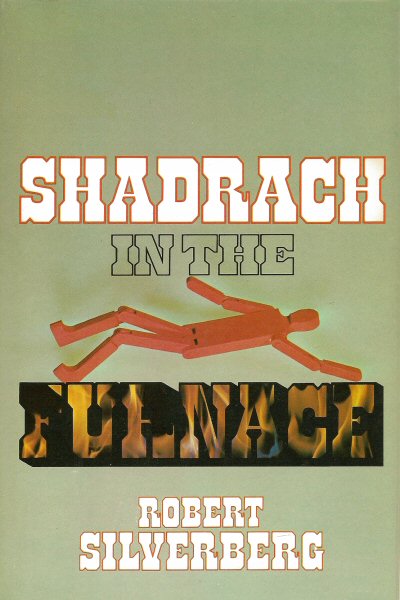
Shadrach in the Furnace is a science fiction novel by American writer Robert Silverberg, first published as a serial in Analog Science Fiction and Fact magazine in the August, September, and October 1976 issues. It was subsequently published by Bobbs Merrill in 1976. The novel was nominated in 1976 for the Nebula Award, and in 1977 for the Hugo Award.
- Synners
Pat Cadiganstandalone novel1991
similar bydarknear futurescience fictionour worldcyberpunkvirtual reality
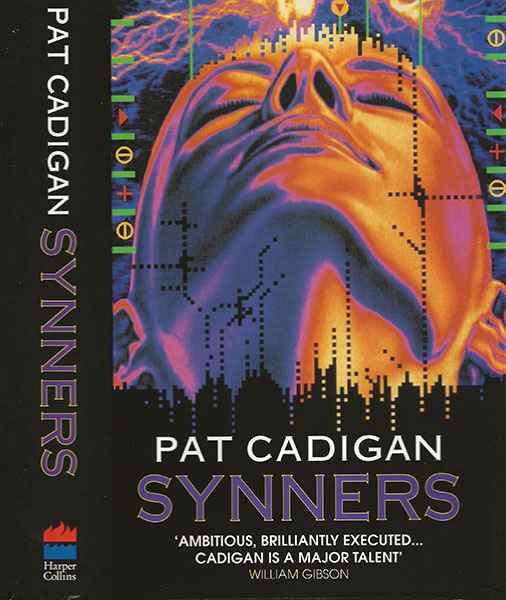
In Synners, the line between technology and humanity is hopelessly slim. A constant stream of new technology spawns crime before it hits the streets; the human mind and the external landscape have fused to the point where any encounter with "reality" is incidental.
- The Idlewild Trilogy
series3 books2003
similar bydarknear futurescience fictionidentityour world+1 more
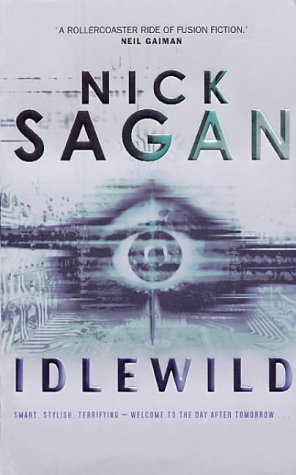
Nick Sagan's Idlewild trilogy opens with Idlewild (2003), a science-fiction novel that alternates between mid-21st-century interludes and events a generation later, following humanity's ten last survivors, cast in a modern mythological framework as god-like figures. It continues across Edenborn and Everfree.
- Stand on Zanzibar
John Brunnerstandalone novel1968
similar bydarknear futurescience fictionour world+1 more
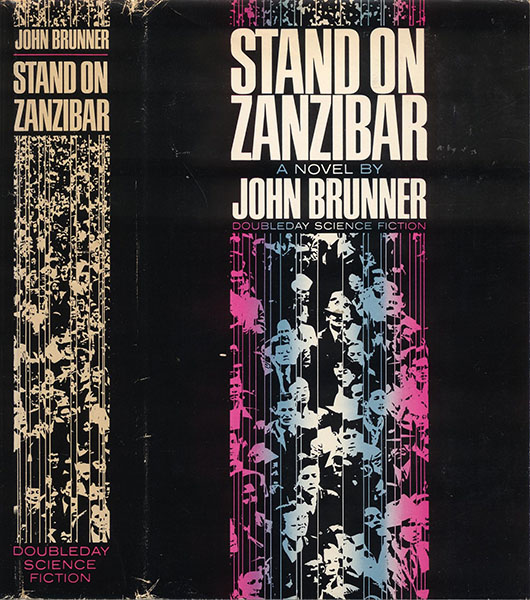
Stand on Zanzibar is a dystopian New Wave science fiction novel written by John Brunner and first in part published in New Worlds magazine in 1967 and in book form in 1968. The book won a Hugo Award for Best Novel at the 27th World Science Fiction Convention in 1969, as well as the 1969 BSFA Award and the 1973 Prix Tour-Apollo Award.
- Dead Girls
series5 books1992
similar bydarknear futurescience fictionidentitycyberpunkour world+1 more
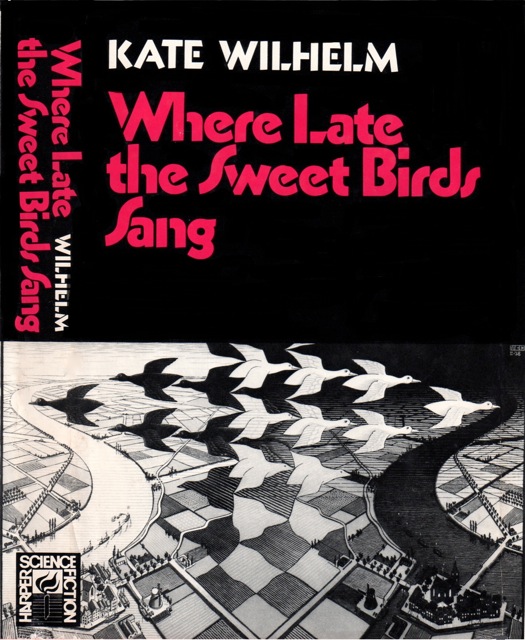
- Where Late the Sweet Birds Sang
Kate Wilhelmstandalone novel1976
similar bydarknear futurescience fictionour world+1 more
Where Late the Sweet Birds Sang is a science fiction novel by American writer Kate Wilhelm, published in 1976. The novel is composed of three parts, "Where Late the Sweet Birds Sang," "Shenandoah," and "At the Still Point," and is set in a post-apocalyptic era, a concept popular among authors who took part in the New Wave Science Fiction movement in the 1960s.
- The Zap Gun
Philip K. Dickstandalone novel1967
similar bydarknear futurescience fictionour world+1 more
The Zap Gun is a 1967 science fiction novel by American writer Philip K. Dick. It was first published as the two-part serial Project Plowshare in Worlds of Tomorrow in 1965 and 1966, before Pyramid Books issued it in paperback under its present title. The novel originated in a title-first commission devised by Pyramid editor Don Bensen and was written in 1964 during a period of rapid production in Dick's career.
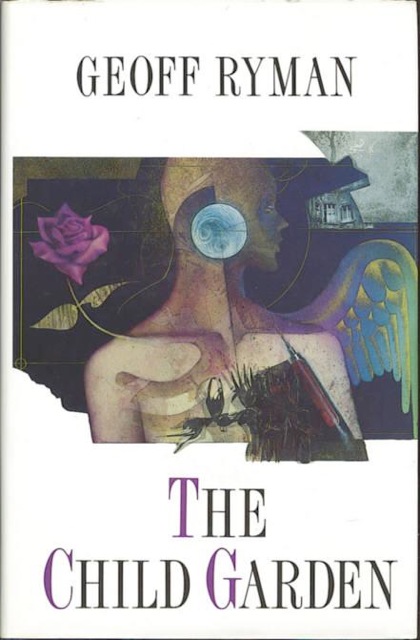
- The Child Garden
Geoff Rymanstandalone novel1989
similar bydarknear futurescience fictionour world+2 more
The Child Garden is a 1989 science fiction novel by Canadian writer Geoff Ryman.
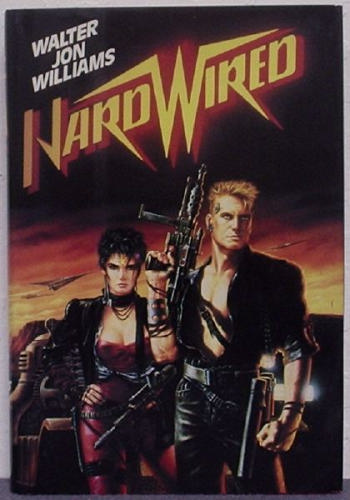
- Hardwired
series3 books1986
similar bynear futurescience fictionour worldcyberpunk+2 more
Walter Jon Williams' Hardwired (1986) is an early and influential cyberpunk novel. Voice of the Whirlwind, published three years later, is a loosely connected follow-up set in the same future, sharing its technological and political backdrop with a different cast of characters.
- The Twilight of Briareus
Richard Cowperstandalone novel1974
similar bydarkidentitynear futurescience fictionour world
It took the light of the supernova Briareus Delta one hundred and thirty-two years to cross space to the Solar System. But the night it exploded in our sky was a night that would never be forgotten in the history of the world. For in that bath of cosmic particles, all things changed. Not only the weather and the flora and fauna, but humanity itself received what seemed to be its death sentence. Sterility signalled the end of man, until the strange children known as the Zeta-mutants began to appear. Richard Cowper, author of Clone and other sf novels, has produced in this new novel a gripping story of how one man coped with the terrible dilemma of his world - how he attempted to solve the problem of the girls with the amber eyes and what he did when he found out what he himself had become during The Twilight of Briarseus. (from the back cover of the DAW Books first printing)
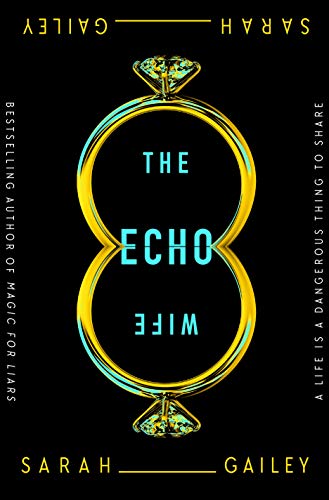
- The Echo Wife
Sarah Gaileystandalone novel2021
similar bydarkidentitynear futurescience fictionour world
The Echo Wife is a 2021 science fiction thriller novel by Sarah Gailey, published by Tor Books. It follows Doctor Evelyn Caldwell, an accomplished scientist researching cloning, who has discovered that her husband, Nathan, has used her research to create Martine, a clone of Evelyn who is his ideal wife. When Martine kills Nathan in self-defense, Evelyn must assist in covering up the murder.
- Slow River
Nicola Griffithstandalone novel1995
similar bydarkidentitynear futurescience fictioncyberpunk
Slow River is a science fiction novel by British writer Nicola Griffith, first published in 1995. It won the Nebula Award for Best Novel and the Lambda Literary Award. The novel received critical praise for its writing and setting, while its use of multiple narrative modes was criticised.
- Childhood's End
Arthur C. Clarkestandalone novel1953
similar byidentityscience fictionnear futureour world+1 more
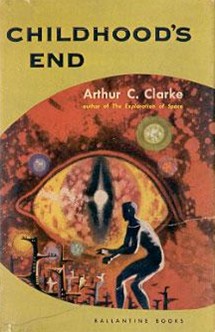
Childhood's End is a 1953 science fiction novel by the British author Arthur C. Clarke. The story follows a peaceful alien invasion of Earth by mysterious Overlords, whose arrival begins decades of apparent utopia under indirect alien rule, at the cost of human identity and culture.
- Feed
M. T. Andersonstandalone novel2002
similar bydarknear futurescience fictioncyberpunk+2 more
Feed (2002) is a cyberpunk, satirical, dystopian, young-adult novel by M. T. Anderson, focusing on issues such as American hegemony, corporate power, consumerism, information technology, data mining, and environmental decline, with a sometimes sardonic, sometimes somber tone. From the first-person perspective of a teenaged boy, the book takes place in a near-futuristic American culture completely dominated by advertising and corporate exploitation, corresponding to the enormous popularity of internetworking brain implants called feeds.
- Deadpan Allie
series6 books1981
similar bynear futurescience fictionidentityour worldvirtual reality+2 more
- Brain Child
George Turnerstandalone novel1991
similar bydarkidentitynear futurescience fictionour world
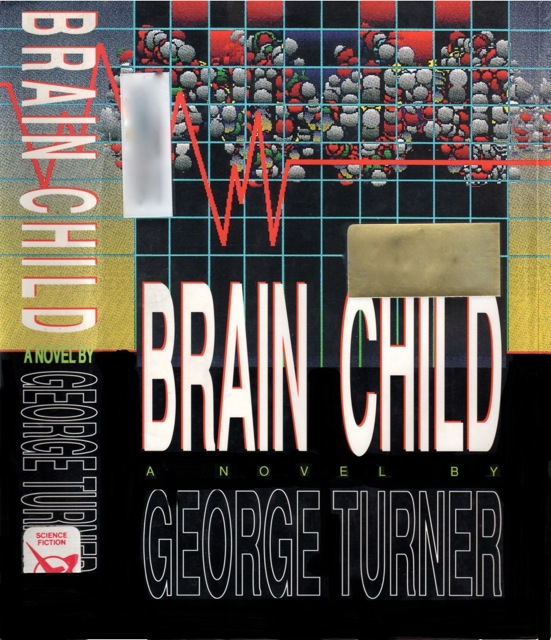
From the rear flap of the William Morrow first edition: Now, in Brain Child, Turner has created an intense novel of murder and science that sounds the great themes of human identity and the nature of intelligence. Set a few decades in the future, he tells the story of a man searching for his roots and, through layers of discovery, the story of a complex and astounding scientific experiment. David Chance has been raised in an orphanage and, now an adult, finds that he is the child of a man genetically altered before birth by a group of scientists experimenting in increasing human intelligence and creativity. But his father is dead. He pursues the search for the true nature of his father and, through it, the true nature of the experiments and the survivors of the final disaster that ended them. Chance exposes his roots and find them entangled in horror, deceit, vengeance, and perverse scientific illumination. Peace and self-knowledge are achieved only at great risk and terrible cost.
- Bridge Trilogy
series4 books1990
similar bynear futurescience fictioncyberpunk+3 more
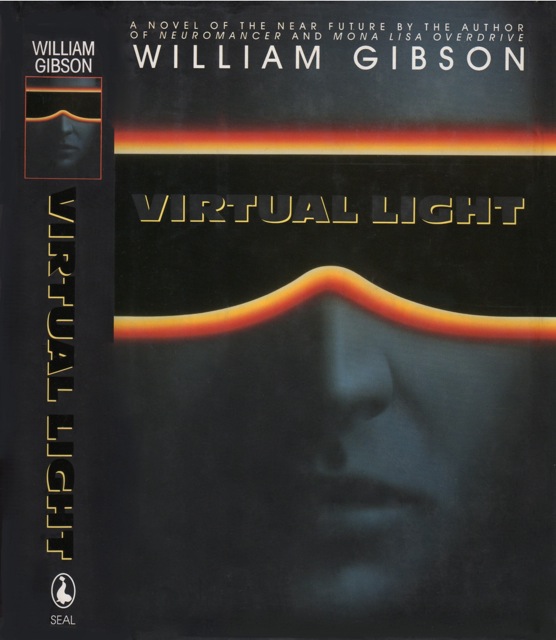
The Bridge trilogy is a series of novels by William Gibson, his second after the successful Sprawl trilogy. The trilogy comprises the novels Virtual Light (1993), Idoru (1996) and All Tomorrow's Parties (1999). A short story, "Skinner's Room", was originally composed for Visionary San Francisco, a 1990 museum exhibition exploring the future of San Francisco.
- The Company Man
Joe Clifford Fauststandalone novel1988
similar bydarknear futurescience fictionour worldcyberpunk+1 more
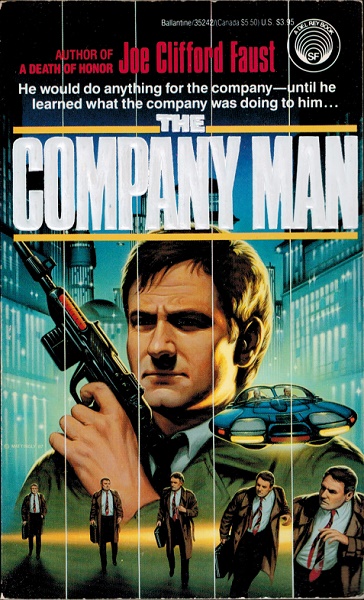
The main character in The Company Man, Andrew Birch, questions his loyalty to Astradyne--the megacorporation replacing governments on Earth--, which had been unfaltering until he realized he has been used as a company pawn in a twisted plot and decided to strike back.