More like Death Commando
but
- H. G. Wells' War of the Worlds
universe65 books1898
Start hereThe War of the Worlds · Start here
No one would have believed, in the closing years of the nineteenth century, that human affairs were being watched keenly and closely from the timeless worlds of space. And then the cylinders fell. H. G. Wells' War of the Worlds opens in the quiet of the Surrey commons, where a falling star proves to be the first Martian craft — and from the pit rise the towering tripods, the Heat-Ray, the choking Black Smoke and the creeping red weed, wielded by minds that regard mankind much as we regard the creatures we boil for supper. This is invasion rendered as natural disaster: cold, methodical, and vast beyond argument. Wells' 1898 novel is the seed; everything else grows from that Martian soil. The catalogue gathers direct sequels and continuations alongside a wide field of other hands. In War of the Worlds: Global Dispatches the invasion is retold across the whole planet through the eyes of Twain, Verne, Tolstoy, Lowell and Kipling; in the Manly Wade and Wade Wellman crossover, Sherlock Holmes, Watson and Professor Challenger take the field against the machines; and Scott Washburn's Great Martian War stretches the fighting into a decades-long alternate history of steam, artillery and grinding attrition. It is a loose shared world — no single decreed sequence, many voices answering one calamity. What sets this world apart is its refusal of heroics: the invaders fall not to generals but to the smallest things of Earth, humbling and indifferent. Begin, always, with Wells' original novel — it is short, and it is the ground every later book stands upon. From there follow your appetite: Global Dispatches for the panorama, the Holmes campaign for adventure, Washburn for the long war.
- Duke de Richleau
series4 books1933
completed
similar by+2 more
The Duke de Richleau novels follow Dennis Wheatley's aristocratic adventurer and occultist across four decades of twentieth-century intrigue, moving from a 1930s rescue thriller in The Forbidden Territory into Satanist set-pieces such as The Devil Rides Out and Strange Conflict, then a later case in Gateway to Hell. Wheatley wrote the books out of order over nearly forty years, but their internal chronology matches the order they were published in.
- Dune Universe
universe78 books1963
Start hereDune · Start here
similar by+1 more
Arrakis. Dune. The desert planet, where empire runs on a single substance: the spice melange, which folds space, prolongs life, and unlocks prescience, and which exists nowhere else in the known universe. Frank Herbert's saga is a meditation dressed as an adventure — feudal houses and a secret sisterhood, engineered messiahs and the patient ecology of a world without water, all turning on the terrible gravity of who commands the spice. It reads like scripture and schemes like a war room, ten thousand years hence, among people who have outlawed the thinking machine and made instruments of themselves instead. At its heart stand Herbert's original six — Dune, Dune Messiah, Children of Dune, God Emperor of Dune, Heretics of Dune, Chapterhouse: Dune — a single deepening arc across millennia, arguing the whole way between prophecy and free will. Around that spine his son Brian Herbert and Kevin J. Anderson have raised a vast prequel architecture: Prelude to Dune, tracing the great houses a generation before Paul; Legends of Dune, reaching back to the crusade that broke the machines; the Schools of Dune cycle on the founding of Bene Gesserit, Mentat, and Navigator; the Caladan Trilogy and Heroes of Dune filling years the originals left in shadow. Many hands, dozens of volumes, one desert. What sets Dune apart is its refusal of the simple: religion is manufactured, heroes are hazards, and the sand itself — worm, water, ecology — acts as a political power. Begin where the universe did, with Frank Herbert's Dune (1965), and read the original six in order; you need nothing else to feel the full weight. The prequels are a country to explore afterward, taken by era. Beginnings are delicate times.
- Dune
series20 books1963
part of Dune Universe
similar by+1 more
Frank Herbert's Dune Chronicles opens with 1965's Dune, set on the desert planet Arrakis where House Atreides takes control of the only source of the vital spice melange and young Paul Atreides is pulled into a struggle over its politics and religion. Herbert carried the story forward across five further novels — Dune Messiah, Children of Dune, God Emperor of Dune, Heretics of Dune, and Chapterhouse: Dune — following Paul's line over the following millennia, before Brian Herbert and Kevin J. Anderson later extended the saga. Many other editions of these six novels are omnibus and box-set repackagings rather than separate stories.
- The Werewolf of Paris
Guy Endorestandalone novel1933
similar bywardarkhorror
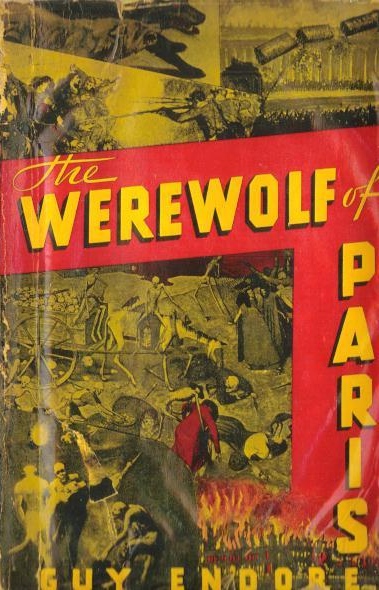
The Werewolf of Paris (1933) is a Gothic horror novel by American writer Guy Endore. The novel follows Bertrand Caillet, the eponymous werewolf, throughout the tumultuous events of the Franco-Prussian War and the Paris Commune of 1870–71. Some literature experts have compared this book with Dracula by Bram Stoker and they have identified it as the Dracula of werewolf fiction.
- Blue Rose (Peter Straub)
series9 books1985
completed
similar bydarkhorror
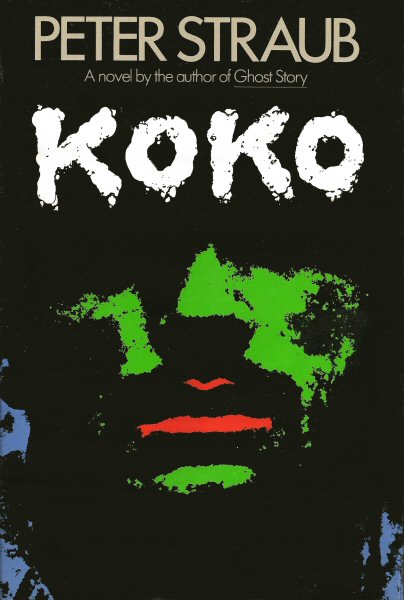
The Blue Rose novels are only loosely a series: Peter Straub's Koko, Mystery, and The Throat are separate suspense novels connected by recurring characters, a shared Midwestern town, and the shadow of a Vietnam-era program called Blue Rose that haunts several of the men at their centers. Koko follows a group of Vietnam veterans hunting a former comrade turned serial killer decades after the war. The 1985 novella Blue Rose and later story collections explore the same program's darker origins.
- The Haunting of Toby Jugg
Dennis Wheatleystandalone novel1948
similar bydarkhorror+1 more
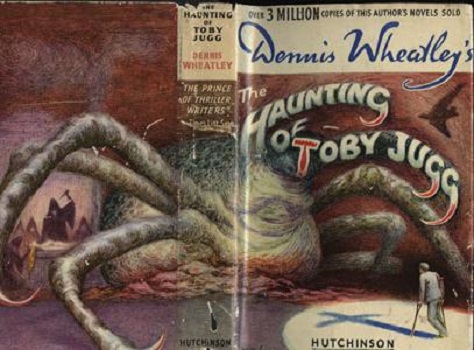
The Haunting of Toby Jugg is a 1948 psychological thriller novel on an occult theme by English writer Dennis Wheatley, incorporating his usual themes of satanic possession and madness, in what was at that time a fresh situation: a disabled British airman recovering from his experiences in the last stages of World War II, in which he played a part in the bombardment of Germany.
- Saint Leibowitz
series6 books1955
completed
similar by+1 more
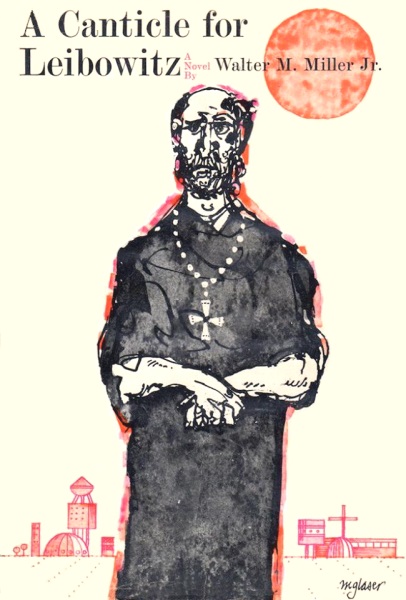
Walter M. Miller Jr.'s A Canticle for Leibowitz (1959), assembled from three novellas he had published earlier in the decade, follows the monks of a Catholic monastery in the post-nuclear American Southwest as they preserve fragments of scientific knowledge across centuries, watching civilization slowly rebuild itself and edge back toward the mistakes that destroyed it. Miller's posthumous sequel, Saint Leibowitz and the Wild Horse Woman, completed by Terry Bisson from his notes after his death and published in 1997, returns to the same abbey and its world decades later. Together the two novels form a sparse, decades-spanning series about memory, faith, and the cycles of civilization.
- Necroscope
series26 books1982
completed
similar bydarkhorror
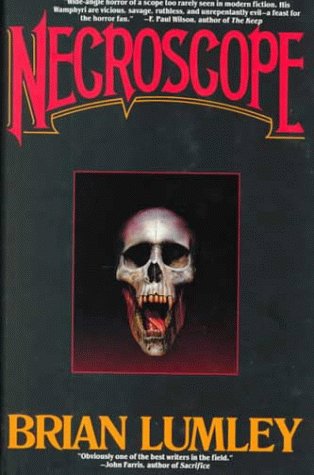
Brian Lumley's Necroscope opens an eighteen-book horror saga (1982-2017) centered on Harry Keogh, a man who can speak with the dead. Harry turns that gift against Thibor Ferenczy, a vampire buried since the Middle Ages, and against Ferenczy's agent Boris Dragosani, a Soviet spy who has learned to tear secrets from corpses in pursuit of world domination. Later volumes follow Harry's descendants and successors through further wars against the vampiric Wamphyri, across sequel trilogies and story collections.
- Ender Wiggin
series14 books1977
part of Ender's Game Universe
Orson Scott Card's Ender's Game (1985, expanded from his 1977 novella) follows child prodigy Andrew "Ender" Wiggin as he is recruited into a military training program built to prepare Earth's defenses for an anticipated third war against an insectoid alien species known as the Formics. The saga continues years later through Speaker for the Dead and Xenocide, following an older Ender as he confronts the moral weight of his role in that earlier conflict, and concludes the core arc in Children of the Mind, with Ender in Exile filling in the years between the first two books. Set within the wider Ender's Game universe, the series shifts from military coming-of-age story to slower, more philosophical science fiction as it progresses.
- The Spear
James Herbertstandalone novel1978
similar bydarkhorror+1 more
The Spear is a 1978 novel by British author James Herbert dealing with Nazi occultism and the Holy Lance. It was first published in by New English Library.
- Macedon
series2 books1990
completed
similar by+2 more
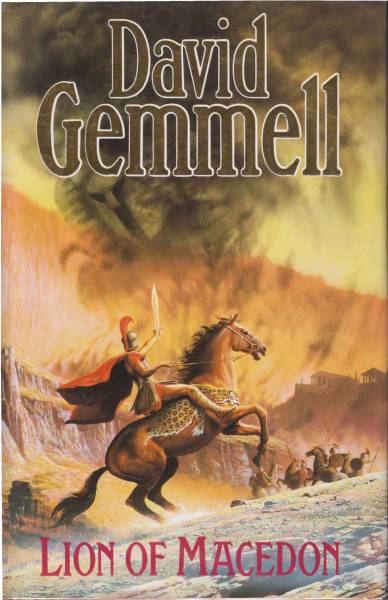
David Gemmell's Lion of Macedon and its sequel Dark Prince follow Parmenion, a gifted but despised half-Spartan general in ancient Macedon, whose military genius is bound up with a dark, supernatural pact that threatens to consume him. Gemmell layers his heroic-fantasy staples - flawed, morally compromised heroes and mystical forces at war - onto a loosely historical Macedonian setting adjacent to the era of Philip and Alexander. The duology sits alongside Gemmell's more purely secondary-world fantasy as one of his forays into history-inflected fantasy.
- Forever War
series10 books1972
similar by+2 more
Joe Haldeman's The Forever War (1974) follows a soldier conscripted into a centuries-long interstellar war against the alien Taurans, using relativistic space travel so that months spent in transit correspond to years or decades passing back on Earth. Haldeman later returned to the same conflict in Forever Peace (1997), a thematically connected but separate story, and Forever Free (1999), a direct sequel set years after the original war's end. The first novel won the Hugo, Nebula, and Locus awards and is considered a foundational work of military science fiction.
- Michael Gallatin
series8 books1989
similar byhorror+2 more
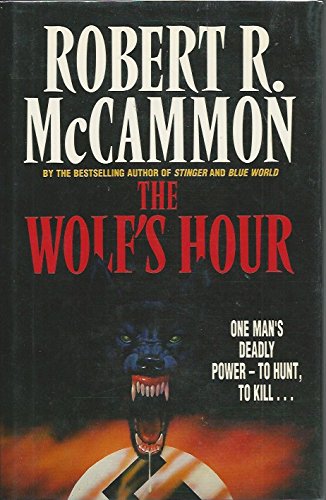
Robert R. McCammon's Michael Gallatin is a British intelligence agent working behind German lines in the Second World War who is secretly a werewolf, introduced in The Wolf's Hour on a mission to stop a Nazi superweapon. McCammon returned to the character decades later in The Hunter from the Woods, a set of interlinked stories filling in the years around the first book.
- A Song of Ice and Fire
series14 books1996
part of World of Ice and Fire
similar bywardark
A Song of Ice and Fire is a series of high fantasy novels by the American author George R. R. Martin. Martin began writing the first volume, A Game of Thrones, in 1991, and published it in 1996. Martin, who originally envisioned the series as a trilogy, has released five out of seven planned volumes. The most recent entry in the series, A Dance with Dragons, was published in 2011. Since then, Martin has been working on the sixth novel, titled The Winds of Winter. A seventh novel, A Dream of Spring, is planned to follow.
- Demon Cycle
series10 books2008
part of The Demon Cycle
similar by+1 more
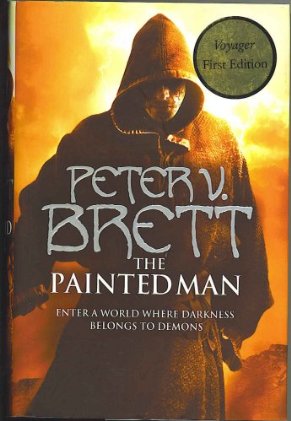
Peter V. Brett's Demon Cycle is set in a world where nightly demon attacks have driven humanity behind protective magical wards, following several point-of-view characters, including Arlen Bales and Leesha Paper, who each search for ways to fight back after centuries of retreat. The core story runs across five novels plus companion novellas.
- Gregory Sallust
series4 books1934
completed
similar by+1 more
Dennis Wheatley's Gregory Sallust novels follow a resourceful, ruthless British secret agent operating against Nazi Germany, beginning with Black August's vision of a Britain collapsing into anarchy and continuing through wartime espionage across occupied Europe. The series, spanning the 1930s to the 1960s, mixes political thriller with Wheatley's taste for scheming villains and narrow escapes.
- The Demon Cycle
universe18 books2008
Start hereDemon Cycle · Start here
similar by+1 more
When the sun goes down, the ground breathes out murder. Mist seeps up from the Core, hardens into flame and rock and wind given teeth, and the only thing between a sleeping family and the corelings is a ring of wards — glyphs scratched in the dust that hold as long as the lines stay unbroken. Miss one stroke and you are meat by morning. This is Peter V. Brett's world: a humanity three centuries into a losing siege, huddled in the dark, waiting on a Deliverer half of them no longer believe will come. The Demon Cycle runs five volumes — The Warded Man (published in Britain as The Painted Man), The Desert Spear, The Daylight War, The Skull Throne, and The Core — following a messenger who tattoos the lost combat-wards into his own skin, a healer, a fiddler whose music turns demons aside, and a desert warlord who claims the prophecy for himself. Around them sit shorter works (Brayan's Gold, Messenger's Legacy, Barren), and beyond them the ongoing Nightfall Saga — The Desert Prince, The Hidden Queen — carrying the next generation into a war their parents did not finish. At its heart is a quarrel over faith and fire: the mannered Free Cities against fanatic, sand-hard Krasia, two would-be saviors who cannot both be right, and a lost art of war-magic that could turn prey into hunters. Begin with The Warded Man and read straight through in publication order; the novellas keep, for later, once the dark is under your skin.
- Swan Song
Robert R. McCammonstandalone novel1987
similar bydarkhorror+1 more
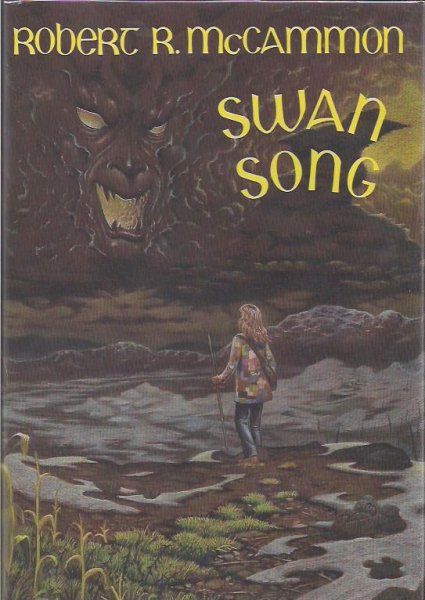
Swan Song is a 1987 post-apocalyptic horror novel by American novelist Robert R. McCammon. Published June 1, 1987, the novel describes the aftermath of a nuclear war that provokes an evolution in humankind. Swan Song won the 1987 Bram Stoker award, tying with Stephen King's Misery.
- Alchemised
SenLinYustandalone novel2025
similar bywardarkhorror
Alchemised is the debut fantasy novel of American author SenLinYu. The book was published in September 2025 by Del Rey Books in the United States and Penguin imprint Michael Joseph in the United Kingdom, New Zealand and Australia. Described as both dark fantasy, horror and gothic romance, and sometimes erroneously classified as dark romance, the standalone novel follows the life of a former alchemist, Helena Marino, as she recovers her memories of a civil war. It reached number one on the New York Times best-seller list in the week after its release.
- Cat's Cradle
Kurt Vonnegut & Jr.standalone novel1963
similar bydark+1 more
Cat's Cradle is a satirical postmodern novel, with science fiction elements, by American writer Kurt Vonnegut. Vonnegut's fourth novel, it was first published on March 18, 1963, exploring and satirizing issues of science, technology, the purpose of religion, and the arms race, often through the use of morbid humor. The novel was nominated for the Hugo Award for Best Novel in 1964.
- Toxic Shadows
Tim Curranstandalone novel2004
similar bydarkhorrorsplatterpunk+1 more
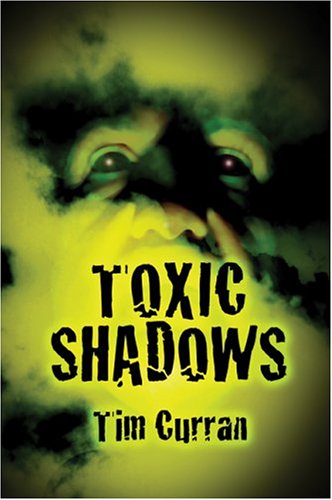
"Cut River, Michigan. Population: 0. The town the Devil built. Once it was a sleepy backwater town and once there were people in it. Then a lurking pestilence ate the flesh from its bones. A pestilence born in the smoldering graveyards of nameless, forgotten battlefields. And now there is only a shifting darkness in Cut River, a darkness populated by hideous shadows that pretend to be people. Seven strangers will arrive. If they can stay alive until dawn, they'll survive. But to do that will mean engaging in a bloody war of attrition against the things that crawl and hunt in the night. Things that wear the faces of men, women, and children. Toxic Shadows. Welcome to Cut River. Welcome to the graveyard. War is Hell." — quoted from this book's product page on Amazon and its Severed Press printing's back cover.