Loreful
HomeDiscover
Search series, authors…⌘K
Loreful

Reading orders for SF/F series and shared universes — with your place kept in every one.

Explore

UniversesSeriesWorksAuthorsAtlas

Help

FAQAboutSite map

Account & legal

Sign inCreate accountPrivacyTerms

Data

Built on ISFDB, Wikipedia, Wikidata and Open Library. Curated reading orders carry their reasoning on the page; the rest follow publication order. Data sources & licenses

© Loreful · data: ISFDB · CC BY

More like Death Trace

anchored on:urban fantasygodsour worldcontemporaryfantasyrevenge+3 more

but

Mood

The mood the book leaves you in.

  • The reading experience is propelled by journeys, exploration, and physical risk; excitement and forward momentum dominate over dread or introspection.
  • Joy and loss are deliberately mixed; the resolution grants characters something real while taking something else away, leaving warmth and sorrow together.
  • The book demands work from the reader — dense prose, difficult structure, unfamiliar ideas, or morally uncomfortable material — as part of its intended effect.
  • Grim events, cruelty, or despair dominate the atmosphere, and the book does not soften them with comfort or comic relief.
  • The atmosphere is quietly unsettling — wrongness, unease, and the uncanny pervade the book without necessarily escalating into overt horror.
  • The book is built to move the reader; character feeling is foregrounded and major scenes aim at a strong emotional response.
  • Humor is a primary aim and the prose plays for laughs — comic situations, wit, or dialogue produce sustained comedy, not occasional levity.
  • The book insists that things can improve; effort and decency are shown to matter, and the arc bends toward better outcomes even through hardship.
  • The book teaches as it goes — real facts, history, science, or craft are conveyed in enough depth that learning is part of the reading experience.
  • The book is designed to uplift and motivate, presenting perseverance or achievement in a way that invites the reader to aspire or act.
  • The overall register is cheerful and easygoing; stakes are kept gentle and the book avoids dwelling on pain or dread.
  • Withheld information drives the experience; the book sustains enigmas and secrets the reader wants resolved, whatever its genre.
  • The book is contemplative and inward-looking, giving more weight to thought, memory, and meaning than to external events.
  • The book works as comfort reading — low tension, a soothing pace, and an atmosphere the reader can unwind in.
  • Grief, loss, or melancholy set the dominant register, and the book lets sorrow stand rather than resolving it into comfort.
  • Sustained suspense is the point; the book keeps the reader braced for what happens next through danger, pressure, or impending revelation.
  • Playful invention and charm define the register — fanciful conceits, light absurdity, and a narration that delights in its own oddity.

About

What the story runs on.

  • Stories in which extraterrestrial beings are central — as characters, cultures, or the object of the plot.
  • Stories structured as a quest — a journey undertaken to find, deliver, or destroy something of great import.
  • Stories in which staying alive against nature, catastrophe, or scarcity is the central problem.
  • Stories of lovers kept apart by law, family, faith, or station, where the obstacle to love is the plot.
  • Stories in which a friendship — its making, testing, or loss — is the emotional center.
  • Stories of growing up — a young protagonist crossing from childhood into adult knowledge and responsibility.
  • Stories about who a character truly is — self-discovery, doubled lives, and the search for a self.
  • Stories about mourning — living through the death of a loved one and what loss does to the survivors.
  • Stories in which a buried family truth — hidden parentage, crimes, or shames — surfaces and reorders the present.
  • Stories driven by maneuvering for power — factions, conspiracies, and statecraft conducted in shadow.
  • Stories in which war itself is the subject — combat, occupation, and what warfare does to soldiers and civilians.
  • Stories organized around investigating a killing — the case, the clues, and the pursuit of the killer, in any genre's clothing.

Shelf

Where it sits in the library.

    • Fiction built on magic or other supernatural elements that have no scientific explanation.
    • Secondary-world fantasy at large scale, where the fate of nations or the world turns on the protagonists' struggle.
    • Fantasy set in a recognizably modern city or contemporary world where the supernatural intrudes on everyday life.
    • Fantasy that blends in horror's atmosphere and imagery, keeping a fantastical frame around grim or frightening material.
    • Action-driven fantasy following warriors or rogues with personal stakes against sorcerous threats, rather than world-spanning conflicts.
    • Fantasy set in a real historical period or a close analogue of one, with magic woven into the era.
    • Fantasy in which protagonists cross from the ordinary world into another world through a portal or similar passage.
    • Fiction that retells or reworks a traditional fairy tale in a new form or setting.
    • Fantasy drawing directly on myths, legends, and folklore, retelling them or building on their figures and logic.
    • Fantasy of ghosts, vampires, shapeshifters, psychics, and similar phenomena, usually set in an otherwise ordinary world.
    • Fiction mixing science-fictional trappings with overtly magical or impossible elements in one setting.
    • Low-stakes fantasy emphasizing comfort, community, and everyday pleasures over conflict and peril.
    • Speculative fiction of pervasive moral ambiguity, violence, and cynicism that rejects heroic conventions — fantasy and SF alike.
      • Fiction that extrapolates from science and technology — future societies, space travel, or speculative inventions — within at least nominally natural laws.
      • Science fiction of interstellar scope — starships, galactic polities, and adventure across star systems.
      • Science fiction committed to scientific rigor, where technical plausibility constrains the story.
      • Science fiction centered on armed forces and warfare, told largely from a military point of view.
      • Science fiction of networked, corporate-dominated near futures, pairing high technology with social decay.
      • Science fiction styled on nineteenth-century steam-powered technology, often in a Victorian or pseudo-Victorian setting.
      • Fiction depicting an oppressive or catastrophic society, presented as a warning.
      • Fiction set after civilization's collapse, following survivors in the ruins of the old world.
      • Fiction in which characters move between past and future, and the mechanics or consequences of that travel drive the plot.
      • Fiction exploring a world where a historical event went differently and history diverged from ours.
      • Science fiction about humanity's first encounter and communication with an alien intelligence.
      • Science fiction in which extraterrestrial forces attack or occupy Earth and humanity resists.
      • Fiction whose primary aim is to frighten or unsettle the reader through dread, menace, or the monstrous.
      • Horror of vast, indifferent, incomprehensible entities before which humanity is insignificant, in the Lovecraft tradition.
      • Horror of decaying houses, buried family secrets, and oppressive atmosphere in the Gothic literary tradition.
      • Horror centered on hauntings and the returning dead.
      • Horror located in the mind — paranoia, obsession, and unreliable perception rather than external monsters.
      • Horror built around the reanimated dead and survival amid their outbreaks.
      • Horror defined by explicit, transgressive gore that refuses to cut away from violence.
      • Speculative fiction of the strange and uncanny that resists both natural explanation and standard genre categories.
      • Fiction organized around solving a crime or puzzle, typically following an investigator toward the identification of a culprit.
      • A puzzle-first mystery that lays out clues so the culprit's identity can be deduced before the reveal.
      • Crime fiction of moral ambiguity, fatalism, and hard-edged style, set among the corrupt and the doomed.
      • A mystery following the realistic routines of police work — forensics, interviews, and case-building.
      • A gentle mystery with an amateur sleuth, a small community, and violence kept off the page.
      • A mystery set in a past era, where the investigation works within that period's methods and society.
      • Fast-paced fiction driven by imminent danger, pursuit, or high-stakes conspiracy, built to sustain tension.
      • A thriller of espionage — agents, tradecraft, and intelligence services in conflict.
      • A thriller centered on lawyers and the courtroom, where litigation carries the suspense.
      • A thriller driven by detailed contemporary or near-future technology, often military or scientific.
      • A thriller whose tension comes from mental states and manipulation between characters rather than external action.
      • Fiction whose central plot is a romantic relationship and its development toward an emotionally satisfying resolution.
      • Romance in which one or both partners are supernatural beings, blending fantasy elements into the love story.
      • A fantasy-romance hybrid in which the romantic arc and the fantasy plot carry equal weight.
      • Romance set in a past era, with courtship shaped by the period's society and manners.
      • Romance set in the present day, without supernatural or historical elements.
      • Fiction set in a real past period, where the historical setting materially shapes characters and events.
        • General and literary fiction emphasizing prose style, character interiority, or formal ambition over genre plot conventions.
        • Fiction in a realistic world where magical events occur and are treated as ordinary, in the tradition of Latin American literature.
        • Fiction that ridicules people, institutions, or society in order to criticize them.
        • Fiction of dreamlike, irrational imagery and logic that breaks from realistic representation.
        • Fiction that plays with narrative convention through metafiction, fragmentation, and self-reference.
        • Fiction propelled by journeys, exploration, and physical peril, where action and survival carry the plot.
        • Adventure fiction of ships and seafaring — naval engagements, voyages, and life at sea.
        • Fiction of the American frontier West — gunmen, ranchers, and lawmen, typically in the late nineteenth century.
        • Fiction centered on soldiers, campaigns, and the experience of warfare, historical or imagined.
          • Fiction written primarily to amuse, using comedic situations, wit, or parody as its organizing principle.
            • Multi-generational fiction following a family or dynasty across decades, with inheritance and kinship as the through-line.
              • Fiction whose world runs on explicit game mechanics — levels, stats, and skills that characters can see and exploit.
                • Fiction about costumed or superpowered heroes and their conflicts with comparable villains.

                Practical

                How long a commitment, whether it stands alone, and whether it has finished.

                Tap a chip to ask for it · tap again to rule it out · once more to clear. Numbers show what would be left.

                • Cover of The Library at Mount Char
                  The Library at Mount Char

                  Scott Hawkins · standalone novel · 2015

                  similar bycontemporarydarktenseour worldfantasygodsrevenge+1 more

                  The Library at Mount Char is a contemporary fantasy/horror novel written by Scott Hawkins. It is his first novel.

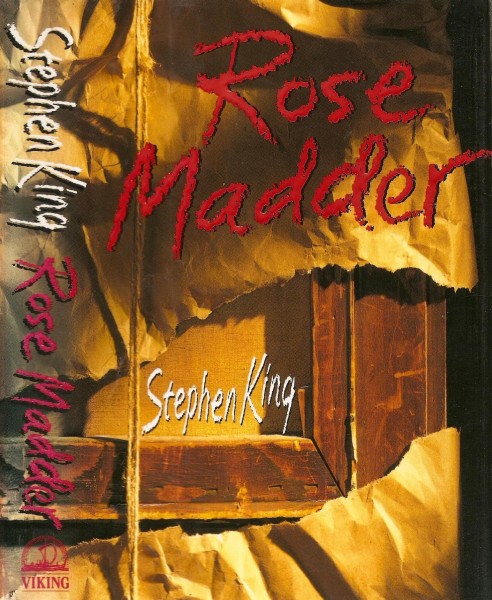
                • Cover of Rose Madder
                  Rose Madder

                  Stephen King · standalone novel · 1995

                  similar bycontemporarydarktenseour worldfantasygods+1 more

                  Rose Madder is a horror/fantasy novel by American writer Stephen King, published in 1995. It deals with the effects of domestic violence and, unusually for a King novel, relies for its fantastic element on Greek mythology. In his memoir, On Writing, King states that Rose Madder and Insomnia are "stiff, trying-too-hard novels."

                • Cover of Lore
                  Lore

                  Alexandra Bracken · standalone novel · 2021

                  similar bycontemporarydarktensefantasyurban fantasygodsrevenge

                  Every seven years, the Agon begins. As punishment for a past rebellion, nine Greek gods are forced to walk the earth as mortals. They are hunted by the descendants of ancient bloodlines, all eager to kill a god and seize their divine power and immortality. Long ago, Lore Perseous fled that brutal world, turning her back on the hunt’s promises of eternal glory after her family was murdered by a rival line. For years she's pushed away any thought of revenge against the man—now a god—responsible for their deaths. Yet as the next hunt dawns over New York City, two participants seek her out: Castor, a childhood friend Lore believed to be dead, and Athena, one of the last of the original gods, now gravely wounded. The goddess offers an alliance against their mutual enemy and a way to leave the Agon behind forever. But Lore's decision to rejoin the hunt, binding her fate to Athena's, will come at a deadly cost—and it may not be enough to stop the rise of a new god with the power to bring humanity to its knees.

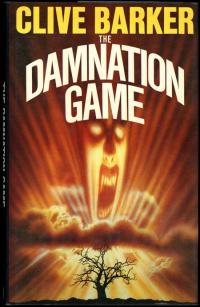
                • Cover of The Damnation Game
                  The Damnation Game

                  Clive Barker · standalone novel · 1985

                  similar bycontemporarydarktenseour worldfantasyrevenge

                  Marty Strauss is a compulsive gambler fresh out of prison when he's hired as bodyguard for Joseph Whitehead, a reclusive tycoon whose fortune and continued existence trace back to a bargain struck decades earlier, during World War II, with a man named Mamoulian. That bargain is coming due: Mamoulian, who commands powers reaching well past death, wants what he's owed, and Whitehead's household -- his wife, his daughter Carys, his previous bodyguard -- is caught in the middle of a decades-old debt finally being called in. Marty, out of his depth from the start, finds himself the only one willing to stand against Mamoulian. Clive Barker's first novel.

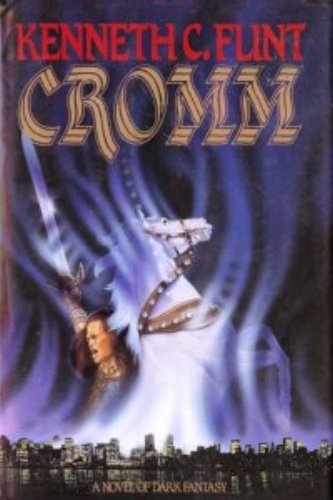
                • Cover of Cromm
                  Cromm

                  Kenneth C. Flint · standalone novel · 1990

                  similar bycontemporaryurban fantasydarktenseour worldfantasygods

                  From the Front Flap of the Doubleday HB: It began with the dreams... visions filled with strange and disturbing specters from a time long ago. Colin McMahon has always been an easygoing artist who never takes his life too seriously - no great ambitions, no long-term relationships, no commitments. But the images that have begun to torment his nights have changed all that forever. In his dreams, he finds himself riding across the rolling hills of a battle-torn land, reliving the memories of a fearless young warrior who shares his name. He loses his heart to the image of a beautiful woman as brave as she is fair. And he helplessly witnesses the brutal rituals of a savage cult that makes blood offerings to a dark and cruel deity called Cromm Cruaich, the Crooked God. At first Colin dismisses the visions as the product of an overactive imagination... until they begin to invade his waking life. A mysterious stranger appears to taunt him with hints of awesome powers. His partner is viciously attacked by an inhuman wraith. And nightmare creatures wreak bloody havoc on the streets of the city. Seeking the truth, Colin sets out on a pilgrimage to Ireland, home of his ancestors. There, in a village untouched by the centuries, he discovers the living woman of his dreams and learns that the ancient cult of the evil god Cromm has arisen again, plotting to place the world under its terrible dominion. Now, in a desperate attempt to ransom humanity from the power of the Crooked God, Colin must call upon the spirit of his warrior ancestor to help unleash the might of a long-buried holy relic. For, in an age without peace, without hope, without faith, what can stand against the forces of violence, cruelty, and fear?

                • Cover of Anita Blake
                  Anita Blake

                  series · 42 books · 1993

                  similar bycontemporaryurban fantasydarktense+2 more

                  Anita Blake: Vampire Hunter is a series of urban fantasy novels, short stories, and comic books by Laurell K. Hamilton. The books have sold more than six million copies; many have made The New York Times Best Seller list.

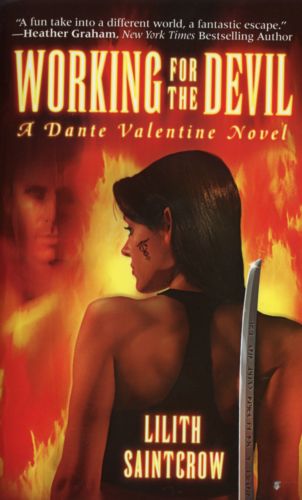
                • Cover of Dante Valentine
                  Dante Valentine

                  series · 6 books · 2006

                  similar bycontemporarydarktenseurban fantasy+4 more

                  Working for the Devil opens Lilith Saintcrow's Dante Valentine series with Dante, a necromancer-for-hire who reluctantly takes a job from the Devil himself: kill a rogue demon, Vardimal Santino, in exchange for her life. The catch is that Santino isn't something that dies easily, and the job pulls Dante deeper into a world of demons and bargains than she planned for. Saintcrow continues the series through Dead Man Rising, The Devil's Right Hand, Saint City Sinners, and To Hell and Back.

                • Cover of Meredith Gentry
                  Meredith Gentry

                  series · 10 books · 2000

                  similar bycontemporaryurban fantasyour world+3 more

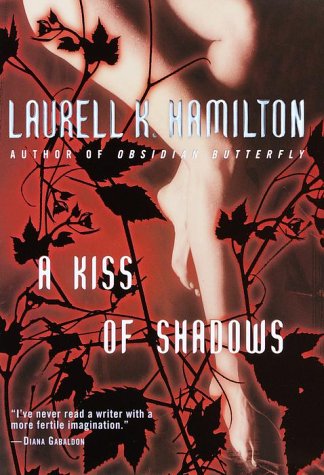
                  The Merry Gentry series is a series of urban fantasy novels by New York Times bestselling author Laurell K. Hamilton. The series is told through the lens of the titular character Meredith "Merry" Gentry, a faerie princess turned private investigator in a world where faeries exist and are known to the general public. The first book in the series, A Kiss of Shadows, was released by Del Rey on October 3, 2000. There are currently nine books in the series.

                • Cover of The Goddess War
                  The Goddess War

                  series · 5 books · 2013

                  similar bycontemporarydarkour worldfantasygods+2 more

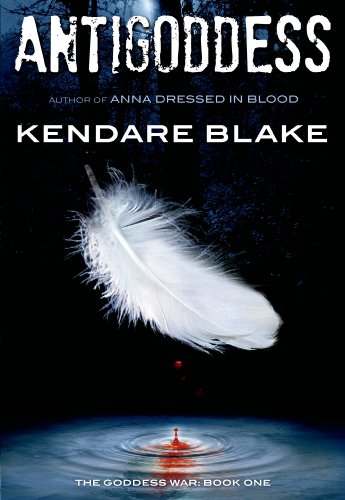
                • Cover of The Curse Workers
                  The Curse Workers

                  series · 3 books · 2010

                  similar bycontemporaryurban fantasytensefantasyour world

                  Holly Black's Curse Workers trilogy is set in an alternate America where 'curse work' — magic that harms or transforms through touch — is illegal, enforced through gloves and Prohibition-era-style crime families. It follows Cassel Sharpe, the only non-worker in a family of con artists and workers, as he tries to stay out of his family's schemes despite his own hidden connection to their world. The series runs from White Cat through two further novels.

                • Cover of Дозоры / Watch
                  Дозоры / Watch

                  series · 6 books · 1998

                  similar bycontemporaryurban fantasydarktensefantasy

                  Sergei Lukyanenko's Watch novels are set among the Others, humans with supernatural gifts who split into the Night Watch, policing dark forces, and the Day Watch, policing the light ones, under a truce that keeps their ancient war frozen in an uneasy bureaucratic peace. Each book follows the Night Watch magician Anton Gorodetsky through a case that keeps threatening to unbalance that truce for good. Starting in Moscow, the series expands across six novels into other cities and a wider view of how the truce actually works.

                • Cover of American Gods
                  American Gods

                  series · 10 books · 1999

                  similar bycontemporaryfantasyour worldgods+1 more

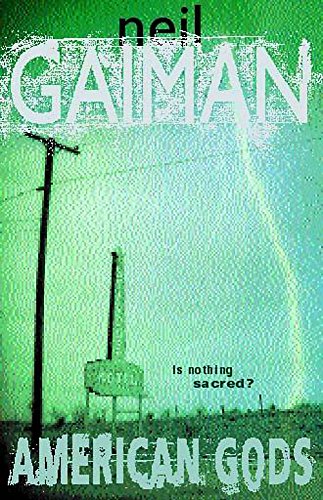
                  Neil Gaiman's American Gods (2001) follows Shadow Moon, an ex-convict who takes a job as bodyguard to a mysterious drifter who is secretly the Norse god Odin, and is drawn into a brewing conflict between the old immigrant gods of myth and the new gods of media, technology, and modern American life. Gaiman's 2005 novel Anansi Boys is set in the same mythological world and shares the trickster god Mr. Nancy, but follows a different protagonist and story, making it a loose companion rather than a direct sequel.

                • Cover of The Demon's Lexicon
                  The Demon's Lexicon

                  series · 3 books · 2009

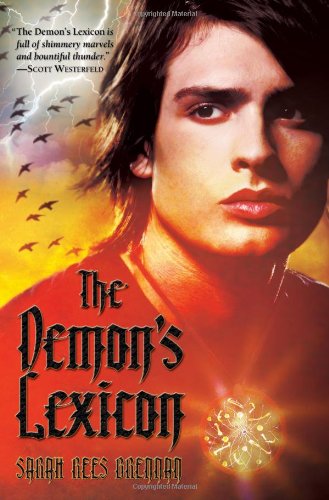
                  similar bycontemporaryurban fantasytenseour worldfantasy+1 more

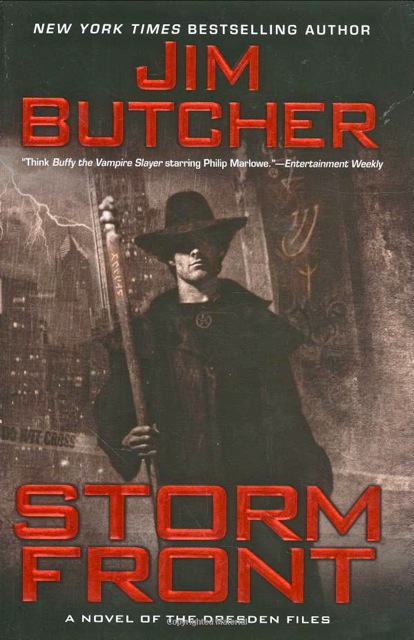
                • Cover of The Dresden Files
                  The Dresden Files

                  series · 56 books · 2000

                  similar bycontemporaryurban fantasy+4 more

                  The Dresden Files is an urban fantasy series written by American author Jim Butcher. The novels are narrated from the first-person perspective of Harry Dresden, a private detective and wizard, as he investigates supernatural disturbances in contemporary Chicago. The first entry, Storm Front, was published in 2000 by Roc Books.

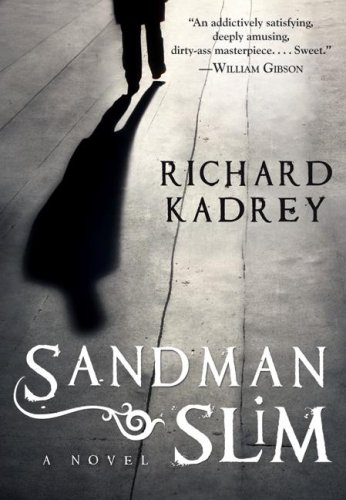
                • Cover of Sandman Slim
                  Sandman Slim

                  series · 15 books · 2009

                  similar bycontemporaryurban fantasydarkour world+2 more

                  Richard Kadrey's Sandman Slim follows James Stark, a magician who spent eleven years trapped fighting in Hell before escaping back to a Los Angeles that isn't much friendlier, looking for revenge against the circle that sent him there. Getting it turns out to mean picking up unwanted allies, including a severed talking head, and getting dragged into schemes run by both Heaven and Hell that have nothing to do with his own plans. The series keeps Stark as a foul-mouthed, magic-augmented antihero across thirteen increasingly baroque supernatural-noir books.

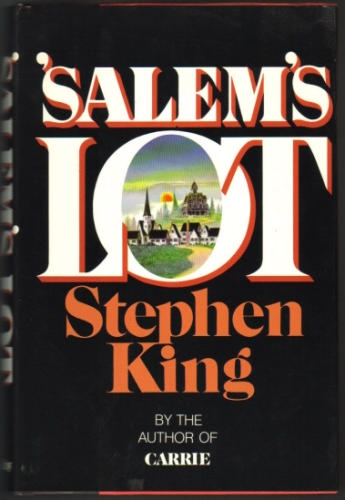
                • Cover of Jerusalem's Lot
                  Jerusalem's Lot

                  series · 3 books · 1975

                  similar bycontemporarydarktenseour world

                  Stephen King's 1975 novel 'Salem's Lot follows writer Ben Mears as he returns to his childhood town of Jerusalem's Lot, Maine, only to discover that its residents are being turned into vampires by a newly arrived stranger. It transplants Gothic vampire horror into a small New England community, tracking that community's collapse under a supernatural siege. It is a single, self-contained novel.

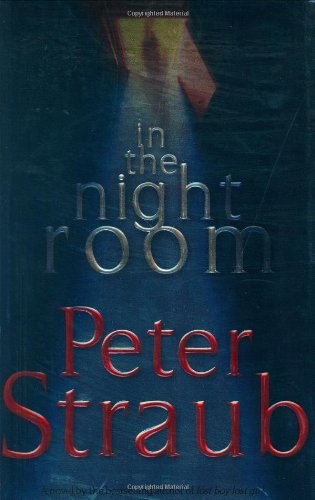
                • Cover of In the Night Room
                  In the Night Room

                  Peter Straub · standalone novel · 2004

                  similar bycontemporarydarktenseour world+2 more

                  In the Night Room is a 2004 horror-thriller novel by American author Peter Straub, a sequel to his 2003 book Lost Boy, Lost Girl. The work was first published in hardback on October 26, 2004, through Random House and it won the 2004 Bram Stoker Award for Novel. Straub encountered some difficulties while writing In the Night Room and had written several different passages for the work before growing bored with each version before writing it using the same technique he used for its predecessor in which he "reached down inside the book and turned it inside out."

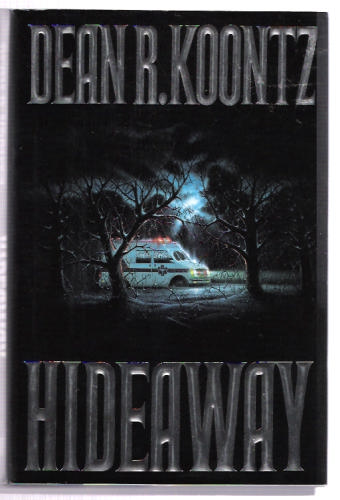
                • Cover of Hideaway
                  Hideaway

                  Dean R. Koontz · standalone novel · 1992

                  similar bycontemporarydarktenseour worldmurder investigation+2 more

                  After being resuscitated from clinical death, a man finds himself telepathically linked with a psychopathic serial murderer who has also been resuscitated from clinical death; and the psychopath decides to target the man and his family.

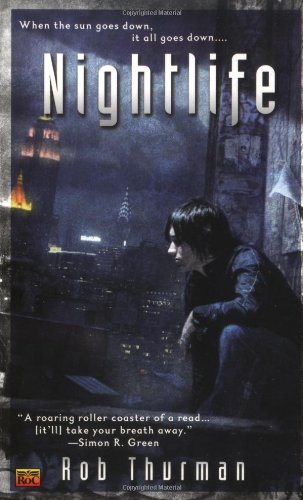
                • Cover of Cal Leandros
                  Cal Leandros

                  series · 13 books · 2006

                  similar bycontemporaryurban fantasydarktense+2 more

                  The Cal Leandros series is a series of urban fantasy novels by American author Rob Thurman about the fictional character of Caliban "Cal" Leandros. The first novel, Nightlife, was published on March 7, 2006, through Roc Fantasy.

                • Cover of Mookie Pearl
                  Mookie Pearl

                  series · 2 books · 2013

                  similar bycontemporaryurban fantasydarktenseour world+1 more

                • Cover of Vengeance Bound
                  Vengeance Bound

                  Justina Ireland · standalone novel · 2013

                  similar bycontemporarydarktensefantasyurban fantasyrevenge

                  Amelie Ainsworth longs to graduate from high school and live a normal life, but as an abused child she became one of the Furies, driven to mete out justice on the Guilty, and lives on the run from the murders they commit.

                • Cover of The Eternal World
                  The Eternal World

                  Christopher Farnsworth · standalone novel · 2015

                  similar bycontemporarydarktenseour worldfantasyrevenge

                  Five hundred years ago, a group of Spanish conquistadors land in the New World, searching for gold. What they find is a treasure far more valuable: the Fountain of Youth. The Spaniards slaughter the Native American tribe that guards the precious liquid that will keep the conquistadors young for centuries. But one of them escapes: Shako, the chief's daughter, who swears to avenge her people--a blood oath that spans five centuries. When the source of the fountain is destroyed in our own time, the loss threatens the Spaniards and the powerful, shadowy empire of wealth and influence they have built. For help, they turn to David Robinton, a scientific prodigy who believes he is on the verge of the greatest medical breakthrough of all time. But as the centuries-old war reaches its final stages, David makes a horrifying discovery about his employers and the mysterious and exotic woman he loves. Now the scientist must decide: Is he a pawn in a game of immortals--or will he be its only winner?--Adapted from book jacket.

                • Cover of Horns
                  Horns

                  Joe Hill · standalone novel · 2010

                  similar bycontemporarydarkour worldrevenge+2 more

                  WorldCat: After his childhood sweetheart is brutally killed and suspicion falls on him, Ig Parrish goes on a drinking binge and wakes up with horns on his head, hate in his heart, and an incredible new power which he uses in the name of vengeance.

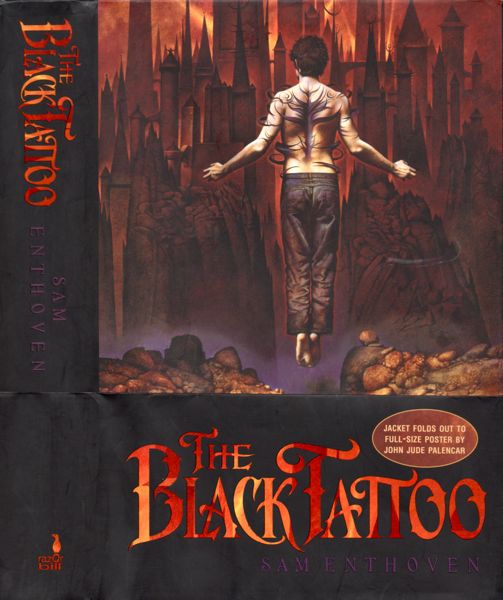
                • Cover of The Black Tattoo
                  The Black Tattoo

                  Sam Enthoven · standalone novel · 2006

                  similar bycontemporarydarktenseour worldfantasy

                  The Black Tattoo is a 2006 young adult fantasy novel by Sam Enthoven. It deals with a boy, Charlie, becoming possessed by a demon that manifests itself in the form of a black tattoo on his body.