Loreful
HomeDiscover
Search series, authors…⌘K
Loreful

Reading orders for SF/F series and shared universes — with your place kept in every one.

Explore

UniversesSeriesWorksAuthorsAtlas

Help

FAQAboutSite map

Account & legal

Sign inCreate accountPrivacyTerms

Data

Built on ISFDB, Wikipedia, Wikidata and Open Library. Curated reading orders carry their reasoning on the page; the rest follow publication order. Data sources & licenses

© Loreful · data: ISFDB · CC BY

More like Deathscape

anchored on:science fictionpsychic powersnorth americacontemporarytensethriller & suspense+1 more

but

Mood

The mood the book leaves you in.

  • The reading experience is propelled by journeys, exploration, and physical risk; excitement and forward momentum dominate over dread or introspection.
  • Joy and loss are deliberately mixed; the resolution grants characters something real while taking something else away, leaving warmth and sorrow together.
  • The book demands work from the reader — dense prose, difficult structure, unfamiliar ideas, or morally uncomfortable material — as part of its intended effect.
  • Grim events, cruelty, or despair dominate the atmosphere, and the book does not soften them with comfort or comic relief.
  • The atmosphere is quietly unsettling — wrongness, unease, and the uncanny pervade the book without necessarily escalating into overt horror.
  • The book is built to move the reader; character feeling is foregrounded and major scenes aim at a strong emotional response.
  • Humor is a primary aim and the prose plays for laughs — comic situations, wit, or dialogue produce sustained comedy, not occasional levity.
  • The book insists that things can improve; effort and decency are shown to matter, and the arc bends toward better outcomes even through hardship.
  • The book teaches as it goes — real facts, history, science, or craft are conveyed in enough depth that learning is part of the reading experience.
  • The book is designed to uplift and motivate, presenting perseverance or achievement in a way that invites the reader to aspire or act.
  • The overall register is cheerful and easygoing; stakes are kept gentle and the book avoids dwelling on pain or dread.
  • Withheld information drives the experience; the book sustains enigmas and secrets the reader wants resolved, whatever its genre.
  • The book is contemplative and inward-looking, giving more weight to thought, memory, and meaning than to external events.
  • The book works as comfort reading — low tension, a soothing pace, and an atmosphere the reader can unwind in.
  • Grief, loss, or melancholy set the dominant register, and the book lets sorrow stand rather than resolving it into comfort.
  • Sustained suspense is the point; the book keeps the reader braced for what happens next through danger, pressure, or impending revelation.
  • Playful invention and charm define the register — fanciful conceits, light absurdity, and a narration that delights in its own oddity.

About

What the story runs on.

  • Stories in which extraterrestrial beings are central — as characters, cultures, or the object of the plot.
  • Stories structured as a quest — a journey undertaken to find, deliver, or destroy something of great import.
  • Stories in which staying alive against nature, catastrophe, or scarcity is the central problem.
  • Stories of lovers kept apart by law, family, faith, or station, where the obstacle to love is the plot.
  • Stories in which a friendship — its making, testing, or loss — is the emotional center.
  • Stories of growing up — a young protagonist crossing from childhood into adult knowledge and responsibility.
  • Stories about who a character truly is — self-discovery, doubled lives, and the search for a self.
  • Stories about mourning — living through the death of a loved one and what loss does to the survivors.
  • Stories in which a buried family truth — hidden parentage, crimes, or shames — surfaces and reorders the present.
  • Stories driven by maneuvering for power — factions, conspiracies, and statecraft conducted in shadow.
  • Stories in which war itself is the subject — combat, occupation, and what warfare does to soldiers and civilians.
  • Stories organized around investigating a killing — the case, the clues, and the pursuit of the killer, in any genre's clothing.

Shelf

Where it sits in the library.

    • Fiction built on magic or other supernatural elements that have no scientific explanation.
    • Secondary-world fantasy at large scale, where the fate of nations or the world turns on the protagonists' struggle.
    • Fantasy set in a recognizably modern city or contemporary world where the supernatural intrudes on everyday life.
    • Fantasy that blends in horror's atmosphere and imagery, keeping a fantastical frame around grim or frightening material.
    • Action-driven fantasy following warriors or rogues with personal stakes against sorcerous threats, rather than world-spanning conflicts.
    • Fantasy set in a real historical period or a close analogue of one, with magic woven into the era.
    • Fantasy in which protagonists cross from the ordinary world into another world through a portal or similar passage.
    • Fiction that retells or reworks a traditional fairy tale in a new form or setting.
    • Fantasy drawing directly on myths, legends, and folklore, retelling them or building on their figures and logic.
    • Fantasy of ghosts, vampires, shapeshifters, psychics, and similar phenomena, usually set in an otherwise ordinary world.
    • Fiction mixing science-fictional trappings with overtly magical or impossible elements in one setting.
    • Low-stakes fantasy emphasizing comfort, community, and everyday pleasures over conflict and peril.
    • Speculative fiction of pervasive moral ambiguity, violence, and cynicism that rejects heroic conventions — fantasy and SF alike.
      • Fiction that extrapolates from science and technology — future societies, space travel, or speculative inventions — within at least nominally natural laws.
      • Science fiction of interstellar scope — starships, galactic polities, and adventure across star systems.
      • Science fiction committed to scientific rigor, where technical plausibility constrains the story.
      • Science fiction centered on armed forces and warfare, told largely from a military point of view.
      • Science fiction of networked, corporate-dominated near futures, pairing high technology with social decay.
      • Science fiction styled on nineteenth-century steam-powered technology, often in a Victorian or pseudo-Victorian setting.
      • Fiction depicting an oppressive or catastrophic society, presented as a warning.
      • Fiction set after civilization's collapse, following survivors in the ruins of the old world.
      • Fiction in which characters move between past and future, and the mechanics or consequences of that travel drive the plot.
      • Fiction exploring a world where a historical event went differently and history diverged from ours.
      • Science fiction about humanity's first encounter and communication with an alien intelligence.
      • Science fiction in which extraterrestrial forces attack or occupy Earth and humanity resists.
      • Fiction whose primary aim is to frighten or unsettle the reader through dread, menace, or the monstrous.
      • Horror of vast, indifferent, incomprehensible entities before which humanity is insignificant, in the Lovecraft tradition.
      • Horror of decaying houses, buried family secrets, and oppressive atmosphere in the Gothic literary tradition.
      • Horror centered on hauntings and the returning dead.
      • Horror located in the mind — paranoia, obsession, and unreliable perception rather than external monsters.
      • Horror built around the reanimated dead and survival amid their outbreaks.
      • Horror defined by explicit, transgressive gore that refuses to cut away from violence.
      • Speculative fiction of the strange and uncanny that resists both natural explanation and standard genre categories.
      • Fiction organized around solving a crime or puzzle, typically following an investigator toward the identification of a culprit.
      • A puzzle-first mystery that lays out clues so the culprit's identity can be deduced before the reveal.
      • Crime fiction of moral ambiguity, fatalism, and hard-edged style, set among the corrupt and the doomed.
      • A mystery following the realistic routines of police work — forensics, interviews, and case-building.
      • A gentle mystery with an amateur sleuth, a small community, and violence kept off the page.
      • A mystery set in a past era, where the investigation works within that period's methods and society.
      • Fast-paced fiction driven by imminent danger, pursuit, or high-stakes conspiracy, built to sustain tension.
      • A thriller of espionage — agents, tradecraft, and intelligence services in conflict.
      • A thriller centered on lawyers and the courtroom, where litigation carries the suspense.
      • A thriller driven by detailed contemporary or near-future technology, often military or scientific.
      • A thriller whose tension comes from mental states and manipulation between characters rather than external action.
      • Fiction whose central plot is a romantic relationship and its development toward an emotionally satisfying resolution.
      • Romance in which one or both partners are supernatural beings, blending fantasy elements into the love story.
      • A fantasy-romance hybrid in which the romantic arc and the fantasy plot carry equal weight.
      • Romance set in a past era, with courtship shaped by the period's society and manners.
      • Romance set in the present day, without supernatural or historical elements.
      • Fiction set in a real past period, where the historical setting materially shapes characters and events.
        • General and literary fiction emphasizing prose style, character interiority, or formal ambition over genre plot conventions.
        • Fiction in a realistic world where magical events occur and are treated as ordinary, in the tradition of Latin American literature.
        • Fiction that ridicules people, institutions, or society in order to criticize them.
        • Fiction of dreamlike, irrational imagery and logic that breaks from realistic representation.
        • Fiction that plays with narrative convention through metafiction, fragmentation, and self-reference.
        • Fiction propelled by journeys, exploration, and physical peril, where action and survival carry the plot.
        • Adventure fiction of ships and seafaring — naval engagements, voyages, and life at sea.
        • Fiction of the American frontier West — gunmen, ranchers, and lawmen, typically in the late nineteenth century.
        • Fiction centered on soldiers, campaigns, and the experience of warfare, historical or imagined.
          • Fiction written primarily to amuse, using comedic situations, wit, or parody as its organizing principle.
            • Multi-generational fiction following a family or dynasty across decades, with inheritance and kinship as the through-line.
              • Fiction whose world runs on explicit game mechanics — levels, stats, and skills that characters can see and exploit.
                • Fiction about costumed or superpowered heroes and their conflicts with comparable villains.

                Practical

                How long a commitment, whether it stands alone, and whether it has finished.

                Tap a chip to ask for it · tap again to rule it out · once more to clear. Numbers show what would be left.

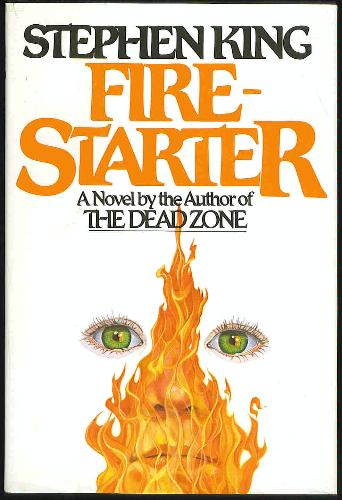
                • Cover of Firestarter
                  Firestarter

                  Stephen King · standalone novel · 1980

                  similar bypsychic powersnorth americacontemporarytensescience fictionthriller & suspense

                  WorldCat: Innocence and beauty ignite with evil and terror... First, a man and a woman are subjects of a top-secret government experiment designed to produce extraordinary psychic powers. Then, they are married and have a child. A daughter. Early on the daughter shows signs of a wild and horrifying force growing within her. Desperately, her parents try to train her to keep that force in check, to 'act normal'. Now the government wants its brainchild back for its own insane ends.

                • Cover of The Institute
                  The Institute

                  Stephen King · standalone novel · 2019

                  similar bypsychic powersnorth americacontemporarytensescience fictionthriller & suspense

                  The Institute is a 2019 American science fiction-horror novel by Stephen King, published by Scribner. The book follows twelve-year-old genius Luke Ellis. When his parents are murdered, he is kidnapped by intruders and awakens in the Institute, a facility that houses other abducted children who have telepathy or telekinesis. The Institute was published on September 10, 2019, and met with generally positive reviews.

                • Cover of City of Cain
                  City of Cain

                  Kate Wilhelm · standalone novel · 1974

                  similar bypsychic powersnorth americacontemporaryscience fictiontensethriller & suspense

                  Publisher: "Peter Roos cannot help knowing the thoughts of those around him. A rare physical condition has given him that power. Now he has ''heard'' about the government's secret plan to give up control of America to the military - to build an underground city for themselves in the event of a nuclear attack. Unfortunately for Roos, the government knows he knows. And the project's sponsors - including his senator brother - have no choice."

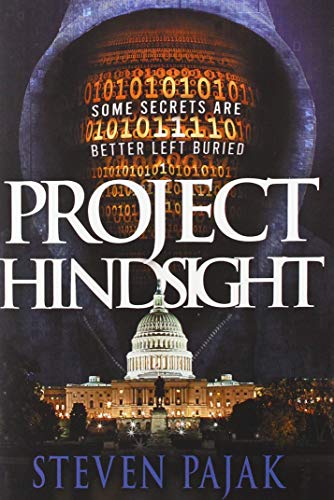
                • Cover of Project Hindsight
                  Project Hindsight

                  Steven Pajak · standalone novel · 2010

                  similar bypsychic powersnorth americascience fictiontensethriller & suspense

                  ● "How can you escape from an enemy that can see everywhere? In the 1970's, the U.S. government began experimentation with remote viewing. In the mid-1990's, the program was shut down after a review revealed that there was not sufficient evidence to prove that remote viewing yielded any actionable intelligence. At least that is what the government told the public. On the fourth sublevel of Mount Weather, the program, code name Project Hindsight, continued with great success, until one of their viewers did the impossible and escaped, taking with her the secrets the government would kill to keep." ― quoted from this book's Amazon product page as of 2022-08-01.

                • Cover of Carrie
                  Carrie

                  Stephen King · standalone novel · 1974

                  similar bypsychic powerscontemporarynorth americatense

                  In one way or another, everybody abused Carrie. This sixteen-year-old misfit was forbidden everything that was young and fun by her fanatical mother. She was teased and taunted by her classmates, misunderstood by her teachers, and given up as hopeless by almost everyone. But Carrie had a secret: She possessed terrifying telekinetic powers that could make inanimate objects move, a lighted candle fall, or a door lock. Carrie could make all kinds of startling bizarre, and malevolent things happen. (WorldCat)

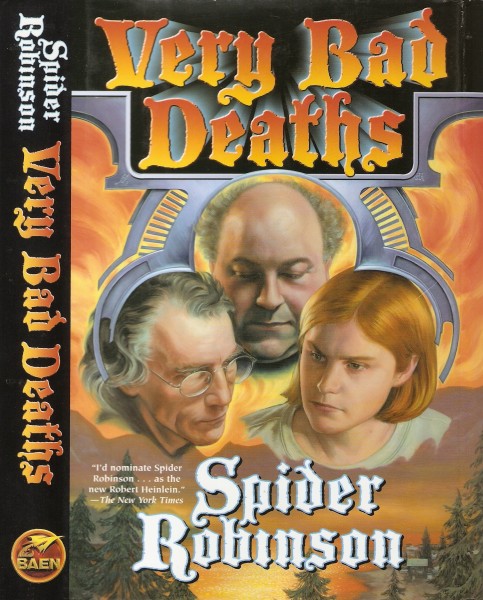
                • Cover of Very
                  Very

                  series · 2 books · 2004

                  similar bypsychic powersnorth americacontemporaryscience fictiontense+1 more

                • Cover of Psi Hunt
                  Psi Hunt

                  Michael Kurland · standalone novel · 1980

                  similar bypsychic powersnorth americacontemporaryscience fictiontensethriller & suspense

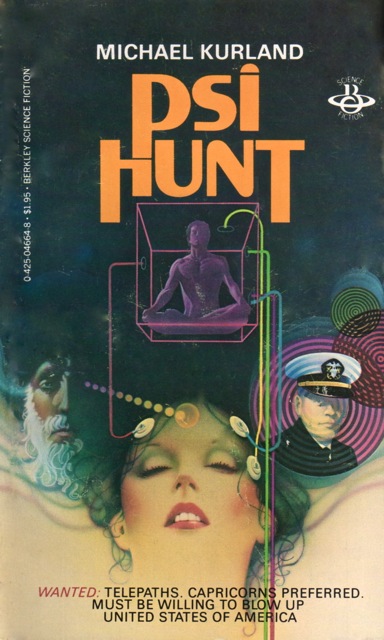
                  Astral Emprise sold metaphysics, mysticism, paranormal phenomena, astrology lessons - and anything else that Believers were willing to spend a dollar on. Not the kind of operation the U. S. Navy was used to dealing with. Until the People's Republic of China decided that it would blow up half the United States with five telepathic kids who spent their days watching grade-B movies in an L.A. theater. And Lieutenant Junior Grade Robert Burrows was assigned to call their bluff... (adapted from one back cover blurb)

                • Cover of Lexicon
                  Lexicon

                  Max Barry · standalone novel · 2013

                  similar bypsychic powerscontemporarytensenorth americascience fictionthriller & suspense

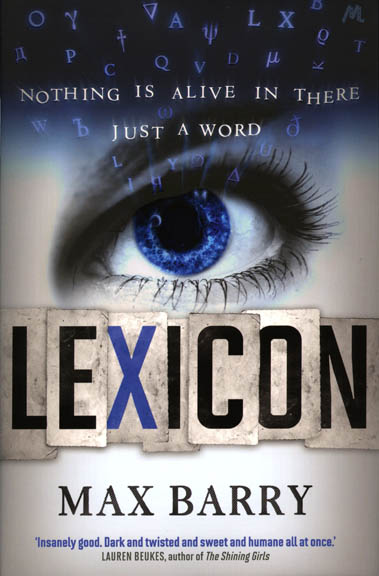
                  Lexicon is a novel written by Max Barry. Published in 2013, it was Barry's fifth novel, following Machine Man, published two years earlier.

                • Cover of Dying Inside
                  Dying Inside

                  Robert Silverberg · standalone novel · 1972

                  similar bypsychic powersnorth americacontemporaryscience fiction

                  Dying Inside is a 1972 science fiction novel by American writer Robert Silverberg. It was first serialized in Galaxy in 1972 and published in book form by Charles Scribner's Sons later that year. The novel follows David Selig, a middle-aged telepath in contemporary New York City, as the mind-reading ability that has shaped his life begins to disappear.

                • Cover of Heroes: Saving Charlie
                  Heroes: Saving Charlie

                  Aury Wallington · standalone novel · 2007

                  similar bypsychic powersnorth americacontemporaryscience fictionadventurous+1 more

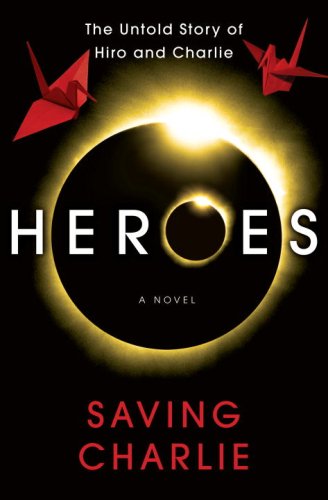
                  Saving Charlie is a novel written by Aury Wallington and published by Del Rey Books, based on the television series Heroes. It was released in the United States on December 26, 2007. It was made with the full cooperation of the show's creators, although its canonicity about the television series has not yet been established.

                • Cover of The Fury
                  The Fury

                  series · 4 books · 1976

                  similar bypsychic powerscontemporarytensethriller & suspense+2 more

                  John Farris's The Fury centers on a teenage girl and boy with escalating psychic and telekinetic powers who become targets of a covert government program trying to weaponize them. The 1976 novel, adapted into Brian De Palma's 1978 film, gave rise to a string of later sequels following the same family's psychic bloodline across decades. Farris writes it as paranoid conspiracy thriller as much as horror, with the powers themselves treated as a violent, destabilizing force.

                • Cover of Darkness Within
                  Darkness Within

                  Steven Pajak · standalone novel · 2008

                  similar bypsychic powersnorth americacontemporarytensethriller & suspense

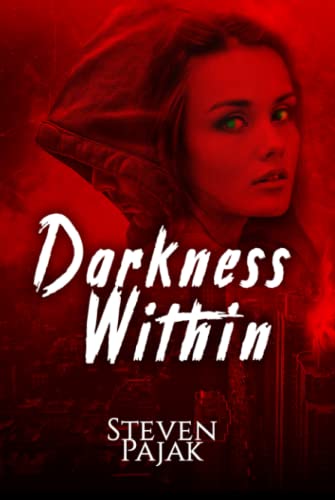
                  ● " Reluctant psychic Susan Moore witnessed the brutal slaying of a young boy in a vision. Despite her psychic gifts, she is unable to save the boy from a brutal ending. In a small Texas town, Sheriff Steven Ames is desperate to catch a killer before tragedy strikes again. When fate brings Ames and Moore together, the two join forces to stop the killer before tragedy strikes again. In the midst of chaos and danger Susan must come to terms with the limitations of her psychic abilities while Ames must battle his own feelings of inadequacy and deal with a town that no longer has faith in his abilities as a peace officer." ― paraphrased from this book's product page on Amazon.com as of 2022-08-02.

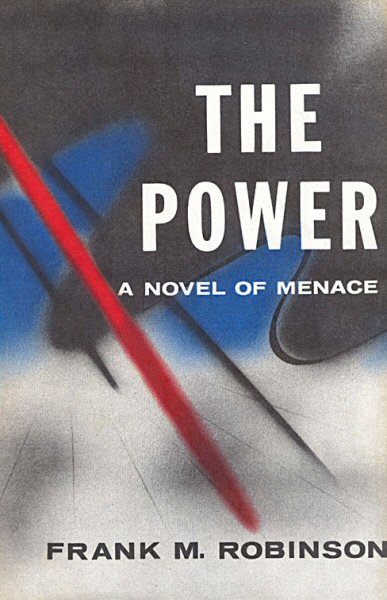
                • Cover of The Power
                  The Power

                  Frank M. Robinson · standalone novel · 1956

                  similar bypsychic powersnorth americascience fictiontensethriller & suspense

                  The Power is a 1956 science fiction novel by American writer Frank M. Robinson. It first appeared in the March 1956 edition of Blue Book magazine and then in a standalone book published by J. B. Lippincott in May that year. Its protagonist, a researcher named Tanner, discovers evidence of a person with psychic abilities among his coworkers. As he tries to uncover the superhuman, his existence is erased and his associates murdered, until he faces a showdown with an apparently invincible opponent.

                • Cover of Cas Russell / Russell's Attic
                  Cas Russell / Russell's Attic

                  series · 5 books · 2014

                  similar bypsychic powersscience fictiontensethriller & suspenseadventurous+2 more

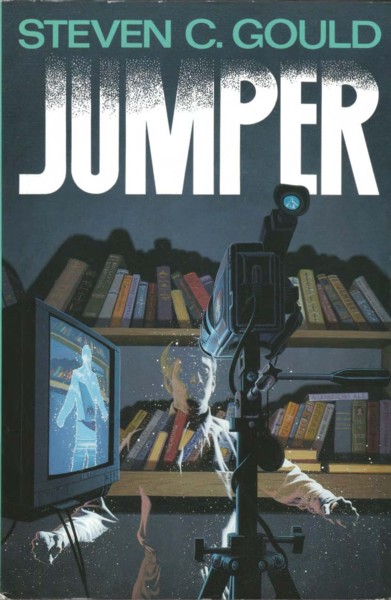
                • Cover of Jumper
                  Jumper

                  series · 6 books · 1992

                  similar bypsychic powersscience fictioncontemporaryadventuroustense+1 more

                  Jumper follows David Rice, a teenager who discovers he can teleport anywhere he's been and uses the power to escape an abusive home, only to find that ability alone doesn't solve the harder problems of finding his absent mother, building an honest relationship, or staying off the radar of people who'd exploit him. Steven Gould's series continues across Reflex, Impulse, and Exo, later following his and his wife's daughter as a second-generation jumper. A 2008 film loosely adapted the first novel.

                • Cover of Lincoln's Dreams
                  Lincoln's Dreams

                  Connie Willis · standalone novel · 1987

                  similar bypsychic powersnorth americacontemporaryscience fiction

                  Lincoln's Dreams is a 1987 novel by American author Connie Willis about a historical researcher studying the U.S. Civil War who meets a young woman who seems to be dreaming General Lee's dreams. The book is about parapsychology, metaphysical speculations, death, and love.

                • Cover of The Terminal Man
                  The Terminal Man

                  Michael Crichton · standalone novel · 1972

                  similar bynorth americacontemporaryscience fictiontensethriller & suspense

                  The Terminal Man is a novel by American writer Michael Crichton. It is his second novel under his own name, his 12th overall, and is about the dangers of mind control. It was published in April 1972 and also serialized in Playboy in March, April, and May 1972. In 1974, it was made into a film of the same name.

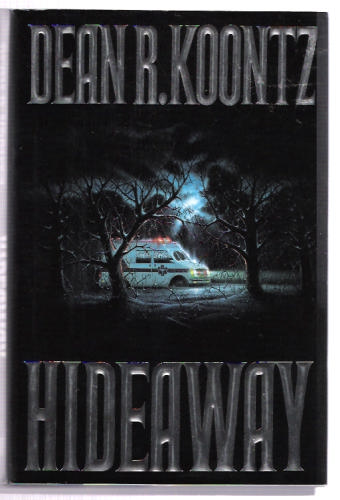
                • Cover of Hideaway
                  Hideaway

                  Dean R. Koontz · standalone novel · 1992

                  similar bypsychic powerscontemporarytensenorth americathriller & suspense

                  After being resuscitated from clinical death, a man finds himself telepathically linked with a psychopathic serial murderer who has also been resuscitated from clinical death; and the psychopath decides to target the man and his family.

                • Cover of Nobody
                  Nobody

                  Jennifer Lynn Barnes · standalone novel · 2013

                  similar bypsychic powerscontemporaryscience fictionnorth americathriller & suspensetense

                  Fifteen-year-old Claire Ryan has always felt invisible, always lived beyond people's notice, which causes trouble when she instantly connects with seventeen-year-old Nix, who really can become invisible and has been sent to assassinate her.

                • Cover of The Reach
                  The Reach

                  Nate Kenyon · standalone novel · 2008

                  similar bypsychic powerscontemporarytensenorth americascience fictionthriller & suspense

                  A young girl who has the psychic ability of telekinesis is being held against her will in an institution while a shadowy research firm studies her and develops her abilities for their own ends. But now the girl's abilities have grown too strong and her doctor needs to keep her alive and out of the company's clutches.

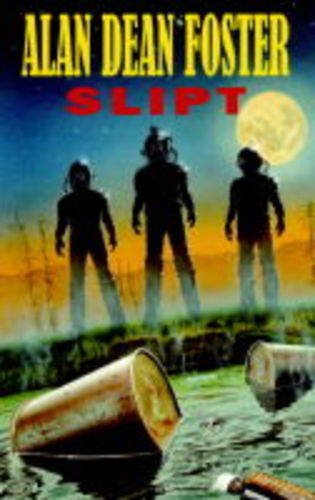
                • Cover of Slipt
                  Slipt

                  Alan Dean Foster · standalone novel · 1984

                  similar bypsychic powerscontemporaryscience fictionnorth americatense

                  Living next to a toxic chemical dump is Jake Pickett, the magic man. He can turn bullets to dust or collapse skyscrapers with his mind. But all he really wants to do with his "magic" is entertain the local kids. Then one day, the giant chemical company decides to eliminate the people who've been affected by their mess...people like Jake.

                • Cover of Made for You
                  Made for You

                  Melissa Marr · standalone novel · 2014

                  similar bypsychic powersnorth americacontemporarytensethriller & suspense

                  Southern small town darling Eva Tilling wakes up in the hospital with the frightening ability to see through the eyes of the victims of a serial killer, and realizes that she, too, is a target of the depraved stalker.

                • Cover of Psychic Killer
                  Psychic Killer

                  series · 2 books · 2008

                  similar bypsychic powersnorth americacontemporarytensethriller & suspense

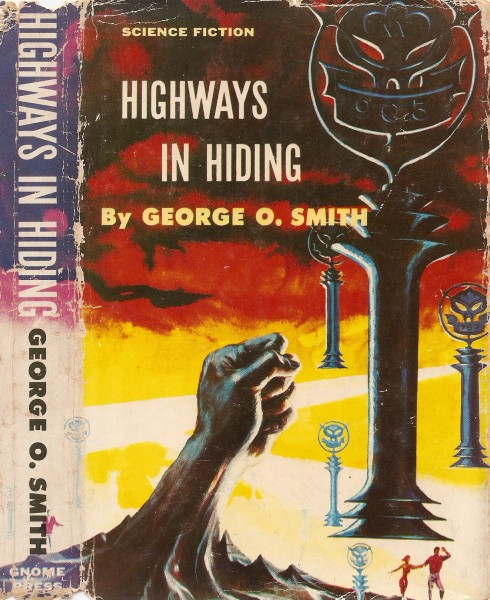
                • Cover of Highways in Hiding
                  Highways in Hiding

                  George O. Smith · standalone novel · 1956

                  similar bypsychic powersscience fictiontensethriller & suspense

                  From the back cover of the first Lancer printing: "Quest impossible - Someone had stolen an important part of Steve Cornell's life. It was bad enough when his fiancee vanished. It was infinitely worse when everyone in the world insisted it couldn't have happened the way he knew it had. In a world where ESP and telepathy were normal, it was difficult to keep secrets. But Steve's search for his missing sweetheart brought him to the threshold of one of the greatest secrets of all time. And it was obvious that somebody would stop at nothing to keep him from uncovering it. What were the oddly sinister symbols along the otherwise ordinary roads? What was behind the spreading plague called Mekstrom's Disease? Why were there "blank" spots where telepathy didn't work? Who was the elusive enemy with powers even beyond those ESP had bestowed on mankind? And, most important of all... could Steve find that enemy before they made him vanish too?"