Loreful
HomeDiscover
Search series, authors…⌘K
Loreful

Reading orders for SF/F series and shared universes — with your place kept in every one.

Explore

UniversesSeriesWorksAuthorsAtlas

Help

FAQAboutSite map

Account & legal

Sign inCreate accountPrivacyTerms

Data

Built on ISFDB, Wikipedia, Wikidata and Open Library. Curated reading orders carry their reasoning on the page; the rest follow publication order. Data sources & licenses

© Loreful · data: ISFDB · CC BY

More like Debtless

anchored on:science fictionnear future

but

Mood

The mood the book leaves you in.

  • The reading experience is propelled by journeys, exploration, and physical risk; excitement and forward momentum dominate over dread or introspection.
  • Joy and loss are deliberately mixed; the resolution grants characters something real while taking something else away, leaving warmth and sorrow together.
  • The book demands work from the reader — dense prose, difficult structure, unfamiliar ideas, or morally uncomfortable material — as part of its intended effect.
  • Grim events, cruelty, or despair dominate the atmosphere, and the book does not soften them with comfort or comic relief.
  • The atmosphere is quietly unsettling — wrongness, unease, and the uncanny pervade the book without necessarily escalating into overt horror.
  • The book is built to move the reader; character feeling is foregrounded and major scenes aim at a strong emotional response.
  • Humor is a primary aim and the prose plays for laughs — comic situations, wit, or dialogue produce sustained comedy, not occasional levity.
  • The book insists that things can improve; effort and decency are shown to matter, and the arc bends toward better outcomes even through hardship.
  • The book teaches as it goes — real facts, history, science, or craft are conveyed in enough depth that learning is part of the reading experience.
  • The book is designed to uplift and motivate, presenting perseverance or achievement in a way that invites the reader to aspire or act.
  • The overall register is cheerful and easygoing; stakes are kept gentle and the book avoids dwelling on pain or dread.
  • Withheld information drives the experience; the book sustains enigmas and secrets the reader wants resolved, whatever its genre.
  • The book is contemplative and inward-looking, giving more weight to thought, memory, and meaning than to external events.
  • The book works as comfort reading — low tension, a soothing pace, and an atmosphere the reader can unwind in.
  • Grief, loss, or melancholy set the dominant register, and the book lets sorrow stand rather than resolving it into comfort.
  • Sustained suspense is the point; the book keeps the reader braced for what happens next through danger, pressure, or impending revelation.
  • Playful invention and charm define the register — fanciful conceits, light absurdity, and a narration that delights in its own oddity.

About

What the story runs on.

  • Stories in which a machine intelligence — an AI, computer mind, or sentient program — is a central character or the story's driving problem.
  • Stories in which extraterrestrial beings are central — as characters, cultures, or the object of the plot.
  • Stories driven by deliberate modification of genomes — designer organisms, engineered humans, and the consequences of remaking life.
  • Stories about venturing into space to explore — survey missions, astronauts, and the frontier of the unknown beyond Earth.
  • Stories about minds with paranormal abilities — telepathy, telekinesis, precognition, empathy — and how societies handle those who have them.
  • Stories in which staying alive against nature, catastrophe, or scarcity is the central problem.
  • Stories of growing up — a young protagonist crossing from childhood into adult knowledge and responsibility.
  • Stories about who a character truly is — self-discovery, doubled lives, and the search for a self.
  • Stories driven by maneuvering for power — factions, conspiracies, and statecraft conducted in shadow.
  • Stories about rising against rulers — uprisings, resistance movements, and revolutions and their aftermaths.
  • Stories in which war itself is the subject — combat, occupation, and what warfare does to soldiers and civilians.
  • Stories about inequality between social classes — poverty and privilege, and the friction or open struggle between them.

Shelf

Where it sits in the library.

    • Fiction built on magic or other supernatural elements that have no scientific explanation.
    • Secondary-world fantasy at large scale, where the fate of nations or the world turns on the protagonists' struggle.
    • Fantasy set in a recognizably modern city or contemporary world where the supernatural intrudes on everyday life.
    • Fantasy that blends in horror's atmosphere and imagery, keeping a fantastical frame around grim or frightening material.
    • Action-driven fantasy following warriors or rogues with personal stakes against sorcerous threats, rather than world-spanning conflicts.
    • Fantasy set in a real historical period or a close analogue of one, with magic woven into the era.
    • Fantasy in which protagonists cross from the ordinary world into another world through a portal or similar passage.
    • Fiction that retells or reworks a traditional fairy tale in a new form or setting.
    • Fantasy drawing directly on myths, legends, and folklore, retelling them or building on their figures and logic.
    • Fantasy of ghosts, vampires, shapeshifters, psychics, and similar phenomena, usually set in an otherwise ordinary world.
    • Fiction mixing science-fictional trappings with overtly magical or impossible elements in one setting.
    • Low-stakes fantasy emphasizing comfort, community, and everyday pleasures over conflict and peril.
    • Speculative fiction of pervasive moral ambiguity, violence, and cynicism that rejects heroic conventions — fantasy and SF alike.
      • Fiction that extrapolates from science and technology — future societies, space travel, or speculative inventions — within at least nominally natural laws.
      • Science fiction of interstellar scope — starships, galactic polities, and adventure across star systems.
      • Science fiction committed to scientific rigor, where technical plausibility constrains the story.
      • Science fiction centered on armed forces and warfare, told largely from a military point of view.
      • Science fiction of networked, corporate-dominated near futures, pairing high technology with social decay.
      • Science fiction styled on nineteenth-century steam-powered technology, often in a Victorian or pseudo-Victorian setting.
      • Fiction depicting an oppressive or catastrophic society, presented as a warning.
      • Fiction set after civilization's collapse, following survivors in the ruins of the old world.
      • Fiction in which characters move between past and future, and the mechanics or consequences of that travel drive the plot.
      • Fiction exploring a world where a historical event went differently and history diverged from ours.
      • Science fiction about humanity's first encounter and communication with an alien intelligence.
      • Science fiction in which extraterrestrial forces attack or occupy Earth and humanity resists.
      • Fiction whose primary aim is to frighten or unsettle the reader through dread, menace, or the monstrous.
      • Horror of vast, indifferent, incomprehensible entities before which humanity is insignificant, in the Lovecraft tradition.
      • Horror of decaying houses, buried family secrets, and oppressive atmosphere in the Gothic literary tradition.
      • Horror centered on hauntings and the returning dead.
      • Horror located in the mind — paranoia, obsession, and unreliable perception rather than external monsters.
      • Horror built around the reanimated dead and survival amid their outbreaks.
      • Horror defined by explicit, transgressive gore that refuses to cut away from violence.
      • Speculative fiction of the strange and uncanny that resists both natural explanation and standard genre categories.
      • Fiction organized around solving a crime or puzzle, typically following an investigator toward the identification of a culprit.
      • A puzzle-first mystery that lays out clues so the culprit's identity can be deduced before the reveal.
      • Crime fiction of moral ambiguity, fatalism, and hard-edged style, set among the corrupt and the doomed.
      • A mystery following the realistic routines of police work — forensics, interviews, and case-building.
      • A gentle mystery with an amateur sleuth, a small community, and violence kept off the page.
      • A mystery set in a past era, where the investigation works within that period's methods and society.
      • Fast-paced fiction driven by imminent danger, pursuit, or high-stakes conspiracy, built to sustain tension.
      • A thriller of espionage — agents, tradecraft, and intelligence services in conflict.
      • A thriller centered on lawyers and the courtroom, where litigation carries the suspense.
      • A thriller driven by detailed contemporary or near-future technology, often military or scientific.
      • A thriller whose tension comes from mental states and manipulation between characters rather than external action.
      • Fiction whose central plot is a romantic relationship and its development toward an emotionally satisfying resolution.
      • Romance in which one or both partners are supernatural beings, blending fantasy elements into the love story.
      • A fantasy-romance hybrid in which the romantic arc and the fantasy plot carry equal weight.
      • Romance set in a past era, with courtship shaped by the period's society and manners.
      • Romance set in the present day, without supernatural or historical elements.
      • Fiction set in a real past period, where the historical setting materially shapes characters and events.
        • General and literary fiction emphasizing prose style, character interiority, or formal ambition over genre plot conventions.
        • Fiction in a realistic world where magical events occur and are treated as ordinary, in the tradition of Latin American literature.
        • Fiction that ridicules people, institutions, or society in order to criticize them.
        • Fiction of dreamlike, irrational imagery and logic that breaks from realistic representation.
        • Fiction that plays with narrative convention through metafiction, fragmentation, and self-reference.
        • Fiction propelled by journeys, exploration, and physical peril, where action and survival carry the plot.
        • Adventure fiction of ships and seafaring — naval engagements, voyages, and life at sea.
        • Fiction of the American frontier West — gunmen, ranchers, and lawmen, typically in the late nineteenth century.
        • Fiction centered on soldiers, campaigns, and the experience of warfare, historical or imagined.
          • Fiction written primarily to amuse, using comedic situations, wit, or parody as its organizing principle.
            • Multi-generational fiction following a family or dynasty across decades, with inheritance and kinship as the through-line.
              • Fiction whose world runs on explicit game mechanics — levels, stats, and skills that characters can see and exploit.
                • Fiction about costumed or superpowered heroes and their conflicts with comparable villains.

                Practical

                How long a commitment, whether it stands alone, and whether it has finished.

                Tap a chip to ask for it · tap again to rule it out · once more to clear. Numbers show what would be left.

                • Cover of Stand on Zanzibar
                  Stand on Zanzibar

                  John Brunner · standalone novel · 1968

                  similar bychallengingscience fictionnear future+1 more

                  Stand on Zanzibar is a dystopian New Wave science fiction novel written by John Brunner and first in part published in New Worlds magazine in 1967 and in book form in 1968. The book won a Hugo Award for Best Novel at the 27th World Science Fiction Convention in 1969, as well as the 1969 BSFA Award and the 1973 Prix Tour-Apollo Award.

                • Cover of The Diamond Age
                  The Diamond Age

                  Neal Stephenson · standalone novel · 1995

                  similar byclass conflictscience fictionnear futurecyberpunk+1 more

                  The Diamond Age: Or, A Young Lady's Illustrated Primer is a science fiction novel by Neal Stephenson. It is to some extent a Bildungsroman or coming-of-age story, focused on a young girl named Nell, set in a future world in which nanotechnology affects all aspects of life. The novel deals with themes of education, social class, ethnicity, and the nature of artificial intelligence. The Diamond Age was first published in 1995 by Bantam Books, as a Bantam Spectra hardcover edition. In 1996, it won both the Hugo and Locus Awards, and was shortlisted for the Nebula and other awards.

                • Cover of Oath of Fealty
                  Oath of Fealty

                  Larry Niven & Jerry Pournelle · standalone novel · 1981

                  similar byclass conflictscience fictionnear future+1 more

                  Oath of Fealty is a 1981 novel by American writers Larry Niven and Jerry Pournelle, published originally by Phantasia Press, then by Timescape Books, with numerous reprints. Set in the near future, it involves an arcology, a large inhabited structure, called Todos Santos, which rises above a crime-ridden Los Angeles, California, but has little beyond casual contact with the city. The novel popularized the phrase "think of it as evolution in action", which occurs elsewhere in Niven's books. The novel anticipated the building of the Los Angeles subway. It was included in David Pringle's book Science Fiction: The 100 Best Novels.

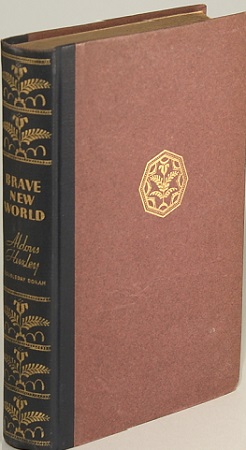
                • Cover of Brave New World
                  Brave New World

                  series · 8 books · 1932

                  similar byclass conflictscience fiction+1 more

                  Aldous Huxley's 1932 novel imagines a future World State where reproduction, social caste, and desire are all engineered before birth, and the population is kept content through conditioning, sleep-hypnosis, and a mood-altering drug called soma. The story follows the disruption this seemingly stable order suffers when an outsider raised beyond its reach is brought into it, exposing what the society traded away for comfort and order. Some editions pair the novel with Huxley's own 1958 nonfiction essay collection, Brave New World Revisited, which reassesses the book's ideas rather than continuing its story.

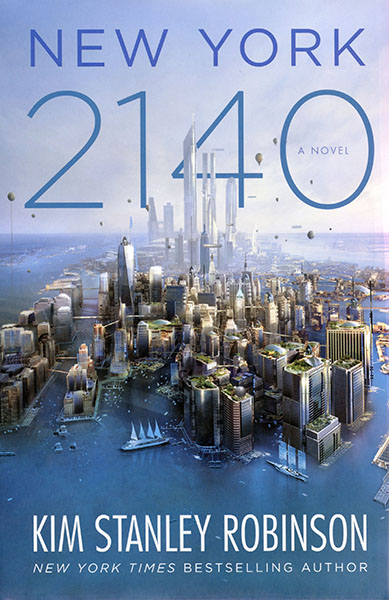
                • Cover of New York 2140
                  New York 2140

                  Kim Stanley Robinson · standalone novel · 2017

                  similar byclass conflictscience fictionnear future+1 more

                  New York 2140 is a 2017 climate fiction novel by American science fiction author Kim Stanley Robinson. The novel is set in a New York City that has been flooded and altered by rising water.

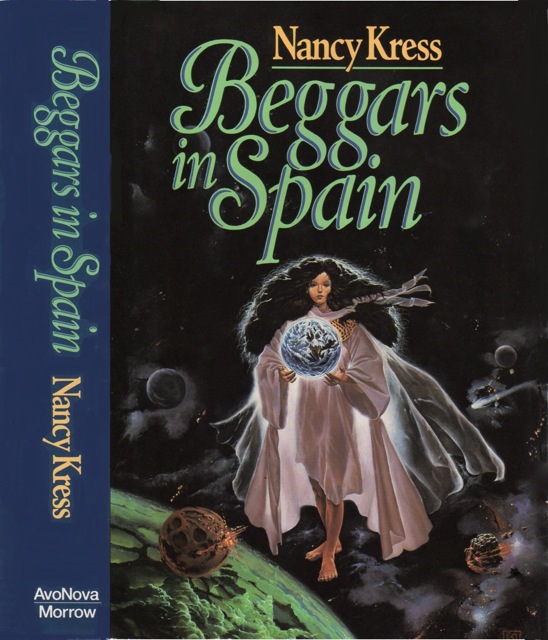
                • Cover of Sleepless
                  Sleepless

                  series · 5 books · 1991

                  similar byclass conflictscience fictionnear future+1 more

                  Genetic engineering produces a small class of 'Sleepless' children who never need to sleep and grow up smarter, healthier, and more capable than everyone else, and Nancy Kress's Beggars in Spain follows one of them, Leisha Camden, as ordinary 'Sleepers' come to resent and fear what the Sleepless represent. The novel uses the divide to ask hard questions about what a society owes people it considers unproductive, and what the gifted owe everyone else. Beggars and Choosers and Beggars Ride carry the same conflict forward across the following decades as the Sleepless gain real power.

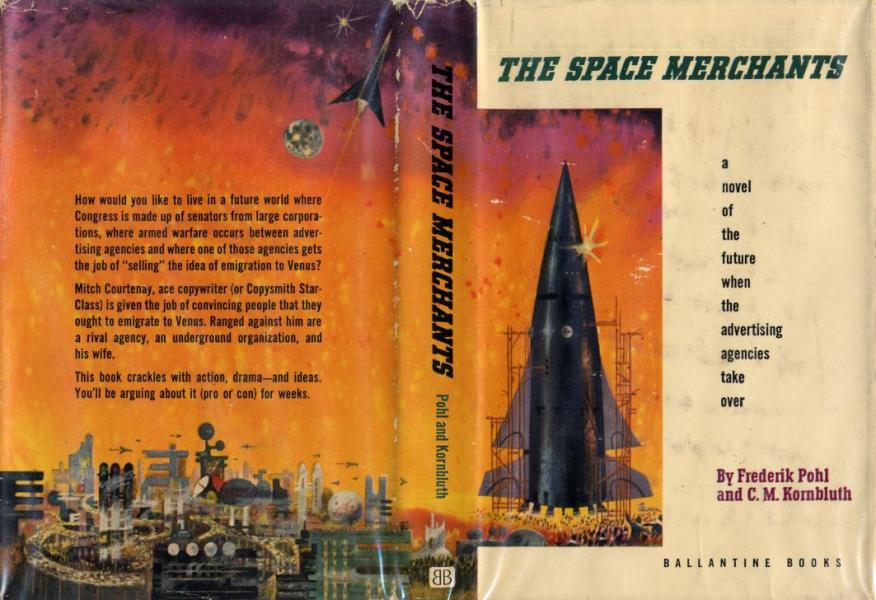
                • Cover of Space Merchants
                  Space Merchants

                  series · 2 books · 1953

                  completed

                  similar byclass conflictscience fictionnear future

                  The Space Merchants (1953) is a satirical science fiction novel by Frederik Pohl and C. M. Kornbluth that follows an advertising executive navigating a future where aggressive consumer capitalism has swallowed politics and daily life. The authors reunited three decades later for a direct sequel, The Merchants' War (1984), returning to the same satirical world. Together the two books form a compact bookend pair rather than an ongoing series.

                • Cover of The Jagged Orbit
                  The Jagged Orbit

                  John Brunner · standalone novel · 1969

                  similar bychallengingscience fictionnear future+1 more

                  The Jagged Orbit is a science fiction novel by British writer John Brunner. It is similar to his earlier novel Stand on Zanzibar in its narrative style and dystopic outlook. It has exactly 100 titled chapters, which vary from several pages to part of one word. It was first published in 1969 with cover art by Leo and Diane Dillon, in the Ace Science Fiction Specials line issued by Ace Books.

                • Cover of The Power
                  The Power

                  Naomi Alderman · standalone novel · 2016

                  similar byclass conflictchallengingscience fictionnear future

                  The Power is a 2016 science fiction novel by the British writer Naomi Alderman. Its central premise is of women developing the ability to release electrical jolts from their fingers, which allows them to become the dominant sex. In 2017, it won the Baileys Women's Prize for Fiction.

                • Cover of Flatland
                  Flatland

                  series · 2 books · 1884

                  similar byscience fiction+2 more

                  Edwin A. Abbott's 1884 novella Flatland: A Romance of Many Dimensions imagines a two-dimensional world of geometric beings, using its narrator's brush with higher dimensions as both a mathematical thought experiment and a satire of Victorian social rank. Ian Stewart's 2001 Flatterland follows a descendant of that narrator on a tour of stranger geometries, from curved and multidimensional space to relativity, as a knowing homage to Abbott's original. Together they pair a Victorian mathematical classic with its modern sequel.

                • Cover of On Wings of Song
                  On Wings of Song

                  Thomas M. Disch · standalone novel · 1979

                  similar byclass conflictchallengingscience fictionnear future

                  On Wings of Song is a 1979 science fiction novel by American writer Thomas M. Disch (1940-2008). It was first published as a serial in The Magazine of Fantasy & Science Fiction in three installments in February to April 1979. Like Disch's previous novel 334, it is a bitter satire that depicts a near-future America falling into worsening economic and social crisis. It was critically well received and is often considered Disch's best work. It was, however, a commercial failure.

                • Cover of Makers
                  Makers

                  Cory Doctorow · standalone novel · 2009

                  similar byclass conflictscience fictionnear future+1 more

                  Makers is a novel by Canadian-British science fiction author Cory Doctorow released in October 2009. It was nominated for the Prometheus Award.

                • Cover of Brute Orbits
                  Brute Orbits

                  George Zebrowski · standalone novel · 1998

                  similar byclass conflictscience fictionnear future+1 more

                  From the flaps of the HarperPrism first edition: "It is the twenty-first century. Suffering from global warming and overpopulation, Earth is opening the solar system to industrialization. One of the largest growth industries - "corrections" - capitalizes on the opportunity, sending convicts to mine asteroids diverted into near-Earth orbits. Like the condemned digging their own graves, the convicts hollow out their own prisons, as the mined-out shells become deep-space cell blocks. Then an administrative genius realizes that the asteroid prisons can be inserted into solar orbits, timed to return to near-Earth space when terms run out. This not only adds further security, it removes the problem of abuse by guards, since they are no longer needed. The orbits grow longer, tending to run out the inmates lives in the vast swing beyond the solar system and back. Ambitious administrators soon discover that small "errors" in boost velocity can rid them of selected groups altogether, whether sentenced to life or not. Political prisoners can be easily included in these planned mistakes, along with the hopelessly violent and mentally defective: the mix of felons - both male and female - makes few distinctions. In time the abyss in every direction from Earth is dotted with receding prisons. Human rejects endure the black vise of interstellar space-time - soft bodies in hard shells, surviving along open orbits, free to live and reproduce as they wish, to seek what law they can amongst themselves, never to return... But as Earths societies recover and prosper, attitudes toward crime and punishment change. The sky's constant reproach spurs a sense of sympathy - and curiosity - about what has happened in these "brute orbits." When an advanced propulsion system makes it possible to overtake the scattered habitats, a courageous team of social scientists sets out to go where no free human has gone before. What they discover about this lost humanity is both provocative and moving. Zebrowski's latest work is an innovative novel about the future of crime and punishment, in which conflicted hearts and minds find new ways to war over the great prize of history called justice."

                • Cover of Termination Shock
                  Termination Shock

                  Neal Stephenson · standalone novel · 2021

                  similar byscience fictionnear future+2 more

                  Termination Shock is a science fiction novel by American writer Neal Stephenson, published in 2021. The book is set in a near-future when climate change has significantly altered human society and follows the attempts of a solar geoengineering scheme. The novel focuses on the geopolitical and social consequences of the rogue fix for climate change, themes common in the growing climate fiction genre.

                • Cover of Socialist Union of American States
                  Socialist Union of American States

                  series · 4 books · 1989

                  similar byclass conflictscience fictionnear future

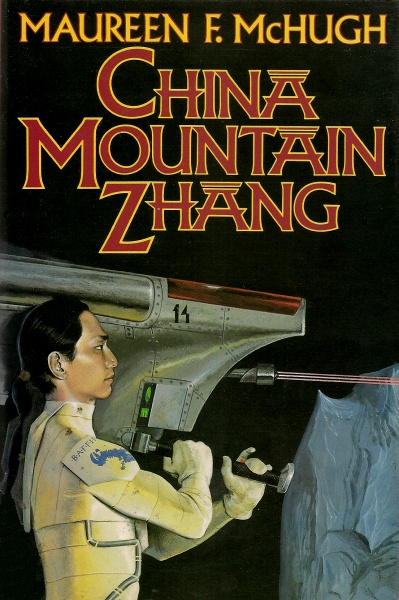
                  Maureen F. McHugh's China Mountain Zhang is set in a 22nd-century America reorganized along socialist lines under Chinese global dominance, told through several interwoven characters including its gay, mixed-race title character navigating a society with no comfortable place for either trait. The related novella Protection returns to the same future without following Zhang directly.

                • Cover of The Ministry for the Future
                  The Ministry for the Future

                  Kim Stanley Robinson · standalone novel · 2020

                  similar bychallengingscience fictionnear future+1 more

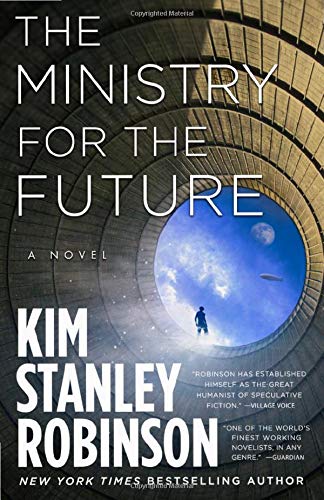
                  The Ministry for the Future is a climate fiction novel by American science fiction writer Kim Stanley Robinson, published in 2020. Set in the near future, the novel follows a subsidiary body, established under the Paris Agreement, whose mission is to act as an advocate for the world's future generations of citizens as if their rights were as valid as the present generation's. While the ministry pursues various ambitious projects, the effects of climate change are determined to be the most consequential. The plot primarily follows Mary Murphy, the head of the titular Ministry for the Future, and Frank May, an American aid worker traumatized by experiencing a deadly heat wave in India. Many chapters are devoted to other characters' accounts of future events, as well as their ideas about ecology, economics, and other subjects.

                • Cover of A Modern Utopia
                  A Modern Utopia

                  H. G. Wells · standalone novel · 1905

                  similar byscience fiction+2 more

                  Two travelers, an unnamed narrator and his skeptical companion, find themselves transported to a parallel world: a planet identical to Earth in geography and even population, down to duplicates of everyone they know, but shaped by a different history. There they examine a global order run by a voluntary elite called the Samurai, who try to hold together progress and stability without the coercion Wells thought inevitable in the utopias that came before his. Framed less as a story than as a philosophical travelogue, it is Wells's own argument with the utopian tradition, tested through the world he invents to make it.

                • Cover of Player Piano
                  Player Piano

                  Kurt Vonnegut & Jr. · standalone novel · 1952

                  similar byclass conflictscience fictionnear future

                  In the near future, when cybernetic automation has effectively separated people into two castes, the "engineers and managers", and the remainder of the population who can find work only in "recycling and reclamation" or the largely useless military, an underground movement arises with the intention of rolling back those changes and giving the masses the dignity of owning their own, productive, work once more.

                • Cover of Son of Man
                  Son of Man

                  Robert Silverberg · standalone novel · 1971

                  similar bychallengingscience fiction+1 more

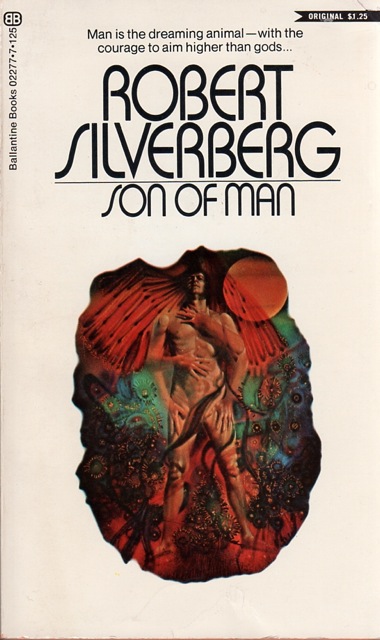
                  Son of Man is a science fiction novel by American writer Robert Silverberg, published in 1971. The book is about Clay, a 20th-century man, who travels billions of years into the future and meets humanity in its future forms. Some of the issues discussed in the book are sexuality, telepathic communication between people, physical prowess or frailty, division of humans by caste or ability, and the preservation of ancient wisdom, among other things.

                • Cover of Stranger in a Strange Land
                  Stranger in a Strange Land

                  Robert A. Heinlein · standalone novel · 1961

                  similar bychallengingscience fictionnear future

                  Stranger in a Strange Land is a 1961 science fiction novel by the American author Robert A. Heinlein. It tells the story of Valentine Michael Smith, a human who comes to Earth in early adulthood after being born on the planet Mars and raised by Martians, and explores his interaction with and eventual transformation of Terran culture.

                • Cover of By Light Alone
                  By Light Alone

                  Adam Roberts · standalone novel · 2011

                  similar byclass conflictscience fictionnear future+1 more

                  In a world where we have been genetically engineered so that we can photosynthesise sunlight with our hair hunger is a thing of the past, food an indulgence. The poor grow their hair, the rich affect baldness and flaunt their wealth by still eating. But other hungers remain ...The young daughter of an affluent New York family is kidnapped.

                • Cover of High-Opp
                  High-Opp

                  Frank Herbert · standalone novel · 2012

                  similar byscience fictionnear future+2 more

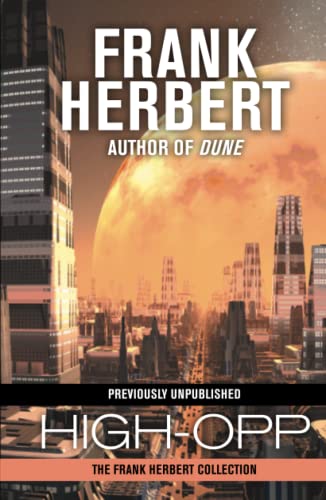
                  High-Opp is a science fiction novel by American writer Frank Herbert, written between The Dragon in the Sea (1956) and Dune (1965), and published posthumously in 2012. It contains a foreword by Kevin J. Anderson, who co-authored many books in the Dune series with Frank Herbert's son, Brian Herbert.

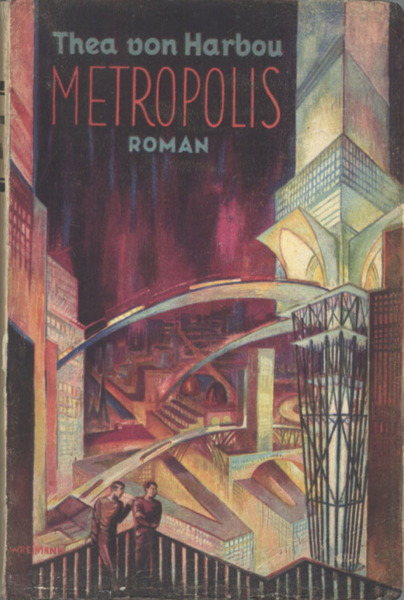
                • Cover of Metropolis
                  Metropolis

                  series · 7 books · 1926

                  similar byclass conflictscience fictionnear future

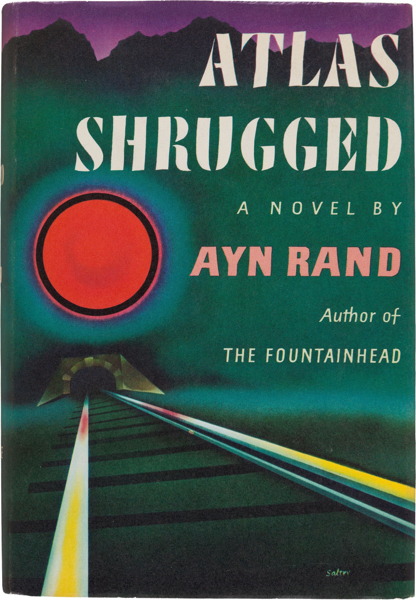
                • Cover of Atlas Shrugged
                  Atlas Shrugged

                  Ayn Rand · standalone novel · 1957

                  similar byclass conflictchallengingscience fiction

                  Atlas Shrugged is a 1957 novel by Ayn Rand. It is her longest novel, the fourth and final one published during her lifetime, and the one she considered her magnum opus in the realm of fiction writing. She described the theme of Atlas Shrugged as "the role of man's mind in existence" and it includes elements of science fiction, mystery, and romance. The book explores a number of philosophical themes from which Rand would subsequently develop Objectivism, including reason, property rights, individualism, rational egoism, and laissez-faire capitalism and depicts what Rand saw as the evil of altruism and governmental coercion. Of Rand's works of fiction, it contains her most extensive statement of her philosophical system.