Loreful
HomeDiscover
Search series, authors…⌘K
Loreful

Reading orders for SF/F series and shared universes — with your place kept in every one.

Explore

UniversesSeriesWorksAuthorsAtlas

Help

FAQAboutSite map

Account & legal

Sign inCreate accountPrivacyTerms

Data

Built on ISFDB, Wikipedia, Wikidata and Open Library. Curated reading orders carry their reasoning on the page; the rest follow publication order. Data sources & licenses

© Loreful · data: ISFDB · CC BY

More like Deem

anchored on:our world

but

Mood

The mood the book leaves you in.

  • The reading experience is propelled by journeys, exploration, and physical risk; excitement and forward momentum dominate over dread or introspection.
  • Joy and loss are deliberately mixed; the resolution grants characters something real while taking something else away, leaving warmth and sorrow together.
  • The book demands work from the reader — dense prose, difficult structure, unfamiliar ideas, or morally uncomfortable material — as part of its intended effect.
  • Grim events, cruelty, or despair dominate the atmosphere, and the book does not soften them with comfort or comic relief.
  • The atmosphere is quietly unsettling — wrongness, unease, and the uncanny pervade the book without necessarily escalating into overt horror.
  • The book is built to move the reader; character feeling is foregrounded and major scenes aim at a strong emotional response.
  • Humor is a primary aim and the prose plays for laughs — comic situations, wit, or dialogue produce sustained comedy, not occasional levity.
  • The book insists that things can improve; effort and decency are shown to matter, and the arc bends toward better outcomes even through hardship.
  • The book teaches as it goes — real facts, history, science, or craft are conveyed in enough depth that learning is part of the reading experience.
  • The book is designed to uplift and motivate, presenting perseverance or achievement in a way that invites the reader to aspire or act.
  • The overall register is cheerful and easygoing; stakes are kept gentle and the book avoids dwelling on pain or dread.
  • Withheld information drives the experience; the book sustains enigmas and secrets the reader wants resolved, whatever its genre.
  • The book is contemplative and inward-looking, giving more weight to thought, memory, and meaning than to external events.
  • The book works as comfort reading — low tension, a soothing pace, and an atmosphere the reader can unwind in.
  • Grief, loss, or melancholy set the dominant register, and the book lets sorrow stand rather than resolving it into comfort.
  • Sustained suspense is the point; the book keeps the reader braced for what happens next through danger, pressure, or impending revelation.
  • Playful invention and charm define the register — fanciful conceits, light absurdity, and a narration that delights in its own oddity.

About

What the story runs on.

  • Stories in which extraterrestrial beings are central — as characters, cultures, or the object of the plot.
  • Stories about minds with paranormal abilities — telepathy, telekinesis, precognition, empathy — and how societies handle those who have them.
  • Stories in which staying alive against nature, catastrophe, or scarcity is the central problem.
  • Stories of lovers kept apart by law, family, faith, or station, where the obstacle to love is the plot.
  • Stories in which a friendship — its making, testing, or loss — is the emotional center.
  • Stories of growing up — a young protagonist crossing from childhood into adult knowledge and responsibility.
  • Stories about who a character truly is — self-discovery, doubled lives, and the search for a self.
  • Stories about mental unraveling — descent into madness, delusion, and minds at war with themselves.
  • Stories about mourning — living through the death of a loved one and what loss does to the survivors.
  • Stories in which a buried family truth — hidden parentage, crimes, or shames — surfaces and reorders the present.
  • Stories driven by maneuvering for power — factions, conspiracies, and statecraft conducted in shadow.
  • Stories organized around investigating a killing — the case, the clues, and the pursuit of the killer, in any genre's clothing.

Shelf

Where it sits in the library.

    • Fiction built on magic or other supernatural elements that have no scientific explanation.
    • Secondary-world fantasy at large scale, where the fate of nations or the world turns on the protagonists' struggle.
    • Fantasy set in a recognizably modern city or contemporary world where the supernatural intrudes on everyday life.
    • Fantasy that blends in horror's atmosphere and imagery, keeping a fantastical frame around grim or frightening material.
    • Action-driven fantasy following warriors or rogues with personal stakes against sorcerous threats, rather than world-spanning conflicts.
    • Fantasy set in a real historical period or a close analogue of one, with magic woven into the era.
    • Fantasy in which protagonists cross from the ordinary world into another world through a portal or similar passage.
    • Fiction that retells or reworks a traditional fairy tale in a new form or setting.
    • Fantasy drawing directly on myths, legends, and folklore, retelling them or building on their figures and logic.
    • Fantasy of ghosts, vampires, shapeshifters, psychics, and similar phenomena, usually set in an otherwise ordinary world.
    • Fiction mixing science-fictional trappings with overtly magical or impossible elements in one setting.
    • Low-stakes fantasy emphasizing comfort, community, and everyday pleasures over conflict and peril.
    • Speculative fiction of pervasive moral ambiguity, violence, and cynicism that rejects heroic conventions — fantasy and SF alike.
      • Fiction that extrapolates from science and technology — future societies, space travel, or speculative inventions — within at least nominally natural laws.
      • Science fiction of interstellar scope — starships, galactic polities, and adventure across star systems.
      • Science fiction committed to scientific rigor, where technical plausibility constrains the story.
      • Science fiction centered on armed forces and warfare, told largely from a military point of view.
      • Science fiction of networked, corporate-dominated near futures, pairing high technology with social decay.
      • Science fiction styled on nineteenth-century steam-powered technology, often in a Victorian or pseudo-Victorian setting.
      • Fiction depicting an oppressive or catastrophic society, presented as a warning.
      • Fiction set after civilization's collapse, following survivors in the ruins of the old world.
      • Fiction in which characters move between past and future, and the mechanics or consequences of that travel drive the plot.
      • Fiction exploring a world where a historical event went differently and history diverged from ours.
      • Science fiction about humanity's first encounter and communication with an alien intelligence.
      • Science fiction in which extraterrestrial forces attack or occupy Earth and humanity resists.
      • Fiction whose primary aim is to frighten or unsettle the reader through dread, menace, or the monstrous.
      • Horror of vast, indifferent, incomprehensible entities before which humanity is insignificant, in the Lovecraft tradition.
      • Horror of decaying houses, buried family secrets, and oppressive atmosphere in the Gothic literary tradition.
      • Horror centered on hauntings and the returning dead.
      • Horror located in the mind — paranoia, obsession, and unreliable perception rather than external monsters.
      • Horror built around the reanimated dead and survival amid their outbreaks.
      • Horror defined by explicit, transgressive gore that refuses to cut away from violence.
      • Speculative fiction of the strange and uncanny that resists both natural explanation and standard genre categories.
      • Fiction organized around solving a crime or puzzle, typically following an investigator toward the identification of a culprit.
      • A puzzle-first mystery that lays out clues so the culprit's identity can be deduced before the reveal.
      • Crime fiction of moral ambiguity, fatalism, and hard-edged style, set among the corrupt and the doomed.
      • A mystery following the realistic routines of police work — forensics, interviews, and case-building.
      • A gentle mystery with an amateur sleuth, a small community, and violence kept off the page.
      • A mystery set in a past era, where the investigation works within that period's methods and society.
      • Fast-paced fiction driven by imminent danger, pursuit, or high-stakes conspiracy, built to sustain tension.
      • A thriller of espionage — agents, tradecraft, and intelligence services in conflict.
      • A thriller centered on lawyers and the courtroom, where litigation carries the suspense.
      • A thriller driven by detailed contemporary or near-future technology, often military or scientific.
      • A thriller whose tension comes from mental states and manipulation between characters rather than external action.
      • Fiction whose central plot is a romantic relationship and its development toward an emotionally satisfying resolution.
      • Romance in which one or both partners are supernatural beings, blending fantasy elements into the love story.
      • A fantasy-romance hybrid in which the romantic arc and the fantasy plot carry equal weight.
      • Romance set in a past era, with courtship shaped by the period's society and manners.
      • Romance set in the present day, without supernatural or historical elements.
      • Fiction set in a real past period, where the historical setting materially shapes characters and events.
        • General and literary fiction emphasizing prose style, character interiority, or formal ambition over genre plot conventions.
        • Fiction in a realistic world where magical events occur and are treated as ordinary, in the tradition of Latin American literature.
        • Fiction that ridicules people, institutions, or society in order to criticize them.
        • Fiction of dreamlike, irrational imagery and logic that breaks from realistic representation.
        • Fiction that plays with narrative convention through metafiction, fragmentation, and self-reference.
        • Fiction propelled by journeys, exploration, and physical peril, where action and survival carry the plot.
        • Adventure fiction of ships and seafaring — naval engagements, voyages, and life at sea.
        • Fiction of the American frontier West — gunmen, ranchers, and lawmen, typically in the late nineteenth century.
        • Fiction centered on soldiers, campaigns, and the experience of warfare, historical or imagined.
          • Fiction written primarily to amuse, using comedic situations, wit, or parody as its organizing principle.
            • Multi-generational fiction following a family or dynasty across decades, with inheritance and kinship as the through-line.
              • Fiction whose world runs on explicit game mechanics — levels, stats, and skills that characters can see and exploit.
                • Fiction about costumed or superpowered heroes and their conflicts with comparable villains.

                Practical

                How long a commitment, whether it stands alone, and whether it has finished.

                Tap a chip to ask for it · tap again to rule it out · once more to clear. Numbers show what would be left.

                • Cover of The Bone Clocks
                  The Bone Clocks

                  David Mitchell · standalone novel · 2014

                  similar byliterary & generalour worldcontemporary

                  The Bone Clocks is a 2014 novel by British writer David Mitchell. It was long-listed for the Man Booker Prize, and described as one of the best novels of the year by Stephen King. The novel won the 2015 World Fantasy Award.

                • Cover of Concrete Island
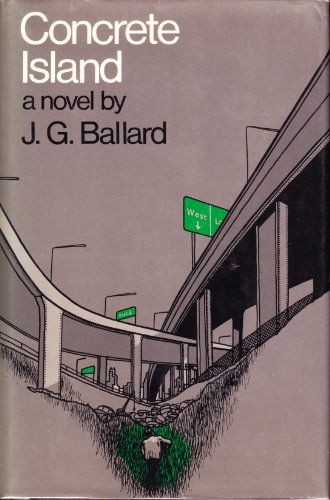
                  Concrete Island

                  J. G. Ballard · standalone novel · 1974

                  similar byliterary & generalour worldcontemporary

                  Architect Robert Maitland crashes his car onto a stretch of wasteland trapped between three converging motorways -- visible from thousands of cars, reachable by none of them. Injured and unable to climb back to the road, Maitland adapts to life on what he starts calling the Island, scavenging food thrown from car windows, and discovers he isn't alone: a runaway sex worker hiding in a bunker, and a brain-damaged former circus acrobat, both long past expecting rescue. What begins as a survival story turns into a question of whether Maitland even wants to leave. A J. G. Ballard novel of urban isolation, grouped with Crash and High-Rise.

                • Cover of Crash
                  Crash

                  J. G. Ballard · standalone novel · 1973

                  similar byliterary & generalcontemporaryour world

                  Crash is a novel by J. G. Ballard, first published in 1973 with a cover designed by Bill Botten. It follows a group of car-crash fetishists who, inspired by the famous crashes of celebrities, become sexually aroused by staging and participating in car accidents.

                • K
                  Kairos

                  series · 11 books · 1962

                  completed

                  similar by+2 more

                  The Time Quintet is a science fantasy series of five young adult novels written by American author Madeleine L'Engle and made up of A Wrinkle in Time (1962), A Wind in the Door (1973), A Swiftly Tilting Planet (1978), Many Waters (1986), and An Acceptable Time (1989).

                • Cover of Lost
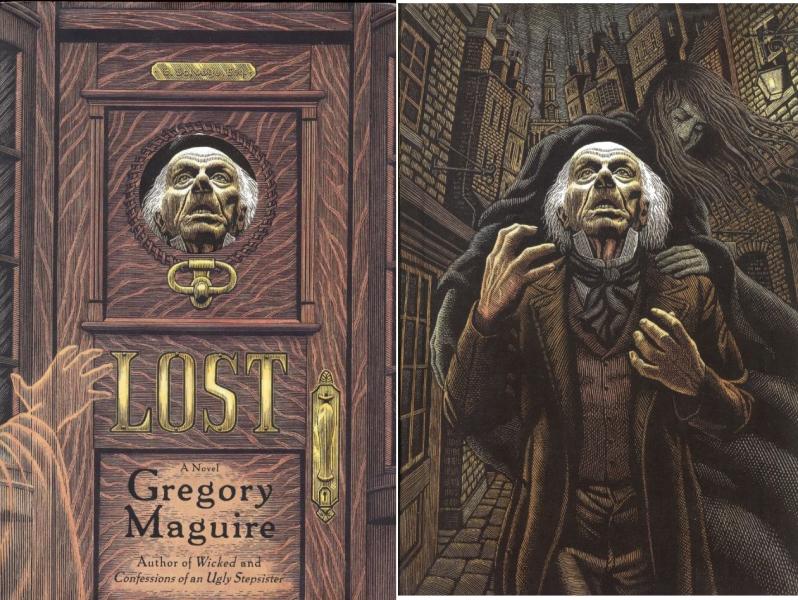
                  Lost

                  Gregory Maguire · standalone novel · 2001

                  similar byliterary & generalour worldcontemporary

                  Lost is a 2001 novel by American author Gregory Maguire. Unlike many of Maguire's other adult novels, Lost is set in the real world. The novel's concept is that the protagonist is a distant relative of the man who inspired Charles Dickens' character of Ebenezer Scrooge.

                • Cover of The Satanic Verses
                  The Satanic Verses

                  Salman Rushdie · standalone novel · 1988

                  similar byliterary & generalour worldcontemporary

                  The Satanic Verses is the fourth novel by British–Indian writer Salman Rushdie. First published in September 1988, the book was inspired by the life of the Islamic prophet Muhammad. As with his previous books, Rushdie used magical realism and relied on contemporary events and people to create his characters. The title refers to the Satanic Verses, a group of Quranic verses about three pagan Meccan goddesses: Allāt, Al-Uzza, and Manāt. The part of the story that deals with the satanic verses was based on accounts from the historians al-Waqidi and al-Tabari.

                • Cover of The Gargoyle
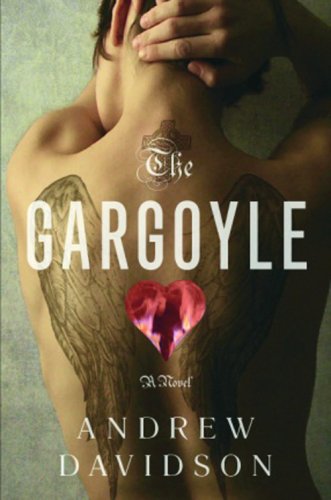
                  The Gargoyle

                  Andrew Davidson · standalone novel · 2008

                  similar byliterary & generalour worldcontemporary

                  The Gargoyle is the debut novel by Andrew Davidson. It was published in 2008.

                • Cover of The Midnight Club
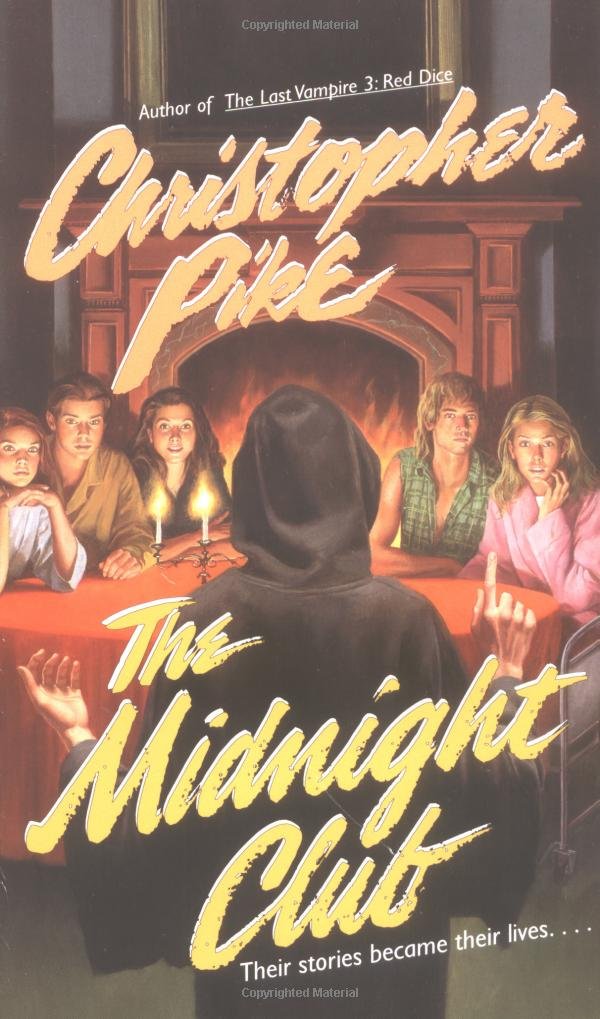
                  The Midnight Club

                  Christopher Pike · standalone novel · 1994

                  similar byliterary & generalour worldcontemporary

                  When you think Christopher Pike, you probably think ax murderers, cursed chain letters, and the occasional evil lizard person — and with good reason! But in this sensitive novel, set at a hospice for terminally ill teens, Pike mashes up standard scary stories with an exploration of what fear really means when illness is more of a threat than haunted houses or sexy vampires.

                • Cover of Free Live Free
                  Free Live Free

                  Gene Wolfe · standalone novel · 1984

                  similar byliterary & generalour worldcontemporary

                  Free Live Free is a novel by American writer Gene Wolfe, first published in 1984.

                • Cover of The Raw Shark Texts
                  The Raw Shark Texts

                  Steven Hall · standalone novel · 2007

                  similar byliterary & generalour worldcontemporary

                  The Raw Shark Texts is the debut novel by British author Steven Hall, released in 2007. The book was released by Canongate Books in the US and the UK and published by HarperCollins in Canada. The title is a play on "Rorschach Tests", which are inkblot tests. The novel is a work of Meta-fiction which uses Concrete poetry, linguistic jokes and cultural references. It is the story of an amnesiac re-discovering his past life through a surreal collection of clues he has left himself while evading a steampunk villain and the shark of the title.

                • Cover of Love
                  Love

                  Angela Carter · standalone novel · 1971

                  similar byliterary & generalour worldcontemporary

                  Love is a 1971 novel by Angela Carter. Her fifth novel, it follows the destructive love triangle between a psychologically unstable woman, her charming husband, and her volatile brother-in-law. Effectively exploring themes of infidelity, self-loathing, suicide, and emotional disconnection, the novel depicts three characters so alienated from society and reality, that they depend solely on each other. This unhealthy fixation slowly eats away at their individual relationships and themselves, until eventually culminating in despair and tragedy.

                • Cover of All's Well
                  All's Well

                  Mona Awad · standalone novel · 2021

                  similar byliterary & generalour worldcontemporary

                • Cover of Rooms
                  Rooms

                  Lauren Oliver · standalone novel · 2014

                  similar byour worldcontemporary+1 more

                  Wealthy Richard Walker has just died, leaving behind his country house full of rooms packed with the detritus of a lifetime. His estranged family-bitter ex-wife Caroline, troubled teenage son Trenton, and unforgiving daughter Minna-have arrived for their inheritance. But the Walkers are not alone. Prim Alice and the cynical Sandra, long dead former residents bound to the house, linger within its claustrophobic walls. Jostling for space, memory, and supremacy, they observe the family, trading barbs and reminiscences about their past lives. Though their voices cannot be heard, Alice and Sandra speak through the house itself-in the hiss of the radiator, a creak in the stairs, the dimming of a light bulb. The living and dead are each haunted by painful truths that will soon surface with explosive force. When a new ghost appears, and Trenton begins to communicate with her, the spirit and human worlds collide-with cataclysmic results.

                • Cover of Ghostwritten
                  Ghostwritten

                  David Mitchell · standalone novel · 1999

                  similar byliterary & generalour worldcontemporary

                  Various individuals around the globe cross paths, while the complexities of modern societies lead to human civilization's inevitable end.

                • Cover of VALIS
                  VALIS

                  series · 4 books · 1981

                  completed

                  similar by+3 more

                  The VALIS trilogy is a set of science fiction/philosophical novels by author Philip K. Dick which include VALIS (1981), The Divine Invasion (1981), and The Transmigration of Timothy Archer (1982). Dick's first novel about the VALIS concept originally titled "VALISystem A", was published as Radio Free Albemuth after Dick's death in 1985.

                • Cover of After Such Knowledge
                  After Such Knowledge

                  series · 7 books · 1953

                  completed

                  similar by+2 more

                  After Such Knowledge is James Blish's loosely linked trilogy on the costs of forbidden or dangerous knowledge. It opens with A Case of Conscience, in which a Jesuit scientist studying a seemingly sinless alien race is forced to weigh what he finds against his own faith, continues with the historical novel Doctor Mirabilis about the medieval friar and scientist Roger Bacon, and closes with the two-part Black Easter, in which a magician is hired to loose Hell's demons upon the world for a single day. The three books share a theme rather than a continuous plot or cast.

                • Cover of Kingdom Come
                  Kingdom Come

                  J. G. Ballard · standalone novel · 2006

                  similar byliterary & generalour worldcontemporary

                  In contemporary Britain, the suburban population falls prey to a combination of boredom, consumerism, xenophobia, sports hooliganism, and resentment of authority leading to the rise of a new fascism centered around a giant enclosed shopping mall.

                • Cover of Doctor Rat
                  Doctor Rat

                  William Kotzwinkle · standalone novel · 1976

                  similar byour world

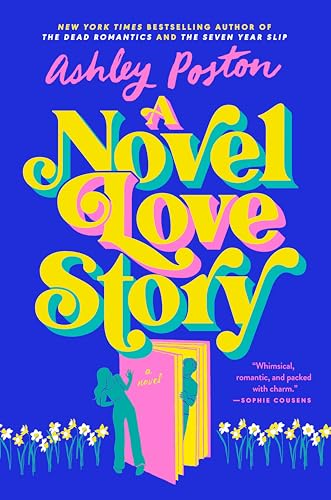
                • Cover of A Novel Love Story
                  A Novel Love Story

                  Ashley Poston · standalone novel · 2024

                  similar byour worldcontemporary+1 more

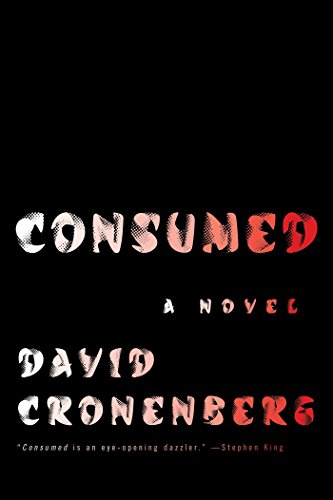
                • Cover of Consumed
                  Consumed

                  David Cronenberg · standalone novel · 2014

                  similar byliterary & generalour worldcontemporary

                  Consumed is the first novel by the Canadian filmmaker, screenwriter and actor David Cronenberg.

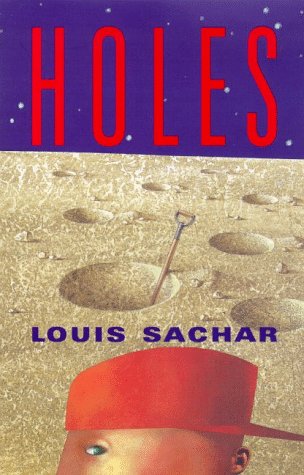
                • Cover of Holes
                  Holes

                  Louis Sachar · standalone novel · 1998

                  similar byliterary & generalour worldcontemporary

                  Holes is a 1998 middle grade novel written by Louis Sachar and first published by Farrar, Straus and Giroux. The book centers on Stanley Yelnats IV, a young boy who is sent to Camp Green Lake, a correctional boot camp in a desert in Texas, after being wrongfully convicted of theft. The plot explores the history of the area and how the actions of several characters in the past have affected Stanley's life in the present. These interconnecting stories touch on themes such as labor, boyhood and masculinity, friendship, meaning of names, illiteracy, elements of fairy tales, and racism.

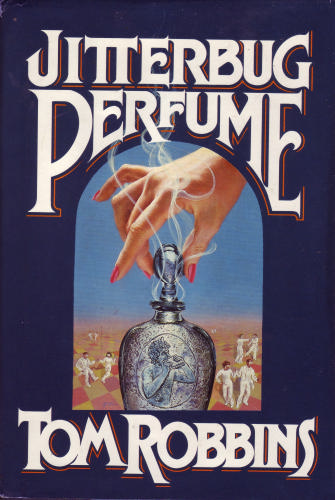
                • Cover of Jitterbug Perfume
                  Jitterbug Perfume

                  Tom Robbins · standalone novel · 1984

                  similar byliterary & generalour worldcontemporary

                  Jitterbug Perfume is American writer Tom Robbins' fourth novel and was listed on the New York Times Best Seller list in 1985. The book follows two interweaving storylines, one in Ancient Eurasia and one in the present day. The story connects dueling perfumers in Seattle, Paris and New Orleans to a bottle of incomparable perfume created by two unlikely but defiant lovers of the past who seek immortality. Orchestrated by a mysterious Irish philosopher, the past and the present collide when the characters come together and discover the unexpected path to life-everlasting. The book was first published in 1984 by Bantam Books and later reprinted by Random House.

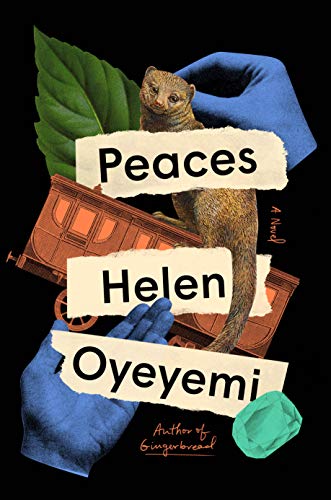
                • Cover of Peaces
                  Peaces

                  Helen Oyeyemi · standalone novel · 2021

                  similar byliterary & generalour worldcontemporary

                  Peaces is a 2021 novel by Helen Oyeyemi. The novel takes place on a train with several passengers.

                • Cover of Shark Heart
                  Shark Heart

                  Emily Habeck · standalone novel · 2023

                  similar byliterary & generalour worldcontemporary

                  Subtitled "A Love Story"