More like Deep, Dark
anchored on:science fictionthriller & suspensecontemporarytensegenetic engineeringunderground & caves+1 more
but
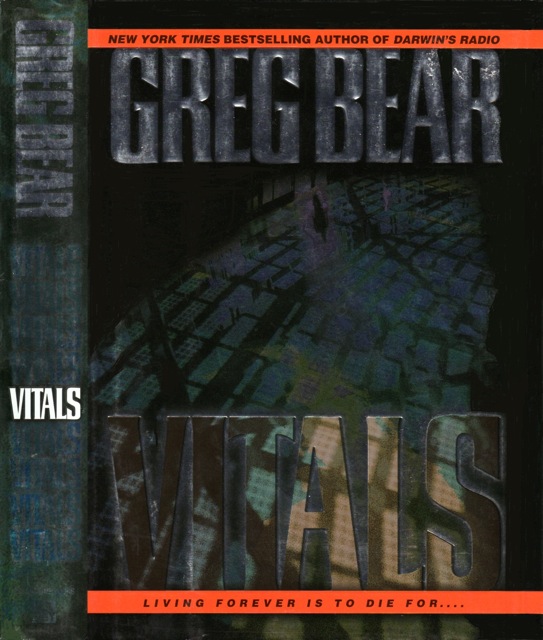
- Vitals
Greg Bearstandalone novel2002
similar bygenetic engineeringcontemporarytensescience fictionthriller & suspense+1 more
From the flaps of the Del Rey first edition: "Hal Cousins is one of a handful of scientists nearing the most sought after discovery in human history: the key to short-circuiting the aging process. Fueled by a wealth of research, an overdose of self-confidence, and the money of influential patrons to whom he makes outrageous promises, Hal experiments with organisms living in the hot thermal plumes in the ocean depths. But as he journeys beneath the sea, his other world is falling apart. Across the country, scientists are being inexplicably murdered - including Hal's identical twin brother, who is also working to unlock the key to immortality. Hal himself barely eludes a cold-blooded attack at sea, and when he returns home to Seattle, he finds himself walking into an eerie realm where voices speak to him from the dead ... where a once-brilliant historian turned crackpot is leading him on a deadly game of hide-and-seek ... and where the beautiful, rich widow of his twin is more than willing to pick up the pieces of Hal's life-and take him places he's never been before. Suddenly Hal is trapped inside an ever-twisting maze of shocking revelations. For he is not the first person to come close to ending aging forever - and those who came before him will stop at nothing to keep the secret to themselves. Now every person on earth is at risk of being made an unsuspecting player in one man's spectacular and horrifying master plan. From the bottom of Russia's Lake Baikal to a billionaire's bionic house built into the cliffs of the Washington seashore, from the darkest days of World War II and the reign of Josef Stalin to the capitalist free-for-all that is the United States, Vitals tells an astounding tale of the most unimaginable scientific secret of all - exposed by the quest for immortality itself..."
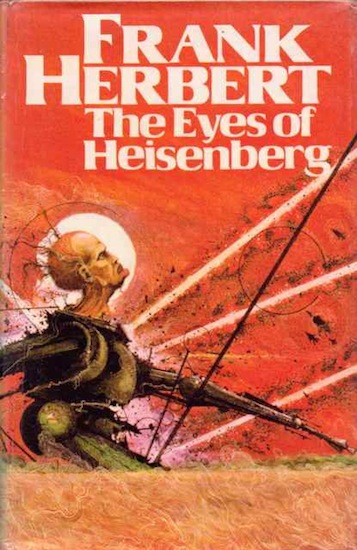
- The Eyes of Heisenberg
Frank Herbertstandalone novel1966
similar bygenetic engineeringtensescience fictiondarkthriller & suspense
Tens of thousands of years in the future, Earth is ruled by the Optimen, a genetically engineered aristocracy that has made itself functionally immortal, while ordinary people, the Folk, live under strict reproductive control. When Harvey and Lizbeth Durant arrive to have their embryo genetically screened, the examining doctor finds something in the child no one has seen in a very long time: real potential for both fertility and life span, traits the Optimen have arrogated to themselves. Rather than destroy the embryo as policy demands, the doctor hesitates, setting off a chain of surveillance, suspicion and resistance. A tightly wound Frank Herbert thriller about genetic caste and rebellion.
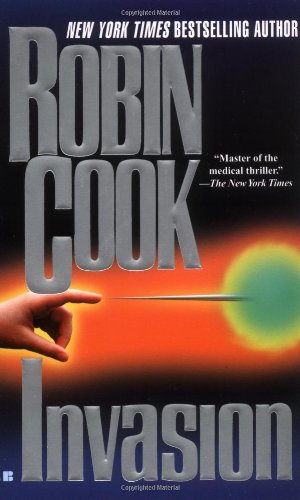
- Invasion
Robin Cookstandalone novel1997
similar bygenetic engineeringcontemporarytensescience fictionthriller & suspense+1 more
Earth is bombarded from space by small disks which, in addition to having powerful physical armaments, when handled activate latent viral DNA which causes humans to mutate into alien beings; a small group recognize the danger and attempt to develop a biological counterweapon.
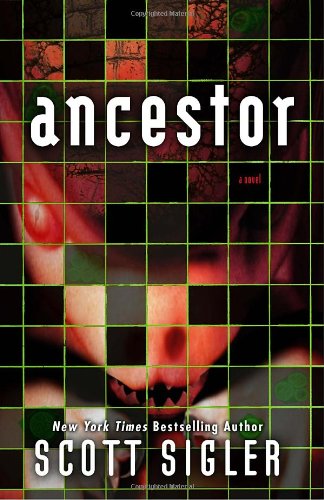
- Ancestor
Scott Siglerstandalone novel2007
similar bygenetic engineeringcontemporarytensescience fictiondarkthriller & suspense
Ancestor is a science fiction thriller novel by American writer Scott Sigler. The novel was released in podcast format in 2006, with it also being released in print via Dragon Moon Press in 2007. Ancestor was later re-released by Crown Publishing in 2010.
- Frameshift
Robert J. Sawyerstandalone novel1997
similar bygenetic engineeringcontemporarytensescience fictionthriller & suspense+1 more
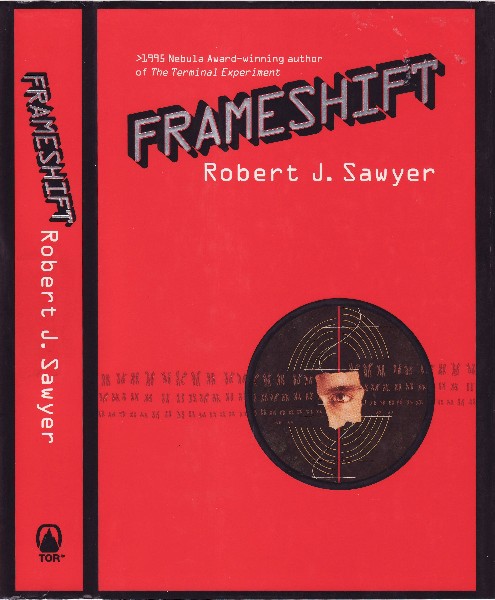
Winner of Japan's Seiun Award and Hugo Award finalist Pierre Tardivel is a scientist working on the Human Genome Project with the Nobel Prize winner, Dr. Burian Klimus. A driven man, Pierre works with the awareness that he may not have long to live: he has a fifty-fifty chance of dying from Huntington's disease, an incurable hereditary disorder of the central nervous system. While he still has his health, Pierre and his wife decide to have a child, and they search for a sperm donor. When Pierre informs Dr. Klimus of their plan, Klimus makes an odd but generous offer: to be the sperm donor as well as to pay for the expensive in vitro fertilization. Shortly thereafter it transpires that Klimus might be hiding a grim past: he may be Ivan Marchenko, the notorious Treblinka death-camp guard known as Ivan the Terrible. While digging into Klimus's past with the help of Nazi hunter Avi Meyer, Pierre and his wife discover that Pierre's insurance company has been illegally screening clients for genetic defects. The two lines of investigation begin to coverage in a sinister manner, while they worry about the possibility of bearing the child of an evil, sadistic killer.
- The Extinction Files
series2 books2017
similar bygenetic engineeringcontemporarytensescience fictionthriller & suspense+1 more
- When the Wind Blows
series2 books1998
similar bygenetic engineeringcontemporarytensescience fictionthriller & suspense+1 more
- The Grays
Whitley Strieberstandalone novel2006
similar bygenetic engineeringcontemporarytensescience fictiondarkthriller & suspense
Millions of people are confronting aliens that authorities say do not exist. Whitley Strieber -- author of the legendary, #1 bestseller Communion, which detailed his own close encounters -- now returns to the riddle of aliens with The Grays. Drawing on a lifetime of research, Strieber offers up a fictional account of the conspiracy behind alien presence on Earth while also giving us a startling look inside the alien mind that will astound, frighten, and enthrall readers. Meet the Three Thieves, a group of Grays assigned to duty in a small Kentucky town. For decades, they have abducted its residents and manipulated bloodlines trying to create an ultra-intelligent human being. Nine year-old Conner Callahan will face the ultimate terror as he struggles to understand who he has been bred to be, and what he must do to save humanity. Meet Colonel Michael Wilkes, the head of a select group of government and military officials who have been monitoring the Grays for years. Wilkes has done everything in his power to keep the secret of the Grays from the public. But when the Grays begin to reveal themselves, Wilkess fear of occupation forces him to set in motion his own sinister plan to ensure the survival of humanity, but at what cost? The fate of the human race lies with one woman, Lauren Glass, whose unique ability to communicate with the last remaining captive Gray, known as A for Adam, may be the only way humans can truly unravel the Grays ultimate plan. The Grays is a mind-bending journey behind the curtain of secrecy that surrounds the subject of aliens, written by the fields great master. This book will make you think deeply, not only about the mystery of who the Grays are, but who exactly we are.
- Midnight
Dean R. Koontzstandalone novel1989
similar bygenetic engineeringcontemporarytensescience fictiondark
A wealthy tech entrepreneur, intending to create superhumans by infecting them with nanotech to assist their physical and mental abilities, picks a California town as his secret pilot project, but things go terribly wrong.
- Hellstrom's Hive
Frank Herbertstandalone novel1973
similar bycontemporaryunderground & cavestensescience fiction+1 more
Hellstrom's Hive is a 1973 science fiction novel by Frank Herbert. It is about a secret group of humans who model their lives upon social insects and the unsettling events that unfold after they are discovered by a deep undercover agency of the U.S. government.
- White Shark
Peter Benchleystandalone novel1994
similar bygenetic engineeringcontemporarytensethriller & suspensedarkscience fiction
White Shark is a 1994 novel by author Peter Benchley, famous for Jaws, The Island, Beast, and The Deep. White Shark is similar to Jaws but does not feature a shark, let alone a white shark, despite what the title suggests; the phrase is the codename of a weapon. To avoid confusion and to capitalize on the miniseries adaptation, the book was republished as Creature in 1997.
- Firestarter
Stephen Kingstandalone novel1980
similar bycontemporarytensedarkscience fictionthriller & suspense+1 more
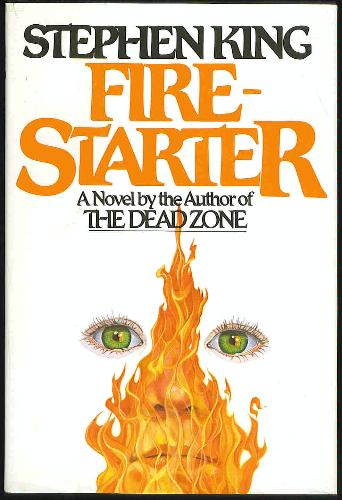
WorldCat: Innocence and beauty ignite with evil and terror... First, a man and a woman are subjects of a top-secret government experiment designed to produce extraordinary psychic powers. Then, they are married and have a child. A daughter. Early on the daughter shows signs of a wild and horrifying force growing within her. Desperately, her parents try to train her to keep that force in check, to 'act normal'. Now the government wants its brainchild back for its own insane ends.
- Prey
Michael Crichtonstandalone novel2002
similar bygenetic engineeringcontemporarytensescience fiction+1 more
Prey is the thirteenth novel by Michael Crichton under his own name and his twenty-third novel overall. It was first published in November 2002, making it his first novel of the twenty-first century. An excerpt was first published in the January–February 2003 issue of Seed magazine. Prey brings together themes from two earlier Crichton best-selling novels, Jurassic Park and The Andromeda Strain, and serves as a cautionary tale about developments in science and technology: in particular, nanotechnology, genetic engineering, and distributed artificial intelligence.
- Burn
Bill Ransomstandalone novel1995
similar bygenetic engineeringcontemporarytensescience fictiondarkthriller & suspense
From the front flap of the Ace first edition: "It is called GenoVax. The death it brings is terrifying. Quarantine and isolations are futile - the infection rate is nearly one hundred percent. It is the most frightening weapon man has ever created. And when it is unleashed, the human race will know what it is like to burn... It started in Mexico City disguised as a vaccine. Now it is out, and spreading. Virologist Marte Chang is determined to isolate and destroy the virus, but first she must unlock the secret of its origins - and uncover the brilliant and fanatical intelligence behind it. As a scientist she understands the necessary dangers of her work, to herself and to those who have been exposed. But can one woman halt a genocidal plan specifically designed to wipe out the entire human race? And even if she can... will there be anyone left to save?"
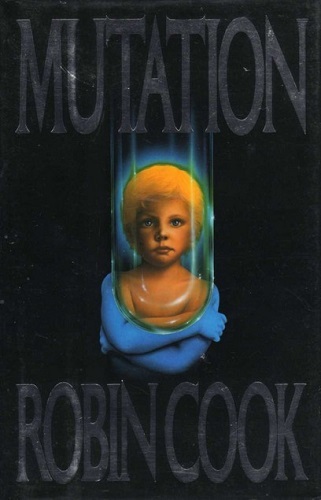
- Mutation
Robin Cookstandalone novel1989
similar bygenetic engineeringcontemporarytensescience fictiondarkthriller & suspense
Mutation is a novel by Robin Cook about the ethics of genetic engineering.
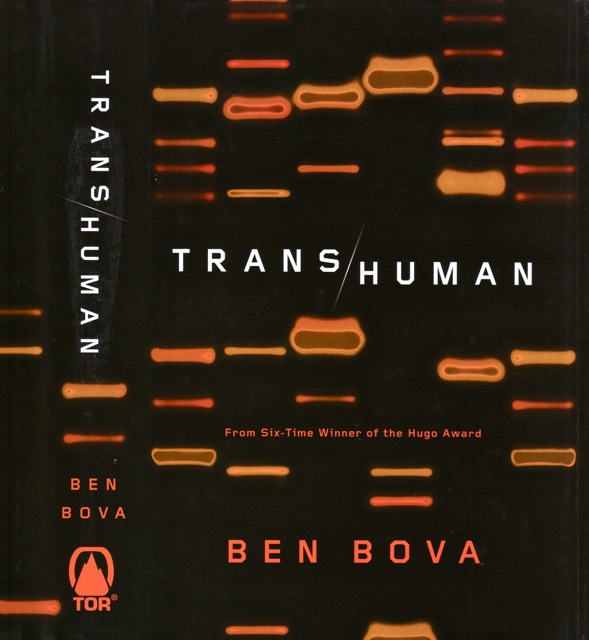
- Transhuman
Ben Bovastandalone novel2014
similar bygenetic engineeringcontemporarytensescience fictionthriller & suspense
"Luke Abramson, a brilliant cellular biologist who is battling lung cancer, has one joy in life, his ten-year-old granddaughter, Angela. When he learns that Angela has an inoperable brain tumor and is given less than six months to live, Abramson wants to try a new enzyme, Mortality Factor 4 (MORF4), that he believes will kill Angela's tumor. However, the hospital bureaucracy won't let him do it because MORF4 has not yet been approved by the FDA. Knowing that Angela will die before he can get approval of the treatment, Abramson abducts Angela from the hospital with plans to take her to a private research laboratory in Oregon. Luke realizes he's too old and decrepit to flee across the country with his sick granddaughter, chased by the FBI. So he injects himself with a genetic factor that will stimulate his body's production of telomerase, an enzyme that has successfully reversed aging in animal tests. As the chase weaves across the country from one research facility to another, Luke begins to grow physically younger, stronger. He looks and feels the way he did thirty or forty years ago. Yet his lung cancer is not abating; if anything the tumors are growing faster. And Angela is dying"--
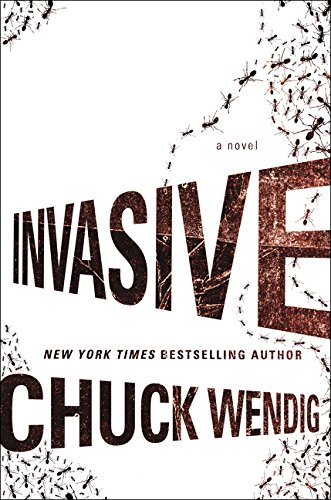
- Invasive
Chuck Wendigstandalone novel2016
similar bygenetic engineeringcontemporarytensescience fictionthriller & suspensedark
On the isolated Kolohe Atoll in the middle of the Pacific ocean, a charismatic billionaire employs a team of scientists to conduct cutting-edge research that he hopes will change the world. In a cabin on a remote lake in the Adirondacks, FBI futurist Hannah Stander finds a barely recognizable human body, which appears to have been skinned alive by thousands of genetically engineered ants. Hannah's investigation leads to Kolohe, where the scientists vehemently deny any connection to the body. But the more Hannah studies the group, the more she suspects their research has sinister applications, and the more she realizes no one may get off the island alive. --
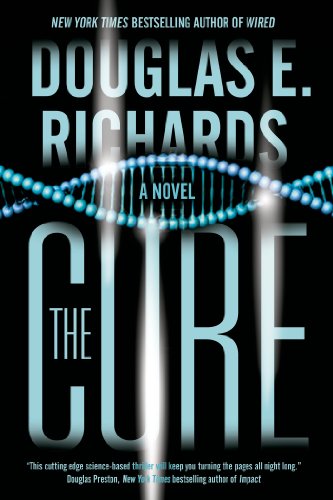
- The Cure
Douglas E. Richardsstandalone novel2013
similar bygenetic engineeringcontemporarytensethriller & suspensedark
A young woman, Erin Palmer, witnesses a psychopath murder her parents and sister. The bloody trauma propels her into a scientific career. She is studying the microbiology of the psychopathic brain, and is on a quest to discover the DNA which engenders the cerebral disease. Teaming up with a powerful but eccentric billionaire, she at last isolates the deadly DNA and is on the verge of finding a cure. But things and people are not what they seem. Both the young man she thinks she loves and the tycoon who has befriended her have a sinister side she did not understand. Erin is ensnared in a global conspiracy which may culminate in humanity's utter destruction.
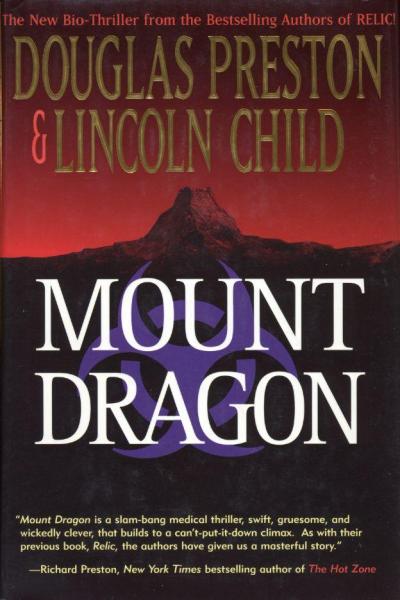
- Mount Dragon
Lincoln Child & Douglas Prestonstandalone novel1996
similar bygenetic engineeringcontemporarytensescience fictionthriller & suspense
A tech tycoon recruits a scientist to perfect a genetically engineered vaccine against all strains of influenza, but when he discovers a disastrous flaw he becomes the target of multiple attacks.
- Oaths and Miracles / Robert Cavanaugh
series2 books1996
similar bygenetic engineeringcontemporarytensethriller & suspensedark+1 more
- The Boys from Brazil
Ira Levinstandalone novel1976
similar bygenetic engineeringtensethriller & suspensedark+1 more
The Boys from Brazil is a 1976 thriller novel by American writer Ira Levin. It was made into a film of the same title that was released in 1978.
- Artifact
Jeremy Robinsonstandalone novel2025
similar bygenetic engineeringcontemporarytensescience fictiondark+1 more
In an isolated Alaskan town, the local sheriff uncovers a secret lab where generative A.I. and bioprinting have unleashed grotesque, living anomalies—and now, something monstrous is loose. Sheriff Colton Graves prefers the quiet life in Raven’s Rest, Alaska, a remote town accessible only by tunnel and home to a hardy mix of locals and secrets buried in the ice. But when a camel wanders down Main Street—its head grotesquely sprouting a dozen eyes—Colton knows his quiet days are over. The bizarre incident leads him to NovaGen, a nearby research facility constructed inside a Cold War bunker, buried in the mountains above town. There, a trail of blood and eerie silence hints at something far more sinister than an escaped animal experiment. With his deputies—the sharp-witted Tali and rookie Ethan—Colton recruits a few trusted locals, including the unshakable Marit, Tali’s sister, the intimidating ‘Grizz’ Norval, and Edgar ‘Old Red’ Rydell, an aging man plagued by demons from when he worked at the bunker during its covert cold war days. Together, they investigate the abandoned lab. What begins as a search for missing scientists soon reveals chilling pools of blood without bodies, cryptic warnings left behind, a bloody six-fingered handprint, and the revelation of a new a generative A.I. capable of printing living organisms. As they descend deeper into the lab, it becomes clear that the answers they seek may come at a terrifying cost—and that what was made in the dark may not be content to stay there.
- The White Plague
Frank Herbertstandalone novel1982
similar bygenetic engineeringscience fictiondarktense+1 more
The White Plague is a 1982 science fiction novel by American author Frank Herbert about an engineered disease which kills only women. It was nominated for a best science fiction novel Locus Award in 1983.
- The Green Berets / Dave Riley
series1 book1994
similar bygenetic engineeringcontemporarytensescience fictionthriller & suspense+1 more