Loreful
HomeDiscover
Search series, authors…⌘K
Loreful

Reading orders for SF/F series and shared universes — with your place kept in every one.

Explore

UniversesSeriesWorksAuthorsAtlas

Help

FAQAboutSite map

Account & legal

Sign inCreate accountPrivacyTerms

Data

Built on ISFDB, Wikipedia, Wikidata and Open Library. Curated reading orders carry their reasoning on the page; the rest follow publication order. Data sources & licenses

© Loreful · data: ISFDB · CC BY

More like Descent Into Hell

anchored on:fantasyour worldearly 20th centurydarkfaith and religionbritish isles+1 more

but

Mood

The mood the book leaves you in.

  • The reading experience is propelled by journeys, exploration, and physical risk; excitement and forward momentum dominate over dread or introspection.
  • Joy and loss are deliberately mixed; the resolution grants characters something real while taking something else away, leaving warmth and sorrow together.
  • The book demands work from the reader — dense prose, difficult structure, unfamiliar ideas, or morally uncomfortable material — as part of its intended effect.
  • Grim events, cruelty, or despair dominate the atmosphere, and the book does not soften them with comfort or comic relief.
  • The atmosphere is quietly unsettling — wrongness, unease, and the uncanny pervade the book without necessarily escalating into overt horror.
  • The book is built to move the reader; character feeling is foregrounded and major scenes aim at a strong emotional response.
  • Humor is a primary aim and the prose plays for laughs — comic situations, wit, or dialogue produce sustained comedy, not occasional levity.
  • The book insists that things can improve; effort and decency are shown to matter, and the arc bends toward better outcomes even through hardship.
  • The book teaches as it goes — real facts, history, science, or craft are conveyed in enough depth that learning is part of the reading experience.
  • The book is designed to uplift and motivate, presenting perseverance or achievement in a way that invites the reader to aspire or act.
  • The overall register is cheerful and easygoing; stakes are kept gentle and the book avoids dwelling on pain or dread.
  • Withheld information drives the experience; the book sustains enigmas and secrets the reader wants resolved, whatever its genre.
  • The book is contemplative and inward-looking, giving more weight to thought, memory, and meaning than to external events.
  • The book works as comfort reading — low tension, a soothing pace, and an atmosphere the reader can unwind in.
  • Grief, loss, or melancholy set the dominant register, and the book lets sorrow stand rather than resolving it into comfort.
  • Sustained suspense is the point; the book keeps the reader braced for what happens next through danger, pressure, or impending revelation.
  • Playful invention and charm define the register — fanciful conceits, light absurdity, and a narration that delights in its own oddity.

About

What the story runs on.

  • Stories in which extraterrestrial beings are central — as characters, cultures, or the object of the plot.
  • Stories structured as a quest — a journey undertaken to find, deliver, or destroy something of great import.
  • Stories in which staying alive against nature, catastrophe, or scarcity is the central problem.
  • Stories of lovers kept apart by law, family, faith, or station, where the obstacle to love is the plot.
  • Stories in which a friendship — its making, testing, or loss — is the emotional center.
  • Stories of growing up — a young protagonist crossing from childhood into adult knowledge and responsibility.
  • Stories about who a character truly is — self-discovery, doubled lives, and the search for a self.
  • Stories about mourning — living through the death of a loved one and what loss does to the survivors.
  • Stories in which a buried family truth — hidden parentage, crimes, or shames — surfaces and reorders the present.
  • Stories driven by maneuvering for power — factions, conspiracies, and statecraft conducted in shadow.
  • Stories in which war itself is the subject — combat, occupation, and what warfare does to soldiers and civilians.
  • Stories organized around investigating a killing — the case, the clues, and the pursuit of the killer, in any genre's clothing.

Shelf

Where it sits in the library.

    • Fiction built on magic or other supernatural elements that have no scientific explanation.
    • Secondary-world fantasy at large scale, where the fate of nations or the world turns on the protagonists' struggle.
    • Fantasy set in a recognizably modern city or contemporary world where the supernatural intrudes on everyday life.
    • Fantasy that blends in horror's atmosphere and imagery, keeping a fantastical frame around grim or frightening material.
    • Action-driven fantasy following warriors or rogues with personal stakes against sorcerous threats, rather than world-spanning conflicts.
    • Fantasy set in a real historical period or a close analogue of one, with magic woven into the era.
    • Fantasy in which protagonists cross from the ordinary world into another world through a portal or similar passage.
    • Fiction that retells or reworks a traditional fairy tale in a new form or setting.
    • Fantasy drawing directly on myths, legends, and folklore, retelling them or building on their figures and logic.
    • Fantasy of ghosts, vampires, shapeshifters, psychics, and similar phenomena, usually set in an otherwise ordinary world.
    • Fiction mixing science-fictional trappings with overtly magical or impossible elements in one setting.
    • Low-stakes fantasy emphasizing comfort, community, and everyday pleasures over conflict and peril.
    • Speculative fiction of pervasive moral ambiguity, violence, and cynicism that rejects heroic conventions — fantasy and SF alike.
      • Fiction that extrapolates from science and technology — future societies, space travel, or speculative inventions — within at least nominally natural laws.
      • Science fiction of interstellar scope — starships, galactic polities, and adventure across star systems.
      • Science fiction committed to scientific rigor, where technical plausibility constrains the story.
      • Science fiction centered on armed forces and warfare, told largely from a military point of view.
      • Science fiction of networked, corporate-dominated near futures, pairing high technology with social decay.
      • Science fiction styled on nineteenth-century steam-powered technology, often in a Victorian or pseudo-Victorian setting.
      • Fiction depicting an oppressive or catastrophic society, presented as a warning.
      • Fiction set after civilization's collapse, following survivors in the ruins of the old world.
      • Fiction in which characters move between past and future, and the mechanics or consequences of that travel drive the plot.
      • Fiction exploring a world where a historical event went differently and history diverged from ours.
      • Science fiction about humanity's first encounter and communication with an alien intelligence.
      • Science fiction in which extraterrestrial forces attack or occupy Earth and humanity resists.
      • Fiction whose primary aim is to frighten or unsettle the reader through dread, menace, or the monstrous.
      • Horror of vast, indifferent, incomprehensible entities before which humanity is insignificant, in the Lovecraft tradition.
      • Horror of decaying houses, buried family secrets, and oppressive atmosphere in the Gothic literary tradition.
      • Horror centered on hauntings and the returning dead.
      • Horror located in the mind — paranoia, obsession, and unreliable perception rather than external monsters.
      • Horror built around the reanimated dead and survival amid their outbreaks.
      • Horror defined by explicit, transgressive gore that refuses to cut away from violence.
      • Speculative fiction of the strange and uncanny that resists both natural explanation and standard genre categories.
      • Fiction organized around solving a crime or puzzle, typically following an investigator toward the identification of a culprit.
      • A puzzle-first mystery that lays out clues so the culprit's identity can be deduced before the reveal.
      • Crime fiction of moral ambiguity, fatalism, and hard-edged style, set among the corrupt and the doomed.
      • A mystery following the realistic routines of police work — forensics, interviews, and case-building.
      • A gentle mystery with an amateur sleuth, a small community, and violence kept off the page.
      • A mystery set in a past era, where the investigation works within that period's methods and society.
      • Fast-paced fiction driven by imminent danger, pursuit, or high-stakes conspiracy, built to sustain tension.
      • A thriller of espionage — agents, tradecraft, and intelligence services in conflict.
      • A thriller centered on lawyers and the courtroom, where litigation carries the suspense.
      • A thriller driven by detailed contemporary or near-future technology, often military or scientific.
      • A thriller whose tension comes from mental states and manipulation between characters rather than external action.
      • Fiction whose central plot is a romantic relationship and its development toward an emotionally satisfying resolution.
      • Romance in which one or both partners are supernatural beings, blending fantasy elements into the love story.
      • A fantasy-romance hybrid in which the romantic arc and the fantasy plot carry equal weight.
      • Romance set in a past era, with courtship shaped by the period's society and manners.
      • Romance set in the present day, without supernatural or historical elements.
      • Fiction set in a real past period, where the historical setting materially shapes characters and events.
        • General and literary fiction emphasizing prose style, character interiority, or formal ambition over genre plot conventions.
        • Fiction in a realistic world where magical events occur and are treated as ordinary, in the tradition of Latin American literature.
        • Fiction that ridicules people, institutions, or society in order to criticize them.
        • Fiction of dreamlike, irrational imagery and logic that breaks from realistic representation.
        • Fiction that plays with narrative convention through metafiction, fragmentation, and self-reference.
        • Fiction propelled by journeys, exploration, and physical peril, where action and survival carry the plot.
        • Adventure fiction of ships and seafaring — naval engagements, voyages, and life at sea.
        • Fiction of the American frontier West — gunmen, ranchers, and lawmen, typically in the late nineteenth century.
        • Fiction centered on soldiers, campaigns, and the experience of warfare, historical or imagined.
          • Fiction written primarily to amuse, using comedic situations, wit, or parody as its organizing principle.
            • Multi-generational fiction following a family or dynasty across decades, with inheritance and kinship as the through-line.
              • Fiction whose world runs on explicit game mechanics — levels, stats, and skills that characters can see and exploit.
                • Fiction about costumed or superpowered heroes and their conflicts with comparable villains.

                Practical

                How long a commitment, whether it stands alone, and whether it has finished.

                Tap a chip to ask for it · tap again to rule it out · once more to clear. Numbers show what would be left.

                • Cover of All Hallows' Eve
                  All Hallows' Eve

                  Charles Williams · standalone novel · 1945

                  similar byfaith and religionfantasydarkeerieour worldbritish isles

                  All Hallows' Eve is the last of the seven novels of the supernatural written by Charles Williams. Published by Faber and Faber in 1945, it went through three impressions that year and another in 1947. In 1948 it was published in the US by Pellegrini & Cudahy with an introduction by T. S. Eliot. There were two later translations into Italian and Spanish.

                • Cover of War in Heaven
                  War in Heaven

                  Charles Williams · standalone novel · 1930

                  similar byfaith and religionfantasyearly 20th centuryour worldbritish isles+1 more

                  War in Heaven is a 1930 novel written by Charles Williams. It is the first of his supernatural novels that C. S. Lewis styled "spiritual shockers" and T. S. Eliot called "supernatural thrillers".

                • Cover of The Place of the Lion
                  The Place of the Lion

                  Charles Williams · standalone novel · 1931

                  similar byfantasyearly 20th centuryeerieour worldbritish isles+1 more

                  The Place of the Lion is a work of supernatural fiction written by Charles Williams. The book was first published in 1931 by Victor Gollancz.

                • Cover of Wormwood
                  Wormwood

                  G. P. Taylor · standalone novel · 2004

                  similar byfaith and religionfantasydarkbritish isles+1 more

                  Wormwood is a fantasy sequel to G. P. Taylor's Shadowmancer. It follows the adventures of Dr. Sabian Blake and his servant girl, Agetta Lamian. The novel is a Christian allegory.

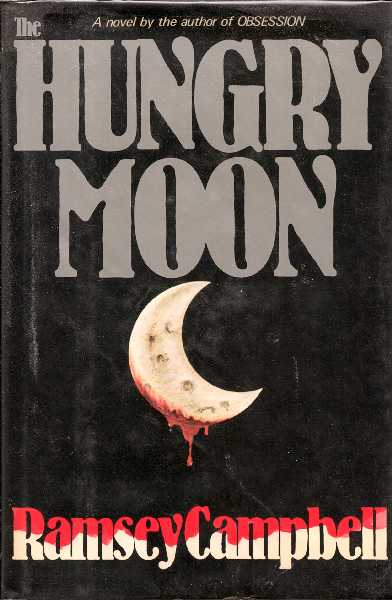
                • Cover of The Hungry Moon
                  The Hungry Moon

                  Ramsey Campbell · standalone novel · 1986

                  similar byfaith and religiondarkeerieour world+1 more

                  The Hungry Moon is a novel by Ramsey Campbell published in 1986.

                • Cover of The Sorrows of Satan
                  The Sorrows of Satan

                  Marie Corelli · standalone novel · 1895

                  similar byfaith and religionfantasydarkour worldbritish isles

                  The Sorrows of Satan is an 1895 Faustian novel by Marie Corelli. It is widely regarded as one of the world's first best-sellers – partly due to an upheaval in the system British libraries used to purchase their books, and partly due to its popular appeal. Roundly condemned by contemporary literary critics for Corelli's moralistic and prosaic style, it nonetheless had strong supporters, including Oscar Wilde and various members of royalty.

                • Cover of Waking the Moon
                  Waking the Moon

                  Elizabeth Hand · standalone novel · 1994

                  similar byfaith and religionfantasydarkeerie

                  Waking the Moon is a 1994 dark fantasy novel by American writer Elizabeth Hand. It was the winner of the James Tiptree, Jr. Award and the 1996 Mythopoeic Award for Adult Literature. It is set mainly in the University of the Archangels and St. John The Divine, a fictional university inspired by The Catholic University of America, mentioned in a few of Hand's novels.

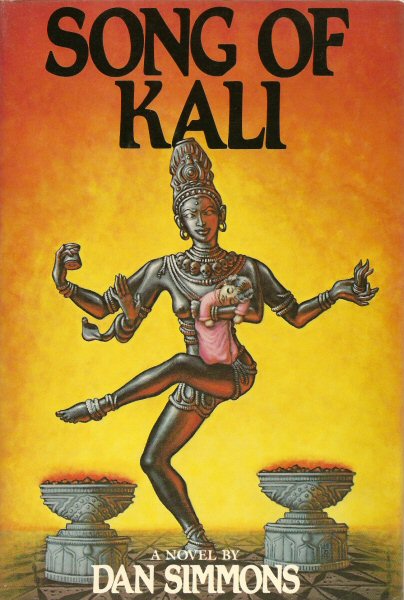
                • Cover of Song of Kali
                  Song of Kali

                  Dan Simmons · standalone novel · 1985

                  similar byfaith and religiondarkeerie+1 more

                  Song of Kali is a horror novel by American writer Dan Simmons, published in 1985. The story deals with an American intellectual who travels to Calcutta, India, where he becomes embroiled in mysterious and horrific events at the centre of which lies a cult of Kapalikas that worships Kali.

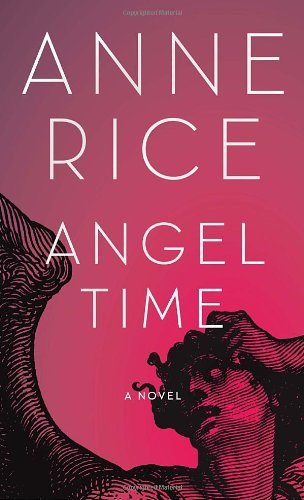
                • Cover of Songs of the Seraphim
                  Songs of the Seraphim

                  series · 2 books · 2009

                  completed

                  similar byfaith and religionfantasydark+1 more

                  Angel Time introduces Toby O'Dare, a contract killer given a chance at redemption when an angel recruits him to intervene in a medieval crisis, sending him back through history rather than forward. Anne Rice's Songs of the Seraphim continues with a second book, Of Love and Evil, following the same reluctant assassin-turned-angelic-agent into another past errand; the series stayed short, with no further volumes.

                • Cover of Mr. Weston's Good Wine
                  Mr. Weston's Good Wine

                  T. F. Powys · standalone novel · 1927

                  similar byfaith and religionfantasyearly 20th centurybritish isles

                  The wine merchant Weston arrives in an English village with his pickup truck and the Archangel Michael as his assistant. This arrival lifts the lid on the private lives of the villagers, who, with their sins, flaws, and weaknesses, seem called to a mini universal judgment.

                • Cover of Shadowmancer
                  Shadowmancer

                  series · 2 books · 2002

                  similar byfantasybritish isles+3 more

                  In G. P. Taylor's Shadowmancer, an evil clergyman, Reverend Obadiah Demurral, seeks two powerful amulets called the Keruvim that would let him command the elements and remake the world in his image. A band of young people in 18th-century Whitby race to stop him before he succeeds, in a story steeped in occult ritual and Christian mythology. The direct sequel, The Curse of Salamander Street, picks up where the first book leaves off with a new supernatural threat loose in London.

                • Cover of The Haunted Woman
                  The Haunted Woman

                  David Lindsay · standalone novel · 1922

                  similar byfantasyearly 20th centurydarkeeriebritish isles

                  The Haunted Woman is a dark, metaphysical fantasy novel by British writer David Lindsay. It was first published, somewhat cut, as a serial in The Daily News in 1921. It was first published in book form by Methuen & Co. Ltd., London, in 1922. The work supposedly marked Lindsay's attempt to write a more "commercial" novel after the initial failure of his first work, A Voyage to Arcturus (1920), though he began it before that work was published. It was reissued by Gollancz in 1947. It was republished by the Newcastle Publishing Company as the fourth volume of the Newcastle Forgotten Fantasy Library in March, 1975; the Newcastle edition was the first American edition. Later editions were issued by Borgo Press (1980), Canongate Books (1987), Wildside Press (2003), and Tartarus Press (2004).

                • Cover of The Magician
                  The Magician

                  W. Somerset Maugham · standalone novel · 1908

                  similar byfantasyearly 20th centurydarkeerieour world

                  A magician tries to create life.

                • Cover of Lost Horizon
                  Lost Horizon

                  James Hilton · standalone novel · 1933

                  similar byfaith and religionearly 20th century+1 more

                  Lost Horizon is a 1933 novel by the English writer James Hilton. The book was adapted into a film, also called Lost Horizon, in 1937 by director Frank Capra; and a musical film remake in 1973 by producer Ross Hunter with music by Burt Bacharach. It is the origin of Shangri-La, a fictional utopian lamasery located high in the mountains of Tibet.

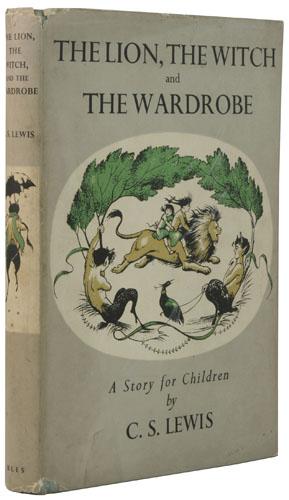
                • Cover of Narnia
                  Narnia

                  series · 26 books · 1950

                  part of Narnia Universe

                  similar byfantasy+2 more

                  The Chronicles of Narnia is a series of seven portal fantasy novels by British author C. S. Lewis. Illustrated by Pauline Baynes and originally published between 1950 and 1956, the series is set in the fictional realm of Narnia, a fantasy world of magic, mythical beasts, and talking animals. It narrates the adventures of various children who play central roles in the unfolding history of the Narnian world. Except in The Horse and His Boy, the protagonists are all children from the real world who are magically transported to Narnia, where they are sometimes called upon by the lion Aslan to protect Narnia from evil. The books span the entire history of Narnia, from its creation in The Magician's Nephew to its eventual destruction in The Last Battle.

                • Cover of Virgin
                  Virgin

                  James Patterson · standalone novel · 1980

                  similar byfaith and religionfantasyearly 20th century+1 more

                  WorldCat: The Blessed Virgin's deliverance of a prophecy to a peasant girl in Fatima in 1914 is followed years later by signs and omens including worldwide droughts and famines that signify its imminent fulfillment.

                • Cover of Sign for the Sacred
                  Sign for the Sacred

                  Storm Constantine · standalone novel · 1993

                  similar byfaith and religionfantasydark

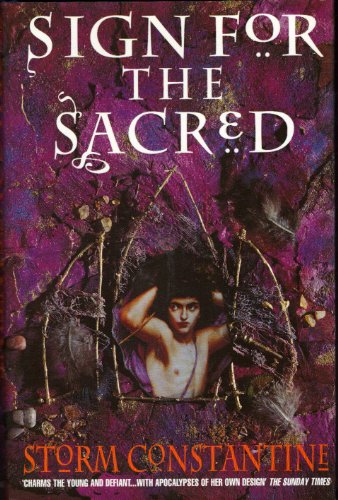
                  The Church of Ixmarity is under siege – the followers of the maverick prophet Resence Jeopardy are winning new converts daily and their heresy threatens the state itself, as well as the wealth and position of those who govern it, particularly the eccliesiarch, Wilfish Implexion. Implexion is determined to stamp out the Jeopardites by any means at his disposal, no matter how ruthless. But the Jeopardites are nomadic, flitting from sanctuary to sanctuary, constantly evading the forces of Ixmarity. Implexion is not alone in his determination to seek out the elusive heretic – four others are desperate in their desire to find Jeopardy... Lucein ... a former colleague of Resences Jeopardy, a vibrancer of the Church of Ixmarity, a man who would have dedicated his life to the dance in respectable slavery had it not been for the love of the prophet to be. Cleo...the child bride of a poisoner. When the beautiful Inky, one of Jeopardy’s illegitimate offspring, is brought to her house for disposal, she falls in love – with the boy and with his sire. Selilah and Trajan..brought together by death and disease. Delilah is orphaned by Rajan’s violent attack on her village, and she’s the only one ont prey to either his wrath or the pernicious plague he carries. Delilah promises to watch over Trajan as he returns to the sanctuary of the Jeopardite camp – he believes Resenence is his only possible saviour from the terrible curse he carries. But in finding Jeopardy all four questers are ultimately surprised by the nature of their success...

                • Cover of The Pilgrim's Regress
                  The Pilgrim's Regress

                  C. S. Lewis · standalone novel · 1933

                  similar byfaith and religionfantasyearly 20th century

                  The Pilgrim's Regress is a book of allegorical fiction by C. S. Lewis. This 1933 novel was Lewis's first published work of prose fiction, and his third piece of work to be published and first after he converted to Christianity. It charts the progress of a fictional character named John through a philosophical landscape in search of the Island of his desire. Lewis described the novel to his publisher as "a kind of Bunyan up to date," in reference to John Bunyan's 1678 novel The Pilgrim's Progress, recast with the politics, ideologies, philosophy, and aesthetic principles of the early 20th century. As such, the character struggles with the modern phoniness, hypocrisy, and intellectual vacancy of the Christian church, Communism, Fascism, and various philosophical and artistic movements.

                • Cover of Inferno
                  Inferno

                  series · 2 books · 1976

                  similar byfantasyfaith and religiondark

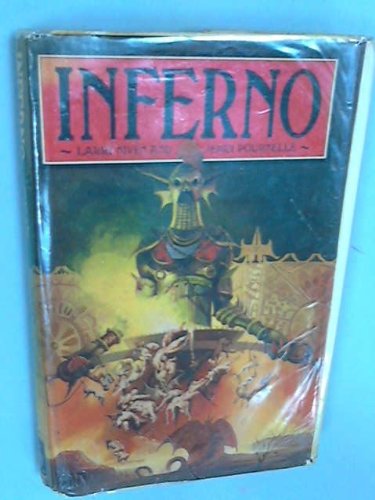
                  In Inferno, Larry Niven and Jerry Pournelle send a science fiction writer to his death and drop him into a modern-dress version of Dante's nine circles of Hell, where he must reason his way toward understanding why he has been damned. The 1976 novel was nominated for both the Hugo and Nebula awards, and the authors returned to the same character decades later in a sequel, Escape from Hell. Together the two books form a self-contained pair rather than an open-ended series.

                • Cover of Only Begotten Daughter
                  Only Begotten Daughter

                  James Morrow · standalone novel · 1990

                  similar byfaith and religionfantasyour world

                  Only Begotten Daughter is a 1990 fantasy novel by American writer James K. Morrow, setting the stage for his later Godhead Trilogy. The book shared the 1991 World Fantasy Award with Ellen Kushner's Thomas the Rhymer. It was also nominated for the Nebula Award for Best Novel in 1990, and both the Locus and John W. Campbell Memorial Awards in 1991.

                • Cover of Skellig
                  Skellig

                  David Almond · standalone novel · 1998

                  similar byfantasyeeriebritish isles+1 more

                  Skellig is a children's novel by the British author David Almond, published by Hodder in 1998. It was the Whitbread Children's Book of the Year and it won the Carnegie Medal from the Library Association, recognising the year's outstanding children's book by a British author. In 2007, it placed third in the "Carnegie of Carnegies", after Northern Lights and Tom's Midnight Garden. In the U.S., it was a runner up for the Michael L. Printz Award, which recognises one work of young adult fiction annually. Since publication, it has also been adapted into a play, an opera, and a film. In December of 2011, a prequel, My Name is Mina was published. William Blake's poems feature in the book, the play and the film.

                • Cover of Chime
                  Chime

                  Franny Billingsley · standalone novel · 2011

                  similar byfantasyearly 20th centuryeerieour worldbritish isles

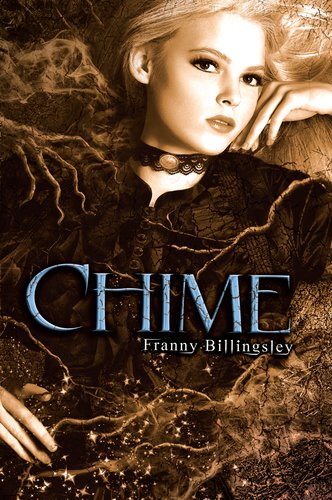
                  In the early twentieth century in Swampsea, seventeen-year-old Briony, who can see the spirits that haunt the marshes around their town, feels responsible for her twin sister's horrible injury until a young man enters their lives and exposes secrets that even Briony does not know about.

                • Cover of The Ceremonies
                  The Ceremonies

                  T. E. D. Klein · standalone novel · 1984

                  similar byfaith and religiondarkeerie+1 more

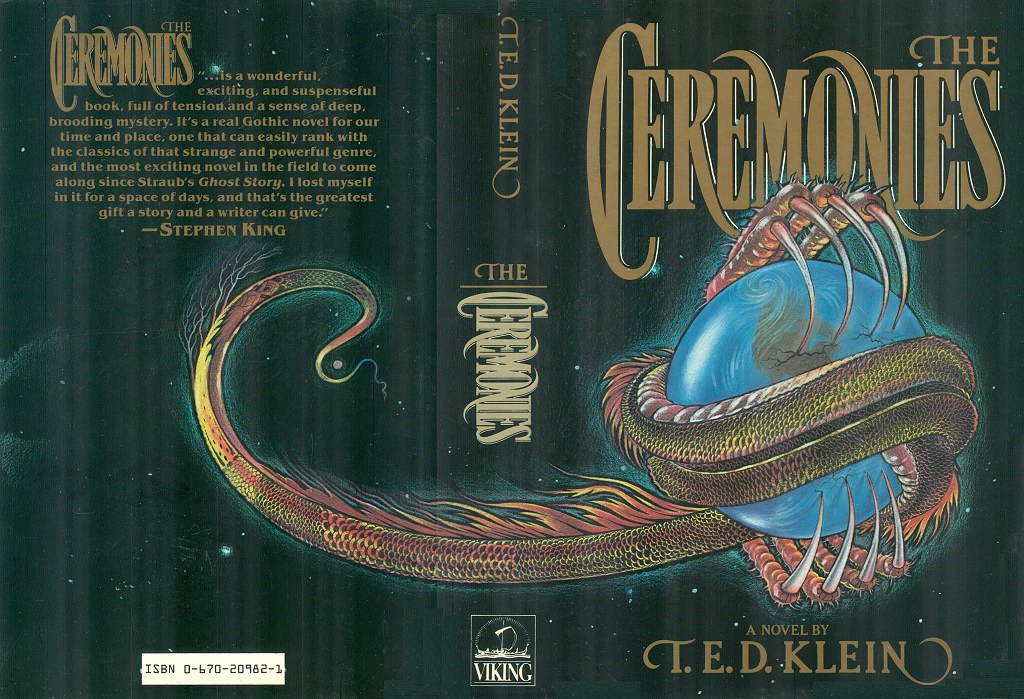
                  The Ceremonies is a novel by T. E. D. Klein published in 1984. The Ceremonies is an extension of Klein's earlier novella, "The Events at Poroth Farm", which he released in 1972.

                • Cover of The Human Chord
                  The Human Chord

                  Algernon Blackwood · standalone novel · 1910

                  similar byfantasyearly 20th centuryeerieour worldbritish isles

                  "Scientific fantasy, dealing with the psychic value of sounds." – The British Science-Fiction Bibliography, 1937.