Loreful
HomeDiscover
Search series, authors…⌘K
Loreful

Reading orders for SF/F series and shared universes — with your place kept in every one.

Explore

UniversesSeriesWorksAuthorsAtlas

Help

FAQAboutSite map

Account & legal

Sign inCreate accountPrivacyTerms

Data

Built on ISFDB, Wikipedia, Wikidata and Open Library. Curated reading orders carry their reasoning on the page; the rest follow publication order. Data sources & licenses

© Loreful · data: ISFDB · CC BY

More like Destroyed

but

Mood

The mood the book leaves you in.

  • The reading experience is propelled by journeys, exploration, and physical risk; excitement and forward momentum dominate over dread or introspection.
  • Joy and loss are deliberately mixed; the resolution grants characters something real while taking something else away, leaving warmth and sorrow together.
  • The book demands work from the reader — dense prose, difficult structure, unfamiliar ideas, or morally uncomfortable material — as part of its intended effect.
  • Grim events, cruelty, or despair dominate the atmosphere, and the book does not soften them with comfort or comic relief.
  • The atmosphere is quietly unsettling — wrongness, unease, and the uncanny pervade the book without necessarily escalating into overt horror.
  • The book is built to move the reader; character feeling is foregrounded and major scenes aim at a strong emotional response.
  • Humor is a primary aim and the prose plays for laughs — comic situations, wit, or dialogue produce sustained comedy, not occasional levity.
  • The book insists that things can improve; effort and decency are shown to matter, and the arc bends toward better outcomes even through hardship.
  • The book teaches as it goes — real facts, history, science, or craft are conveyed in enough depth that learning is part of the reading experience.
  • The book is designed to uplift and motivate, presenting perseverance or achievement in a way that invites the reader to aspire or act.
  • The overall register is cheerful and easygoing; stakes are kept gentle and the book avoids dwelling on pain or dread.
  • Withheld information drives the experience; the book sustains enigmas and secrets the reader wants resolved, whatever its genre.
  • The book is contemplative and inward-looking, giving more weight to thought, memory, and meaning than to external events.
  • The book works as comfort reading — low tension, a soothing pace, and an atmosphere the reader can unwind in.
  • Grief, loss, or melancholy set the dominant register, and the book lets sorrow stand rather than resolving it into comfort.
  • Sustained suspense is the point; the book keeps the reader braced for what happens next through danger, pressure, or impending revelation.
  • Playful invention and charm define the register — fanciful conceits, light absurdity, and a narration that delights in its own oddity.

About

What the story runs on.

  • Stories in which extraterrestrial beings are central — as characters, cultures, or the object of the plot.
  • Stories about venturing into space to explore — survey missions, astronauts, and the frontier of the unknown beyond Earth.
  • Stories structured as a quest — a journey undertaken to find, deliver, or destroy something of great import.
  • Stories in which staying alive against nature, catastrophe, or scarcity is the central problem.
  • Stories of lovers kept apart by law, family, faith, or station, where the obstacle to love is the plot.
  • Stories of growing up — a young protagonist crossing from childhood into adult knowledge and responsibility.
  • Stories about who a character truly is — self-discovery, doubled lives, and the search for a self.
  • Stories about mourning — living through the death of a loved one and what loss does to the survivors.
  • Stories in which a buried family truth — hidden parentage, crimes, or shames — surfaces and reorders the present.
  • Stories driven by maneuvering for power — factions, conspiracies, and statecraft conducted in shadow.
  • Stories in which war itself is the subject — combat, occupation, and what warfare does to soldiers and civilians.
  • Stories organized around investigating a killing — the case, the clues, and the pursuit of the killer, in any genre's clothing.

Shelf

Where it sits in the library.

    • Fiction built on magic or other supernatural elements that have no scientific explanation.
    • Secondary-world fantasy at large scale, where the fate of nations or the world turns on the protagonists' struggle.
    • Fantasy set in a recognizably modern city or contemporary world where the supernatural intrudes on everyday life.
    • Fantasy that blends in horror's atmosphere and imagery, keeping a fantastical frame around grim or frightening material.
    • Action-driven fantasy following warriors or rogues with personal stakes against sorcerous threats, rather than world-spanning conflicts.
    • Fantasy set in a real historical period or a close analogue of one, with magic woven into the era.
    • Fantasy in which protagonists cross from the ordinary world into another world through a portal or similar passage.
    • Fiction that retells or reworks a traditional fairy tale in a new form or setting.
    • Fantasy drawing directly on myths, legends, and folklore, retelling them or building on their figures and logic.
    • Fantasy of ghosts, vampires, shapeshifters, psychics, and similar phenomena, usually set in an otherwise ordinary world.
    • Fiction mixing science-fictional trappings with overtly magical or impossible elements in one setting.
    • Low-stakes fantasy emphasizing comfort, community, and everyday pleasures over conflict and peril.
    • Speculative fiction of pervasive moral ambiguity, violence, and cynicism that rejects heroic conventions — fantasy and SF alike.
      • Fiction that extrapolates from science and technology — future societies, space travel, or speculative inventions — within at least nominally natural laws.
      • Science fiction of interstellar scope — starships, galactic polities, and adventure across star systems.
      • Science fiction committed to scientific rigor, where technical plausibility constrains the story.
      • Science fiction centered on armed forces and warfare, told largely from a military point of view.
      • Science fiction of networked, corporate-dominated near futures, pairing high technology with social decay.
      • Science fiction styled on nineteenth-century steam-powered technology, often in a Victorian or pseudo-Victorian setting.
      • Fiction depicting an oppressive or catastrophic society, presented as a warning.
      • Fiction set after civilization's collapse, following survivors in the ruins of the old world.
      • Fiction in which characters move between past and future, and the mechanics or consequences of that travel drive the plot.
      • Fiction exploring a world where a historical event went differently and history diverged from ours.
      • Science fiction about humanity's first encounter and communication with an alien intelligence.
      • Science fiction in which extraterrestrial forces attack or occupy Earth and humanity resists.
      • Fiction whose primary aim is to frighten or unsettle the reader through dread, menace, or the monstrous.
      • Horror of vast, indifferent, incomprehensible entities before which humanity is insignificant, in the Lovecraft tradition.
      • Horror of decaying houses, buried family secrets, and oppressive atmosphere in the Gothic literary tradition.
      • Horror centered on hauntings and the returning dead.
      • Horror located in the mind — paranoia, obsession, and unreliable perception rather than external monsters.
      • Horror built around the reanimated dead and survival amid their outbreaks.
      • Horror defined by explicit, transgressive gore that refuses to cut away from violence.
      • Speculative fiction of the strange and uncanny that resists both natural explanation and standard genre categories.
      • Fiction organized around solving a crime or puzzle, typically following an investigator toward the identification of a culprit.
      • A puzzle-first mystery that lays out clues so the culprit's identity can be deduced before the reveal.
      • Crime fiction of moral ambiguity, fatalism, and hard-edged style, set among the corrupt and the doomed.
      • A mystery following the realistic routines of police work — forensics, interviews, and case-building.
      • A gentle mystery with an amateur sleuth, a small community, and violence kept off the page.
      • A mystery set in a past era, where the investigation works within that period's methods and society.
      • Fast-paced fiction driven by imminent danger, pursuit, or high-stakes conspiracy, built to sustain tension.
      • A thriller of espionage — agents, tradecraft, and intelligence services in conflict.
      • A thriller centered on lawyers and the courtroom, where litigation carries the suspense.
      • A thriller driven by detailed contemporary or near-future technology, often military or scientific.
      • A thriller whose tension comes from mental states and manipulation between characters rather than external action.
      • Fiction whose central plot is a romantic relationship and its development toward an emotionally satisfying resolution.
      • Romance in which one or both partners are supernatural beings, blending fantasy elements into the love story.
      • A fantasy-romance hybrid in which the romantic arc and the fantasy plot carry equal weight.
      • Romance set in a past era, with courtship shaped by the period's society and manners.
      • Romance set in the present day, without supernatural or historical elements.
      • Fiction set in a real past period, where the historical setting materially shapes characters and events.
        • General and literary fiction emphasizing prose style, character interiority, or formal ambition over genre plot conventions.
        • Fiction in a realistic world where magical events occur and are treated as ordinary, in the tradition of Latin American literature.
        • Fiction that ridicules people, institutions, or society in order to criticize them.
        • Fiction of dreamlike, irrational imagery and logic that breaks from realistic representation.
        • Fiction that plays with narrative convention through metafiction, fragmentation, and self-reference.
        • Fiction propelled by journeys, exploration, and physical peril, where action and survival carry the plot.
        • Adventure fiction of ships and seafaring — naval engagements, voyages, and life at sea.
        • Fiction of the American frontier West — gunmen, ranchers, and lawmen, typically in the late nineteenth century.
        • Fiction centered on soldiers, campaigns, and the experience of warfare, historical or imagined.
          • Fiction written primarily to amuse, using comedic situations, wit, or parody as its organizing principle.
            • Multi-generational fiction following a family or dynasty across decades, with inheritance and kinship as the through-line.
              • Fiction whose world runs on explicit game mechanics — levels, stats, and skills that characters can see and exploit.
                • Fiction about costumed or superpowered heroes and their conflicts with comparable villains.

                Practical

                How long a commitment, whether it stands alone, and whether it has finished.

                Tap a chip to ask for it · tap again to rule it out · once more to clear. Numbers show what would be left.

                • Cover of The Host
                  The Host

                  Stephenie Meyer · standalone novel · 2008

                  similar byidentityemotionalscience fictionromance

                  The earth has been invaded by a species that take over the minds of their human hosts while leaving their bodies intact, and most of humanity has succumbed. But Melanie Stryder refuses to fade away. Wanderer, the invading "soul" who has been given Melanie's body, knew about the challenges of living inside a human: the overwhelming emotions, the too vivid memories. But there was one difficulty Wanderer didn't expect: the former tenant of her body refusing to relinquish possession of her mind. Melanie fills Wanderer's thoughts with visions of the man Melanie loves--Jared, a human who still lives in hiding. Unable to separate herself from her body's desires, Wanderer yearns for a man she's never met. As outside forces make Wanderer and Melanie unwilling allies, they set off to search for the man they both love.--From publisher description.

                • Cover of Flowers for Algernon
                  Flowers for Algernon

                  Daniel Keyes · standalone novel · 1966

                  similar byidentityemotionalscience fiction

                  A man with a low IQ becomes the subject of an experimental medical procedure which raises his IQ well over genius level.

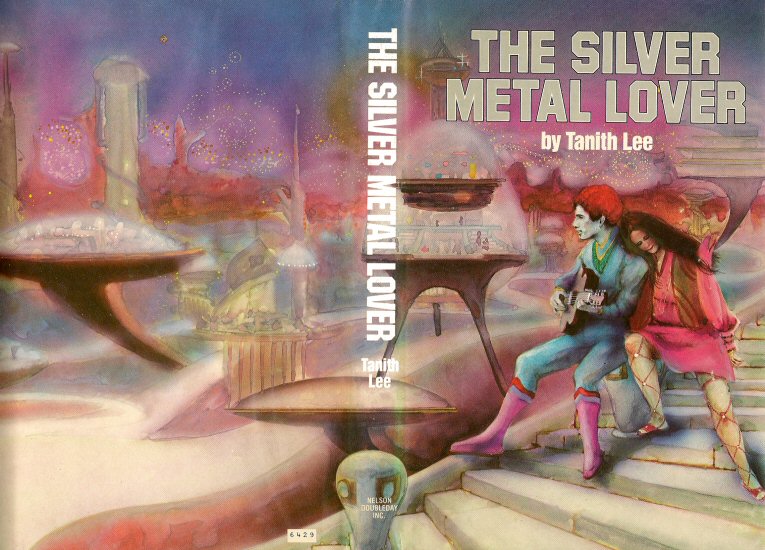
                • Cover of Silver Metal Lover
                  Silver Metal Lover

                  series · 2 books · 1981

                  completed

                  similar byidentityemotionalscience fictionromance

                  The S.I.L.V.E.R. series is a fantasy novel series by Tanith Lee. The Silver Metal Lover, published in 1981, is the first in the series. Metallic Love, published in 2005, is the second novel.

                • Cover of Juliette / Shatter Me
                  Juliette / Shatter Me

                  series · 16 books · 2011

                  similar byscience fiction+3 more

                  Tahereh Mafi's Shatter Me series follows Juliette, a teenager whose touch is lethally dangerous, in a dystopian future. The debut novel, Shatter Me (2011), is written in a fragmented, diary-like style with crossed-out lines reflecting its narrator's state of mind; the series has since grown to seven novels plus five companion novellas.

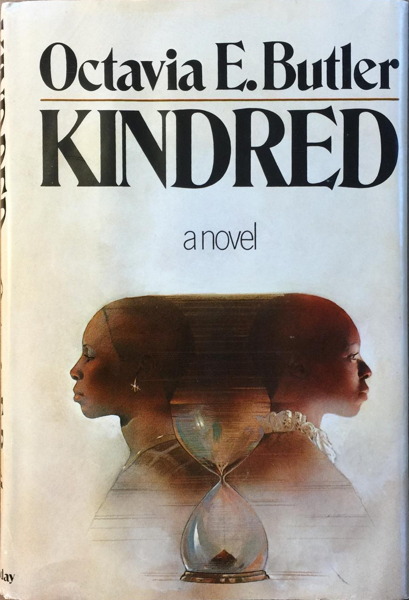
                • Cover of Kindred
                  Kindred

                  Octavia E. Butler · standalone novel · 1979

                  similar byemotionalscience fiction+1 more

                  Kindred (1979) is a novel by American writer Octavia E. Butler that incorporates time travel and is modeled on slave narratives. Widely popular, it has frequently been chosen as a text by community-wide reading programs and book organizations, and for high school and college courses.

                • Cover of The Dreaming Jewels
                  The Dreaming Jewels

                  Theodore Sturgeon · standalone novel · 1950

                  similar byidentityemotionalscience fiction

                  The Dreaming Jewels (1950), also known as The Synthetic Man, is a science fiction novel by American writer Theodore Sturgeon. It was his first published novel.

                • Cover of Winter's Orbit
                  Winter's Orbit

                  series · 2 books · 2021

                  similar byscience fiction+2 more

                • Cover of Xenogenesis / Lilith's Brood
                  Xenogenesis / Lilith's Brood

                  series · 4 books · 1987

                  completed

                  similar byscience fiction+1 more

                  Lilith's Brood, previously known as the Xenogenesis Trilogy, is a collection of three science fiction works by Octavia E. Butler: Dawn, Adulthood Rites, and Imago.

                • Cover of The Program
                  The Program

                  series · 7 books · 2013

                  similar byidentityscience fiction

                • Cover of One Last Stop
                  One Last Stop

                  Casey McQuiston · standalone novel · 2021

                  similar byemotionalscience fictionromance+1 more

                  One Last Stop is a 2021 LGBTQ romance novel written by American author Casey McQuiston. The novel is about a woman named August Landry, a cynical pseudo detective, who finds love in a woman named Jane Su she meets on a subway, a punk butch lesbian from the 1970s who has been misplaced in time and is trapped on the subway.

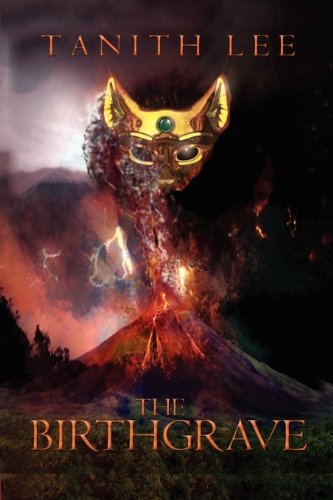
                • Cover of Birthgrave
                  Birthgrave

                  series · 3 books · 1975

                  completed

                  similar byidentity

                  Tanith Lee's Birthgrave trilogy (The Birthgrave, Vazkor Son of Vazkor, Quest for the White Witch, 1975-1978) opens with an amnesiac woman waking inside a volcano with no memory of who she is, and follows her journey through a brutal, quasi-medieval world in search of her identity, wielding strange powers she doesn't understand along the way. She eventually learns she is one of the last of the Old Ones, an ancient, nearly extinct people, and must reckon with the harm her own vanished civilization once did.

                • Cover of Experimental Heart
                  Experimental Heart

                  series · 6 books · 2013

                  similar by+2 more

                • Cover of No Enemy But Time
                  No Enemy But Time

                  Michael Bishop · standalone novel · 1982

                  similar byemotionalscience fiction+1 more

                  No Enemy But Time is a 1982 science fiction novel by Michael Bishop. It won the 1982 Nebula Award for Best Novel, and was also nominated for the 1983 John W. Campbell Memorial Award. It was included in David Pringle's book Science Fiction: The 100 Best Novels.

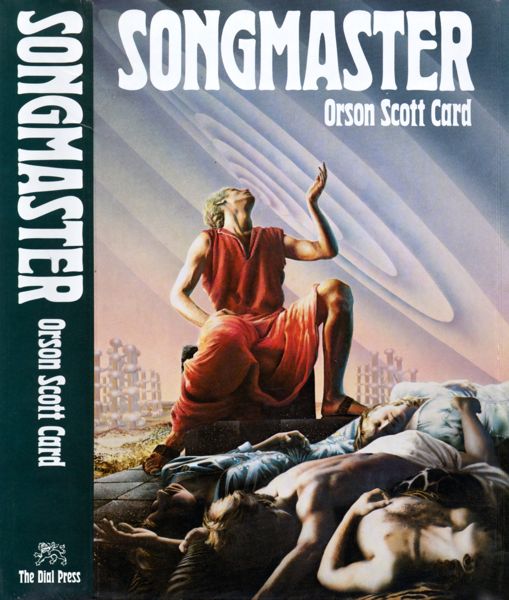
                • Cover of Songmaster
                  Songmaster

                  series · 3 books · 1978

                  similar byscience fiction+2 more

                  Ansset is a boy with a singing voice so perfect it can reach straight into people's emotions, raised from infancy at the Songhouse to become a 'Songbird' -- a living gift bestowed on the powerful until he comes of age. Orson Scott Card's Songmaster follows Ansset once he's given to the ambitious young emperor of a Rome-like galactic empire, where his voice becomes a tool of influence and vulnerability in equally dangerous measure. The novel grew out of Card's earlier stories 'Mikal's Songbird' and 'Songhouse,' which the catalog also lists under this same series.

                • Cover of The Speed of Dark
                  The Speed of Dark

                  Elizabeth Moon · standalone novel · 2002

                  similar byidentityemotionalscience fiction

                  From the Penguin Random House website In the near future, disease will be a condition of the past. Most genetic defects will be removed at birth; the remaining during infancy. Lou Arrendale, a high-functioning autistic adult, is a member of the lost generation, born at the wrong time to reap the rewards of medical science. He lives a low-key, independent life. But then he is offered a chance to try a brand-new experimental "cure" for his condition. With this treatment Lou would think and act and be just like everyone else. But if he was suddenly free of autism, would he still be himself? Would he still love the same classical music — with its complications and resolutions? Would he still see the same colors and patterns in the world—shades and hues that others cannot see? Most important, would he still love Marjory, a woman who may never be able to reciprocate his feelings? Now Lou must decide if he should submit to a surgery that might completely change the way he views the world ... and the very essence of who he is.

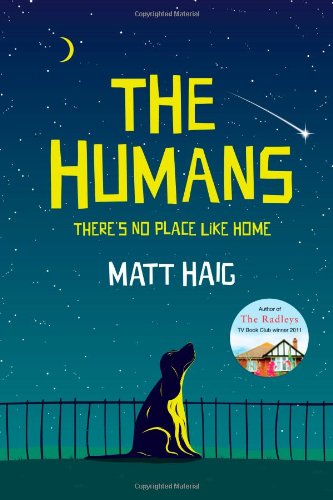
                • Cover of The Humans
                  The Humans

                  Matt Haig · standalone novel · 2013

                  similar byidentityemotionalscience fiction

                  When an extraterrestrial arrives on Earth, his first impressions of humans are less than positive. Taking the form of Professor Andrew Martin at Cambridge University, the visitor is eager to complete his task and hurry back to his own utopian planet. Disgusted by the way humans look, what they eat, their capacity for murder and war, he is equally baffled by the concepts of love and family. But as time goes on, he starts to reconsider.

                • Cover of Renegades (Marissa Meyer)
                  Renegades (Marissa Meyer)

                  series · 3 books · 2017

                  similar byidentityscience fiction+1 more

                  Renegades is set in Gatlon City after a civil war between the superheroic Renegades and the villainous Anarchists, and follows Nova, a young woman with the power to put people to sleep by touch, as she infiltrates the Renegades as a spy for her uncle's Anarchists and falls for Adrian, the adopted son of the Renegades' leaders. Marissa Meyer's trilogy, continuing through Archenemies and Supernova, plays the two factions' history against the leads' divided loyalties; Meyer has said she doesn't plan to extend the series further.

                • Cover of Outlander (Diana Gabaldon)
                  Outlander (Diana Gabaldon)

                  series · 26 books · 1991

                  similar by+2 more

                  Outlander is a series of historical fantasy novels by American author Diana Gabaldon. Gabaldon began the first volume of the series, Outlander, in the late 1980s; it was published in 1991. She has published nine out of a planned ten volumes. The ninth novel in the series, Go Tell the Bees That I Am Gone, was released on November 23, 2021.

                • Cover of Matched
                  Matched

                  series · 3 books · 2010

                  similar byscience fiction+3 more

                  Ally Condie's dystopian trilogy follows Cassia, a teenager in a rigidly controlled Society that assigns citizens' spouses, careers, and even manner of death, after a glitch shows her a second face at her own Matching ceremony. Across Matched, Crossed, and Reached, her quiet doubt about the Society's choices grows into open resistance against the system that shaped her whole life.

                • Cover of Death-Cast
                  Death-Cast

                  series · 3 books · 2017

                  similar byemotionalscience fiction+2 more

                  They Both Die at the End is set in a world where a service called Death-Cast calls people on the morning of the day they will die, and follows two strangers who connect through an app built for exactly that situation, choosing to spend their last day together. Adam Silvera's novel became a viral hit years after its original release, later gaining a prequel and further entries exploring other characters within the same premise. The series stays within a single fixed speculative conceit rather than expanding into a wider plot.

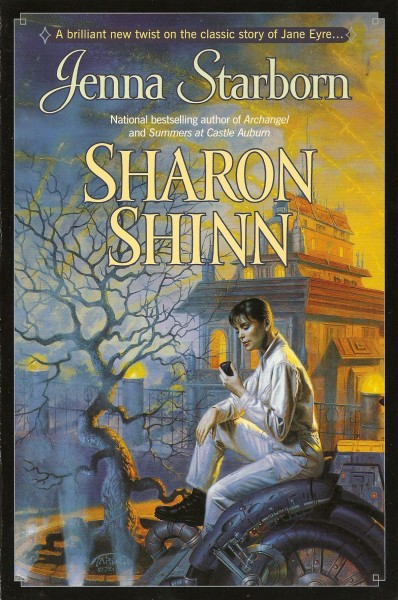
                • Cover of Jenna Starborn
                  Jenna Starborn

                  Sharon Shinn · standalone novel · 2002

                  similar byidentityemotionalscience fictionromance

                  From the Author's Website: "Jane Eyre retold as a science fiction tale. Jenna is created in the gen tanks, repudiated by the woman who commissioned her, educated in a scientific school, and employed as a nuclear technician on a remote, lonely planet. There she falls in love with the brusque and changeable owner of a mining estate—but he has hidden away a wife who is not so much mad as broken."

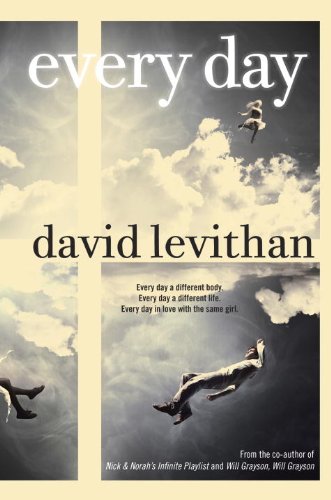
                • Cover of Every Day
                  Every Day

                  series · 3 books · 2012

                  similar byidentityemotionalromance

                  David Levithan's Every Day follows A, a consciousness with no fixed body who wakes each morning inside a different person's life, and who falls for a girl named Rhiannon despite the impossibility of ever staying in one body to be with her. The story continues from other perspectives in Another Day and, years later, Someday.

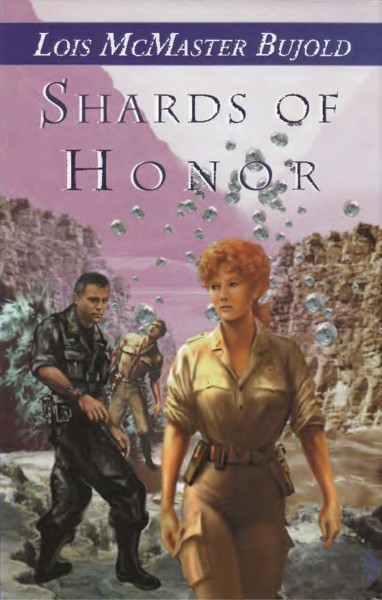
                • Cover of Vorkosigan
                  Vorkosigan

                  universe · 27 books · 1986

                  Start hereShards of Honor · Chronological start

                  similar byscience fiction

                  On Barrayar they will tell you that a man is measured by his forebears and the straightness of his spine — which is a difficulty for Miles Vorkosigan, born brittle-boned and half-height into the highest military caste of a planet that not long ago left such infants on the hillside to die. Beyond his backwater lies the wormhole nexus: a scatter of human worlds strung along unstable jump-routes, where a blood-and-honor warrior aristocracy, a coolly egalitarian utopia, and a hundred lesser polities trade, spy, and go to war. Miles cannot pass the physicals. So he builds himself a fleet, a false name, and a career out of sheer talky brilliance and a constitutional refusal to sit still. Lois McMaster Bujold has spent decades on this future, and it reads as one long life more than a franchise. It opens a generation early with Miles's mother, Cordelia — a level-headed survey captain from Beta Colony who marries into Barrayaran politics — before handing the saga to Miles himself, from teenage con-artist admiral to Imperial troubleshooter, and eventually to the next generation. Around that spine stand companion novels set elsewhere in the nexus: Falling Free, among the engineered zero-gee "quaddies"; Ethan of Athos; and the later books. Many volumes are gathered into omnibuses; several have taken Hugo Awards. The pleasure is voice and heart more than hardware — comedies of intrigue that turn, without warning, into hard questions about disability, ambition, biology as destiny, and what honor costs the people who keep it. Newcomers have two clean doors: Shards of Honor (paired with Barrayar as Cordelia's Honor) for the chronological start, or The Warrior's Apprentice to meet Miles at full velocity.

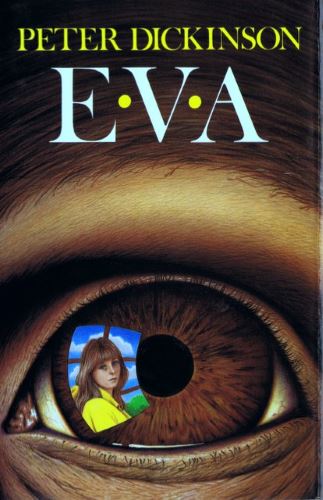
                • Cover of Eva
                  Eva

                  Peter Dickinson · standalone novel · 1988

                  similar byidentityemotionalscience fiction

                  From the back cover: "Thirteen-year-old Eva wakes up in the hospital unable to remember anything since the picnic on the beach. Her mother leans over the bed and begins to explain. A traffic accident, a long coma... But there is something, Eva senses, she is not being told, some other price she must pay to be alive at all. What have they done, with their amazing medical technology, to save her?"