More like Devil's Forest
anchored on:contemporary
but
- Jerusalem's Lot
series3 books1975
similar byhorroreerieour worldcontemporarytense
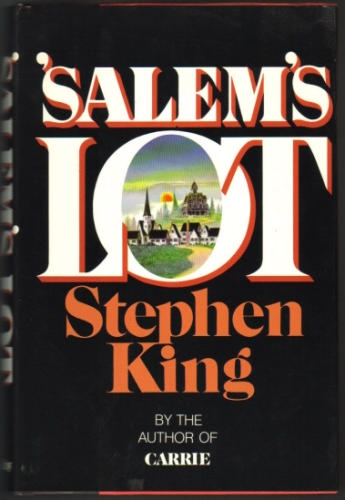
Stephen King's 1975 novel 'Salem's Lot follows writer Ben Mears as he returns to his childhood town of Jerusalem's Lot, Maine, only to discover that its residents are being turned into vampires by a newly arrived stranger. It transplants Gothic vampire horror into a small New England community, tracking that community's collapse under a supernatural siege. It is a single, self-contained novel.
- Bod Owens
series3 books2007
similar byeerieour worldcontemporary+1 more
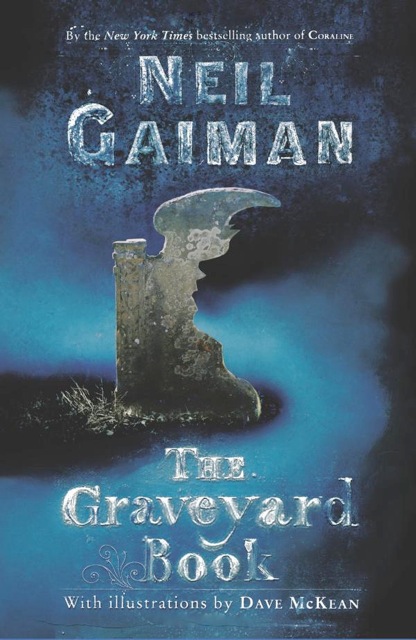
The Graveyard Book follows Nobody "Bod" Owens, a toddler who escapes the murder of his family and is raised among the ghosts of an old English graveyard, absorbing their otherworldly customs while a threat from his past waits beyond the gates. Neil Gaiman's 2008 novel won both the Newbery and Carnegie Medals, and illustrator P. Craig Russell later adapted it into a two-volume graphic novel. Bod's story spans the original novel and that graphic-novel retelling rather than continuing in a prose sequel.
- Southern Reach Trilogy
series4 books2014
similar byhorroreerieour worldcontemporary+1 more
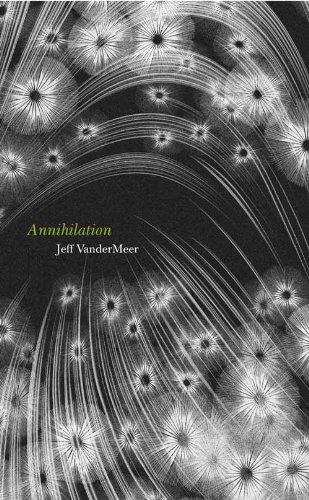
The Southern Reach Series is a series of novels by the American author Jeff VanderMeer first published in 2014—Annihilation, Authority, Acceptance, and Absolution. The series takes its name from the secret agency that is central to the plot. In 2013, Paramount Pictures bought the movie rights for the series, and a film adaptation of Annihilation was made with Alex Garland as writer-director. The film was released in 2018. The most recent book in the series, Absolution, was released on 22 October 2024.
- The Ocean at the End of the Lane
Neil Gaimanstandalone novel2013
similar byeerieour worldcontemporary+1 more
A seven year old farm boy becomes friends with an eleven year old neighbor girl, who he discovers is ancient and powerful and intervenes when a nonhuman entity attempts to make a home in earthly reality.
- Goosebumps
universe234 books1992
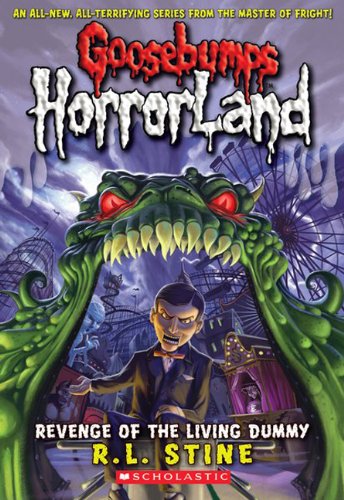
Start hereRevenge of the Living Dummy · The connected HorrorLand story
similar byhorrorour worldcontemporary+2 more
Reader beware — you're in for a scare. That promise has been kept, book after book, since a boy first knocked on the door of the Dead House and found the whole neighborhood grinning too widely. Goosebumps is R. L. Stine's carnival of small-town dread, where the horror is always sized just right for a kid: a haunted ventriloquist dummy, a camera that photographs disasters before they happen, a mask that won't come off, a basement that hums. Each book is its own self-contained nightmare, narrated by an ordinary boy or girl whose ordinary street has quietly turned against them — and every one snaps shut on a twist that pulls the rug out one last time before the lights come up. The shelf is deep. The original run of paperbacks gave way to Series 2000, then the branching, choose-your-doom gamebooks of Give Yourself Goosebumps, the story-collections Tales to Give You Goosebumps, and villain showcases in Most Wanted. HorrorLand strung the standalones into a single running arc set inside a monstrous theme park, and SlappyWorld and House of Shivers keep the lights flickering for new readers, hosted by Slappy, the wooden fiend who considers himself the star of the whole show. The tone is mock-scary and knowing — spooky enough to thrill, silly enough to laugh off before bed, always short and always cliffhung. No reading order binds them; open any cover. Newcomers usually meet the dummy first, in Night of the Living Dummy, or start where it all began, in Welcome to Dead House.
- Rosemary Reilly
series2 books1967
completed
similar byhorrortense+3 more
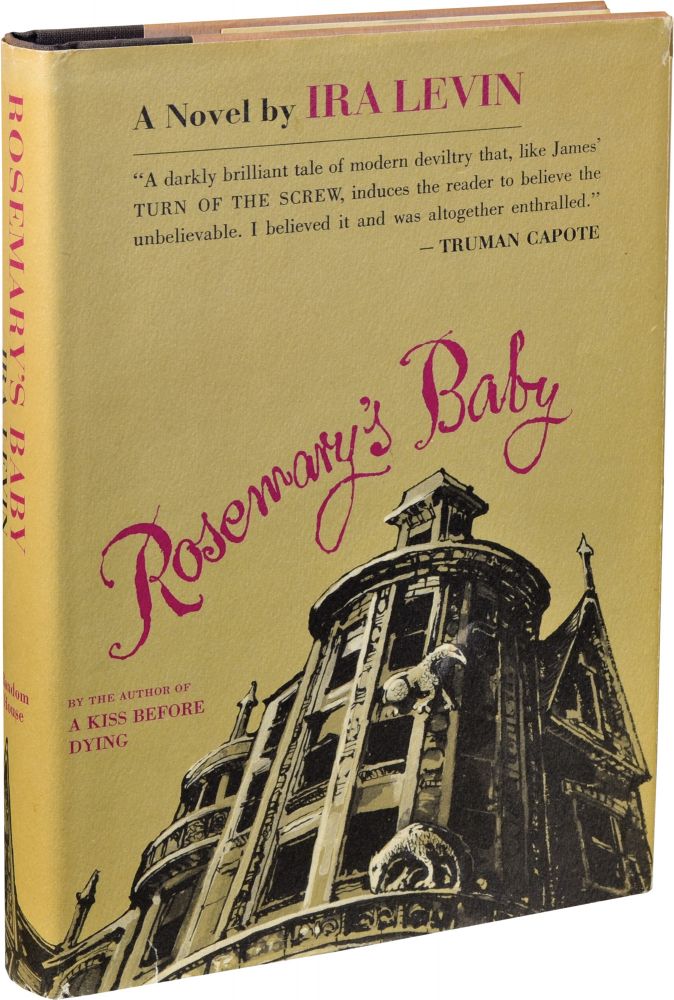
Rosemary's Baby follows a young wife in a Gothic Manhattan apartment building who grows increasingly convinced that her elderly neighbors, and even her own husband, are part of a conspiracy surrounding her pregnancy. Ira Levin returned to the character thirty years later in the 1997 sequel Son of Rosemary. Together the two novels form a short, self-contained horror series about faith, control, and motherhood.
- Dead Lines
Greg Bearstandalone novel2004
similar byhorroreerieour worldcontemporary+1 more
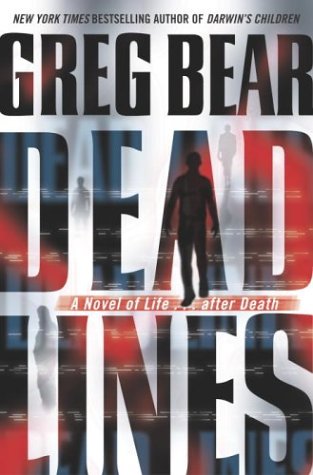
From the flaps of the Ballantine first edition: "For the last two years, Peter Russell has mourned the death of one of his twin daughters - who was just ten when she was murdered. Recent news of his best friend's fatal heart attack has now come as another devastating blow. Divorced, despondent, and going nowhere in his career, Peter fears his life is circling the drain. Then Trans comes along. The brainchild of an upstart telecom company, Trans is (as its name suggests) a transcendent marvel, a sleek, handheld interpersonal communication device capable of flawless operation anywhere in the world, at any time. "A cell phone, but not" - transmitting with crystal clarity across a newly discovered, never-utilized bandwidth... and poised to spark a new-technology revolution. When its creators offer Peter a position on their team, it should be a golden opportunity for him. If only he wasn't seemingly going mad. Everywhere Peter turns, inexplicable apparitions are walking before him or reaching out in torment. After a chilling encounter with his own lost child he begins to grasp the terrifying truth: Trans is a Pandora's box that has tapped into a frequency not of this world... but of the next. And now, via this open channel to oblivion, the dead have gained access to the living. For Peter, and for humankind, a long shadowy night of the soul has descended, bringing with it the stuff of a horrifying nightmare from which they may never awaken."
- Fear
L. Ron Hubbardstandalone novel1951
similar byhorroreerieour worldcontemporarytense
Fear is a psychological thriller-horror novella by American writer L. Ron Hubbard, which first appeared in the magazine Unknown Fantasy Fiction in July 1940.
- Ancient Images
Ramsey Campbellstandalone novel1989
similar byhorroreerieour worldcontemporarytense
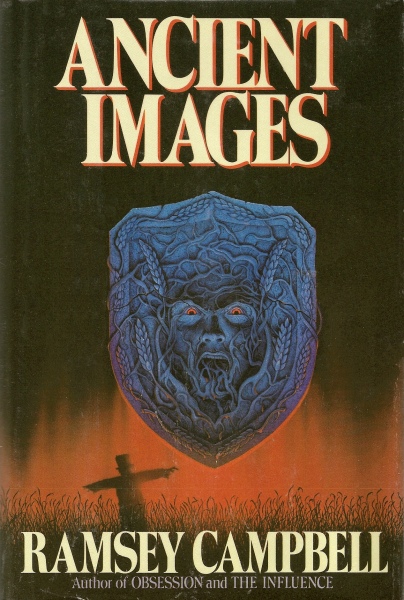
A lost horror film holds the key to terrifying secrets. The legends have persisted for decades of a lost horror film starring Boris Karloff and Bela Lugosi that was never released. Rumor has it that, for reasons long forgotten, powerful forces suppressed the film and burned all known prints. Nobody now living has seen the finished film. But that might no longer be true… Film researcher Sandy Allan is invited to a screening of a newly-discovered sole-surviving print, but then the film disappears and the real horror begins. Sandy’s search for the film leads her to Redfield, a rural community known its rich soil, fertilized by blood from an ancient massacre. But Redfield guards its secrets closely, with good reason. During every step of her search, Sandy is watched, shadowed by strange figures. Is it paranoia, or is someone—or something—determined to keep the lost film and the secrets it reveals buried forever?
- Nobody True
James Herbertstandalone novel2003
similar byour worldcontemporarytense+2 more
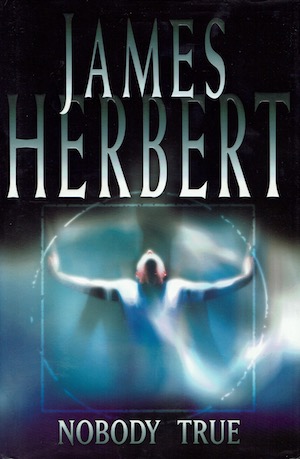
Returning from an out-of-body experience only to discover that he has been murdered, James True suspects the work of a serial killer who has been terrorizing the city and sets out in spirit form to discover the truth.
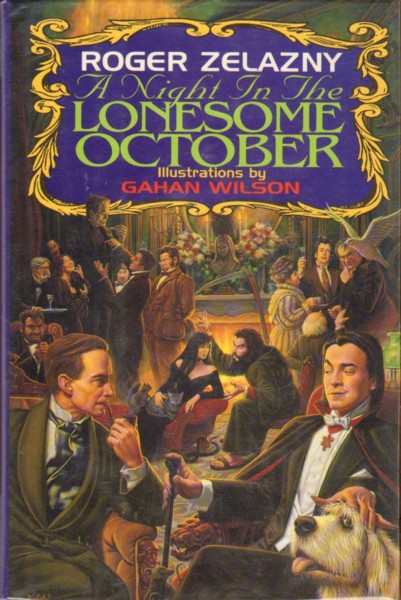
- A Night in the Lonesome October
Roger Zelaznystandalone novel1993
similar byhorroreerieour worldcontemporary
A Night in the Lonesome October is a novel by American writer Roger Zelazny published in 1993, near the end of his life. It was his final book, and one of his five personal favorites.
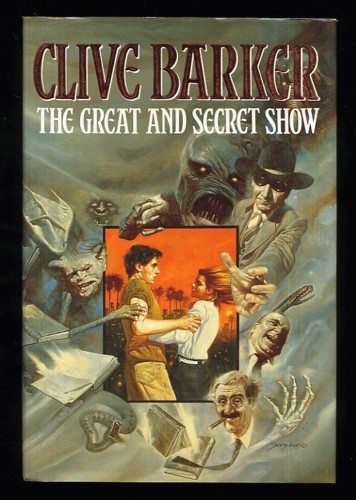
- Book of the Art
series3 books1989
similar byhorroreeriecontemporary+1 more
The Art was meant to be a trilogy about a hidden order guarding the boundary between our world and Quiddity, a dream-sea shared by all sleeping minds, but Clive Barker only completed two of its three volumes. The Great and Secret Show follows a decades-long feud between two men who discover Quiddity's power - one seeking to harness it, the other to protect it - with consequences that distort reality itself; Everville continues the story a generation later. The planned third volume was never published.
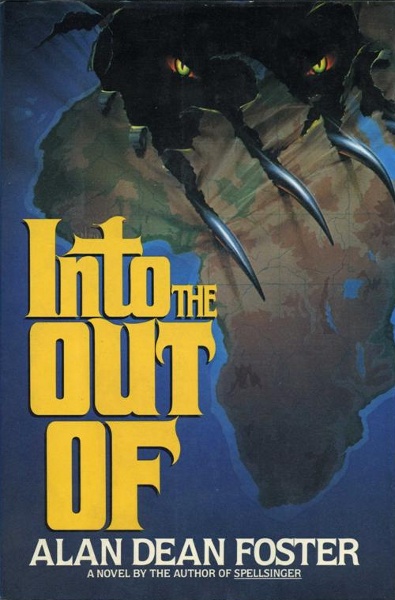
- Into the Out of
Alan Dean Fosterstandalone novel1986
similar byhorroreeriecontemporarytense+1 more
Into the Out Of (1986) is a horror-science fiction novel by American writer Alan Dean Foster.
- Strangers
Dean R. Koontzstandalone novel1986
similar byhorroreerieour worldcontemporarytense
Strangers is a horror novel written by Dean Koontz, released in 1986.
- The House on Moon Creek Avenue
E. Reyesstandalone novel2020
similar byhorroreerieour worldcontemporarytense
● "Cindy is a twenty-one-year-old single mother, retail worker, and college student. She inherits her grandmother's home on Moon Creek Avenue after she passes away. At first, the home is comfortable, nostalgic of Cindy's childhood at nana's, and her daughter enjoys the home, too. But soon, ghosts randomly appear day and night, doors open and close, a streak of bad luck begins, Cindy and her daughter have unsettling nightmares, and Cindy's mental state is pushed to the edge. When Cindy's video recording of paranormal activity goes viral on social media, she gets the attention of famous ghost hunters. Without anywhere else to turn, Cindy accepts their help." ― paraphrased from this book's product page on Amazon.com as of 2024-09-26.
- If You Could See Me Now
Peter Straubstandalone novel1976
similar byhorroreerieour worldcontemporary
If You Could See Me Now is a horror novel by American author Peter Straub. It is his third novel and his second work of gothic or supernatural fiction. The book was published by Jonathan Cape in June 1977 – the same London publisher who published Julia in 1976. Coward, McCann & Geoghegan published an American edition also in June 1977.
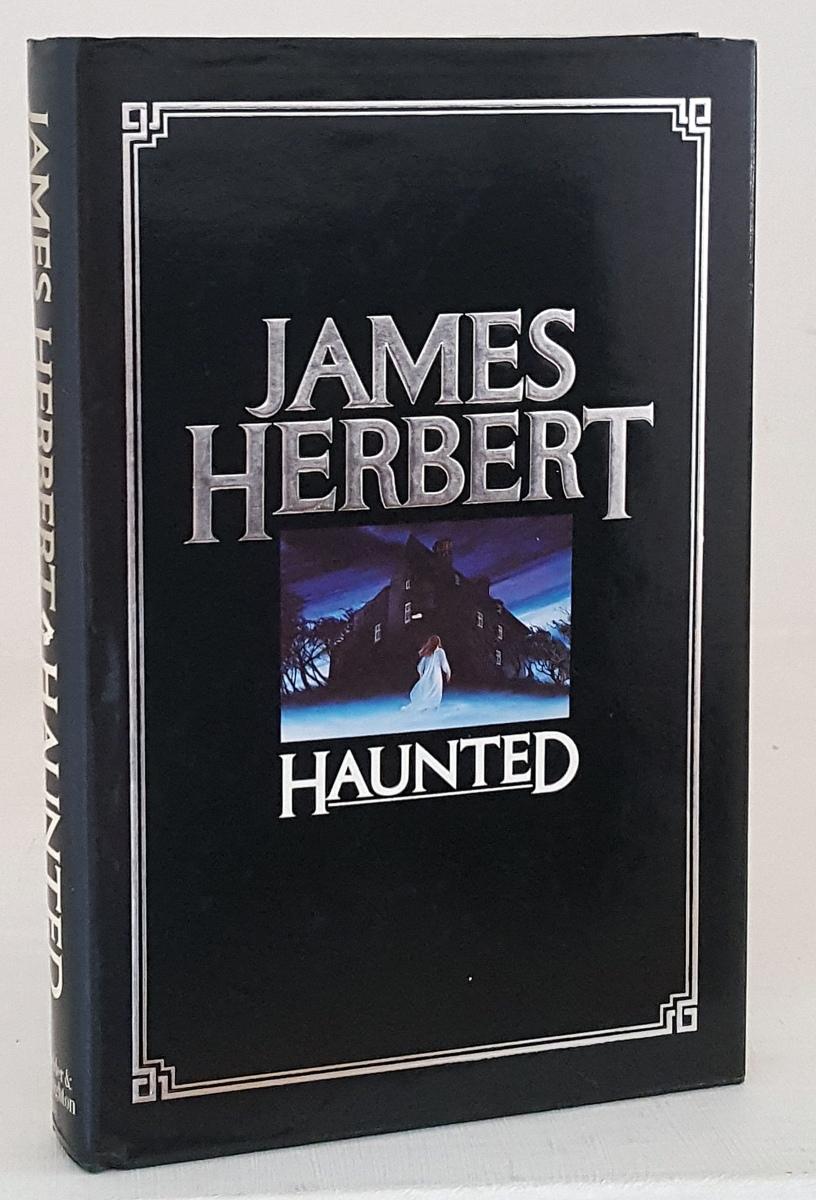
- David Ash
series3 books1988
completed
similar byhorroreeriecontemporary+2 more
David Ash is a professional skeptic, a paranormal investigator who makes his living debunking hauntings until a case in an old English house convinces him something genuinely malicious is at work. James Herbert's Haunted, which began life as a BBC screenplay, launches Ash into a trilogy that continues through The Ghosts of Sleath and Ash, each pitting his hard-won doubt against increasingly undeniable horrors. The character's skepticism is the series' throughline, making each haunting a test of what he's willing to believe.
- Bone Chillers
series23 books1994
similar byhorrorour worldcontemporary+2 more
Bone Chillers is a children's horror series created by Betsy Haynes, similar in spirit and format to Goosebumps, though later volumes in the 23-book run (1994-1998) were written by other credited authors. It also spun off into a television adaptation on which Haynes appeared to encourage young viewers to read, write, and be creative.
- Twilight Zone
universe40 books1960
Start hereStories from the Twilight Zone · Start here
similar byour world+3 more
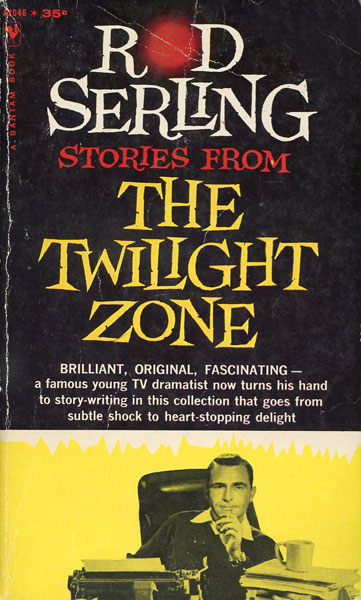
Picture, if you will, an ordinary person on an ordinary afternoon: a tired salesman, a frightened child, a man who wants only to be left alone. Somewhere between the streetlight and the front door, the rules quietly change. This is the Twilight Zone — not a place on any map but a middle ground between light and shadow, science and superstition, the pit of our fears and the summit of our knowledge. There is no continuing saga here, no cast to follow across the years. There is only the door, and the parable waiting on the far side of it. What the shelf holds is Rod Serling's anthology given the permanence of print. Serling turned his own teleplays into prose, the collections that open with Stories from the Twilight Zone, and the scripts survive alongside them — his and Richard Matheson's, the two hands that set the show's pulse. Around that core gather the story-collections of Walter B. Gibson, the volumes of new tales assembled by Carol Serling, standalone novels, and paired reissues: dozens of self-contained pieces, many writers under one banner. Read one or read forty. Each closes its own circle. The machinery is always the same and never predictable — a reasonable premise, a moral squeeze, a final turn that lands like a tap on the shoulder, sometimes cruel, sometimes merciful, always earned. Beneath the twist runs Serling's true subject: ordinary conscience under strain — prejudice, vanity, loneliness, the wish to go back. Begin where he began, with his own Stories from the Twilight Zone, then follow Matheson. There is no order to keep. You unlock this door with the key of imagination.
- The Nest
Kenneth Oppelstandalone novel2015
similar byhorroreerieour worldcontemporarytense
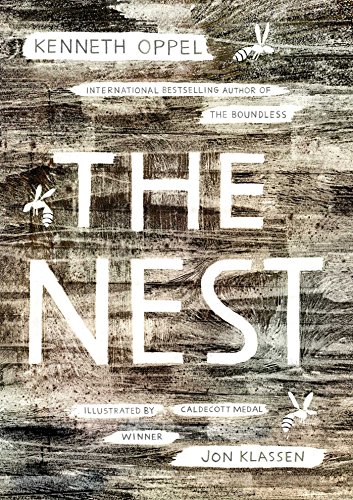
For some kids summer is a sun-soaked season of fun. But for Steve, it s just another season of worries. Worries about his sick newborn baby brother who is fighting to survive, worries about his parents who are struggling to cope, even worries about the wasp s nest looming ominously from the eaves. So when a mysterious wasp queen invades his dreams, offering to fix the baby, Steve thinks his prayers have been answered. All he has to do is say Yes. But yes is a powerful word. It is also a dangerous one. And once it is uttered, can it be taken back?
- The Hungry Moon
Ramsey Campbellstandalone novel1986
similar byhorroreerieour worldcontemporary
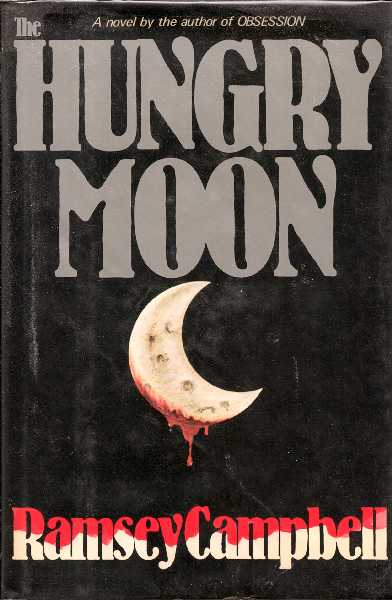
The Hungry Moon is a novel by Ramsey Campbell published in 1986.
- Jeremy Logan
series6 books2007
similar bycontemporarytense+3 more
Lincoln Child's Jeremy Logan series follows an investigator through cases where science and the seemingly supernatural collide, opening with Deep Storm, set at a deep-sea drilling platform that may have uncovered the lost city of Atlantis. The series continues across six novels blending techno-thriller and horror elements.
- Her Fearful Symmetry
Audrey Niffeneggerstandalone novel2009
similar byhorroreerieour worldcontemporary
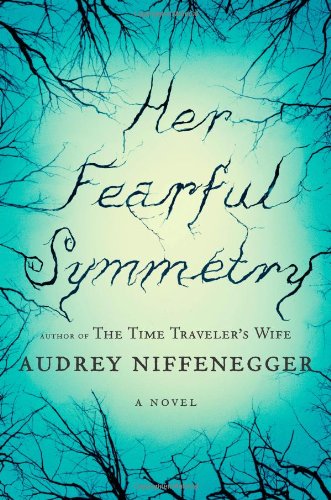
Her Fearful Symmetry is a horror novel by the American writer Audrey Niffenegger. The book was published on October 1, 2009 and is set in and around London's Highgate Cemetery where, after a year of research for the book, Niffenegger acted as a tour guide.
- The Andromeda Strain
series2 books1969
similar bycontemporarytense+2 more
Michael Crichton's 1969 novel The Andromeda Strain follows a team of scientists racing to contain a lethal extraterrestrial microorganism that crash-lands in Arizona, told in the clinical, document-driven style that helped establish the techno-thriller genre. Daniel H. Wilson's authorized 2019 sequel The Andromeda Evolution revisits the same threat five decades later. Together the two books form a two-part outbreak story separated by a fifty-year gap in publication.