More like Dialogues
anchored on:science fictionartificial intelligenceliterary & generalchallengingreflective
but
- Genesis
Bernard Beckettstandalone novel2006
similar byartificial intelligencescience fictionchallengingreflective+1 more
Genesis (2006) is a philosophical science fiction novel by New Zealand author Bernard Beckett. It won the 2007 Esther Glen Award for children's literature, and the 2007 New Zealand Post Book Awards for Children and Young Adults. As of 2008 it has been published in 22 countries.
- Dialogi
series1 book1957
similar byartificial intelligencescience fictionchallengingreflectiveliterary & general+1 more
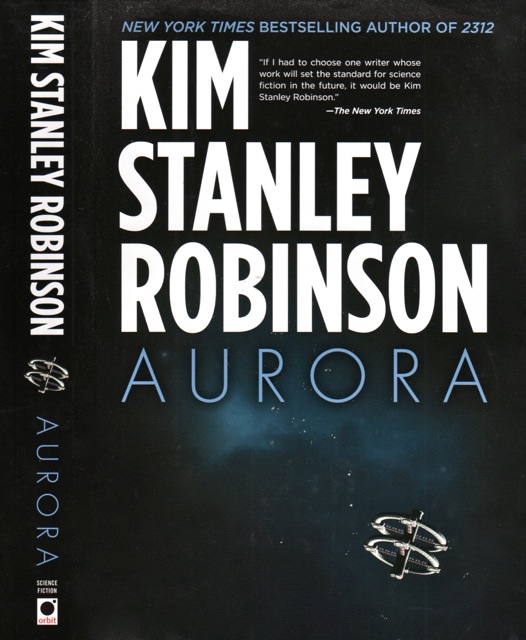
- Aurora
Kim Stanley Robinsonstandalone novel2015
similar byartificial intelligencescience fictionchallengingreflective
Aurora is a 2015 novel by American science fiction author Kim Stanley Robinson. The novel concerns a generation ship built in the style of a Stanford torus, traveling to Tau Ceti to start a human colony. The novel's primary narrative voice is that of the starship's artificial intelligence. Aurora was well received by critics.
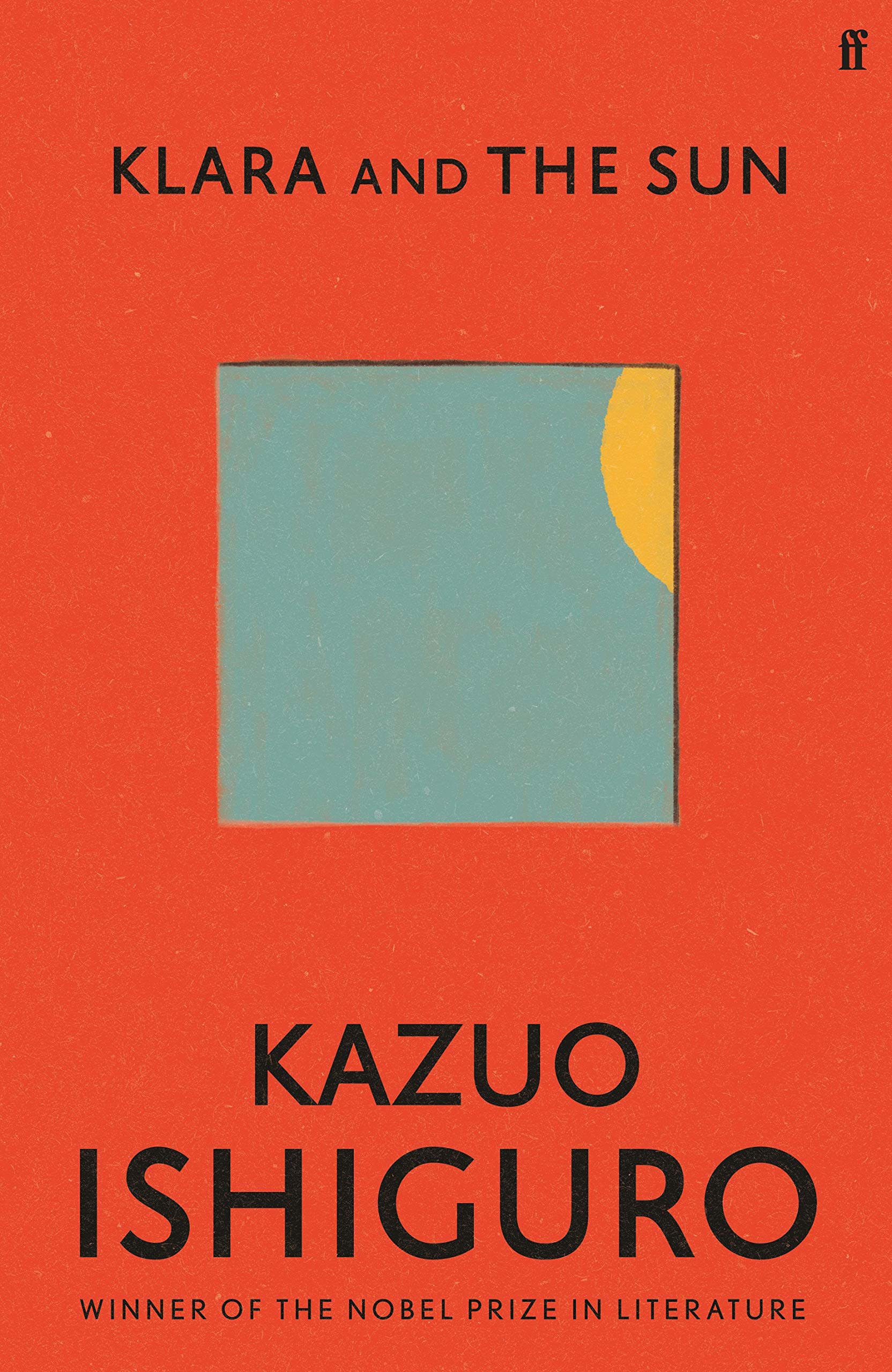
- Klara and the Sun
Kazuo Ishigurostandalone novel2021
similar byartificial intelligencescience fictionreflectiveliterary & general
Klara and the Sun is the eighth novel by the Japanese-British writer Kazuo Ishiguro, published on 2 March 2021. It is a dystopian science fiction story.
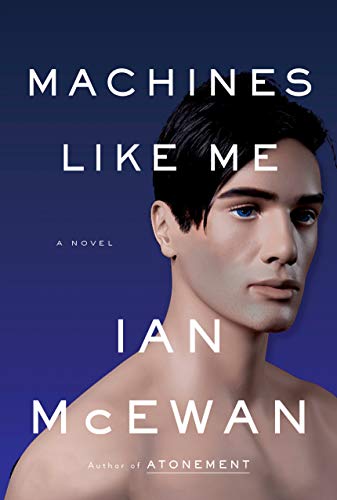
- Machines Like Me
Ian McEwanstandalone novel2019
similar byartificial intelligencescience fictionreflectiveliterary & generalrobots
Set in a 1980s technologically advanced London in which Alan Turing opted for prison rather than drug therapy, and, while incarcerated, achieved many mathematical breakthroughs which provided the basis for computational advances during his extended life. (source: Uchronia.net)
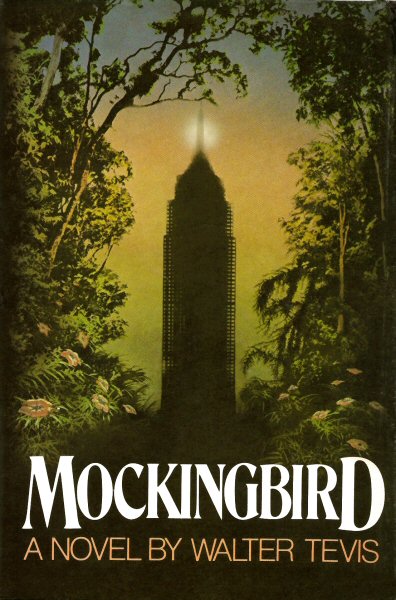
- Mockingbird
Walter Tevisstandalone novel1980
similar byartificial intelligencescience fictionreflectiverobots
WorldCat: In a future world where mankind is dying, humans wander through life in a drugged electronic bliss. Quick sex is the norm, and some people would rather commit suicide than live in hopelessness. Humanity's salvation rests with an android who has no desire to live, and a man and a woman who must discover love, hope, and dreams of a world reborn.
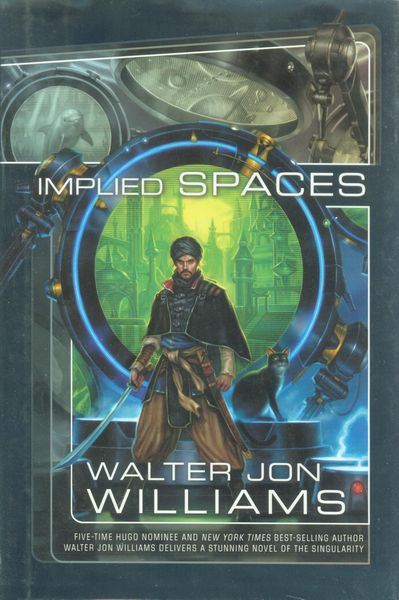
- Implied Spaces
Walter Jon Williamsstandalone novel2008
similar byartificial intelligencescience fictionchallengingreflective
Implied Spaces is a 2008 space opera novel by American author Walter Jon Williams. It explores themes of transhumanism, artificial intelligence and ontology.
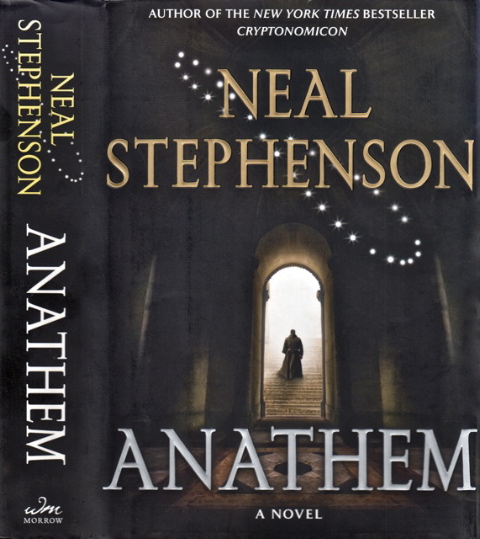
- Anathem
Neal Stephensonstandalone novel2008
similar byscience fictionchallengingreflective
On a planet where quasi-monastic academic institutions have existed alongside the secular world for thousands of years, a young scholar from one such institution becomes part of a planetwide effort to muster an appropriate reaction to a shocking discovery.
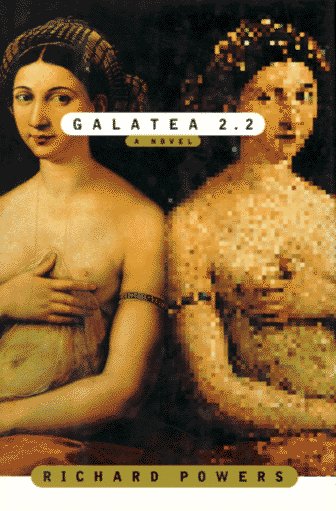
- Galatea 2.2
Richard Powersstandalone novel1995
similar byartificial intelligencereflectivescience fictionliterary & general+1 more
Galatea 2.2 is a 1995 pseudo-autobiographical novel by American writer Richard Powers and a contemporary reworking of the Pygmalion myth. The book's narrator shares the same name as Powers, with the book referencing events and books in the author's life while mentioning other events that may or may not be based upon Powers' life.
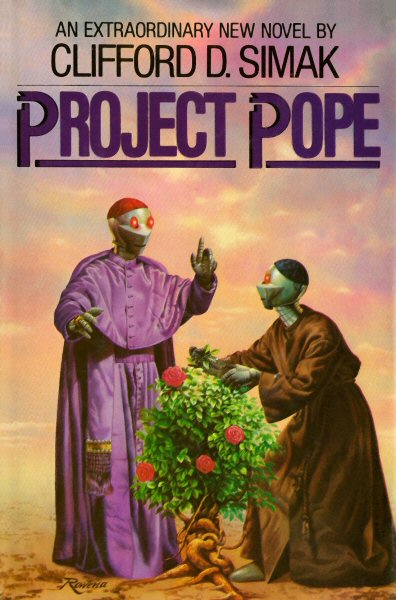
- Project Pope
Clifford D. Simakstandalone novel1981
similar byartificial intelligencescience fictionreflectiverobots
Project Pope is a science fiction novel by the American author Clifford Simak, published in 1981 by Ballantine Books. The novel is about a group of robots and humans living on a planet called the End of Nothing. Their mission is to search the universe and other dimensions to seek out true religion and knowledge. They add the information they gather to their Pope, a robotic supercomputer, in order to make an infallible authority of all knowledge and religion. The novel was nominated for both a Hugo Award for Best Novel and a Locus Award for Best SF novel in 1982.
- Void Star
Zachary Masonstandalone novel2017
similar byartificial intelligencescience fictionchallengingreflective
Void Star is a 2017 near-future science fiction novel by American writer Zachary Mason. It is his second novel, published after The Lost Books of the Odyssey. Set in a near-future San Francisco, the book explores themes of artificial intelligence, philosophy, linguistics and immortality.
- Rupetta
N. A. Sulwaystandalone novel2013
similar byartificial intelligencescience fictionreflectiverobots
Rupetta (2013) is a science fiction novel by Australian writer Nike Sulway, who has previously published work under the pseudonym Nicole Bourke. The novel won the 2013 James Tiptree, Jr. Award.
- Bête
Adam Robertsstandalone novel2014
similar byartificial intelligencescience fictionchallengingreflective
A man is about to kill a cow. He discusses life and death and his right to kill with the compliant animal. He begins to suspect he may be about to commit murder. But kills anyway. It began when the animal rights movement injected domestic animals with artificial intelligences in bid to have the status of animals realigned by the international court of human rights. But what is an animal that can talk? Where does its intelligence end at its machine intelligence begin? And where might its soul reside?
- Whileaway
series4 books1972
completed
similar byscience fictionchallengingreflective+1 more
Joanna Russ's The Female Man (1975) is a single feminist science fiction novel, not a multi-book series, built around four women from parallel timelines with very different gender arrangements. One of them, Janet, comes from Whileaway, an all-female utopian Earth ten centuries in the future where men died out in a plague; the other three come from realities closer to Russ's own, and their collisions are used to interrogate what womanhood and equality could mean under different social rules.
- Hegira
Greg Bearstandalone novel1979
similar byartificial intelligencescience fictionchallenging+1 more
Hegira is a 1979 science fiction novel by American writer Greg Bear. It deals with themes including cyclic time, artificial intelligence, artificial life, and artificial structures of planetary scale.
- Stranger in a Strange Land
Robert A. Heinleinstandalone novel1961
similar byscience fictionreflectivechallenging
Stranger in a Strange Land is a 1961 science fiction novel by the American author Robert A. Heinlein. It tells the story of Valentine Michael Smith, a human who comes to Earth in early adulthood after being born on the planet Mars and raised by Martians, and explores his interaction with and eventual transformation of Terran culture.
- The City and the Stars
Arthur C. Clarkestandalone novel1956
similar byscience fictionreflective+2 more
The City and the Stars is a science fiction novel by British writer Arthur C. Clarke, published in 1956. This novel is a complete rewrite of Clarke's earlier Against the Fall of Night, his first novel, which had been published in Startling Stories magazine in 1948 after being rejected by the editor of Astounding Science-Fiction, according to the author.
- A History of the World in 10½ Chapters
Julian Barnesstandalone novel1989
similar bychallengingreflectiveliterary & general
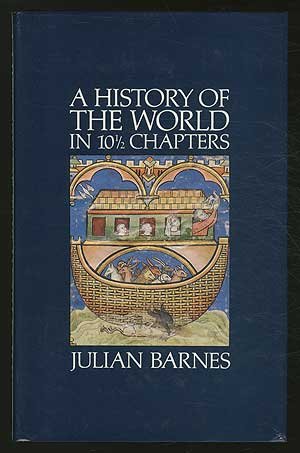
A History of the World in 10½ Chapters by English writer Julian Barnes published in 1989 is usually described as a novel, though it is actually a collection of subtly connected short stories, in different styles. In a review Joyce Carol Oates describes them as "a gathering of prose pieces, some fiction, others rather like essays".
- VALIS
series4 books1981
completed
similar byscience fictionchallengingreflective+1 more
The VALIS trilogy is a set of science fiction/philosophical novels by author Philip K. Dick which include VALIS (1981), The Divine Invasion (1981), and The Transmigration of Timothy Archer (1982). Dick's first novel about the VALIS concept originally titled "VALISystem A", was published as Radio Free Albemuth after Dick's death in 1985.
- Culture
series15 books1987
completed
part of The Culture
similar byartificial intelligencescience fiction+2 more
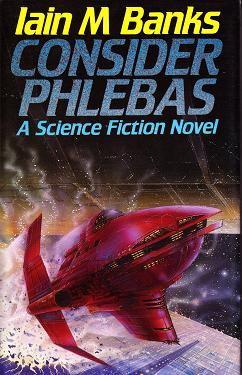
The Culture series is a science fiction series written by Scottish author Iain M. Banks and released from 1987 until 2012. The stories centre on The Culture, a utopian, post-scarcity space society of humanoid aliens and advanced superintelligent artificial intelligences living in artificial habitats spread across the Milky Way galaxy. The main themes of the series are the dilemmas that an idealistic, more-advanced civilization faces in dealing with smaller, less-advanced civilizations that do not share its ideals, and whose behaviour it sometimes finds barbaric. In some of the stories, action takes place mainly in non-Culture environments, and the leading characters are often on the fringes of the Culture, sometimes acting as agents of the Culture in its plans to civilize the galaxy. Each novel is a self-contained story with new characters, although reference is occasionally made to the events of previous novels.
- Pandora
series4 books1966
similar byartificial intelligencescience fiction+1 more
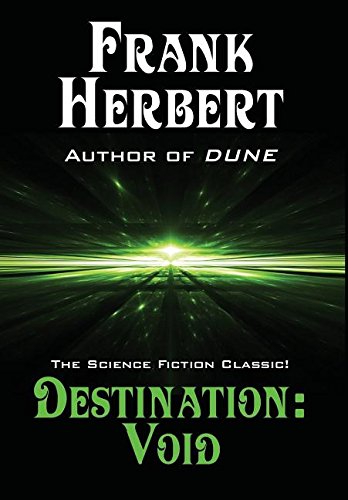
The Pandora Sequence opens with Frank Herbert's solo novel Destination: Void, in which a starship crew must jury-rig a working artificial consciousness after their vessel's control systems fail. Bill Ransom co-writes the three novels that follow, carrying the survivors to the world Pandora, where they must contend with both a manipulative machine intelligence and the planet's own hostile ecology. Across its four books the series moves from a claustrophobic ship-bound crisis to a generations-long struggle over faith, control, and survival on a dangerous new world.
- The Actual Star
Monica Byrnestandalone novel2021
similar byscience fictionchallengingreflectiveliterary & general
[Publisher:] The Actual Star takes readers on a journey over two millennia and six continents–telling three powerful tales a thousand years apart, all of them converging in the same cave in the Belizean jungle. Braided together are the stories of a pair of teenage twins who ascend the throne of a Maya kingdom; a young American woman on a trip of self-discovery in Belize; and two dangerous charismatics vying for the leadership of a new religion and racing toward a confrontation that will determine the fate of the few humans left on Earth after massive climate change. In each era, a reincarnated trinity of souls navigates the entanglements of tradition and progress, sister and stranger, and love and hate–until all of their age-old questions about the nature of existence converge deep underground, where only in complete darkness can they truly see. The Actual Star is a feast of ideas about where humanity came from, where we are now, and where we're going–and how, in every age, the same forces that drive us apart also bind us together.