More like Dio
but
- The City and the Stars
Arthur C. Clarkestandalone novel1956
similar byimmortalityscience fiction
The City and the Stars is a science fiction novel by British writer Arthur C. Clarke, published in 1956. This novel is a complete rewrite of Clarke's earlier Against the Fall of Night, his first novel, which had been published in Startling Stories magazine in 1948 after being rejected by the editor of Astounding Science-Fiction, according to the author.
- I Will Fear No Evil
Robert A. Heinleinstandalone novel1970
similar byimmortalityscience fiction
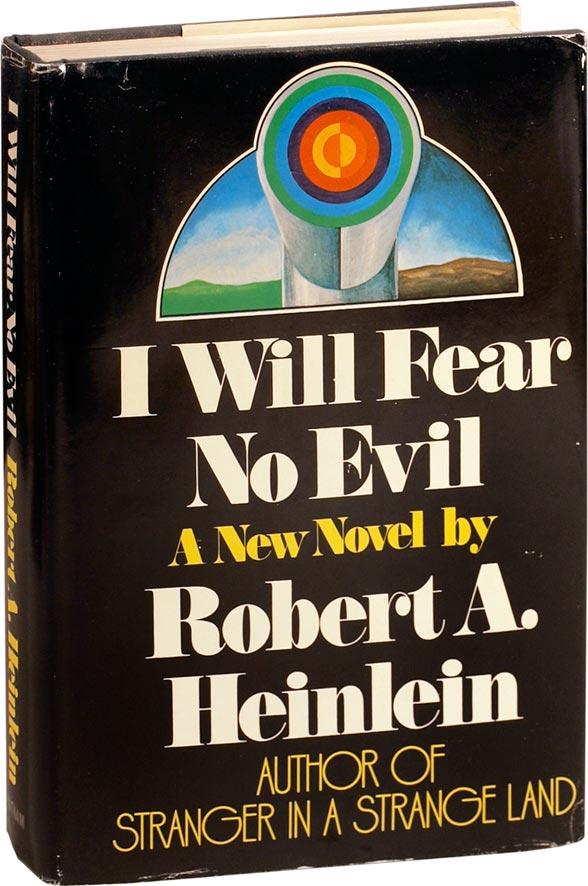
I Will Fear No Evil is a science fiction novel by American writer Robert A. Heinlein, originally serialised in Galaxy and published in hardcover in 1970. The title is taken from Psalm 23:4.
- Beyond This Horizon
Robert A. Heinleinstandalone novel1948
similar byscience fiction+1 more
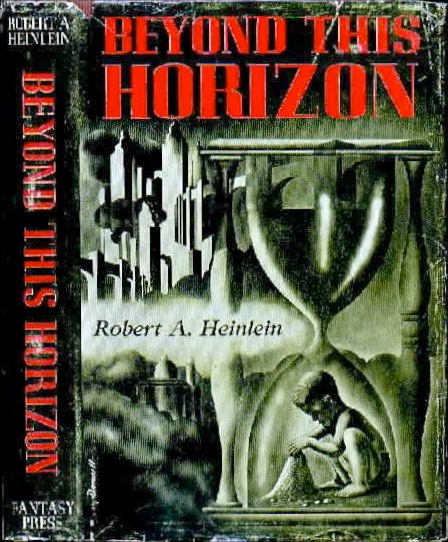
From the front flap of a 2001 Baen reprint: "Utopia has been achieved. For centuries, disease, hunger, poverty, and war have been things found only in the history tapes. And applied genetics has given men and women the bodies of athletes and a lifespan of over a century. They should all have been very happy... But Hamilton Felix is bored. And he is the culmination of a star line, each of his last thirty ancestors chosen for superior genes. Hamilton is, as far as genetics can produce one, the ultimate man. And this ultimate man can see no reason why the human race should survive, and has no intention of continuing the pointless comedy. However, Hamilton's life is about to become less boring. A secret cabal of revolutionaries who find utopia not just boring, but desperately in need of leaders who know just What Needs to be Done, are planning to revolt and put themselves in charge. Knowing of Hamilton's disenchantment with the modern world, they have recruited him to join their Glorious Revolution. Big mistake! The revolutionaries are about to find out that recruiting a superman was definitely not a good idea..."
- Future History
series42 books1939
completed
similar byscience fiction+1 more
The Future History is a series of science fiction stories written by American author Robert A. Heinlein (1907–1988). It describes a projected future of the human race from the middle of the 20th century through the early 23rd century. The term Future History was coined by John W. Campbell Jr. in the February 1941 issue of Astounding Science Fiction. Campbell published an early draft of Heinlein's chart of the series in the May 1941 issue.
- Way Station
Clifford D. Simakstandalone novel1963
similar byscience fiction+1 more
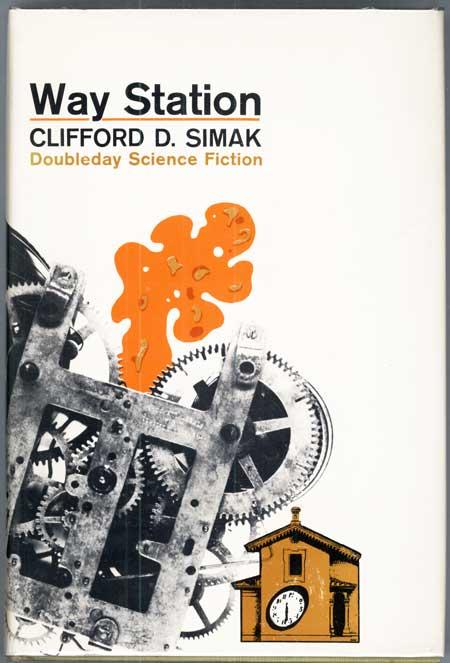
The human operator of a transfer station for aliens traveling between planets, kept secret from the human race, deals with discovery by the US government and interplanetary political crisis, as well as his own emotional issues.
- This Immortal
series2 books1966
similar byimmortalityscience fiction
This Immortal is a single science fiction novel by Roger Zelazny, expanded from his 1965 serial ...And Call Me Conrad. In a depopulated future Earth largely toured by an alien race, its long-lived, secretive protagonist Conrad Nomikos is assigned to guide and protect a visiting alien across the ruins of Greece and Egypt, uncovering old grudges and assassination plots along the way. The novel shared the 1966 Hugo Award for Best Novel with Frank Herbert's Dune.
- Trouble with Lichen
John Wyndhamstandalone novel1960
similar byimmortalityscience fiction
Biochemists Diana Brackley and Francis Saxover, working independently, both isolate a compound from a rare lichen that appears to dramatically slow the aging process. Francis quietly doses himself and his family and says nothing; Diana takes the opposite approach, opening exclusive beauty spas as cover to give the drug to well-connected women across Britain, reasoning that if longevity becomes known before women have a foothold, men will simply monopolize it as they have everything else. The secret can only hold so long, and the novel's tension builds toward the moment it gets out. A quietly subversive social science-fiction novel from John Wyndham.
- The Eyes of Heisenberg
Frank Herbertstandalone novel1966
similar byimmortalityscience fiction
Tens of thousands of years in the future, Earth is ruled by the Optimen, a genetically engineered aristocracy that has made itself functionally immortal, while ordinary people, the Folk, live under strict reproductive control. When Harvey and Lizbeth Durant arrive to have their embryo genetically screened, the examining doctor finds something in the child no one has seen in a very long time: real potential for both fertility and life span, traits the Optimen have arrogated to themselves. Rather than destroy the embryo as policy demands, the doctor hesitates, setting off a chain of surveillance, suspicion and resistance. A tightly wound Frank Herbert thriller about genetic caste and rebellion.
- Dune
series20 books1963
part of Dune Universe
similar byscience fiction
Frank Herbert's Dune Chronicles opens with 1965's Dune, set on the desert planet Arrakis where House Atreides takes control of the only source of the vital spice melange and young Paul Atreides is pulled into a struggle over its politics and religion. Herbert carried the story forward across five further novels — Dune Messiah, Children of Dune, God Emperor of Dune, Heretics of Dune, and Chapterhouse: Dune — following Paul's line over the following millennia, before Brian Herbert and Kevin J. Anderson later extended the saga. Many other editions of these six novels are omnibus and box-set repackagings rather than separate stories.
- Creatures of Light and Darkness
Roger Zelaznystandalone novel1969
similar byscience fiction+1 more
Creatures of Light and Darkness is a 1969 science fiction novel by American writer Roger Zelazny. Long out of print, it was reissued in April 2010. The novel is set in the far future, with humans on many worlds. Some humans have god-like powers or perhaps are actually gods—the names and aspects of various Egyptian gods are used. Elements of horror and technology are mixed, and the novel shares elements with cyberpunk.
- The Boat of a Million Years
Poul Andersonstandalone novel1989
similar byimmortalityscience fiction
The Boat of a Million Years is a science fiction novel by American writer Poul Anderson, first published in 1989 and nominated for the Nebula Award for Best Novel that same year. It was also nominated for the Hugo Award for Best Novel and the Prometheus Award in 1990.
- Ring Around the Sun
Clifford D. Simakstandalone novel1953
similar byscience fiction+1 more
Ring Around the Sun is a science fiction novel by American writer Clifford D. Simak. Its anti-urban and pro-agrarian sentiments are typical of much of Simak's work.
- Richard Forthrast
series2 books2011
similar byscience fiction+1 more
Neal Stephenson's Richard 'Dodge' Forthrast novels open with Reamde, a globe-spanning thriller that starts when ransomware inside an MMORPG economy pulls Richard's extended family into a real-world hostage crisis involving hackers, jihadists and Russian mobsters. The sequel Fall; or, Dodge in Hell shifts registers entirely, following Richard's digitally preserved mind after death into an afterlife simulation built from his scanned brain. The two books share a protagonist and family but differ sharply in genre and scale.
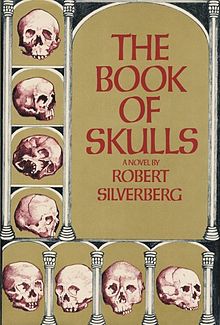
- The Book of Skulls
Robert Silverbergstandalone novel1971
similar byimmortalityscience fiction
The Book of Skulls is a science fiction novel by American writer Robert Silverberg, first published in 1972. It was nominated for the Nebula Award in 1972, and both the Hugo and Locus Awards in 1973.
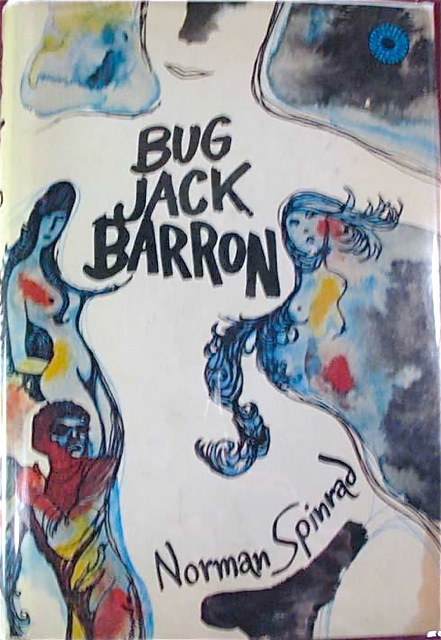
- Bug Jack Barron
Norman Spinradstandalone novel1969
similar byscience fiction+1 more
Bug Jack Barron is a 1969 science fiction novel by American writer Norman Spinrad, first serialized in the New Worlds magazine under the editorship of Michael Moorcock. It was nominated for the 1970 Hugo Award. The novel is notable for its lyrical style and unique use of cut-up phrases. In this regard, Spinrad has cited the influence of Beat writers William S. Burroughs, Allen Ginsberg, and Jack Kerouac.
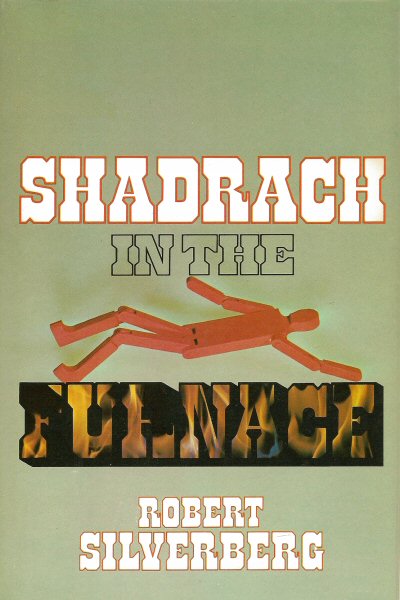
- Shadrach in the Furnace
Robert Silverbergstandalone novel1976
similar byscience fiction+1 more
Shadrach in the Furnace is a science fiction novel by American writer Robert Silverberg, first published as a serial in Analog Science Fiction and Fact magazine in the August, September, and October 1976 issues. It was subsequently published by Bobbs Merrill in 1976. The novel was nominated in 1976 for the Nebula Award, and in 1977 for the Hugo Award.
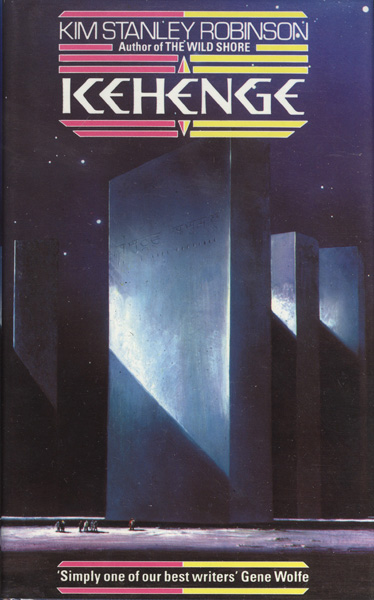
- Icehenge
Kim Stanley Robinsonstandalone novel1984
similar byscience fiction+1 more
Icehenge unfolds in three parts, narrated years or centuries apart by different investigators piecing together the same facts. The first is the diary of Emma Weil, an engineer swept into a Martian revolution in 2248, conscripted onto a rebel starship fitted for a voyage beyond the solar system, and forced to decide how far her sympathy for the uprising extends. Generations later, other narrators pick up the thread of what became of her and the ship, drawn toward a stone monument on a moon of Pluto that should not exist. An early standalone novel by Kim Stanley Robinson, revisiting the Martian-revolution material he later expanded into the Mars trilogy.
- This Perfect Day
Ira Levinstandalone novel1970
similar byscience fiction+1 more
This Perfect Day is a science fiction novel by American writer Ira Levin, about a technocratic dystopia. Levin won a Prometheus Award in 1992 for this novel. This Perfect Day is one of two Levin novels yet to be adapted to film.
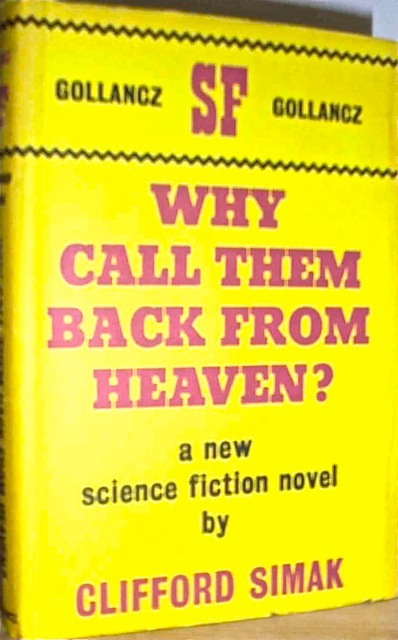
- Why Call Them Back from Heaven?
Clifford D. Simakstandalone novel1967
similar byimmortalityscience fiction
Why Call them Back From Heaven? is a 1967 science fiction novel by American writer Clifford D. Simak. It was the initial volume in the Ace Science Fiction Specials line.
- The Algebraist
Iain M. Banksstandalone novel2004
similar byscience fiction+1 more
The Algebraist is a science fiction novel by Scottish writer Iain M. Banks, published in print in 2004. It was nominated for a Hugo Award for Best Novel in 2005.
- Black Oxen
Gertrude Athertonstandalone novel1923
similar byimmortality+1 more
"... Black Oxen was written in a burst of mental energy after Gertrude Atherton herself received an experimental anti-aging treatment; the introduction and appendices to this edition explore parallels between Atherton's medical treatment and that of her rejuvenated protagonist, as well as provide selections from other contemporary writings on aging, science, and the role of women in the 1920s. ..." --description of the 2012 Broadview ed. at Amazon 2019-09-05 (read in full, {{ASIN|1554810256}}
- The World of Tiers
series9 books1965
similar byimmortalityscience fiction
The World of Tiers is a series of science fiction novels by American writer Philip José Farmer. They are set within a series of artificially constructed universes, created and ruled by decadent beings who are genetically identical to humans, but regard themselves as superior, and are the inheritors of an advanced technology they no longer understand. This technology enables the "Lords" to create novel lifeforms, and also to prevent aging or disease, making them effectively immortal. Their technology also allows them to create small artificial universes, and the planets and stars within them, and modify the physical laws to create unusual or interesting phenomena within these universes. Instantaneous travel within and between these universes is achieved by the use of "gates" which seem to function as teleportation devices, or as a means of creating wormholes between different regions of spacetime.
- Cities in Flight
series10 books1950
completed
similar byscience fiction+1 more
Cities in Flight is a four-volume series of science fiction novels and short stories by American writer James Blish, originally published between 1950 and 1962, which were first known collectively as the "Okie" novels. The series features entire cities that are able to fly through space using an anti-gravity device, the spindizzy. The stories cover roughly two thousand years, from the very near future to the end of the universe. One story, "Earthman, Come Home", won a Retro Hugo Award in 2004 for Best Novelette. Since 1970, the primary edition has been the omnibus volume first published in paperback by Avon Books. Over the years James Blish made many changes to these stories in response to points raised in letters from readers.