More like disLocations
anchored on:science fictioncontemporarymysterious
but
- The Long Twilight
Keith Laumerstandalone novel1969
similar byimmortalityscience fictionmysteriousour worldcontemporary
An intelligent interstellar ship containing two immortal humanoid aliens crashes on earth 1200 years ago and retains just enough energy to conceal itself; a broadcast power station coming online activates the ship, and brings the deadly rivalry which has built up between the two aliens to a head.
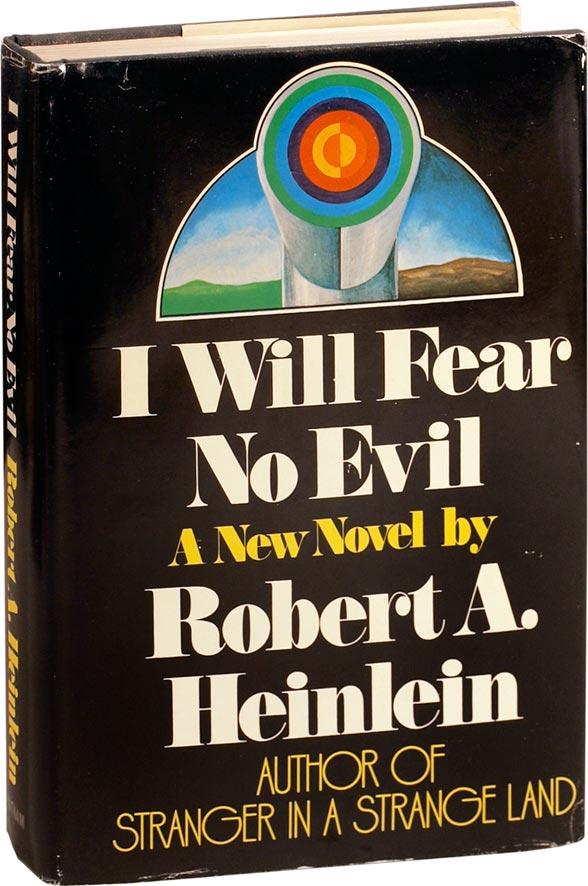
- I Will Fear No Evil
Robert A. Heinleinstandalone novel1970
similar byimmortalityscience fictionour worldreflective
I Will Fear No Evil is a science fiction novel by American writer Robert A. Heinlein, originally serialised in Galaxy and published in hardcover in 1970. The title is taken from Psalm 23:4.
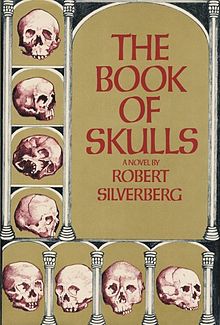
- The Book of Skulls
Robert Silverbergstandalone novel1971
similar byimmortalityscience fictionmysteriouscontemporary
The Book of Skulls is a science fiction novel by American writer Robert Silverberg, first published in 1972. It was nominated for the Nebula Award in 1972, and both the Hugo and Locus Awards in 1973.
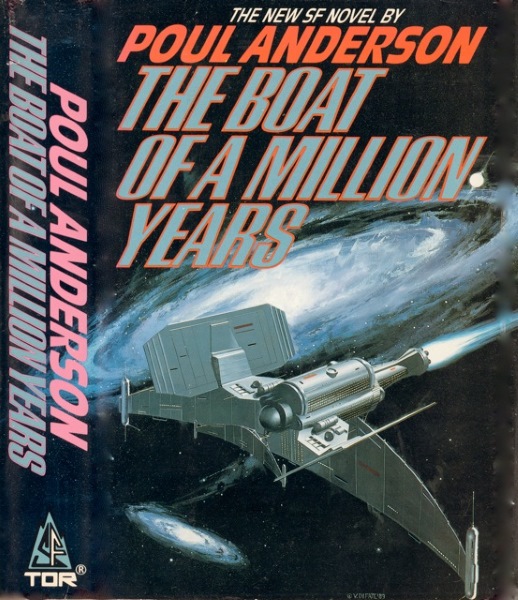
- The Boat of a Million Years
Poul Andersonstandalone novel1989
similar byimmortalityscience fictionour worldreflective+1 more
The Boat of a Million Years is a science fiction novel by American writer Poul Anderson, first published in 1989 and nominated for the Nebula Award for Best Novel that same year. It was also nominated for the Hugo Award for Best Novel and the Prometheus Award in 1990.
- The City and the Stars
Arthur C. Clarkestandalone novel1956
similar byimmortalityscience fictionreflective+1 more
The City and the Stars is a science fiction novel by British writer Arthur C. Clarke, published in 1956. This novel is a complete rewrite of Clarke's earlier Against the Fall of Night, his first novel, which had been published in Startling Stories magazine in 1948 after being rejected by the editor of Astounding Science-Fiction, according to the author.
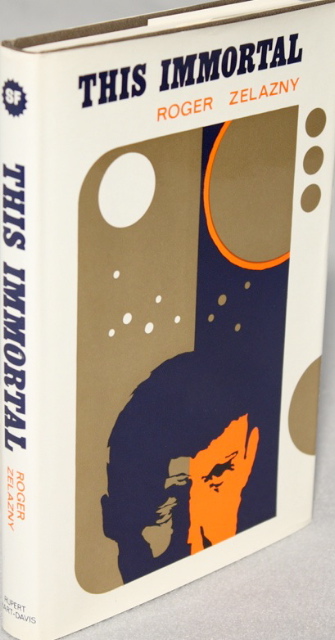
- This Immortal
series2 books1966
similar byimmortalityscience fictionour worldreflective
This Immortal is a single science fiction novel by Roger Zelazny, expanded from his 1965 serial ...And Call Me Conrad. In a depopulated future Earth largely toured by an alien race, its long-lived, secretive protagonist Conrad Nomikos is assigned to guide and protect a visiting alien across the ruins of Greece and Egypt, uncovering old grudges and assassination plots along the way. The novel shared the 1966 Hugo Award for Best Novel with Frank Herbert's Dune.
- The House That Stood Still
A. E. van Vogtstandalone novel1950
similar byimmortalityscience fictionmysteriousour world
A California estate lawyer takes a case involving a decaying mansion built atop a pre-Toltec stone structure, and discovers, following a secretive cult in the house, that the ancient foundation confers immortality on those who know how to use it. Drawn in through his attraction to a cult member, the lawyer learns the group possesses technology beyond its disguise, including spacecraft, and is preparing to relocate the house's stones off-world to escape a coming war. He finds himself trying to stop a catastrophe, expose an ancient secret, and win the woman's trust, all at once. A. E. van Vogt's blend of hardboiled mystery and cosmic science fiction.
- Chocky
series2 books1968
similar byscience fictioncontemporarymysterious+2 more
Chocky (1968) is John Wyndham's science fiction novel about an eleven-year-old boy, Matthew, whose parents grow alarmed by his conversations with an unseen presence that feeds him unsettling insights into mathematics and human progress, building toward the reveal of what, or who, Chocky really is. Mark Daniel's Chocky's Challenge (1986), published after Wyndham's death, is an authorized continuation that carries the story forward.
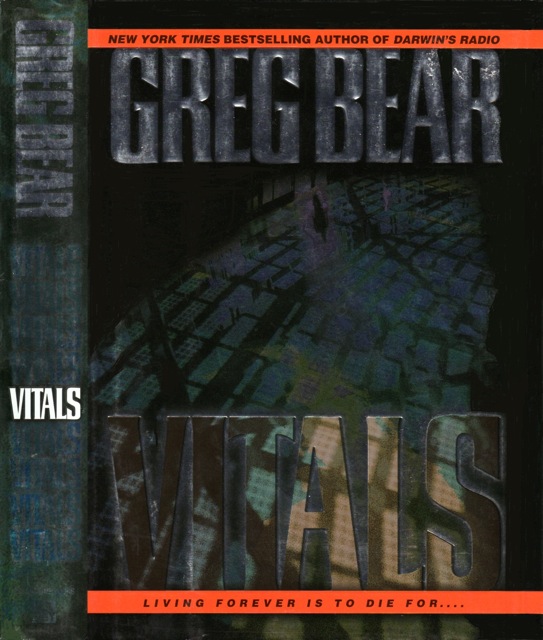
- Vitals
Greg Bearstandalone novel2002
similar byimmortalityscience fictionour worldcontemporary
From the flaps of the Del Rey first edition: "Hal Cousins is one of a handful of scientists nearing the most sought after discovery in human history: the key to short-circuiting the aging process. Fueled by a wealth of research, an overdose of self-confidence, and the money of influential patrons to whom he makes outrageous promises, Hal experiments with organisms living in the hot thermal plumes in the ocean depths. But as he journeys beneath the sea, his other world is falling apart. Across the country, scientists are being inexplicably murdered - including Hal's identical twin brother, who is also working to unlock the key to immortality. Hal himself barely eludes a cold-blooded attack at sea, and when he returns home to Seattle, he finds himself walking into an eerie realm where voices speak to him from the dead ... where a once-brilliant historian turned crackpot is leading him on a deadly game of hide-and-seek ... and where the beautiful, rich widow of his twin is more than willing to pick up the pieces of Hal's life-and take him places he's never been before. Suddenly Hal is trapped inside an ever-twisting maze of shocking revelations. For he is not the first person to come close to ending aging forever - and those who came before him will stop at nothing to keep the secret to themselves. Now every person on earth is at risk of being made an unsuspecting player in one man's spectacular and horrifying master plan. From the bottom of Russia's Lake Baikal to a billionaire's bionic house built into the cliffs of the Washington seashore, from the darkest days of World War II and the reign of Josef Stalin to the capitalist free-for-all that is the United States, Vitals tells an astounding tale of the most unimaginable scientific secret of all - exposed by the quest for immortality itself..."
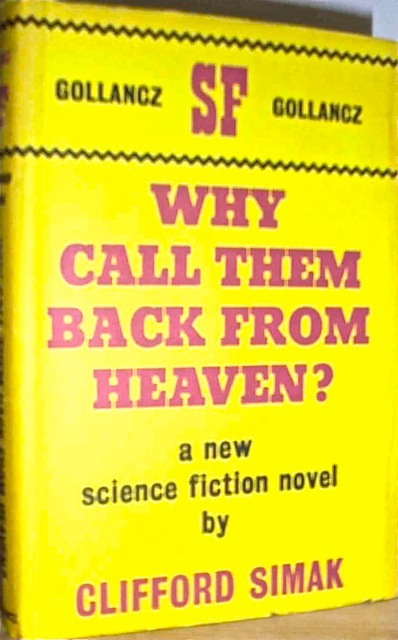
- Why Call Them Back from Heaven?
Clifford D. Simakstandalone novel1967
similar byimmortalityscience fictionour worldreflective
Why Call them Back From Heaven? is a 1967 science fiction novel by American writer Clifford D. Simak. It was the initial volume in the Ace Science Fiction Specials line.
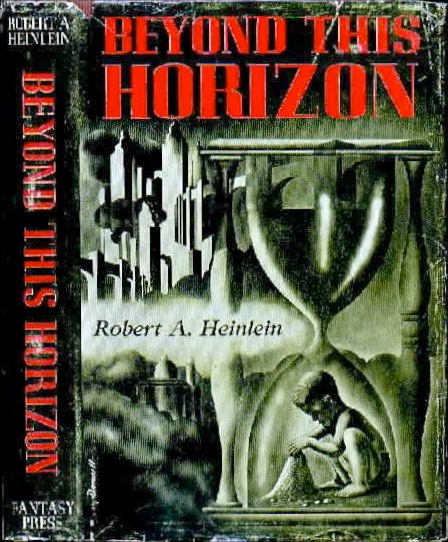
- Beyond This Horizon
Robert A. Heinleinstandalone novel1948
similar byscience fictionour worldreflective+1 more
From the front flap of a 2001 Baen reprint: "Utopia has been achieved. For centuries, disease, hunger, poverty, and war have been things found only in the history tapes. And applied genetics has given men and women the bodies of athletes and a lifespan of over a century. They should all have been very happy... But Hamilton Felix is bored. And he is the culmination of a star line, each of his last thirty ancestors chosen for superior genes. Hamilton is, as far as genetics can produce one, the ultimate man. And this ultimate man can see no reason why the human race should survive, and has no intention of continuing the pointless comedy. However, Hamilton's life is about to become less boring. A secret cabal of revolutionaries who find utopia not just boring, but desperately in need of leaders who know just What Needs to be Done, are planning to revolt and put themselves in charge. Knowing of Hamilton's disenchantment with the modern world, they have recruited him to join their Glorious Revolution. Big mistake! The revolutionaries are about to find out that recruiting a superman was definitely not a good idea..."
- Joyleg
Avram Davidson & Ward Moorestandalone novel1962
similar byimmortalityscience fictionour worldcontemporary+1 more
"Who is Joyleg? What is he? There are governments that want to know his secret. There is evidence that he is more than 200 years old. And indeed he does have a secret--one that will cause the history of the world to be rewritten!"--Page 4 of cover.
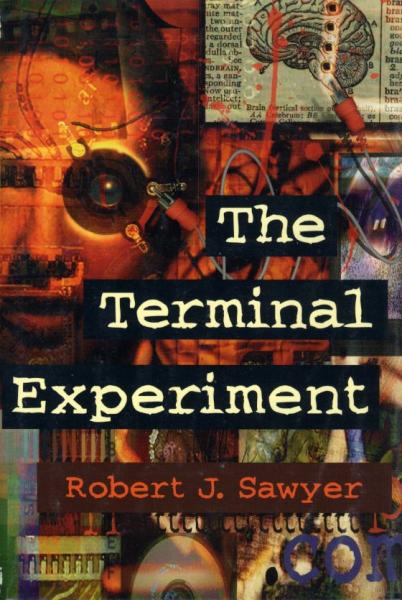
- The Terminal Experiment
Robert J. Sawyerstandalone novel1995
similar byscience fictioncontemporary+2 more
The Terminal Experiment is a science fiction novel by Canadian writer Robert J. Sawyer. The book won the 1995 Nebula Award for Best Novel, and was nominated for the Hugo Award for Best Novel in 1996. Sawyer received a writer's reserve grant from the Ontario Arts Council in 1993 in support of his writing the novel.
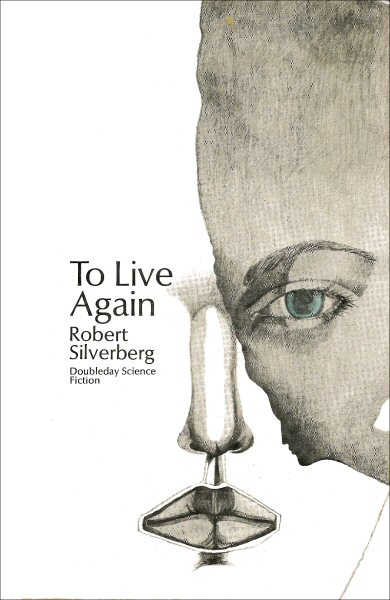
- To Live Again
Robert Silverbergstandalone novel1969
similar byimmortalityscience fictionour worldreflective
In a future where the very rich can have their personalities recorded before death and then implanted into a living host to share, or dominate, that person's mind and body, owning a recorded soul becomes the ultimate status symbol among the powerful. The practice carries real risk: a strong enough recorded personality can overwhelm its host entirely, a fate the novel calls going dybbuk. Robert Silverberg builds a society around this trade in secondhand immortality, and the people who profit, or don't survive, dealing in it. A standalone novel from Silverberg's prolific late-1960s run.
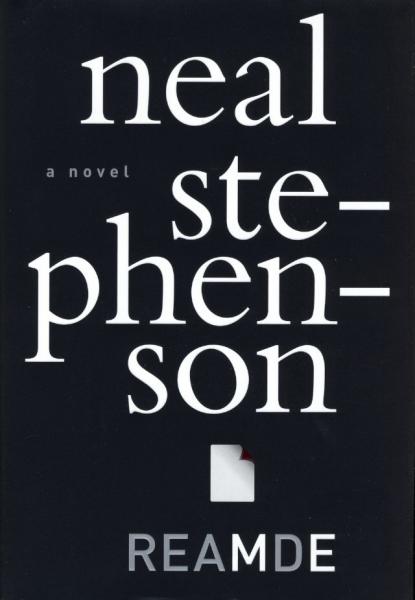
- Richard Forthrast
series2 books2011
similar byscience fictionour world+3 more
Neal Stephenson's Richard 'Dodge' Forthrast novels open with Reamde, a globe-spanning thriller that starts when ransomware inside an MMORPG economy pulls Richard's extended family into a real-world hostage crisis involving hackers, jihadists and Russian mobsters. The sequel Fall; or, Dodge in Hell shifts registers entirely, following Richard's digitally preserved mind after death into an afterlife simulation built from his scanned brain. The two books share a protagonist and family but differ sharply in genre and scale.
- Company (Kage Baker)
series41 books1997
completed
part of Company
similar byscience fictionour world+2 more
Kage Baker's Company novels imagine a secretive 24th-century corporation, Dr. Zeus Incorporated, that recruits children throughout history and remakes them into immortal cyborg operatives who quietly harvest art, biological specimens, and lost treasures for the future. The saga follows operatives such as the botanist Mendoza across centuries of missions, building toward the unexplained blackout in the corporation's own records after the year 2355. Later volumes, some completed with Kathleen Bartholomew after Baker's death, close out the operatives' long, involuntary service.
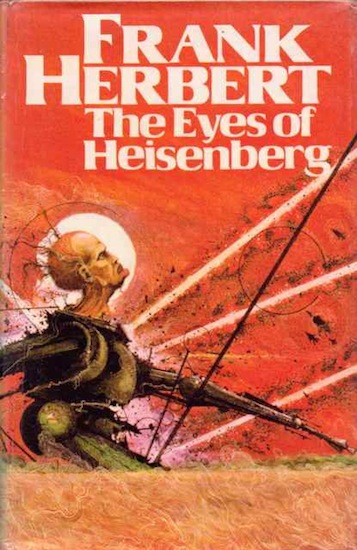
- The Eyes of Heisenberg
Frank Herbertstandalone novel1966
similar byimmortalityscience fictionour world
Tens of thousands of years in the future, Earth is ruled by the Optimen, a genetically engineered aristocracy that has made itself functionally immortal, while ordinary people, the Folk, live under strict reproductive control. When Harvey and Lizbeth Durant arrive to have their embryo genetically screened, the examining doctor finds something in the child no one has seen in a very long time: real potential for both fertility and life span, traits the Optimen have arrogated to themselves. Rather than destroy the embryo as policy demands, the doctor hesitates, setting off a chain of surveillance, suspicion and resistance. A tightly wound Frank Herbert thriller about genetic caste and rebellion.
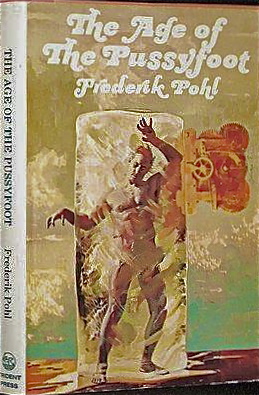
- The Age of the Pussyfoot
Frederik Pohlstandalone novel1969
similar byscience fictionour world+2 more
A 20th century man who is cryopreserved upon his death is resurrected 600 years in the future and attempts to fit into the human society of that era.
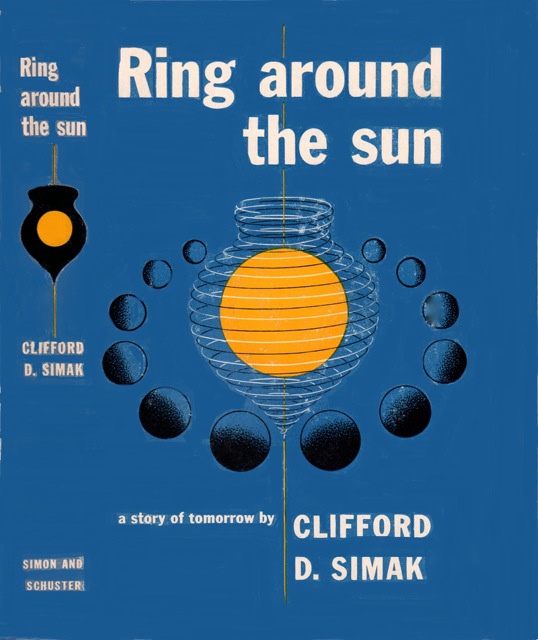
- Ring Around the Sun
Clifford D. Simakstandalone novel1953
similar byscience fictionour worldreflective+1 more
Ring Around the Sun is a science fiction novel by American writer Clifford D. Simak. Its anti-urban and pro-agrarian sentiments are typical of much of Simak's work.
- The Computer Connection
Alfred Besterstandalone novel1975
similar byimmortalityscience fictionour world+1 more
The Computer Connection is a science fiction novel by American writer Alfred Bester. It was originally published as a serial in Analog Science Fiction magazine in November and December 1974, and in January 1975 under the title The Indian Giver; the novel appeared in book form in 1975. Some editions use the title Extro. The novel was nominated for the Nebula Award for Best Novel in 1975 and the Hugo Award for Best Novel in 1976.
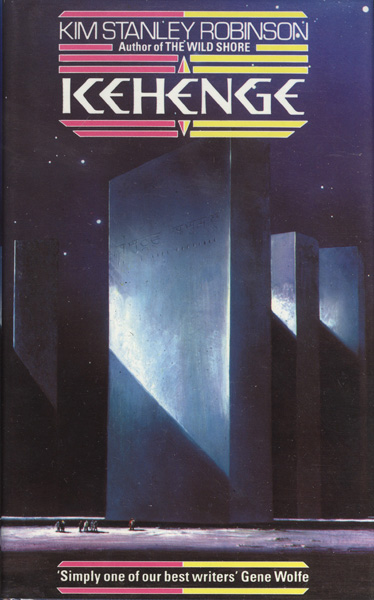
- Icehenge
Kim Stanley Robinsonstandalone novel1984
similar byscience fictionmysteriousreflective+1 more
Icehenge unfolds in three parts, narrated years or centuries apart by different investigators piecing together the same facts. The first is the diary of Emma Weil, an engineer swept into a Martian revolution in 2248, conscripted onto a rebel starship fitted for a voyage beyond the solar system, and forced to decide how far her sympathy for the uprising extends. Generations later, other narrators pick up the thread of what became of her and the ship, drawn toward a stone monument on a moon of Pluto that should not exist. An early standalone novel by Kim Stanley Robinson, revisiting the Martian-revolution material he later expanded into the Mars trilogy.
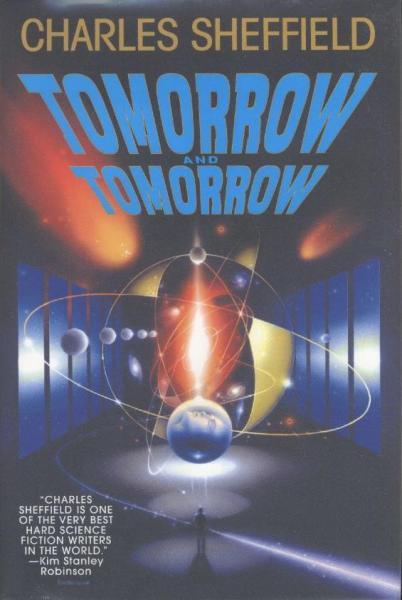
- Tomorrow and Tomorrow
Charles Sheffieldstandalone novel1997
similar byimmortalityscience fictionreflective+1 more
Tomorrow and Tomorrow is a 1997 science fiction novel by Charles Sheffield. The book starts in approximately the year 2020 and follows the protracted adventures of Drake Merlin, in his quest to save his wife from a terminal brain disease, over the course of eons. Similar premises are presented in the 2006 film The Fountain, as well as the Isaac Asimov story "The Last Question".
- The Bone Clocks
David Mitchellstandalone novel2014
similar byimmortalityour worldcontemporary+1 more
The Bone Clocks is a 2014 novel by British writer David Mitchell. It was long-listed for the Man Booker Prize, and described as one of the best novels of the year by Stephen King. The novel won the 2015 World Fantasy Award.
- The Hercules Text
Jack McDevittstandalone novel1986
similar byscience fictionmysteriousour worldcontemporaryreflective
The Hercules Text is a 1986 science fiction novel by American writer Jack McDevitt. It tells the story of a message of intelligent extraterrestrial origin received by SETI scientists. The Hercules Text was nominated for the Philip K. Dick Award in 1986.