More like Divided by Infinity
anchored on:science fiction
but
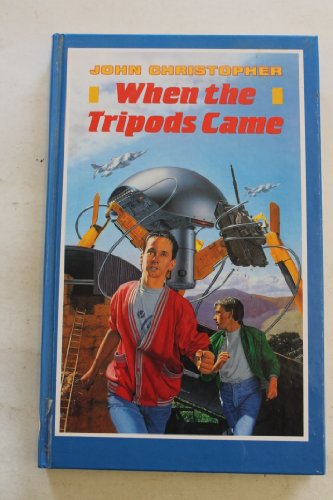
- Tripods
series4 books1967
completed
similar byscience fictionnear futurealienspost-apocalyptic
The Tripods is a series of young adult science fiction novels by John Christopher. The series takes place in a post-apocalyptic world where humanity is enslaved by "Tripods"—gigantic three-legged walking machines piloted by an alien race later identified as the "Masters". The first two books were the basis of a science fiction TV series, produced in the United Kingdom in the 1980s.
- The Martian Chronicles
series30 books1946
completed
similar byscience fictionnear future+1 more
The Martian Chronicles (1950) is Ray Bradbury's fix-up novel, a chain of linked short stories following waves of settlers leaving a troubled Earth to colonize Mars and encountering its native Martians, before Earth itself is ultimately consumed by nuclear war.
- Stranger in a Strange Land
Robert A. Heinleinstandalone novel1961
similar byscience fictionnear futurealiens
Stranger in a Strange Land is a 1961 science fiction novel by the American author Robert A. Heinlein. It tells the story of Valentine Michael Smith, a human who comes to Earth in early adulthood after being born on the planet Mars and raised by Martians, and explores his interaction with and eventual transformation of Terran culture.
- Sparrow
series2 books1996
similar byscience fictionnear futurealiensgrief and loss
Mary Doria Russell's The Sparrow (1996) follows a Jesuit-led mission to the planet Rakhat after radio signals from Alpha Centauri reveal it hosts intelligent life, alternating between the expedition and the traumatized return of its sole survivor, Father Emilio Sandoz, as he tries to explain what happened. The sequel Children of God (1998) follows Sandoz back to Rakhat and continues working out the theological and political fallout of first contact between humans and the planet's two native species.
- This Is the Way the World Ends
James Morrowstandalone novel1986
similar byscience fictionnear futurepost-apocalyptic+2 more
This Is the Way the World Ends is a post-apocalyptic novel by American writer James K. Morrow, published in 1986.
- Childhood's End
Arthur C. Clarkestandalone novel1953
similar byscience fictionnear futurealiens
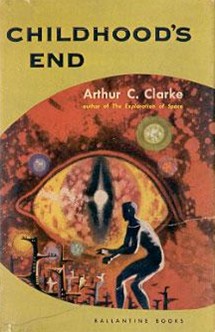
Childhood's End is a 1953 science fiction novel by the British author Arthur C. Clarke. The story follows a peaceful alien invasion of Earth by mysterious Overlords, whose arrival begins decades of apparent utopia under indirect alien rule, at the cost of human identity and culture.
- The 5th Wave
series4 books2013
similar byscience fictionnear futurealienspost-apocalyptic
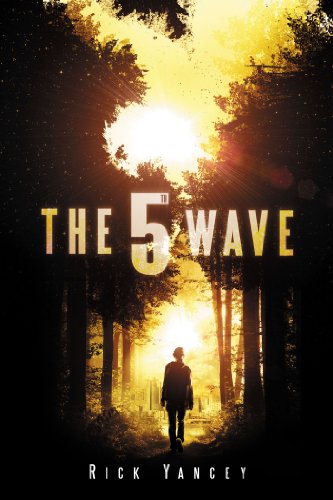
Rick Yancey's The 5th Wave opens after a series of escalating alien attacks has already devastated Earth's population and infrastructure, following sixteen-year-old survivor Cassie Sullivan as she searches for her younger brother while trying to work out who, among the remaining humans, can still be trusted. The trilogy is young-adult science fiction that treats its alien-invasion premise as a survival and paranoia story more than a war story.
- The Road
Cormac McCarthystandalone novel2006
similar byscience fictionnear futuregrief and losspost-apocalyptic
In this post-apocalyptic novel, a father and his son walk alone through burned America. Nothing moves in the ravaged landscape save the ash on the wind. It is cold enough to crack stones, and when the snow falls it is gray. They sky is dark. Their destination is the coast, although they don't know what, if anything, awaits them there. They have nothing; just a pistol to defend themselves against the lawless bands that stalk the road, the clothes they are wearing, a cart of scavenged food--and each other. This book boldly imagines a future in which no hope remains, but in which the father and his son, "each the other's world entire," are sustained by love. It is an unflinching meditation on the worst and the best that we are capable of: ultimate destructiveness, desperate tenacity, and the tenderness that keeps two people alive in the face of total devastation.--From publisher description.
- Greybeard
Brian W. Aldissstandalone novel1964
similar byscience fictionnear futuregrief and losspost-apocalyptic
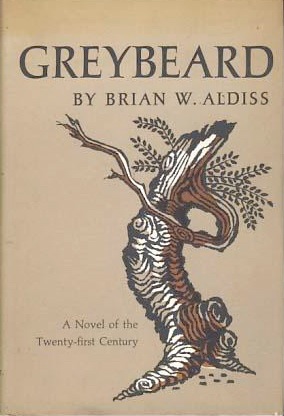
Long after a catastrophe that has sterilized humans and most other mammals, the 54-year-old protagonists—Greybeard and Martha—take a tour of entropic England. In scattered self contained communities only the old survive, while outside these enclaves nature comes back into its own, peopling the land with new animal life.
- Xenogenesis / Lilith's Brood
series4 books1987
completed
similar byscience fictionaliens+2 more
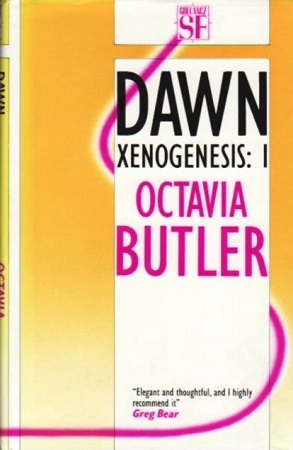
Lilith's Brood, previously known as the Xenogenesis Trilogy, is a collection of three science fiction works by Octavia E. Butler: Dawn, Adulthood Rites, and Imago.
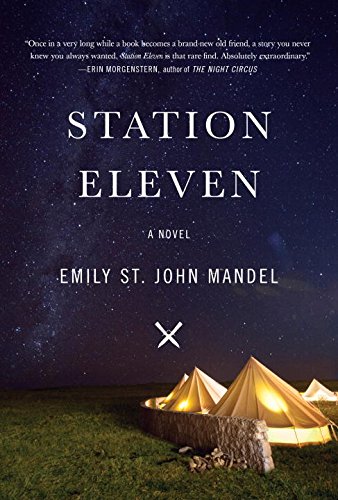
- Station Eleven
Emily St. John Mandelstandalone novel2014
similar byscience fictionnear futurepost-apocalyptic+1 more
"Set in the days of civilization's collapse, Station Eleven tells the story of a Hollywood star, his would-be savior, and a nomadic group of actors roaming the scattered outposts of the Great Lakes region, risking everything for art and humanity. One snowy night a famous Hollywood actor slumps over and dies onstage during a production of King Lear. Hours later, the world as we know it begins to dissolve. Moving back and forth in time — from the actor's early days as a film star to fifteen years in the future, when a theater troupe known as the Traveling Symphony roams the wasteland of what remains — this suspenseful, elegiac, spellbinding novel charts the strange twists of fate that connect five people: the actor, the man who tried to save him, the actor's first wife, his oldest friend, and a young actress with the Traveling Symphony, caught in the crosshairs of a dangerous self-proclaimed prophet." (source: Goodreads.com)
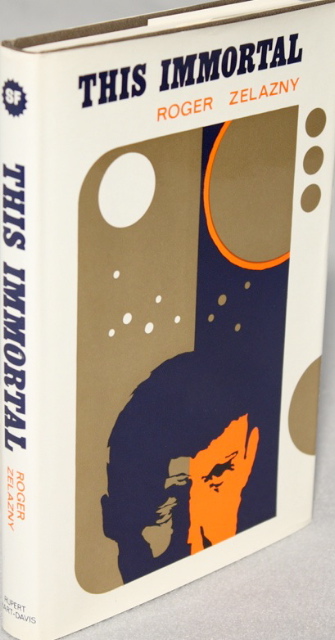
- This Immortal
series2 books1966
similar byscience fictionaliensimmortalitypost-apocalyptic
This Immortal is a single science fiction novel by Roger Zelazny, expanded from his 1965 serial ...And Call Me Conrad. In a depopulated future Earth largely toured by an alien race, its long-lived, secretive protagonist Conrad Nomikos is assigned to guide and protect a visiting alien across the ruins of Greece and Egypt, uncovering old grudges and assassination plots along the way. The novel shared the 1966 Hugo Award for Best Novel with Frank Herbert's Dune.
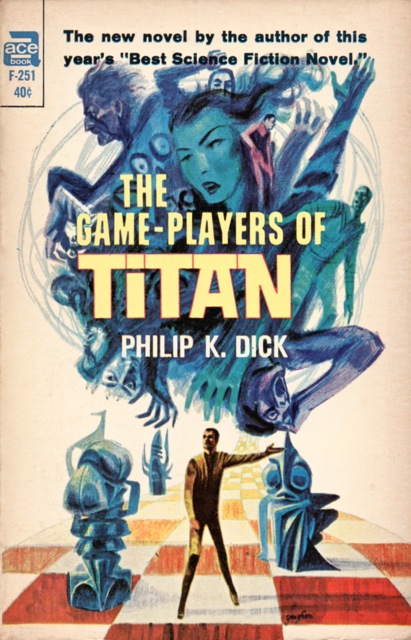
- The Game-Players of Titan
Philip K. Dickstandalone novel1963
similar byscience fictionnear futurealienspost-apocalyptic
In a depopulated, mostly sterile America, land, marriages and social standing are all wagered on Bluff, a high-stakes game administered by the vugs, gelatinous, gambling-obsessed aliens from Titan who rule Earth without ever quite occupying it. Pete Garden's bipolar disorder threatens his standing among the game's players even as his new wife becomes pregnant, a near-miraculous event in this exhausted world, and his attraction to a telepath complicates things further. When a fellow player turns up dead, Pete finds himself a suspect in a mystery tangled up with induced amnesia and vug politics he barely understands. Philip K. Dick's 1963 novel.
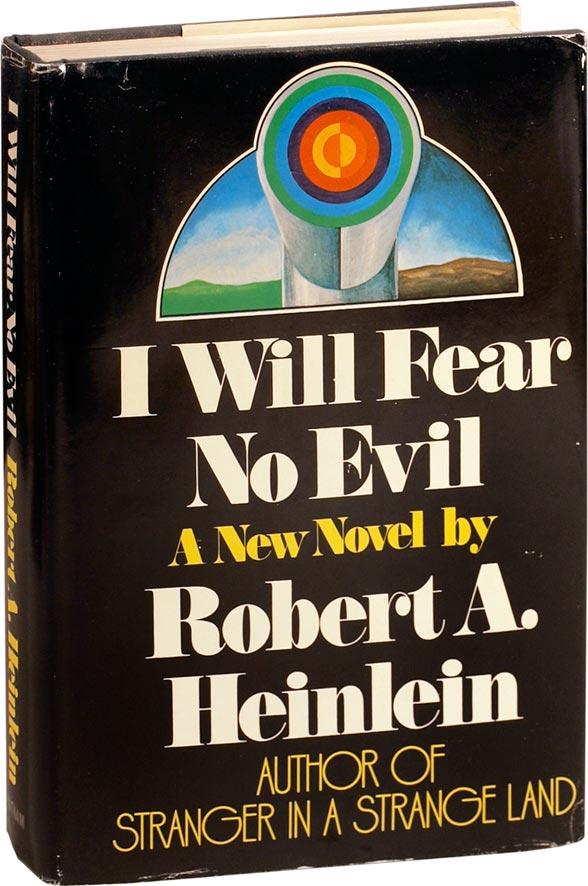
- I Will Fear No Evil
Robert A. Heinleinstandalone novel1970
similar byscience fictionnear futureimmortality
I Will Fear No Evil is a science fiction novel by American writer Robert A. Heinlein, originally serialised in Galaxy and published in hardcover in 1970. The title is taken from Psalm 23:4.
- Future History
series42 books1939
completed
similar byscience fiction+2 more
The Future History is a series of science fiction stories written by American author Robert A. Heinlein (1907–1988). It describes a projected future of the human race from the middle of the 20th century through the early 23rd century. The term Future History was coined by John W. Campbell Jr. in the February 1941 issue of Astounding Science Fiction. Campbell published an early draft of Heinlein's chart of the series in the May 1941 issue.
- Gaean
series3 books1979
completed
similar byscience fictionaliens+1 more
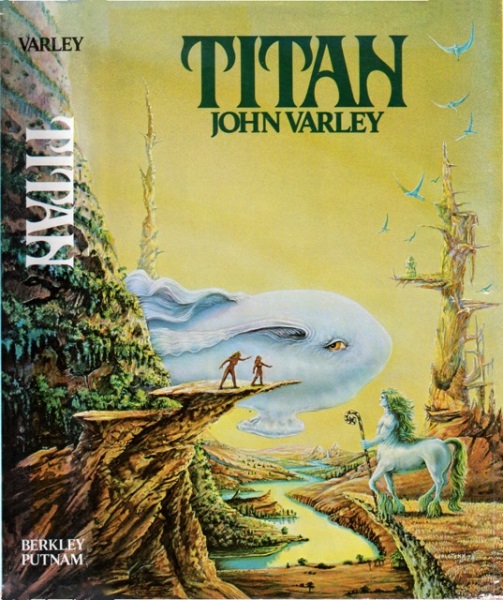
The Gaea Trilogy consists of three science fiction novels by John Varley. The stories tell of humanity's encounter with a living being in the shape of a 1,300 km diameter Stanford torus, inhabited by many different species, most notably the centaur-like Titanides, in orbit around the planet Saturn.
- Black Star Rising
Frederik Pohlstandalone novel1985
similar byscience fictionnear futurealienspost-apocalyptic
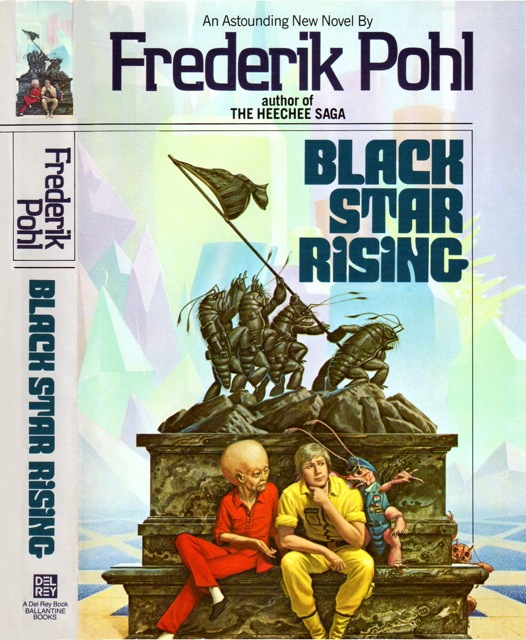
Black Star Rising, published in 1986, is a dystopian science fiction novel by American author Frederik Pohl. It is about a post-nuclear war future in which a conquered United States becomes a Chinese farming colony. The main character is an American who the Chinese send to meet a race of warlike aliens who come to Earth.
- Slaughterhouse-Five or the Children's Crusade: A Duty-Dance with Death
Kurt Vonnegut & Jr.standalone novel1969
similar byscience fictionmetafiction+2 more
Vonnegut opens in his own voice, describing the twenty years it took him to face writing about surviving the firebombing of Dresden as a POW. He then hands the story to Billy Pilgrim, an awkward, fatalistic American chaplain's assistant swept into the Battle of the Bulge and captured by German forces alongside a soldier who dies blaming him for it. Imprisoned in a disused slaughterhouse in Dresden, Billy survives the firebombing that follows, and, we're told upfront, has also come 'unstuck in time,' living his life out of order, including a stretch on the alien world of Tralfamadore. Vonnegut's best-known novel folds war memoir into science fiction and black comedy.
- Rollback
Robert J. Sawyerstandalone novel2007
similar byscience fictionnear futurealiensimmortality
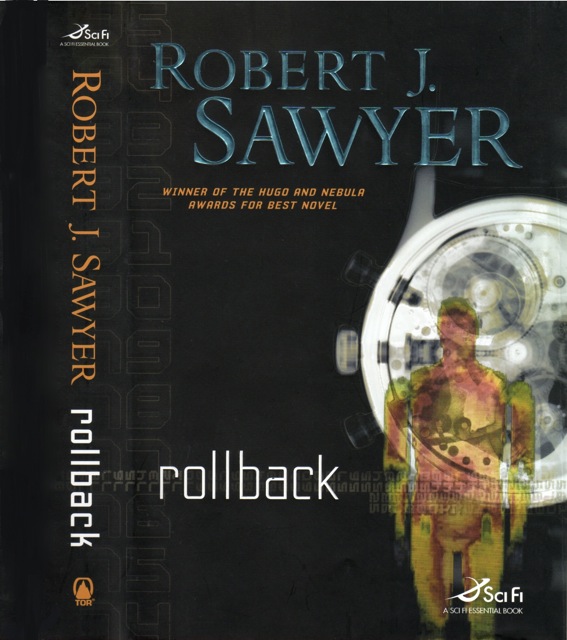
Rollback is a 2007 science fiction novel by Canadian author Robert J. Sawyer that was serialized in four parts in Analog Science Fiction and Fact from October 2006 to January 2007. It deals primarily with the social effects of drastic age rejuvenation technology and first contact theory. In 2008 the novel was nominated for a Hugo Award and a Campbell Award.
- Time Storm
Gordon R. Dicksonstandalone novel1977
similar byscience fictionnear futurepost-apocalyptic+1 more
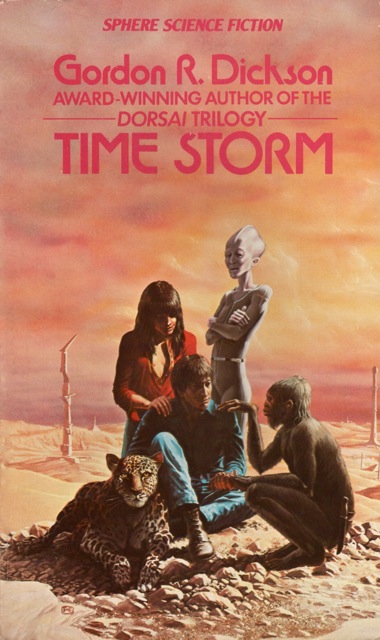
A time storm has devastated the Earth, and only a small fraction of humankind remains. From the rubble, three survivors form an unlikely alliance: a young man, a young woman, and a leopard. "A masterful science fiction story told by a masterful science fiction writer". -- Milwaukee Journal. A time storm strikes the Earth. The Earth remains, but different parts of the Earth are in different eras. Travel between the different zones is thought to be impossible. The main character, Marc Despard, resolves to fight the time storm. After some struggles, he assembles a small band of people, including one alien, to help him try to understand what has happened and to stop the time storm. He has 2 extraordinary relationships with a older teenaged girl who is speechless for the first part of the book (she was "struck dumb" by the time storm) and with, believe it or not, a leopard. Dickson's writing makes the extraordinary seem quite normal. Ultimately, after being harried by a Mad Max-like group of survivors, he uses a machine found in a different era of time to bring his small band of followers into the future so that he can find those who are trying to fight the time storm. He convinces those future beings that he is capable of fighting the time storm, and ultimately stops it, and gets the girl in the end.
- War Against the Chtorr
series7 books1983
similar byscience fictionnear futurealienspost-apocalyptic
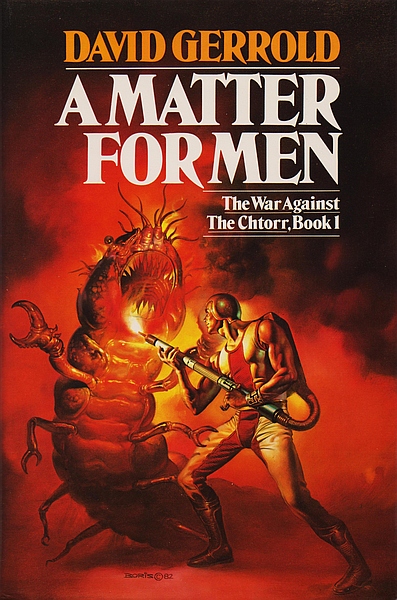
The War Against the Chtorr is a series of science fiction novels by American writer David Gerrold. The Chtorr series was originally planned as a trilogy, but as the story became more intricate, Gerrold realized that three books would not be enough for him to tell the entire story. For a time, he was uncertain how many books there would be in the end but plans on seven. As of 2022, four books have been completed. As of 2017, a fifth and sixth were in the works, 24 years after the publication of the fourth book.
- Eater
Gregory Benfordstandalone novel2000
similar byscience fictionnear futurealiensgrief and loss
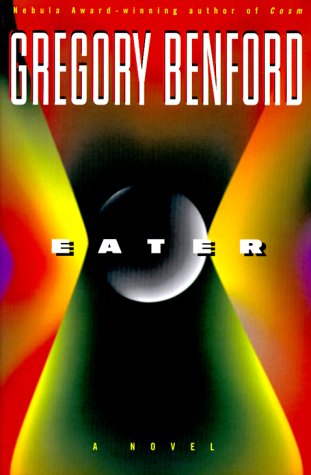
From the flaps of the Eos first edition: "Dr. Benjamin Knowlton heads the High Energy Astrophysics Center, a prestigious research facility devoted to the interpretation of astronomical data. He stands at the apex of his profession, respected by his peers and involved in research with the potential to revolutionize our understanding of the universe. But Benjamin has no cause to celebrate. His beloved wife and colleague, Channing, an ex-astronaut turned astronomer, is dying of cancer. She has only a few months to live. Then an anomalous signal from a remote probe alerts Banjamin to the presence of a wandering black hole beyond the orbit of Pluto. Though its trajectory will take it through the solar system, the singularity poses no threat to Earth-on the contrary, it may hold answers to the most fundamental questions of physics. But when an encoded message is received from the black hole, excitement turns to astonishment and apprehension. The thing is alive, intelligent, its mind residing in powerfully fluctuating fields of electromagnetic energies that radiate outward from its infinitely dense core. And it wants a closer look at Earth... and its inhabitants. The entity - dubbed the Eater for its habit of devouring everything in its path - proves eager to share its vast knowledge, accumulated in the course of explorations that began long before life arose on Earth. In exchange, it seeks to learn about human art, culture, and science. The world is charmed by the seemingly beneficent alien. Even Channing is infused with fresh strength and purpose. But gradually a terrifying truth about the singularity emerges - a truth almost too awful to comprehend. Now, as the world waits, Channing volunteers to undertake a desperate gamble: a one-to-one confrontation with the Eater."
- The Dog Stars
Peter Hellerstandalone novel2012
similar byscience fictionnear futuregrief and losspost-apocalyptic
The Dog Stars is a 2012 post-apocalyptic fiction novel by Peter Heller. It follows a pilot and mechanic, Hig, who is surviving at an abandoned airport after a pandemic. He meets other survivors, including a woman, while dealing with grief for his old life. The book was adapted into a movie, also called The Dog Stars, released in 2026.
- Cold People
Tom Rob Smithstandalone novel2023
similar byscience fictionnear futurealienspost-apocalyptic
A novel about a colony of global apocalypse survivors seeking to reinvent civilisation under the most extreme conditions imaginable: without warning, a mysterious and omnipotent force has claimed Earth for their own; there are no negotiations, no demands, no reasons given for their actions; humanity has thirty days to reach the one place on Earth where they will be allowed to exist... Antarctica.