Loreful
HomeDiscover
Search series, authors…⌘K
Loreful

Reading orders for SF/F series and shared universes — with your place kept in every one.

Explore

UniversesSeriesWorksAuthorsAtlas

Help

FAQAboutSite map

Account & legal

Sign inCreate accountPrivacyTerms

Data

Built on ISFDB, Wikipedia, Wikidata and Open Library. Curated reading orders carry their reasoning on the page; the rest follow publication order. Data sources & licenses

© Loreful · data: ISFDB · CC BY

More like Division by Zero

anchored on:science fictionmadnessour worldcontemporaryidentitygrief and loss+2 more

but

Mood

The mood the book leaves you in.

  • The reading experience is propelled by journeys, exploration, and physical risk; excitement and forward momentum dominate over dread or introspection.
  • Joy and loss are deliberately mixed; the resolution grants characters something real while taking something else away, leaving warmth and sorrow together.
  • The book demands work from the reader — dense prose, difficult structure, unfamiliar ideas, or morally uncomfortable material — as part of its intended effect.
  • Grim events, cruelty, or despair dominate the atmosphere, and the book does not soften them with comfort or comic relief.
  • The atmosphere is quietly unsettling — wrongness, unease, and the uncanny pervade the book without necessarily escalating into overt horror.
  • The book is built to move the reader; character feeling is foregrounded and major scenes aim at a strong emotional response.
  • Humor is a primary aim and the prose plays for laughs — comic situations, wit, or dialogue produce sustained comedy, not occasional levity.
  • The book insists that things can improve; effort and decency are shown to matter, and the arc bends toward better outcomes even through hardship.
  • The book teaches as it goes — real facts, history, science, or craft are conveyed in enough depth that learning is part of the reading experience.
  • The book is designed to uplift and motivate, presenting perseverance or achievement in a way that invites the reader to aspire or act.
  • The overall register is cheerful and easygoing; stakes are kept gentle and the book avoids dwelling on pain or dread.
  • Withheld information drives the experience; the book sustains enigmas and secrets the reader wants resolved, whatever its genre.
  • The book is contemplative and inward-looking, giving more weight to thought, memory, and meaning than to external events.
  • The book works as comfort reading — low tension, a soothing pace, and an atmosphere the reader can unwind in.
  • Grief, loss, or melancholy set the dominant register, and the book lets sorrow stand rather than resolving it into comfort.
  • Sustained suspense is the point; the book keeps the reader braced for what happens next through danger, pressure, or impending revelation.
  • Playful invention and charm define the register — fanciful conceits, light absurdity, and a narration that delights in its own oddity.

About

What the story runs on.

  • Stories in which extraterrestrial beings are central — as characters, cultures, or the object of the plot.
  • Stories in which staying alive against nature, catastrophe, or scarcity is the central problem.
  • Stories of lovers kept apart by law, family, faith, or station, where the obstacle to love is the plot.
  • Stories in which a friendship — its making, testing, or loss — is the emotional center.
  • Stories of growing up — a young protagonist crossing from childhood into adult knowledge and responsibility.
  • Stories about who a character truly is — self-discovery, doubled lives, and the search for a self.
  • Stories about mental unraveling — descent into madness, delusion, and minds at war with themselves.
  • Stories about mourning — living through the death of a loved one and what loss does to the survivors.
  • Stories in which a buried family truth — hidden parentage, crimes, or shames — surfaces and reorders the present.
  • Stories driven by maneuvering for power — factions, conspiracies, and statecraft conducted in shadow.
  • Stories in which war itself is the subject — combat, occupation, and what warfare does to soldiers and civilians.
  • Stories organized around investigating a killing — the case, the clues, and the pursuit of the killer, in any genre's clothing.

Shelf

Where it sits in the library.

    • Fiction built on magic or other supernatural elements that have no scientific explanation.
    • Secondary-world fantasy at large scale, where the fate of nations or the world turns on the protagonists' struggle.
    • Fantasy set in a recognizably modern city or contemporary world where the supernatural intrudes on everyday life.
    • Fantasy that blends in horror's atmosphere and imagery, keeping a fantastical frame around grim or frightening material.
    • Action-driven fantasy following warriors or rogues with personal stakes against sorcerous threats, rather than world-spanning conflicts.
    • Fantasy set in a real historical period or a close analogue of one, with magic woven into the era.
    • Fantasy in which protagonists cross from the ordinary world into another world through a portal or similar passage.
    • Fiction that retells or reworks a traditional fairy tale in a new form or setting.
    • Fantasy drawing directly on myths, legends, and folklore, retelling them or building on their figures and logic.
    • Fantasy of ghosts, vampires, shapeshifters, psychics, and similar phenomena, usually set in an otherwise ordinary world.
    • Fiction mixing science-fictional trappings with overtly magical or impossible elements in one setting.
    • Low-stakes fantasy emphasizing comfort, community, and everyday pleasures over conflict and peril.
    • Speculative fiction of pervasive moral ambiguity, violence, and cynicism that rejects heroic conventions — fantasy and SF alike.
      • Fiction that extrapolates from science and technology — future societies, space travel, or speculative inventions — within at least nominally natural laws.
      • Science fiction of interstellar scope — starships, galactic polities, and adventure across star systems.
      • Science fiction committed to scientific rigor, where technical plausibility constrains the story.
      • Science fiction centered on armed forces and warfare, told largely from a military point of view.
      • Science fiction of networked, corporate-dominated near futures, pairing high technology with social decay.
      • Science fiction styled on nineteenth-century steam-powered technology, often in a Victorian or pseudo-Victorian setting.
      • Fiction depicting an oppressive or catastrophic society, presented as a warning.
      • Fiction set after civilization's collapse, following survivors in the ruins of the old world.
      • Fiction in which characters move between past and future, and the mechanics or consequences of that travel drive the plot.
      • Fiction exploring a world where a historical event went differently and history diverged from ours.
      • Science fiction about humanity's first encounter and communication with an alien intelligence.
      • Science fiction in which extraterrestrial forces attack or occupy Earth and humanity resists.
      • Fiction whose primary aim is to frighten or unsettle the reader through dread, menace, or the monstrous.
      • Horror of vast, indifferent, incomprehensible entities before which humanity is insignificant, in the Lovecraft tradition.
      • Horror of decaying houses, buried family secrets, and oppressive atmosphere in the Gothic literary tradition.
      • Horror centered on hauntings and the returning dead.
      • Horror located in the mind — paranoia, obsession, and unreliable perception rather than external monsters.
      • Horror built around the reanimated dead and survival amid their outbreaks.
      • Horror defined by explicit, transgressive gore that refuses to cut away from violence.
      • Speculative fiction of the strange and uncanny that resists both natural explanation and standard genre categories.
      • Fiction organized around solving a crime or puzzle, typically following an investigator toward the identification of a culprit.
      • A puzzle-first mystery that lays out clues so the culprit's identity can be deduced before the reveal.
      • Crime fiction of moral ambiguity, fatalism, and hard-edged style, set among the corrupt and the doomed.
      • A mystery following the realistic routines of police work — forensics, interviews, and case-building.
      • A gentle mystery with an amateur sleuth, a small community, and violence kept off the page.
      • A mystery set in a past era, where the investigation works within that period's methods and society.
      • Fast-paced fiction driven by imminent danger, pursuit, or high-stakes conspiracy, built to sustain tension.
      • A thriller of espionage — agents, tradecraft, and intelligence services in conflict.
      • A thriller centered on lawyers and the courtroom, where litigation carries the suspense.
      • A thriller driven by detailed contemporary or near-future technology, often military or scientific.
      • A thriller whose tension comes from mental states and manipulation between characters rather than external action.
      • Fiction whose central plot is a romantic relationship and its development toward an emotionally satisfying resolution.
      • Romance in which one or both partners are supernatural beings, blending fantasy elements into the love story.
      • A fantasy-romance hybrid in which the romantic arc and the fantasy plot carry equal weight.
      • Romance set in a past era, with courtship shaped by the period's society and manners.
      • Romance set in the present day, without supernatural or historical elements.
      • Fiction set in a real past period, where the historical setting materially shapes characters and events.
        • General and literary fiction emphasizing prose style, character interiority, or formal ambition over genre plot conventions.
        • Fiction in a realistic world where magical events occur and are treated as ordinary, in the tradition of Latin American literature.
        • Fiction that ridicules people, institutions, or society in order to criticize them.
        • Fiction of dreamlike, irrational imagery and logic that breaks from realistic representation.
        • Fiction that plays with narrative convention through metafiction, fragmentation, and self-reference.
        • Fiction propelled by journeys, exploration, and physical peril, where action and survival carry the plot.
        • Adventure fiction of ships and seafaring — naval engagements, voyages, and life at sea.
        • Fiction of the American frontier West — gunmen, ranchers, and lawmen, typically in the late nineteenth century.
        • Fiction centered on soldiers, campaigns, and the experience of warfare, historical or imagined.
          • Fiction written primarily to amuse, using comedic situations, wit, or parody as its organizing principle.
            • Multi-generational fiction following a family or dynasty across decades, with inheritance and kinship as the through-line.
              • Fiction whose world runs on explicit game mechanics — levels, stats, and skills that characters can see and exploit.
                • Fiction about costumed or superpowered heroes and their conflicts with comparable villains.

                Practical

                How long a commitment, whether it stands alone, and whether it has finished.

                Tap a chip to ask for it · tap again to rule it out · once more to clear. Numbers show what would be left.

                • Cover of Flowers for Algernon
                  Flowers for Algernon

                  Daniel Keyes · standalone novel · 1966

                  similar byscience fictioncontemporarysadidentity+1 more

                  A man with a low IQ becomes the subject of an experimental medical procedure which raises his IQ well over genius level.

                • Cover of HARM
                  HARM

                  Brian W. Aldiss · standalone novel · 2007

                  similar byscience fictioncontemporarymadnesschallengingour worldidentity

                  "... a young writer of light fiction with a Muslim heritage has been arrested for no compelling reason. He is held as Prisoner B, in HARM ... and isolated. To evade this misery Prisoner B escapes - through his split personality - to a science fiction-like planet ruled by insects. But gradually the two worlds start to converge ..."

                • Cover of Dhalgren
                  Dhalgren

                  Samuel R. Delany · standalone novel · 1975

                  similar byscience fictioncontemporarychallengingidentitymadness

                  Dhalgren is a 1975 science fiction novel by American writer Samuel R. Delany. It features an extended trip to and through Bellona, a fictional city in the American Midwest cut off from the rest of the world by an unknown catastrophe. It is number 33 on the 20th Century's Greatest Hits: 100 English-Language Books of Fiction list.

                • Cover of The Hollow Man
                  The Hollow Man

                  Dan Simmons · standalone novel · 1992

                  similar byscience fictionour worldcontemporarymadnessgrief and loss+1 more

                  The Hollow Man is a novel by American author Dan Simmons. The book was initially published by Bantam Books on September 1, 1992. It narrates the story of a university lecturer who has the ability to "hear" the thoughts of others, an ability he shares with his dying wife.

                • Cover of Eye in the Sky
                  Eye in the Sky

                  Philip K. Dick · standalone novel · 1957

                  similar byscience fictionour worldchallengingidentitymadness

                  Eight visitors touring a particle-accelerator facility are caught in a catastrophic malfunction, a collapsing platform, a burst of radiation, that leaves them all unconscious. When protagonist Jack Hamilton, an engineer recently fired over Red Scare-era suspicions about his wife's politics, comes to, the world around him is subtly, then not so subtly, wrong: physics bends to fit one fellow victim's religious convictions, then to another's paranoid fears, as the group cycles through what turn out to be shared hallucinations built from each other's private belief systems. Philip K. Dick's early novel about how differently people actually see the same world.

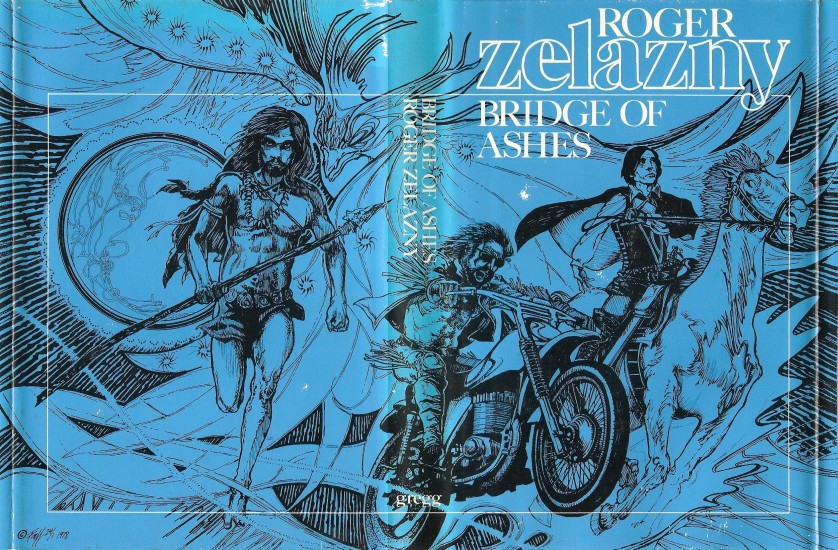
                • Cover of Bridge of Ashes
                  Bridge of Ashes

                  Roger Zelazny · standalone novel · 1976

                  similar byscience fictionour worldcontemporarychallengingidentity

                  Bridge of Ashes is an experimental science fiction novel by American writer Roger Zelazny. The paperback edition was published in 1976 and the hardcover in 1979. Zelazny describes the book as one of five books from which he learned things "that have borne me through thirty or so others". He states that he "felt that if I could pull it off I could achieve some powerful effects. What I learned from this book is something of the limits of puzzlement in that no man’s land between suspense and the weakening of communication".

                • Cover of Never Let Me Go
                  Never Let Me Go

                  Kazuo Ishiguro · standalone novel · 2005

                  similar byscience fictionour worldsadidentitygrief and loss

                  Never Let Me Go is a 2005 science fiction novel by the British author Kazuo Ishiguro. It was shortlisted for the 2005 Man Booker Prize, for the 2006 Arthur C. Clarke Award and the 2005 National Book Critics Circle Award. Time magazine named it the best novel of 2005. It included the novel in its '100 Best English-language novels published since 1923—the beginning of TIME'. It also received an ALA Alex Award in 2006. A film adaptation directed by Mark Romanek was released in 2010.

                • Cover of Legion / Stephen Leeds
                  Legion / Stephen Leeds

                  series · 5 books · 2012

                  similar byscience fictionour worldcontemporaryidentitymadness

                  Legion, or the Stephen Leeds series, is a series of science fiction novellas created by American author Brandon Sanderson. Sanderson authored the first three stories : Legion, first published on August 31, 2012, Legion: Skin Deep in November 2014, and Legion: Lies of the Beholder in September 2018. Death and Faxes, co-authored by Max Epstein, David Pace, and Michael Harkins, was released in June 2022. The books have received favorable reviews.

                • Cover of Dying Inside
                  Dying Inside

                  Robert Silverberg · standalone novel · 1972

                  similar byscience fictioncontemporarysadidentity+1 more

                  Dying Inside is a 1972 science fiction novel by American writer Robert Silverberg. It was first serialized in Galaxy in 1972 and published in book form by Charles Scribner's Sons later that year. The novel follows David Selig, a middle-aged telepath in contemporary New York City, as the mind-reading ability that has shaped his life begins to disappear.

                • Cover of Spacetime Donuts
                  Spacetime Donuts

                  Rudy Rucker · standalone novel · 1981

                  similar byscience fictionour worldcontemporarychallengingidentity

                  Spacetime Donuts is a novel by Rudy Rucker published in 1981.

                • Cover of The Machine
                  The Machine

                  James Smythe · standalone novel · 2013

                  similar byscience fictionour worldcontemporarysadgrief and loss+1 more

                  From the publisher's website: Haunting memories defined him. The machine took them away. She vowed to rebuild him. From the author of The Testimony comes a Frankenstein for the twenty-first century. Beth lives alone on a desolate housing estate near the sea. She came here to rebuild her life following her husband's return from the war. His memories haunted him but a machine promised salvation. It could record memories, preserving a life that existed before the nightmares. Now the machines are gone. The government declared them too controversial, the side-effects too harmful. But within Beth's flat is an ever-whirring black box. She knows that memories can be put back, that she can rebuild her husband piece by piece. A Frankenstein tale for the 21st century, The Machine is a story of the indelibility of memory, the human cost of science and the horrors of love.

                • Cover of The Dreaming Jewels
                  The Dreaming Jewels

                  Theodore Sturgeon · standalone novel · 1950

                  similar byscience fictionour worldcontemporaryidentity

                  The Dreaming Jewels (1950), also known as The Synthetic Man, is a science fiction novel by American writer Theodore Sturgeon. It was his first published novel.

                • Cover of Southern Reach Trilogy
                  Southern Reach Trilogy

                  series · 4 books · 2014

                  similar byscience fictionour worldcontemporarymadness+1 more

                  The Southern Reach Series is a series of novels by the American author Jeff VanderMeer first published in 2014—Annihilation, Authority, Acceptance, and Absolution. The series takes its name from the secret agency that is central to the plot. In 2013, Paramount Pictures bought the movie rights for the series, and a film adaptation of Annihilation was made with Alex Garland as writer-director. The film was released in 2018. The most recent book in the series, Absolution, was released on 22 October 2024.

                • Cover of VALIS
                  VALIS

                  series · 4 books · 1981

                  completed

                  similar byscience fictionchallengingidentity+3 more

                  The VALIS trilogy is a set of science fiction/philosophical novels by author Philip K. Dick which include VALIS (1981), The Divine Invasion (1981), and The Transmigration of Timothy Archer (1982). Dick's first novel about the VALIS concept originally titled "VALISystem A", was published as Radio Free Albemuth after Dick's death in 1985.

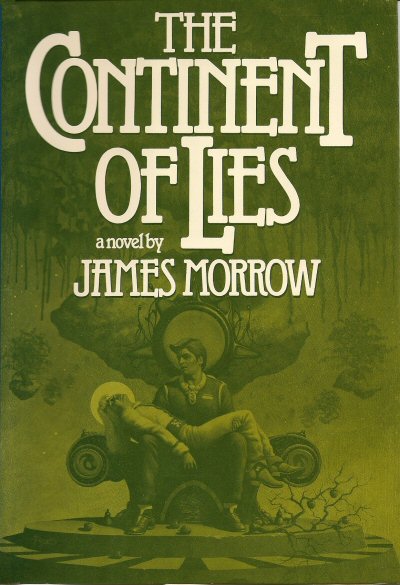
                • Cover of The Continent of Lies
                  The Continent of Lies

                  James Morrow · standalone novel · 1984

                  similar byscience fictionour worldcontemporarychallenging+1 more

                  The Continent of Lies is a 1984 novel written by James K. Morrow.

                • Cover of Lord Tyger
                  Lord Tyger

                  Philip José Farmer · standalone novel · 1970

                  similar byscience fictioncontemporaryour worldidentity+2 more

                  What if Tarzan had been written by William S. Burroughs instead of Edgar Rice Burroughs? A rich, insane, old racist attempts to raise a white Lord of the Jungle, but things don't turn out that way, and the product of this obsession and the jungle he is supposed to become Lord over must live with the consequences.

                • Cover of Stranger in a Strange Land
                  Stranger in a Strange Land

                  Robert A. Heinlein · standalone novel · 1961

                  similar byscience fictionchallengingidentityour world

                  Stranger in a Strange Land is a 1961 science fiction novel by the American author Robert A. Heinlein. It tells the story of Valentine Michael Smith, a human who comes to Earth in early adulthood after being born on the planet Mars and raised by Martians, and explores his interaction with and eventual transformation of Terran culture.

                • Cover of A Clockwork Orange
                  A Clockwork Orange

                  series · 4 books · 1962

                  completed

                  similar byscience fictionour worldchallenging+2 more

                  Anthony Burgess's 1962 novel is narrated by Alex, a teenage gang leader in a near-future Britain gripped by a youth subculture of extreme violence, recounting his crimes in Nadsat, an invented slang blending English with Russian-derived words. After his crimes catch up with him, Alex is made the subject of a controversial state program meant to forcibly reform his behavior, and the novel uses his ordeal to question whether imposed goodness is worth the loss of free will. It is a standalone novel.

                • Cover of Passage
                  Passage

                  Connie Willis · standalone novel · 2001

                  similar byscience fictionour worldcontemporarygrief and loss

                  Passage is a science fiction novel by Connie Willis, published in 2001. The novel won the Locus Award for Best Novel in 2002, was shortlisted for the Nebula Award in 2001, and received nominations for the Hugo, Campbell, and Clarke Awards in 2002.

                • Cover of Shark Heart
                  Shark Heart

                  Emily Habeck · standalone novel · 2023

                  similar byour worldcontemporarysadidentitygrief and loss+1 more

                  Subtitled "A Love Story"

                • Cover of Dark Matter
                  Dark Matter

                  Blake Crouch · standalone novel · 2016

                  similar byscience fictionour worldcontemporaryidentity

                  Jason Dessen, college physics professor, husband and father, is kidnapped and taken to a parallel universe where his counterpart had dedicated his life to inventing a method of traveling between an infinity of parallel universes.

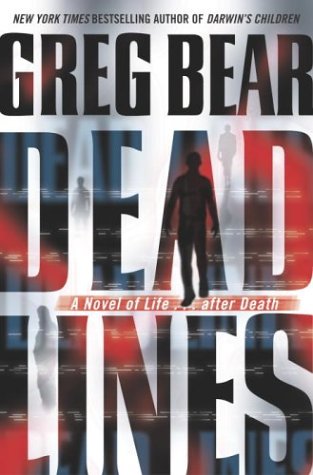
                • Cover of Dead Lines
                  Dead Lines

                  Greg Bear · standalone novel · 2004

                  similar byscience fictionour worldcontemporarymadnessgrief and loss

                  From the flaps of the Ballantine first edition: "For the last two years, Peter Russell has mourned the death of one of his twin daughters - who was just ten when she was murdered. Recent news of his best friend's fatal heart attack has now come as another devastating blow. Divorced, despondent, and going nowhere in his career, Peter fears his life is circling the drain. Then Trans comes along. The brainchild of an upstart telecom company, Trans is (as its name suggests) a transcendent marvel, a sleek, handheld interpersonal communication device capable of flawless operation anywhere in the world, at any time. "A cell phone, but not" - transmitting with crystal clarity across a newly discovered, never-utilized bandwidth... and poised to spark a new-technology revolution. When its creators offer Peter a position on their team, it should be a golden opportunity for him. If only he wasn't seemingly going mad. Everywhere Peter turns, inexplicable apparitions are walking before him or reaching out in torment. After a chilling encounter with his own lost child he begins to grasp the terrifying truth: Trans is a Pandora's box that has tapped into a frequency not of this world... but of the next. And now, via this open channel to oblivion, the dead have gained access to the living. For Peter, and for humankind, a long shadowy night of the soul has descended, bringing with it the stuff of a horrifying nightmare from which they may never awaken."

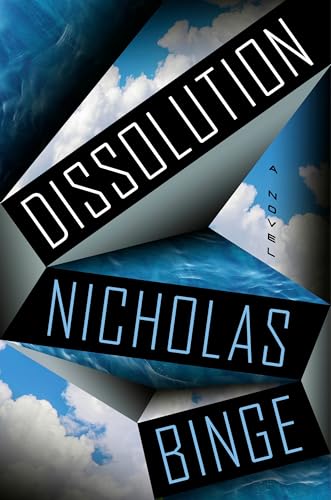
                • Cover of Dissolution
                  Dissolution

                  Nicholas Binge · standalone novel · 2025

                  similar byscience fictionour worldcontemporarygrief and loss+1 more

                  Dissolution is a 2025 science fiction novel by Nicholas Binge, published in the UK by Harper Voyager, and in the US by Riverhead Books. It is published or forthcoming in multiple languages, including Spanish, German, Hungarian, and Arabic. The novel tells the story of Margaret (Maggie) Webb, who discovers that her husband Stanley’s Alzheimer’s is a false cover for the fact that his memories are being purposefully erased to keep something he did in his past hidden. The book alternates between Maggie and Stanley’s perspectives as they move through multiple decades of their relationship.

                • Cover of The Infinite Cage
                  The Infinite Cage

                  Keith Laumer · standalone novel · 1972

                  similar byscience fictionour worldcontemporaryidentitymadness

                  Synopsis from back cover: A little wisp of a man appears from who-knows-where, apparently suffering from delusions, schizophrenia, paranoia, and mental maladies not yet named. His misadventures in a hostile world would put Walter Mitty to shame for lack of imagination. He finds he has strange powers that bring him spectacular success at whatever he attempts--followed, it seems inevitably, by crushing disaster. At last, on the verge of utter despair, he stumbles onto a clue to the secret of his existence... Keith Laumer, famous for his witty novels of galaxy-hopping adventure, has created a spooky, funny, hauntingly brilliant novel that cannot be put down--and will never be forgotten-- Welcome To Adam's World