More like Dome
anchored on:science fictionpost-apocalypticunderwaternear futuregenetic engineeringsurvival+2 more
but
- The Fireman
Joe Hillstandalone novel2016
similar bynear futurescience fictionpost-apocalypticdarktensesurvivalplague and pandemic
The Fireman is a novel set in a post-apocalyptic time by American author Joe Hill. The novel, Hill's fourth, tells the tale of a deadly spore that has infected most of the world's population. Hill first spoke of the novel in 2013 in promotional interviews for his then-new novel NOS4A2. The novel was released on May 17, 2016.
- The Passage
series3 books2010
similar bynear futuredarktensepost-apocalypticsurvivalscience fiction+1 more
The Passage is a novel series by Justin Cronin. There are three published books in the series. The film rights were acquired by Fox Entertainment Group in 2007 for adaptation into a film trilogy, but after 12 years of development and planning, it was changed to a television series, which premiered in January 2019 and was canceled after the first season.
- I Am Legend
Richard Mathesonstandalone novel1954
similar bypost-apocalypticdarktensesurvivalscience fictionlast of their kindplague and pandemic
The last human survivor of the vampire epidemic has to maintain his defences against their onslaught, while attempting to research the cause and possibly solution to the plague. Robert Neville is the last living man on Earth... but he is not alone. Every other man, woman and child on the planet has become a vampire, and they are hungry for Neville's blood. By day he is the hunter, stalking the undead through the ruins of civilization. By night, he barricades himself in his home and prays for the dawn. How long can a man survive like this?
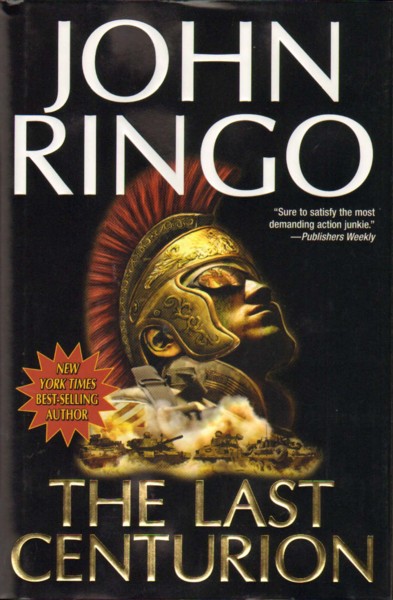
- The Last Centurion
John Ringostandalone novel2008
similar bynear futurescience fictionpost-apocalypticdarktensesurvivalplague and pandemic
The Last Centurion is a 2008 stand-alone novel by John Ringo. It is written in "blog style" from the point of view of a U.S. Army officer known as "Bandit Six". The novel is set in a post apocalyptic world that has been ravaged by a brief ice age and disease.
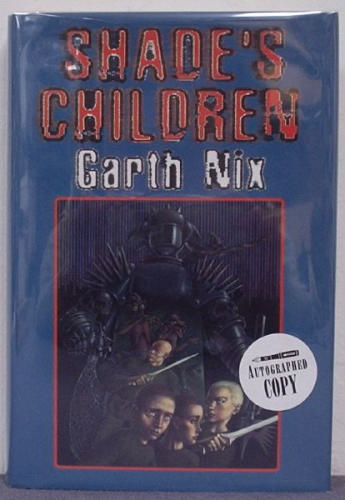
- Shade's Children milieu
series2 books1997
similar bynear futurescience fictionpost-apocalypticdarktensesurvival
Shade's Children is set on an Earth where all adults vanished overnight fourteen years earlier, leaving children to be harvested at puberty by the machines that now run the world, unless they escape into hiding with Shade, a mysterious AI-like protector. Garth Nix's 1997 novel is a single, self-contained book rather than a series, though its bleak post-apocalyptic premise has drawn comparisons to his other work.
- The Twilight of Briareus
Richard Cowperstandalone novel1974
similar bynear futurescience fictiondarktensegenetic engineeringsurvivalpost-apocalyptic
It took the light of the supernova Briareus Delta one hundred and thirty-two years to cross space to the Solar System. But the night it exploded in our sky was a night that would never be forgotten in the history of the world. For in that bath of cosmic particles, all things changed. Not only the weather and the flora and fauna, but humanity itself received what seemed to be its death sentence. Sterility signalled the end of man, until the strange children known as the Zeta-mutants began to appear. Richard Cowper, author of Clone and other sf novels, has produced in this new novel a gripping story of how one man coped with the terrible dilemma of his world - how he attempted to solve the problem of the girls with the amber eyes and what he did when he found out what he himself had become during The Twilight of Briarseus. (from the back cover of the DAW Books first printing)
- MaddAddam
series3 books2003
similar bynear futurescience fictiondarkgenetic engineeringsurvivalpost-apocalyptic
Margaret Atwood's MaddAddam trilogy (Oryx and Crake, The Year of the Flood, MaddAddam, 2003-2013) is set around a genetically engineered pandemic unleashed deliberately by the brilliant, disillusioned scientist Crake, who intends the deadly 'BlyssPluss' pill to wipe out humanity and clear the way for the gentler, engineered Crakers he has designed to replace it. Told from the perspectives of survivors including Crake's old friend Jimmy (now calling himself Snowman), the trilogy pieces together the pandemic's causes and its aftermath from multiple, overlapping vantage points.
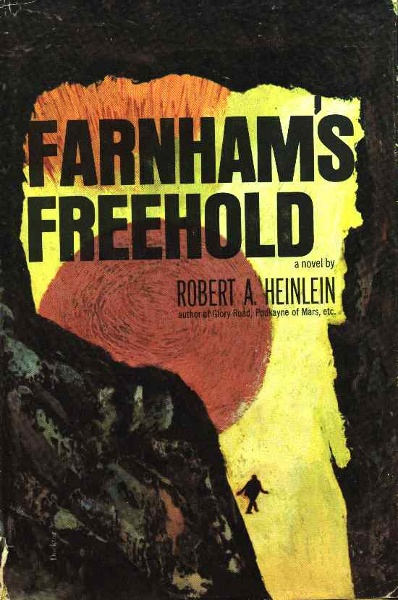
- Farnham's Freehold
Robert A. Heinleinstandalone novel1964
similar bynear futurescience fictiontensesurvivalpost-apocalyptic+1 more
Farnham's Freehold is a science fiction novel by American writer Robert A. Heinlein. A serialized version, edited by Frederik Pohl, appeared in Worlds of If magazine. The complete version was published in novel form by G. P. Putnam later in 1964.
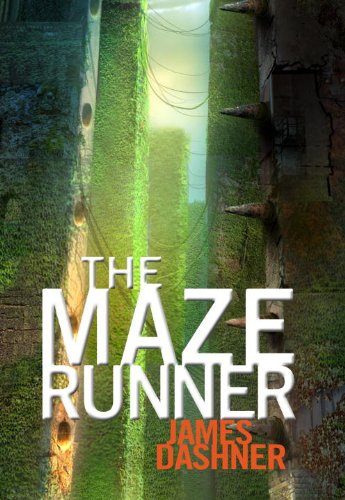
- Maze Runner
series11 books2009
similar byscience fictiontensenear futuresurvivalpost-apocalyptic+2 more
The Maze Runner is a series of young adult dystopian science fiction novels written by American author James Dashner. The series consists of the trilogy The Maze Runner (2009), The Scorch Trials (2010) and The Death Cure (2011), as well as two prequel novels, The Kill Order (2012) and The Fever Code (2016). A novella titled Crank Palace (2020) and a companion book titled The Maze Runner Files (2013) have also been released. A sequel trilogy in the series titled The Maze Cutter takes place 73 years following the events of The Death Cure and consists of the novels The Maze Cutter (2022), The Godhead Complex (2023), and The Infinite Glade (2025).
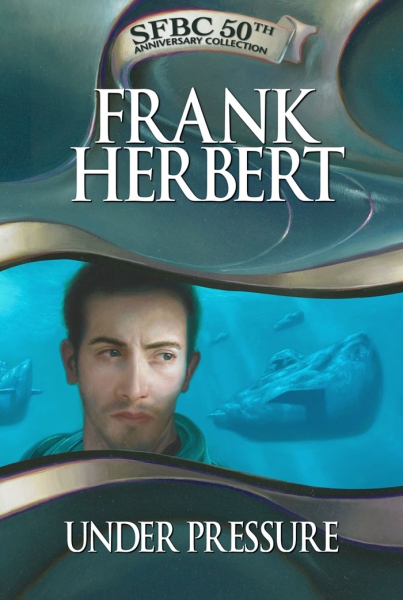
- Under Pressure
Frank Herbertstandalone novel1956
similar byunderwaternear futurescience fictiondarktensesurvival
From back cover Del Rey paperback September 1978: FOUR MEN Were on board the atomic subtug Fenian Ram S1881. They were on a mission to steal vitally needed oil from underwater deposits in enemy territory -- a mission from which none of the last twenty tugs had returned... FOUR MEN Fighting a war a mile and half under the ocean, isolated by the unrelenting pressure of the water and by their own hellish fears... FOUR MEN Who knew everything they had to know about one another -- except which one of them was the saboteur who could destroy them all!
- Saturn's Race
Larry Niven & Steven Barnesstandalone novel2000
similar bynear futurescience fictiondarktenseunderwatergenetic engineeringsurvival
The future is a strange and dangerous place. Chaz Kato can testify to that. He is a citizen of Xanadu, a near-future perfect society hosting the wealthiest men and women on future Earth. Along with his fellow citizens on this artificial island, Kato bears the burden of a dark secret that the outside world would be shocked to hear. Avid Minky, Kato's oldest friend, is a reclusive biological genius, who resides in the bizarre underwater village below the island. Grotesquely distorted by an array of cybergenetic gear, he surrounds himself with composite life forms - dolphins and white sharks with grafted arms and organic computer links. Lenore Myles is a student when she travels to Xanadu and gets herself involved with Chaz Kato. When Kato unwittingly lends her his access codes, Lenore stumbles upon the grisly truth behind Xanadu's glittering facade. Lenore, not knowing whom to trust, is soon on the run, hunted down by Saturn, a mysterious entity that moves aggressively to contain the security breach. With the interests of the world's wealthiest people at stake and powerful technology at Saturn's fingertips, Lenore is in a race for her life, against a truly formidable foe. (from the front dust jacket flap of the Tor Books first edition)
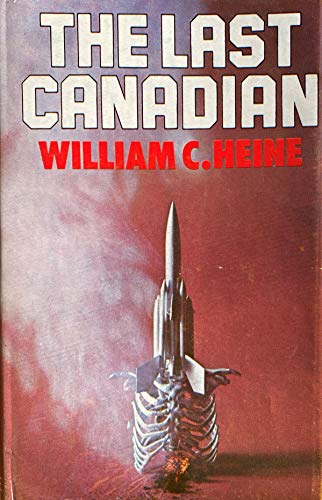
- The Last Canadian
William C. Heinestandalone novel1974
similar bynear futurescience fictionpost-apocalypticdarktensesurvivallast of their kindplague and pandemic
The Last Canadian is a 1974 science fiction novel by William C. Heine about the adventures of Eugene Arnprior after North America is devastated by a plague. The U.S. release of the novel was titled Death Wind.
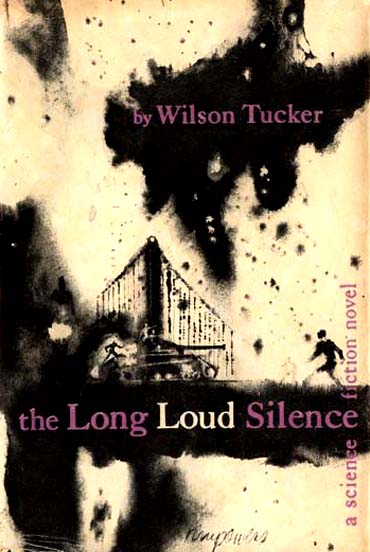
- The Long Loud Silence
Wilson Tuckerstandalone novel1952
similar bynear futurescience fictionpost-apocalypticdarktensesurvivalplague and pandemic
Publisher's description: Tomorrow's war -- the war that could not be. The army of the United States was stationed along the length of the Mississippi River, guns pointed east -- with orders to shoot anyone attempting to cross. For the Final War was not a war of the ultimate bomb, of atomic hell. It was a war of the tiny germ, the filterable virus, the disease that came to conquer a nation -- and stayed to damn a world."
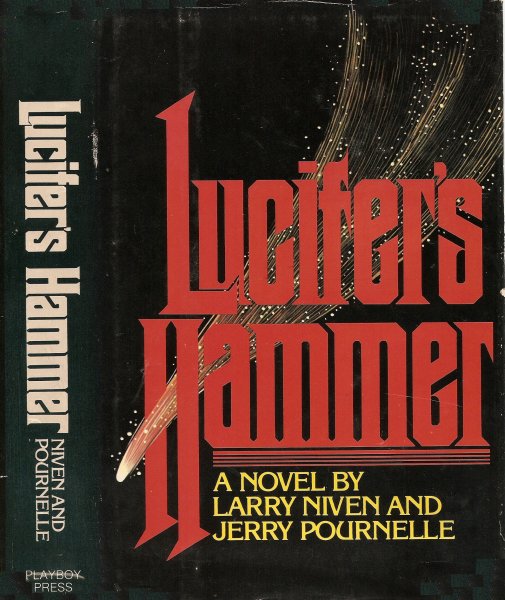
- Lucifer's Hammer
Larry Niven & Jerry Pournellestandalone novel1977
similar byscience fictionpost-apocalypticdarktensesurvival+1 more
Lucifer's Hammer is a science fiction post-apocalypse-survival novel by American writers Larry Niven and Jerry Pournelle that was first published in 1977. It was nominated for the Hugo Award for Best Novel in 1978.
- Ship Breaker
series3 books2010
similar byscience fictiondarktensepost-apocalypticnear futuresurvival+1 more
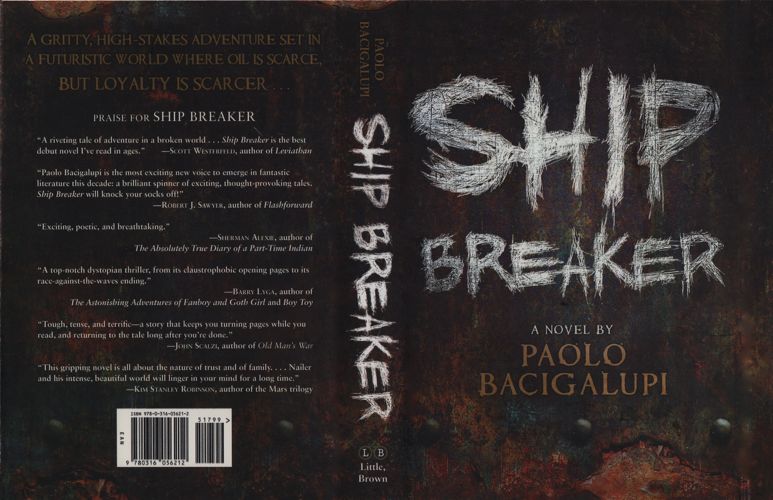
Nailer works a light-crew scavenging copper wire and scrap from beached oil tankers on a Gulf Coast reshaped by rising seas and vanished order, until a wrecked clipper ship washes ashore carrying a half-drowned girl from the wealthy world he'll never belong to. Paolo Bacigalupi's Ship Breaker follows Nailer as helping her pulls him out of his abusive father's orbit and into a much larger, more dangerous game involving her family's fortune. The sequels The Drowned Cities and Tool of War widen the same flooded, resource-scavenging future to new characters and coastlines.
- The Chemical Garden Trilogy
series3 books2011
similar bynear futurescience fictiondarktensesurvivalgenetic engineeringplague and pandemic
- Level 7
Mordecai Roshwaldstandalone novel1959
similar bynear futurescience fictiondarktensesurvivalpost-apocalyptic
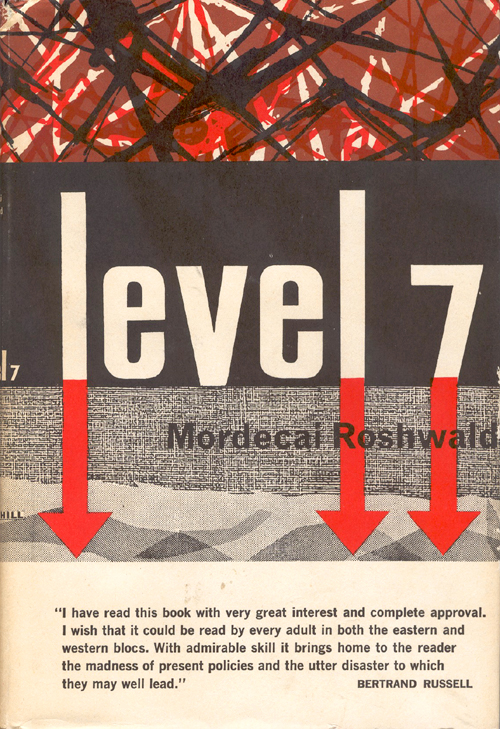
Level 7 is a 1959 science fiction novel by American writer Mordecai Roshwald. It is told from the first-person perspective of a modern soldier, X-127, living in the underground military complex Level 7, where he and several hundred others are expected to reside permanently. X-127 fulfills the role of 'push-button' offensive initiator of his nation's nuclear weapons capacity against an unspecified enemy. X-127 narrates life within a deep shelter before, during and after a nuclear war that wipes out the human species.
- Directive 51 / Daybreak
series3 books2010
similar bynear futurescience fictionpost-apocalypticdarktensesurvival
Directive 51 opens John Barnes's near-future thriller trilogy with government analyst Heather O'Grainn as anti-technology extremists unleash a nanotech plague called Daybreak that destroys petroleum-based materials, rubber, and electrical systems worldwide. The resulting collapse triggers mass death, a crisis over presidential succession, and mysterious Moon-launched fusion strikes on Washington and Chicago, while a shadowy neofeudalist movement moves into the vacuum. Daybreak Zero and The Last President carry the same unraveling-civilization story through the rest of the trilogy.
- Aftermath (Charles Sheffield)
series2 books1998
completed
similar bynear futurescience fictiondarktensesurvival+2 more
Charles Sheffield's Aftermath duology opens with a near-future Earth devastated by a nearby supernova's radiation, which knocks out electronics and forces survivors to rebuild without most modern technology. Starfire continues years later as a second, larger stellar threat approaches and humanity must recover enough capability to respond. Sheffield, a physicist by training, grounds both books in hard-science consequences of the disaster rather than treating it as mere backdrop.
- Down to a Sunless Sea
David Grahamstandalone novel1979
similar bynear futurescience fictionpost-apocalypticdarktensesurvival
David Graham's Down to a Sunless Sea (1979) is a post-apocalyptic novel about a planeload of people during and after a short nuclear war, set in a near-future world where the USA is critically short of oil. The title of the book is taken from a line of the poem Kubla Khan by Samuel Taylor Coleridge.
- Cold People
Tom Rob Smithstandalone novel2023
similar bynear futurescience fictionpost-apocalypticdarktensesurvival
A novel about a colony of global apocalypse survivors seeking to reinvent civilisation under the most extreme conditions imaginable: without warning, a mysterious and omnipotent force has claimed Earth for their own; there are no negotiations, no demands, no reasons given for their actions; humanity has thirty days to reach the one place on Earth where they will be allowed to exist... Antarctica.
- War Against the Chtorr
series7 books1983
similar bynear futurescience fictiontensedarkpost-apocalypticsurvival
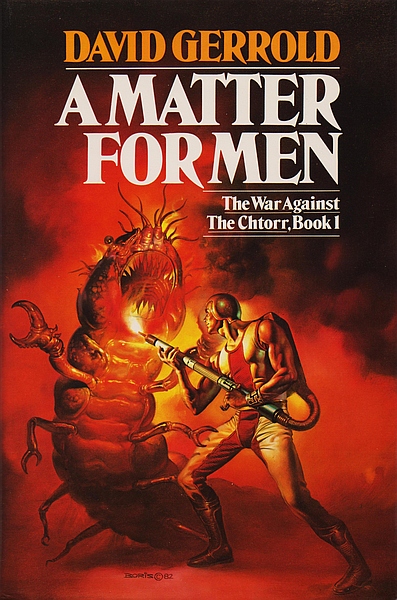
The War Against the Chtorr is a series of science fiction novels by American writer David Gerrold. The Chtorr series was originally planned as a trilogy, but as the story became more intricate, Gerrold realized that three books would not be enough for him to tell the entire story. For a time, he was uncertain how many books there would be in the end but plans on seven. As of 2022, four books have been completed. As of 2017, a fifth and sixth were in the works, 24 years after the publication of the fourth book.
- At the End of Everything
Marieke Nijkampstandalone novel2022
similar bynear futurescience fictionpost-apocalypticdarktensesurvivalplague and pandemic
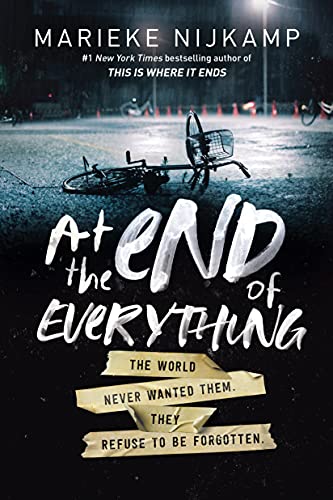
The Hope Juvenile Treatment Center is ironically named. No one has hope for the delinquent teenagers who have been exiled there; the world barely acknowledges that they exist. Then the guards at Hope start acting strange. And one day…they don't show up. But when the teens band together to make a break from the facility, they encounter soldiers outside the gates. There's a rapidly spreading infectious disease outside, and no one can leave their houses or travel without a permit. Which means that they're stuck at Hope. And this time, no one is watching out for them at all. As supplies quickly dwindle and a deadly plague tears through their ranks, the group has to decide whom among them they can trust and figure out how they can survive in a world that has never wanted them in the first place.
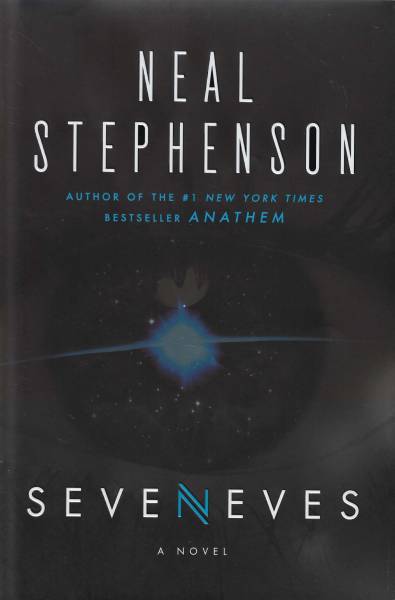
- Seveneves
Neal Stephensonstandalone novel2015
similar bynear futurescience fictiontensegenetic engineeringsurvivalpost-apocalyptic
Seveneves is a science fiction novel by Neal Stephenson published in 2015. The story tells of the desperate efforts to preserve Homo sapiens in the wake of apocalyptic events on Earth after the unexplained disintegration of the Moon and the remaking of human society as a space-based civilization after a severe genetic bottleneck.