More like Doomsday Match
anchored on:contemporary
but
- The Andromeda Strain
series2 books1969
similar byscience fictiontensecontemporarysurvival+1 more
Michael Crichton's 1969 novel The Andromeda Strain follows a team of scientists racing to contain a lethal extraterrestrial microorganism that crash-lands in Arizona, told in the clinical, document-driven style that helped establish the techno-thriller genre. Daniel H. Wilson's authorized 2019 sequel The Andromeda Evolution revisits the same threat five decades later. Together the two books form a two-part outbreak story separated by a fifty-year gap in publication.
- H. G. Wells' War of the Worlds
universe65 books1898
Start hereThe War of the Worlds · Start here
similar byscience fiction+2 more
No one would have believed, in the closing years of the nineteenth century, that human affairs were being watched keenly and closely from the timeless worlds of space. And then the cylinders fell. H. G. Wells' War of the Worlds opens in the quiet of the Surrey commons, where a falling star proves to be the first Martian craft — and from the pit rise the towering tripods, the Heat-Ray, the choking Black Smoke and the creeping red weed, wielded by minds that regard mankind much as we regard the creatures we boil for supper. This is invasion rendered as natural disaster: cold, methodical, and vast beyond argument. Wells' 1898 novel is the seed; everything else grows from that Martian soil. The catalogue gathers direct sequels and continuations alongside a wide field of other hands. In War of the Worlds: Global Dispatches the invasion is retold across the whole planet through the eyes of Twain, Verne, Tolstoy, Lowell and Kipling; in the Manly Wade and Wade Wellman crossover, Sherlock Holmes, Watson and Professor Challenger take the field against the machines; and Scott Washburn's Great Martian War stretches the fighting into a decades-long alternate history of steam, artillery and grinding attrition. It is a loose shared world — no single decreed sequence, many voices answering one calamity. What sets this world apart is its refusal of heroics: the invaders fall not to generals but to the smallest things of Earth, humbling and indifferent. Begin, always, with Wells' original novel — it is short, and it is the ground every later book stands upon. From there follow your appetite: Global Dispatches for the panorama, the Holmes campaign for adventure, Washburn for the long war.
- Dune
series20 books1963
part of Dune Universe
similar byscience fiction+2 more
Frank Herbert's Dune Chronicles opens with 1965's Dune, set on the desert planet Arrakis where House Atreides takes control of the only source of the vital spice melange and young Paul Atreides is pulled into a struggle over its politics and religion. Herbert carried the story forward across five further novels — Dune Messiah, Children of Dune, God Emperor of Dune, Heretics of Dune, and Chapterhouse: Dune — following Paul's line over the following millennia, before Brian Herbert and Kevin J. Anderson later extended the saga. Many other editions of these six novels are omnibus and box-set repackagings rather than separate stories.
- The Wanderer
Fritz Leiberstandalone novel1964
similar byscience fictiontensecontemporarysurvivalour world
The Wanderer is a science fiction novel by American writer Fritz Leiber, published as a paperback original by Ballantine Books in 1964. It won the 1965 Hugo Award for Best Novel.
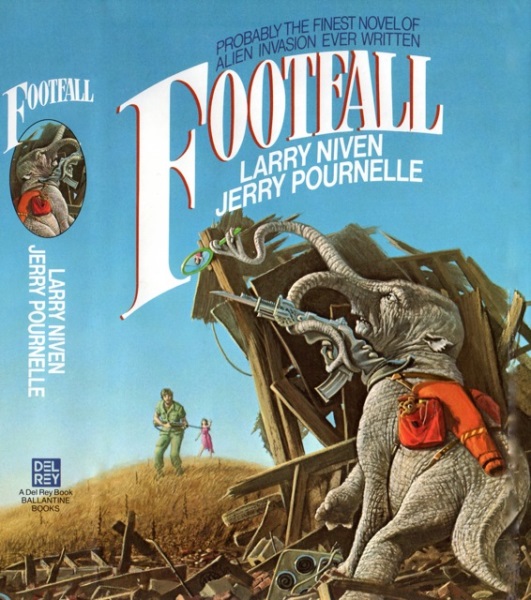
- Footfall
Larry Niven & Jerry Pournellestandalone novel1985
similar byscience fictiontensecontemporarysurvivalour world
When aliens travel to Earth from Alpha Centauri, differences between alien and human psychology result in an unprovoked invasion, and the resulting resistance results in the aliens' use of a devastating weapon.
- Rats
series4 books1974
completed
similar bytensesurvivalcontemporary+2 more
The Rats, James Herbert's 1974 debut novel, imagines a plague of giant mutant rats overrunning London, told through a rotating cast of victims and survivors in the tradition of British disaster horror. It was followed by two sequels, Lair and Domain, which widen the outbreak first to the countryside and then to a besieged, apocalyptic city, completing a three-book trilogy.
- Cell
Stephen Kingstandalone novel2006
similar byscience fictiontensecontemporarysurvivalour world
In Cell, King taps into readers fears of technological warfare and terrorism. Mobile phones deliver the apocalypse to millions of unsuspecting humans by wiping their brains of any humanity, leaving only aggressive and destructive impulses behind. Those without cell phones, like illustrator Clayton Riddell and his small band of "normies," must fight for survival, and their journey to find Clayton's estranged wife and young son rockets the book toward resolution.
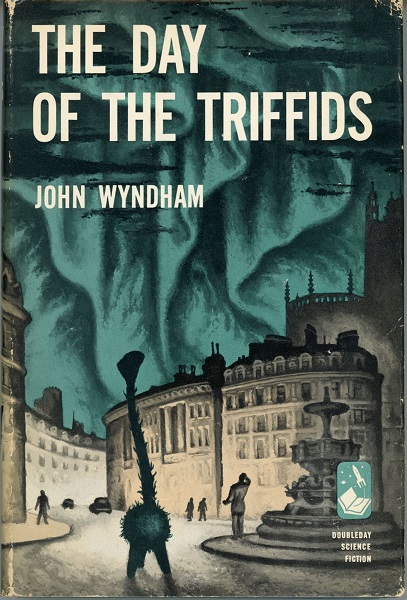
- The Triffids
series3 books1951
similar byscience fictionsurvivalour world+1 more
John Wyndham's The Day of the Triffids (1951) opens with a meteor-shower-like event that leaves most of Britain's population blind, throwing civilization into collapse just as triffids, an aggressive and mobile species of poisonous plant, become free to hunt the helpless survivors. Simon Clark's authorized sequel The Night of the Triffids (2001) picks up a generation later, narrated by the original protagonist's son as he confronts a new triffid-dominated world, and John Whitbourn's The Age of the Triffids extends the shared setting further still. Together the three novels form a loose post-apocalyptic trilogy built on Wyndham's original premise rather than a tightly plotted single story.
- The Fog
James Herbertstandalone novel1975
similar bytensecontemporarysurvivalour world+1 more
The Fog is a horror novel by English writer James Herbert, published in 1975. It is about a deadly fog that drives its victims insane when they come into contact with it.
- Kairos
series11 books1962
completed
similar byscience fiction+2 more
The Time Quintet is a science fantasy series of five young adult novels written by American author Madeleine L'Engle and made up of A Wrinkle in Time (1962), A Wind in the Door (1973), A Swiftly Tilting Planet (1978), Many Waters (1986), and An Acceptable Time (1989).
- Southern Reach Trilogy
series4 books2014
similar byscience fictioncontemporaryour world+2 more
The Southern Reach Series is a series of novels by the American author Jeff VanderMeer first published in 2014—Annihilation, Authority, Acceptance, and Absolution. The series takes its name from the secret agency that is central to the plot. In 2013, Paramount Pictures bought the movie rights for the series, and a film adaptation of Annihilation was made with Alex Garland as writer-director. The film was released in 2018. The most recent book in the series, Absolution, was released on 22 October 2024.
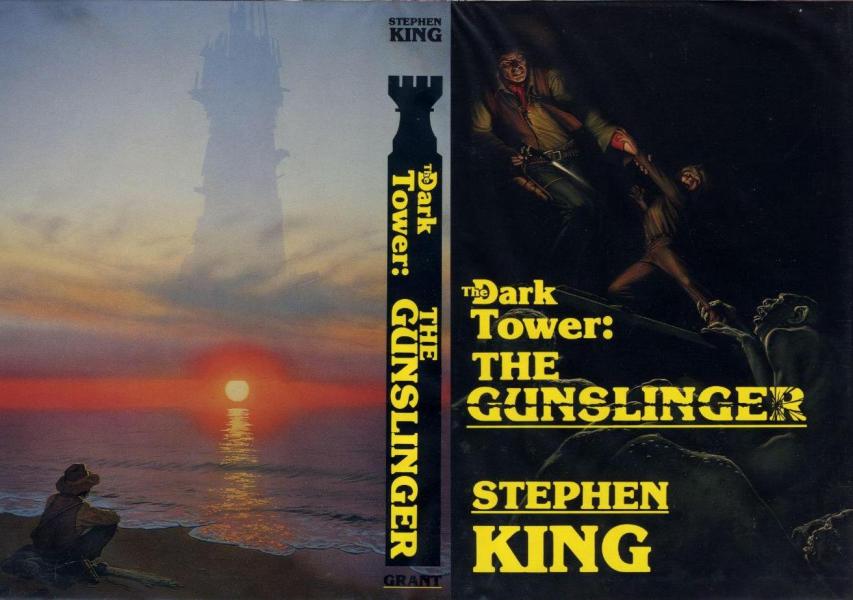
- Stephen King multiverse
universe46 books1967
Start hereThe Gunslinger · Start here
similar by+2 more
The man in black fled across the desert, and the gunslinger followed. So begins the long walk of Roland Deschain, last of an order of knight-errant pistoleers, across a land that has "moved on" — where the compass points drift, dead machines rot toward sentience, and the weave of what's real wears thin. His quest is the Dark Tower itself: a spire standing at the hub of every world that exists, the linchpin that holds all of them back from ruin. Roland's road runs eight volumes, from The Gunslinger through the closing Dark Tower, with the later, interleaved tale The Wind Through the Keyhole folding a story-within-a-story back into his youth. Along the way he draws a ka-tet — a fellowship bound by fate, not choosing — through doorways between worlds: a heroin-shackled New Yorker, a woman of two minds, a boy who dies twice. The Tower is also the secret axle around which the wider shelf of King's work turns; threads from The Stand, 'Salem's Lot and beyond wind quietly toward it. Expect a mongrel of Western, high fantasy, horror and decayed science fiction, told in a dusty, incantatory dialect all its own — ka, thankee-sai, the world that has moved on. This is King at his most mythic and most personal, a decades-spanning circle that rewards a patient reader. Begin at the beginning: The Gunslinger, then walk forward in publication order. There are other worlds than these — but this door opens first.
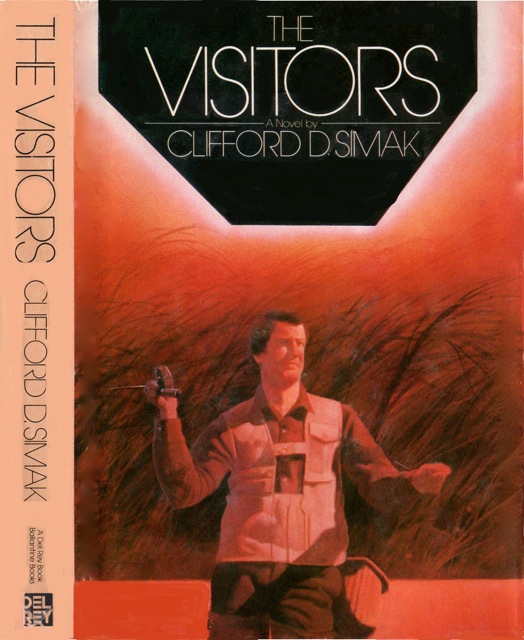
- The Visitors
Clifford D. Simakstandalone novel1980
similar byscience fictiontensecontemporarysurvivalour world
WorldCat: Intelligent, alien creatures arrive on Earth from outer space, threatening world stability and presaging the destruction of civilization.
- The Eternal Enemy
Christopher Pikestandalone novel1993
similar byscience fictiontensecontemporaryprophecysurvivalour world
A VCR that could tape tomorrow's news. Rela has just bought herself a new VCR. She sets the machine to tape a movie she plans to show at a party she is throwing. But instead of the movie she gets the news - tomorrow's news. Soon Rela is regularly recording next week's news, even what is to happen in the far future. It's fun, at first, until she sees herself on the news. And learns that there is no future for her. But can she change destiny? Can Rela survive what is meant to be?
- Micro
Michael Crichton & Richard Prestonstandalone novel2011
similar byscience fictiontensecontemporarysurvivalour world
Micro is a techno-thriller novel by Michael Crichton, the seventeenth under his own name and second to be published after his death, published in 2011. Upon his death in 2008, an untitled, unfinished manuscript was found on his computer, which would become Micro. Publisher HarperCollins chose science writer Richard Preston to complete the novel from Crichton's remaining notes and research, and it was finally published in 2011. Micro followed the historical thriller Pirate Latitudes, which was also found on his computer and published posthumously in 2009.
- The Martian
series2 books2012
similar byscience fictiontensesurvivalour world
Andy Weir's novel The Martian, first self-published in 2011 before a commercial re-release, follows astronaut Mark Watney after he is stranded alone on Mars when his crew presumes him dead and departs. Using scientific improvisation and dark humor, Watney works to keep himself alive long enough for a rescue to reach him. It is a single, self-contained survival story.
- Gone
series9 books2008
similar byscience fictiontensesurvivalcontemporary
Michael Grant's Gone series begins when everyone aged fifteen and older vanishes without warning from a swath of the California coast, trapping the town of Perdido Beach inside an impenetrable barrier the survivors call the FAYZ. As children develop strange powers and food and order break down, Sam Temple and his rival, his twin brother Caine, become central to the fight for survival against human threats and the monstrous Gaiaphage. Six books (Gone through Light) close the original story; a follow-up Monster trilogy, set years later, follows a new outbreak of mutation-causing powers and a new generation of characters.
- Jumper
series6 books1992
similar byscience fictiontensecontemporary+2 more
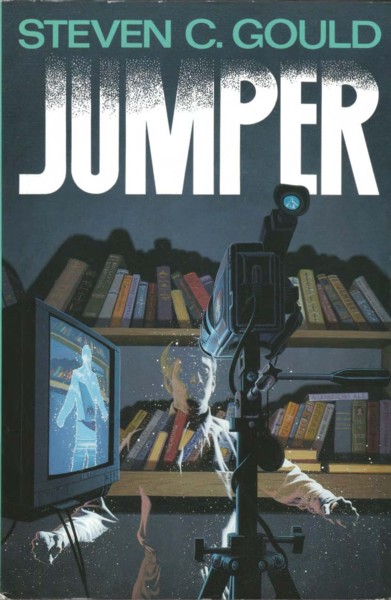
Jumper follows David Rice, a teenager who discovers he can teleport anywhere he's been and uses the power to escape an abusive home, only to find that ability alone doesn't solve the harder problems of finding his absent mother, building an honest relationship, or staying off the radar of people who'd exploit him. Steven Gould's series continues across Reflex, Impulse, and Exo, later following his and his wife's daughter as a second-generation jumper. A 2008 film loosely adapted the first novel.
- The Joshua Files
series6 books2008
similar bytensecontemporaryprophecy+1 more
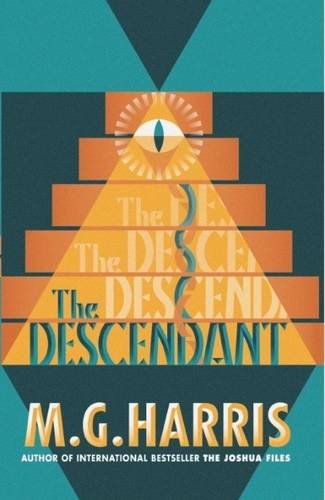
The Joshua Files is a thriller book series aimed at pre-teens/teenagers written by British author M. G. Harris. The mythology of the series includes a fictional prophecy of the ancient Maya of a catastrophic event that will occur in December 2012.
- Our Children's Children
Clifford D. Simakstandalone novel1974
similar byscience fictiontensecontemporarysurvivalour world
From the back cover of the first DAW printing: "They were our children's children, and they came one day from nowhere - walking through holes in the air into our world. By means of one-way time tunnels, they fled the ravening beasts with teeth, claws and tentacles, that reproduced like bacteria and were intelligent. They fled to escape the uncontrolled horror of their own far future, and we, their distant ancestors, housed and fed and comforted them, content in their assurance that the tunnel was securely guarded from the beasts, whatever or whoever they were. But then somebody up there slipped and the beasts were abroad..."
- Prey
Michael Crichtonstandalone novel2002
similar byscience fictiontensecontemporarysurvivalour world
Prey is the thirteenth novel by Michael Crichton under his own name and his twenty-third novel overall. It was first published in November 2002, making it his first novel of the twenty-first century. An excerpt was first published in the January–February 2003 issue of Seed magazine. Prey brings together themes from two earlier Crichton best-selling novels, Jurassic Park and The Andromeda Strain, and serves as a cautionary tale about developments in science and technology: in particular, nanotechnology, genetic engineering, and distributed artificial intelligence.