More like Doomtime
anchored on:science fictionfar future
but
- Hainish
series33 books1964
completed
similar byscience fictionfar future
The Hainish Cycle consists of a number of science fiction novels and stories by Ursula K. Le Guin. The cycle is set in a future history that features civilizations of human beings on planets orbiting a number of nearby stars, including Terra ("Earth"); these humans are contacting each other for the first time and establishing diplomatic relations, as well as setting up a confederacy under the guidance of the oldest of the human worlds, the peaceful planet Hain. In this history, human beings did not evolve on Earth, but they were instead the result of interstellar colonies planted by Hain in the distant past, after which interstellar travel ceased for an extended period. Some of the human races have new genetic traits, a result of ancient Hainish experiments in genetic engineering; this includes people who can dream while awake, and a world of hermaphroditic people who only enter active sexuality once per month, not knowing which sex will manifest in them. In keeping with Le Guin's narrative approach, she uses varied social and environmental settings to explore the anthropological and sociological outcomes of human evolution in those environments. The author often discounted the characterization of a so-called "Hainish Cycle".
- Saint Leibowitz
series6 books1955
completed
similar byscience fictionfar futurepost-apocalyptic+1 more
Walter M. Miller Jr.'s A Canticle for Leibowitz (1959), assembled from three novellas he had published earlier in the decade, follows the monks of a Catholic monastery in the post-nuclear American Southwest as they preserve fragments of scientific knowledge across centuries, watching civilization slowly rebuild itself and edge back toward the mistakes that destroyed it. Miller's posthumous sequel, Saint Leibowitz and the Wild Horse Woman, completed by Terry Bisson from his notes after his death and published in 1997, returns to the same abbey and its world decades later. Together the two novels form a sparse, decades-spanning series about memory, faith, and the cycles of civilization.
- Pax / Astra
series2 books1954
completed
similar bysurvivalscience fictionfar future+2 more
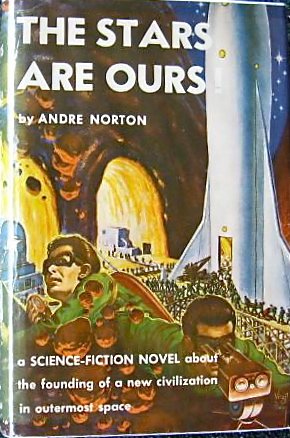
Andre Norton's The Stars Are Ours! (1954) and its sequel Star Born (1957) follow a group of scientists and their families who flee a repressive future Earth to colonize a distant world they name Astra, and then the next generation, who must contend with that world's original inhabitants. Star Flight appears to be a later omnibus or reissue rather than a third original novel.
- H. G. Wells' War of the Worlds
universe65 books1898
Start hereThe War of the Worlds · Start here
similar byscience fiction+1 more
No one would have believed, in the closing years of the nineteenth century, that human affairs were being watched keenly and closely from the timeless worlds of space. And then the cylinders fell. H. G. Wells' War of the Worlds opens in the quiet of the Surrey commons, where a falling star proves to be the first Martian craft — and from the pit rise the towering tripods, the Heat-Ray, the choking Black Smoke and the creeping red weed, wielded by minds that regard mankind much as we regard the creatures we boil for supper. This is invasion rendered as natural disaster: cold, methodical, and vast beyond argument. Wells' 1898 novel is the seed; everything else grows from that Martian soil. The catalogue gathers direct sequels and continuations alongside a wide field of other hands. In War of the Worlds: Global Dispatches the invasion is retold across the whole planet through the eyes of Twain, Verne, Tolstoy, Lowell and Kipling; in the Manly Wade and Wade Wellman crossover, Sherlock Holmes, Watson and Professor Challenger take the field against the machines; and Scott Washburn's Great Martian War stretches the fighting into a decades-long alternate history of steam, artillery and grinding attrition. It is a loose shared world — no single decreed sequence, many voices answering one calamity. What sets this world apart is its refusal of heroics: the invaders fall not to generals but to the smallest things of Earth, humbling and indifferent. Begin, always, with Wells' original novel — it is short, and it is the ground every later book stands upon. From there follow your appetite: Global Dispatches for the panorama, the Holmes campaign for adventure, Washburn for the long war.
- City at World's End
Edmond Hamiltonstandalone novel1951
similar bysurvivalscience fictionfar futureour worldpost-apocalyptic
An experimental atomic weapons test in small-town America goes catastrophically wrong, hurling the entire town of Middletown, buildings, streets and all, untold ages into Earth's future, to a time when the sun is dying and humanity's last city struggles on beneath a darkening sky. Cut off from everything and everyone they knew, the townspeople have to find a way to survive in a world that has nothing left to spare for latecomers. Edmond Hamilton's novel strands a slice of mid-century America at the literal end of the world.
- Dune
series20 books1963
part of Dune Universe
similar byscience fictionfar future
Frank Herbert's Dune Chronicles opens with 1965's Dune, set on the desert planet Arrakis where House Atreides takes control of the only source of the vital spice melange and young Paul Atreides is pulled into a struggle over its politics and religion. Herbert carried the story forward across five further novels — Dune Messiah, Children of Dune, God Emperor of Dune, Heretics of Dune, and Chapterhouse: Dune — following Paul's line over the following millennia, before Brian Herbert and Kevin J. Anderson later extended the saga. Many other editions of these six novels are omnibus and box-set repackagings rather than separate stories.
- Snake
series5 books1973
completed
similar bysurvivalscience fictionfar future+2 more
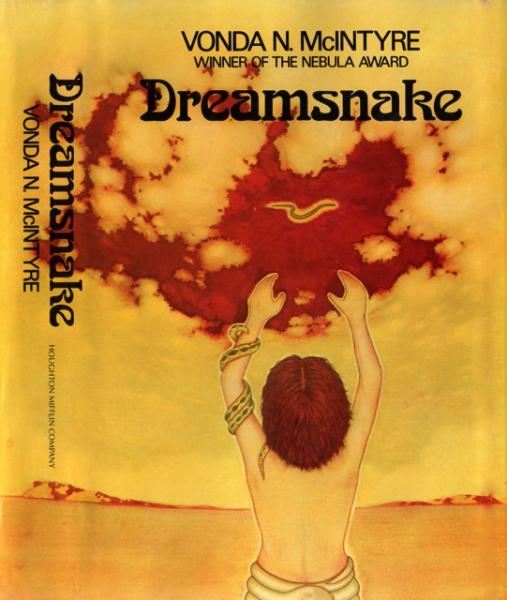
Vonda N. McIntyre's Dreamsnake (1978) follows Snake, an itinerant healer in a post-nuclear world who treats patients with venom from three genetically altered serpents, including an alien 'dreamsnake' that eases the dying. When her dreamsnake is killed early on, Snake sets out across a fractured, tribal far-future Earth to find a replacement. The novel grew out of McIntyre's 1973 novelette 'Of Mist, and Grass, and Sand,' which became its opening section.
- Riddley Walker
Russell Hobanstandalone novel1980
similar bysurvivalscience fictionfar futureour worldpost-apocalyptic
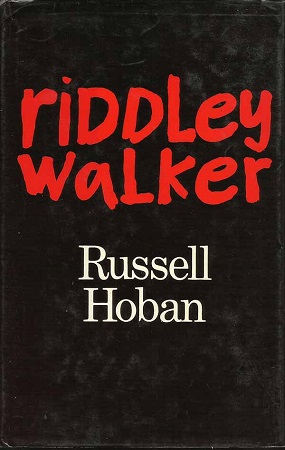
WorldCat: Composed in an English which has never been spoken and laced with a storytelling tradition that predates the written word, RIDDLEY WALKER is the world waiting for us at the bitter end of the nuclear road. It is desolate, dangerous and harrowing, and a modern masterpiece.
- Wolfbane
C. M. Kornbluth & Frederik Pohlstandalone novel1959
similar bysurvivalscience fictionfar futureour world
Wolfbane is a science fiction novel by American writers Frederik Pohl and C. M. Kornbluth, published in 1959. It was serialized in Galaxy in 1957, with illustrations by Wally Wood. In his review column for F&SF, Damon Knight selected the novel as one of the 10 best genre books of 1959.
- The Triffids
series3 books1951
similar bysurvivalscience fictionour worldpost-apocalyptic
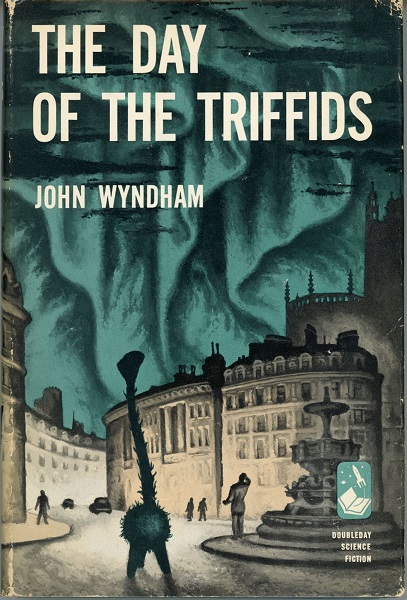
John Wyndham's The Day of the Triffids (1951) opens with a meteor-shower-like event that leaves most of Britain's population blind, throwing civilization into collapse just as triffids, an aggressive and mobile species of poisonous plant, become free to hunt the helpless survivors. Simon Clark's authorized sequel The Night of the Triffids (2001) picks up a generation later, narrated by the original protagonist's son as he confronts a new triffid-dominated world, and John Whitbourn's The Age of the Triffids extends the shared setting further still. Together the three novels form a loose post-apocalyptic trilogy built on Wyndham's original premise rather than a tightly plotted single story.
- Future History
series42 books1939
completed
similar byscience fiction+1 more
The Future History is a series of science fiction stories written by American author Robert A. Heinlein (1907–1988). It describes a projected future of the human race from the middle of the 20th century through the early 23rd century. The term Future History was coined by John W. Campbell Jr. in the February 1941 issue of Astounding Science Fiction. Campbell published an early draft of Heinlein's chart of the series in the May 1941 issue.
- The Obernewtyn Chronicles
series9 books1987
similar byscience fictionfar futurepost-apocalyptic+2 more
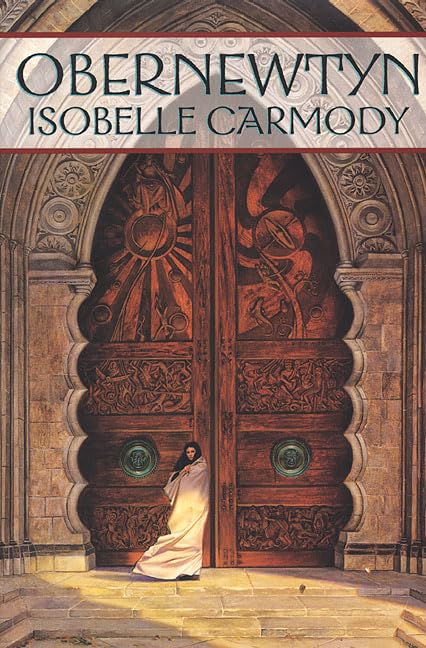
The Obernewtyn Chronicles is a series of science fiction and fantasy novels by Australian author Isobelle Carmody. The series has a post apocalyptic setting and depicts a world long after its destruction by a global nuclear holocaust.
- The Book of Ptath
A. E. van Vogtstandalone novel1947
similar bysurvivalscience fictionfar futureour world
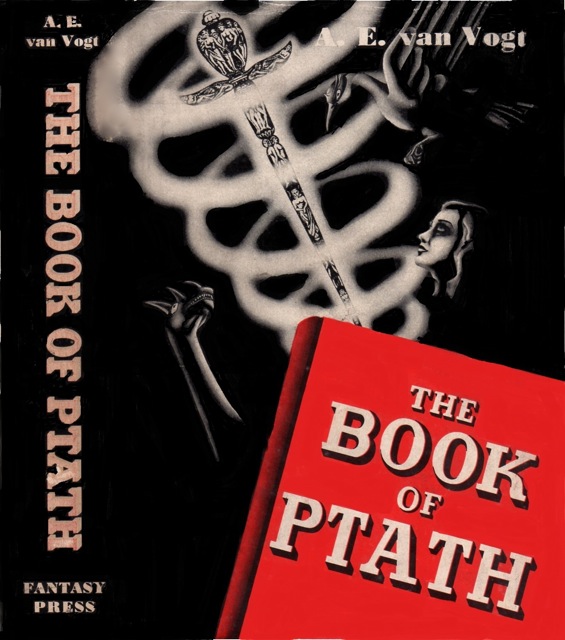
Ptath, a very powerful god, is throwing by his deadly rival, the goddess Ineznia, on Earth, around 200,000,000 AD, in the form of a mortal, where he has to face numerous dangers to survive.
- Maurai
series6 books1959
completed
similar byscience fictionfar futureour worldpost-apocalyptic
The Maurai series is a series of short stories and a novel by Poul Anderson set in a resource depleted, post-apocalyptic earth several centuries in the future. The series is named after its most frequent protagonists, citizens of the Maurai Federation. The Maurai dominate the Pacific and Indian Oceans. Fearful of the social and ecological implications of a return to large-scale industrial society, they use their considerable might and covert resources to prevent other nations from developing nuclear power.
- Hothouse
series6 books1961
completed
similar byscience fictionfar future+2 more
Hothouse is set so far in Earth's future that the sun has nearly stopped and a single vast banyan tree has swallowed most of the land, leaving a shrunken, primitive humanity struggling to survive among giant plants and insects that have taken over ecological niches animals once filled. Brian Aldiss fixed up five linked novelettes, originally serialized in 1961, into this novel; the abridged US edition appeared as The Long Afternoon of Earth, with the full text not reaching American readers until 1976. It's cited as one of the defining 'dying Earth' science fantasies.
- Burl
series4 books1920
completed
similar bysurvivalscience fictionfar future+1 more
Murray Leinster's Burl sequence is set on a planet deliberately seeded with insect and plant life for later human colonization, but the follow-up mission meant to introduce animal life never arrived; over centuries the surviving flora and insects grew to monstrous size, leaving the marooned descendants of a crashed expedition to survive among ant colonies, giant wasps, and spiders. Burl, born into this stranded, near-primitive community, has to out-think these giant predators to keep his people alive. The story began as two 1920s pulp novellas and a 1953 sequel before Leinster fused all three into the single fix-up novel The Forgotten Planet.
- Ender Wiggin
series14 books1977
part of Ender's Game Universe
similar byscience fictionfar future
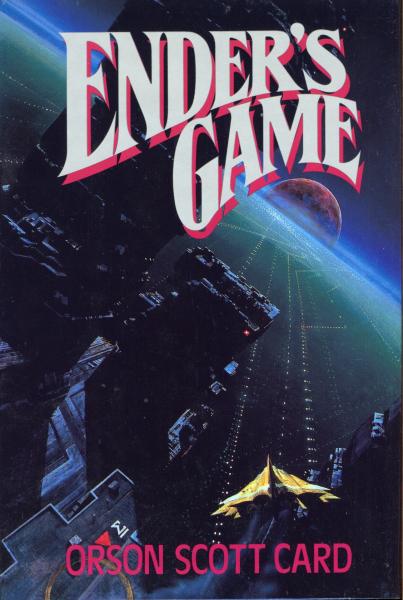
Orson Scott Card's Ender's Game (1985, expanded from his 1977 novella) follows child prodigy Andrew "Ender" Wiggin as he is recruited into a military training program built to prepare Earth's defenses for an anticipated third war against an insectoid alien species known as the Formics. The saga continues years later through Speaker for the Dead and Xenocide, following an older Ender as he confronts the moral weight of his role in that earlier conflict, and concludes the core arc in Children of the Mind, with Ender in Exile filling in the years between the first two books. Set within the wider Ender's Game universe, the series shifts from military coming-of-age story to slower, more philosophical science fiction as it progresses.
- Ender's Shadow
series5 books1999
part of Ender's Game Universe
similar byscience fictionfar future
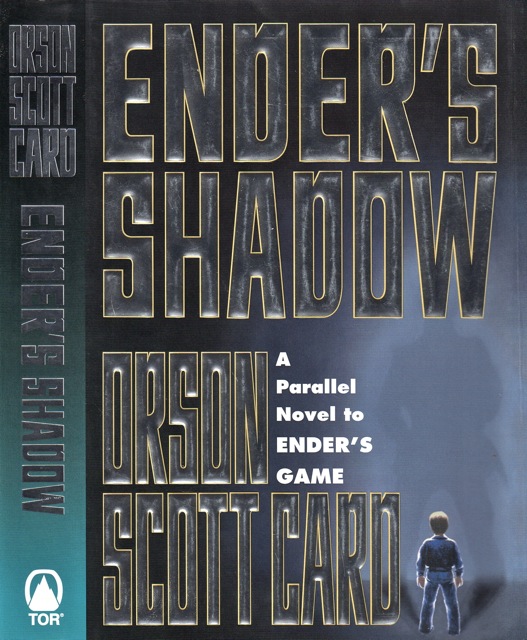
Orson Scott Card's Ender's Shadow retells the events of Ender's Game from the perspective of Bean, a physically stunted but ferociously intelligent street child recruited into the same Battle School program as Ender Wiggin. It launches the Shadow series, which follows Bean and other secondary Battle School characters into the political aftermath of the Formic Wars back on Earth, running parallel to and eventually past the timeline of Card's main Ender Quintet.
- Cavor
series2 books1901
similar byscience fiction+1 more
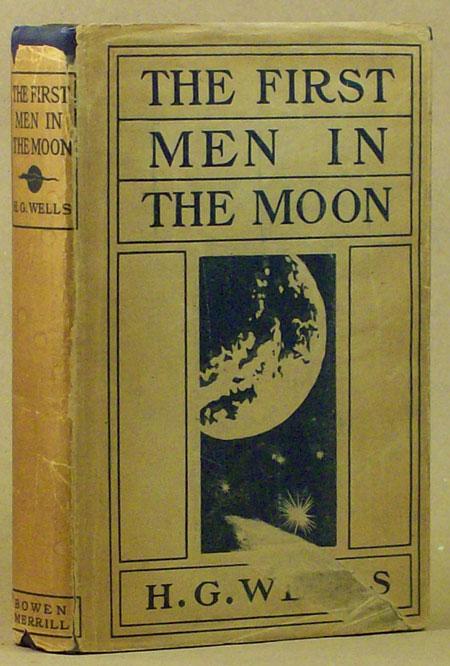
H. G. Wells's 1901 novel The First Men in the Moon is narrated by the businessman Bedford, who joins the reclusive scientist Cavor after Cavor invents cavorite, a gravity-blocking substance that carries the two men to the Moon. There they discover a vast underground civilization of insect-like Selenites, and the expedition that began as a hunt for lunar minerals turns into an encounter with an alien society. It is a standalone novel; later editions crediting Stephen Baxter add an introduction or afterword rather than a continuing story.
- Tales of a Darkening World
series17 books1954
completed
similar byscience fictionfar futurepost-apocalyptic+2 more
Edgar Pangborn's loose post-apocalyptic sequence is set generations after an unspecified war has reduced North America to small, pseudo-medieval communities ruled by a Church that actively suppresses old technology and persecutes mutants. Davy, the best-known entry, follows its roguish narrator from indentured servitude to a fragile reformist community rebuilt on an island; The Judgment of Eve and the story collection Still I Persist in Wondering return to the same world and some of its people. It's gentler and more concerned with human folly than most post-apocalyptic fiction of its era.
- Tripods
series4 books1967
completed
similar byscience fictionour worldpost-apocalyptic+2 more
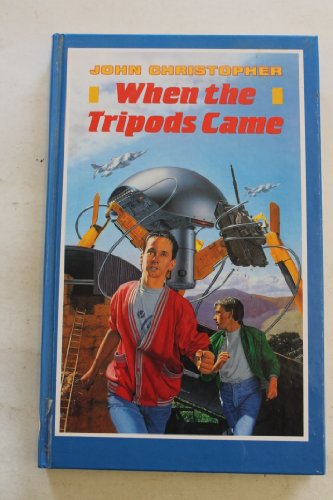
The Tripods is a series of young adult science fiction novels by John Christopher. The series takes place in a post-apocalyptic world where humanity is enslaved by "Tripods"—gigantic three-legged walking machines piloted by an alien race later identified as the "Masters". The first two books were the basis of a science fiction TV series, produced in the United Kingdom in the 1980s.
- Company Wars
series7 books1981
part of Alliance-Union Universe
similar byscience fictionfar future+1 more
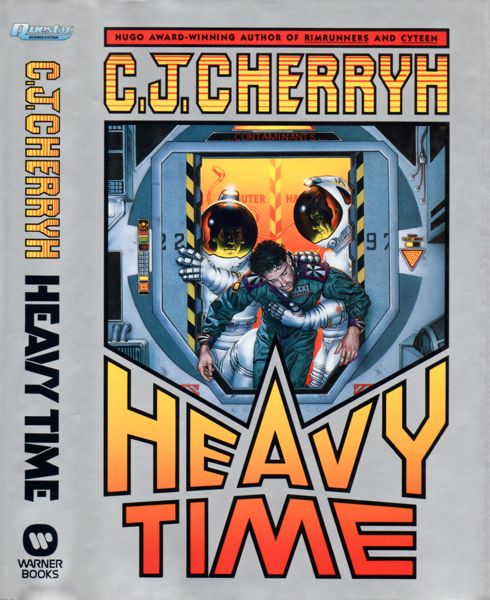
Company Wars gathers the novels C. J. Cherryh set during the breakaway conflict between Earth's colonial Company and the newly independent Union, within her wider Alliance-Union future history. Anchored by the Hugo Award-winning Downbelow Station, the books follow different ships, stations, and crews caught on either side, from merchanter traders to military spacers, rather than a single continuing cast. Read in any order, they build up a picture of the political and economic pressure that reshapes Cherryh's larger Alliance-Union universe.