Loreful
HomeDiscover
Search series, authors…⌘K
Loreful

Reading orders for SF/F series and shared universes — with your place kept in every one.

Explore

UniversesSeriesWorksAuthorsAtlas

Help

FAQAboutSite map

Account & legal

Sign inCreate accountPrivacyTerms

Data

Built on ISFDB, Wikipedia, Wikidata and Open Library. Curated reading orders carry their reasoning on the page; the rest follow publication order. Data sources & licenses

© Loreful · data: ISFDB · CC BY

More like Dourado

anchored on:adventurecontemporary

but

Mood

The mood the book leaves you in.

  • The reading experience is propelled by journeys, exploration, and physical risk; excitement and forward momentum dominate over dread or introspection.
  • Joy and loss are deliberately mixed; the resolution grants characters something real while taking something else away, leaving warmth and sorrow together.
  • The book demands work from the reader — dense prose, difficult structure, unfamiliar ideas, or morally uncomfortable material — as part of its intended effect.
  • Grim events, cruelty, or despair dominate the atmosphere, and the book does not soften them with comfort or comic relief.
  • The atmosphere is quietly unsettling — wrongness, unease, and the uncanny pervade the book without necessarily escalating into overt horror.
  • The book is built to move the reader; character feeling is foregrounded and major scenes aim at a strong emotional response.
  • Humor is a primary aim and the prose plays for laughs — comic situations, wit, or dialogue produce sustained comedy, not occasional levity.
  • The book insists that things can improve; effort and decency are shown to matter, and the arc bends toward better outcomes even through hardship.
  • The book teaches as it goes — real facts, history, science, or craft are conveyed in enough depth that learning is part of the reading experience.
  • The book is designed to uplift and motivate, presenting perseverance or achievement in a way that invites the reader to aspire or act.
  • The overall register is cheerful and easygoing; stakes are kept gentle and the book avoids dwelling on pain or dread.
  • Withheld information drives the experience; the book sustains enigmas and secrets the reader wants resolved, whatever its genre.
  • The book is contemplative and inward-looking, giving more weight to thought, memory, and meaning than to external events.
  • The book works as comfort reading — low tension, a soothing pace, and an atmosphere the reader can unwind in.
  • Grief, loss, or melancholy set the dominant register, and the book lets sorrow stand rather than resolving it into comfort.
  • Sustained suspense is the point; the book keeps the reader braced for what happens next through danger, pressure, or impending revelation.
  • Playful invention and charm define the register — fanciful conceits, light absurdity, and a narration that delights in its own oddity.

About

What the story runs on.

  • Stories in which extraterrestrial beings are central — as characters, cultures, or the object of the plot.
  • Stories structured as a quest — a journey undertaken to find, deliver, or destroy something of great import.
  • Stories in which staying alive against nature, catastrophe, or scarcity is the central problem.
  • Stories of lovers kept apart by law, family, faith, or station, where the obstacle to love is the plot.
  • Stories in which a friendship — its making, testing, or loss — is the emotional center.
  • Stories of growing up — a young protagonist crossing from childhood into adult knowledge and responsibility.
  • Stories about who a character truly is — self-discovery, doubled lives, and the search for a self.
  • Stories about mourning — living through the death of a loved one and what loss does to the survivors.
  • Stories in which a buried family truth — hidden parentage, crimes, or shames — surfaces and reorders the present.
  • Stories driven by maneuvering for power — factions, conspiracies, and statecraft conducted in shadow.
  • Stories in which war itself is the subject — combat, occupation, and what warfare does to soldiers and civilians.
  • Stories organized around investigating a killing — the case, the clues, and the pursuit of the killer, in any genre's clothing.

Shelf

Where it sits in the library.

    • Fiction built on magic or other supernatural elements that have no scientific explanation.
    • Secondary-world fantasy at large scale, where the fate of nations or the world turns on the protagonists' struggle.
    • Fantasy set in a recognizably modern city or contemporary world where the supernatural intrudes on everyday life.
    • Fantasy that blends in horror's atmosphere and imagery, keeping a fantastical frame around grim or frightening material.
    • Action-driven fantasy following warriors or rogues with personal stakes against sorcerous threats, rather than world-spanning conflicts.
    • Fantasy set in a real historical period or a close analogue of one, with magic woven into the era.
    • Fantasy in which protagonists cross from the ordinary world into another world through a portal or similar passage.
    • Fiction that retells or reworks a traditional fairy tale in a new form or setting.
    • Fantasy drawing directly on myths, legends, and folklore, retelling them or building on their figures and logic.
    • Fantasy of ghosts, vampires, shapeshifters, psychics, and similar phenomena, usually set in an otherwise ordinary world.
    • Fiction mixing science-fictional trappings with overtly magical or impossible elements in one setting.
    • Low-stakes fantasy emphasizing comfort, community, and everyday pleasures over conflict and peril.
    • Speculative fiction of pervasive moral ambiguity, violence, and cynicism that rejects heroic conventions — fantasy and SF alike.
      • Fiction that extrapolates from science and technology — future societies, space travel, or speculative inventions — within at least nominally natural laws.
      • Science fiction of interstellar scope — starships, galactic polities, and adventure across star systems.
      • Science fiction committed to scientific rigor, where technical plausibility constrains the story.
      • Science fiction centered on armed forces and warfare, told largely from a military point of view.
      • Science fiction of networked, corporate-dominated near futures, pairing high technology with social decay.
      • Science fiction styled on nineteenth-century steam-powered technology, often in a Victorian or pseudo-Victorian setting.
      • Fiction depicting an oppressive or catastrophic society, presented as a warning.
      • Fiction set after civilization's collapse, following survivors in the ruins of the old world.
      • Fiction in which characters move between past and future, and the mechanics or consequences of that travel drive the plot.
      • Fiction exploring a world where a historical event went differently and history diverged from ours.
      • Science fiction about humanity's first encounter and communication with an alien intelligence.
      • Science fiction in which extraterrestrial forces attack or occupy Earth and humanity resists.
      • Fiction whose primary aim is to frighten or unsettle the reader through dread, menace, or the monstrous.
      • Horror of vast, indifferent, incomprehensible entities before which humanity is insignificant, in the Lovecraft tradition.
      • Horror of decaying houses, buried family secrets, and oppressive atmosphere in the Gothic literary tradition.
      • Horror centered on hauntings and the returning dead.
      • Horror located in the mind — paranoia, obsession, and unreliable perception rather than external monsters.
      • Horror built around the reanimated dead and survival amid their outbreaks.
      • Horror defined by explicit, transgressive gore that refuses to cut away from violence.
      • Speculative fiction of the strange and uncanny that resists both natural explanation and standard genre categories.
      • Fiction organized around solving a crime or puzzle, typically following an investigator toward the identification of a culprit.
      • A puzzle-first mystery that lays out clues so the culprit's identity can be deduced before the reveal.
      • Crime fiction of moral ambiguity, fatalism, and hard-edged style, set among the corrupt and the doomed.
      • A mystery following the realistic routines of police work — forensics, interviews, and case-building.
      • A gentle mystery with an amateur sleuth, a small community, and violence kept off the page.
      • A mystery set in a past era, where the investigation works within that period's methods and society.
      • Fast-paced fiction driven by imminent danger, pursuit, or high-stakes conspiracy, built to sustain tension.
      • A thriller of espionage — agents, tradecraft, and intelligence services in conflict.
      • A thriller centered on lawyers and the courtroom, where litigation carries the suspense.
      • A thriller driven by detailed contemporary or near-future technology, often military or scientific.
      • A thriller whose tension comes from mental states and manipulation between characters rather than external action.
      • Fiction whose central plot is a romantic relationship and its development toward an emotionally satisfying resolution.
      • Romance in which one or both partners are supernatural beings, blending fantasy elements into the love story.
      • A fantasy-romance hybrid in which the romantic arc and the fantasy plot carry equal weight.
      • Romance set in a past era, with courtship shaped by the period's society and manners.
      • Romance set in the present day, without supernatural or historical elements.
      • Fiction set in a real past period, where the historical setting materially shapes characters and events.
        • General and literary fiction emphasizing prose style, character interiority, or formal ambition over genre plot conventions.
        • Fiction in a realistic world where magical events occur and are treated as ordinary, in the tradition of Latin American literature.
        • Fiction that ridicules people, institutions, or society in order to criticize them.
        • Fiction of dreamlike, irrational imagery and logic that breaks from realistic representation.
        • Fiction that plays with narrative convention through metafiction, fragmentation, and self-reference.
        • Fiction propelled by journeys, exploration, and physical peril, where action and survival carry the plot.
        • Adventure fiction of ships and seafaring — naval engagements, voyages, and life at sea.
        • Fiction of the American frontier West — gunmen, ranchers, and lawmen, typically in the late nineteenth century.
        • Fiction centered on soldiers, campaigns, and the experience of warfare, historical or imagined.
          • Fiction written primarily to amuse, using comedic situations, wit, or parody as its organizing principle.
            • Multi-generational fiction following a family or dynasty across decades, with inheritance and kinship as the through-line.
              • Fiction whose world runs on explicit game mechanics — levels, stats, and skills that characters can see and exploit.
                • Fiction about costumed or superpowered heroes and their conflicts with comparable villains.

                Practical

                How long a commitment, whether it stands alone, and whether it has finished.

                Tap a chip to ask for it · tap again to rule it out · once more to clear. Numbers show what would be left.

                • Cover of Allan Quatermain
                  Allan Quatermain

                  series · 25 books · 1885

                  similar byadventureexpeditionsadventurous

                  Allan Quatermain is the protagonist of H. Rider Haggard's 1885 novel King Solomon's Mines, its one sequel Allan Quatermain (1887), twelve prequel novels and four prequel short stories, totalling eighteen works. An English professional big game hunter and adventurer, in film and television he has been portrayed by Richard Chamberlain, Sean Connery, Cedric Hardwicke, Patrick Swayze and Stewart Granger among others.

                • Cover of Tarzan
                  Tarzan

                  series · 50 books · 1912

                  part of Tarzan Universe

                  similar byadventureadventurousjungle

                  Tarzan is a series of 24 adventure novels written by Edgar Rice Burroughs (1875–1950) and published between 1912 and 1966, followed by several novels either co-written by Burroughs, or officially authorized by his estate. There are also two works written by Burroughs especially for children that are not related to the main series.

                • Cover of Jack West, Jr.
                  Jack West, Jr.

                  series · 7 books · 2005

                  similar byadventurecontemporaryour worldthriller & suspense+4 more

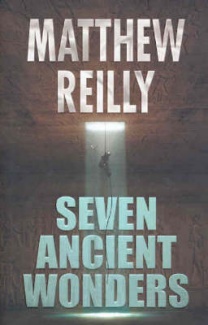
                  Matthew Reilly's Jack West Jr. series opens with Seven Ancient Wonders (2005), an action-adventure thriller sending Jack West Jr. on a globe-spanning hunt tied to the ancient wonders of the world. The series continues its countdown structure through The Six Sacred Stones and five further novels, ending with The One Impossible Labyrinth (2021).

                • Cover of Nina Wilde and Eddie Chase
                  Nina Wilde and Eddie Chase

                  series · 19 books · 2007

                  similar byadventurecontemporaryexpeditionsadventurousour worldthriller & suspense+1 more

                • RS
                  Roland Smith's Cryptid Series

                  series · 5 books · 1998

                  similar byadventurecontemporaryexpeditionsadventuroustense

                • Cover of The Copernicus Legacy
                  The Copernicus Legacy

                  series · 6 books · 2014

                  similar byadventurecontemporaryquestsadventurous+3 more

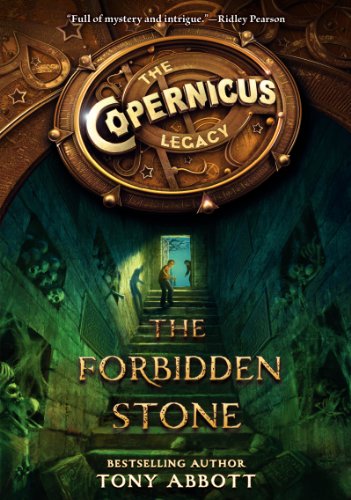
                  The Copernicus Legacy is a book series written by Tony Abbott. It is about the adventures of Wade Kaplan, Darrell Kaplan, Lily, Becca Moore, Roald Kaplan, and Sara Kaplan, as they try to destroy a time machine made by Ptolemy but discovered and used by Nicolaus Copernicus, from the dangerous Teutonic Order of Ancient Prussia. It currently has four books in the main series, but two are in a series diverted from The Copernicus Legacy called Copernicus Archives. While a work of fiction, it does incorporate some facts about Copernicus's history.

                • Cover of Voyages extraordinaires
                  Voyages extraordinaires

                  series · 59 books · 1863

                  similar byadventureadventurous+2 more

                  The Voyages extraordinaires is a collection or sequence of novels and short stories by the French writer Jules Verne. The cycle features some of Verne's best known titles, such as Journey to the Center of the Earth, From the Earth to the Moon, Twenty Thousand Leagues Under the Seas, Around the World in Eighty Days and The Mysterious Island.

                • Cover of Jack Howard
                  Jack Howard

                  series · 8 books · 2005

                  similar byadventurecontemporaryexpeditionsadventuroustenseour worldthriller & suspense

                • Cover of Uncharted
                  Uncharted

                  series · 2 books · 2011

                  similar byadventurecontemporaryquestsadventurous+3 more

                • Cover of Tunnels / Circle in the Spiral
                  Tunnels / Circle in the Spiral

                  series · 6 books · 2005

                  similar bycontemporaryadventureadventurous+2 more

                • Cover of Luke Challenger
                  Luke Challenger

                  series · 3 books · 2010

                  similar byadventurecontemporaryexpeditionsadventuroustense+3 more

                • Cover of Dirk Pitt
                  Dirk Pitt

                  series · 12 books · 1973

                  completed

                  similar byadventureexpeditionscontemporaryadventuroustenseour worldthriller & suspense

                  Clive Cussler's Dirk Pitt novels follow the title character, a two-fisted marine engineer and de facto field agent for the fictional National Underwater and Marine Agency, through globe-spanning adventures mixing undersea salvage, historical mystery, and international conspiracy. The run collected here spans The Mediterranean Caper (1973) through Valhalla Rising (2001), the earlier stretch of a series Cussler continued for decades with later co-authors.

                • Cover of The NUMA Files
                  The NUMA Files

                  series · 6 books · 2004

                  similar bycontemporaryadventuroustenseour worldthriller & suspense+2 more

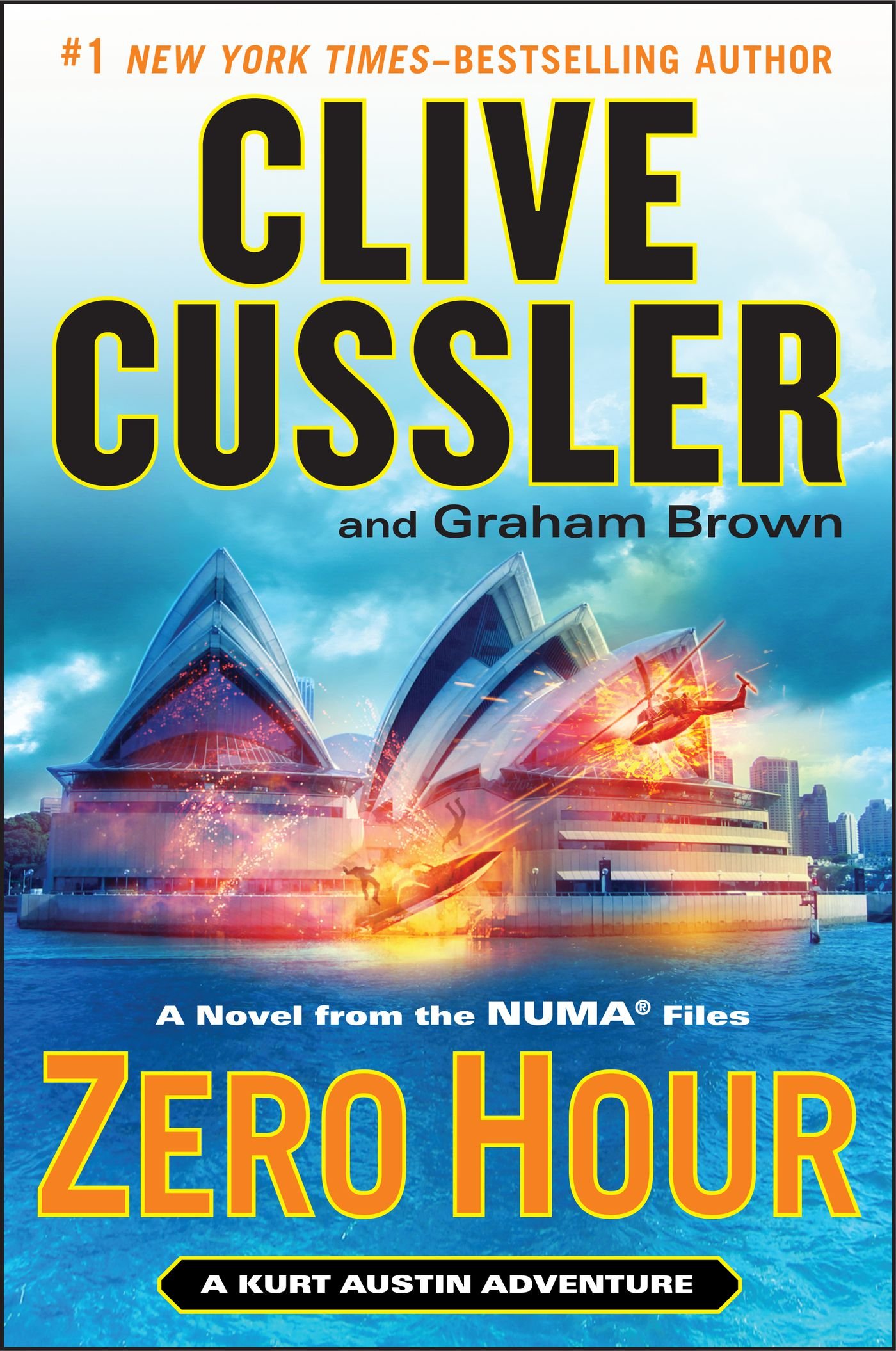
                  Clive Cussler's NUMA Files novels follow Kurt Austin, leader of the National Underwater and Marine Agency's Special Assignments Team, and his colleague Joe Zavala, through globe-spanning adventure-thrillers mixing action, exotic locations and speculative science. Lost City finds them investigating a life-extending enzyme discovered deep in the North Atlantic, and the string of deaths and disappearances surrounding its discovery. Zero Hour, Nighthawk and the following novels continue Austin's missions, later written with Graham Brown after original co-author Paul Kemprecos.

                • Cover of Atlantis (Thomas Greanias)
                  Atlantis (Thomas Greanias)

                  series · 3 books · 2005

                  similar byadventurecontemporaryexpeditionsadventuroustenseour worldthriller & suspense

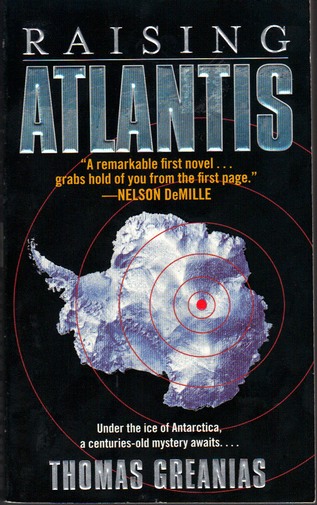
                  Archaeologist Conrad Yeats teams up with Vatican linguist Serena Serghetti to chase the truth behind Atlantis and the origins of the human race in Raising Atlantis, a globe-trotting thriller that Thomas Greanias followed with The Atlantis Prophecy and The Atlantis Revelation. Greanias originally planned a longer series; this trilogy stands as the completed core of a larger Atlantis mythology he later expanded through prequels and spin-offs.

                • Cover of Congo
                  Congo

                  Michael Crichton · standalone novel · 1980

                  similar byadventureexpeditionsadventuroustensejunglethriller & suspense

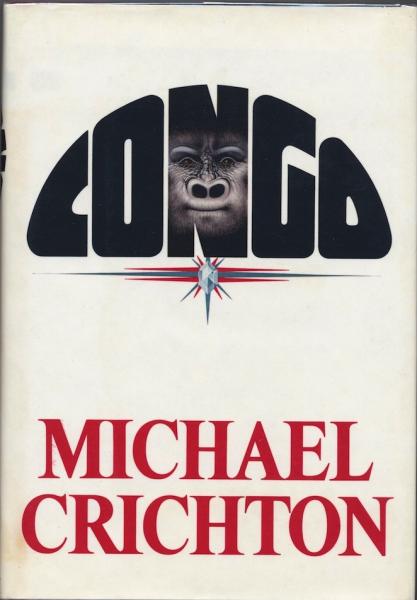
                  WorldCat: On an expedition to return Amy, his talking gorilla, to her home in the Congo, Professor Peter Elliot is joined by others who hope to find a legendary diamond mine guarded by mutant gorillas.

                • Cover of Philip Mercer
                  Philip Mercer

                  series · 2 books · 1998

                  similar byadventurecontemporaryexpeditionsadventuroustenseour worldthriller & suspense

                • Cover of Pym
                  Pym

                  series · 5 books · 1838

                  similar byadventureexpeditions+4 more

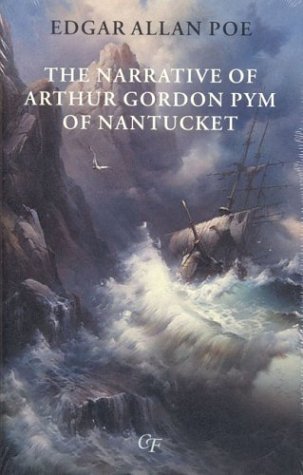
                  Edgar Allan Poe's The Narrative of Arthur Gordon Pym of Nantucket (1838), his only complete novel, sends a young stowaway through shipwreck, mutiny, and cannibalism toward an increasingly strange voyage to the South Pole that breaks off on a mysterious, unexplained image. Jules Verne wrote an unauthorized 1897 sequel, An Antarctic Mystery, resolving Poe's cliffhanger in more rationalist terms, while Mat Johnson's 2011 novel Pym uses Poe's original as the springboard for a satirical modern story about race.

                • Cover of Seven Wonders
                  Seven Wonders

                  series · 10 books · 2013

                  similar byquestscontemporaryadventureadventurous+1 more

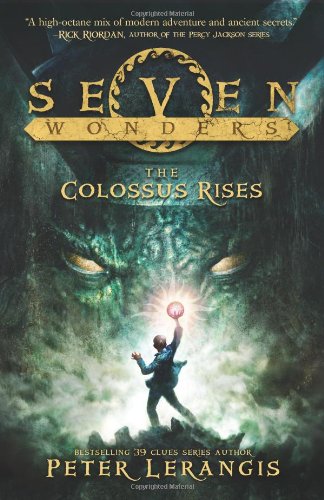
                  Seven Wonders is a pentalogy of children's fantasy, adventure and mythological fiction books written by American author Peter Lerangis. It is based on Greek mythology and set around the Seven Wonders of the Ancient World. Jack McKinley discovers a secret organization on a hidden island, and becomes the leader of a mission to retrieve seven lost magical orbs. As Jack and his three friends realize their lives are at stake, they have no choice but to accept the quest and embark on the challenge.

                • Cover of Wolves Chronicles
                  Wolves Chronicles

                  series · 12 books · 1962

                  completed

                  similar byadventureadventurous+1 more

                  The Wolves Chronicles is Joan Aiken's long-running alternate-history series for young readers, set in a nineteenth-century England ruled by the Stuart dynasty and beset by wolves that have migrated across a Channel land-bridge. It opens with The Wolves of Willoughby Chase, in which two girls outwit a scheming governess sent to ruin them, and expands over twelve books into a sprawling saga of orphans, conspiracies, and journeys through a Britain quite unlike the real one. Aiken kept adding to the same timeline across more than four decades, including later prequels set before the first book.

                • Cover of The Joshua Files
                  The Joshua Files

                  series · 6 books · 2008

                  similar bycontemporaryexpeditionsadventureadventuroustensethriller & suspense+1 more

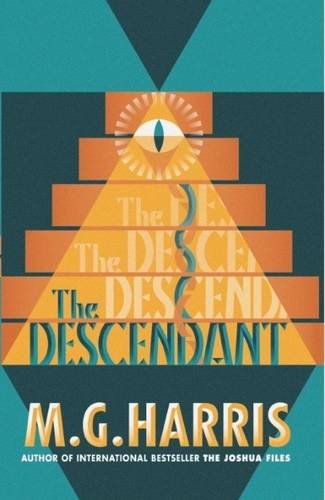
                  The Joshua Files is a thriller book series aimed at pre-teens/teenagers written by British author M. G. Harris. The mythology of the series includes a fictional prophecy of the ancient Maya of a catastrophic event that will occur in December 2012.

                • Cover of The Zone Unknown
                  The Zone Unknown

                  series · 7 books · 1994

                  completed

                  similar bycontemporarytense+4 more

                • Cover of Fargo Adventures
                  Fargo Adventures

                  series · 1 book · 2019

                  similar byadventurecontemporaryour world

                • Cover of Alexander Cold
                  Alexander Cold

                  series · 3 books · 2002

                  similar byadventurecontemporaryexpeditionsadventurousour world+1 more

                • Cover of Find Your Fate
                  Find Your Fate

                  series · 32 books · 1984

                  similar byadventureadventuroustenseour world+1 more

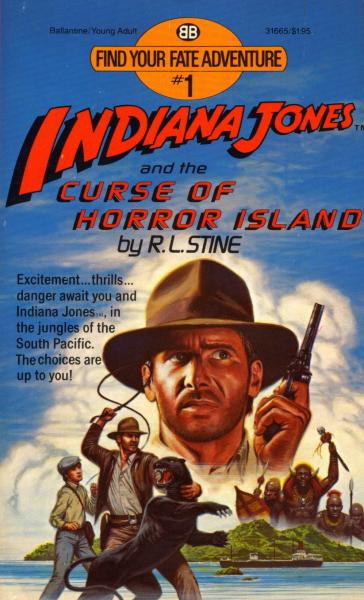
                  Find Your Fate is a series of gamebooks published by Ballantine Books featuring licensed characters including Indiana Jones, James Bond, and Morgan Swift. They were written and published between 1984 and 1987 by authors including R. L. Stine, Rose Estes, and Richard Wenk to compete with the popular Choose Your Own Adventure series published by Bantam Books, featuring a similar branching storyline which depended on choices made by the reader.