More like Dr. Adder
anchored on:science fictioncyberpunknorth americanear futuredarkdystopia+3 more
but
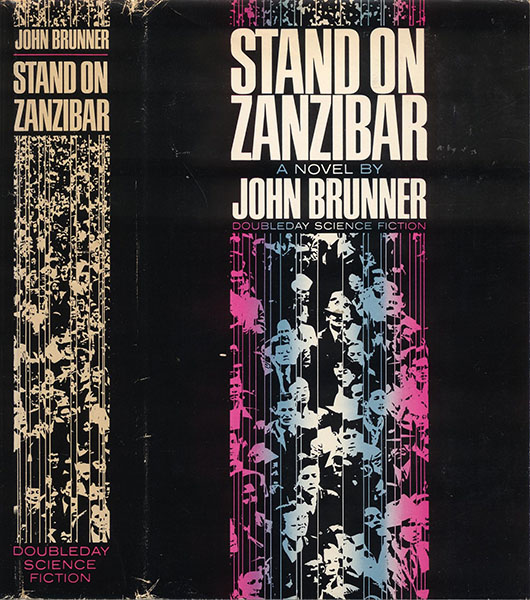
- Stand on Zanzibar
John Brunnerstandalone novel1968
similar bynear futuregenetic engineeringchallengingdarkscience fictiondystopiabig city+1 more
Stand on Zanzibar is a dystopian New Wave science fiction novel written by John Brunner and first in part published in New Worlds magazine in 1967 and in book form in 1968. The book won a Hugo Award for Best Novel at the 27th World Science Fiction Convention in 1969, as well as the 1969 BSFA Award and the 1973 Prix Tour-Apollo Award.
- Blood Music
Greg Bearstandalone novel1985
similar bynear futuregenetic engineeringdarkscience fictionnorth americacyberpunk+1 more
Blood Music is a 1985 science fiction novel by American writer Greg Bear. It is an expanded version of a short story of the same title, originally published in the June 1983 issue of Analog and the winner of both the 1983 Nebula and 1984 Hugo awards for Best Novelette. The novel won the 1986 Prix Apollo Award, given to the best science fiction novel published in France during the preceding year, under the title La Musique du sang.
- Feed
M. T. Andersonstandalone novel2002
similar bynear futuredarkscience fictioncyberpunknorth americadystopia+2 more
Feed (2002) is a cyberpunk, satirical, dystopian, young-adult novel by M. T. Anderson, focusing on issues such as American hegemony, corporate power, consumerism, information technology, data mining, and environmental decline, with a sometimes sardonic, sometimes somber tone. From the first-person perspective of a teenaged boy, the book takes place in a near-futuristic American culture completely dominated by advertising and corporate exploitation, corresponding to the enormous popularity of internetworking brain implants called feeds.
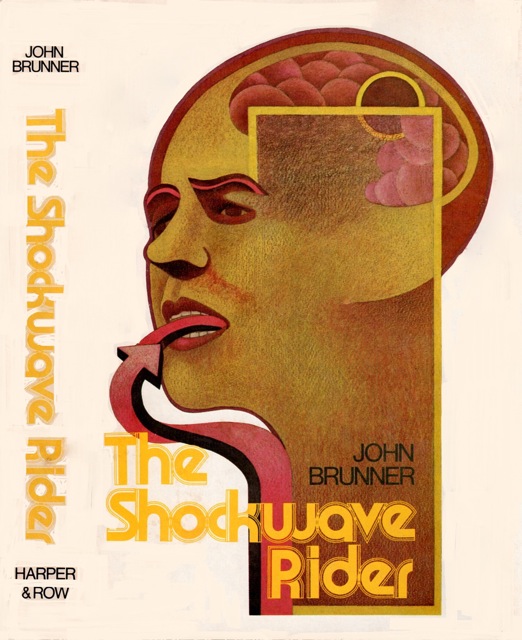
- The Shockwave Rider
John Brunnerstandalone novel1975
similar bynear futuredarkscience fictioncyberpunknorth americadystopiabig city
The Shockwave Rider is a science fiction novel by John Brunner, originally published in 1975. It is notable for its hero's use of computer hacking skills to escape pursuit in a dystopian future, and for the coining of the word "worm" to describe a program that propagates itself through a computer network. It also introduces the concept of a Delphi pool, perhaps derived from the RAND Corporation's Delphi method – a prediction market on world events which bears close resemblance to DARPA's controversial and cancelled Policy Analysis Market.
- The Windup Universe
series3 books2005
similar bynear futuredarkgenetic engineeringscience fictiondystopia+2 more
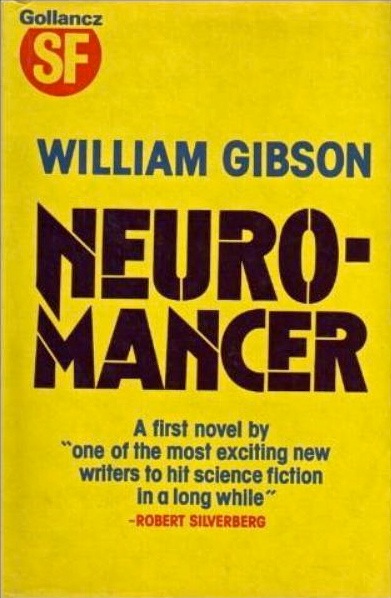
- Sprawl Trilogy
series10 books1981
similar bynear futuredarkcyberpunkscience fictionbig city
The Sprawl Trilogy is William Gibson's foundational cyberpunk sequence: Neuromancer (1984), in which hacker Case is drawn into a high-stakes heist alongside an artificial intelligence and a damaged ex-soldier, followed by Count Zero (1986) and Mona Lisa Overdrive (1988), which widen the same near-future world of corporate power and networked cyberspace to new characters. Johnny Mnemonic, an early short story set in the same fictional milieu, predates the novels and introduces the courier Molly Millions before her role in the trilogy. Together these works established much of cyberpunk's visual and thematic vocabulary.
- MaddAddam
series3 books2003
similar bynear futuregenetic engineeringdarkscience fictionnorth americadystopia+1 more
Margaret Atwood's MaddAddam trilogy (Oryx and Crake, The Year of the Flood, MaddAddam, 2003-2013) is set around a genetically engineered pandemic unleashed deliberately by the brilliant, disillusioned scientist Crake, who intends the deadly 'BlyssPluss' pill to wipe out humanity and clear the way for the gentler, engineered Crakers he has designed to replace it. Told from the perspectives of survivors including Crake's old friend Jimmy (now calling himself Snowman), the trilogy pieces together the pandemic's causes and its aftermath from multiple, overlapping vantage points.
- The Jagged Orbit
John Brunnerstandalone novel1969
similar bynear futurechallengingdarkscience fictiondystopiabig citynorth america+1 more
The Jagged Orbit is a science fiction novel by British writer John Brunner. It is similar to his earlier novel Stand on Zanzibar in its narrative style and dystopic outlook. It has exactly 100 titled chapters, which vary from several pages to part of one word. It was first published in 1969 with cover art by Leo and Diane Dillon, in the Ace Science Fiction Specials line issued by Ace Books.
- The Sheep Look Up
John Brunnerstandalone novel1972
similar bynear futuredarkscience fictionnorth americadystopiabig city
The Sheep Look Up is a 1972 dystopian science fiction novel by British author John Brunner, dealing with the deterioration of the environment in the United States. It was nominated for the 1972 Nebula Award for Best Novel.
- A Clockwork Orange
series4 books1962
completed
similar bynear futuredarkchallengingscience fictiondystopiabig city
Anthony Burgess's 1962 novel is narrated by Alex, a teenage gang leader in a near-future Britain gripped by a youth subculture of extreme violence, recounting his crimes in Nadsat, an invented slang blending English with Russian-derived words. After his crimes catch up with him, Alex is made the subject of a controversial state program meant to forcibly reform his behavior, and the novel uses his ordeal to question whether imposed goodness is worth the loss of free will. It is a standalone novel.
- Make Room! Make Room!
Harry Harrisonstandalone novel1966
similar bynear futuredarkscience fictiondystopianorth americabig cityclass conflict
Make Room! Make Room! is a 1966 science fiction novel written by Harry Harrison exploring the consequences of both unchecked population growth on society and the hoarding of resources by a wealthy minority. It was originally serialized in Impulse magazine.
- Player Piano
Kurt Vonnegut & Jr.standalone novel1952
similar bynear futuredarkscience fictionnorth americadystopiaclass conflict
In the near future, when cybernetic automation has effectively separated people into two castes, the "engineers and managers", and the remainder of the population who can find work only in "recycling and reclamation" or the largely useless military, an underground movement arises with the intention of rolling back those changes and giving the masses the dignity of owning their own, productive, work once more.
- Moxyland
Lauren Beukesstandalone novel2008
similar bynear futuredarkcyberpunkscience fictiondystopiabig city+1 more
Moxyland is a cyberpunk dystopian novel written by South African author, Lauren Beukes. The book was published in 2008.
- On Wings of Song
Thomas M. Dischstandalone novel1979
similar bynear futurechallengingdarkscience fictionnorth americadystopiaclass conflict
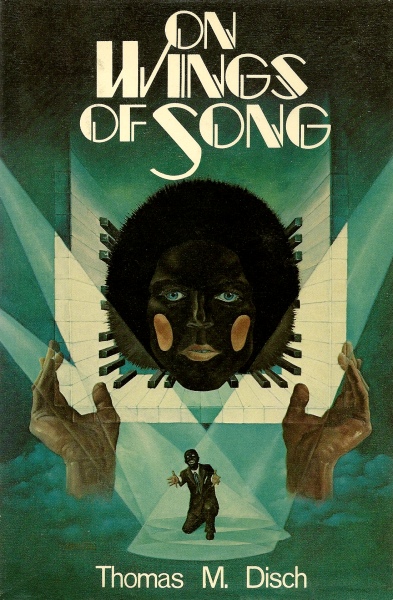
On Wings of Song is a 1979 science fiction novel by American writer Thomas M. Disch (1940-2008). It was first published as a serial in The Magazine of Fantasy & Science Fiction in three installments in February to April 1979. Like Disch's previous novel 334, it is a bitter satire that depicts a near-future America falling into worsening economic and social crisis. It was critically well received and is often considered Disch's best work. It was, however, a commercial failure.
- Slow River
Nicola Griffithstandalone novel1995
similar bynear futuregenetic engineeringdarkscience fictioncyberpunkbig cityclass conflict
Slow River is a science fiction novel by British writer Nicola Griffith, first published in 1995. It won the Nebula Award for Best Novel and the Lambda Literary Award. The novel received critical praise for its writing and setting, while its use of multiple narrative modes was criticised.
- Space Merchants
series2 books1953
completed
similar bynear futuredarkscience fictiondystopiaclass conflict+1 more
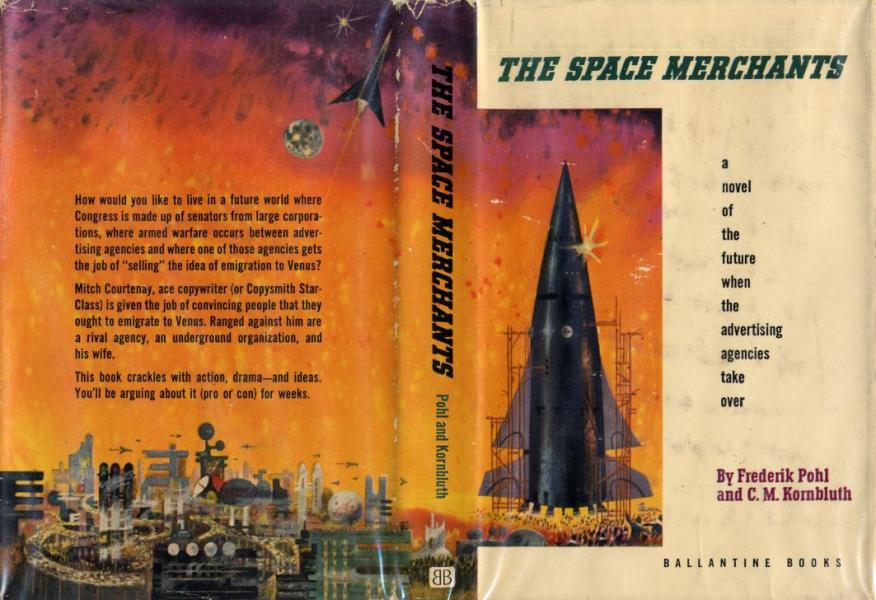
The Space Merchants (1953) is a satirical science fiction novel by Frederik Pohl and C. M. Kornbluth that follows an advertising executive navigating a future where aggressive consumer capitalism has swallowed politics and daily life. The authors reunited three decades later for a direct sequel, The Merchants' War (1984), returning to the same satirical world. Together the two books form a compact bookend pair rather than an ongoing series.
- By Light Alone
Adam Robertsstandalone novel2011
similar bynear futuregenetic engineeringscience fictionnorth americadystopiabig cityclass conflict+2 more
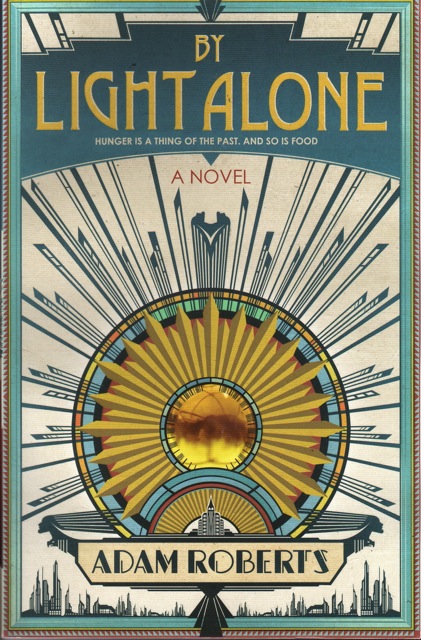
In a world where we have been genetically engineered so that we can photosynthesise sunlight with our hair hunger is a thing of the past, food an indulgence. The poor grow their hair, the rich affect baldness and flaunt their wealth by still eating. But other hungers remain ...The young daughter of an affluent New York family is kidnapped.
- When She Woke
Hillary Jordanstandalone novel2011
similar bynear futuredarkgenetic engineeringscience fictionnorth americadystopia
When She Woke is a science fiction novel by American author Hillary Jordan, published in October 2011. It has been translated into French, Spanish, Turkish, German, Portuguese and Chinese. The novel is a dystopian reimagining of Nathaniel Hawthorne's The Scarlet Letter, set in a future theocratic America where rather than being imprisoned and rehabilitated, criminals are punished by being "chromed" – having their skin color genetically altered to fit their crime – and released into the general population to survive as best they can.
- The Supernaturalist
Eoin Colferstandalone novel2004
similar bynear futuredarkscience fictioncyberpunkbig citydystopia+1 more
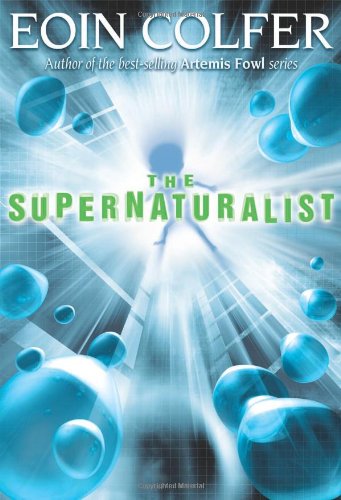
The Supernaturalist is a science fiction cyberpunk novel by Irish author Eoin Colfer. The book was influenced by film noir and other predecessors of the cyberpunk science fiction movement. Colfer has outlined plans for a sequel, Avernus.
- Oath of Fealty
Larry Niven & Jerry Pournellestandalone novel1981
similar bynear futurescience fictionnorth americabig cityclass conflictdystopia+1 more
Oath of Fealty is a 1981 novel by American writers Larry Niven and Jerry Pournelle, published originally by Phantasia Press, then by Timescape Books, with numerous reprints. Set in the near future, it involves an arcology, a large inhabited structure, called Todos Santos, which rises above a crime-ridden Los Angeles, California, but has little beyond casual contact with the city. The novel popularized the phrase "think of it as evolution in action", which occurs elsewhere in Niven's books. The novel anticipated the building of the Los Angeles subway. It was included in David Pringle's book Science Fiction: The 100 Best Novels.
- The Handmaid's Tale
series3 books1985
similar bynear futuredarknorth americascience fictiondystopia
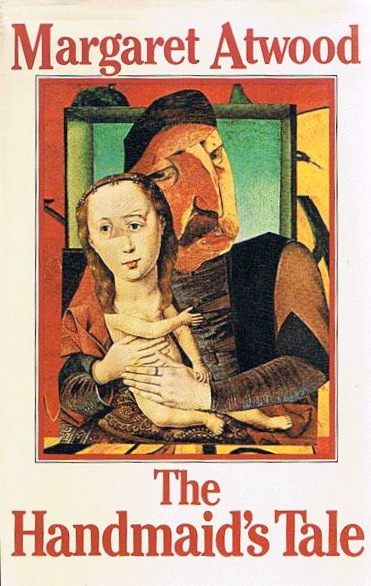
The Handmaid's Tale is Margaret Atwood's 1985 novel set in Gilead, a totalitarian theocracy that has overthrown the United States and forces fertile women into reproductive servitude as Handmaids; it is narrated by one such woman, Offred. Atwood returned to the world in her 2019 sequel The Testaments, set fifteen years later and narrated by three women, including the regime's Aunt Lydia. Together the two novels move from Gilead's grip on power toward the first cracks in it.
- Earthseed
series7 books1993
similar bynear futuredarkscience fictionnorth americadystopia
Octavia E. Butler's Earthseed novels, Parable of the Sower and Parable of the Talents, follow Lauren Olamina as she survives the collapse of a climate-ravaged, near-future United States and founds a belief system built on the idea that "God is Change." The two-book series was left unfinished at Butler's death; a planned third novel, Parable of the Trickster, was never completed. Later graphic-novel adaptations retell the same two stories rather than continuing the narrative.
- Blade Runner Universe
series6 books1968
similar bynear futuredarkscience fictioncyberpunkbig city
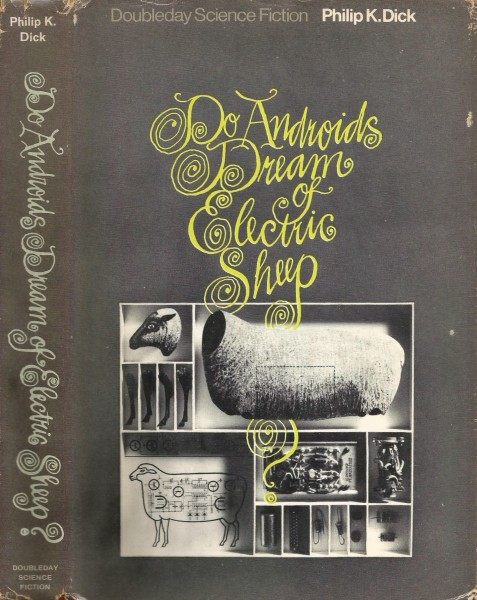
Philip K. Dick's 1968 novel Do Androids Dream of Electric Sheep? follows bounty hunter Rick Deckard as he tracks escaped androids through an irradiated, near-abandoned San Francisco, using the hunt to probe questions of empathy and what separates human from machine. The novel became the basis for Ridley Scott's 1982 film Blade Runner, and Marvel Comics later published an illustrated adaptation of that film. Together the two trace the story's path from prose original to screen and comic-page adaptation.