Loreful
HomeDiscover
Search series, authors…⌘K
Loreful

Reading orders for SF/F series and shared universes — with your place kept in every one.

Explore

UniversesSeriesWorksAuthorsAtlas

Help

FAQAboutSite map

Account & legal

Sign inCreate accountPrivacyTerms

Data

Built on ISFDB, Wikipedia, Wikidata and Open Library. Curated reading orders carry their reasoning on the page; the rest follow publication order. Data sources & licenses

© Loreful · data: ISFDB · CC BY

More like Dr. Identity

anchored on:science fictionidentitynear futurecyberpunkartificial intelligencechallenging+1 more

but

Mood

The mood the book leaves you in.

  • The reading experience is propelled by journeys, exploration, and physical risk; excitement and forward momentum dominate over dread or introspection.
  • Joy and loss are deliberately mixed; the resolution grants characters something real while taking something else away, leaving warmth and sorrow together.
  • The book demands work from the reader — dense prose, difficult structure, unfamiliar ideas, or morally uncomfortable material — as part of its intended effect.
  • Grim events, cruelty, or despair dominate the atmosphere, and the book does not soften them with comfort or comic relief.
  • The atmosphere is quietly unsettling — wrongness, unease, and the uncanny pervade the book without necessarily escalating into overt horror.
  • The book is built to move the reader; character feeling is foregrounded and major scenes aim at a strong emotional response.
  • Humor is a primary aim and the prose plays for laughs — comic situations, wit, or dialogue produce sustained comedy, not occasional levity.
  • The book insists that things can improve; effort and decency are shown to matter, and the arc bends toward better outcomes even through hardship.
  • The book teaches as it goes — real facts, history, science, or craft are conveyed in enough depth that learning is part of the reading experience.
  • The book is designed to uplift and motivate, presenting perseverance or achievement in a way that invites the reader to aspire or act.
  • The overall register is cheerful and easygoing; stakes are kept gentle and the book avoids dwelling on pain or dread.
  • Withheld information drives the experience; the book sustains enigmas and secrets the reader wants resolved, whatever its genre.
  • The book is contemplative and inward-looking, giving more weight to thought, memory, and meaning than to external events.
  • The book works as comfort reading — low tension, a soothing pace, and an atmosphere the reader can unwind in.
  • Grief, loss, or melancholy set the dominant register, and the book lets sorrow stand rather than resolving it into comfort.
  • Sustained suspense is the point; the book keeps the reader braced for what happens next through danger, pressure, or impending revelation.
  • Playful invention and charm define the register — fanciful conceits, light absurdity, and a narration that delights in its own oddity.

About

What the story runs on.

  • Stories in which extraterrestrial beings are central — as characters, cultures, or the object of the plot.
  • Stories structured as a quest — a journey undertaken to find, deliver, or destroy something of great import.
  • Stories in which staying alive against nature, catastrophe, or scarcity is the central problem.
  • Stories of lovers kept apart by law, family, faith, or station, where the obstacle to love is the plot.
  • Stories in which a friendship — its making, testing, or loss — is the emotional center.
  • Stories of growing up — a young protagonist crossing from childhood into adult knowledge and responsibility.
  • Stories about who a character truly is — self-discovery, doubled lives, and the search for a self.
  • Stories about mourning — living through the death of a loved one and what loss does to the survivors.
  • Stories in which a buried family truth — hidden parentage, crimes, or shames — surfaces and reorders the present.
  • Stories driven by maneuvering for power — factions, conspiracies, and statecraft conducted in shadow.
  • Stories in which war itself is the subject — combat, occupation, and what warfare does to soldiers and civilians.
  • Stories organized around investigating a killing — the case, the clues, and the pursuit of the killer, in any genre's clothing.

Shelf

Where it sits in the library.

    • Fiction built on magic or other supernatural elements that have no scientific explanation.
    • Secondary-world fantasy at large scale, where the fate of nations or the world turns on the protagonists' struggle.
    • Fantasy set in a recognizably modern city or contemporary world where the supernatural intrudes on everyday life.
    • Fantasy that blends in horror's atmosphere and imagery, keeping a fantastical frame around grim or frightening material.
    • Action-driven fantasy following warriors or rogues with personal stakes against sorcerous threats, rather than world-spanning conflicts.
    • Fantasy set in a real historical period or a close analogue of one, with magic woven into the era.
    • Fantasy in which protagonists cross from the ordinary world into another world through a portal or similar passage.
    • Fiction that retells or reworks a traditional fairy tale in a new form or setting.
    • Fantasy drawing directly on myths, legends, and folklore, retelling them or building on their figures and logic.
    • Fantasy of ghosts, vampires, shapeshifters, psychics, and similar phenomena, usually set in an otherwise ordinary world.
    • Fiction mixing science-fictional trappings with overtly magical or impossible elements in one setting.
    • Low-stakes fantasy emphasizing comfort, community, and everyday pleasures over conflict and peril.
    • Speculative fiction of pervasive moral ambiguity, violence, and cynicism that rejects heroic conventions — fantasy and SF alike.
      • Fiction that extrapolates from science and technology — future societies, space travel, or speculative inventions — within at least nominally natural laws.
      • Science fiction of interstellar scope — starships, galactic polities, and adventure across star systems.
      • Science fiction committed to scientific rigor, where technical plausibility constrains the story.
      • Science fiction centered on armed forces and warfare, told largely from a military point of view.
      • Science fiction of networked, corporate-dominated near futures, pairing high technology with social decay.
      • Science fiction styled on nineteenth-century steam-powered technology, often in a Victorian or pseudo-Victorian setting.
      • Fiction depicting an oppressive or catastrophic society, presented as a warning.
      • Fiction set after civilization's collapse, following survivors in the ruins of the old world.
      • Fiction in which characters move between past and future, and the mechanics or consequences of that travel drive the plot.
      • Fiction exploring a world where a historical event went differently and history diverged from ours.
      • Science fiction about humanity's first encounter and communication with an alien intelligence.
      • Science fiction in which extraterrestrial forces attack or occupy Earth and humanity resists.
      • Fiction whose primary aim is to frighten or unsettle the reader through dread, menace, or the monstrous.
      • Horror of vast, indifferent, incomprehensible entities before which humanity is insignificant, in the Lovecraft tradition.
      • Horror of decaying houses, buried family secrets, and oppressive atmosphere in the Gothic literary tradition.
      • Horror centered on hauntings and the returning dead.
      • Horror located in the mind — paranoia, obsession, and unreliable perception rather than external monsters.
      • Horror built around the reanimated dead and survival amid their outbreaks.
      • Horror defined by explicit, transgressive gore that refuses to cut away from violence.
      • Speculative fiction of the strange and uncanny that resists both natural explanation and standard genre categories.
      • Fiction organized around solving a crime or puzzle, typically following an investigator toward the identification of a culprit.
      • A puzzle-first mystery that lays out clues so the culprit's identity can be deduced before the reveal.
      • Crime fiction of moral ambiguity, fatalism, and hard-edged style, set among the corrupt and the doomed.
      • A mystery following the realistic routines of police work — forensics, interviews, and case-building.
      • A gentle mystery with an amateur sleuth, a small community, and violence kept off the page.
      • A mystery set in a past era, where the investigation works within that period's methods and society.
      • Fast-paced fiction driven by imminent danger, pursuit, or high-stakes conspiracy, built to sustain tension.
      • A thriller of espionage — agents, tradecraft, and intelligence services in conflict.
      • A thriller centered on lawyers and the courtroom, where litigation carries the suspense.
      • A thriller driven by detailed contemporary or near-future technology, often military or scientific.
      • A thriller whose tension comes from mental states and manipulation between characters rather than external action.
      • Fiction whose central plot is a romantic relationship and its development toward an emotionally satisfying resolution.
      • Romance in which one or both partners are supernatural beings, blending fantasy elements into the love story.
      • A fantasy-romance hybrid in which the romantic arc and the fantasy plot carry equal weight.
      • Romance set in a past era, with courtship shaped by the period's society and manners.
      • Romance set in the present day, without supernatural or historical elements.
      • Fiction set in a real past period, where the historical setting materially shapes characters and events.
        • General and literary fiction emphasizing prose style, character interiority, or formal ambition over genre plot conventions.
        • Fiction in a realistic world where magical events occur and are treated as ordinary, in the tradition of Latin American literature.
        • Fiction that ridicules people, institutions, or society in order to criticize them.
        • Fiction of dreamlike, irrational imagery and logic that breaks from realistic representation.
        • Fiction that plays with narrative convention through metafiction, fragmentation, and self-reference.
        • Fiction propelled by journeys, exploration, and physical peril, where action and survival carry the plot.
        • Adventure fiction of ships and seafaring — naval engagements, voyages, and life at sea.
        • Fiction of the American frontier West — gunmen, ranchers, and lawmen, typically in the late nineteenth century.
        • Fiction centered on soldiers, campaigns, and the experience of warfare, historical or imagined.
          • Fiction written primarily to amuse, using comedic situations, wit, or parody as its organizing principle.
            • Multi-generational fiction following a family or dynasty across decades, with inheritance and kinship as the through-line.
              • Fiction whose world runs on explicit game mechanics — levels, stats, and skills that characters can see and exploit.
                • Fiction about costumed or superpowered heroes and their conflicts with comparable villains.

                Practical

                How long a commitment, whether it stands alone, and whether it has finished.

                Tap a chip to ask for it · tap again to rule it out · once more to clear. Numbers show what would be left.

                • Cover of Genesis
                  Genesis

                  Bernard Beckett · standalone novel · 2006

                  similar bychallengingnear futureartificial intelligenceidentityscience fiction

                  Genesis (2006) is a philosophical science fiction novel by New Zealand author Bernard Beckett. It won the 2007 Esther Glen Award for children's literature, and the 2007 New Zealand Post Book Awards for Children and Young Adults. As of 2008 it has been published in 22 countries.

                • Cover of Stranger in a Strange Land
                  Stranger in a Strange Land

                  Robert A. Heinlein · standalone novel · 1961

                  similar bychallengingnear futureidentityscience fiction

                  Stranger in a Strange Land is a 1961 science fiction novel by the American author Robert A. Heinlein. It tells the story of Valentine Michael Smith, a human who comes to Earth in early adulthood after being born on the planet Mars and raised by Martians, and explores his interaction with and eventual transformation of Terran culture.

                • Cover of Void Star
                  Void Star

                  Zachary Mason · standalone novel · 2017

                  similar bychallengingnear futureartificial intelligenceidentityscience fictioncyberpunk

                  Void Star is a 2017 near-future science fiction novel by American writer Zachary Mason. It is his second novel, published after The Lost Books of the Odyssey. Set in a near-future San Francisco, the book explores themes of artificial intelligence, philosophy, linguistics and immortality.

                • Cover of A Clockwork Orange
                  A Clockwork Orange

                  series · 4 books · 1962

                  completed

                  similar bychallengingnear futurescience fiction+2 more

                  Anthony Burgess's 1962 novel is narrated by Alex, a teenage gang leader in a near-future Britain gripped by a youth subculture of extreme violence, recounting his crimes in Nadsat, an invented slang blending English with Russian-derived words. After his crimes catch up with him, Alex is made the subject of a controversial state program meant to forcibly reform his behavior, and the novel uses his ordeal to question whether imposed goodness is worth the loss of free will. It is a standalone novel.

                • Cover of The Stone Gods
                  The Stone Gods

                  Jeanette Winterson · standalone novel · 2007

                  similar bychallengingnear futureartificial intelligencescience fictionmetafiction

                  The Stone Gods is a novel written by Jeanette Winterson. Published in the year 2007, the novel is a post-apocalyptic, postmodern, dystopian love story, with themes of corporate government control, the harshness of war, artificial intelligence, and technology. The novel is self-referential as characters make inter-textual references, while certain characters’ story arcs repeat. The novel aims to warn against history's tendency to repeat itself, as well as humanity's inability to learn from past mistakes.

                • Cover of The Light of Other Days
                  The Light of Other Days

                  Arthur C. Clarke & Stephen Baxter · standalone novel · 2000

                  similar bychallengingnear futurescience fiction+2 more

                  An industrialist devises a technique to use tiny wormholes as light pipes to enable viewing of any event anywhere; and subsequently it becomes possible to use them to view any event in the past as well. The effects on society are enormous.

                • Cover of The Diamond Age
                  The Diamond Age

                  Neal Stephenson · standalone novel · 1995

                  similar bynear futureartificial intelligencescience fictioncyberpunk+1 more

                  The Diamond Age: Or, A Young Lady's Illustrated Primer is a science fiction novel by Neal Stephenson. It is to some extent a Bildungsroman or coming-of-age story, focused on a young girl named Nell, set in a future world in which nanotechnology affects all aspects of life. The novel deals with themes of education, social class, ethnicity, and the nature of artificial intelligence. The Diamond Age was first published in 1995 by Bantam Books, as a Bantam Spectra hardcover edition. In 1996, it won both the Hugo and Locus Awards, and was shortlisted for the Nebula and other awards.

                • Cover of Subjective Cosmology
                  Subjective Cosmology

                  series · 3 books · 1992

                  similar bychallengingnear futurescience fiction+2 more

                • Cover of Dhalgren
                  Dhalgren

                  Samuel R. Delany · standalone novel · 1975

                  similar bychallengingidentityscience fictionmadness

                  Dhalgren is a 1975 science fiction novel by American writer Samuel R. Delany. It features an extended trip to and through Bellona, a fictional city in the American Midwest cut off from the rest of the world by an unknown catastrophe. It is number 33 on the 20th Century's Greatest Hits: 100 English-Language Books of Fiction list.

                • Cover of The Magus
                  The Magus

                  John Fowles · standalone novel · 1965

                  similar bychallengingidentitymetafiction+2 more

                  The Magus (1965) is a postmodern novel by British author John Fowles, telling the story of Nicholas Urfe, a young British graduate who is teaching English on a small Greek island. Urfe becomes embroiled in the psychological illusions of a master trickster, which become increasingly dark and serious. Considered an example of metafiction, it was the first novel written by Fowles but his third book to be published. A revised edition was published in 1977.

                • Cover of Stand on Zanzibar
                  Stand on Zanzibar

                  John Brunner · standalone novel · 1968

                  similar bychallengingnear futurescience fiction

                  Stand on Zanzibar is a dystopian New Wave science fiction novel written by John Brunner and first in part published in New Worlds magazine in 1967 and in book form in 1968. The book won a Hugo Award for Best Novel at the 27th World Science Fiction Convention in 1969, as well as the 1969 BSFA Award and the 1973 Prix Tour-Apollo Award.

                • Cover of Gnomon
                  Gnomon

                  Nick Harkaway · standalone novel · 2017

                  similar bychallengingnear futureidentityscience fiction

                  Gnomon is a 2017 science fiction novel by British author Nick Harkaway. The book deals with a state that exerts ubiquitous surveillance on its population. A detective investigates a murder through unconventional methods that leads to questions about her society's very nature.

                • Cover of Bête
                  Bête

                  Adam Roberts · standalone novel · 2014

                  similar bychallengingnear futureartificial intelligenceidentityscience fiction

                  A man is about to kill a cow. He discusses life and death and his right to kill with the compliant animal. He begins to suspect he may be about to commit murder. But kills anyway. It began when the animal rights movement injected domestic animals with artificial intelligences in bid to have the status of animals realigned by the international court of human rights. But what is an animal that can talk? Where does its intelligence end at its machine intelligence begin? And where might its soul reside?

                • Cover of Observer
                  Observer

                  Nancy Kress & Robert Lanza · standalone novel · 2023

                  similar bychallengingnear futureartificial intelligenceidentityscience fiction

                  Observer is a 2023 science fiction novel by American medical doctor and scientist, Robert Lanza, and science fiction author, Nancy Kress. It is Lanza's first novel and Kress's first novel written in collaboration with another author.

                • Cover of Cloud Atlas
                  Cloud Atlas

                  David Mitchell · standalone novel · 2004

                  similar bychallengingidentitymetafictionscience fiction+1 more

                  Cloud Atlas, published in 2004, is the third novel by British author David Mitchell. The book combines metafiction, historical fiction, contemporary fiction and science fiction, with interconnected nested stories in different writing styles that take the reader from the remote South Pacific in the 19th century to the island of Hawaii in a distant post-apocalyptic future. Its title references a piece of music by Toshi Ichiyanagi.

                • Cover of Blade Runner Universe
                  Blade Runner Universe

                  series · 6 books · 1968

                  similar bynear futureidentityscience fictioncyberpunk+1 more

                  Philip K. Dick's 1968 novel Do Androids Dream of Electric Sheep? follows bounty hunter Rick Deckard as he tracks escaped androids through an irradiated, near-abandoned San Francisco, using the hunt to probe questions of empathy and what separates human from machine. The novel became the basis for Ridley Scott's 1982 film Blade Runner, and Marvel Comics later published an illustrated adaptation of that film. Together the two trace the story's path from prose original to screen and comic-page adaptation.

                • Cover of Breakfast of Champions
                  Breakfast of Champions

                  Kurt Vonnegut & Jr. · standalone novel · 1973

                  similar bychallengingidentitymetafictionmadness+1 more

                  The author decides to liberate the characters he created, including an author who decides to try to help a mentally ill reader who was driven over the edge by the book's assertion that he was the only creature with free will in a universe of preprogrammed automatons.

                • Cover of Blood Music
                  Blood Music

                  Greg Bear · standalone novel · 1985

                  similar bynear futurescience fictioncyberpunk+2 more

                  Blood Music is a 1985 science fiction novel by American writer Greg Bear. It is an expanded version of a short story of the same title, originally published in the June 1983 issue of Analog and the winner of both the 1983 Nebula and 1984 Hugo awards for Best Novelette. The novel won the 1986 Prix Apollo Award, given to the best science fiction novel published in France during the preceding year, under the title La Musique du sang.

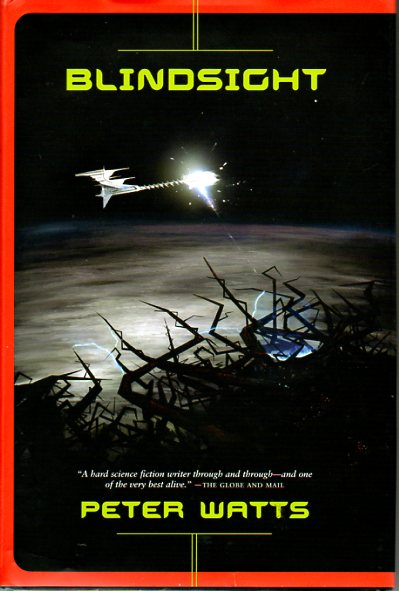
                • Cover of Blindsight / Firefall
                  Blindsight / Firefall

                  series · 3 books · 2006

                  similar bychallengingartificial intelligencescience fiction+2 more

                  Blindsight sends a crew of radically modified posthumans (including a resurrected, genetically restored vampire) out to the Oort cloud after humanity detects an alien signal, only to make contact with something intelligent, wildly capable, and possibly not conscious at all — a first-contact story built around the question of whether self-awareness is actually useful. Peter Watts's Echopraxia is a same-timeframe "sidequel" rather than a direct sequel, following different characters through the fallout of the same first-contact event.

                • Cover of Farewell Horizontal
                  Farewell Horizontal

                  K. W. Jeter · standalone novel · 1989

                  similar bychallengingnear futurescience fictioncyberpunk+1 more

                  Farewell Horizontal is a science fiction novel by American writer K. W. Jeter, published in 1989. It came in second for the John W. Campbell Memorial Award for Best Science Fiction Novel in 1990, and was a finalist for the Arthur C. Clarke Award in 1991. The novel deals with themes of information access, security, and reliability.

                • Cover of Eye in the Sky
                  Eye in the Sky

                  Philip K. Dick · standalone novel · 1957

                  similar bychallengingidentityscience fictionmadness

                  Eight visitors touring a particle-accelerator facility are caught in a catastrophic malfunction, a collapsing platform, a burst of radiation, that leaves them all unconscious. When protagonist Jack Hamilton, an engineer recently fired over Red Scare-era suspicions about his wife's politics, comes to, the world around him is subtly, then not so subtly, wrong: physics bends to fit one fellow victim's religious convictions, then to another's paranoid fears, as the group cycles through what turn out to be shared hallucinations built from each other's private belief systems. Philip K. Dick's early novel about how differently people actually see the same world.

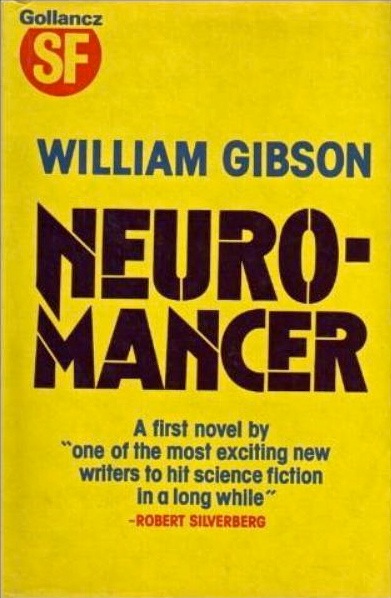
                • Cover of Sprawl Trilogy
                  Sprawl Trilogy

                  series · 10 books · 1981

                  similar bynear futureartificial intelligencescience fictioncyberpunk

                  The Sprawl Trilogy is William Gibson's foundational cyberpunk sequence: Neuromancer (1984), in which hacker Case is drawn into a high-stakes heist alongside an artificial intelligence and a damaged ex-soldier, followed by Count Zero (1986) and Mona Lisa Overdrive (1988), which widen the same near-future world of corporate power and networked cyberspace to new characters. Johnny Mnemonic, an early short story set in the same fictional milieu, predates the novels and introduces the courier Molly Millions before her role in the trilogy. Together these works established much of cyberpunk's visual and thematic vocabulary.

                • Cover of VALIS
                  VALIS

                  series · 4 books · 1981

                  completed

                  similar bychallengingidentityscience fiction+1 more

                  The VALIS trilogy is a set of science fiction/philosophical novels by author Philip K. Dick which include VALIS (1981), The Divine Invasion (1981), and The Transmigration of Timothy Archer (1982). Dick's first novel about the VALIS concept originally titled "VALISystem A", was published as Radio Free Albemuth after Dick's death in 1985.

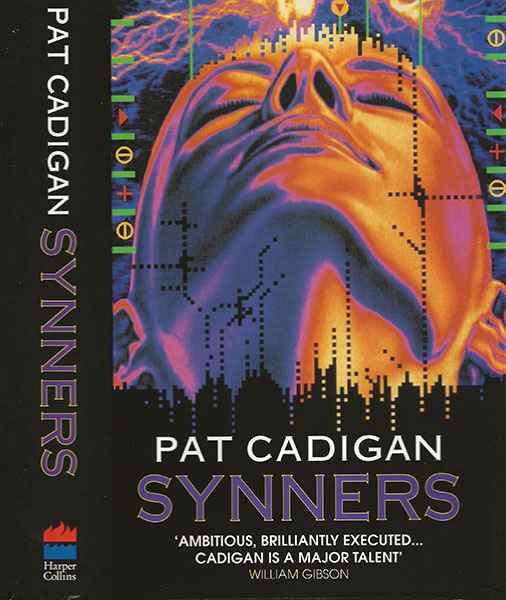
                • Cover of Synners
                  Synners

                  Pat Cadigan · standalone novel · 1991

                  similar bynear futureartificial intelligencescience fictioncyberpunk+1 more

                  In Synners, the line between technology and humanity is hopelessly slim. A constant stream of new technology spawns crime before it hits the streets; the human mind and the external landscape have fused to the point where any encounter with "reality" is incidental.