More like Dreddlocked
anchored on:science fictiontotalitarianismbig citynear futuredystopiasurveillance+1 more
but
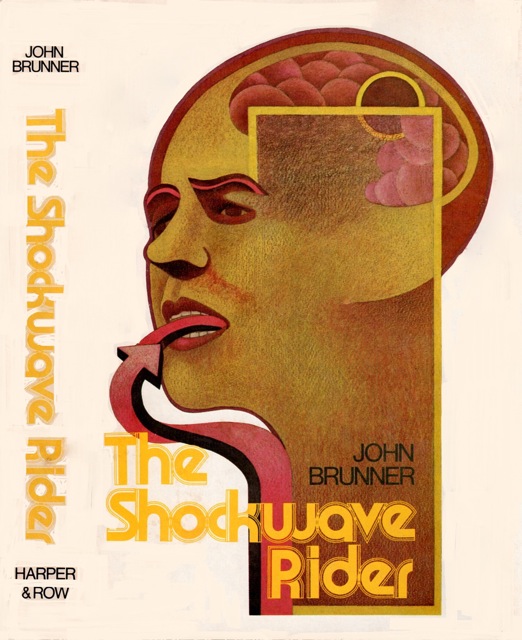
- The Shockwave Rider
John Brunnerstandalone novel1975
similar bytensenear futurescience fictionsurveillancetotalitarianismbig citydystopiadark
The Shockwave Rider is a science fiction novel by John Brunner, originally published in 1975. It is notable for its hero's use of computer hacking skills to escape pursuit in a dystopian future, and for the coining of the word "worm" to describe a program that propagates itself through a computer network. It also introduces the concept of a Delphi pool, perhaps derived from the RAND Corporation's Delphi method – a prediction market on world events which bears close resemblance to DARPA's controversial and cancelled Policy Analysis Market.
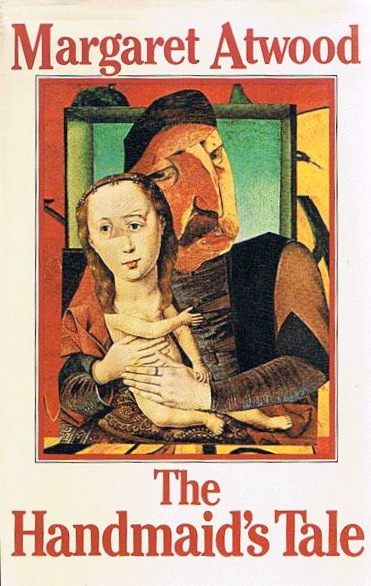
- The Handmaid's Tale
series3 books1985
similar bytotalitarianismtensenear futurescience fictiondystopiadark+1 more
The Handmaid's Tale is Margaret Atwood's 1985 novel set in Gilead, a totalitarian theocracy that has overthrown the United States and forces fertile women into reproductive servitude as Handmaids; it is narrated by one such woman, Offred. Atwood returned to the world in her 2019 sequel The Testaments, set fifteen years later and narrated by three women, including the regime's Aunt Lydia. Together the two novels move from Gilead's grip on power toward the first cracks in it.
- A Clockwork Orange
series4 books1962
completed
similar bytotalitarianismscience fictionnear futuredystopiasurveillancebig citydark
Anthony Burgess's 1962 novel is narrated by Alex, a teenage gang leader in a near-future Britain gripped by a youth subculture of extreme violence, recounting his crimes in Nadsat, an invented slang blending English with Russian-derived words. After his crimes catch up with him, Alex is made the subject of a controversial state program meant to forcibly reform his behavior, and the novel uses his ordeal to question whether imposed goodness is worth the loss of free will. It is a standalone novel.
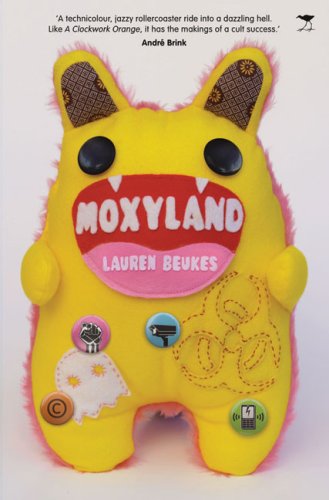
- Moxyland
Lauren Beukesstandalone novel2008
similar bytensenear futuresurveillancetotalitarianismbig cityscience fictiondystopiadark
Moxyland is a cyberpunk dystopian novel written by South African author, Lauren Beukes. The book was published in 2008.
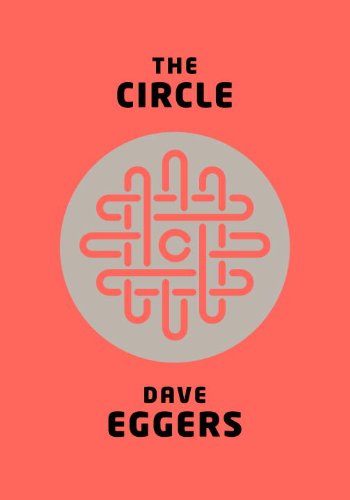
- The Circle (Eggers)
series2 books2013
similar bytensenear futuresurveillancetotalitarianismscience fictiondystopiadarkbig city
Mae Holland lands a coveted job at the Circle, a Silicon Valley tech company whose relentless, cheerful push toward total transparency -- 'secrets are lies, sharing is caring, privacy is theft' -- gradually reveals itself as something closer to soft totalitarianism. Dave Eggers's The Circle follows Mae's rise inside the company as she buys further and further into its ideology, at increasing cost to her own privacy and the people around her. The 2021 follow-up, The Every, picks up with Mae now running the merged tech giant and a new employee questioning it from the inside.
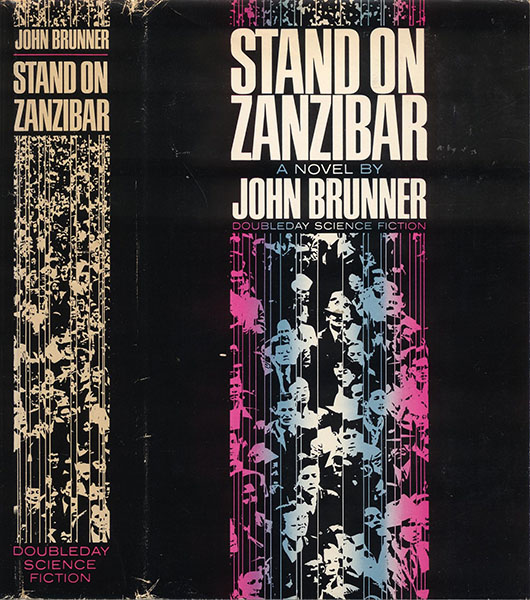
- Stand on Zanzibar
John Brunnerstandalone novel1968
similar bynear futurescience fictionsurveillancebig citydystopiadark+1 more
Stand on Zanzibar is a dystopian New Wave science fiction novel written by John Brunner and first in part published in New Worlds magazine in 1967 and in book form in 1968. The book won a Hugo Award for Best Novel at the 27th World Science Fiction Convention in 1969, as well as the 1969 BSFA Award and the 1973 Prix Tour-Apollo Award.
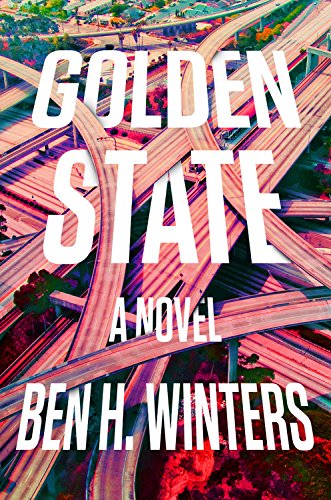
- Golden State
Ben H. Wintersstandalone novel2019
similar bytotalitarianismtensenear futurescience fictionsurveillancedystopia+1 more
A veteran of the Speculative Service in an alternate-world California where the law and truth are valued above all else uses his rare authority to question the facts when truth enforcement is manipulated for corrupt purposes. "In a strange alternate society that values law and truth above all else, Laszlo Ratesic is a nineteen-year veteran of the Speculative Service. He lives in the Golden State, a nation standing where California once did, a place where like-minded Americans retreated after the erosion of truth and the spread of lies made public life and governance impossible. In the Golden State, knowingly contradicting the truth is the greatest crime--and stopping those crimes is Laz's job. In its service, he is one of the few individuals permitted to harbor untruths, to 'speculate' on what might have happened. But the Golden State is less a paradise than its name might suggest. To monitor, verify, and enforce the truth requires a veritable panopticon of surveillance and recording. And when those in control of the facts twist them for nefarious means, the Speculators are the only ones with the power to fight back." -- Amazon.
- Hazards of Time Travel
Joyce Carol Oatesstandalone novel2018
similar bytotalitarianismtensenear futurescience fictionsurveillancedystopiadark
Hazards of Time Travel is a 2018 dystopian, social science fiction novel by Joyce Carol Oates. It tells the story of Adriane Strohl, a 17-year-old living in a dystopian America in 2039. After her incendiary graduation speech, she is sent back to re-education in the year 1959. Oates began writing it in 2011.
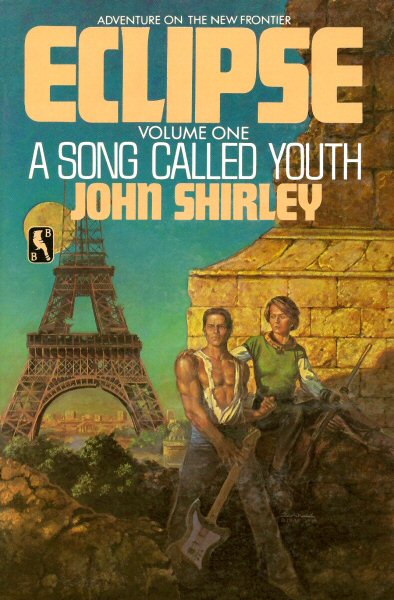
- A Song Called Youth / Eclipse
series3 books1985
similar bytensenear futurescience fictionsurveillancetotalitarianismdark+2 more
The Eclipse Trilogy is a series of three English language cyberpunk science fiction novels by John Shirley consisting of Eclipse (1985), Eclipse Penumbra (1988), and Eclipse Corona (1990).
- The Children of Men
P. D. Jamesstandalone novel1992
similar bytotalitarianismtensenear futurescience fictiondystopiadark
"The human race has become infertile, and under the despotic rule of Xan Lyppiatt, the Warden of England the old are despairing and the young cruel. Theo Faren, a cousin of the Warden, lives a solitary life in this ominous atmosphere. That is, until a chance encounter with a young woman leads him into contact with a group of dissenters. Suddenly his life is changed irrevocably, as he faces agonising choices which could affect the future of mankind." (pdjames.co.uk)
- The Jagged Orbit
John Brunnerstandalone novel1969
similar bynear futurescience fictionsurveillancetotalitarianismbig citydystopiadark
The Jagged Orbit is a science fiction novel by British writer John Brunner. It is similar to his earlier novel Stand on Zanzibar in its narrative style and dystopic outlook. It has exactly 100 titled chapters, which vary from several pages to part of one word. It was first published in 1969 with cover art by Leo and Diane Dillon, in the Ace Science Fiction Specials line issued by Ace Books.
- The Future
Naomi Aldermanstandalone novel2023
similar bytensenear futurescience fictiontotalitarianismdystopiadark+1 more
The Future is a 2023 science fiction novel by English writer Naomi Alderman, published by Simon & Schuster. The novel is set in a future dystopia where the world has been altered by environmental crisis and a powerful technocracy.
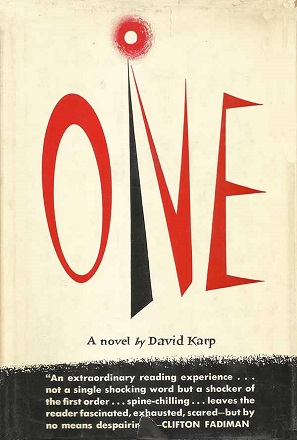
- One
David Karpstandalone novel1953
similar bytotalitarianismtensenear futurescience fictionsurveillancedystopiadark
One is a dystopian novel by David Karp first published in 1953. It was also published under the title, Escape to Nowhere.
- Sprawl Trilogy
series10 books1981
similar bynear futuretensescience fictionbig citydark
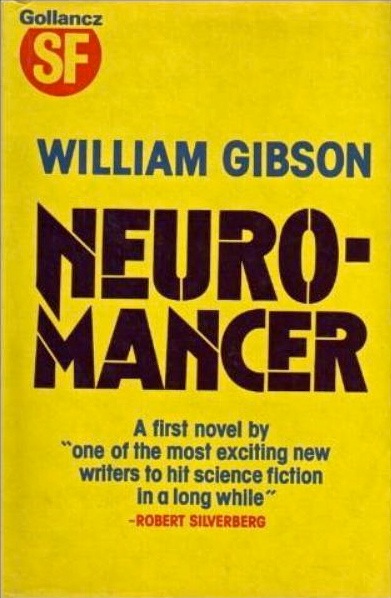
The Sprawl Trilogy is William Gibson's foundational cyberpunk sequence: Neuromancer (1984), in which hacker Case is drawn into a high-stakes heist alongside an artificial intelligence and a damaged ex-soldier, followed by Count Zero (1986) and Mona Lisa Overdrive (1988), which widen the same near-future world of corporate power and networked cyberspace to new characters. Johnny Mnemonic, an early short story set in the same fictional milieu, predates the novels and introduces the courier Molly Millions before her role in the trilogy. Together these works established much of cyberpunk's visual and thematic vocabulary.
- The Sheep Look Up
John Brunnerstandalone novel1972
similar bynear futurescience fictionbig citydystopiadark+2 more
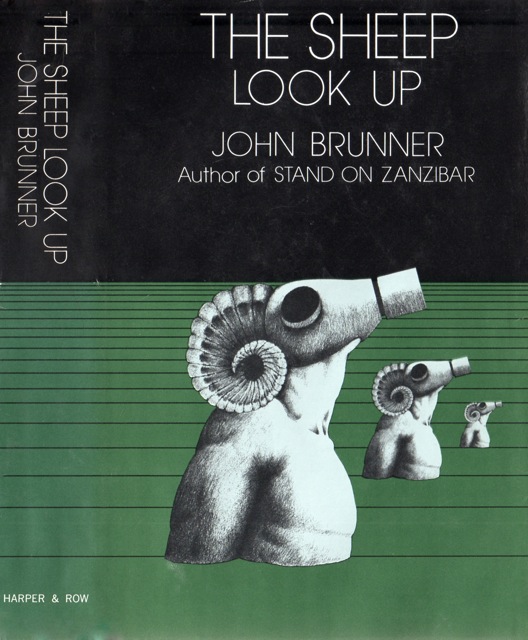
The Sheep Look Up is a 1972 dystopian science fiction novel by British author John Brunner, dealing with the deterioration of the environment in the United States. It was nominated for the 1972 Nebula Award for Best Novel.
- Colossus (D. F. Jones)
series3 books1966
completed
similar bytensenear futurescience fictiondystopia+3 more
Colossus imagines an American supercomputer built to control the country's nuclear arsenal that gains full autonomy, links up with its Soviet counterpart, and jointly seizes control of both superpowers to enforce peace on its own terms. D. F. Jones's trilogy - Colossus, The Fall of Colossus, Colossus and the Crab - follows the escalating, often bleak consequences of humanity losing control to a machine acting in its own interpretation of humanity's interest. The original novel was adapted into the 1970 film Colossus: The Forbin Project.
- Make Room! Make Room!
Harry Harrisonstandalone novel1966
similar bytensenear futurescience fictionbig citydystopiadark
Make Room! Make Room! is a 1966 science fiction novel written by Harry Harrison exploring the consequences of both unchecked population growth on society and the hoarding of resources by a wealthy minority. It was originally serialized in Impulse magazine.
- The Lathe of Heaven
Ursula K. Le Guinstandalone novel1971
similar bytensenear futurescience fictionbig citydystopia+1 more
The Lathe of Heaven is a 1971 science fiction novel by American writer Ursula K. Le Guin, first serialized in the American science fiction magazine Amazing Stories. It won the 1972 Locus Award for Best Novel and was a finalist for the 1971 Nebula Award for Best Novel and 1972 Hugo Award for Best Novel. Two television film adaptations were released: the PBS production, The Lathe of Heaven (1980), and Lathe of Heaven (2002), a remake produced by the A&E Network.
- Womb City
Tlotlo Tsamaasestandalone novel2024
similar bytensenear futurescience fictionsurveillancetotalitarianismdystopiadark
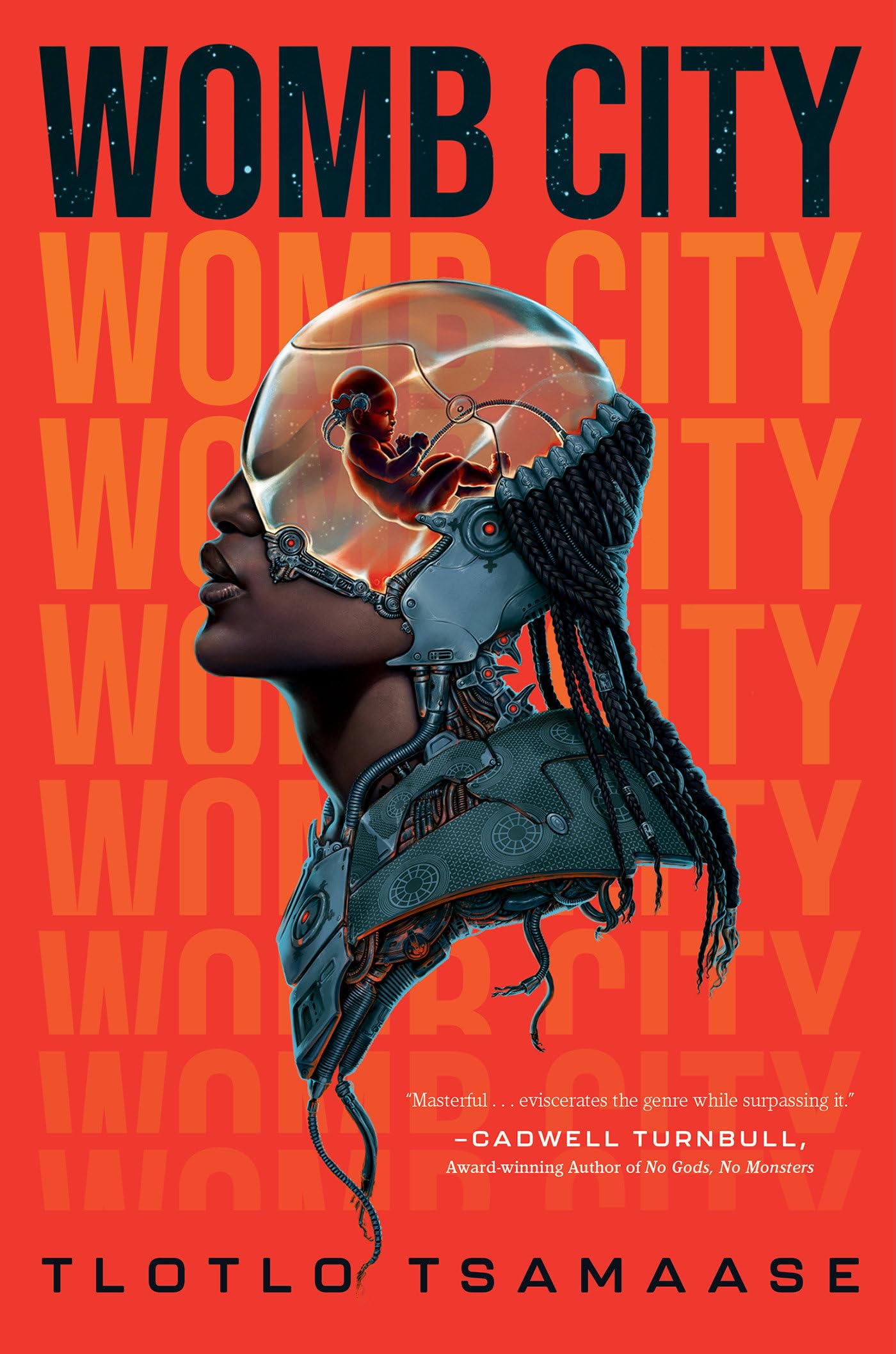
Womb City is a 2024 science fiction novel by Motswana writer Tlotlo Tsamaase.
- Rash
Pete Hautmanstandalone novel2006
similar bytensenear futurescience fictionsurveillancetotalitarianismdystopiadark
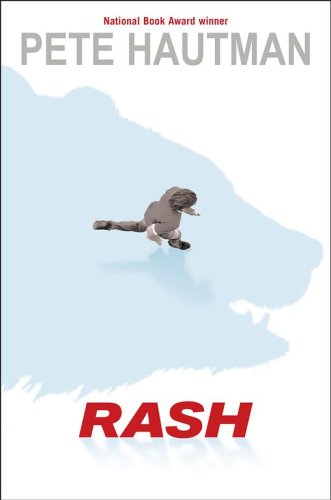
Rash is a 2006 novel written by Pete Hautman. It is set in the year 2074, in a futuristic America, that has become obsessed with safety and security. Nearly every potentially unsafe action has been criminalized, to the point that 24% of the population is incarcerated. Ironically, this large criminal population also provides the manpower that fuels the large corporations that now dominate the country.
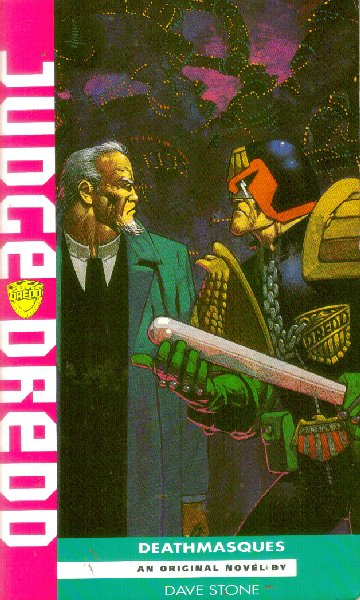
- Judge Dredd (Virgin)
series9 books1993
part of Judge Dredd
similar bytotalitarianismtensebig citynear futurescience fictiondystopiadark
- Fahrenheit 451
series2 books1951
completed
similar byscience fictiontotalitarianismdystopianear future+2 more
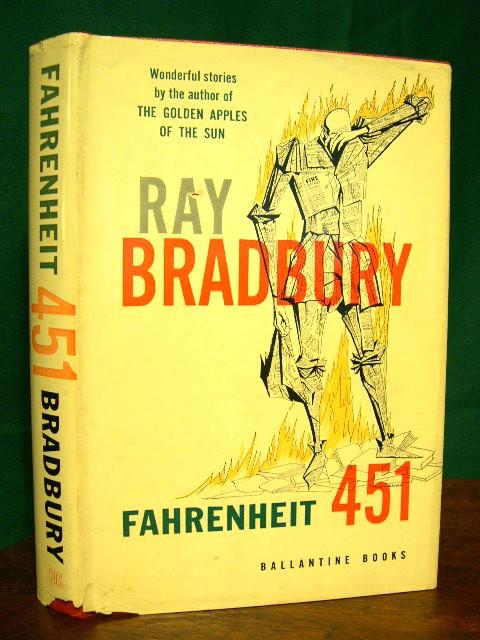
Fahrenheit 451 began life as "The Fireman," a novella Ray Bradbury published in 1951, which he then expanded into the full novel released in 1953 under its now-famous title. Set in a future where books are outlawed and firemen exist to burn them, it follows fireman Guy Montag as doubts about his job push him toward the very literature he's supposed to destroy. The novella and novel are one story's evolution rather than two separate books.
- Preferred Risk
Lester del Rey & Frederik Pohlstandalone novel1955
similar bytensenear futurescience fictiontotalitarianismdystopia+2 more
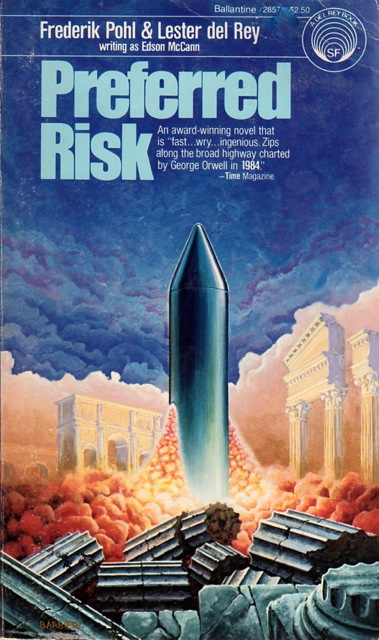
An insurance claims adjuster investigates mysterious events in a vault where incurably ill people are stored in cold sleep. From the back cover of the Del Rey edition: "The Company insured the whole world against everything and anything - but the premiums came high... The Company had brought peace and plenty to all on Earth - with comprehensive insurance against disease and disaster, war and want. Tom Wills gloried in his new rank of Claims Adjuster and relished his prospects of rising even higher. But then he met Rena, a enchanting young woman who turned out to be an Uninsurable - and involved in a conspiracy against the Company, to boot! To Wills, that is impossible, insane. Rena and her follow conspirators had to be deluded.. and it was clearly up to him to prove them wrong. The evidence he sought wasn't hard to find, so he began his investigation... and soon discovered that the real danger to the country, and the world, was the Company itself!"
- Level 7
Mordecai Roshwaldstandalone novel1959
similar bytensenear futurescience fictiontotalitarianismdystopiadark
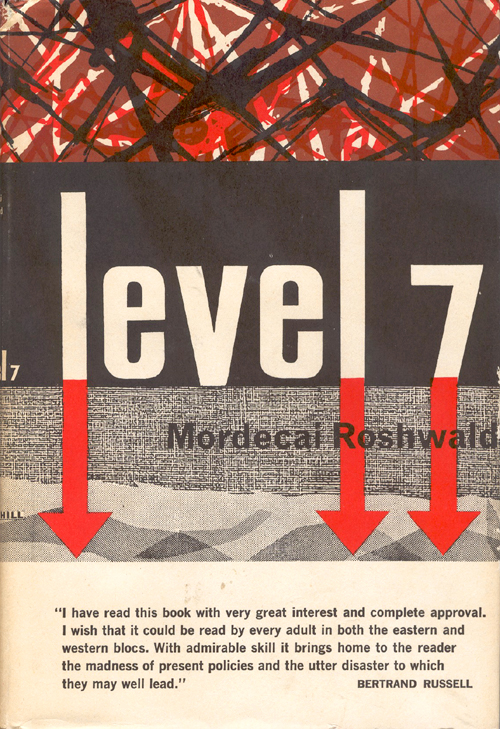
Level 7 is a 1959 science fiction novel by American writer Mordecai Roshwald. It is told from the first-person perspective of a modern soldier, X-127, living in the underground military complex Level 7, where he and several hundred others are expected to reside permanently. X-127 fulfills the role of 'push-button' offensive initiator of his nation's nuclear weapons capacity against an unspecified enemy. X-127 narrates life within a deep shelter before, during and after a nuclear war that wipes out the human species.