More like Driven
but
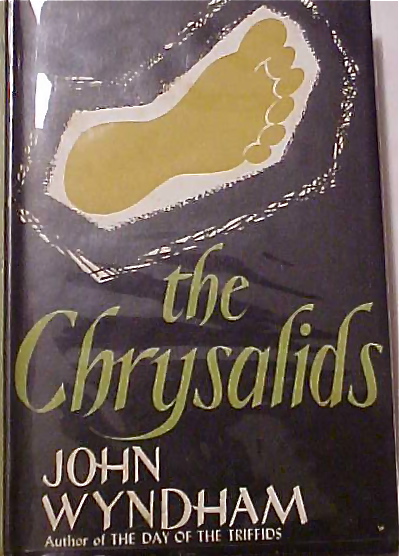
- The Chrysalids
John Wyndhamstandalone novel1955
similar bysurvivaltensescience fiction+1 more
The Chrysalids is a science fiction novel by British writer John Wyndham, first published in 1955 by Michael Joseph. It is the least typical of Wyndham's major novels, but regarded by some as his best. An early manuscript version was entitled Time for a Change.
- Alas, Babylon
Pat Frankstandalone novel1959
similar bysurvivaltensescience fiction+1 more
Classic novel of nuclear war and aftermath in rural Florida. From the back cover of a Bantam Pathfinder edition: "The day that the bomb dropped the thousands of years of "progress" that had covered the treacheries and weaknesses of ordinary man with a thin veneer of civilization were dissolved and melted like snow on the desert's dusty face. Then - the law of the jungle reigned but in the wreckage a few courageous survivors, men and women with the guts to have hope, were determined to build a new and better world on the ruins of the old. This is their story."
- I Am Legend
Richard Mathesonstandalone novel1954
similar bysurvivaltensedystopiascience fiction
The last human survivor of the vampire epidemic has to maintain his defences against their onslaught, while attempting to research the cause and possibly solution to the plague. Robert Neville is the last living man on Earth... but he is not alone. Every other man, woman and child on the planet has become a vampire, and they are hungry for Neville's blood. By day he is the hunter, stalking the undead through the ruins of civilization. By night, he barricades himself in his home and prays for the dawn. How long can a man survive like this?
- The Hunger Games Universe
universe5 books2008
Start hereThe Hunger Games · Start here
similar bysurvivaltensedystopiascience fiction
Panem, they call it now — a nation raised on the drowned bones of North America, a glittering Capitol ringed by twelve districts it once starved into obedience. Every year the Capitol collects its debt in children: two tributes from each district, drawn by lottery, dropped into an engineered arena, and made to kill one another on live television while the whole country is required to watch. This is the Hunger Games — entertainment, punishment, and government at once. Suzanne Collins tells it in a compact, unified body of work. The founding trilogy — The Hunger Games, Catching Fire, and Mockingjay — follows Katniss Everdeen, a girl from the coal-mining District 12 who volunteers in her sister's place and becomes something the Capitol never scripted. Two prequels reach back into the same machinery: The Ballad of Songbirds and Snakes traces a young Coriolanus Snow long before he is President, and Sunrise on the Reaping returns to District 12 a generation ahead of Katniss. Begin with the trilogy, in order — it is Katniss's voice, close and present-tense, that makes Panem breathe, and the prequels land hardest once you know how her story ends. Beneath the spectacle sits one steady, uncomfortable question: who profits when we agree to look away.
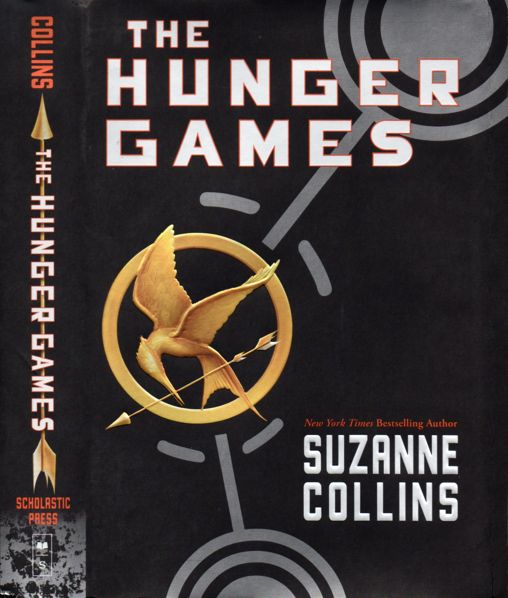
- The Hunger Games
series3 books2008
part of The Hunger Games Universe
similar bysurvivaltensedystopiascience fiction
The Hunger Games is a series of young adult dystopian novels written by American author Suzanne Collins. The series consists of a trilogy that follows teenage protagonist Katniss Everdeen, as well as two prequels. The Hunger Games universe is a dystopia set in Panem, a post-apocalyptic North American country consisting of the wealthy Capitol and 12 districts in varying states of poverty. As punishment for rebellion, the Capitol hosts an annual battle royale competition called The Hunger Games. Each of the 12 districts must send two children between the ages of 12 and 18 to participate, and the last surviving child is dubbed the victor.
- Lord of the Flies
William Goldingstandalone novel1954
similar bysurvivaltense+2 more
Lord of the Flies is the 1954 debut novel of British author William Golding. The plot concerns a group of prepubescent British boys who are stranded on an uninhabited island and their disastrous attempts to govern themselves that lead to a descent into savagery. The novel's themes include morality, leadership, and the tension between civility and chaos.
- H. G. Wells' War of the Worlds
universe65 books1898
Start hereThe War of the Worlds · Start here
similar byscience fiction+1 more
No one would have believed, in the closing years of the nineteenth century, that human affairs were being watched keenly and closely from the timeless worlds of space. And then the cylinders fell. H. G. Wells' War of the Worlds opens in the quiet of the Surrey commons, where a falling star proves to be the first Martian craft — and from the pit rise the towering tripods, the Heat-Ray, the choking Black Smoke and the creeping red weed, wielded by minds that regard mankind much as we regard the creatures we boil for supper. This is invasion rendered as natural disaster: cold, methodical, and vast beyond argument. Wells' 1898 novel is the seed; everything else grows from that Martian soil. The catalogue gathers direct sequels and continuations alongside a wide field of other hands. In War of the Worlds: Global Dispatches the invasion is retold across the whole planet through the eyes of Twain, Verne, Tolstoy, Lowell and Kipling; in the Manly Wade and Wade Wellman crossover, Sherlock Holmes, Watson and Professor Challenger take the field against the machines; and Scott Washburn's Great Martian War stretches the fighting into a decades-long alternate history of steam, artillery and grinding attrition. It is a loose shared world — no single decreed sequence, many voices answering one calamity. What sets this world apart is its refusal of heroics: the invaders fall not to generals but to the smallest things of Earth, humbling and indifferent. Begin, always, with Wells' original novel — it is short, and it is the ground every later book stands upon. From there follow your appetite: Global Dispatches for the panorama, the Holmes campaign for adventure, Washburn for the long war.
- Pax / Astra
series2 books1954
completed
similar bysurvivaltensescience fiction+1 more
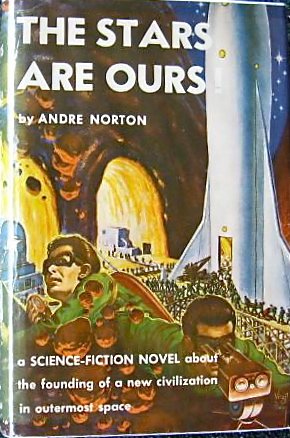
Andre Norton's The Stars Are Ours! (1954) and its sequel Star Born (1957) follow a group of scientists and their families who flee a repressive future Earth to colonize a distant world they name Astra, and then the next generation, who must contend with that world's original inhabitants. Star Flight appears to be a later omnibus or reissue rather than a third original novel.
- The Postman
series3 books1982
similar bysurvivalscience fiction+2 more
The Postman (1985) is David Brin's post-apocalyptic novel about a wandering survivor who, after taking a dead mail carrier's uniform for warmth, is mistaken for a representative of a restored United States government and is drawn into rebuilding trust and order among scattered, wary settlements. It stands as a self-contained story, later adapted into a 1997 film.
- Maze Runner
series11 books2009
similar bysurvivaltensedystopiascience fiction
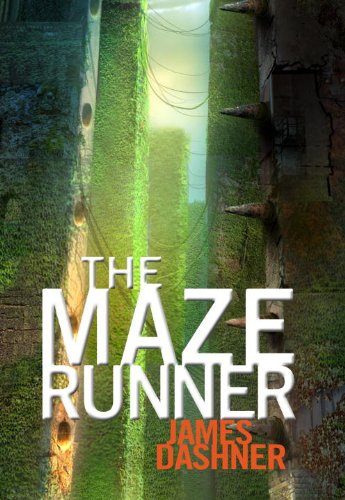
The Maze Runner is a series of young adult dystopian science fiction novels written by American author James Dashner. The series consists of the trilogy The Maze Runner (2009), The Scorch Trials (2010) and The Death Cure (2011), as well as two prequel novels, The Kill Order (2012) and The Fever Code (2016). A novella titled Crank Palace (2020) and a companion book titled The Maze Runner Files (2013) have also been released. A sequel trilogy in the series titled The Maze Cutter takes place 73 years following the events of The Death Cure and consists of the novels The Maze Cutter (2022), The Godhead Complex (2023), and The Infinite Glade (2025).
- Dune
series20 books1963
part of Dune Universe
similar byscience fiction+1 more
Frank Herbert's Dune Chronicles opens with 1965's Dune, set on the desert planet Arrakis where House Atreides takes control of the only source of the vital spice melange and young Paul Atreides is pulled into a struggle over its politics and religion. Herbert carried the story forward across five further novels — Dune Messiah, Children of Dune, God Emperor of Dune, Heretics of Dune, and Chapterhouse: Dune — following Paul's line over the following millennia, before Brian Herbert and Kevin J. Anderson later extended the saga. Many other editions of these six novels are omnibus and box-set repackagings rather than separate stories.
- Make Room! Make Room!
Harry Harrisonstandalone novel1966
similar bysurvivaltensedystopiascience fiction
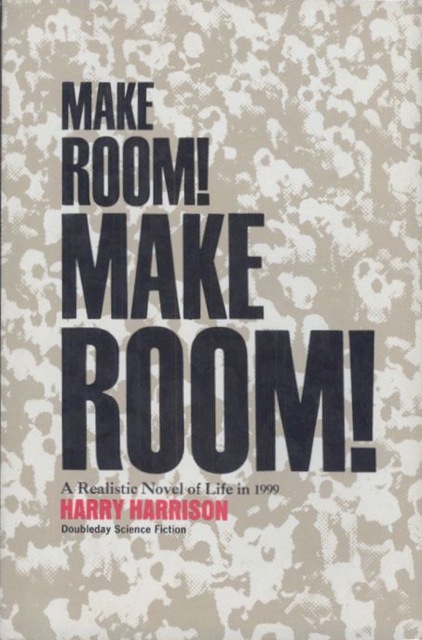
Make Room! Make Room! is a 1966 science fiction novel written by Harry Harrison exploring the consequences of both unchecked population growth on society and the hoarding of resources by a wealthy minority. It was originally serialized in Impulse magazine.
- Logan
series8 books1967
similar bydystopiascience fiction+2 more
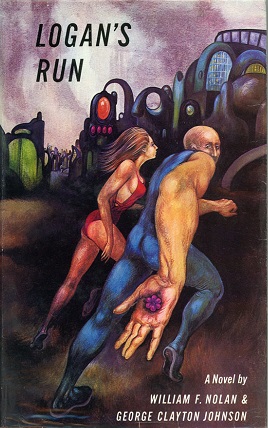
William F. Nolan and George Clayton Johnson's Logan's Run imagines a future society that maintains its population and resources by requiring everyone to die at 21, hunted down by enforcers called Sandmen if they refuse. The 1967 novel's own Sandman protagonist, Logan, becomes a fugitive from the system he once served; Nolan continued the story alone across several further novels decades later, with other writers later adding to the franchise. It's a classic of youth-obsessed dystopian SF, better known today through its 1976 film adaptation.
- Cell
Stephen Kingstandalone novel2006
similar bysurvivaltensedystopiascience fiction
In Cell, King taps into readers fears of technological warfare and terrorism. Mobile phones deliver the apocalypse to millions of unsuspecting humans by wiping their brains of any humanity, leaving only aggressive and destructive impulses behind. Those without cell phones, like illustrator Clayton Riddell and his small band of "normies," must fight for survival, and their journey to find Clayton's estranged wife and young son rockets the book toward resolution.
- The Passage
series3 books2010
similar bysurvivaltensescience fiction+1 more
The Passage is a novel series by Justin Cronin. There are three published books in the series. The film rights were acquired by Fox Entertainment Group in 2007 for adaptation into a film trilogy, but after 12 years of development and planning, it was changed to a television series, which premiered in January 2019 and was canceled after the first season.
- Delirium (Lauren Oliver)
series11 books2011
similar bydystopiascience fiction+3 more
Lauren Oliver's dystopian trilogy imagines a near-future America that has classified love as a curable disease, "amor deliria nervosa," and mandates a procedure to remove the capacity for it at adulthood. Delirium follows Lena Haloway in the months before her own scheduled procedure, as falling in love throws her lifelong acceptance of the system into doubt; Pandemonium and Requiem carry her out of the walled city and into the resistance against it. Companion novellas fill in supporting characters' perspectives alongside the main trilogy.
- Matched
series3 books2010
similar bytensedystopiascience fiction+2 more
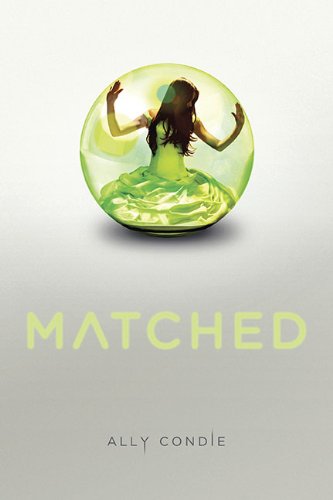
Ally Condie's dystopian trilogy follows Cassia, a teenager in a rigidly controlled Society that assigns citizens' spouses, careers, and even manner of death, after a glitch shows her a second face at her own Matching ceremony. Across Matched, Crossed, and Reached, her quiet doubt about the Society's choices grows into open resistance against the system that shaped her whole life.
- Legend (Marie Lu)
series5 books2011
similar bytensedystopiascience fiction+1 more
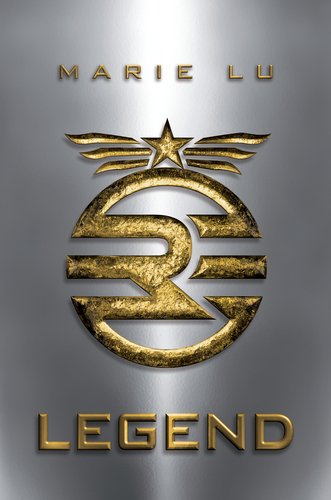
Marie Lu's Legend follows two teenagers from opposite ends of a divided, war-torn future society — one a celebrated young military prodigy, the other a hunted fugitive — whose paths collide and gradually complicate what each believed about the system that shaped them. The story continues through Prodigy and Champion, with a fourth book, Rebel, added years after the original trilogy closed; Lu has cited the film Les Misérables among her inspirations for its shape.
- The Status Civilization
Robert Sheckleystandalone novel1960
similar bysurvivaltensedystopiascience fiction
"Will Barrent had no memory of his crime ... but he found himself shipped across space to a brutal prison-planet. On Omega, his only chance to advance himself -- and stay alive -- is to commit an endless series of violent crimes. The average inmate's life expectancy from time of arrival is three years. Can Barrett survive, escape, and return to Earth to clear his name?" - From the cover of the 2007 Wildside paperback edition.
- Death-Cast
series3 books2017
similar byscience fiction+4 more
They Both Die at the End is set in a world where a service called Death-Cast calls people on the morning of the day they will die, and follows two strangers who connect through an app built for exactly that situation, choosing to spend their last day together. Adam Silvera's novel became a viral hit years after its original release, later gaining a prequel and further entries exploring other characters within the same premise. The series stays within a single fixed speculative conceit rather than expanding into a wider plot.
- The Triffids
series3 books1951
similar bysurvivalscience fiction+1 more
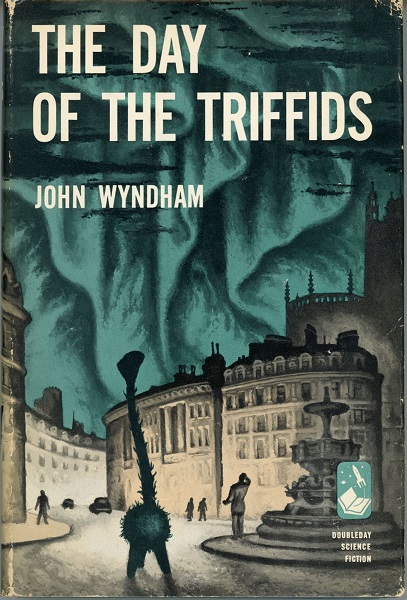
John Wyndham's The Day of the Triffids (1951) opens with a meteor-shower-like event that leaves most of Britain's population blind, throwing civilization into collapse just as triffids, an aggressive and mobile species of poisonous plant, become free to hunt the helpless survivors. Simon Clark's authorized sequel The Night of the Triffids (2001) picks up a generation later, narrated by the original protagonist's son as he confronts a new triffid-dominated world, and John Whitbourn's The Age of the Triffids extends the shared setting further still. Together the three novels form a loose post-apocalyptic trilogy built on Wyndham's original premise rather than a tightly plotted single story.
- Colony
Ben Bovastandalone novel1978
similar bysurvivaltensedystopiascience fiction
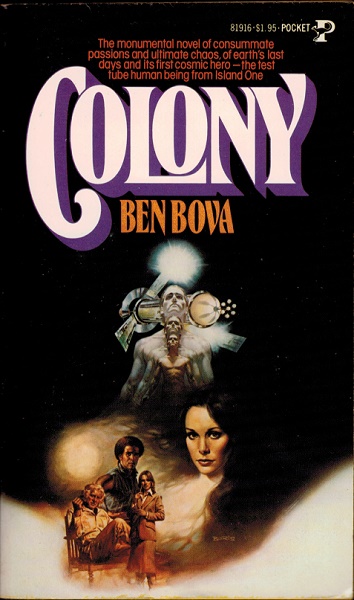
Colony continues the story Ben Bova began in Millennium, following astronaut-turned-administrator Chet Kinsman years later as the head of an orbiting space habitat that has become Earth's only real refuge from a planet buckling under overpopulation, food shortages and unrest. Getting a place in the habitat is a matter of life and death for millions who will never be chosen, and as Earth's governments grow more desperate to control or dismantle the colony outright, Kinsman has to decide how far he'll go to protect the world he's built off-world. Bova later folded both novels together into the omnibus The Kinsman Saga. Part of Ben Bova's Chet Kinsman series.
- Shade's Children milieu
series2 books1997
similar bysurvivaltensedystopiascience fiction
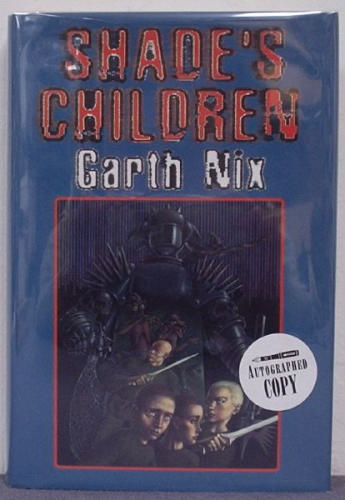
Shade's Children is set on an Earth where all adults vanished overnight fourteen years earlier, leaving children to be harvested at puberty by the machines that now run the world, unless they escape into hiding with Shade, a mysterious AI-like protector. Garth Nix's 1997 novel is a single, self-contained book rather than a series, though its bleak post-apocalyptic premise has drawn comparisons to his other work.