Loreful
HomeDiscover
Search series, authors…⌘K
Loreful

Reading orders for SF/F series and shared universes — with your place kept in every one.

Explore

UniversesSeriesWorksAuthorsAtlas

Help

FAQAboutSite map

Account & legal

Sign inCreate accountPrivacyTerms

Data

Built on ISFDB, Wikipedia, Wikidata and Open Library. Curated reading orders carry their reasoning on the page; the rest follow publication order. Data sources & licenses

© Loreful · data: ISFDB · CC BY

More like Duluth

anchored on:literary & generalsatirenorth americalate 20th centurymetafictionpostmodern+1 more

but

Mood

The mood the book leaves you in.

  • The reading experience is propelled by journeys, exploration, and physical risk; excitement and forward momentum dominate over dread or introspection.
  • Joy and loss are deliberately mixed; the resolution grants characters something real while taking something else away, leaving warmth and sorrow together.
  • The book demands work from the reader — dense prose, difficult structure, unfamiliar ideas, or morally uncomfortable material — as part of its intended effect.
  • Grim events, cruelty, or despair dominate the atmosphere, and the book does not soften them with comfort or comic relief.
  • The atmosphere is quietly unsettling — wrongness, unease, and the uncanny pervade the book without necessarily escalating into overt horror.
  • The book is built to move the reader; character feeling is foregrounded and major scenes aim at a strong emotional response.
  • Humor is a primary aim and the prose plays for laughs — comic situations, wit, or dialogue produce sustained comedy, not occasional levity.
  • The book insists that things can improve; effort and decency are shown to matter, and the arc bends toward better outcomes even through hardship.
  • The book teaches as it goes — real facts, history, science, or craft are conveyed in enough depth that learning is part of the reading experience.
  • The book is designed to uplift and motivate, presenting perseverance or achievement in a way that invites the reader to aspire or act.
  • The overall register is cheerful and easygoing; stakes are kept gentle and the book avoids dwelling on pain or dread.
  • Withheld information drives the experience; the book sustains enigmas and secrets the reader wants resolved, whatever its genre.
  • The book is contemplative and inward-looking, giving more weight to thought, memory, and meaning than to external events.
  • The book works as comfort reading — low tension, a soothing pace, and an atmosphere the reader can unwind in.
  • Grief, loss, or melancholy set the dominant register, and the book lets sorrow stand rather than resolving it into comfort.
  • Sustained suspense is the point; the book keeps the reader braced for what happens next through danger, pressure, or impending revelation.
  • Playful invention and charm define the register — fanciful conceits, light absurdity, and a narration that delights in its own oddity.

About

What the story runs on.

  • Stories in which extraterrestrial beings are central — as characters, cultures, or the object of the plot.
  • Stories about venturing into space to explore — survey missions, astronauts, and the frontier of the unknown beyond Earth.
  • Stories about minds with paranormal abilities — telepathy, telekinesis, precognition, empathy — and how societies handle those who have them.
  • Stories in which staying alive against nature, catastrophe, or scarcity is the central problem.
  • Stories in which a friendship — its making, testing, or loss — is the emotional center.
  • Stories of growing up — a young protagonist crossing from childhood into adult knowledge and responsibility.
  • Stories about who a character truly is — self-discovery, doubled lives, and the search for a self.
  • Stories about mourning — living through the death of a loved one and what loss does to the survivors.
  • Stories in which a buried family truth — hidden parentage, crimes, or shames — surfaces and reorders the present.
  • Stories driven by maneuvering for power — factions, conspiracies, and statecraft conducted in shadow.
  • Stories in which war itself is the subject — combat, occupation, and what warfare does to soldiers and civilians.
  • Stories organized around investigating a killing — the case, the clues, and the pursuit of the killer, in any genre's clothing.

Shelf

Where it sits in the library.

    • Fiction built on magic or other supernatural elements that have no scientific explanation.
    • Secondary-world fantasy at large scale, where the fate of nations or the world turns on the protagonists' struggle.
    • Fantasy set in a recognizably modern city or contemporary world where the supernatural intrudes on everyday life.
    • Fantasy that blends in horror's atmosphere and imagery, keeping a fantastical frame around grim or frightening material.
    • Action-driven fantasy following warriors or rogues with personal stakes against sorcerous threats, rather than world-spanning conflicts.
    • Fantasy set in a real historical period or a close analogue of one, with magic woven into the era.
    • Fantasy in which protagonists cross from the ordinary world into another world through a portal or similar passage.
    • Fiction that retells or reworks a traditional fairy tale in a new form or setting.
    • Fantasy drawing directly on myths, legends, and folklore, retelling them or building on their figures and logic.
    • Fantasy of ghosts, vampires, shapeshifters, psychics, and similar phenomena, usually set in an otherwise ordinary world.
    • Fiction mixing science-fictional trappings with overtly magical or impossible elements in one setting.
    • Low-stakes fantasy emphasizing comfort, community, and everyday pleasures over conflict and peril.
    • Speculative fiction of pervasive moral ambiguity, violence, and cynicism that rejects heroic conventions — fantasy and SF alike.
      • Fiction that extrapolates from science and technology — future societies, space travel, or speculative inventions — within at least nominally natural laws.
      • Science fiction of interstellar scope — starships, galactic polities, and adventure across star systems.
      • Science fiction committed to scientific rigor, where technical plausibility constrains the story.
      • Science fiction centered on armed forces and warfare, told largely from a military point of view.
      • Science fiction of networked, corporate-dominated near futures, pairing high technology with social decay.
      • Science fiction styled on nineteenth-century steam-powered technology, often in a Victorian or pseudo-Victorian setting.
      • Fiction depicting an oppressive or catastrophic society, presented as a warning.
      • Fiction set after civilization's collapse, following survivors in the ruins of the old world.
      • Fiction in which characters move between past and future, and the mechanics or consequences of that travel drive the plot.
      • Fiction exploring a world where a historical event went differently and history diverged from ours.
      • Science fiction about humanity's first encounter and communication with an alien intelligence.
      • Science fiction in which extraterrestrial forces attack or occupy Earth and humanity resists.
      • Fiction whose primary aim is to frighten or unsettle the reader through dread, menace, or the monstrous.
      • Horror of vast, indifferent, incomprehensible entities before which humanity is insignificant, in the Lovecraft tradition.
      • Horror of decaying houses, buried family secrets, and oppressive atmosphere in the Gothic literary tradition.
      • Horror centered on hauntings and the returning dead.
      • Horror located in the mind — paranoia, obsession, and unreliable perception rather than external monsters.
      • Horror built around the reanimated dead and survival amid their outbreaks.
      • Horror defined by explicit, transgressive gore that refuses to cut away from violence.
      • Speculative fiction of the strange and uncanny that resists both natural explanation and standard genre categories.
      • Fiction organized around solving a crime or puzzle, typically following an investigator toward the identification of a culprit.
      • A puzzle-first mystery that lays out clues so the culprit's identity can be deduced before the reveal.
      • Crime fiction of moral ambiguity, fatalism, and hard-edged style, set among the corrupt and the doomed.
      • A mystery following the realistic routines of police work — forensics, interviews, and case-building.
      • A gentle mystery with an amateur sleuth, a small community, and violence kept off the page.
      • A mystery set in a past era, where the investigation works within that period's methods and society.
      • Fast-paced fiction driven by imminent danger, pursuit, or high-stakes conspiracy, built to sustain tension.
      • A thriller of espionage — agents, tradecraft, and intelligence services in conflict.
      • A thriller centered on lawyers and the courtroom, where litigation carries the suspense.
      • A thriller driven by detailed contemporary or near-future technology, often military or scientific.
      • A thriller whose tension comes from mental states and manipulation between characters rather than external action.
      • Fiction whose central plot is a romantic relationship and its development toward an emotionally satisfying resolution.
      • Romance in which one or both partners are supernatural beings, blending fantasy elements into the love story.
      • A fantasy-romance hybrid in which the romantic arc and the fantasy plot carry equal weight.
      • Romance set in a past era, with courtship shaped by the period's society and manners.
      • Romance set in the present day, without supernatural or historical elements.
      • Fiction set in a real past period, where the historical setting materially shapes characters and events.
        • General and literary fiction emphasizing prose style, character interiority, or formal ambition over genre plot conventions.
        • Fiction in a realistic world where magical events occur and are treated as ordinary, in the tradition of Latin American literature.
        • Fiction that ridicules people, institutions, or society in order to criticize them.
        • Fiction of dreamlike, irrational imagery and logic that breaks from realistic representation.
        • Fiction that plays with narrative convention through metafiction, fragmentation, and self-reference.
        • Fiction propelled by journeys, exploration, and physical peril, where action and survival carry the plot.
        • Adventure fiction of ships and seafaring — naval engagements, voyages, and life at sea.
        • Fiction of the American frontier West — gunmen, ranchers, and lawmen, typically in the late nineteenth century.
        • Fiction centered on soldiers, campaigns, and the experience of warfare, historical or imagined.
          • Fiction written primarily to amuse, using comedic situations, wit, or parody as its organizing principle.
            • Multi-generational fiction following a family or dynasty across decades, with inheritance and kinship as the through-line.
              • Fiction whose world runs on explicit game mechanics — levels, stats, and skills that characters can see and exploit.
                • Fiction about costumed or superpowered heroes and their conflicts with comparable villains.

                Practical

                How long a commitment, whether it stands alone, and whether it has finished.

                Tap a chip to ask for it · tap again to rule it out · once more to clear. Numbers show what would be left.

                • Cover of Good News from Outer Space
                  Good News from Outer Space

                  John Kessel · standalone novel · 1989

                  similar byaliensfunnylate 20th centurynorth americasatire

                  Good News From Outer Space is a science fiction novel by American writer John Kessel. It is predominantly a satire telling the story of a resurrected reporter, George Eberhart, investigating alien involvement on Earth just prior to worldwide hysteria surrounding the countdown to the year 2000. The book was described as "madcap" and containing "gonzo plotting", which lent itself well to the satirical points Kessel was trying to make.

                • Cover of Little Green Men
                  Little Green Men

                  Christopher Buckley · standalone novel · 1999

                  similar byaliensfunnynorth americasatire

                  Little Green Men is a satirical novel by Christopher Buckley, first published in 1999. The novel follows a fictional "Inside the Beltway" talk-show host whose career and life is altered forever when he is abducted by aliens.

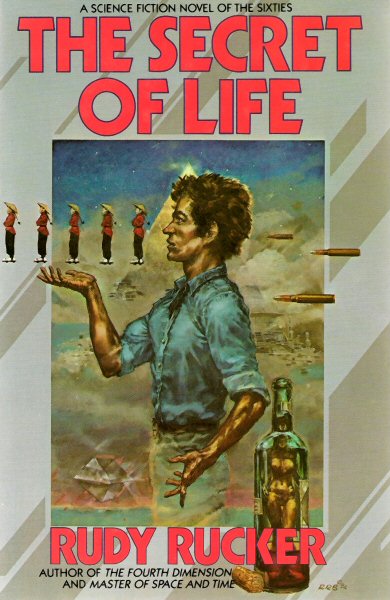
                • Cover of The Secret of Life
                  The Secret of Life

                  Rudy Rucker · standalone novel · 1985

                  similar byaliensfunnylate 20th centurynorth america

                  Bawdy, hilarious, and brisk, The Secret of Life tours the sixties with Conrad Bunger, alter ego of award-winning cyberpunk Rudy Rucker. Almost suicidally reckless, Conrad doesn't seem destined to reach legal drinking age. However, thanks to the supernatural powers he manifests when in crisis, not even the most severe mishaps interrupt his quest for booze, girls, and enlightenment. From a Catholic high school to college, he gradually awakens to his secret identity as an energy being from outer space. His solemn commission: to proceed incognito and return with the ultimate prize -- knowledge of the Secret of Life. Problem is, he's having too darn much fun to keep it together.

                • Cover of Agent to the Stars
                  Agent to the Stars

                  John Scalzi · standalone novel · 2005

                  similar byaliensfunnynorth america

                  "The space-faring Yherajk have come to Earth to meet us and to begin humanity's first interstellar friendship. There's just one problem: They're hideously ugly and they smell like rotting fish. Gaining humanity's trust isn't easy when you look like a B-movie terror. The Yherajk need someone who can help them close the deal. Thomas Stein knows all about closing deals - he's one of Hollywood's hottest young agents who's just closed the biggest deal of his career. But it's one thing to sell your client when she's a hot young starlet. It's another thing entirely when your client is an entire alien species, depending on you to pull off the greatest introduction in this history of man. Stein's going to need all his smarts, all his skills, and all his wits to earn his percentage and his place in history." [Source: front dust jacket flap of Subterranean Press edition]

                • Cover of The Asylum World
                  The Asylum World

                  John Jakes · standalone novel · 1969

                  similar byaliensfunnynorth americasatire

                  Synopsis - Take a trip to the asylum world, a mind blowing science fiction satire of our times-and times to come! Gears ground and the mechanical voice started describing Newyork. “....such noted tourist attractions as the Mailer Obelisk, the Streisand Catafalque, the ever popular Wax Museum of the Performing Arts...charming ethnic dining spots, prices beginning at 70 credits. Recommended are Nedick’s Flaming Filet, Mother’s Hot Chicken Soup Eatateria...” But the visitors from Mars couldn’t get to Newyork after all-it was closed except to official personnel. Juts then a trainload of lunatics passed the barrier. Official personnel? What on earth was wrong with earth

                • Cover of Even Cowgirls Get the Blues
                  Even Cowgirls Get the Blues

                  Tom Robbins · standalone novel · 1976

                  similar byfunnynorth americalate 20th centuryliterary & general

                  Sissy Hankshaw was born with unusually oversized thumbs, and instead of seeing them as a flaw turns them into a gift: the greatest hitchhiking thumbs in America, carrying her across the country on a restless road life. Her travels take her to New York, where she becomes star model for the Countess, a feminine-hygiene tycoon, before a stint at a Dakota ranch called the Rubber Rose brings her into the orbit of Bonanza Jellybean's cowgirls and a mountain mystic known only as the Chink. Around Sissy's wandering, Robbins builds a philosophical comedy about freedom and gender, with a flock of endangered whooping cranes crossing her path. Tom Robbins's best-known novel.

                • Cover of God Bless You, Mr. Rosewater or Pearls Before Swine
                  God Bless You, Mr. Rosewater or Pearls Before Swine

                  Kurt Vonnegut & Jr. · standalone novel · 1965

                  similar byfunnynorth americaliterary & generalsatire

                  The Rosewater Foundation was built to shield the family fortune from taxes, but its current steward, war veteran and committed alcoholic Eliot Rosewater, has other ideas: he moves the foundation's offices to rural Rosewater County, Indiana, and starts handing out 'unlimited amounts of love and limited sums of money' to anyone who asks. His disgusted father, Senator Lister Rosewater, watches the family name become a punchline. Meanwhile a distant, downtrodden cousin, Fred Rosewater, is approached by an ambitious young lawyer with a scheme to have Eliot declared insane and the fortune redirected. A satire of American philanthropy, class and sanity from Kurt Vonnegut.

                • Cover of Martians, Go Home
                  Martians, Go Home

                  Fredric Brown · standalone novel · 1955

                  similar byaliensfunnysatire+1 more

                  Martians, Go Home is a science fiction comic novel by American writer Fredric Brown, published in the magazine Astounding Science Fiction in September 1954 and later by E. P. Dutton in 1955. The novel concerns a writer who witnesses an alien invasion of Earth by boorish little green men from Mars.

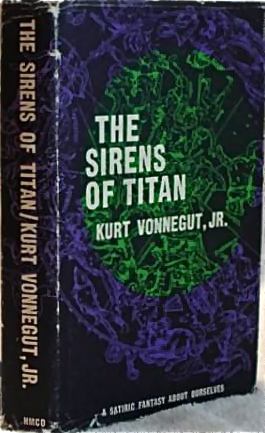
                • Cover of The Sirens of Titan
                  The Sirens of Titan

                  Kurt Vonnegut & Jr. · standalone novel · 1959

                  similar byaliensfunny

                  The Sirens of Titan is a comic science fiction novel by Kurt Vonnegut Jr., first published in 1959. His second novel, it involves issues of free will, omniscience, and the overall purpose of human history, with much of the story revolving around a Martian invasion of Earth.

                • Cover of Beautyland
                  Beautyland

                  Marie-Helene Bertino · standalone novel · 2024

                  similar byaliensnorth americalate 20th centuryliterary & general

                  Beautyland is a novel by Marie-Helene Bertino. It was published on January 16, 2024, by Farrar, Straus and Giroux. The book follows Adina, who is sent by aliens before birth to find out if they could live on earth and reports to them via a fax machine. The book starts with Adina's birth, which takes place in 1977 when Voyager 1 was launched.

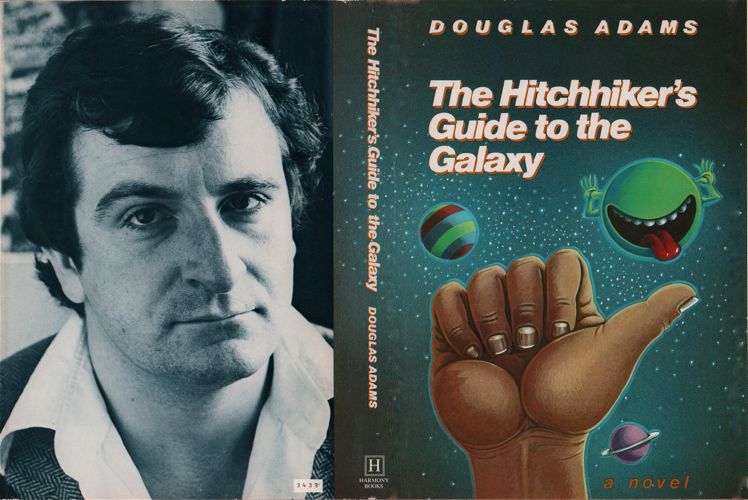
                • Cover of Hitchhiker's Guide to the Galaxy
                  Hitchhiker's Guide to the Galaxy

                  series · 16 books · 1979

                  part of The Hitchhiker's Guide to the Galaxy Universe

                  similar byfunny+1 more

                  The Hitchhiker's Guide to the Galaxy is a comedy science fiction franchise created by Douglas Adams. Originally a radio sitcom broadcast over two series on BBC Radio 4 between 1978 and 1980, it was soon adapted to other formats, including both novels and comic books, a 1981 BBC television series, a 1984 text adventure game, stage shows and a 2005 feature film.

                • Cover of Stranger in a Strange Land
                  Stranger in a Strange Land

                  Robert A. Heinlein · standalone novel · 1961

                  similar byaliensnorth americasatire

                  Stranger in a Strange Land is a 1961 science fiction novel by the American author Robert A. Heinlein. It tells the story of Valentine Michael Smith, a human who comes to Earth in early adulthood after being born on the planet Mars and raised by Martians, and explores his interaction with and eventual transformation of Terran culture.

                • Cover of Breakfast of Champions
                  Breakfast of Champions

                  Kurt Vonnegut & Jr. · standalone novel · 1973

                  similar byfunnynorth americaliterary & generalsatiremetafiction

                  The author decides to liberate the characters he created, including an author who decides to try to help a mentally ill reader who was driven over the edge by the book's assertion that he was the only creature with free will in a universe of preprogrammed automatons.

                • Cover of Mork & Mindy: A Video Novel
                  Mork & Mindy: A Video Novel

                  Richard J. Anobile · standalone novel · 1979

                  similar byaliensfunnynorth americalate 20th century

                  "Mork & Mindy: A Video Novel" is a comic-book like photo-adaptation of "The Mork & Mindy Special," the first official episode of the series. Richard Anobile adapted it straight from the episode, which was penned by Dale MCraven. Photonovels became popular in the now-primitive era right before the swift rise in popularity of the VCR. The stills and conversation-bubbles follow the premiere practically verbatim, but little bits of dialogue are missing, Mindy's grandmother is omitted along with the sequence featuring Fonzie and Laverne in their dream-sequence crossover from "Happy Days" and "Laverne & Shirley" (bypassing the cost of additional character licensing).

                • Cover of Uncharted Territory
                  Uncharted Territory

                  Connie Willis · standalone novel · 1994

                  similar byaliensfunnysatire

                  Uncharted Territory is a science fiction novella by Connie Willis. Published in 1994, it follows three humans sent to explore an alien world, accompanied by a native guide, in an "archly written satire... of political correctness."

                • Cover of The Crimson Deathbringer
                  The Crimson Deathbringer

                  series · 1 book · 2019

                  similar byaliensfunny+1 more

                • Cover of The Big U
                  The Big U

                  Neal Stephenson · standalone novel · 1984

                  similar byfunnynorth americalate 20th centurysatireliterary & general

                  The Big U (1984) is a novel by American writer Neal Stephenson. His first published novel, it is a satire of campus life.

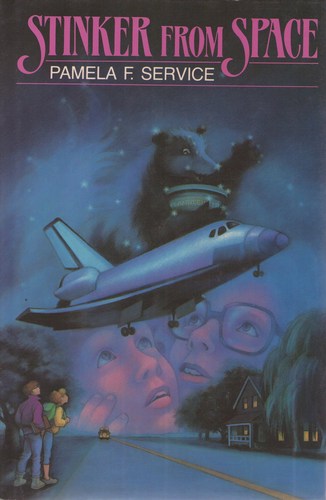
                • Cover of Stinker
                  Stinker

                  series · 2 books · 1988

                  similar byaliensfunnynorth america

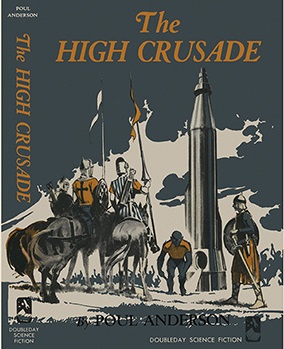
                • Cover of The High Crusade
                  The High Crusade

                  Poul Anderson · standalone novel · 1960

                  similar byaliensfunny

                  The High Crusade is a science fiction novel by American writer Poul Anderson, about the consequences of an extraterrestrial scoutship landing in medieval England. Poul Anderson described the novel as "one of the most popular things I've ever done, going through many book editions in several languages."

                • Cover of Doorways in the Sand
                  Doorways in the Sand

                  Roger Zelazny · standalone novel · 1976

                  similar byaliensfunny

                  Doorways in the Sand is a science fiction novel by American writer Roger Zelazny. Featuring both detective fiction and comic elements, it was originally published in serial form in the magazine Analog Science Fiction and Science Fact; the hardcover edition was first published in 1976 and the paperback in 1977. Zelazny wrote the whole story in one draft, with no rewrites, and it subsequently became one of his five favorites among his own work. Doorways in the Sand was nominated for the Nebula and Hugo awards.

                • Cover of M31: A Family Romance
                  M31: A Family Romance

                  Stephen Wright · standalone novel · 1988

                  similar byalienslate 20th centurysatireliterary & general

                  M31: A Family Romance is the second novel written by Stephen Wright. First published in 1988 by Harmony Books, it is a dark satire about media and mass culture as filtered through the lens of a fictional family with extraterrestrial ties.

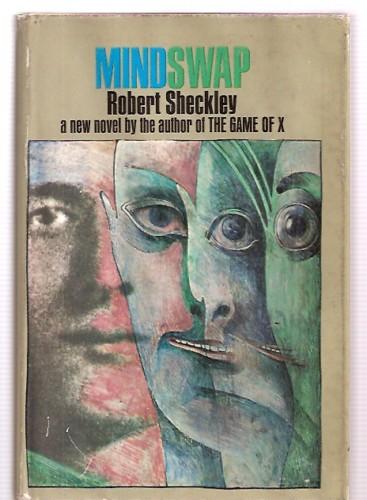
                • Cover of Mindswap
                  Mindswap

                  Robert Sheckley · standalone novel · 1966

                  similar byaliensfunny

                  "In the future, interstellar travel to alien worlds will be too expensive for most ordinary people. It certainly is for Marvin, a college student who wants to take a really good vacation. And so he signs up for what he can afford, a mindswap, in which a persons consciousness is swapped into the body of an alien lifeform. But Marvin is unlucky, and finds himself in the body of an interstellar criminal, a body that he has to vacate fast. But that criminal consciousness has stolen Marvins earthly body, and Marvin has to find a body on the black market. Travel from world to world with Marvin, each one crazier than the last, as he keeps finding far-from-ideal bodies in awful situations, just to stay alive"--Cover p. [4].

                • Cover of Pulp
                  Pulp

                  Charles Bukowski · standalone novel · 1994

                  similar byfunnynorth americalate 20th centuryliterary & general

                  Pulp is the last completed novel by Los Angeles poet and writer Charles Bukowski. It was published in 1994, shortly before Bukowski's death. He began writing it in 1991 and encountered several problems during its creation. He fell ill during the spring of 1993, only three-quarters of the way through Pulp.

                • Cover of Brother Termite
                  Brother Termite

                  Patricia Anthony · standalone novel · 1993

                  similar byaliensnorth americasatire+1 more

                  From the front flap of the Harcourt Brace first edition: "Aliens in the White House. They are in charge. First Cousin Brother Reen, chief of staff, is not happy about the rioters outside, or the graffiti by the West Wing stairs, of his secretary's brightly colored new blouse. Humans are chaotic. So many crises now, and so little time left. Germany plans to invade China, but President Womack is more interested in attending seances and ordering pizza. Cousins have been kidnapped, but all the FBI and CIA do is accuse each other. Tali and even the Sleep Master are furious with Reen. His beloved Marion still cannot forgive him for ruining her life. But Angela - Angela is Reen's greatest worry. For what world awaits her, their Cousin-human daughter, when both Cousins and humans are no more? Patricia Anthony mixes Washington politics and the numbing horror of mind control to tell a tale, at once comical and dark, of treachery, guilt, and self-sacrificing love."