Loreful
HomeDiscover
Search series, authors…⌘K
Loreful

Reading orders for SF/F series and shared universes — with your place kept in every one.

Explore

UniversesSeriesWorksAuthorsAtlas

Help

FAQAboutSite map

Account & legal

Sign inCreate accountPrivacyTerms

Data

Built on ISFDB, Wikipedia, Wikidata and Open Library. Curated reading orders carry their reasoning on the page; the rest follow publication order. Data sources & licenses

© Loreful · data: ISFDB · CC BY

More like Dumb Supper

anchored on:north americamid 20th centuryfantasyhorrorwitcheseerie

but

Mood

The mood the book leaves you in.

  • The reading experience is propelled by journeys, exploration, and physical risk; excitement and forward momentum dominate over dread or introspection.
  • Joy and loss are deliberately mixed; the resolution grants characters something real while taking something else away, leaving warmth and sorrow together.
  • The book demands work from the reader — dense prose, difficult structure, unfamiliar ideas, or morally uncomfortable material — as part of its intended effect.
  • Grim events, cruelty, or despair dominate the atmosphere, and the book does not soften them with comfort or comic relief.
  • The atmosphere is quietly unsettling — wrongness, unease, and the uncanny pervade the book without necessarily escalating into overt horror.
  • The book is built to move the reader; character feeling is foregrounded and major scenes aim at a strong emotional response.
  • Humor is a primary aim and the prose plays for laughs — comic situations, wit, or dialogue produce sustained comedy, not occasional levity.
  • The book insists that things can improve; effort and decency are shown to matter, and the arc bends toward better outcomes even through hardship.
  • The book teaches as it goes — real facts, history, science, or craft are conveyed in enough depth that learning is part of the reading experience.
  • The book is designed to uplift and motivate, presenting perseverance or achievement in a way that invites the reader to aspire or act.
  • The overall register is cheerful and easygoing; stakes are kept gentle and the book avoids dwelling on pain or dread.
  • Withheld information drives the experience; the book sustains enigmas and secrets the reader wants resolved, whatever its genre.
  • The book is contemplative and inward-looking, giving more weight to thought, memory, and meaning than to external events.
  • The book works as comfort reading — low tension, a soothing pace, and an atmosphere the reader can unwind in.
  • Grief, loss, or melancholy set the dominant register, and the book lets sorrow stand rather than resolving it into comfort.
  • Sustained suspense is the point; the book keeps the reader braced for what happens next through danger, pressure, or impending revelation.
  • Playful invention and charm define the register — fanciful conceits, light absurdity, and a narration that delights in its own oddity.

About

What the story runs on.

  • Stories centered on witches and the practice of witchcraft — covens, hedge magic, familiars, and the witch's place in her community.
  • Stories structured as a quest — a journey undertaken to find, deliver, or destroy something of great import.
  • Stories in which staying alive against nature, catastrophe, or scarcity is the central problem.
  • Stories of lovers kept apart by law, family, faith, or station, where the obstacle to love is the plot.
  • Stories in which a friendship — its making, testing, or loss — is the emotional center.
  • Stories of growing up — a young protagonist crossing from childhood into adult knowledge and responsibility.
  • Stories about who a character truly is — self-discovery, doubled lives, and the search for a self.
  • Stories about mourning — living through the death of a loved one and what loss does to the survivors.
  • Stories in which a buried family truth — hidden parentage, crimes, or shames — surfaces and reorders the present.
  • Stories driven by maneuvering for power — factions, conspiracies, and statecraft conducted in shadow.
  • Stories in which war itself is the subject — combat, occupation, and what warfare does to soldiers and civilians.
  • Stories organized around investigating a killing — the case, the clues, and the pursuit of the killer, in any genre's clothing.

Shelf

Where it sits in the library.

    • Fiction built on magic or other supernatural elements that have no scientific explanation.
    • Secondary-world fantasy at large scale, where the fate of nations or the world turns on the protagonists' struggle.
    • Fantasy set in a recognizably modern city or contemporary world where the supernatural intrudes on everyday life.
    • Fantasy that blends in horror's atmosphere and imagery, keeping a fantastical frame around grim or frightening material.
    • Action-driven fantasy following warriors or rogues with personal stakes against sorcerous threats, rather than world-spanning conflicts.
    • Fantasy set in a real historical period or a close analogue of one, with magic woven into the era.
    • Fantasy in which protagonists cross from the ordinary world into another world through a portal or similar passage.
    • Fiction that retells or reworks a traditional fairy tale in a new form or setting.
    • Fantasy drawing directly on myths, legends, and folklore, retelling them or building on their figures and logic.
    • Fantasy of ghosts, vampires, shapeshifters, psychics, and similar phenomena, usually set in an otherwise ordinary world.
    • Fiction mixing science-fictional trappings with overtly magical or impossible elements in one setting.
    • Low-stakes fantasy emphasizing comfort, community, and everyday pleasures over conflict and peril.
    • Speculative fiction of pervasive moral ambiguity, violence, and cynicism that rejects heroic conventions — fantasy and SF alike.
      • Fiction that extrapolates from science and technology — future societies, space travel, or speculative inventions — within at least nominally natural laws.
      • Science fiction of interstellar scope — starships, galactic polities, and adventure across star systems.
      • Science fiction committed to scientific rigor, where technical plausibility constrains the story.
      • Science fiction centered on armed forces and warfare, told largely from a military point of view.
      • Science fiction of networked, corporate-dominated near futures, pairing high technology with social decay.
      • Science fiction styled on nineteenth-century steam-powered technology, often in a Victorian or pseudo-Victorian setting.
      • Fiction depicting an oppressive or catastrophic society, presented as a warning.
      • Fiction set after civilization's collapse, following survivors in the ruins of the old world.
      • Fiction in which characters move between past and future, and the mechanics or consequences of that travel drive the plot.
      • Fiction exploring a world where a historical event went differently and history diverged from ours.
      • Science fiction about humanity's first encounter and communication with an alien intelligence.
      • Science fiction in which extraterrestrial forces attack or occupy Earth and humanity resists.
      • Fiction whose primary aim is to frighten or unsettle the reader through dread, menace, or the monstrous.
      • Horror of vast, indifferent, incomprehensible entities before which humanity is insignificant, in the Lovecraft tradition.
      • Horror of decaying houses, buried family secrets, and oppressive atmosphere in the Gothic literary tradition.
      • Horror centered on hauntings and the returning dead.
      • Horror located in the mind — paranoia, obsession, and unreliable perception rather than external monsters.
      • Horror built around the reanimated dead and survival amid their outbreaks.
      • Horror defined by explicit, transgressive gore that refuses to cut away from violence.
      • Speculative fiction of the strange and uncanny that resists both natural explanation and standard genre categories.
      • Fiction organized around solving a crime or puzzle, typically following an investigator toward the identification of a culprit.
      • A puzzle-first mystery that lays out clues so the culprit's identity can be deduced before the reveal.
      • Crime fiction of moral ambiguity, fatalism, and hard-edged style, set among the corrupt and the doomed.
      • A mystery following the realistic routines of police work — forensics, interviews, and case-building.
      • A gentle mystery with an amateur sleuth, a small community, and violence kept off the page.
      • A mystery set in a past era, where the investigation works within that period's methods and society.
      • Fast-paced fiction driven by imminent danger, pursuit, or high-stakes conspiracy, built to sustain tension.
      • A thriller of espionage — agents, tradecraft, and intelligence services in conflict.
      • A thriller centered on lawyers and the courtroom, where litigation carries the suspense.
      • A thriller driven by detailed contemporary or near-future technology, often military or scientific.
      • A thriller whose tension comes from mental states and manipulation between characters rather than external action.
      • Fiction whose central plot is a romantic relationship and its development toward an emotionally satisfying resolution.
      • Romance in which one or both partners are supernatural beings, blending fantasy elements into the love story.
      • A fantasy-romance hybrid in which the romantic arc and the fantasy plot carry equal weight.
      • Romance set in a past era, with courtship shaped by the period's society and manners.
      • Romance set in the present day, without supernatural or historical elements.
      • Fiction set in a real past period, where the historical setting materially shapes characters and events.
        • General and literary fiction emphasizing prose style, character interiority, or formal ambition over genre plot conventions.
        • Fiction in a realistic world where magical events occur and are treated as ordinary, in the tradition of Latin American literature.
        • Fiction that ridicules people, institutions, or society in order to criticize them.
        • Fiction of dreamlike, irrational imagery and logic that breaks from realistic representation.
        • Fiction that plays with narrative convention through metafiction, fragmentation, and self-reference.
        • Fiction propelled by journeys, exploration, and physical peril, where action and survival carry the plot.
        • Adventure fiction of ships and seafaring — naval engagements, voyages, and life at sea.
        • Fiction of the American frontier West — gunmen, ranchers, and lawmen, typically in the late nineteenth century.
        • Fiction centered on soldiers, campaigns, and the experience of warfare, historical or imagined.
          • Fiction written primarily to amuse, using comedic situations, wit, or parody as its organizing principle.
            • Multi-generational fiction following a family or dynasty across decades, with inheritance and kinship as the through-line.
              • Fiction whose world runs on explicit game mechanics — levels, stats, and skills that characters can see and exploit.
                • Fiction about costumed or superpowered heroes and their conflicts with comparable villains.

                Practical

                How long a commitment, whether it stands alone, and whether it has finished.

                Tap a chip to ask for it · tap again to rule it out · once more to clear. Numbers show what would be left.

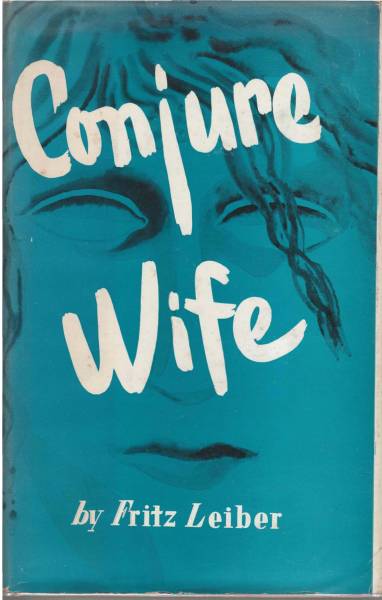
                • Cover of Conjure Wife
                  Conjure Wife

                  Fritz Leiber · standalone novel · 1943

                  similar byeeriewitchesmid 20th centuryhorrornorth america+1 more

                  From the front cover of the Lion first paperback: "Potions in the house... evil in the air... and a witch in his bed." From the back cover of the Lion first paperback: ""Conjure Wife... is easily the most frightening (and necessarily) the most thoroughly convincing of all modern horror stories. Its premise is that witchcraft still flourishes, or at any rate survives, an open secret among women, a closed book to men. Under the rational overlay of 20th-century civilization this sickly growth, uncultivated, unsuspected, still manages to propagate itself. Leiber develops this theme with the utmost dexterity, piling up alternate layers of the mundane and outre, until at the story's real climax, the shocker at the end of chapter 14, I am not ashamed to say that I jumped an inch out of my seat. From that point onward the story anticlimax so skillfully managed that I am not really certain I touched the slipcover again until after the last page. Leiber has never written anything better... which perhaps is all that needed to be said." Damon Knight, Science Fiction Adventures"

                • Cover of Witchcraft for Wayward Girls
                  Witchcraft for Wayward Girls

                  Grady Hendrix · standalone novel · 2025

                  similar byeeriewitchesnorth americamid 20th centuryhorror

                  Witchcraft for Wayward Girls is a 2025 horror novel by American writer Grady Hendrix. It was first published in January 2025 in the United States by Berkley Books, an imprint of Penguin Random House, and in the United Kingdom by Tor Books. The novel is set in Florida in 1970, and is about a group of pregnant teenage girls living in a maternity home for unwed girls who discover a book on witchcraft.

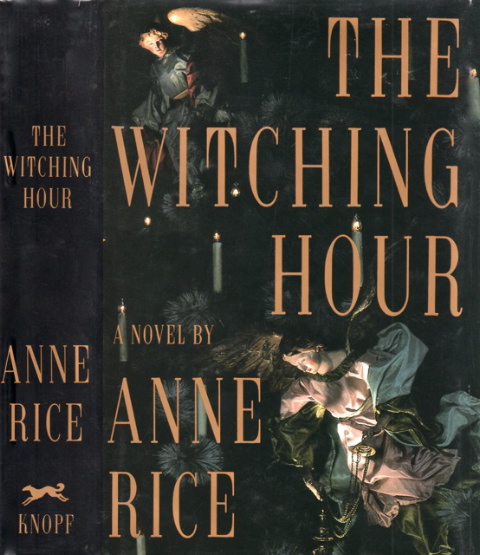
                • Cover of The Mayfair Witches Saga
                  The Mayfair Witches Saga

                  series · 3 books · 1990

                  completed

                  similar byeeriewitchesnorth americahorrorfantasy

                  Lives of the Mayfair Witches is a trilogy of Gothic supernatural horror fantasy novels by American author Anne Rice. It centers on a family of witches whose fortunes have been guided for generations by a spirit named Lasher. The series began in 1990 with The Witching Hour, which was followed by the sequels Lasher (1993) and Taltos (1994). All three novels debuted at No. 2 on The New York Times Best Seller list.

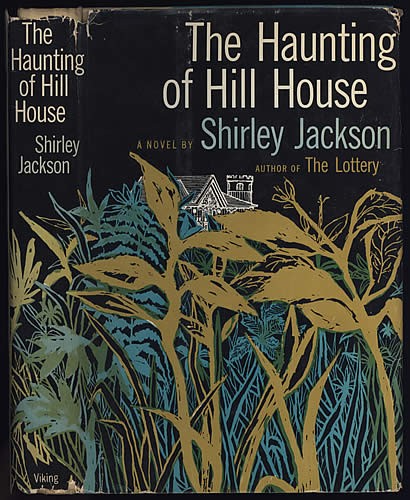
                • Cover of The Haunting of Hill House
                  The Haunting of Hill House

                  Shirley Jackson · standalone novel · 1959

                  similar byeeriemid 20th centuryhorrornorth america+1 more

                  The Haunting of Hill House is a 1959 gothic horror novel by American author Shirley Jackson. It was a finalist for the National Book Award and has been made into two feature films, a play, and is the basis of a Netflix series.

                • Cover of Darker Than You Think
                  Darker Than You Think

                  Jack Williamson · standalone novel · 1948

                  similar bywitchesnorth americamid 20th centuryhorrorfantasy

                  Darker Than You Think is a science fantasy and horror novel by American writer Jack Williamson. Originally a novelette, it was expanded into novel length and published by Fantasy Press in 1948. The short version was published in Unknown in 1940.

                • Cover of A Stir of Echoes
                  A Stir of Echoes

                  Richard Matheson · standalone novel · 1958

                  similar byeeriemid 20th centuryhorrorfantasynorth america

                  A Stir of Echoes is a supernatural novel by American writer Richard Matheson, published in 1958. It served as the inspiration for the 1999 film Stir of Echoes.

                • Cover of Waking the Moon
                  Waking the Moon

                  Elizabeth Hand · standalone novel · 1994

                  similar byeeriewitchesnorth americafantasygods

                  Waking the Moon is a 1994 dark fantasy novel by American writer Elizabeth Hand. It was the winner of the James Tiptree, Jr. Award and the 1996 Mythopoeic Award for Adult Literature. It is set mainly in the University of the Archangels and St. John The Divine, a fictional university inspired by The Catholic University of America, mentioned in a few of Hand's novels.

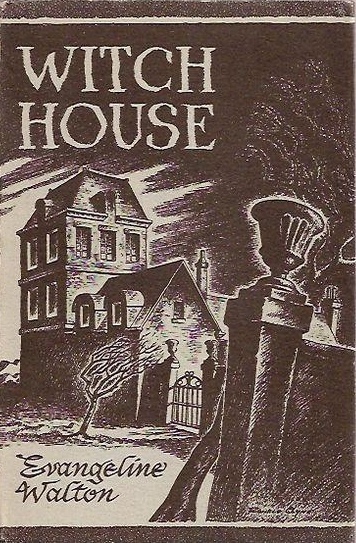
                • Cover of Witch House
                  Witch House

                  Evangeline Walton · standalone novel · 1945

                  similar byeeriewitchesfantasyhorror+1 more

                  Witch House is a fantasy novel by American writer Evangeline Walton. It was published in 1945 by Arkham House in an edition of 3,000 copies. It was the first full-length novel to be published by Arkham House and was listed as the initial book in the Library of Arkham House Novels of Fantasy and Terror. An expanded version, with a newly written 20,000-word prologue, was published in England in 1950. In 2013, Centipede Press issued the first American edition of this revised version, also including previously unpublished writings by Walton and several of her short stories.

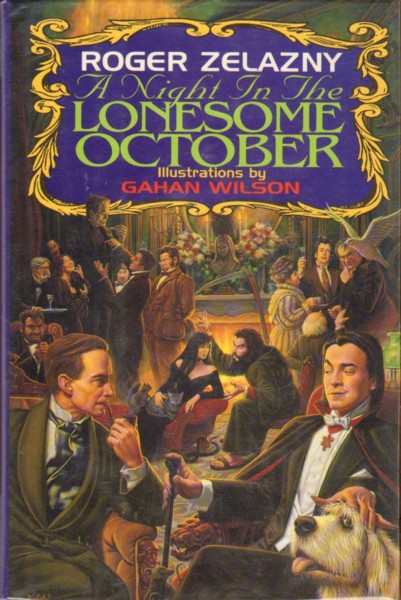
                • Cover of A Night in the Lonesome October
                  A Night in the Lonesome October

                  Roger Zelazny · standalone novel · 1993

                  similar byeeriehorrorfantasygods+1 more

                  A Night in the Lonesome October is a novel by American writer Roger Zelazny published in 1993, near the end of his life. It was his final book, and one of his five personal favorites.

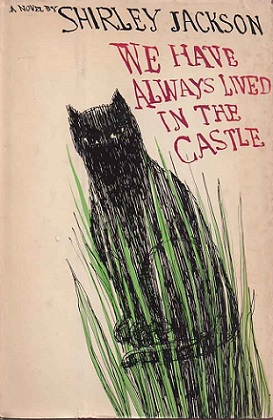
                • Cover of We Have Always Lived in the Castle
                  We Have Always Lived in the Castle

                  Shirley Jackson · standalone novel · 1962

                  similar byeeriemid 20th centuryhorrornorth america

                  A young woman lives with her older sister and sickly uncle in their old family house, after a mysterious tragedy turns the townsfolk against them.

                • Cover of Lewis Barnavelt
                  Lewis Barnavelt

                  series · 12 books · 1973

                  similar byeerienorth americafantasy+2 more

                  Lewis Barnavelt is a lonely orphan who moves in with his uncle Jonathan, an amateur wizard, in a rambling old house that turns out to hide a doomsday clock built into its walls by a previous, malevolent owner. John Bellairs introduced the character in The House with a Clock in Its Walls (1973), illustrated by Edward Gorey, and after Bellairs's death Brad Strickland continued the series from his notes and outlines for most of its later volumes. It blends gothic horror atmosphere with a gentler, more whimsical strain of children's fantasy.

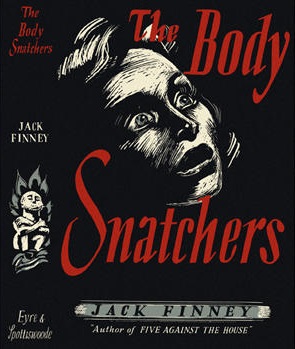
                • Cover of The Body Snatchers
                  The Body Snatchers

                  Jack Finney · standalone novel · 1955

                  similar byeerienorth americamid 20th centuryhorror

                  The Body Snatchers is a science fiction horror novel by American writer Jack Finney, originally serialized in Collier's magazine in November–December 1954 and published in book form the following year.

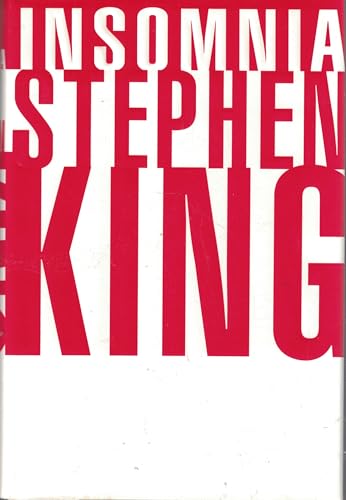
                • Cover of Insomnia
                  Insomnia

                  Stephen King · standalone novel · 1994

                  similar byeerienorth americahorror+1 more

                  When an elderly widower in Maine finds himself with sleep maintenance insomnia, awakening early every morning, this state of exhaustion allows him to perceive a higher state of reality, where he learns of an impending disaster which will shake not just the Earthly reality. but all the higher realities, and which he has been recruited to prevent.

                • Cover of John the Balladeer
                  John the Balladeer

                  series · 38 books · 1951

                  completed

                  similar byeerienorth americafantasymid 20th century+1 more

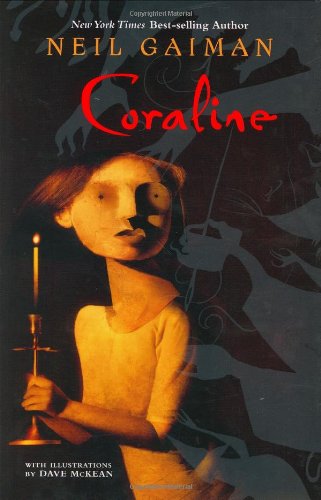
                • Cover of Coraline
                  Coraline

                  series · 2 books · 2002

                  similar byeeriefantasyhorrornorth america

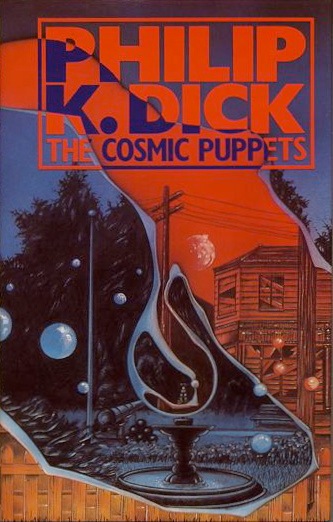
                • Cover of The Cosmic Puppets
                  The Cosmic Puppets

                  Philip K. Dick · standalone novel · 1957

                  similar byeerienorth americamid 20th centurygods

                  The Cosmic Puppets is a science fiction novel by American author Philip K. Dick, published in 1957. It is a novelization of a short story initially published in the December 1956 issue of Satellite Science Fiction. The Cosmic Puppets was first published as a novel by Ace Books as one half of Ace Double D-249, bound dos-à-dos with Sargasso of Space by Andrew North .The story follows Ted Barton, a man who returns to his childhood hometown of Millgate, Virginia, only to discover that it has been erased from all official records and is now a surreal place where the laws of reality are distorted. Barton learns that the town is a battleground in a cosmic struggle between two ancient beings, a conflict that has twisted the fabric of his home and the memories of its inhabitants.

                • Cover of Root Magic
                  Root Magic

                  Eden Royce · standalone novel · 2021

                  similar byeeriewitchesnorth americafantasy

                  Root Magic is a children's novel by Eden Royce. It is her novel-length debut set in South Carolina. The first edition was published by Walden Pond Press, an imprint of HarperCollins, in 2021.

                • Cover of Harvest Home
                  Harvest Home

                  Thomas Tryon · standalone novel · 1973

                  similar byeerienorth americahorror+1 more

                  What is the dark secret the people (especially the women!) of Harvest Home are hiding? A family tries to get out of the City and finds the perfect home for their young daughter complete with folk remedies for her allergies and sensitivities in the local wisewoman. But is there something sinister under the surface of the charming little town?

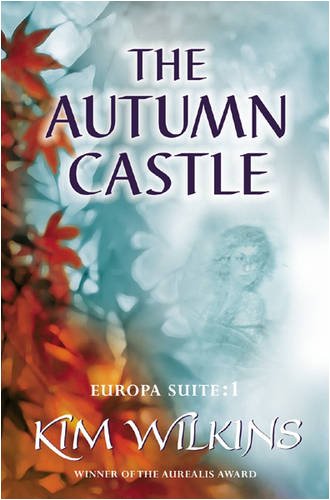
                • Cover of Europa Suite
                  Europa Suite

                  series · 2 books · 2003

                  similar byeeriefantasyhorror+2 more

                  Kim Wilkins' Europa Suite opens with The Autumn Castle, in which a woman's ordinary life is upended when the childhood friend she lost — abducted as a girl into a realm of magic and myth — unexpectedly returns, bringing old jealousies and betrayals that threaten to destroy them both. Giants of the Frost continues the loosely linked suite in the same vein.

                • Cover of Our Lady of Darkness
                  Our Lady of Darkness

                  Fritz Leiber · standalone novel · 1977

                  similar byeerienorth americahorrorfantasy

                  Our Lady of Darkness (1977) is an urban fantasy novel by American author Fritz Leiber. The novel is distinguished for three elements: the heavily autobiographical elements in the story, the use of Jungian psychology that informs the narrative, and its detailed description of "megapolisomancy", a fictional occult science. It was originally published in shorter form as The Pale Brown Thing.

                • Cover of Peace
                  Peace

                  Gene Wolfe · standalone novel · 1975

                  similar byeeriemid 20th centurynorth america+2 more

                  Peace is a 1975 psychological fantasy/ghost story novel by American writer Gene Wolfe. It is the story of a man from a small Midwestern town in the early to mid-20th century, Alden Dennis Weer, who narrates various memories from different parts of his life, including his childhood, early adulthood, and middle to old age.

                • Cover of Black Light
                  Black Light

                  Elizabeth Hand · standalone novel · 1999

                  similar byeeriewitchesnorth americahorror

                  Two factions of magicians vie for control of the world in this horror fantasy in Maine. The events are seen through the eyes of a high-school girl and they play out during a film director's party.

                • Cover of Summer of Fear
                  Summer of Fear

                  Lois Duncan · standalone novel · 1976

                  similar byeeriewitchesnorth americahorror

                  Summer of Fear is a 1976 American horror novel by Lois Duncan. The plot follows a teenaged girl who suspects her recently orphaned cousin is practicing witchcraft. The novel was adapted into a 1978 film by Wes Craven.

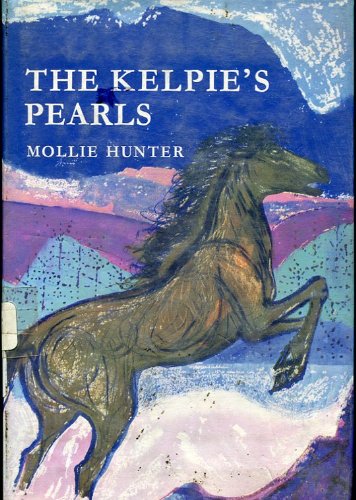
                • Cover of The Kelpie's Pearls
                  The Kelpie's Pearls

                  Mollie Hunter · standalone novel · 1964

                  similar byeeriewitchesmid 20th centuryfantasy

                  "An old woman of the Scottish highlands makes friends with a kelpie, sees the Loch Ness monster, and practices some of her grandmother's witchcraft." --summary, WorldCat library records of multiple eds. "Morag MacLeod lived near Loch Ness in the Scottish Highlands, and this is the story of how she came to be called a witch. Small wonder, too, what with her carrying on with a kelpie--the creature who lives in the bottom of a pool. and roams about in the shape of a big black horse." --Kirkus Reviews (contemporary, undated online, above)