Loreful
HomeDiscover
Search series, authors…⌘K
Loreful

Reading orders for SF/F series and shared universes — with your place kept in every one.

Explore

UniversesSeriesWorksAuthorsAtlas

Help

FAQAboutSite map

Account & legal

Sign inCreate accountPrivacyTerms

Data

Built on ISFDB, Wikipedia, Wikidata and Open Library. Curated reading orders carry their reasoning on the page; the rest follow publication order. Data sources & licenses

© Loreful · data: ISFDB · CC BY

More like Dynamicist

but

Mood

The mood the book leaves you in.

  • The reading experience is propelled by journeys, exploration, and physical risk; excitement and forward momentum dominate over dread or introspection.
  • Joy and loss are deliberately mixed; the resolution grants characters something real while taking something else away, leaving warmth and sorrow together.
  • The book demands work from the reader — dense prose, difficult structure, unfamiliar ideas, or morally uncomfortable material — as part of its intended effect.
  • Grim events, cruelty, or despair dominate the atmosphere, and the book does not soften them with comfort or comic relief.
  • The atmosphere is quietly unsettling — wrongness, unease, and the uncanny pervade the book without necessarily escalating into overt horror.
  • The book is built to move the reader; character feeling is foregrounded and major scenes aim at a strong emotional response.
  • Humor is a primary aim and the prose plays for laughs — comic situations, wit, or dialogue produce sustained comedy, not occasional levity.
  • The book insists that things can improve; effort and decency are shown to matter, and the arc bends toward better outcomes even through hardship.
  • The book teaches as it goes — real facts, history, science, or craft are conveyed in enough depth that learning is part of the reading experience.
  • The book is designed to uplift and motivate, presenting perseverance or achievement in a way that invites the reader to aspire or act.
  • The overall register is cheerful and easygoing; stakes are kept gentle and the book avoids dwelling on pain or dread.
  • Withheld information drives the experience; the book sustains enigmas and secrets the reader wants resolved, whatever its genre.
  • The book is contemplative and inward-looking, giving more weight to thought, memory, and meaning than to external events.
  • The book works as comfort reading — low tension, a soothing pace, and an atmosphere the reader can unwind in.
  • Grief, loss, or melancholy set the dominant register, and the book lets sorrow stand rather than resolving it into comfort.
  • Sustained suspense is the point; the book keeps the reader braced for what happens next through danger, pressure, or impending revelation.
  • Playful invention and charm define the register — fanciful conceits, light absurdity, and a narration that delights in its own oddity.

About

What the story runs on.

  • Stories in which extraterrestrial beings are central — as characters, cultures, or the object of the plot.
  • Stories about venturing into space to explore — survey missions, astronauts, and the frontier of the unknown beyond Earth.
  • Stories structured as a quest — a journey undertaken to find, deliver, or destroy something of great import.
  • Stories in which staying alive against nature, catastrophe, or scarcity is the central problem.
  • Stories of lovers kept apart by law, family, faith, or station, where the obstacle to love is the plot.
  • Stories in which a friendship — its making, testing, or loss — is the emotional center.
  • Stories of growing up — a young protagonist crossing from childhood into adult knowledge and responsibility.
  • Stories about who a character truly is — self-discovery, doubled lives, and the search for a self.
  • Stories in which a buried family truth — hidden parentage, crimes, or shames — surfaces and reorders the present.
  • Stories driven by maneuvering for power — factions, conspiracies, and statecraft conducted in shadow.
  • Stories in which war itself is the subject — combat, occupation, and what warfare does to soldiers and civilians.
  • Stories organized around investigating a killing — the case, the clues, and the pursuit of the killer, in any genre's clothing.

Shelf

Where it sits in the library.

    • Fiction built on magic or other supernatural elements that have no scientific explanation.
    • Secondary-world fantasy at large scale, where the fate of nations or the world turns on the protagonists' struggle.
    • Fantasy set in a recognizably modern city or contemporary world where the supernatural intrudes on everyday life.
    • Fantasy that blends in horror's atmosphere and imagery, keeping a fantastical frame around grim or frightening material.
    • Action-driven fantasy following warriors or rogues with personal stakes against sorcerous threats, rather than world-spanning conflicts.
    • Fantasy set in a real historical period or a close analogue of one, with magic woven into the era.
    • Fantasy in which protagonists cross from the ordinary world into another world through a portal or similar passage.
    • Fiction that retells or reworks a traditional fairy tale in a new form or setting.
    • Fantasy drawing directly on myths, legends, and folklore, retelling them or building on their figures and logic.
    • Fantasy of ghosts, vampires, shapeshifters, psychics, and similar phenomena, usually set in an otherwise ordinary world.
    • Fiction mixing science-fictional trappings with overtly magical or impossible elements in one setting.
    • Low-stakes fantasy emphasizing comfort, community, and everyday pleasures over conflict and peril.
    • Speculative fiction of pervasive moral ambiguity, violence, and cynicism that rejects heroic conventions — fantasy and SF alike.
      • Fiction that extrapolates from science and technology — future societies, space travel, or speculative inventions — within at least nominally natural laws.
      • Science fiction of interstellar scope — starships, galactic polities, and adventure across star systems.
      • Science fiction committed to scientific rigor, where technical plausibility constrains the story.
      • Science fiction centered on armed forces and warfare, told largely from a military point of view.
      • Science fiction of networked, corporate-dominated near futures, pairing high technology with social decay.
      • Science fiction styled on nineteenth-century steam-powered technology, often in a Victorian or pseudo-Victorian setting.
      • Fiction depicting an oppressive or catastrophic society, presented as a warning.
      • Fiction set after civilization's collapse, following survivors in the ruins of the old world.
      • Fiction in which characters move between past and future, and the mechanics or consequences of that travel drive the plot.
      • Fiction exploring a world where a historical event went differently and history diverged from ours.
      • Science fiction about humanity's first encounter and communication with an alien intelligence.
      • Science fiction in which extraterrestrial forces attack or occupy Earth and humanity resists.
      • Fiction whose primary aim is to frighten or unsettle the reader through dread, menace, or the monstrous.
      • Horror of vast, indifferent, incomprehensible entities before which humanity is insignificant, in the Lovecraft tradition.
      • Horror of decaying houses, buried family secrets, and oppressive atmosphere in the Gothic literary tradition.
      • Horror centered on hauntings and the returning dead.
      • Horror located in the mind — paranoia, obsession, and unreliable perception rather than external monsters.
      • Horror built around the reanimated dead and survival amid their outbreaks.
      • Horror defined by explicit, transgressive gore that refuses to cut away from violence.
      • Speculative fiction of the strange and uncanny that resists both natural explanation and standard genre categories.
      • Fiction organized around solving a crime or puzzle, typically following an investigator toward the identification of a culprit.
      • A puzzle-first mystery that lays out clues so the culprit's identity can be deduced before the reveal.
      • Crime fiction of moral ambiguity, fatalism, and hard-edged style, set among the corrupt and the doomed.
      • A mystery following the realistic routines of police work — forensics, interviews, and case-building.
      • A gentle mystery with an amateur sleuth, a small community, and violence kept off the page.
      • A mystery set in a past era, where the investigation works within that period's methods and society.
      • Fast-paced fiction driven by imminent danger, pursuit, or high-stakes conspiracy, built to sustain tension.
      • A thriller of espionage — agents, tradecraft, and intelligence services in conflict.
      • A thriller centered on lawyers and the courtroom, where litigation carries the suspense.
      • A thriller driven by detailed contemporary or near-future technology, often military or scientific.
      • A thriller whose tension comes from mental states and manipulation between characters rather than external action.
      • Fiction whose central plot is a romantic relationship and its development toward an emotionally satisfying resolution.
      • Romance in which one or both partners are supernatural beings, blending fantasy elements into the love story.
      • A fantasy-romance hybrid in which the romantic arc and the fantasy plot carry equal weight.
      • Romance set in a past era, with courtship shaped by the period's society and manners.
      • Romance set in the present day, without supernatural or historical elements.
      • Fiction set in a real past period, where the historical setting materially shapes characters and events.
        • General and literary fiction emphasizing prose style, character interiority, or formal ambition over genre plot conventions.
        • Fiction in a realistic world where magical events occur and are treated as ordinary, in the tradition of Latin American literature.
        • Fiction that ridicules people, institutions, or society in order to criticize them.
        • Fiction of dreamlike, irrational imagery and logic that breaks from realistic representation.
        • Fiction that plays with narrative convention through metafiction, fragmentation, and self-reference.
        • Fiction propelled by journeys, exploration, and physical peril, where action and survival carry the plot.
        • Adventure fiction of ships and seafaring — naval engagements, voyages, and life at sea.
        • Fiction of the American frontier West — gunmen, ranchers, and lawmen, typically in the late nineteenth century.
        • Fiction centered on soldiers, campaigns, and the experience of warfare, historical or imagined.
          • Fiction written primarily to amuse, using comedic situations, wit, or parody as its organizing principle.
            • Multi-generational fiction following a family or dynasty across decades, with inheritance and kinship as the through-line.
              • Fiction whose world runs on explicit game mechanics — levels, stats, and skills that characters can see and exploit.
                • Fiction about costumed or superpowered heroes and their conflicts with comparable villains.

                Practical

                How long a commitment, whether it stands alone, and whether it has finished.

                Tap a chip to ask for it · tap again to rule it out · once more to clear. Numbers show what would be left.

                • SC
                  Solar Cycle

                  series · 18 books · 1980

                  completed

                  similar byscience fiction+3 more

                • Cover of After Such Knowledge
                  After Such Knowledge

                  series · 7 books · 1953

                  completed

                  similar by+4 more

                  After Such Knowledge is James Blish's loosely linked trilogy on the costs of forbidden or dangerous knowledge. It opens with A Case of Conscience, in which a Jesuit scientist studying a seemingly sinless alien race is forced to weigh what he finds against his own faith, continues with the historical novel Doctor Mirabilis about the medieval friar and scientist Roger Bacon, and closes with the two-part Black Easter, in which a magician is hired to loose Hell's demons upon the world for a single day. The three books share a theme rather than a continuous plot or cast.

                • Cover of Erewhon
                  Erewhon

                  series · 4 books · 1872

                  completed

                  similar byreflectivescience fiction+2 more

                • Cover of Richard Forthrast
                  Richard Forthrast

                  series · 2 books · 2011

                  similar byscience fiction+3 more

                  Neal Stephenson's Richard 'Dodge' Forthrast novels open with Reamde, a globe-spanning thriller that starts when ransomware inside an MMORPG economy pulls Richard's extended family into a real-world hostage crisis involving hackers, jihadists and Russian mobsters. The sequel Fall; or, Dodge in Hell shifts registers entirely, following Richard's digitally preserved mind after death into an afterlife simulation built from his scanned brain. The two books share a protagonist and family but differ sharply in genre and scale.

                • Cover of The Just City / Thessaly
                  The Just City / Thessaly

                  series · 3 books · 2015

                  similar byfantasychallengingreflectivescience fiction

                • Cover of The Actual Star
                  The Actual Star

                  Monica Byrne · standalone novel · 2021

                  similar bychallengingreflectivescience fiction+1 more

                  [Publisher:] The Actual Star takes readers on a journey over two millennia and six continents–telling three powerful tales a thousand years apart, all of them converging in the same cave in the Belizean jungle. Braided together are the stories of a pair of teenage twins who ascend the throne of a Maya kingdom; a young American woman on a trip of self-discovery in Belize; and two dangerous charismatics vying for the leadership of a new religion and racing toward a confrontation that will determine the fate of the few humans left on Earth after massive climate change. In each era, a reincarnated trinity of souls navigates the entanglements of tradition and progress, sister and stranger, and love and hate–until all of their age-old questions about the nature of existence converge deep underground, where only in complete darkness can they truly see. The Actual Star is a feast of ideas about where humanity came from, where we are now, and where we're going–and how, in every age, the same forces that drive us apart also bind us together.

                • Cover of Zimiamvian Trilogy
                  Zimiamvian Trilogy

                  series · 4 books · 1922

                  completed

                  similar byfantasy+2 more

                  The Zimiamvian Trilogy is a series of fantasy novels by English author E. R. Eddison.Mistress of Mistresses (1935) A Fish Dinner in Memison (1941) The Mezentian Gate (1958)

                • Cover of Lord of Light
                  Lord of Light

                  series · 5 books · 1967

                  similar by+3 more

                  Lord of Light is Roger Zelazny's 1967 science fantasy novel about the surviving crew of a colonizing starship who use salvaged technology and mind-transfer to make themselves effectively immortal, then rule their colony for a thousand years under the guises of Hindu gods. One of their own, called Sam, breaks with the pantheon to return forbidden knowledge to the ordinary people they rule, touching off a war among the self-styled gods. A standalone novel, it won the 1968 Hugo Award for Best Novel.

                • Cover of Seven Days in New Crete
                  Seven Days in New Crete

                  Robert Graves · standalone novel · 1949

                  similar byreflectivescience fiction+2 more

                  Seven Days in New Crete, also known as Watch the North Wind Rise, is a seminal future-utopian / dystopian speculative fiction novel by Robert Graves, first published in 1949. It shares many themes and ideas with Graves' The White Goddess, published a year earlier. Martin Seymour-Smith, Graves's biographer, further suggested it was autobiographical, "telling the essential story of his life between 1929 and 1947".

                • Cover of The Day of Creation
                  The Day of Creation

                  J. G. Ballard · standalone novel · 1987

                  similar bychallengingreflective+1 more

                  Dr. John Mallory has spent six purposeless months running a WHO clinic in a corner of Central Africa gutted by guerrilla war, with almost no patients to treat, when he throws himself into a project: bringing water to the parched land, with dreams of blooming the Sahara. When his drilling improbably succeeds and unleashes a river, Mallory's fixation curdles into obsession -- he begins to identify with the river as an extension of himself, and assembles an expedition, including a girl he takes for a water spirit and a half-blind documentary filmmaker, to follow it upstream toward its source. A visionary novel by J. G. Ballard.

                • Cover of Neveryon
                  Neveryon

                  series · 19 books · 1979

                  similar bychallengingreflective+1 more

                  Return to Nevèrÿon is a series of eleven sword and sorcery stories by Samuel R. Delany, originally published in four volumes during the years 1979–1987. Those volumes are:Tales of Nevèrÿon Neveryóna, or: The Tale of Signs and Cities Flight from Nevèrÿon Return to Nevèrÿon

                • Cover of A History Maker
                  A History Maker

                  Alasdair Gray · standalone novel · 1994

                  similar byfantasychallengingreflectivescience fiction

                  Alasdair James Gray was a Scottish writer and artist. He published novels, short stories, plays, poetry and translations, and wrote on politics and the history of English and Scots literature. His works of fiction combine realism, fantasy, and science fiction with the use of his own typography and illustrations, and won several awards.

                • Cover of F & SF Anniversary Anthologies
                  F & SF Anniversary Anthologies

                  series · 8 books · 1960

                  similar byfantasyscience fiction+2 more

                • Cover of Stranger in a Strange Land
                  Stranger in a Strange Land

                  Robert A. Heinlein · standalone novel · 1961

                  similar bychallengingreflectivescience fiction

                  Stranger in a Strange Land is a 1961 science fiction novel by the American author Robert A. Heinlein. It tells the story of Valentine Michael Smith, a human who comes to Earth in early adulthood after being born on the planet Mars and raised by Martians, and explores his interaction with and eventual transformation of Terran culture.

                • Cover of New Crobuzon
                  New Crobuzon

                  series · 4 books · 2000

                  similar byfantasychallenging+1 more

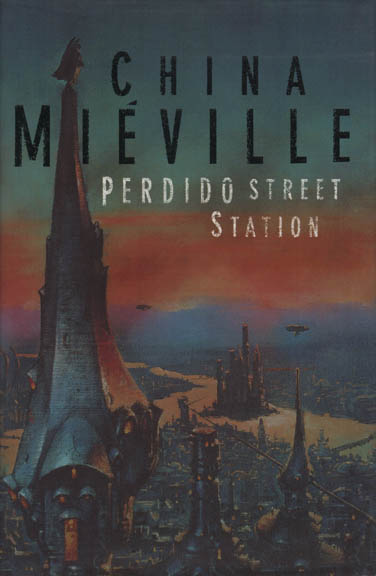
                  The New Crobuzon books are three standalone novels by China Miéville set in and around New Crobuzon, a vast, corrupt industrial city in his invented world of Bas-Lag where magic, biopunk technology, and several sentient species coexist. Perdido Street Station follows a renegade scientist and his lover after an experiment unleashes something monstrous on the city, while The Scar and Iron Council return to the same setting with different casts and only loose continuity between books.

                • Cover of Inferno
                  Inferno

                  series · 2 books · 1976

                  similar byfantasy+2 more

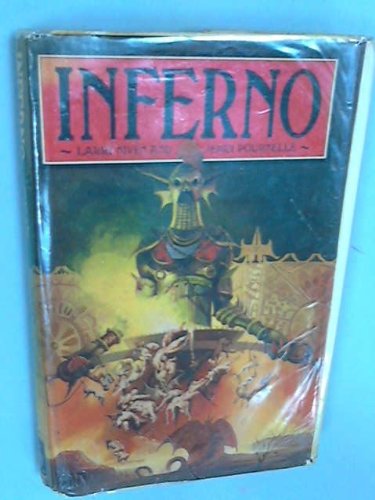
                  In Inferno, Larry Niven and Jerry Pournelle send a science fiction writer to his death and drop him into a modern-dress version of Dante's nine circles of Hell, where he must reason his way toward understanding why he has been damned. The 1976 novel was nominated for both the Hugo and Nebula awards, and the authors returned to the same character decades later in a sequel, Escape from Hell. Together the two books form a self-contained pair rather than an open-ended series.

                • Cover of Replay
                  Replay

                  Ken Grimwood · standalone novel · 1987

                  similar byfantasyreflectivescience fiction

                  Replay is a fantasy novel by American writer Ken Grimwood, first published by Arbor House in 1987. It won the 1988 World Fantasy Award for Best Novel.

                • Cover of The Fire Gospel
                  The Fire Gospel

                  Michel Faber · standalone novel · 2008

                  similar byfantasyreflective+1 more

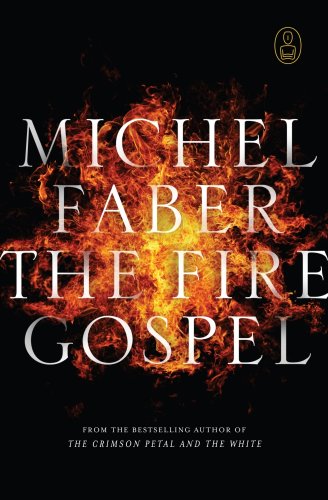
                  Literary fantasy novel

                • Cover of Men Like Gods
                  Men Like Gods

                  H. G. Wells · standalone novel · 1923

                  similar byreflectivescience fiction+1 more

                  Men Like Gods is a 1923 novel, referred to by the author as a "scientific fantasy", by English writer H. G. Wells. It features a utopia located in a parallel universe.

                • Cover of Macroscope
                  Macroscope

                  Piers Anthony · standalone novel · 1969

                  similar byscience fiction+2 more

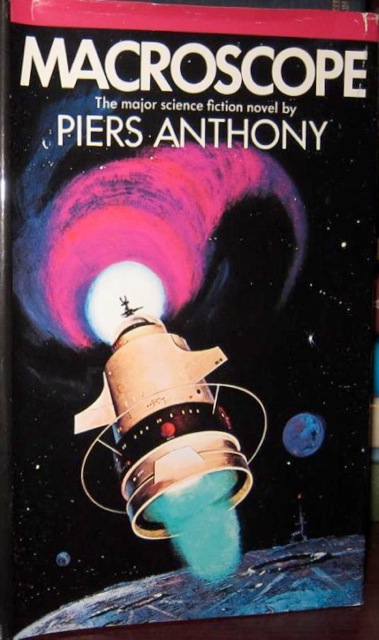
                  Macroscope is a science fiction novel by British-American writer Piers Anthony. It was nominated for the Hugo Award for Best Novel in 1970.

                • Cover of Nebula Awards
                  Nebula Awards

                  series · 75 books · 1966

                  similar byscience fiction+2 more

                  Nebula Award Showcase is a series of annual science fiction and fantasy anthologies collecting stories that have won or been nominated for the Nebula Award, awarded by the Science Fiction and Fantasy Writers of America (SFWA), a nonprofit association of professional science fiction and fantasy writers founded in 1965 by Damon Knight as the Science Fiction Writers of America.

                • Cover of Among Others
                  Among Others

                  Jo Walton · standalone novel · 2011

                  similar byfantasyreflective+1 more

                  Among Others is a 2011 fantasy novel written by Welsh-Canadian writer Jo Walton, published originally by Tor Books. It is published in the UK by Corsair. It won the Nebula Award for Best Novel of 2011, the 2012 Hugo Award for Best Novel and the 2012 British Fantasy Award.

                • Cover of Cloud Atlas
                  Cloud Atlas

                  David Mitchell · standalone novel · 2004

                  similar bychallengingscience fiction+1 more

                  Cloud Atlas, published in 2004, is the third novel by British author David Mitchell. The book combines metafiction, historical fiction, contemporary fiction and science fiction, with interconnected nested stories in different writing styles that take the reader from the remote South Pacific in the 19th century to the island of Hawaii in a distant post-apocalyptic future. Its title references a piece of music by Toshi Ichiyanagi.

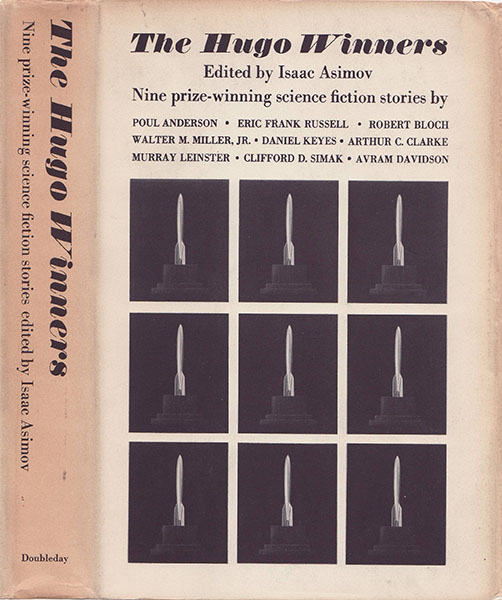
                • Cover of The Hugo Winners
                  The Hugo Winners

                  series · 15 books · 1962

                  similar byscience fiction+2 more

                  The Hugo Winners was a series of books which collected science fiction and fantasy stories that won a Hugo Award for Short Story, Novelette or Novella at the World Science Fiction Convention between 1955 and 1982. Each volume was edited by American writer Isaac Asimov, who wrote the introduction and a short essay about each author featured in the book. Through these essays, Asimov shared personal anecdotes, revealing the authors he was jealous of, and how other writers winning awards ahead of him made him angry. Additionally, he discussed his political beliefs, friendships, and his affinity for writers of "hard science fiction". The first two volumes were collected by Doubleday into a single book, which lacks a publishing date and ISBN.