More like Eater
anchored on:science fictionfirst contactaliensnear futurehard science fictiongrief and loss+2 more
but
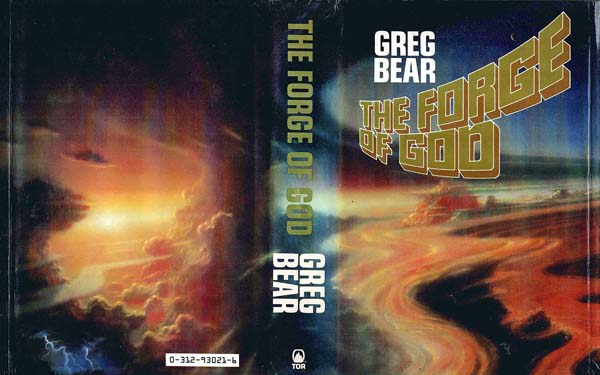
- Forge of God
series2 books1987
completed
similar bytensealiensscience fiction+5 more
The Forge of God (1987) is Greg Bear's science fiction novel about Earth's discovery that it is the target of an incomprehensible, overwhelming alien attack, following scientists and ordinary people as they try to understand what is destroying the planet. Its 1992 sequel, Anvil of Stars, follows a group of young survivors sent on a mission of interstellar retaliation, continuing directly from the first book's ending.
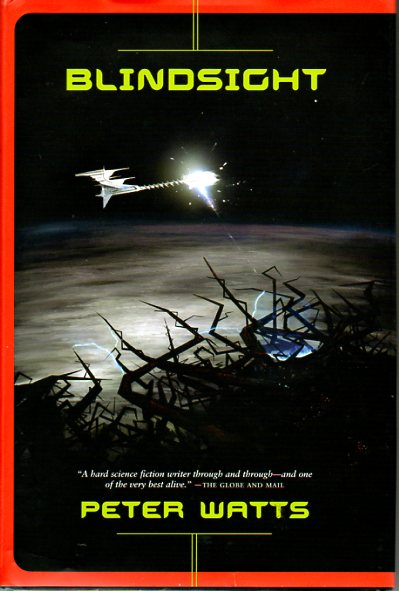
- Blindsight / Firefall
series3 books2006
similar bytensealiensspacescience fictionfirst contacthard science fictionartificial intelligence+1 more
Blindsight sends a crew of radically modified posthumans (including a resurrected, genetically restored vampire) out to the Oort cloud after humanity detects an alien signal, only to make contact with something intelligent, wildly capable, and possibly not conscious at all — a first-contact story built around the question of whether self-awareness is actually useful. Peter Watts's Echopraxia is a same-timeframe "sidequel" rather than a direct sequel, following different characters through the fallout of the same first-contact event.
- Have Space Suit - Will Travel
Robert A. Heinleinstandalone novel1958
similar bytensenear futurealiensspacescience fiction+1 more
From the back cover of the Del Rey 9th printing: "Skyjacked - Everything happened at once. One minute Kip Russell was walking about in his own backyard, testing out an old space suit and dreaming about going to the moon - and the next he was out cold and the captive of an insidious space pirate. The whole thing seemed like a very bad dream until he discovered he wasn't the only prisoner on board. Then the reality of the situation became inescapable. He - along with the daughter of a world-renowned scientist and a beautiful creature from an alien planet - had been skyjacked by a monstrous extraterrestrial and they were on their way to the Moon... a journey toward a fate worse than death!"
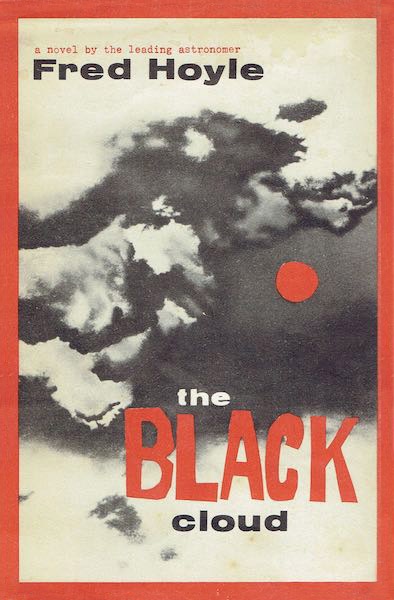
- The Black Cloud
Fred Hoylestandalone novel1957
similar bytensealiensscience fictionhard science fictionour world+2 more
The Black Cloud is a 1957 science fiction novel by British astrophysicist Fred Hoyle. It details the arrival of an enormous cloud of gas that enters the Solar System and appears about to destroy most of the life on Earth by blocking the Sun's radiation.
- The Host
Stephenie Meyerstandalone novel2008
similar bytensenear futurealiensscience fictionemotionalour world
The earth has been invaded by a species that take over the minds of their human hosts while leaving their bodies intact, and most of humanity has succumbed. But Melanie Stryder refuses to fade away. Wanderer, the invading "soul" who has been given Melanie's body, knew about the challenges of living inside a human: the overwhelming emotions, the too vivid memories. But there was one difficulty Wanderer didn't expect: the former tenant of her body refusing to relinquish possession of her mind. Melanie fills Wanderer's thoughts with visions of the man Melanie loves--Jared, a human who still lives in hiding. Unable to separate herself from her body's desires, Wanderer yearns for a man she's never met. As outside forces make Wanderer and Melanie unwilling allies, they set off to search for the man they both love.--From publisher description.
- All Judgment Fled
James Whitestandalone novel1968
similar bytensenear futurealiensspacescience fictionfirst contact
From the front flap of the Rapp first edition: It is the spring of 1978 and a gigantic alien spaceship has entered the solar system and taken up an orbit some sixty million miles from the Sun. The Ship neither signals nor replies in any detectable fashion to signals directed towards it. Silently and, some think, implacably, it orbits like some tremendous battleship cruising off the coast of a tiny, backward island. Inevitably there are natives on the island whose curiosity outweighs their fear and six men in two tiny sophisticated dug-out canoes go out to satisfy their curiosity... All Judgment Fled is not another story about super heroes solving alien communications problems with the aid of super scientific and infallible translation devices. Instead it concerns the reactions of six very ordinary people to what is probably the most extraordinary situation of all - the first meeting with an extraterrestrial race.
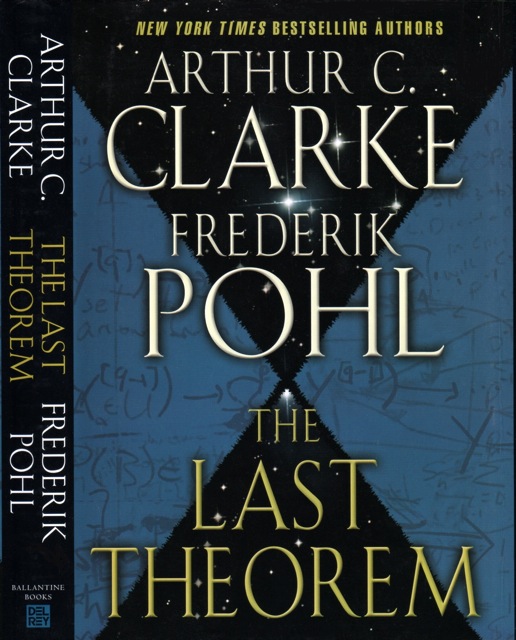
- The Last Theorem
Arthur C. Clarke & Frederik Pohlstandalone novel2008
similar bytensenear futurealiensscience fictionfirst contactour world
The Last Theorem is a 2008 science fiction novel by Arthur C. Clarke and Frederik Pohl. It was first published in the United Kingdom by HarperVoyager in July 2008, and in the United States by Del Rey Books in August 2008. The book is about a young Sri Lankan mathematician who finds a short proof of Fermat's Last Theorem, while an alien invasion of Earth is in progress.
- Sparrow
series2 books1996
similar bynear futurealiensgrief and lossscience fictionemotionalfirst contact
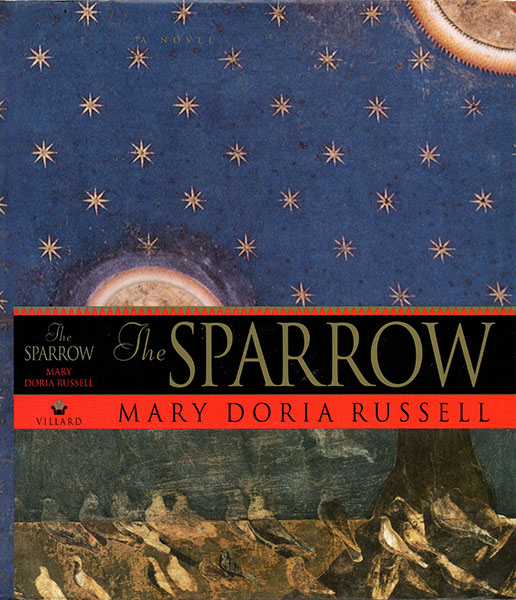
Mary Doria Russell's The Sparrow (1996) follows a Jesuit-led mission to the planet Rakhat after radio signals from Alpha Centauri reveal it hosts intelligent life, alternating between the expedition and the traumatized return of its sole survivor, Father Emilio Sandoz, as he tries to explain what happened. The sequel Children of God (1998) follows Sandoz back to Rakhat and continues working out the theological and political fallout of first contact between humans and the planet's two native species.
- The Coming
Joe Haldemanstandalone novel2000
similar bytensenear futurealiensscience fictionfirst contactour world+1 more
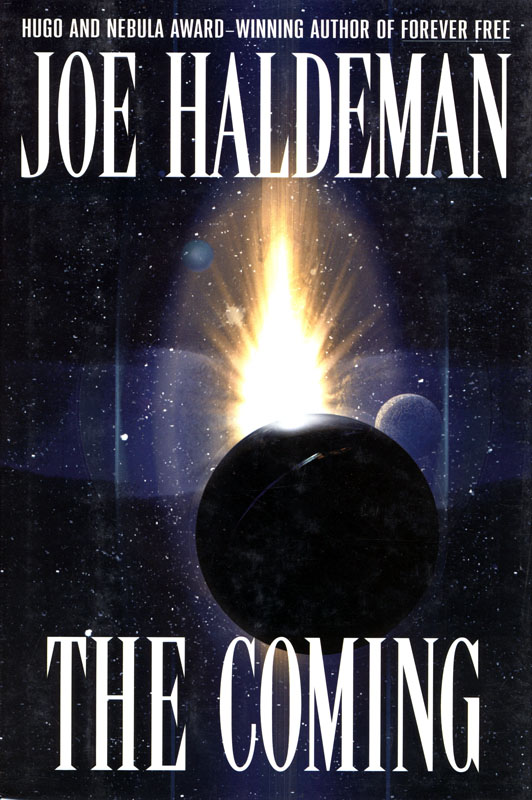
An astronomy professor in Florida in a mid-21st century suffering from climate change and international hostilities detects an apparent interstellar vehicle headed directly for earth at near light speed but decelerating dramatically; it transmits the message "We're coming". The effect this discovery has on her, those close to her, and the surrounding circles of contacts is followed, as the impending event plays out on the larger stage of national and international affairs until it comes to an unpredictable ending. The dedication page says in part "The author gratefully acknowledges the influence of James Gunn's beautiful novel The Listeners, on this book."
- The Hammer of God
Arthur C. Clarkestandalone novel1993
similar bytensenear futurespacescience fictionhard science fiction+2 more
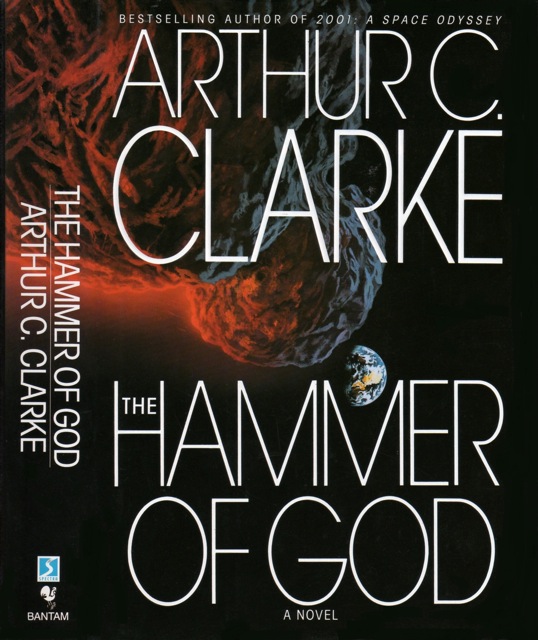
The Hammer of God is a science fiction novel by Arthur C. Clarke originally published in 1993. Set in the year 2109, it deals with the discovery of an asteroid to be on course to collide with Earth and depicts the mission for deflecting the asteroid by using fusion thermal rockets.
- Starstrike
W. Michael Gearstandalone novel1990
similar bytensenear futurealiensspacescience fictionfirst contact
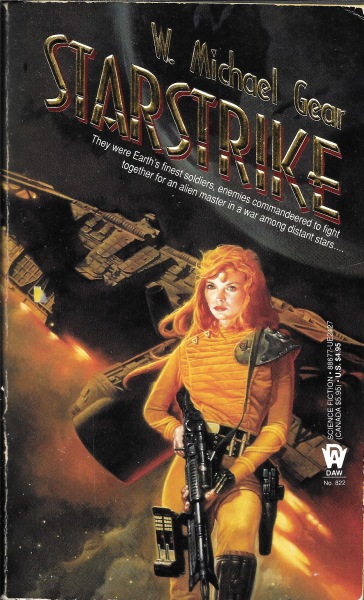
First contact had been an event some humans had dreamed of, others had dreaded, and still others believed would never happen. When it finally did, no one was prepared. For when the Ahimsa came, the course of human destiny was changed in a matter of hours. The alien had contacted Earth against all interstellar regulations. For this "barbaric" world where wars were still very much a part of everyday existence was a forbidden zone for other life-forms in the universe. But the Ahimsa had targeted humans for a mission of its own. And, by taking control of all the Earth's defensive and offensive missile systems, the alien was able to force humans to do its bidding. Soon Earth's most skilled strike force, composed of Soviet, American, and Israeli experts in the arts of war and espionage found themselves aboard an alien vessel, training together for an offensive attack against a distant space station, while fighting their own internal battle to weld people who had been on opposing sides for generations into one unified army. And as they struggled to overcome their own prejudices and hatreds while preparing to face an enemy of unknown capabilities, none of them realized that the greatest danger to humanity's future was right in their midst... (from the back cover of the DAW Books first edition)
- Starplex
Robert J. Sawyerstandalone novel1996
similar bytensenear futurealiensspacescience fictionfirst contact
The only novel of its year to be nominated for both the Hugo and Nebula Awards. Starplex won Canada's Aurora Award for best novel of the year. For nearly twenty years Earth's space exploration had exploded outward, thanks to a series of mysterious, artificial wormholes. No one knows who created these interstellar passages, yet they have brought the far reaches of space immediately close. For Starplex Director Keith Lansing, too close. Discovery is superseding understanding. And when an unknown vessel — with no windows, no seams, and no visible means of propulsion — arrives through a new wormhole, an already battle-scarred Starplex could be the starting point of a new interstellar war . . . ROBERT J. SAWYER has won the Hugo, Nebula, John W. Campbell Memorial, Seiun, and Aurora Awards, all for best science fiction novel of the year. His novels include Hominids, Rollback, Wake, and FlashForward (basis for the TV series).
- Jenny Casey
series4 books2004
similar bytensenear futurescience fiction+5 more
Elizabeth Bear's Jenny Casey trilogy opens with Hammered (2004), her debut novel, which won the Locus Award for Best First Novel. It continues across Scardown and Worldwired, completing the story of its title character across three volumes published through 2006.
- Seveneves
Neal Stephensonstandalone novel2015
similar bytensenear futurespacescience fictionhard science fictionour world
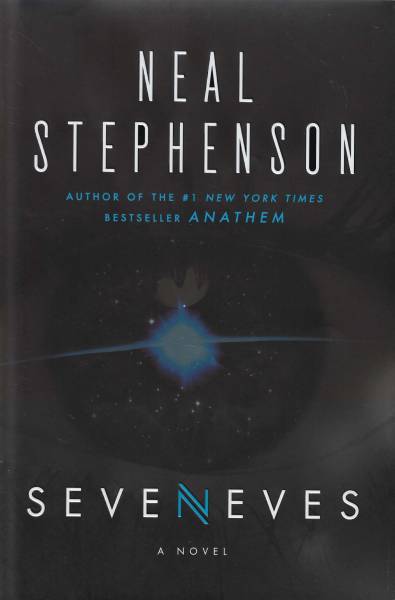
Seveneves is a science fiction novel by Neal Stephenson published in 2015. The story tells of the desperate efforts to preserve Homo sapiens in the wake of apocalyptic events on Earth after the unexplained disintegration of the Moon and the remaking of human society as a space-based civilization after a severe genetic bottleneck.
- The Killing Star
George Zebrowski & Charles Pellegrinostandalone novel1995
similar bytensenear futurealiensspacescience fictionhard science fiction
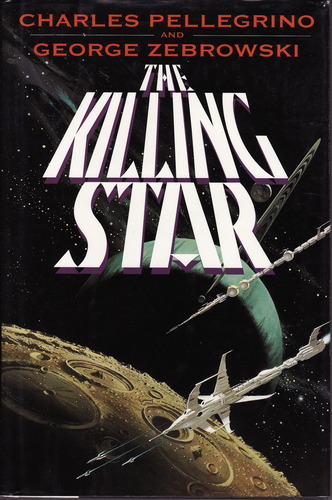
The Killing Star is a hard science fiction novel by American writers Charles R. Pellegrino and George Zebrowski, published in April 1995. It chronicles a sudden alien invasion in a late 21st century technological utopia, while covering several other speculative fiction ideas such as sublight interstellar travel, genetic cloning, virtual reality and advanced robotics.
- Childhood's End
Arthur C. Clarkestandalone novel1953
similar byaliensnear futurescience fictionfirst contactour world
Childhood's End is a 1953 science fiction novel by the British author Arthur C. Clarke. The story follows a peaceful alien invasion of Earth by mysterious Overlords, whose arrival begins decades of apparent utopia under indirect alien rule, at the cost of human identity and culture.
- Mission to Methone
Les Johnsonstandalone novel2018
similar bytensenear futurealiensspacescience fictionfirst contactartificial intelligence
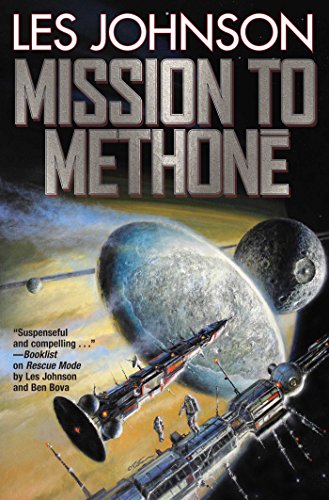
"The year is 2065 and an accidental encounter in space leads to the discovery that we are not alone and that our continued existence may be in jeopardy. Chris Holt, working at the Space Resources Corp., discovers that one of the asteroids he surveying for mining is actually a derelict spaceship. What Earth doesn't know is that across the galaxy, a war has been underway for millennia. A war between alien civilizations that have very different ideas about what should be done about emerging spacefaring civilizations like our own. The artificial intelligence resident in the derelict has been in our solar system since before the dawn of human civilization, watching, waiting and keeping quiet lest the war return and wipe out humanity"--
- Stranger in a Strange Land
Robert A. Heinleinstandalone novel1961
similar byaliensnear futurescience fictionfirst contactour world
Stranger in a Strange Land is a 1961 science fiction novel by the American author Robert A. Heinlein. It tells the story of Valentine Michael Smith, a human who comes to Earth in early adulthood after being born on the planet Mars and raised by Martians, and explores his interaction with and eventual transformation of Terran culture.
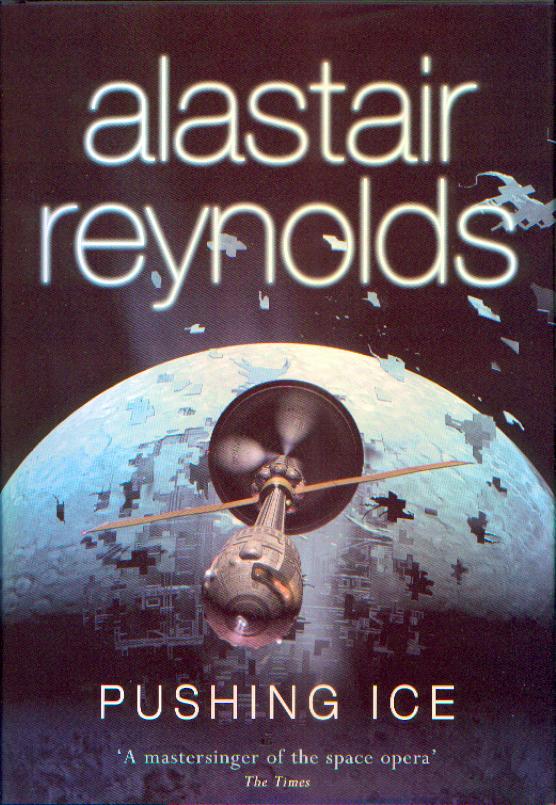
- Pushing Ice
Alastair Reynoldsstandalone novel2005
similar bytensealiensspacescience fictionhard science fictionfirst contact
When Saturn's moon Janus suddenly takes off into interstellar space, an ice mining spaceship sent to investigate finds itself swept along into distant space until it ends up trapped in a gigantic alien structure, wherein the crew must prepare to reside for the foreseeable future.
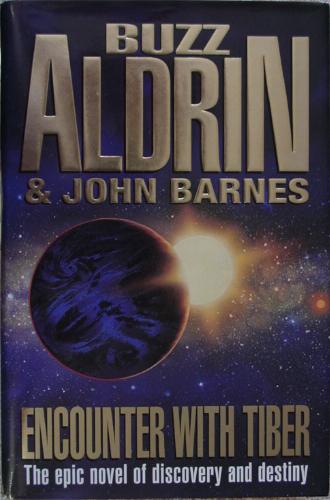
- Encounter with Tiber
John Barnes & Buzz Aldrinstandalone novel1996
similar bynear futurealiensspacescience fictionfirst contacthard science fiction+1 more
Encounter With Tiber (ISBN 0-340-62451-5) is a 1996 science fiction novel written by former astronaut Buzz Aldrin and science fiction writer John Barnes. A working title, used on some advance covers for the British edition, was The Tides of Tiber.
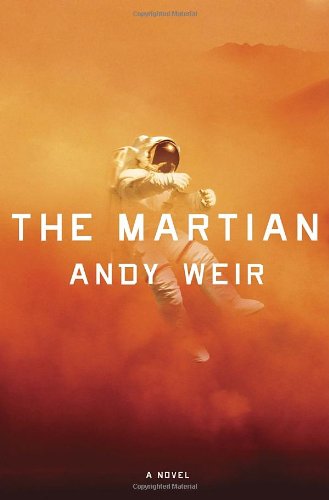
- The Martian
series2 books2012
similar bytensenear futurescience fictionhard science fictionour world
Andy Weir's novel The Martian, first self-published in 2011 before a commercial re-release, follows astronaut Mark Watney after he is stranded alone on Mars when his crew presumes him dead and departs. Using scientific improvisation and dark humor, Watney works to keep himself alive long enough for a rescue to reach him. It is a single, self-contained survival story.
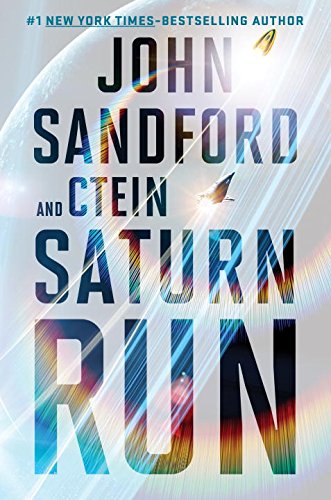
- Saturn Run
Ctein & John Sandfordstandalone novel2015
similar bytensenear futurealiensspacescience fictionhard science fictionfirst contact
"The year is 2066. A Caltech intern inadvertently notices an anomaly from a space telescope--something is approaching Saturn, and decelerating. Space objects don't decelerate. Spaceships do. A flurry of top-level government meetings produces the inescapable conclusion: Whatever built that ship is at least one hundred years ahead in hard and soft technology, and whoever can get their hands on it exclusively and bring it back will have an advantage so large, no other nation can compete. A conclusion the Chinese definitely agree with when they find out. The race is on, and a remarkable adventure begins..."--
- Rogue Moon
Algis Budrysstandalone novel1960
similar bytensenear futurealiensscience fictionhard science fiction
A project to transport humans by matter transmission becomes the means to send explorers to the Moon when the US discovers an alien artifact on the dark side, but anyone who enters dies, so a hardened adventurer is given the job.
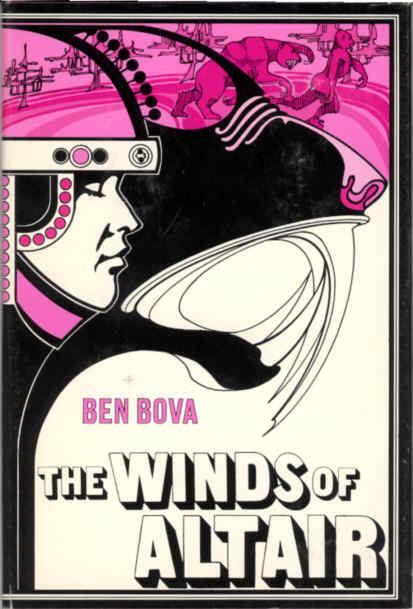
- The Winds of Altair
Ben Bovastandalone novel1973
similar bytensenear futurealiensscience fictionfirst contact
From back cover Tor trade paperback May 1983: MORALITY VS. SURVIVAL... Even before the human scientists arrived at the sixth planet of Altair they knew they had their work cut out for them. Star probes had long before informed them that Altair VI had flourishing ecology with one very tough beast at the top of the food chain, a beast that would have to be dealt with before the human colony ships arrived. What they didn't know was that the beast was not only tough, it was as smart as a man -- and that the only human capable of real communication with the wolfcats of Altair would want to become one...