Loreful
HomeDiscover
Search series, authors…⌘K
Loreful

Reading orders for SF/F series and shared universes — with your place kept in every one.

Explore

UniversesSeriesWorksAuthorsAtlas

Help

FAQAboutSite map

Account & legal

Sign inCreate accountPrivacyTerms

Data

Built on ISFDB, Wikipedia, Wikidata and Open Library. Curated reading orders carry their reasoning on the page; the rest follow publication order. Data sources & licenses

© Loreful · data: ISFDB · CC BY

More like Eclipse Dancer

anchored on:historical fictionnorth america

but

Mood

The mood the book leaves you in.

  • The reading experience is propelled by journeys, exploration, and physical risk; excitement and forward momentum dominate over dread or introspection.
  • Joy and loss are deliberately mixed; the resolution grants characters something real while taking something else away, leaving warmth and sorrow together.
  • The book demands work from the reader — dense prose, difficult structure, unfamiliar ideas, or morally uncomfortable material — as part of its intended effect.
  • Grim events, cruelty, or despair dominate the atmosphere, and the book does not soften them with comfort or comic relief.
  • The atmosphere is quietly unsettling — wrongness, unease, and the uncanny pervade the book without necessarily escalating into overt horror.
  • The book is built to move the reader; character feeling is foregrounded and major scenes aim at a strong emotional response.
  • Humor is a primary aim and the prose plays for laughs — comic situations, wit, or dialogue produce sustained comedy, not occasional levity.
  • The book insists that things can improve; effort and decency are shown to matter, and the arc bends toward better outcomes even through hardship.
  • The book teaches as it goes — real facts, history, science, or craft are conveyed in enough depth that learning is part of the reading experience.
  • The book is designed to uplift and motivate, presenting perseverance or achievement in a way that invites the reader to aspire or act.
  • The overall register is cheerful and easygoing; stakes are kept gentle and the book avoids dwelling on pain or dread.
  • Withheld information drives the experience; the book sustains enigmas and secrets the reader wants resolved, whatever its genre.
  • The book is contemplative and inward-looking, giving more weight to thought, memory, and meaning than to external events.
  • The book works as comfort reading — low tension, a soothing pace, and an atmosphere the reader can unwind in.
  • Grief, loss, or melancholy set the dominant register, and the book lets sorrow stand rather than resolving it into comfort.
  • Sustained suspense is the point; the book keeps the reader braced for what happens next through danger, pressure, or impending revelation.
  • Playful invention and charm define the register — fanciful conceits, light absurdity, and a narration that delights in its own oddity.

About

What the story runs on.

  • Stories in which extraterrestrial beings are central — as characters, cultures, or the object of the plot.
  • Stories structured as a quest — a journey undertaken to find, deliver, or destroy something of great import.
  • Stories in which staying alive against nature, catastrophe, or scarcity is the central problem.
  • Stories of lovers kept apart by law, family, faith, or station, where the obstacle to love is the plot.
  • Stories in which a friendship — its making, testing, or loss — is the emotional center.
  • Stories of growing up — a young protagonist crossing from childhood into adult knowledge and responsibility.
  • Stories about who a character truly is — self-discovery, doubled lives, and the search for a self.
  • Stories about mourning — living through the death of a loved one and what loss does to the survivors.
  • Stories in which a buried family truth — hidden parentage, crimes, or shames — surfaces and reorders the present.
  • Stories driven by maneuvering for power — factions, conspiracies, and statecraft conducted in shadow.
  • Stories in which war itself is the subject — combat, occupation, and what warfare does to soldiers and civilians.
  • Stories organized around investigating a killing — the case, the clues, and the pursuit of the killer, in any genre's clothing.

Shelf

Where it sits in the library.

    • Fiction built on magic or other supernatural elements that have no scientific explanation.
    • Secondary-world fantasy at large scale, where the fate of nations or the world turns on the protagonists' struggle.
    • Fantasy set in a recognizably modern city or contemporary world where the supernatural intrudes on everyday life.
    • Fantasy that blends in horror's atmosphere and imagery, keeping a fantastical frame around grim or frightening material.
    • Action-driven fantasy following warriors or rogues with personal stakes against sorcerous threats, rather than world-spanning conflicts.
    • Fantasy set in a real historical period or a close analogue of one, with magic woven into the era.
    • Fantasy in which protagonists cross from the ordinary world into another world through a portal or similar passage.
    • Fiction that retells or reworks a traditional fairy tale in a new form or setting.
    • Fantasy drawing directly on myths, legends, and folklore, retelling them or building on their figures and logic.
    • Fantasy of ghosts, vampires, shapeshifters, psychics, and similar phenomena, usually set in an otherwise ordinary world.
    • Fiction mixing science-fictional trappings with overtly magical or impossible elements in one setting.
    • Low-stakes fantasy emphasizing comfort, community, and everyday pleasures over conflict and peril.
    • Speculative fiction of pervasive moral ambiguity, violence, and cynicism that rejects heroic conventions — fantasy and SF alike.
      • Fiction that extrapolates from science and technology — future societies, space travel, or speculative inventions — within at least nominally natural laws.
      • Science fiction of interstellar scope — starships, galactic polities, and adventure across star systems.
      • Science fiction committed to scientific rigor, where technical plausibility constrains the story.
      • Science fiction centered on armed forces and warfare, told largely from a military point of view.
      • Science fiction of networked, corporate-dominated near futures, pairing high technology with social decay.
      • Science fiction styled on nineteenth-century steam-powered technology, often in a Victorian or pseudo-Victorian setting.
      • Fiction depicting an oppressive or catastrophic society, presented as a warning.
      • Fiction set after civilization's collapse, following survivors in the ruins of the old world.
      • Fiction in which characters move between past and future, and the mechanics or consequences of that travel drive the plot.
      • Fiction exploring a world where a historical event went differently and history diverged from ours.
      • Science fiction about humanity's first encounter and communication with an alien intelligence.
      • Science fiction in which extraterrestrial forces attack or occupy Earth and humanity resists.
      • Fiction whose primary aim is to frighten or unsettle the reader through dread, menace, or the monstrous.
      • Horror of vast, indifferent, incomprehensible entities before which humanity is insignificant, in the Lovecraft tradition.
      • Horror of decaying houses, buried family secrets, and oppressive atmosphere in the Gothic literary tradition.
      • Horror centered on hauntings and the returning dead.
      • Horror located in the mind — paranoia, obsession, and unreliable perception rather than external monsters.
      • Horror built around the reanimated dead and survival amid their outbreaks.
      • Horror defined by explicit, transgressive gore that refuses to cut away from violence.
      • Speculative fiction of the strange and uncanny that resists both natural explanation and standard genre categories.
      • Fiction organized around solving a crime or puzzle, typically following an investigator toward the identification of a culprit.
      • A puzzle-first mystery that lays out clues so the culprit's identity can be deduced before the reveal.
      • Crime fiction of moral ambiguity, fatalism, and hard-edged style, set among the corrupt and the doomed.
      • A mystery following the realistic routines of police work — forensics, interviews, and case-building.
      • A gentle mystery with an amateur sleuth, a small community, and violence kept off the page.
      • A mystery set in a past era, where the investigation works within that period's methods and society.
      • Fast-paced fiction driven by imminent danger, pursuit, or high-stakes conspiracy, built to sustain tension.
      • A thriller of espionage — agents, tradecraft, and intelligence services in conflict.
      • A thriller centered on lawyers and the courtroom, where litigation carries the suspense.
      • A thriller driven by detailed contemporary or near-future technology, often military or scientific.
      • A thriller whose tension comes from mental states and manipulation between characters rather than external action.
      • Fiction whose central plot is a romantic relationship and its development toward an emotionally satisfying resolution.
      • Romance in which one or both partners are supernatural beings, blending fantasy elements into the love story.
      • A fantasy-romance hybrid in which the romantic arc and the fantasy plot carry equal weight.
      • Romance set in a past era, with courtship shaped by the period's society and manners.
      • Romance set in the present day, without supernatural or historical elements.
      • Fiction set in a real past period, where the historical setting materially shapes characters and events.
        • General and literary fiction emphasizing prose style, character interiority, or formal ambition over genre plot conventions.
        • Fiction in a realistic world where magical events occur and are treated as ordinary, in the tradition of Latin American literature.
        • Fiction that ridicules people, institutions, or society in order to criticize them.
        • Fiction of dreamlike, irrational imagery and logic that breaks from realistic representation.
        • Fiction that plays with narrative convention through metafiction, fragmentation, and self-reference.
        • Fiction propelled by journeys, exploration, and physical peril, where action and survival carry the plot.
        • Adventure fiction of ships and seafaring — naval engagements, voyages, and life at sea.
        • Fiction of the American frontier West — gunmen, ranchers, and lawmen, typically in the late nineteenth century.
        • Fiction centered on soldiers, campaigns, and the experience of warfare, historical or imagined.
          • Fiction written primarily to amuse, using comedic situations, wit, or parody as its organizing principle.
            • Multi-generational fiction following a family or dynasty across decades, with inheritance and kinship as the through-line.
              • Fiction whose world runs on explicit game mechanics — levels, stats, and skills that characters can see and exploit.
                • Fiction about costumed or superpowered heroes and their conflicts with comparable villains.

                Practical

                How long a commitment, whether it stands alone, and whether it has finished.

                Tap a chip to ask for it · tap again to rule it out · once more to clear. Numbers show what would be left.

                • Cover of Buckskin Brigades
                  Buckskin Brigades

                  L. Ron Hubbard · standalone novel · 1937

                  similar byhistorical fictionnorth america19th century+2 more

                  Buckskin Brigades is a Western novel written by L. Ron Hubbard, first published July 30, 1937. The work was Hubbard's first hard-covered book, and his first published novel. The next year he became a contributor to Astounding Science Fiction. Winfred Blevins wrote the introduction to the book. Some sources state that as a young man, Hubbard became a blood brother to the Piegan Blackfeet Native American tribe while living in Montana, though this claim is disputed. Hubbard incorporates historical background from the Blackfeet tribe into the book.

                • Cover of Collected Supernatural and Weird Fiction of Robert W. Chambers
                  Collected Supernatural and Weird Fiction of Robert W. Chambers

                  series · 6 books · 1914

                  completed

                  similar byhistorical fictionnorth americawarcolonialism

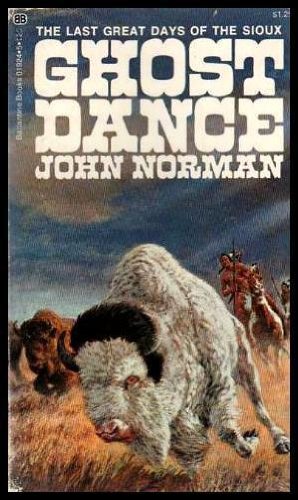
                • Cover of Ghost Dance
                  Ghost Dance

                  John Norman · standalone novel · 1970

                  similar byhistorical fictionnorth americacolonialism+1 more

                  Ghost Dance is a 1970 historical fiction novel by John Norman. A Sioux man and his tradition comes into conflict with a white woman and her civilization as the Wounded Knee Massacre approaches. As with his Gor series, his main body of work, Norman displays both philosophical reaction and an affinity with incorporating historical events into the plotlines of fictional characters.

                • Cover of Blood Meridian; or, The Evening Redness in the West
                  Blood Meridian; or, The Evening Redness in the West

                  Cormac McCarthy · standalone novel · 1985

                  similar byhistorical fictionnorth americawar19th century+1 more

                  "Based on incidents that took place in the southwestern United States and Mexico around 1850, this novel chronicles the crimes of a band of desperados, with a particular focus on one, "the kid," a boy of fourteen." (cited from the OCLC entry for the first edition)

                • Cover of The Spy
                  The Spy

                  James Fenimore Cooper · standalone novel · 1821

                  similar byhistorical fictionnorth americawar19th century

                  Alternate history, U.S. Revolutionary War.

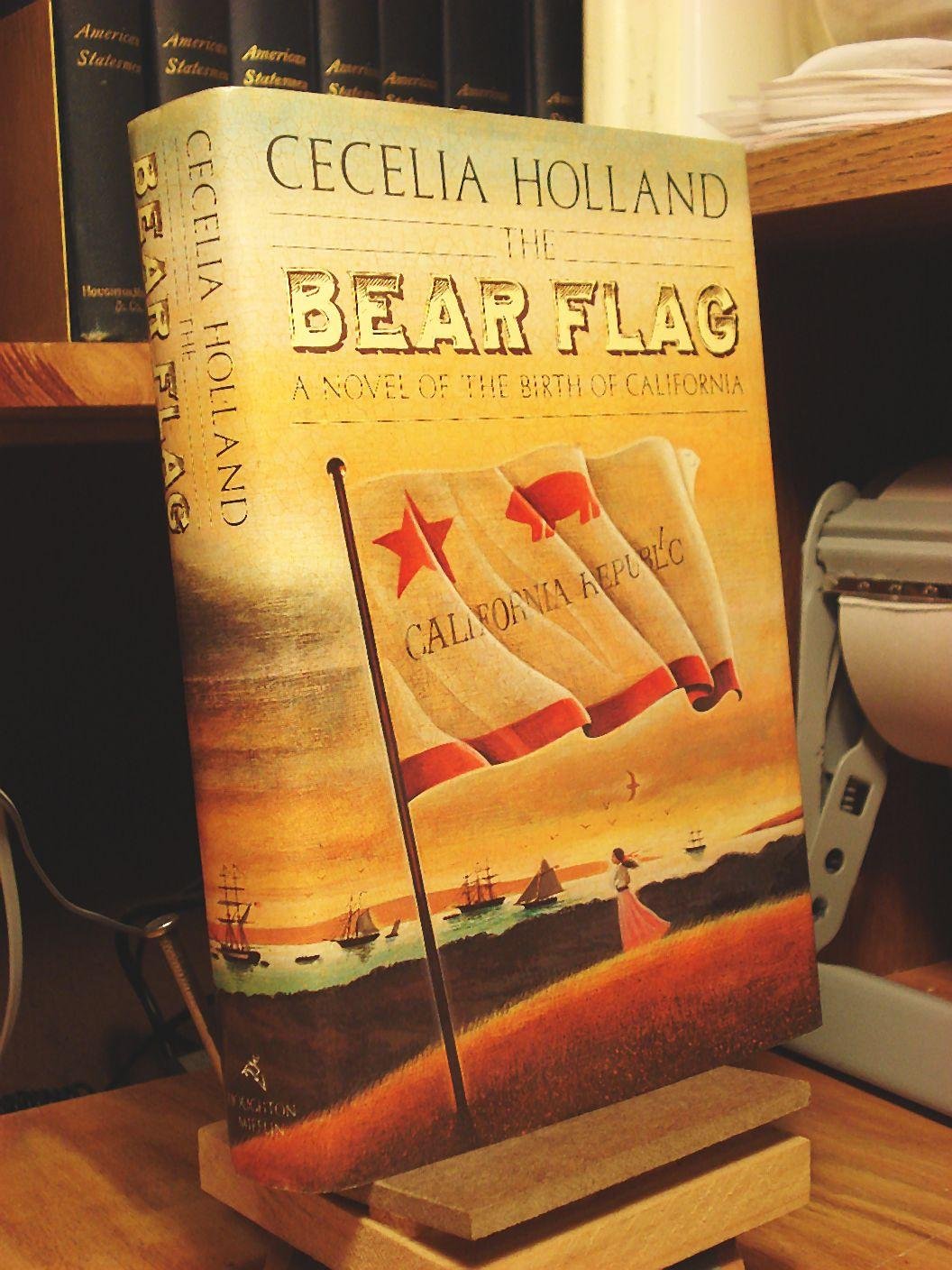
                • Cover of The Bear Flag
                  The Bear Flag

                  Cecelia Holland · standalone novel · 1990

                  similar byhistorical fictionnorth america19th century+1 more

                • Cover of Contact: The Battle for America
                  Contact: The Battle for America

                  series · 3 books · 2010

                  similar byhistorical fictionnorth americawarcolonialism

                • Cover of Allan Quatermain
                  Allan Quatermain

                  series · 25 books · 1885

                  similar by19th century+1 more

                  Allan Quatermain is the protagonist of H. Rider Haggard's 1885 novel King Solomon's Mines, its one sequel Allan Quatermain (1887), twelve prequel novels and four prequel short stories, totalling eighteen works. An English professional big game hunter and adventurer, in film and television he has been portrayed by Richard Chamberlain, Sean Connery, Cedric Hardwicke, Patrick Swayze and Stewart Granger among others.

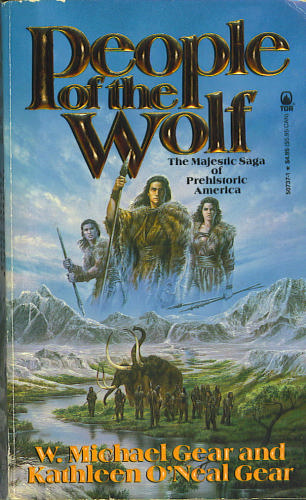
                • Cover of First North Americans
                  First North Americans

                  series · 34 books · 1990

                  similar byhistorical fictionnorth america+1 more

                  North America's Forgotten Past is a series of historical fiction novels published by Tor and written by husband and wife co-authors W. Michael Gear and Kathleen O'Neal Gear. The series, which began with 1990's People of the Wolf, explores various civilizations and cultures in prehistoric North America. It is somewhat comparable to Jean M. Auel's Earth's Children series, which is set in prehistoric Europe, but each of its books focuses on a different time period, location, and set of characters. The first four novels form a coherent, more or less linear narrative, from the initial migration of Siberian peoples into what is now Canada and Alaska through the florescence of the Mississippian semi-urban mound-building culture, considered the "high-water mark" of North American pre-Columbian civilization, around 1000 AD. The remaining novels cover a wide variety of times and settings, most standalone stories in no particular order, ranging from tropical Florida in the 6th millennium BC to the Chaco Empire of the Southwest in the 13th century AD. The novels take into account new developments in North American archaeology such as the discovery of Kennewick Man and the development of the coastal-route model as a possible alternative or supplement to overland migration across Beringia.

                • Cover of Narratives of Empire
                  Narratives of Empire

                  series · 7 books · 1967

                  completed

                  similar byhistorical fictionnorth america+1 more

                • Cover of Trail of Glory
                  Trail of Glory

                  series · 2 books · 2005

                  completed

                  similar bynorth americawar19th century+1 more

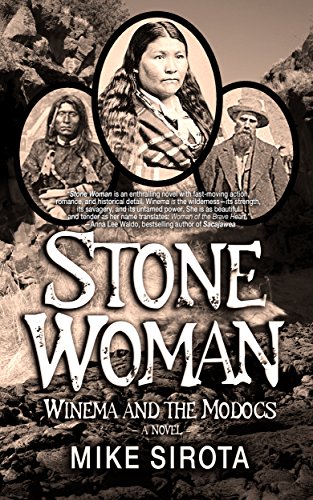
                • Cover of Stone Woman: Winema and the Modocs
                  Stone Woman: Winema and the Modocs

                  Mike Sirota · standalone novel · 2014

                  similar byhistorical fictionnorth america19th century+1 more

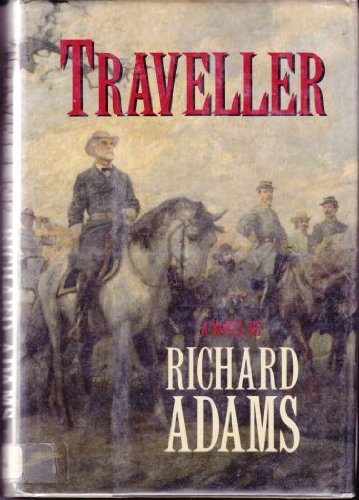
                • Cover of Traveller
                  Traveller

                  Richard Adams · standalone novel · 1988

                  similar byhistorical fictionnorth americawar19th century

                  Traveller is a historical novel written by Richard Adams in 1988. It recounts the American Civil War through the viewpoint of Traveller, the favorite horse of Confederate General Robert E. Lee.

                • Cover of Drew Rennie
                  Drew Rennie

                  series · 2 books · 1961

                  completed

                  similar byhistorical fictionnorth america19th century+1 more

                  Andre Norton's Drew Rennie duology — Ride Proud, Rebel! and Rebel Spurs — is a Civil War-era historical adventure for young readers, following a young soldier through the war's final campaigns and into the postwar West. The two novels form a linked story grounded in Civil War history rather than Norton's more familiar science fiction and fantasy.

                • Cover of Time and Again
                  Time and Again

                  series · 2 books · 1970

                  completed

                  similar bynorth america+2 more

                  Time and Again (1970) follows Si Morley, a commercial artist recruited into a secret government project that sends him back to Manhattan in 1882, where he falls for a woman named Julia while weighing whether he can, or should, alter the past; Jack Finney illustrates the story with period photographs and engravings. The sequel, From Time to Time (1995), continues Si's story with a further trip into the past.

                • Cover of All Those Vanished Engines
                  All Those Vanished Engines

                  Paul Park · standalone novel · 2014

                  similar byhistorical fictionnorth americawar19th century

                  Follows the Park family in three different areas of the nation after the Queen of the North agreed to a two-nation settlement in the Civil War, in this new alternate-history novel from the author of A Princess of Roumania.

                • Cover of Fort Pillow
                  Fort Pillow

                  Harry Turtledove · standalone novel · 2006

                  similar byhistorical fictionnorth americawar19th century

                  A fictionalized account of the April 12, 1864 battle and massacre of Fort Pillow (Henning, TN) during the American Civil War.

                • Cover of Lost Continent of Atlantis
                  Lost Continent of Atlantis

                  series · 5 books · 2005

                  similar by19th century+2 more

                  Atlantis is an alternate history series written by Harry Turtledove. The point of divergence occurs around 85 million years ago when the eastern portion of the North American continent splits off from the rest of the continent and forms Atlantis, a separate continent farther east in the Atlantic Ocean.

                • Cover of Ballad
                  Ballad

                  series · 11 books · 1991

                  similar byhistorical fictionnorth america

                • Cover of Zulu Nation
                  Zulu Nation

                  series · 1 book · 1892

                  similar byhistorical fiction19th century+1 more

                  H. Rider Haggard's Nada the Lily is set during the rise of the Zulu king Shaka, following Umslopogaas, Shaka's unacknowledged son, and his love for the celebrated beauty Nada. Haggard weaves real Zulu history and figures together with invented characters and supernatural elements, building a tragic story of forbidden love against a backdrop of war and court intrigue. It's a standalone 1892 novel rather than a series.

                • Cover of Alias Grace
                  Alias Grace

                  Margaret Atwood · standalone novel · 1996

                  similar byhistorical fictionnorth america19th century

                  Alias Grace is a historical fiction novel by Canadian writer Margaret Atwood. First published in 1996 by McClelland & Stewart, it won the Giller Prize and was shortlisted for the Booker Prize.

                • Cover of Beloved
                  Beloved

                  Toni Morrison · standalone novel · 1987

                  similar byhistorical fictionnorth america19th century

                  Beloved is a 1987 novel by American novelist Toni Morrison. Set in the period after the American Civil War, the novel tells the story of formerly enslaved people whose Cincinnati home is haunted by a malevolent spirit. Sethe, a formerly enslaved mother of four, grapples with her traumatic past. Morrison sought to depict the limitations that enslaved women faced and to present a physical manifestation that was lacking in the world of literature. Moreover, Beloved explores the interior life of the formerly enslaved.

                • Cover of Montezuma's Daughter
                  Montezuma's Daughter

                  H. Rider Haggard · standalone novel · 1893

                  similar byhistorical fiction+2 more

                  Montezuma's Daughter, first published in 1893, is a novel by the Victorian adventure writer H. Rider Haggard.

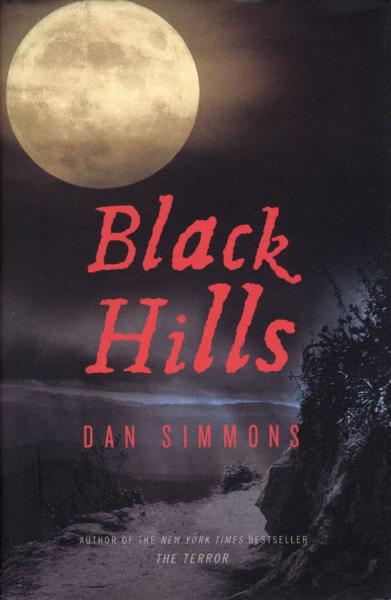
                • Cover of Black Hills
                  Black Hills

                  Dan Simmons · standalone novel · 2010

                  similar byhistorical fictionnorth americacolonialism

                  Haunted by Custer's ghost, and also by his ability to see into the memories and futures of legendary men like Sioux war-chief Crazy Horse, Paha Sapa plans to silence his ghost forever and reclaim his people's legacy--on the very day FDR comes to Mount Rushmore to dedicate the Jefferson face.