More like Effendi
anchored on:alternate historymiddle eastearly 20th centurynoiridentitypolitical intrigue+3 more
but
- The Separation
Christopher Prieststandalone novel2002
similar bymysteriousearly 20th centuryidentityalternate historyscience fiction
The Separation is a novel by British writer Christopher Priest, published in 2002. It is an alternate history revolving around the experiences of identical twin brothers during the Second World War, during which one becomes a pilot for the RAF, and the other, a conscientious objector, becomes an ambulance driver for the Red Cross. The author introduces a deliberate confusion by giving these brothers identical initials – J.L. Sawyer – one known as Jack and the other as Joe.
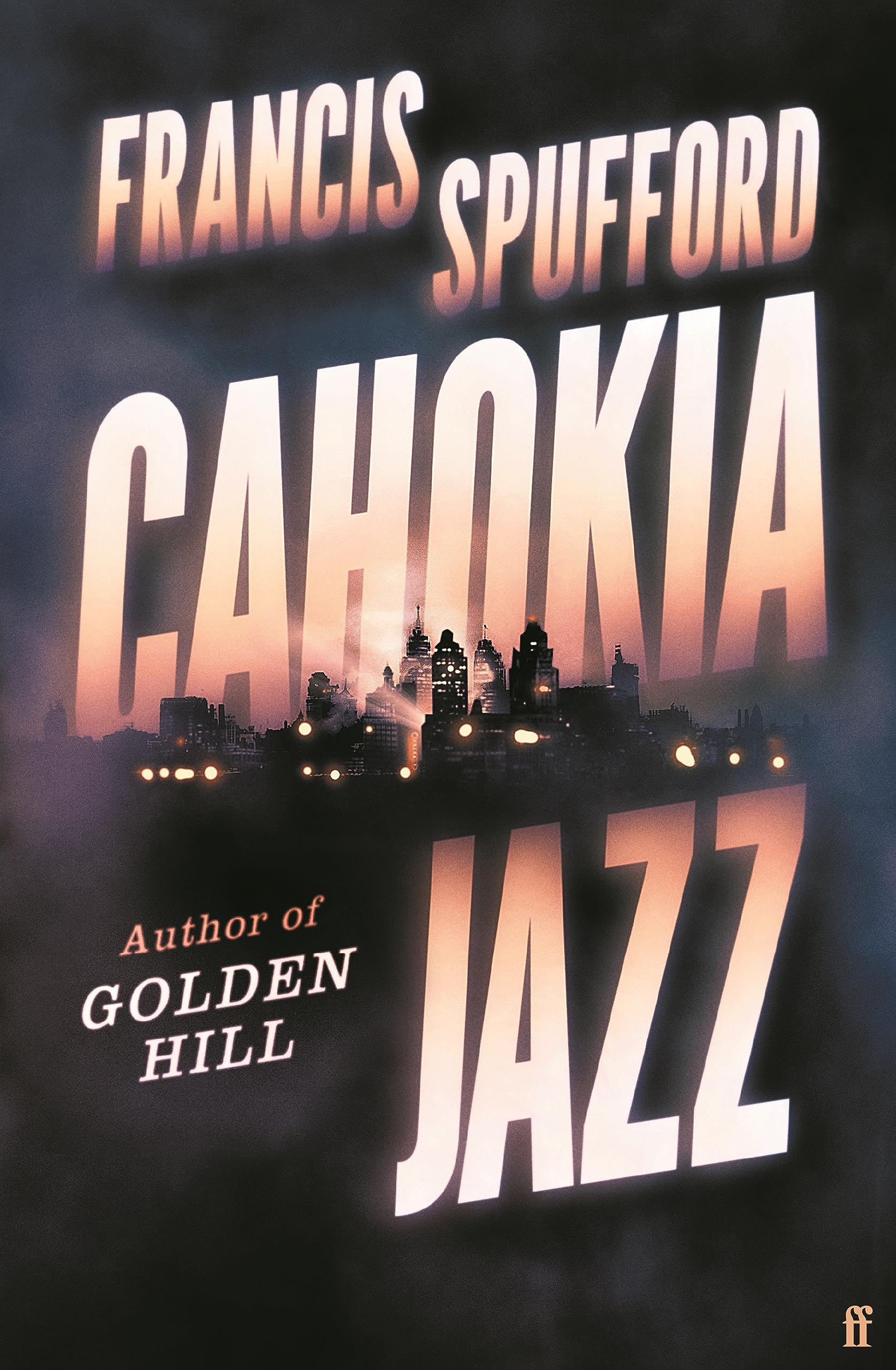
- Cahokia Jazz
Francis Spuffordstandalone novel2023
similar bymysteriousearly 20th centurypolitical intriguealternate historybig city
Cahokia Jazz is an alternate-history detective novel by Francis Spufford released in Great Britain in 2023 and the United States in 2024.
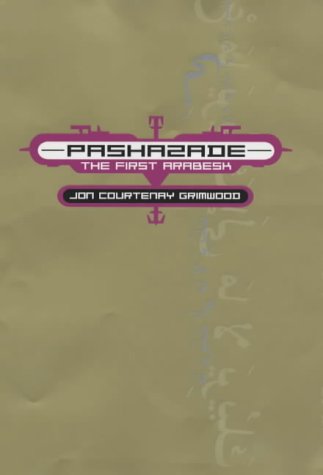
- Arabesk
series3 books2001
similar bypolitical intriguealternate historymiddle eastscience fictionbig city+5 more
The Arabesk trilogy is a sequence of alternate history novels by the British author Jon Courtenay Grimwood.
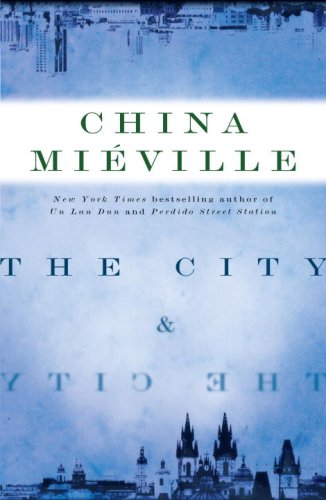
- The City & the City
China Miévillestandalone novel2009
similar bymysteriousidentitypolitical intriguebig city+1 more
Inspector Tyador Borlú must travel to Ul Qoma to search for answers in the murder of a woman found in the city of Besźel. (Source: OCLC record)
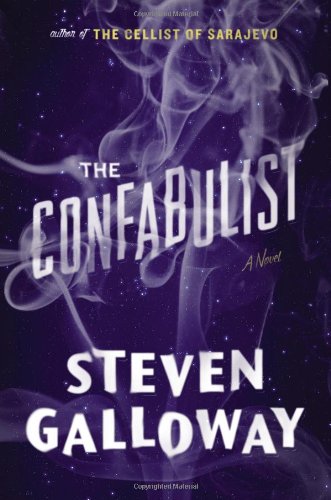
- The Confabulist
Steven Gallowaystandalone novel2014
similar bymysteriousearly 20th centuryidentityalternate history+1 more
Alternate history. Harry Houdini, in addition to the life you know, is also a secret spy for the U.S. Treasury Department, advisor to the American military, confidant of a Russian spy, and faker of his own death.
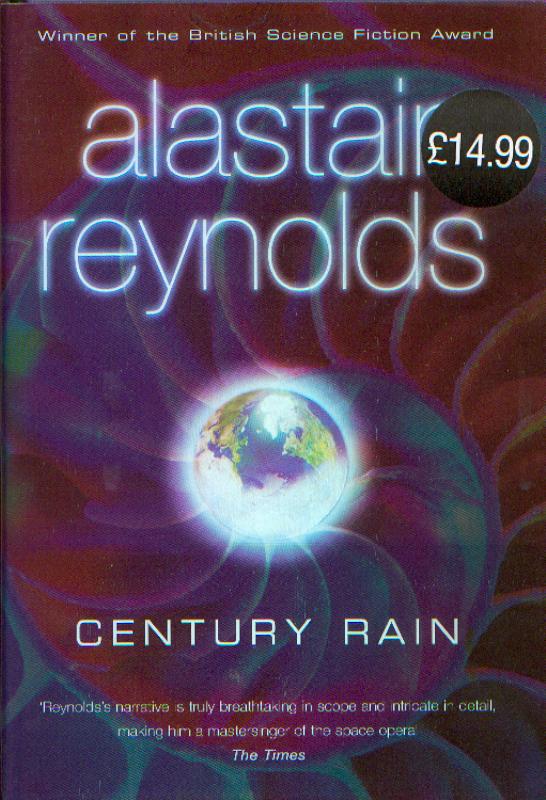
- Century Rain
Alastair Reynoldsstandalone novel2004
similar bymysteriousidentityalternate historynoirscience fiction
Century Rain is a 2004 noir science fiction alternative history mystery novel by Welsh author Alastair Reynolds (ISBN 0-575-07436-1).
- The Lady of the Shroud
Bram Stokerstandalone novel1909
similar bymysteriousearly 20th centurypolitical intrigue
Rupert Sent Leger inherits his eccentric uncle's fortune on one condition: he must spend a year living in the family's castle in the Blue Mountains, a small, embattled corner of the Balkan coast under threat from Turkish forces. Determined to earn the trust of his new neighbors, Rupert arms the local mountain people for their own defense, and soon finds his castle visited at night by a beautiful woman in a wet burial shroud, who claims sanctuary from the cold and offers no explanation of who, or what, she might be. Bram Stoker's follow-up to Dracula trades outright horror for Ruritanian romance and adventure, blending gothic atmosphere with political intrigue.
- The Oracle Year
Charles Soulestandalone novel2018
similar bymysteriousidentitypolitical intriguescience fictionbig city
Awakening from a dream with more than one hundred predictions about the future in his head, an unassuming Manhattan bassist becomes one of the world's most powerful men and hides his identity behind an online persona that is targeted by greedy corporations and dangerous enemies.
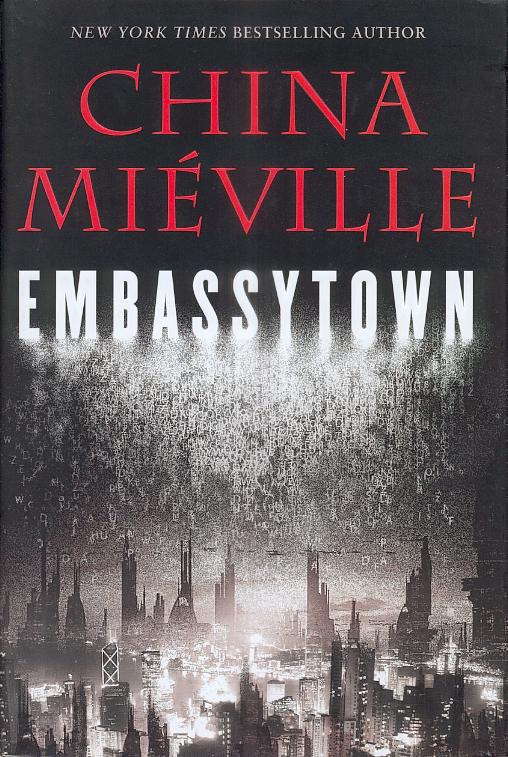
- Embassytown
China Miévillestandalone novel2011
similar bymysteriousidentitypolitical intriguescience fiction
In the far future, humans have colonized a distant planet, home to the enigmatic Ariekei, sentient beings famed for a language unique in the universe, one that only a few altered human ambassadors can speak. Avice Benner Cho, a human colonist, has returned to Embassytown after years of deep-space adventure. She cannot speak the Ariekei tongue, but she is an indelible part of it, having long ago been made a figure of speech, a living simile in their language. When distant political machinations deliver a new ambassador to Arieka, the fragile equilibrium between humans and aliens is violently upset. Catastrophe looms, and Avice is torn between competing loyalties—to a husband she no longer loves, to a system she no longer trusts, and to her place in a language she cannot speak yet speaks through her.
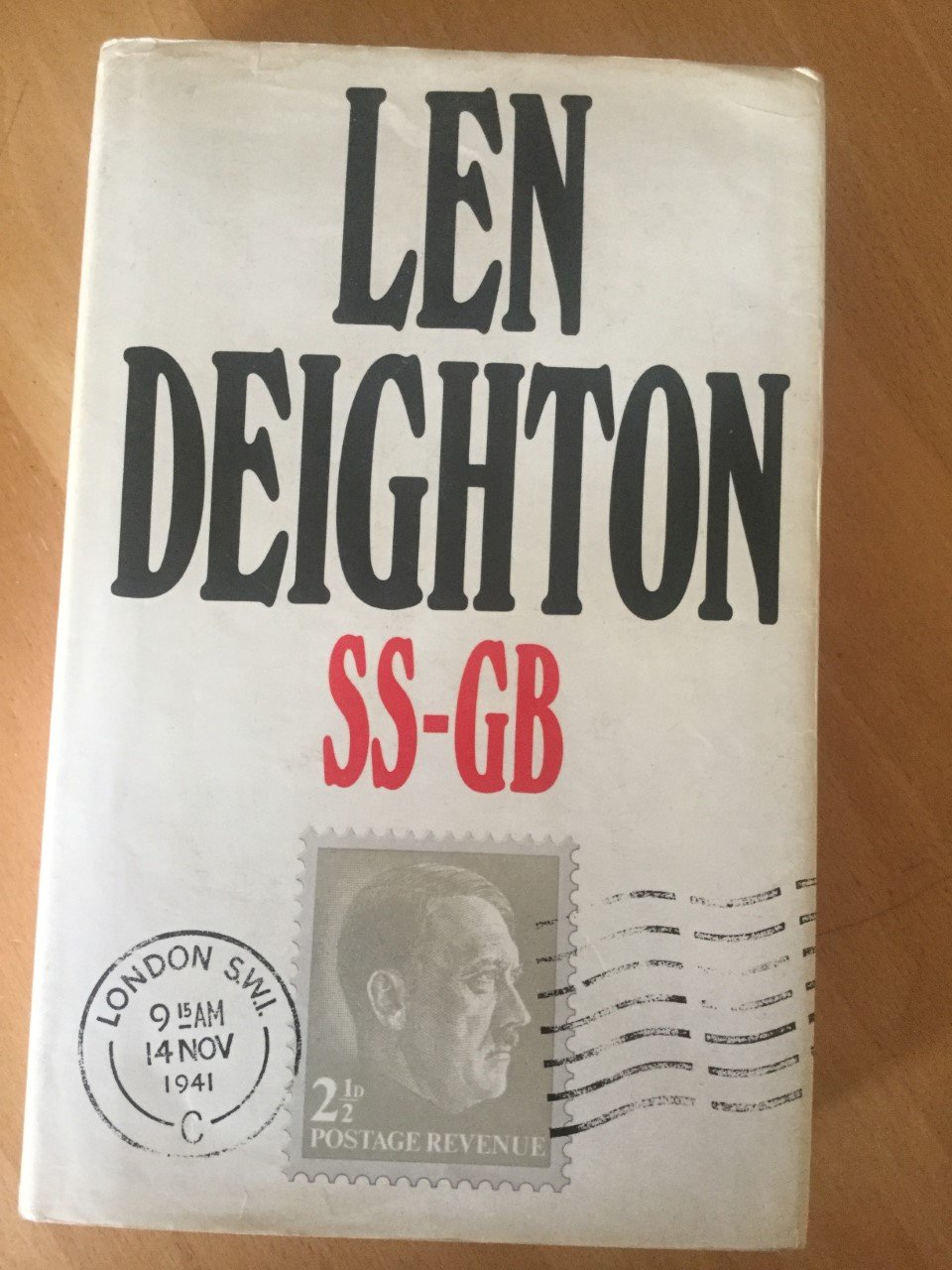
- SS-GB
Len Deightonstandalone novel1978
similar byearly 20th centurypolitical intriguealternate historyscience fictionbig city
It's November 1941 in a Britain that lost the war: Operation Sea Lion succeeded, Churchill was executed, and the King is a prisoner in his own Tower of London. Detective Superintendent Douglas Archer, still working homicide for the Metropolitan Police under German occupation, catches what looks like a routine case, a well-dressed man murdered above an antiques shop, until the body's oddities point toward something far more dangerous than burglary gone wrong. Archer's investigation collides with occupation politics, the British resistance, and rival factions of the SS and the German Army, each wanting the case to go a different way. Len Deighton's alternate-history spy thriller.
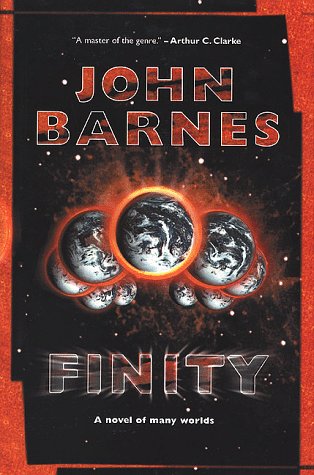
- Finity
John Barnesstandalone novel1999
similar bymysteriousidentityalternate historyscience fiction+1 more
From the flaps of the Tor first edition: "Lyle Peripart's world is coming apart. Up until just a few days ago he was a settled professor at the University of Auckland. The descendant of American expatriates, he's proud of his ancestry and privately doesn't care for the Reichs that have dominated the world since the Axis victory over a century ago. But he's the quiet type, not looking for a fight. Then Lyle is recruited for private industry by the mysterious industrialist Geoffrey Iphwin - and that's when everything stops making sense. His fiancee turns out to be a gun-toting weapons expert who saves him from assassination - and who immediately afterwards, remembers nothing of what she did. But what she does remember is that she grew up in a world with an entirely different history, in which America surrendered to the Soviet Union in the 1970s. Even stranger, several of their friends turn out to have each grown up in worlds with different histories still. Worse, they gradually realize that not one of them has ever talked to anyone inside the continental United States. In fact, just thinking about the United States is hard - as if something is trying to stop them. Something, in fact, seems to be trying to kill each of them. And Geoffrey Iphwin is trying to pull them together - for a quest into what's actually going on."
- The Seven Deaths of Evelyn Hardcastle
Stuart Turtonstandalone novel2018
similar bymysteriousearly 20th centuryidentityscience fiction
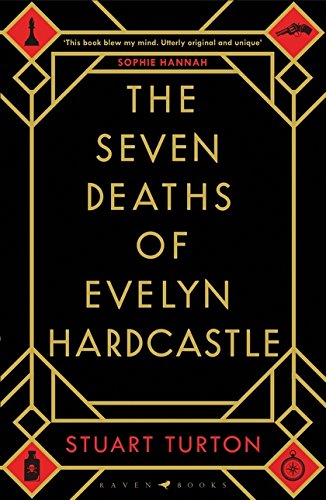
The Seven Deaths of Evelyn Hardcastle is a novel by Stuart Turton which won the Best First Novel prize in the 2018 Costa Book Awards and reached number one on The Saturday Times Bestseller list.
- Ministry of Alchemy
series5 books2016
similar bymysteriouspolitical intriguemiddle eastbig city+1 more
- Joe Golem and the Drowning City
Christopher Golden & Mike Mignolastandalone novel2012
similar bymysteriousearly 20th centuryidentitybig city
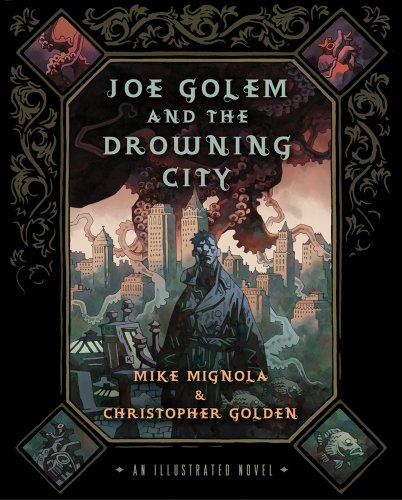
"An illustrated novel from the acclaimed creator of Hellboy--with over 100 illustrations. In 1925, earthquakes and a rising sea level left Lower Manhattan submerged under more than thirty feet of water, so that its residents began to call it The Drowning City. Those unwilling to abandon their homes created a new life on streets turned to canals and in buildings whose first three stories are underwater. Fifty years have passed since then, and The Drowning City is full of scavengers and water rats, poor people trying to eke out an existence, and those too proud or stubborn to be defeated by circumstance. Among them are fourteen year old Molly McHugh and her friend and employer, Felix Orlov. Once upon a time Orlov the Conjuror was a celebrated stage magician, but now he is an old man, a psychic medium, contacting the spirits of the departed for the grieving loved ones left behind. When a seance goes horribly wrong, Felix Orlov is abducted by strange men wearing gas masks and rubber suits. Molly finds herself on the run. Her flight leads her into the company of Simon Hodge, a Victorian detective who's kept himself alive with magic and steampunk mechanics, and the stalwart sidekick, Joe Golem, whose own past and true identity is a mystery to him, but who walks his own dreams as a man of stone and clay, brought to life for the sole purpose of hunting witches"--Provided by publisher. "In 1925, earthquakes and a rising sea level left Lower Manhattan submerged under more than thirty feet of water, so that its residents began to call it The Drowning City. Those unwilling to abandon their homes created a new life on streets turned to canals and in buildings whose first three stories are underwater. Fifty years have passed since then, and The Drowning City is full of scavengers and water rats, poor people trying to eke out an existence, and those too proud or stubborn to be defeated by circumstance. Among them are fourteen year old Molly McHugh and her friend and employer, Felix Orlov. Once upon a time Orlov the Conjuror was a celebrated stage magician, but now he is an old man, a psychic medium, contacting the spirits of the departed for the grieving loved ones left behind. When a seance goes horribly wrong, Felix Orlov is abducted by strange men wearing gas masks and rubber suits. Molly finds herself on the run. Her flight leads her into the company of Simon Hodge, a Victorian detective who's kept himself alive with magic and steampunk mechanics, and the stalwart sidekick, Joe Golem, whose own past and true identity is a mystery to him, but who walks his own dreams as a man of stone and clay, brought to life for the sole purpose of hunting witches"--Provided by publisher.
- The Peculiarities
David Lissstandalone novel2021
similar bymysteriousearly 20th centurypolitical intriguebig city
All of his life, Thomas Thresher has been free of obligation and responsibility, but that is over now. He is a twenty-three-year-old man whose best days are behind him. Thomas's older brother Walter has trapped him in a tedious clerical job at the family bank in London, and Thomas is expected to wed a wealthy young woman in whom he has no interest. But Thomas has more serious problems than those of a disaffected young man. There are irregularities at the bank he cannot explain. His childhood friend has mysteriously turned up dead. Worse, a verdant skin malady has infected him: leaves have begun sprouting on his skin. Thomas must conclude that it is due to the long-rumored Peculiarities. London's famous grey fog has been concealing a rash of unnatural afflictions--and worse, the murderous Elegants. As Thomas grows leafier, the conspiracies surrounding him become more apparent. He cannot determine whom to trust: his own family; his banking co-workers and superiors; the beautiful widow of his companion; the woman he is to marry. Or perhaps a lycanthropic medium; the members of a secret occult society...or even Aleister Crowley.
- The Adjacent
Christopher Prieststandalone novel2013
similar bymysteriousscience fiction+4 more
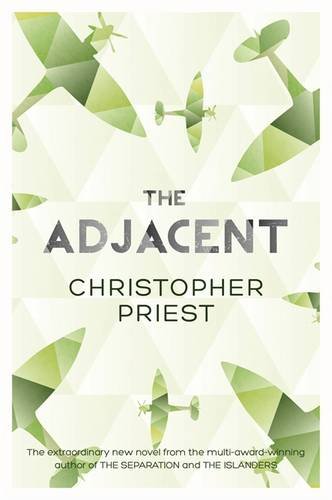
In the near future, Tibor Tarent, a freelance photographer, is recalled from Anatolia to Britain when his wife, an aid worker, is killed--annihilated by a terrifying weapon that reduces its target to a triangular patch of scorched earth. A century earlier, Tommy Trent, a stage magician, is sent to the Western Front on a secret mission to render British reconnaissance aircraft invisible to the enemy. Present day: a theoretical physicist develops a new method of diverting matter, a discovery with devastating consequences that will resonate through time.
- The Mirage
Matt Ruffstandalone novel2012
similar bymysteriouspolitical intriguealternate historyscience fictionmiddle east
The Mirage is an alternate history novel by American writer Matt Ruff, published in 2012 by Harper. The book centers on Mustafa, Samir, and Amal, who are agents of Halal, an organization of the United Arab States, a Middle Eastern version of the United States. The agents discover artifacts of our world and begin a quest to discover the truth.
- Teixcalaan
series2 books2019
similar byidentitypolitical intriguescience fiction+2 more
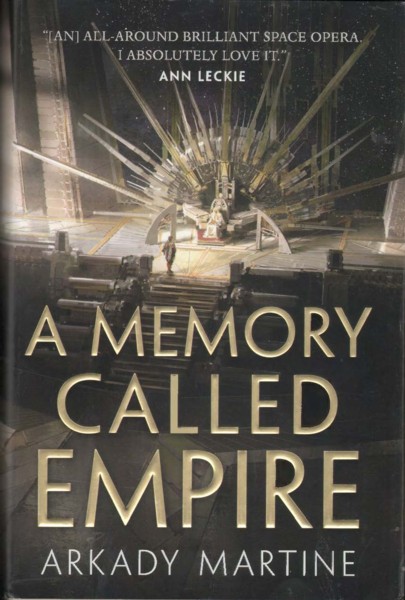
Arkady Martine's space opera duology follows Mahit Dzmare, ambassador from the small, independent Lsel Station, as she arrives in the vast Teixcalaanli Empire to investigate her predecessor's death and finds herself caught up in the empire's own succession crisis. A Memory Called Empire and A Desolation Called Peace pair court intrigue with Mahit's conflicted, outsider fascination with an empire she can't help admiring.
- The Two Georges
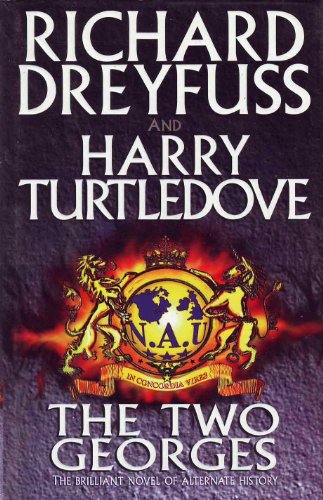
Harry Turtledove & Richard Dreyfussstandalone novel1995
similar bymysteriouspolitical intriguealternate historyscience fiction
Alternate history where Britain keeps the American colonies after George Washington and King George III agree a settlement.
- Free Live Free
Gene Wolfestandalone novel1984
similar bymysteriousidentityscience fictionbig city
Free Live Free is a novel by American writer Gene Wolfe, first published in 1984.
- Time Out of Joint
Philip K. Dickstandalone novel1959
similar bymysteriousidentityscience fiction
Time Out of Joint is a science fiction novel by American writer Philip K. Dick, first published in novel form in the United States in 1959. An abridged version was also serialised in the British science fiction magazine New Worlds Science Fiction in several installments from December 1959 to February 1960.
- Time and Again
series2 books1970
completed
similar bymysteriousscience fictionbig city+1 more
Time and Again (1970) follows Si Morley, a commercial artist recruited into a secret government project that sends him back to Manhattan in 1882, where he falls for a woman named Julia while weighing whether he can, or should, alter the past; Jack Finney illustrates the story with period photographs and engravings. The sequel, From Time to Time (1995), continues Si's story with a further trip into the past.
- Departure
A. G. Riddlestandalone novel2014
similar bymysteriouspolitical intriguescience fiction+1 more
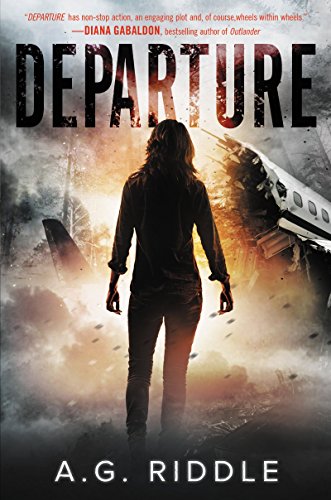
"The world's past and future rests in the hands of five unwitting strangers in this definitive edition of A. G. Riddle's time-traveling, mind-bending speculative thriller. En route to London from New York, Flight 305 suddenly loses power and crash-lands in the English countryside, plunging a group of strangers into a mysterious adventure that will have repercussions for all of humankind.Struggling to stay alive, the survivors soon realize that the world they've crashed in is very different from the one they left. But where are they? Why are they here? And how will they get back home? Five passengers seem to hold clues about what's really going on: writer Harper Lane, venture capitalist Nick Stone, German genetic researcher Sabrina Schroeder, computer scientist Yul Tan, and Grayson Shaw, the son of a billionaire philanthropist.As more facts about the crash emerge, it becomes clear that some in this group know more than they're letting on--answers that will lead Harper and Nick to uncover a far-reaching conspiracy involving their own lives. As they begin to piece together the truth, they discover they have the power to change the future and the past--to save our world. or end it. A wildly inventive and propulsive adventure full of hairpin twists, Departure is a thrilling tale that weaves together power, ambition, fate, memory, and love, from a bold and visionary talent"--