More like Elemental
anchored on:science fictiondystopianorth americafar futureyoung adultcoming of age+2 more
but
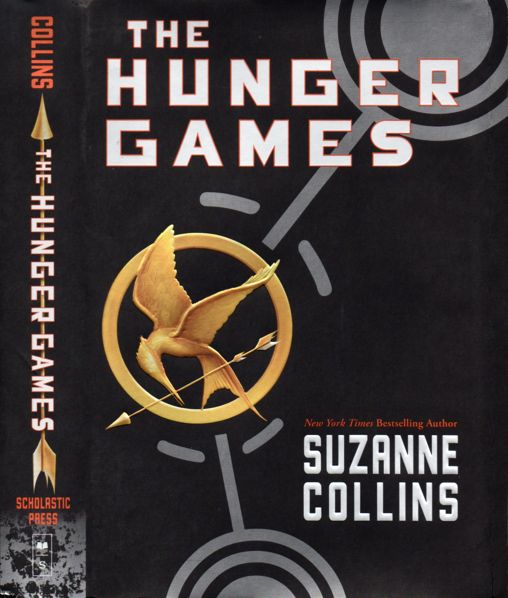
- The Hunger Games
series3 books2008
part of The Hunger Games Universe
similar bynorth americafar futurescience fictiondystopiatenseyoung adultrebellion and revolution+1 more
The Hunger Games is a series of young adult dystopian novels written by American author Suzanne Collins. The series consists of a trilogy that follows teenage protagonist Katniss Everdeen, as well as two prequels. The Hunger Games universe is a dystopia set in Panem, a post-apocalyptic North American country consisting of the wealthy Capitol and 12 districts in varying states of poverty. As punishment for rebellion, the Capitol hosts an annual battle royale competition called The Hunger Games. Each of the 12 districts must send two children between the ages of 12 and 18 to participate, and the last surviving child is dubbed the victor.
- The Hunger Games Universe
universe5 books2008
Start hereThe Hunger Games · Start here
similar byfar futurenorth americadystopiascience fictiontenseyoung adultrebellion and revolution+1 more
Panem, they call it now — a nation raised on the drowned bones of North America, a glittering Capitol ringed by twelve districts it once starved into obedience. Every year the Capitol collects its debt in children: two tributes from each district, drawn by lottery, dropped into an engineered arena, and made to kill one another on live television while the whole country is required to watch. This is the Hunger Games — entertainment, punishment, and government at once. Suzanne Collins tells it in a compact, unified body of work. The founding trilogy — The Hunger Games, Catching Fire, and Mockingjay — follows Katniss Everdeen, a girl from the coal-mining District 12 who volunteers in her sister's place and becomes something the Capitol never scripted. Two prequels reach back into the same machinery: The Ballad of Songbirds and Snakes traces a young Coriolanus Snow long before he is President, and Sunrise on the Reaping returns to District 12 a generation ahead of Katniss. Begin with the trilogy, in order — it is Katniss's voice, close and present-tense, that makes Panem breathe, and the prequels land hardest once you know how her story ends. Beneath the spectacle sits one steady, uncomfortable question: who profits when we agree to look away.
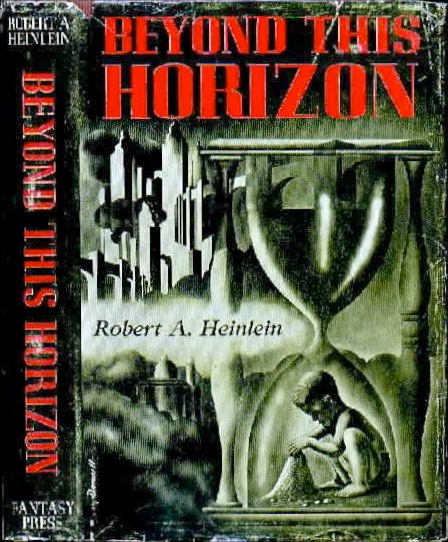
- Beyond This Horizon
Robert A. Heinleinstandalone novel1948
similar byfar futurescience fictionnorth americadystopiarebellion and revolution+3 more
From the front flap of a 2001 Baen reprint: "Utopia has been achieved. For centuries, disease, hunger, poverty, and war have been things found only in the history tapes. And applied genetics has given men and women the bodies of athletes and a lifespan of over a century. They should all have been very happy... But Hamilton Felix is bored. And he is the culmination of a star line, each of his last thirty ancestors chosen for superior genes. Hamilton is, as far as genetics can produce one, the ultimate man. And this ultimate man can see no reason why the human race should survive, and has no intention of continuing the pointless comedy. However, Hamilton's life is about to become less boring. A secret cabal of revolutionaries who find utopia not just boring, but desperately in need of leaders who know just What Needs to be Done, are planning to revolt and put themselves in charge. Knowing of Hamilton's disenchantment with the modern world, they have recruited him to join their Glorious Revolution. Big mistake! The revolutionaries are about to find out that recruiting a superman was definitely not a good idea..."
- Imperial Galaxy
series2 books2012
similar byadventurousfar futurescience fictioncoming of ageidentityyoung adult+1 more
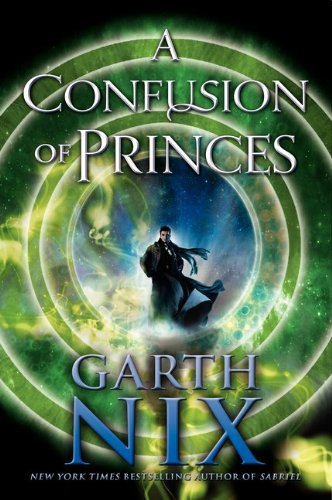
Prince Khemri has spent his life as one of ten thousand princes bred and trained by a sprawling galactic empire, expecting eventual rule -- until he learns just how disposable princes actually are, and how routinely they're assassinated by their own siblings. Garth Nix's A Confusion of Princes follows Khemri through the empire's ruthless military, its secret intelligence service, and a deadly, decades-long competition to determine who might one day take the throne. It's a single, self-contained space opera rather than an ongoing series.
- Tunnel in the Sky
Robert A. Heinleinstandalone novel1955
similar byadventurousfar futurescience fictioncoming of agetenseyoung adult
As the final test of a survivalist/explorer class, teenagers are dumped on an alien planet to use their skills while awaiting pickup. But something has gone wrong, and they find they are on their own.
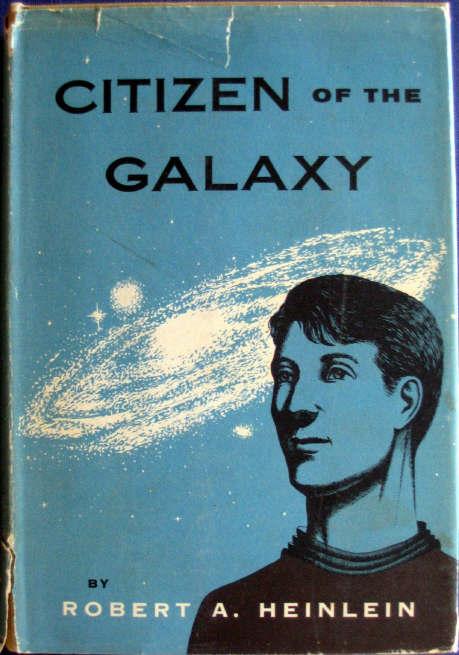
- Citizen of the Galaxy
Robert A. Heinleinstandalone novel1957
similar byadventurousfar futurescience fictioncoming of ageidentity+1 more
On a planet far distant from Earth, a lame beggar buys a young boy slave who has forgotten his origins. The beggar is more than he seems, and gives the boy an extensive education while employing him as an observer of activity in their city. Years later, the beggar is captured by the government, and the youth must escape the planet.
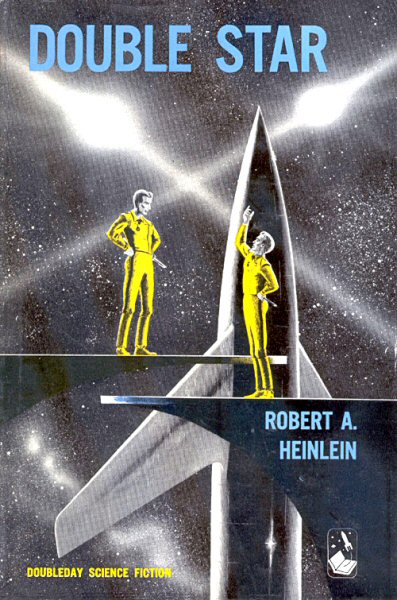
- Double Star
Robert A. Heinleinstandalone novel1956
similar byadventurousfar futurescience fictionidentity+1 more
Lorenzo Smythe, the excellent yet unemployed actor, meets Dak Broadbent in a bar. Broadbent hires Lorenzo for an unspecified role, and hustles him onto a rocket ship. Broadbent turns out to be an assistant to the famous interplanetary politician and leader of the Expansionist party: John J. Bonforte. Bonforte, however, has been kidnapped by the political opposition on Mars, and due to Lorenzo's physical similarity to Bonforte, his staff wants Lorenzo to impersonate the politician for an important Martian ceremony.
- Red Planet
Robert A. Heinleinstandalone novel1949
similar byadventurousfar futurescience fictioncoming of age+1 more
A boy colonist on Mars takes his bouncing ball Martian pet with him to boarding school, but the new Headmaster is a controlling tyrant. Things get worse when he discovers a plot that will jeopardize all of the colonists.
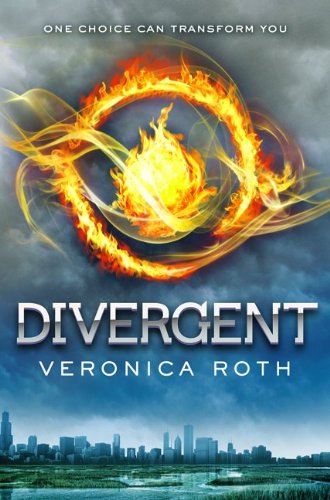
- Divergent
series10 books2011
similar bynorth americadystopiascience fictiontenseidentityyoung adult+2 more
Divergent, also known as The Divergent Series, is a series of young adult dystopian novels by American novelist Veronica Roth set in a post-apocalyptic dystopian Chicago. The trilogy consists of Divergent (2011), Insurgent (2012), and Allegiant (2013). A related book, Four (2014), presents a series of short stories told from the perspective of one of the trilogy's characters, the male love interest Tobias. A later short story, We Can Be Mended (2018), serves as an epilogue five years after the events of the trilogy, again from Tobias/Four's perspective.
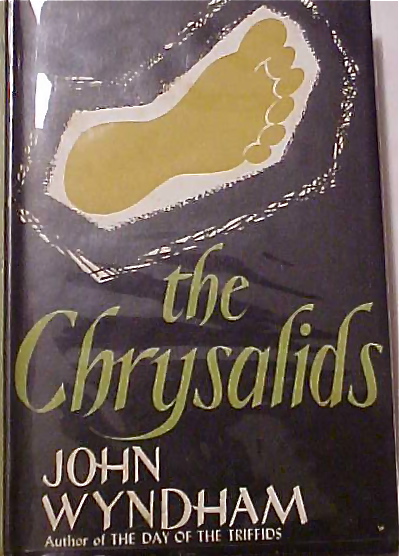
- The Chrysalids
John Wyndhamstandalone novel1955
similar byfar futurescience fictioncoming of agetensepsychic powers+2 more
The Chrysalids is a science fiction novel by British writer John Wyndham, first published in 1955 by Michael Joseph. It is the least typical of Wyndham's major novels, but regarded by some as his best. An early manuscript version was entitled Time for a Change.
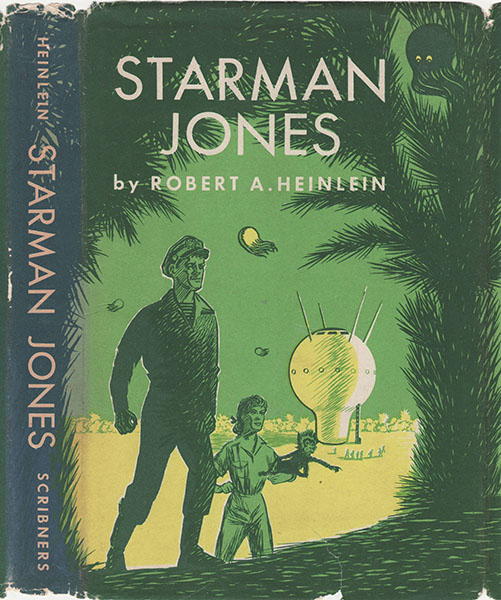
- Starman Jones
Robert A. Heinleinstandalone novel1953
similar byadventurousfar futurescience fictioncoming of ageyoung adult
Starman Jones, a 1953 science fiction novel by Robert A. Heinlein, features a farm boy who wants to go to the stars. Charles Scribner's Sons published the book as part of the Heinlein juveniles series.
- Chaos Walking
series5 books2008
similar byfar futurescience fictiondystopiatenseyoung adult+3 more
Chaos Walking is a young adult science fiction series written by American-British novelist Patrick Ness. It is set in a dystopian world where all living creatures can hear each other's thoughts in a stream of images, words, and sounds called Noise. The series is named after a line in the first book: "The Noise is a man unfiltered, and without a filter, a man is just chaos walking." The series consists of a trilogy of novels and three short stories.
- Ready Player One
series3 books2011
similar byadventurousscience fictiondystopia+4 more
Ernest Cline's Ready Player One (2011) is set in a near-future dystopia where much of humanity escapes into the OASIS, a vast virtual-reality universe, and follows teenager Wade Watts as he chases an Easter egg hidden by the OASIS's late creator in a puzzle-based hunt worth a fortune. The 2020 sequel, Ready Player Two, picks up after Wade has gained control of the OASIS and follows him and his friends into a new quest built around a brain-computer interface the creator left behind.
- The Moon Is a Harsh Mistress
Robert A. Heinleinstandalone novel1966
similar byadventurousfar futurescience fictionrebellion and revolution+1 more
A technician discovers that the massive computer that operates everything on Luna (a prison colony) has become self-aware. He befriends it, but when he accompanied a beautiful girl to a dissident meeting, he encounters people who want to throw off the yoke of their Earth rulers.
- Friday
Robert A. Heinleinstandalone novel1982
similar byadventurousnorth americascience fictionidentitytense
Friday is a 1982 science fiction novel by American writer Robert A. Heinlein. It is the story of a female "artificial person", the eponymous Friday, genetically engineered to be stronger, faster, smarter, and generally better than normal humans. Artificial humans are widely resented, and much of the story deals with Friday's struggle both against prejudice and to conceal her enhanced attributes from other humans. The story is set in a Balkanized 21st century, in which the nations of the North American continent have been split up into a number of smaller states.
- The House of the Scorpion
series2 books2002
similar byscience fictiondystopiacoming of agetenseyoung adult+3 more
Matt is a clone of El Patron, the ancient drug lord who rules Opium, a narco-state carved out of the border between the U.S. and a future Mexico, created and raised solely to supply spare organs for the man he was copied from. Nancy Farmer's The House of the Scorpion follows Matt's growing awareness of what he is and what's expected of him, and his fight to be treated as human once El Patron dies. The sequel, The Lord of Opium, picks up with Matt unexpectedly left in charge of the whole corrupt nation.
- Wild Jack
John Christopherstandalone novel1974
similar byadventurousfar futurescience fictiondystopiacoming of ageyoung adult
Wild Jack is a 1974 young adult science fiction novel written by the English prize-winning author John Christopher. Set in twenty-third century England, the plot concerns the young aristocrat Clive Anderson, who lives in decadent isolation within one of many walled-in hierarchal city-states, whose walls keep out the dangerous wilderness of the Outlands, and the barbaric savages known to hide there. When Clive is falsely accused of questioning the status quo, he is sent off to a brutal prison island. Faced with hunger and cruelty, he begins to truly question the good of his world.
- Elemental (Antony John)
series3 books2012
similar bynorth americascience fictiondystopiatenseyoung adultpsychic powers+6 more
- Reckoners
series6 books2013
similar bynorth americaadventurousscience fictiontenseyoung adult+2 more
The Reckoners is a series of young adult superhero novels written by American author Brandon Sanderson. The series consists of Steelheart (2013), Firefight (2015), Calamity (2016) and Lux (2021). The series depicts a post-apocalyptic world in which the appearance of an orbiting cosmic phenomenon known as Calamity has given random people superhuman powers in apparent defiance of known physical laws, turning them into "Epics". These Epics prey upon or enslave the rest of humanity, causing the collapse of traditional governments. One young man orphaned by a High Epic joins a group that is killing Epics.
- Have Space Suit - Will Travel
Robert A. Heinleinstandalone novel1958
similar byadventurousscience fictionnorth americatenseyoung adult+1 more
From the back cover of the Del Rey 9th printing: "Skyjacked - Everything happened at once. One minute Kip Russell was walking about in his own backyard, testing out an old space suit and dreaming about going to the moon - and the next he was out cold and the captive of an insidious space pirate. The whole thing seemed like a very bad dream until he discovered he wasn't the only prisoner on board. Then the reality of the situation became inescapable. He - along with the daughter of a world-renowned scientist and a beautiful creature from an alien planet - had been skyjacked by a monstrous extraterrestrial and they were on their way to the Moon... a journey toward a fate worse than death!"
- Legend (Marie Lu)
series5 books2011
similar bynorth americadystopiascience fictiontenseyoung adultrebellion and revolution+1 more
Marie Lu's Legend follows two teenagers from opposite ends of a divided, war-torn future society — one a celebrated young military prodigy, the other a hunted fugitive — whose paths collide and gradually complicate what each believed about the system that shaped them. The story continues through Prodigy and Champion, with a fourth book, Rebel, added years after the original trilogy closed; Lu has cited the film Les Misérables among her inspirations for its shape.
- This Perfect Day
Ira Levinstandalone novel1970
similar byfar futurescience fictiondystopiaidentitytenserebellion and revolution
This Perfect Day is a science fiction novel by American writer Ira Levin, about a technocratic dystopia. Levin won a Prometheus Award in 1992 for this novel. This Perfect Day is one of two Levin novels yet to be adapted to film.
- Pax / Astra
series2 books1954
completed
similar byadventurousfar futurescience fictiontense+1 more
Andre Norton's The Stars Are Ours! (1954) and its sequel Star Born (1957) follow a group of scientists and their families who flee a repressive future Earth to colonize a distant world they name Astra, and then the next generation, who must contend with that world's original inhabitants. Star Flight appears to be a later omnibus or reissue rather than a third original novel.
- Lunar Chronicles
series15 books2011
similar byfar futureadventurousscience fictionyoung adult+1 more
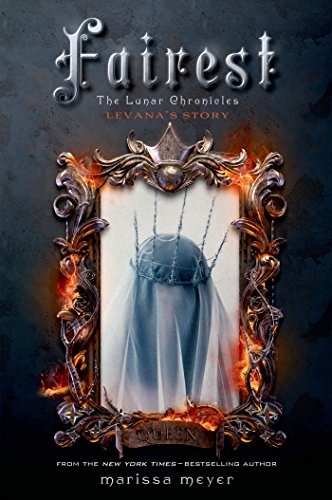
The Lunar Chronicles is a series of four young adult science fiction novels, a novella, and a short story collection written by American author Marissa Meyer and published by Feiwel & Friends. Each book entails a science fictional twist on a classic fairy tale, including "Cinderella", "Little Red Riding Hood", "Rapunzel", and "Snow White". Set in a futuristic world inhabited by various species and creatures, tensions are rising between Earth and its former colony Luna, while both attempt to manage an ongoing pandemic.