More like Embedded
anchored on:science fictionother star systemsfar futuretensemilitary science fictionspace colonization+2 more
but
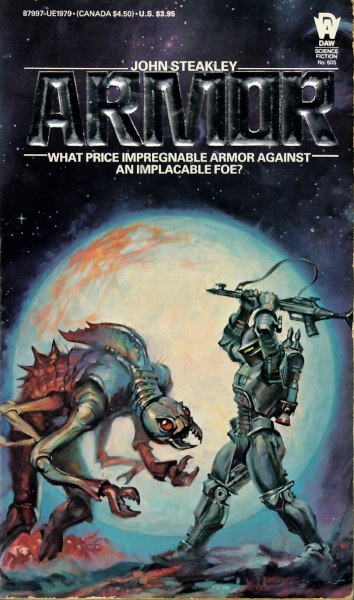
- Armor
John Steakleystandalone novel1984
similar byother star systemsfar futurescience fictiontensewarmilitary science fictiondark
Armor is a military science fiction novel by John Steakley. It features the military use of exoskeletons and insect-like alien enemies but concentrates on the psychological effects of violence on human beings.
- Old Man's War
series16 books2005
similar byfar futurescience fictionother star systemsmilitary science fictionwar+3 more
The Old Man's War series is a series of science fiction novels by John Scalzi. The first book in the series, Old Man's War, was first published in 2005 by Tor Books, and was nominated for the Hugo Award for Best Novel in 2006. In 2026 it was a finalist for the Hugo Award for Best Series.
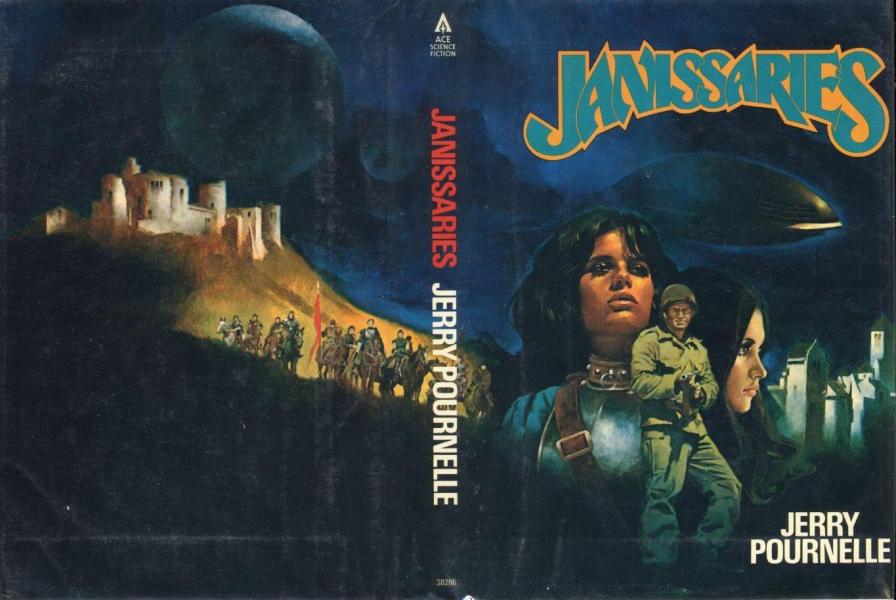
- Janissaries
series4 books1979
similar byother star systemsfar futurescience fictiontensewarmilitary science fiction
Janissaries are an American series of military and political-based science fiction novels are set in an interstellar confederation of races, in which humans are a slave race entrusted with military affairs and law enforcement. They were written by Jerry Pournelle, with Roland J. Green co-authoring the second two books.
- Honor Harrington
series14 books1993
part of Honorverse
similar byfar futurescience fictiontensewarmilitary science fictionother star systems
David Weber's Honor Harrington novels follow the title character's rise through the Manticoran navy in the 'Honorverse,' a space-opera setting built around Age-of-Sail-style naval combat, interstellar politics and a decades-long war between rival star nations. Beginning with On Basilisk Station, the core series runs to fourteen books, alongside spin-off subseries, prequels and shared-world anthologies also set in the Honorverse. It's one of the longest-running modern military science fiction series, published by Baen.
- Starship Troopers
Robert A. Heinleinstandalone novel1959
similar byfar futurewarother star systemsscience fictionmilitary science fictionfirst person
Starship Troopers is a military science fiction novel by American writer Robert A. Heinlein. Written in a few weeks in reaction to the US suspending nuclear tests, the story was first published as a two-part serial in The Magazine of Fantasy & Science Fiction as Starship Soldier, and published as a book by G. P. Putnam's Sons on November 5, 1959.
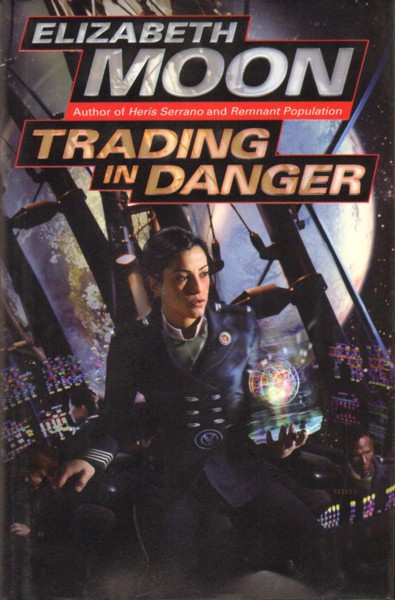
- Vatta's War
series6 books2003
part of Vatta
similar byfar futurescience fictiontenseother star systemswarmilitary science fiction
Vatta's War is a science fiction series by American writer Elizabeth Moon, comprising five books: Trading in Danger (2003), Marque and Reprisal, Engaging the Enemy (2006), Command Decision (2007), and Victory Conditions (2008). They have been characterized as military science fiction similar in style to the works of Lois McMaster Bujold, David Weber and Walter Jon Williams.
- Dune
series20 books1963
part of Dune Universe
similar byfar futureother star systemsscience fiction+2 more
Frank Herbert's Dune Chronicles opens with 1965's Dune, set on the desert planet Arrakis where House Atreides takes control of the only source of the vital spice melange and young Paul Atreides is pulled into a struggle over its politics and religion. Herbert carried the story forward across five further novels — Dune Messiah, Children of Dune, God Emperor of Dune, Heretics of Dune, and Chapterhouse: Dune — following Paul's line over the following millennia, before Brian Herbert and Kevin J. Anderson later extended the saga. Many other editions of these six novels are omnibus and box-set repackagings rather than separate stories.
- Freehold
William C. Dietzstandalone novel1987
similar byother star systemsfar futurescience fictiontensespace colonizationwarmilitary science fiction
Colonel Stell and his band of mercenaries yearn for a place to call home. To them Freehold is like a bright diamond in the vast universe. But its desert conditions, economic instability, social disarray, and political turmoil render the planet perfect for takeover. Willing to fight anything that stands in their way, Colonel Stell and his small crew contend with all who seek to dominate their planet, even vast interstellar empires. Their success will not be determined by their size but by their resolution to create creating a home for themselves.
- Dune Universe
universe78 books1963
Start hereDune · Start here
similar byfar futurescience fictionother star systems+2 more
Arrakis. Dune. The desert planet, where empire runs on a single substance: the spice melange, which folds space, prolongs life, and unlocks prescience, and which exists nowhere else in the known universe. Frank Herbert's saga is a meditation dressed as an adventure — feudal houses and a secret sisterhood, engineered messiahs and the patient ecology of a world without water, all turning on the terrible gravity of who commands the spice. It reads like scripture and schemes like a war room, ten thousand years hence, among people who have outlawed the thinking machine and made instruments of themselves instead. At its heart stand Herbert's original six — Dune, Dune Messiah, Children of Dune, God Emperor of Dune, Heretics of Dune, Chapterhouse: Dune — a single deepening arc across millennia, arguing the whole way between prophecy and free will. Around that spine his son Brian Herbert and Kevin J. Anderson have raised a vast prequel architecture: Prelude to Dune, tracing the great houses a generation before Paul; Legends of Dune, reaching back to the crusade that broke the machines; the Schools of Dune cycle on the founding of Bene Gesserit, Mentat, and Navigator; the Caladan Trilogy and Heroes of Dune filling years the originals left in shadow. Many hands, dozens of volumes, one desert. What sets Dune apart is its refusal of the simple: religion is manufactured, heroes are hazards, and the sand itself — worm, water, ecology — acts as a political power. Begin where the universe did, with Frank Herbert's Dune (1965), and read the original six in order; you need nothing else to feel the full weight. The prequels are a country to explore afterward, taken by era. Beginnings are delicate times.
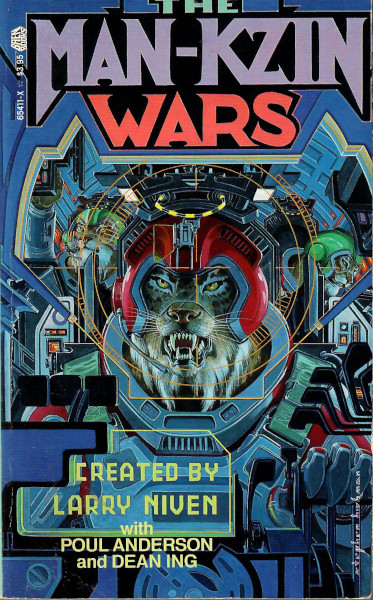
- Man-Kzin Wars
series84 books1986
part of Known Space
similar byfar futurescience fictiontensewarother star systemsmilitary science fiction
The Man–Kzin Wars is the name of a series of military science fiction anthologies as well as the name of the first book in the series. The short stories detail the eponymous conflicts between mankind and the Kzinti, set in Larry Niven's Known Space universe. However, Niven himself has written only a small number of the stories; most were written by other science fiction writers, as Niven opened this part of the Known Space to collaboration in the form of a shared universe. The cover art for the books in the series is created by Stephen Hickman.
- Hero!
Dave Duncanstandalone novel1991
similar byother star systemsfar futuretensespace colonizationwarscience fictionmilitary science fiction
Space opera at its finest and most action-filled, from the bestselling author of fantasy quests, epic tales and swashbuckling adventures.Vaun, born a peasant in the stinking mud flats of Ult, a thriving colony planet, claws his way to survival and fame by becoming the toughest young officer in the Space Patrol. A veteran of the brutal training academy, he seizes opportunities as they arise, leading the first ship out against a surprise attack by the mysterious Brotherhood. He returns to a hero's welcome as the Brotherhood ship falls to the surface of his home planet in shattered pieces.The Brotherhood is elsewhere unstoppable, though, as neighboring plants, one by one, fall silent, conquered. And then, the Patrol detects a huge spacecraft launched from one of the now-silent worlds and headed for Ult. Facing a challenge greater than he can truly hope to overcome, Vaun nonetheless sets out to save Ult for a second time...
- Conquerors
series3 books1994
similar byother star systemsfar futuretensescience fictionwarmilitary science fiction
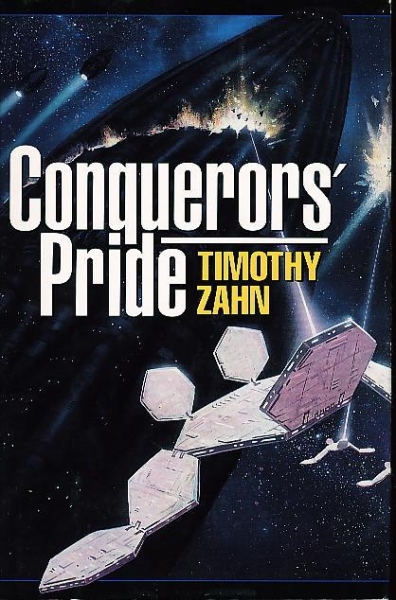
Conquerors is Timothy Zahn's military science-fiction trilogy following human fighter pilots and their commanders through an interstellar war that neither side fully understands, told across Conquerors' Pride, Conquerors' Heritage, and Conquerors' Legacy. Zahn alternates perspective between the human and alien chains of command, using the shifting viewpoints to slowly unpick why the conflict started in the first place. It's contact-and-conflict SF built around miscommunication rather than straightforward invasion.
- Forbidden Borders
series3 books1991
similar byfar futuretensescience fictionother star systemswarmilitary science fiction+1 more
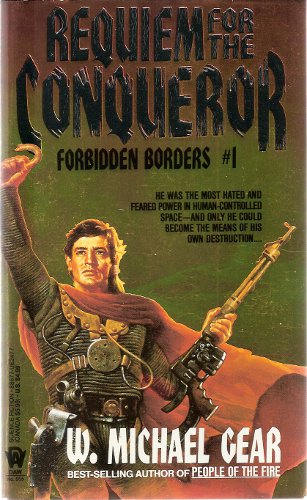
William Michael Gear, better known as W. Michael Gear, is an American writer and archaeologist. He is the author of North America's Forgotten Past series, co-written with his wife Kathleen O'Neal Gear. His novels have been published in 29 languages.
- Parafaith
series2 books1996
similar byfar futurescience fictionother star systemstensewarmilitary science fiction
- Safehold
series11 books2006
similar byother star systemsfar futurescience fictiontensewar+2 more
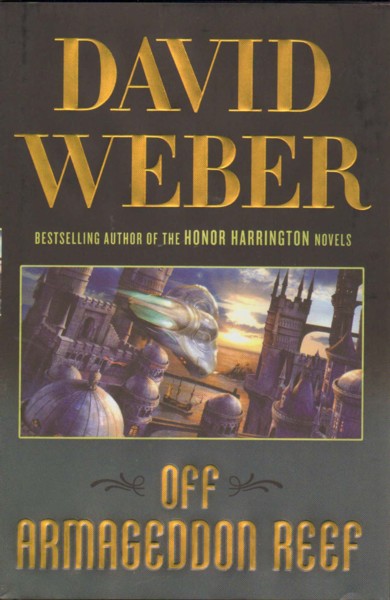
Safehold is a science fiction book series by David Weber, currently consisting of ten titles, the latest released in January 2019. The series is mostly set around the 31st century, on a distant world dubbed "Safehold" where a group of humans are in hiding from the Gbaba, an alien enemy responsible for the end of all other human civilization.
- Xan-Sskarn War
series1 book2010
similar bytensefar futurescience fictionwarother star systemsmilitary science fictiondark
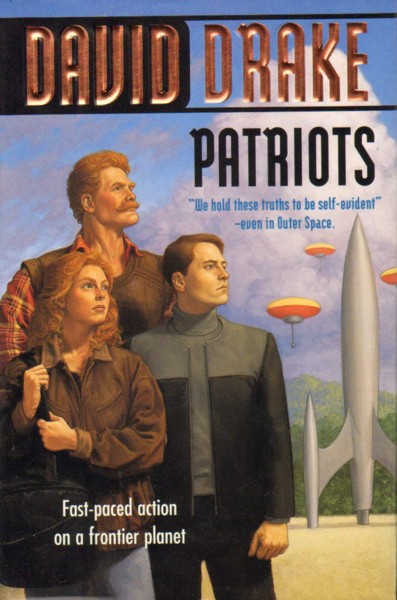
- Patriots
David Drakestandalone novel1996
similar byother star systemsfar futurescience fictionspace colonizationwarmilitary science fiction+1 more
In the future, barring our self destruction or reducing ourselves to the stone age level, mankind's only avenue to expand will be to do so on other planets that will support human life. The reasons for man to do so are as old as any migrations to new lands that have occured in our history. The greed of the filthy rich and the stupidity of grasping governments is also the same - as we can see from our own history. History is something Master Author David Drake is very good at. Many would be surprised at how he researches it for his books, what they shouldn't be surprised about is the outstanding tales updated for the future that results from his efforts. This tale is fast paced action combined with the good and ill of colonization of the planet Greenwood and the battles against the rich and powerful who would ruin its beauty and the way of life of its inhabitants. Once you start reading, you may have some difficulty in stopping before you finish this well written book.
- Forever War
series10 books1972
similar byscience fictionfar futuremilitary science fiction+4 more
Joe Haldeman's The Forever War (1974) follows a soldier conscripted into a centuries-long interstellar war against the alien Taurans, using relativistic space travel so that months spent in transit correspond to years or decades passing back on Earth. Haldeman later returned to the same conflict in Forever Peace (1997), a thematically connected but separate story, and Forever Free (1999), a direct sequel set years after the original war's end. The first novel won the Hugo, Nebula, and Locus awards and is considered a foundational work of military science fiction.
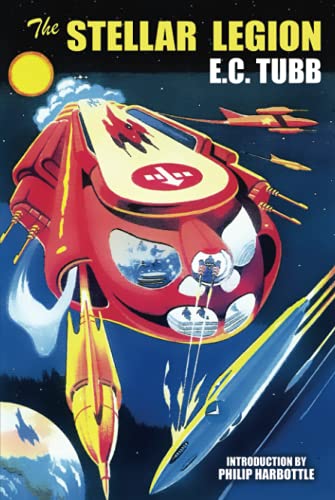
- The Stellar Legion
E. C. Tubbstandalone novel1954
similar byother star systemsfar futurescience fictiontensewarmilitary science fictiondark
"Wilson, a waif of the war of unity, spends his boyhood in forced labour. When he is sent to the penal world of Stellar, he survives, winning promotion in the Stellar Legion, a brutal military system. Laurance, Director of the Federation of Man, wants to dissolve the Legion. He pits his wits against its commander, Hogarth. He's terrified lest the human wolves, trained and hardened in blood and terror, should ravage the defenceless galaxy ..."--Publisher description.
- Naked to the Stars
Gordon R. Dicksonstandalone novel1961
similar byother star systemsfar futurescience fictiontensewarmilitary science fiction
The subject of the cosmic soldier has become a matter of concern for the science fiction reader. With the award-winning success of The Forever War, and with the great classic novels of Gordon R. Dickson's genetically bred mercenaries, the Dorsai, it is clear that the role of a fighter in a universe of expanding technology and competing alien intelligences is on science fiction's orders of the day. Gordon R. Dickson has been the master of that field, and his novel, Naked to the Stars, is one of his masterpieces. Long out of print, it is the story of a star soldier who, during a battle against a non-human foe on a far planet, somehow lost sixteen hours from his memory. Discharged for the potential danger those lost hours might have programmed, Cal Truant made it his fixation to uncover the mystery buried in his mind - to find out what had happened in those missing hours - and block the peril it might present to his fellow troopers, to his war command, and to the planet for which they fought - Earth.
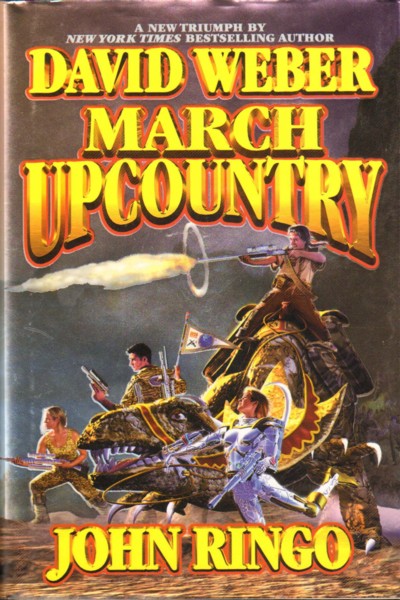
- Empire of Man
series4 books2001
similar byother star systemsfar futurescience fictionwartensemilitary science fiction
The Empire of Man is a series of science fiction books by David Weber and John Ringo published by Baen Books. It combines elements of space opera and military science fiction.
- Berserker (Fred Saberhagen)
series59 books1963
similar byfar futurescience fictiontenseother star systemswar+2 more
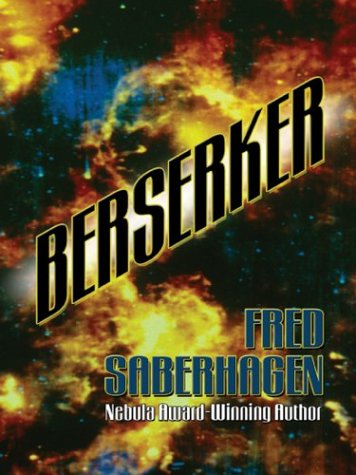
The Berserker series is a series of space opera science fiction short stories and novels by Fred Saberhagen, in which robotic self-replicating machines strive to destroy all life.
- Nicholas Seafort
series7 books1994
completed
similar byscience fictionfar futuretensewarmilitary science fictionfirst person+2 more
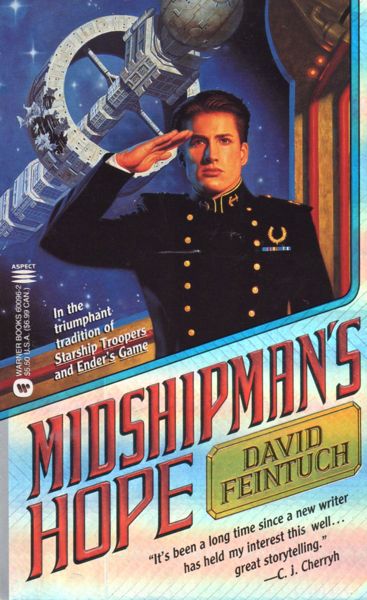
The Seafort Saga is a series of science fiction novels written by American author David Feintuch. The novels are set from the late 22nd century to the mid-23rd century and relate the adventures of Nicholas Seafort, an officer in the (fictional) UNNS| United Nations Naval Service. The series is a collection of personal accounts, usually from the perspective of Nicholas Seafort, describing Seafort's adventures, beginning as a lowly midshipman, to the elected leader of earth, and finally to the captain of the UNNS flagship Olympiad. Although most books in the series are told from a single perspective, usually Seafort's, Voices of Hope is a collection of accounts from several sources: Seafort's son, PT, the son of a friend of Seafort's, and a transient boy named Pook. Additionally, Children of Hope is narrated by Randy Carr, the son of a close friend of Seafort.
- Death's Head (David Gunn)
series3 books2007
similar byfar futurescience fictiontensewarmilitary science fictiondark+1 more
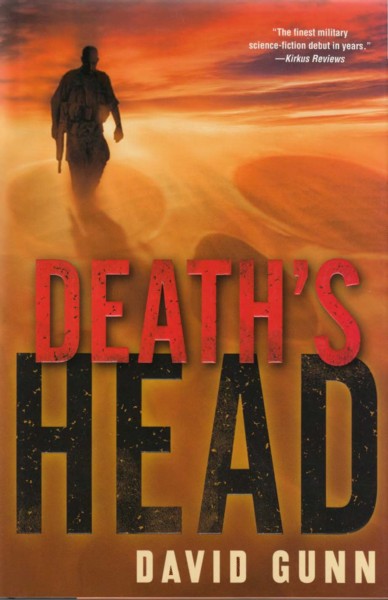
Death's Head is a noir military science fiction series written by David Gunn. The series follows the antihero Sven Tveskoeg, an ex-sergeant of The Legion, in service to the Octovian Empire.