Loreful
HomeDiscover
Search series, authors…⌘K
Loreful

Reading orders for SF/F series and shared universes — with your place kept in every one.

Explore

UniversesSeriesWorksAuthorsAtlas

Help

FAQAboutSite map

Account & legal

Sign inCreate accountPrivacyTerms

Data

Built on ISFDB, Wikipedia, Wikidata and Open Library. Curated reading orders carry their reasoning on the page; the rest follow publication order. Data sources & licenses

© Loreful · data: ISFDB · CC BY

More like Empire Builders

anchored on:science fictionhard science fictionspace colonizationnear futurepolitical intrigueecological collapse+3 more

but

Mood

The mood the book leaves you in.

  • The reading experience is propelled by journeys, exploration, and physical risk; excitement and forward momentum dominate over dread or introspection.
  • Joy and loss are deliberately mixed; the resolution grants characters something real while taking something else away, leaving warmth and sorrow together.
  • The book demands work from the reader — dense prose, difficult structure, unfamiliar ideas, or morally uncomfortable material — as part of its intended effect.
  • Grim events, cruelty, or despair dominate the atmosphere, and the book does not soften them with comfort or comic relief.
  • The atmosphere is quietly unsettling — wrongness, unease, and the uncanny pervade the book without necessarily escalating into overt horror.
  • The book is built to move the reader; character feeling is foregrounded and major scenes aim at a strong emotional response.
  • Humor is a primary aim and the prose plays for laughs — comic situations, wit, or dialogue produce sustained comedy, not occasional levity.
  • The book insists that things can improve; effort and decency are shown to matter, and the arc bends toward better outcomes even through hardship.
  • The book teaches as it goes — real facts, history, science, or craft are conveyed in enough depth that learning is part of the reading experience.
  • The book is designed to uplift and motivate, presenting perseverance or achievement in a way that invites the reader to aspire or act.
  • The overall register is cheerful and easygoing; stakes are kept gentle and the book avoids dwelling on pain or dread.
  • Withheld information drives the experience; the book sustains enigmas and secrets the reader wants resolved, whatever its genre.
  • The book is contemplative and inward-looking, giving more weight to thought, memory, and meaning than to external events.
  • The book works as comfort reading — low tension, a soothing pace, and an atmosphere the reader can unwind in.
  • Grief, loss, or melancholy set the dominant register, and the book lets sorrow stand rather than resolving it into comfort.
  • Sustained suspense is the point; the book keeps the reader braced for what happens next through danger, pressure, or impending revelation.
  • Playful invention and charm define the register — fanciful conceits, light absurdity, and a narration that delights in its own oddity.

About

What the story runs on.

  • Stories in which a machine intelligence — an AI, computer mind, or sentient program — is a central character or the story's driving problem.
  • Stories in which extraterrestrial beings are central — as characters, cultures, or the object of the plot.
  • Stories driven by deliberate modification of genomes — designer organisms, engineered humans, and the consequences of remaking life.
  • Stories about venturing into space to explore — survey missions, astronauts, and the frontier of the unknown beyond Earth.
  • Stories structured as a quest — a journey undertaken to find, deliver, or destroy something of great import.
  • Stories in which staying alive against nature, catastrophe, or scarcity is the central problem.
  • Stories of growing up — a young protagonist crossing from childhood into adult knowledge and responsibility.
  • Stories about who a character truly is — self-discovery, doubled lives, and the search for a self.
  • Stories driven by maneuvering for power — factions, conspiracies, and statecraft conducted in shadow.
  • Stories about rising against rulers — uprisings, resistance movements, and revolutions and their aftermaths.
  • Stories in which war itself is the subject — combat, occupation, and what warfare does to soldiers and civilians.
  • Stories organized around investigating a killing — the case, the clues, and the pursuit of the killer, in any genre's clothing.

Shelf

Where it sits in the library.

    • Fiction built on magic or other supernatural elements that have no scientific explanation.
    • Secondary-world fantasy at large scale, where the fate of nations or the world turns on the protagonists' struggle.
    • Fantasy set in a recognizably modern city or contemporary world where the supernatural intrudes on everyday life.
    • Fantasy that blends in horror's atmosphere and imagery, keeping a fantastical frame around grim or frightening material.
    • Action-driven fantasy following warriors or rogues with personal stakes against sorcerous threats, rather than world-spanning conflicts.
    • Fantasy set in a real historical period or a close analogue of one, with magic woven into the era.
    • Fantasy in which protagonists cross from the ordinary world into another world through a portal or similar passage.
    • Fiction that retells or reworks a traditional fairy tale in a new form or setting.
    • Fantasy drawing directly on myths, legends, and folklore, retelling them or building on their figures and logic.
    • Fantasy of ghosts, vampires, shapeshifters, psychics, and similar phenomena, usually set in an otherwise ordinary world.
    • Fiction mixing science-fictional trappings with overtly magical or impossible elements in one setting.
    • Low-stakes fantasy emphasizing comfort, community, and everyday pleasures over conflict and peril.
    • Speculative fiction of pervasive moral ambiguity, violence, and cynicism that rejects heroic conventions — fantasy and SF alike.
      • Fiction that extrapolates from science and technology — future societies, space travel, or speculative inventions — within at least nominally natural laws.
      • Science fiction of interstellar scope — starships, galactic polities, and adventure across star systems.
      • Science fiction committed to scientific rigor, where technical plausibility constrains the story.
      • Science fiction centered on armed forces and warfare, told largely from a military point of view.
      • Science fiction of networked, corporate-dominated near futures, pairing high technology with social decay.
      • Science fiction styled on nineteenth-century steam-powered technology, often in a Victorian or pseudo-Victorian setting.
      • Fiction depicting an oppressive or catastrophic society, presented as a warning.
      • Fiction set after civilization's collapse, following survivors in the ruins of the old world.
      • Fiction in which characters move between past and future, and the mechanics or consequences of that travel drive the plot.
      • Fiction exploring a world where a historical event went differently and history diverged from ours.
      • Science fiction about humanity's first encounter and communication with an alien intelligence.
      • Science fiction in which extraterrestrial forces attack or occupy Earth and humanity resists.
      • Fiction whose primary aim is to frighten or unsettle the reader through dread, menace, or the monstrous.
      • Horror of vast, indifferent, incomprehensible entities before which humanity is insignificant, in the Lovecraft tradition.
      • Horror of decaying houses, buried family secrets, and oppressive atmosphere in the Gothic literary tradition.
      • Horror centered on hauntings and the returning dead.
      • Horror located in the mind — paranoia, obsession, and unreliable perception rather than external monsters.
      • Horror built around the reanimated dead and survival amid their outbreaks.
      • Horror defined by explicit, transgressive gore that refuses to cut away from violence.
      • Speculative fiction of the strange and uncanny that resists both natural explanation and standard genre categories.
      • Fiction organized around solving a crime or puzzle, typically following an investigator toward the identification of a culprit.
      • A puzzle-first mystery that lays out clues so the culprit's identity can be deduced before the reveal.
      • Crime fiction of moral ambiguity, fatalism, and hard-edged style, set among the corrupt and the doomed.
      • A mystery following the realistic routines of police work — forensics, interviews, and case-building.
      • A gentle mystery with an amateur sleuth, a small community, and violence kept off the page.
      • A mystery set in a past era, where the investigation works within that period's methods and society.
      • Fast-paced fiction driven by imminent danger, pursuit, or high-stakes conspiracy, built to sustain tension.
      • A thriller of espionage — agents, tradecraft, and intelligence services in conflict.
      • A thriller centered on lawyers and the courtroom, where litigation carries the suspense.
      • A thriller driven by detailed contemporary or near-future technology, often military or scientific.
      • A thriller whose tension comes from mental states and manipulation between characters rather than external action.
      • Fiction whose central plot is a romantic relationship and its development toward an emotionally satisfying resolution.
      • Romance in which one or both partners are supernatural beings, blending fantasy elements into the love story.
      • A fantasy-romance hybrid in which the romantic arc and the fantasy plot carry equal weight.
      • Romance set in a past era, with courtship shaped by the period's society and manners.
      • Romance set in the present day, without supernatural or historical elements.
      • Fiction set in a real past period, where the historical setting materially shapes characters and events.
        • General and literary fiction emphasizing prose style, character interiority, or formal ambition over genre plot conventions.
        • Fiction in a realistic world where magical events occur and are treated as ordinary, in the tradition of Latin American literature.
        • Fiction that ridicules people, institutions, or society in order to criticize them.
        • Fiction of dreamlike, irrational imagery and logic that breaks from realistic representation.
        • Fiction that plays with narrative convention through metafiction, fragmentation, and self-reference.
        • Fiction propelled by journeys, exploration, and physical peril, where action and survival carry the plot.
        • Adventure fiction of ships and seafaring — naval engagements, voyages, and life at sea.
        • Fiction of the American frontier West — gunmen, ranchers, and lawmen, typically in the late nineteenth century.
        • Fiction centered on soldiers, campaigns, and the experience of warfare, historical or imagined.
          • Fiction written primarily to amuse, using comedic situations, wit, or parody as its organizing principle.
            • Multi-generational fiction following a family or dynasty across decades, with inheritance and kinship as the through-line.
              • Fiction whose world runs on explicit game mechanics — levels, stats, and skills that characters can see and exploit.
                • Fiction about costumed or superpowered heroes and their conflicts with comparable villains.

                Practical

                How long a commitment, whether it stands alone, and whether it has finished.

                Tap a chip to ask for it · tap again to rule it out · once more to clear. Numbers show what would be left.

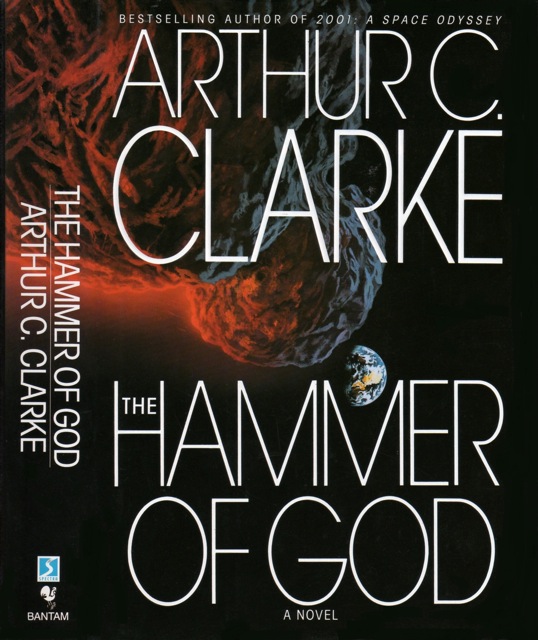
                • Cover of The Hammer of God
                  The Hammer of God

                  Arthur C. Clarke · standalone novel · 1993

                  similar byinformativenear futurescience fictionhard science fictionspaceasteroid belt

                  The Hammer of God is a science fiction novel by Arthur C. Clarke originally published in 1993. Set in the year 2109, it deals with the discovery of an asteroid to be on course to collide with Earth and depicts the mission for deflecting the asteroid by using fusion thermal rockets.

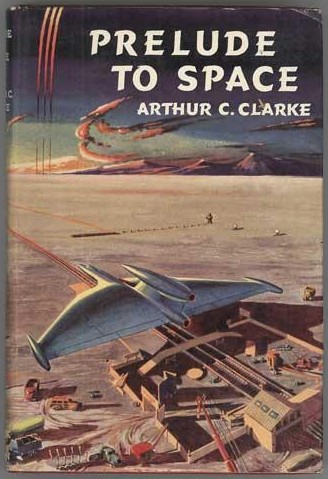
                • Cover of Prelude to Space
                  Prelude to Space

                  Arthur C. Clarke · standalone novel · 1951

                  similar byinformativenear futurescience fictionhard science fiction+2 more

                  Prelude to Space is a science fiction novel written by British author Arthur C. Clarke in 1947. It appeared for the first time in 1951 as a paperback from World Editions Inc, as number three in its series of Galaxy novels. Sidgwick & Jackson published it in the UK in 1953, followed the next year by a United States hardcover edition from Gnome Press and a paperback from Ballantine Books.

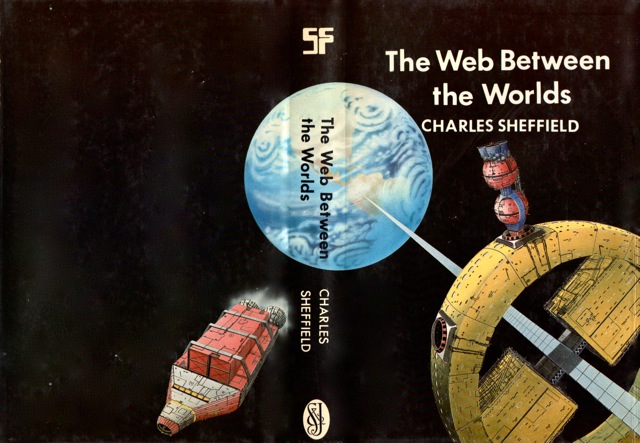
                • Cover of The Web Between the Worlds
                  The Web Between the Worlds

                  Charles Sheffield · standalone novel · 1979

                  similar byinformativenear futurescience fictionspace colonizationhard science fictionspace

                  The Web Between the Worlds is the second science fiction novel by Charles Sheffield. It was first published as a trade paperback by Ace Books in 1979, by the first UK edition in hardcover by Sidgwick & Jackson Ltd the following year. Further editions were published by Arrow Books, Ace Books, Del Rey/Ballantyne and others; in 2001 Baen Books issued a revised edition. The novel has also been translated into German and French. This novel and the simultaneously published novel The Fountains of Paradise, by Arthur C. Clarke, are the first popularization of the space elevator.

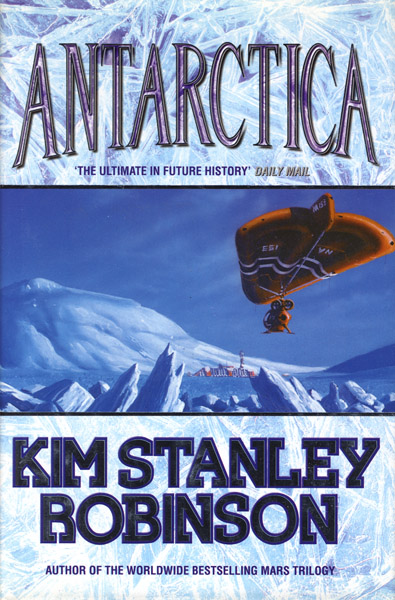
                • Cover of Antarctica
                  Antarctica

                  Kim Stanley Robinson · standalone novel · 1997

                  similar byinformativenear futurescience fictionecological collapse+1 more

                  Antarctica (1997) is a science fiction novel by American writer Kim Stanley Robinson. It deals with a variety of characters living at or visiting an Antarctic research station. The novel incorporates many of Robinson's frequent themes, including scientific process and the importance of environmental protection.

                • Cover of Earth
                  Earth

                  David Brin · standalone novel · 1990

                  similar byinformativenear futurescience fictionecological collapse+1 more

                  Earth is a 1990 science fiction novel by American writer David Brin. The book was nominated for the Hugo and Locus Awards in 1991.

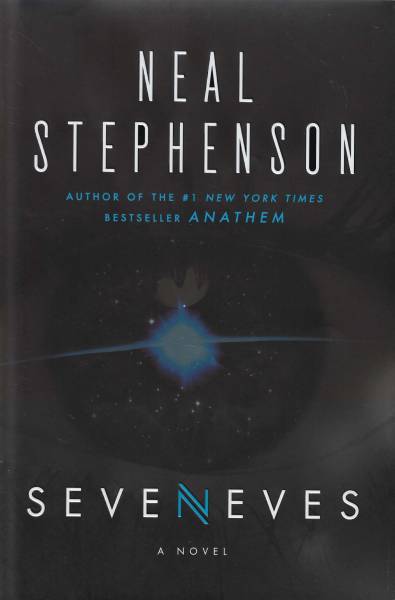
                • Cover of Seveneves
                  Seveneves

                  Neal Stephenson · standalone novel · 2015

                  similar bynear futurespace colonizationscience fictionhard science fictionecological collapsespace

                  Seveneves is a science fiction novel by Neal Stephenson published in 2015. The story tells of the desperate efforts to preserve Homo sapiens in the wake of apocalyptic events on Earth after the unexplained disintegration of the Moon and the remaking of human society as a space-based civilization after a severe genetic bottleneck.

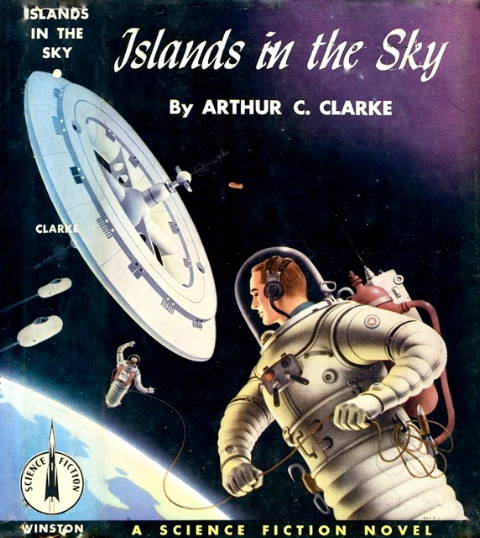
                • Cover of Islands in the Sky
                  Islands in the Sky

                  Arthur C. Clarke · standalone novel · 1952

                  similar bynear futurespace colonizationscience fictionspace+1 more

                  Islands in the Sky is a 1952 science fiction novel by British writer Arthur C. Clarke. It is one of his earliest works. Clarke wrote the story as a travelogue of human settlement of cislunar space in the last half of the twenty-first century.

                • Cover of Red Moon
                  Red Moon

                  Kim Stanley Robinson · standalone novel · 2018

                  similar bynear futurespace colonizationscience fictionpolitical intriguehard science fiction+1 more

                  Red Moon is a 2018 science fiction novel by American novelist Kim Stanley Robinson. The novel is set in China and on the Moon. It was reviewed in several US media outlets with mixed reception.

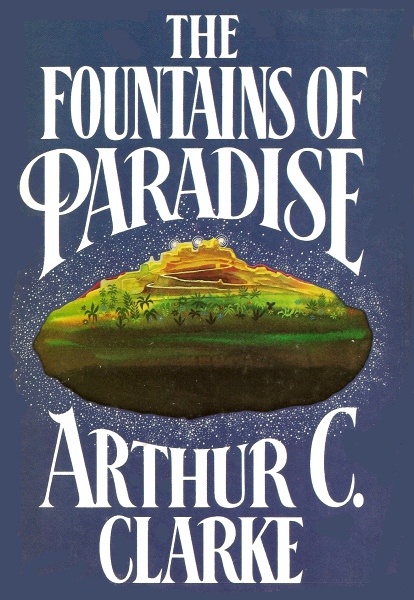
                • Cover of The Fountains of Paradise
                  The Fountains of Paradise

                  Arthur C. Clarke · standalone novel · 1979

                  similar byinformativescience fictionhard science fictionspace

                  The Fountains of Paradise is a 1979 science fiction novel by British writer Arthur C. Clarke. Set in the 22nd century, it describes the construction of a space elevator. This "orbital tower" is a giant structure rising from the ground and linking with a satellite in geostationary orbit at the height of approximately 36,000 kilometres. Such a structure would be used to raise payloads to orbit without the expense of using rockets. The novel won both the Hugo and Nebula Awards for Best Novel.

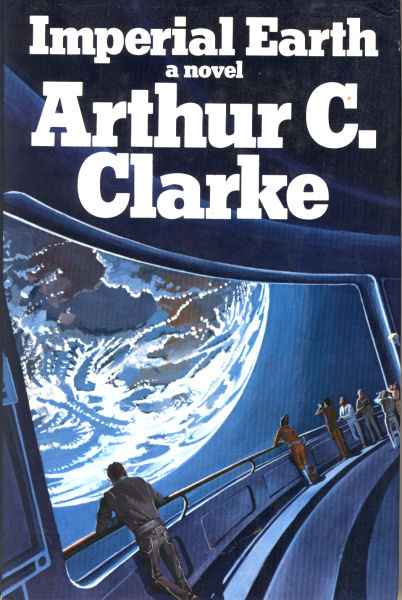
                • Cover of Imperial Earth
                  Imperial Earth

                  Arthur C. Clarke · standalone novel · 1975

                  similar byscience fictionspace colonizationhard science fictionspace+2 more

                  Imperial Earth is a science fiction novel by British writer Sir Arthur C. Clarke, published in 1975 by Gollancz Books. The plot follows the protagonist, Duncan Makenzie, on a trip to Earth from his home on Titan, in large part as a diplomatic visit to the U.S. for its quincentennial in 2276, but also to have a clone of himself produced. The book was published in time for the U.S. bicentennial in 1976.

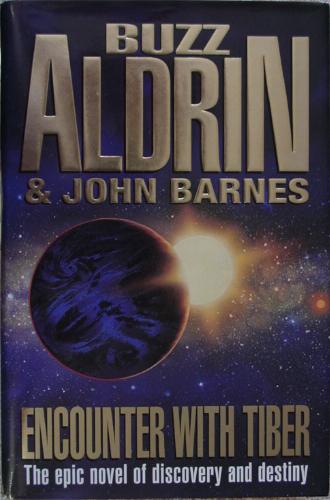
                • Cover of Encounter with Tiber
                  Encounter with Tiber

                  John Barnes & Buzz Aldrin · standalone novel · 1996

                  similar byinformativenear futurescience fictionhard science fictionspace

                  Encounter With Tiber (ISBN 0-340-62451-5) is a 1996 science fiction novel written by former astronaut Buzz Aldrin and science fiction writer John Barnes. A working title, used on some advance covers for the British edition, was The Tides of Tiber.

                • Cover of Mars (Kim Stanley Robinson)
                  Mars (Kim Stanley Robinson)

                  series · 36 books · 1982

                  similar byscience fictionspace colonizationhard science fiction+3 more

                  The Mars trilogy is a series of science fiction novels by Kim Stanley Robinson that chronicles the settlement and terraforming of the planet Mars through the personal and detailed viewpoints of a wide variety of characters spanning 187 years, from 2026 to 2212. Ultimately more utopian than dystopian, the story focuses on egalitarian, sociological, and scientific advances made on Mars, while Earth suffers from overpopulation and ecological disaster.

                • Cover of Termination Shock
                  Termination Shock

                  Neal Stephenson · standalone novel · 2021

                  similar bynear futurescience fictionpolitical intrigueecological collapse+1 more

                  Termination Shock is a science fiction novel by American writer Neal Stephenson, published in 2021. The book is set in a near-future when climate change has significantly altered human society and follows the attempts of a solar geoengineering scheme. The novel focuses on the geopolitical and social consequences of the rogue fix for climate change, themes common in the growing climate fiction genre.

                • Cover of 2312
                  2312

                  Kim Stanley Robinson · standalone novel · 2012

                  similar byscience fictionspace colonizationecological collapsehard science fictionspace+2 more

                  In the eponymous year, when Earth's ecology is degraded and humanity has settled throughout the solar system by terraforming and genetic engineering, mysterious disasters strike some human communities and an assortment of human types from throughout the system seek to find and eliminate the cause.

                • Cover of Dragon's Egg
                  Dragon's Egg

                  series · 3 books · 1980

                  completed

                  similar byinformativescience fictionhard science fiction+2 more

                  Robert L. Forward's Dragon's Egg (1980) follows first contact with the cheela, intelligent beings the size of sesame seeds living on the surface of a neutron star, where crushing gravity and fast-moving physics let them evolve from primitive agriculture to advanced technology in about a month of Earth time while human observers watch from orbit. The sequel Starquake (1985) follows the cheela's own development of space travel and a catastrophic starquake that devastates their neutron-star home, alongside the continuing story of the human crew observing them.

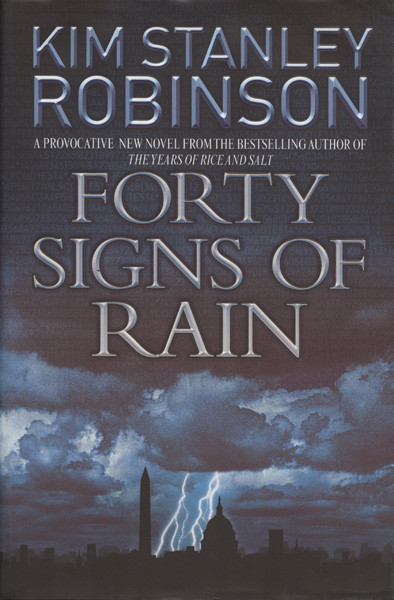
                • Cover of Science in the Capital
                  Science in the Capital

                  series · 5 books · 2004

                  similar bynear futurescience fictionecological collapsehard science fictionpolitical intrigue

                  Kim Stanley Robinson's Science in the Capital trilogy follows scientists and staff at the National Science Foundation in Washington, D.C. as they try to get a paralyzed government to act on accelerating climate change, while catastrophic storms on both American coasts turn the crisis undeniable. Forty Signs of Rain introduces biomathematician Frank Vanderwal, the Quibler family, and a delegation of Buddhist monks from a low-lying island nation threatened by rising seas; Fifty Degrees Below and Sixty Days and Counting follow the same characters through worsening disaster and the slow mechanics of policy change. Robinson later revised the trilogy into a single volume, Green Earth.

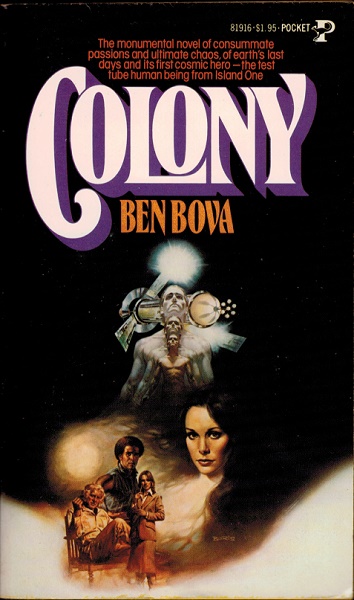
                • Cover of Colony
                  Colony

                  Ben Bova · standalone novel · 1978

                  similar bynear futurespace colonizationscience fictionpolitical intrigue+1 more

                  Colony continues the story Ben Bova began in Millennium, following astronaut-turned-administrator Chet Kinsman years later as the head of an orbiting space habitat that has become Earth's only real refuge from a planet buckling under overpopulation, food shortages and unrest. Getting a place in the habitat is a matter of life and death for millions who will never be chosen, and as Earth's governments grow more desperate to control or dismantle the colony outright, Kinsman has to decide how far he'll go to protect the world he's built off-world. Bova later folded both novels together into the omnibus The Kinsman Saga. Part of Ben Bova's Chet Kinsman series.

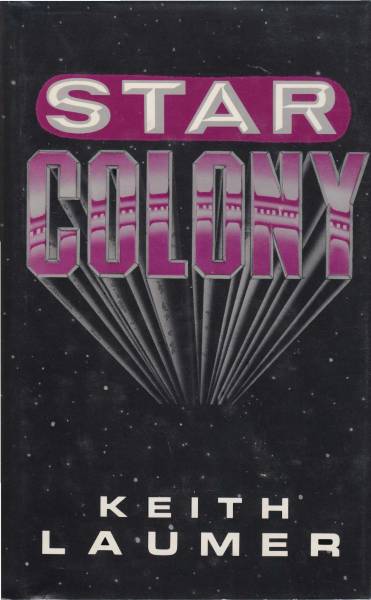
                • Cover of Star Colony
                  Star Colony

                  Keith Laumer · standalone novel · 1981

                  similar byinformativespace colonizationscience fictionpolitical intrigue

                  From the front flap of the St. Martin's Press first edition: "The History of Colmar in Three Volumes - Volume One: Star Colony This history is based on official Terran archives only recently released to scholars, as well as on letters and diaries of early settlers, supplemented by material from the Oral History Project initiated in honor of independent Colmar's Centennial celebrations in CY325 (AD2437). For the first time, the authentic course of events has been extracted and separated from its overlay of myth and folklore. Prepared by a distinguished board of editors under the leadership of our world's preeminent chronicler, the present history, designed especially for use in the schools through post-doctorate levels, will lay to rest for all time, it is earnestly hoped, the maze of conflicting legendary and mythical accounts of Early Times, which have heretofore clogged scholarly avenues of inquiry into Colmar's settlement, the origin of the curious dichotomy that has existed between our East and North Continents, and the events leading to Unification and, at last, to Independence itself."

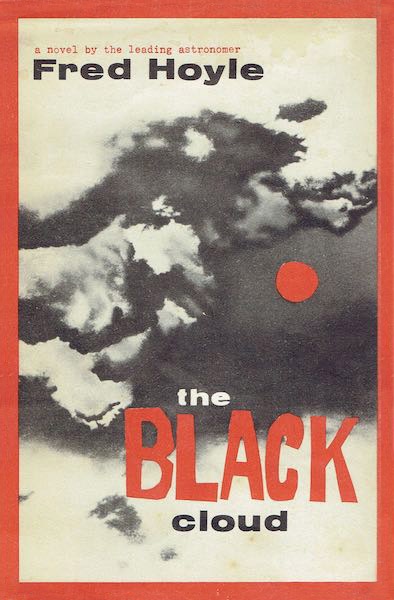
                • Cover of The Black Cloud
                  The Black Cloud

                  Fred Hoyle · standalone novel · 1957

                  similar byscience fictionhard science fiction+4 more

                  The Black Cloud is a 1957 science fiction novel by British astrophysicist Fred Hoyle. It details the arrival of an enormous cloud of gas that enters the Solar System and appears about to destroy most of the life on Earth by blocking the Sun's radiation.

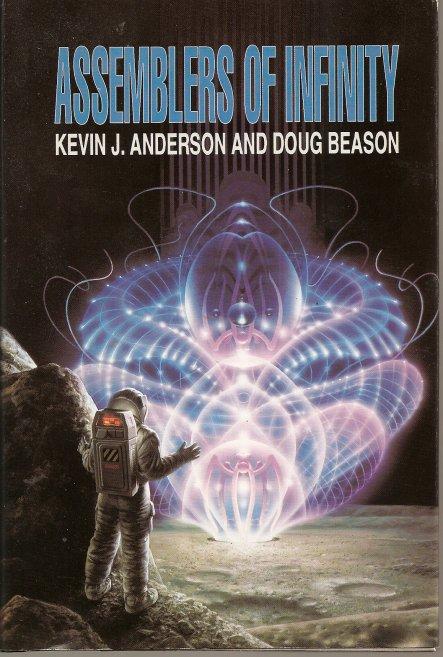
                • Cover of Assemblers of Infinity
                  Assemblers of Infinity

                  Kevin J. Anderson & Doug Beason · standalone novel · 1993

                  similar bynear futurescience fictionhard science fictionspace+1 more

                  Assemblers of Infinity is a science-fiction novel by American writers Kevin J. Anderson and Doug Beason. It first appeared in print in serialized form in the American magazine Analog Science Fiction and Fact from September to December 1992 and was published in 1993 by Bantam Spectra. In 1994 it was nominated for the Nebula Award for best science fiction novel: this was the only Nebula nomination that both Anderson and Beason ever had. It was also placed 25th SF Novel in the 1994 Locus Award. The book is currently out of print, but is still available as e-book.

                • Cover of Podkayne of Mars
                  Podkayne of Mars

                  Robert A. Heinlein · standalone novel · 1963

                  similar bynear futurescience fictionpolitical intriguespace

                  From the back cover of the Baen 1995 edition: "Meet Podkayne Fries, a thoroughly modern Martian Ms. who thinks that Earth is not really fit for habitation and that humanity evolved in the now-exploded Fifth Planet. Poddy has one goal in life, to be the first female starship captain. She has her strategy all scoped out, and with her determination, looks and I.Q. she'll get there, never you doubt! But all work and no play would make Poddy a Dull Girl, so when a chance comes her way to travel to distant Earth via Venus with her elderly uncle, Poddy jumps at it, even if it does mean having her loathsome little brother along for the trip: Travel, Adventure, the chance to cuddle up (in a nice way) with real spaceship officers and ruthlessly pump their brains - she'll have it all. What Poddy doesn't know is that "Unca Tom" is more than her warmly supportive relative: he is also the Ambassador Plenipotentiary from Mars to the Three Planets Conference (travelling not quite incognito enough) and that certain people will stop at nothing to gain control of his vote - including kidnapping and doing terrible things to sweetly innocent Poddy Fries..."

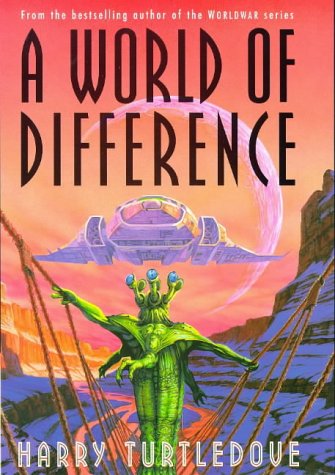
                • Cover of A World of Difference
                  A World of Difference

                  Harry Turtledove · standalone novel · 1990

                  similar byinformativenear futurescience fiction+1 more

                  A World of Difference is a 1990 science fiction novel by American writer Harry Turtledove.

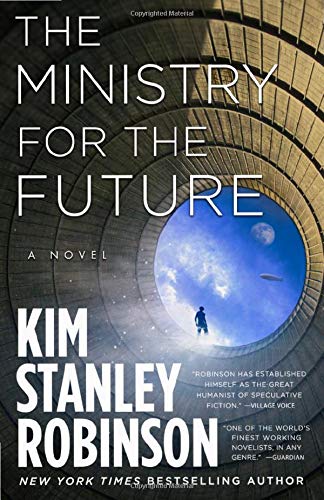
                • Cover of The Ministry for the Future
                  The Ministry for the Future

                  Kim Stanley Robinson · standalone novel · 2020

                  similar bynear futurescience fictionpolitical intrigueecological collapse+1 more

                  The Ministry for the Future is a climate fiction novel by American science fiction writer Kim Stanley Robinson, published in 2020. Set in the near future, the novel follows a subsidiary body, established under the Paris Agreement, whose mission is to act as an advocate for the world's future generations of citizens as if their rights were as valid as the present generation's. While the ministry pursues various ambitious projects, the effects of climate change are determined to be the most consequential. The plot primarily follows Mary Murphy, the head of the titular Ministry for the Future, and Frank May, an American aid worker traumatized by experiencing a deadly heat wave in India. Many chapters are devoted to other characters' accounts of future events, as well as their ideas about ecology, economics, and other subjects.

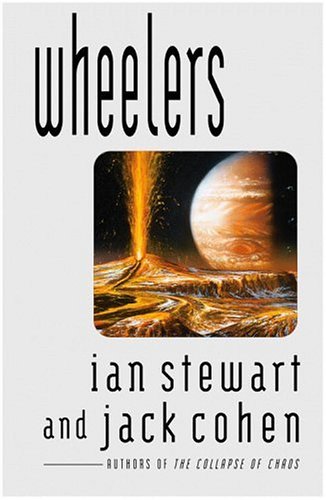
                • Cover of Wheelers
                  Wheelers

                  Ian Stewart & Jack Cohen · standalone novel · 2000

                  similar byinformativescience fictionhard science fictionspace

                  Wheelers is a hard science fiction novel written by English mathematician Ian Stewart and reproductive biologist Jack Cohen. The book was originally released in hardcover form in the year 2000, and a more common paperback printing was begun in 2001. It has enjoyed modest commercial success and is perhaps best known for its conceptions of alien zoology and intelligence—hallmarks of Cohen's work as a consultant on exobiology for books, movies, and television.