More like Empires Ghost
but
- Oxford Time Travel
series6 books1982
similar byeurope+2 more
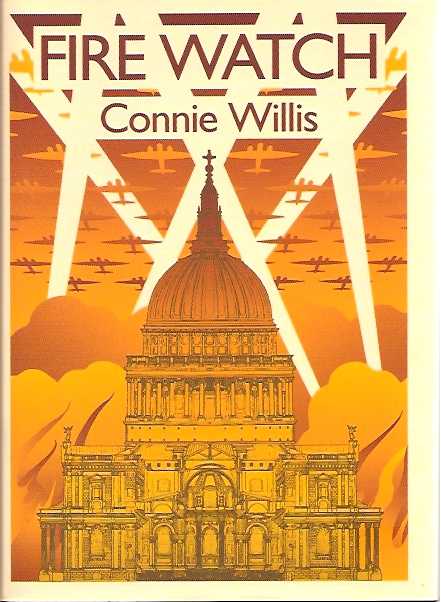
Connie Willis's Oxford Time Travel novels are set at a near-future Oxford University where historians travel into the past as observers, constrained by a version of history that resists any change large enough to alter real events. Doomsday Book sends a medieval historian to what should be 1320 but turns out to be the Black Death year of 1348, intercut with a present-day epidemic at Oxford; To Say Nothing of the Dog returns to the same time-travel program for a lighter, Victorian-set story with different characters. The two novels share their setting and rules rather than a directly continuing plot.
- H. G. Wells' War of the Worlds
universe65 books1898
Start hereThe War of the Worlds · Start here
No one would have believed, in the closing years of the nineteenth century, that human affairs were being watched keenly and closely from the timeless worlds of space. And then the cylinders fell. H. G. Wells' War of the Worlds opens in the quiet of the Surrey commons, where a falling star proves to be the first Martian craft — and from the pit rise the towering tripods, the Heat-Ray, the choking Black Smoke and the creeping red weed, wielded by minds that regard mankind much as we regard the creatures we boil for supper. This is invasion rendered as natural disaster: cold, methodical, and vast beyond argument. Wells' 1898 novel is the seed; everything else grows from that Martian soil. The catalogue gathers direct sequels and continuations alongside a wide field of other hands. In War of the Worlds: Global Dispatches the invasion is retold across the whole planet through the eyes of Twain, Verne, Tolstoy, Lowell and Kipling; in the Manly Wade and Wade Wellman crossover, Sherlock Holmes, Watson and Professor Challenger take the field against the machines; and Scott Washburn's Great Martian War stretches the fighting into a decades-long alternate history of steam, artillery and grinding attrition. It is a loose shared world — no single decreed sequence, many voices answering one calamity. What sets this world apart is its refusal of heroics: the invaders fall not to generals but to the smallest things of Earth, humbling and indifferent. Begin, always, with Wells' original novel — it is short, and it is the ground every later book stands upon. From there follow your appetite: Global Dispatches for the panorama, the Holmes campaign for adventure, Washburn for the long war.
- Sarantine Universe
series8 books1995
similar by+1 more
Guy Gavriel Kay's Sarantine-world novels are loosely connected historical fantasies sharing one invented history rather than a fixed cast: The Lions of Al-Rassan (1995, an analogue of medieval Spain), The Last Light of the Sun (2004, drawing on the Viking-age raids of Alfred the Great's Britain), Children of Earth and Sky (2016, a world modeled on Venice, Istanbul, and the Balkans in the 15th century), its prequel A Brightness Long Ago (2019), and its sequel All the Seas of the World (2022, set amid wars between Christendom and the Ottoman Empire). Each novel stands alone, but together they trace centuries of the same fictional world, distinct from Kay's separate Sarantine Mosaic duology.
- The Crucible
series3 books2000
completed
similar by+4 more
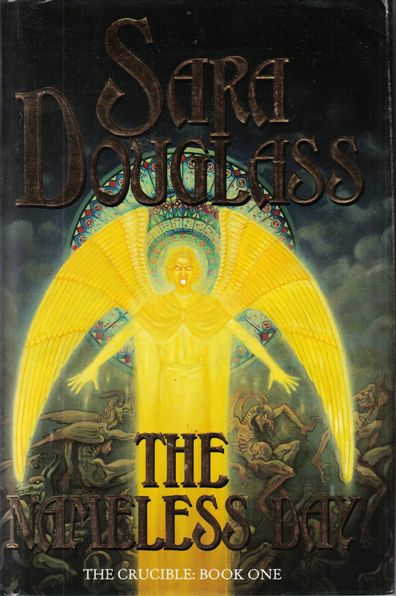
Sara Douglass' The Crucible trilogy follows an English friar and nobleman, Thomas Neville, drawn into a war between heavenly and infernal forces across England and Europe during the late Middle Ages. It comprises The Nameless Day, The Wounded Hawk, and The Crippled Angel.
- Slaughterhouse-Five or the Children's Crusade: A Duty-Dance with Death
Kurt Vonnegut & Jr.standalone novel1969
similar bywardarkeurope
Vonnegut opens in his own voice, describing the twenty years it took him to face writing about surviving the firebombing of Dresden as a POW. He then hands the story to Billy Pilgrim, an awkward, fatalistic American chaplain's assistant swept into the Battle of the Bulge and captured by German forces alongside a soldier who dies blaming him for it. Imprisoned in a disused slaughterhouse in Dresden, Billy survives the firebombing that follows, and, we're told upfront, has also come 'unstuck in time,' living his life out of order, including a stretch on the alien world of Tralfamadore. Vonnegut's best-known novel folds war memoir into science fiction and black comedy.
- Red Eve
H. Rider Haggardstandalone novel1911
similar bywardarkeuropemedieval
Red Eve is a historical novel with fantasy elements, by British writer H. Rider Haggard, set in the reign of Edward III. Red Eve depicts the Battle of Crécy and the Black Death, and also features a supernatural personification of Death called Murgh.
- Duke de Richleau
series4 books1933
completed
similar by+2 more
The Duke de Richleau novels follow Dennis Wheatley's aristocratic adventurer and occultist across four decades of twentieth-century intrigue, moving from a 1930s rescue thriller in The Forbidden Territory into Satanist set-pieces such as The Devil Rides Out and Strange Conflict, then a later case in Gateway to Hell. Wheatley wrote the books out of order over nearly forty years, but their internal chronology matches the order they were published in.
- The Broken Sword
Poul Andersonstandalone novel1954
similar bydarkmedieval+1 more
The Broken Sword is a fantasy novel by American writer Poul Anderson, originally published on 5 November 1954. A revised edition was issued by Ballantine Books in January 1971 as the twenty-fourth volume of their Ballantine Adult Fantasy series. The original text was reissued by Gollancz in 2002. Set during the Viking Age, the novel features numerous references to Norse mythology.
- Mother Night
Kurt Vonnegut & Jr.standalone novel1962
similar bywardarkeurope
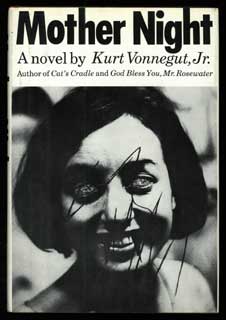
Howard W. Campbell Jr., an American playwright who grew up in Germany, writes his memoirs from an Israeli prison cell awaiting trial for war crimes. As the Nazis rose to power, Campbell stayed on, married a German actress, and was recruited by an American agent to serve as a double agent, broadcasting Nazi propaganda over the radio while secretly passing coded intelligence to the Allies. The catch, as Campbell tells it, is that he became one of the war's most effective propagandists in the process, whatever his loyalties. Kurt Vonnegut's darkest novel asks what a person becomes when the mask he wears for a cause is indistinguishable from his face.
- Assassin's Creed Valhalla
series2 books2020
part of Assassin's Creed Universe
similar bymedieval+2 more
- The Angel and the Sword
Cecelia Hollandstandalone novel2000
similar bywareuropemedieval+1 more
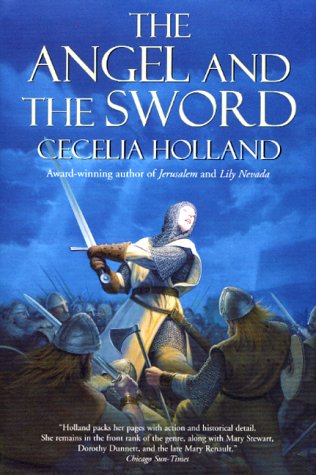
"It is the waning days of the ninth century. The vast dominion won by the great Emperor Charlemagne has been torn apart by his heirs and successors. In Paris, once the heart of that realm, the Emperor's irresolute grandson, Charles the Bald, battles desperately to preserve his kingdom from the ravages of Viking raiders. If the city falls, its people will perish, and along with them the precious remnants of culture and learning rescued from the ashes of Rome." -- Jacket.
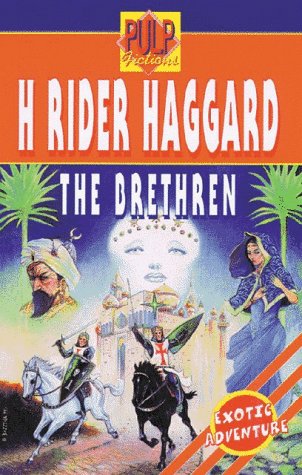
- The Brethren
H. Rider Haggardstandalone novel1904
similar bywarmedieval+2 more
"... a tale ... of that pregnant and mysterious epoch, when men by thousands were glad to lay down their lives for visions and spiritual hopes, could find a picture, however faint and broken, of the long war between Cross and Crescent waged among the Syrian plains and deserts. Of Christian knights and ladies also, and their loves and sufferings in England and the East; of the fearful lord of the Assassins whom the Franks called Old Man of the Mountain, and his fortress city, Masyaf. Of the great-hearted, if at times cruel Saladin and his fierce Saracens; of the rout at Hattin itself, on whose rocky height the Holy Rood was set up as a standard and captured, to be seen no more by Christian eyes; and of the last surrender, whereby the Crusaders lost Jerusalem forever." (From the Author's Note)
- Gravity's Rainbow
Thomas Pynchonstandalone novel1973
similar bywardarkeurope
Gravity's Rainbow is a 1973 postmodern novel by Thomas Pynchon. The narrative is set primarily in Europe at the end of World War II and centers on the design, production and dispatch of V-2 rockets by the German military. In particular, it features the quest undertaken by several characters to uncover the secret of a mysterious device, the Schwarzgerät, which is slated to be installed in a rocket with the serial number "00000".
- Fionavar Universe
series5 books1984
similar by+1 more
Ysabel is a 2007 standalone contemporary fantasy novel by Guy Gavriel Kay, following teenager Ned Marriner as he stumbles into a centuries-old rivalry playing out around the cathedral of Aix-en-Provence. It marked Kay's turn toward urban fantasy and briefly brings back two adult characters from his earlier Fionavar Tapestry trilogy, though it is not itself part of that trilogy and can be read on its own.
- Hungry City Chronicles / Mortal Engines
series5 books2001
part of Mortal Engines Universe
similar bywar+1 more
The Mortal Engines Quartet, also known as the Predator Cities Quartet, is a series of epic young adult science fiction novels by the English novelist and illustrator Philip Reeve. He began the first volume of the series, Mortal Engines, in the 1980s, and it was published in 2001. Reeve then published three further novels, Predator's Gold (2003), Infernal Devices (2005), and A Darkling Plain (2006).
- Chronicles of the Deryni
series4 books1970
part of Deryni
similar bymedieval+1 more
Katherine Kurtz's Chronicles of the Deryni trilogy (Deryni Rising, Deryni Checkmate, High Deryni, 1970-1973) follows the young King Kelson Haldane defending his throne in Gwynedd, a kingdom modeled on 10th-to-12th-century Britain, against ecclesiastical opposition and foreign invasion. Central to the conflict is the Deryni, a persecuted human-like people with inherited psychic and magical powers, whose presence in and around the crown makes Kelson's reign a lightning rod for religious and political tension.
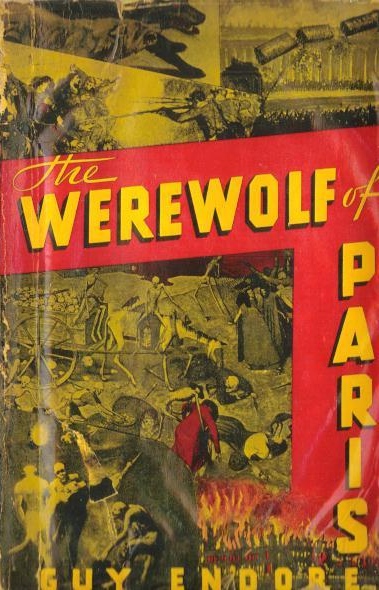
- The Werewolf of Paris
Guy Endorestandalone novel1933
similar bywardarkeurope
The Werewolf of Paris (1933) is a Gothic horror novel by American writer Guy Endore. The novel follows Bertrand Caillet, the eponymous werewolf, throughout the tumultuous events of the Franco-Prussian War and the Paris Commune of 1870–71. Some literature experts have compared this book with Dracula by Bram Stoker and they have identified it as the Dracula of werewolf fiction.